
You're out in the yard in El Paso, doing the routine cleanup you've done a hundred times before, and one pile stops you cold. It isn't the usual brown. It's dark, almost black, and it may look sticky or oddly glossy. That kind of find gets a dog owner's attention fast, and it should.
A black poop dog situation can be as simple as a recent medication or a rich meal with liver. It can also be a warning sign of internal bleeding that needs same-day veterinary care. The right response is calm observation, quick judgment, and a low tolerance for guessing.
In disciplined pet care, small details matter. The owners who catch changes in stool, gum color, appetite, and behavior early usually give their dogs a better shot at fast treatment. That same disciplined mindset is also why El Paso dog grooming, premium pet grooming, and careful handling standards matter more than is commonly understood. Good care isn't only about a clean coat. It's about noticing what changed before a problem gets worse.
An Unsettling Discovery in Your El Paso Yard
The most common version of this starts with a normal morning. Coffee in one hand, poop bag in the other, and then that second look. The stool isn't just dark brown. It looks black enough to raise the question you were hoping not to ask.
That concern is justified.
Black stool in dogs can mean melena, which is digested blood coming from the upper digestive tract. It can also come from something less dangerous, like certain medications, supplements, or foods. The hard part is that owners often lose time trying to talk themselves out of concern because the dog still seems mostly normal.
Why this gets missed
Dogs don't always show dramatic distress at the beginning. Some still wag, still ask for breakfast, and still follow the same household routine. Owners often assume a one-off stool change can wait.
That's where good observation beats panic. Look at the stool itself. Think about what your dog ate. Review anything you recently gave, including supplements, iron, activated charcoal, or stomach remedies. Then make the next decision based on evidence, not hope.
Practical rule: If the stool is black and tar-like, treat it as significant until a veterinarian tells you otherwise.
In El Paso, yard conditions add another wrinkle. Dry weather, outdoor time, scavenging, and access to things dogs shouldn't eat can make it harder to know whether you're seeing a food-related issue, swallowed blood from another source, or a true gastrointestinal problem. Owners who stay organized do better here. Keep a mental log of medications, unusual treats, trash exposure, and changes in appetite.
What matters in the first few minutes
Start with three questions:
- What did it look like: Was it black, sticky, tarry, or unusually shiny?
- What changed recently: New food, liver treats, iron, activated charcoal, or bismuth products?
- How is your dog acting: Normal energy, or weaker, quieter, nauseated, or off balance?
A resilient pet-care routine always comes back to the same principle. Notice early. Act early. Don't wait for collapse before deciding something mattered.
Differentiating Dangerous from Dietary Black Dog Poop
The most important distinction is this. Not every black stool is an emergency, but some absolutely are.
Melena is the medical term for black stool caused by digested blood from upper gastrointestinal bleeding. Spot & Tango explains that melena reflects digested hemoglobin from upper GI bleeding, with gastric acids and intestinal enzymes turning red hemoglobin into black pigments called hematin, producing stool that is sticky, tarry, and foul-smelling.
What melena usually looks like
Owners often describe melena as looking more like old engine oil than normal poop. That's a useful comparison. It tends to be dark, tacky, tarry, and harder to mistake once you've seen it.
By contrast, diet-related black stool is usually dark in color but still formed like normal stool. It doesn't have that same tar-like drag or foul smell associated with digested blood.
Common harmless causes
Several non-emergency causes can darken stool:
- Activated charcoal: Often used after toxin exposure and can turn stool coal-black for a short period.
- Iron supplements: These can darken stool noticeably.
- Bismuth-containing products: These may also produce black stool.
- Organ meats like liver: Rich foods can make stool look much darker than usual.
- Swallowed blood from outside the gut: Oral bleeding, respiratory bleeding, or licking a wound can darken stool after digestion.
That's why context matters. A dark stool after a known iron supplement is different from a sudden black, sticky stool in a dog with reduced appetite and low energy.
Melena vs. Dietary Black Stool At a Glance
| Characteristic | Melena (Medical Emergency) | Benign Dietary/Medicinal Cause |
|---|---|---|
| Color | Black | Black or very dark |
| Texture | Sticky, tarry | Usually normal stool texture |
| Odor | Foul-smelling | Usually typical stool odor |
| Cause | Digested blood from upper GI bleeding | Iron, bismuth, activated charcoal, organ meats, swallowed blood |
| Urgency | Same-day veterinary attention | Still monitor closely, but context may explain it |
A common mistake is assuming all black stool comes from ulcers. That's not always true. Parasites can also be involved, especially in younger dogs, which is why owners who want a better grasp of parasite-related digestive issues should review this guide on dog deworming medicine.
Black stool with a normal texture can still deserve a vet call. Stool color alone doesn't give you the whole answer.
What works is comparing color, texture, smell, and timing. What doesn't work is relying on color by itself and hoping you can sort it out later.
How to Assess Urgency When Your Dog Has Black Poop
The first rule is simple. If you're unsure, call your veterinarian.
A black poop dog situation becomes more urgent when the stool is tarry, the dog seems weak, or other symptoms show up alongside it. One of the most important checks is one many owners skip.
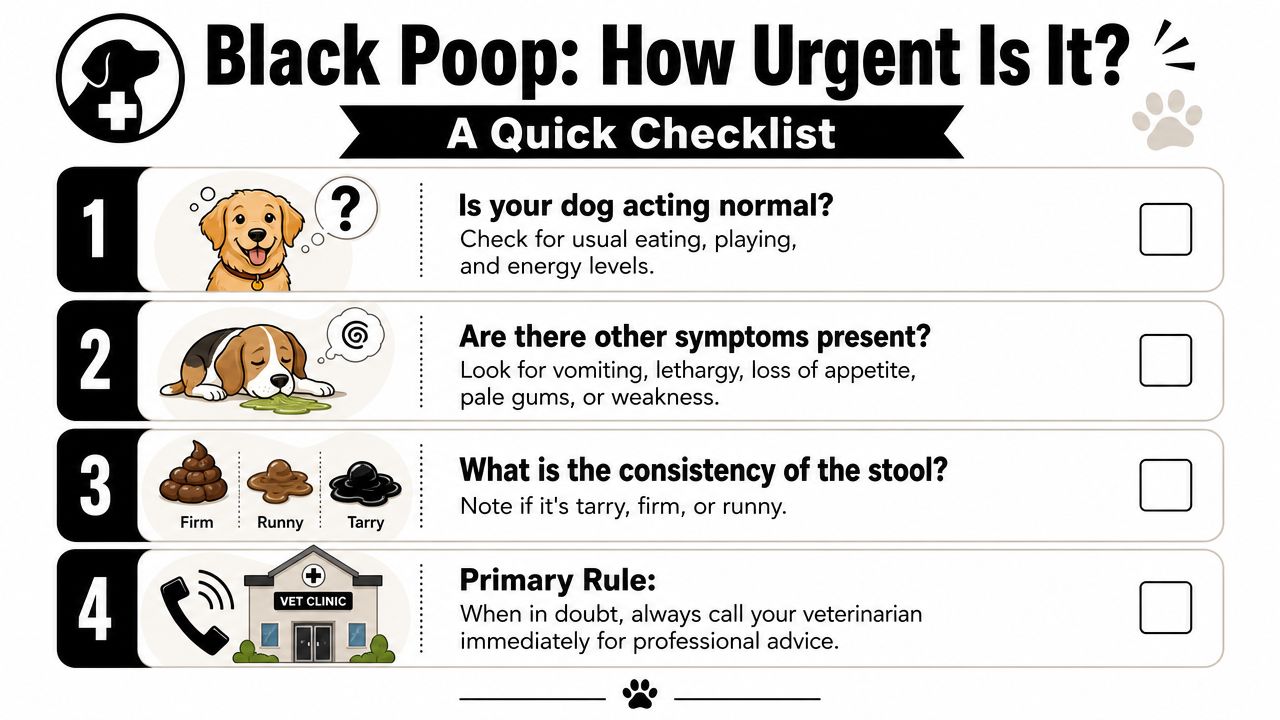
Check the gums right away
Press gently on your dog's gums with a finger, then release. Healthy gums should return to pink quickly. If the gums look pale, white-ish, or the color returns slowly, that raises concern for blood loss or poor circulation.
Use this real-world checklist
- Behavior first: Is your dog eating, walking, and responding normally, or do they seem withdrawn and weak?
- Look for companion symptoms: Vomiting, reduced appetite, lethargy, weakness, or collapse increase the urgency.
- Check stool consistency: Tarry and sticky is more concerning than dark stool with normal form.
- Inspect the gums: Pink and quick refill are better signs. Pale gums and slow refill deserve immediate action.
If your dog also got into something strange at home, swallowed fabric, or ate a household item, this article on what to do if your dog ate a dryer sheet can help you think through one common ingestion scenario that may complicate digestive symptoms.
When it stops being a watch-and-see issue
Call an emergency clinic now if you see any of these:
- Pale gums
- Weakness or wobbling
- Collapse
- Repeated vomiting
- Black tarry stool plus refusal to eat
- A painful abdomen or obvious distress
Don't wait for a second black stool if your dog looks unwell on the first one.
Owners often lose time because the dog still walked outside under their own power. That doesn't rule out internal bleeding. A dog can still be mobile and still need urgent care.
Your Next Steps and What to Expect at the Vet
Once you've seen black stool and assessed your dog, move in order. Fast action helps. Random action doesn't.
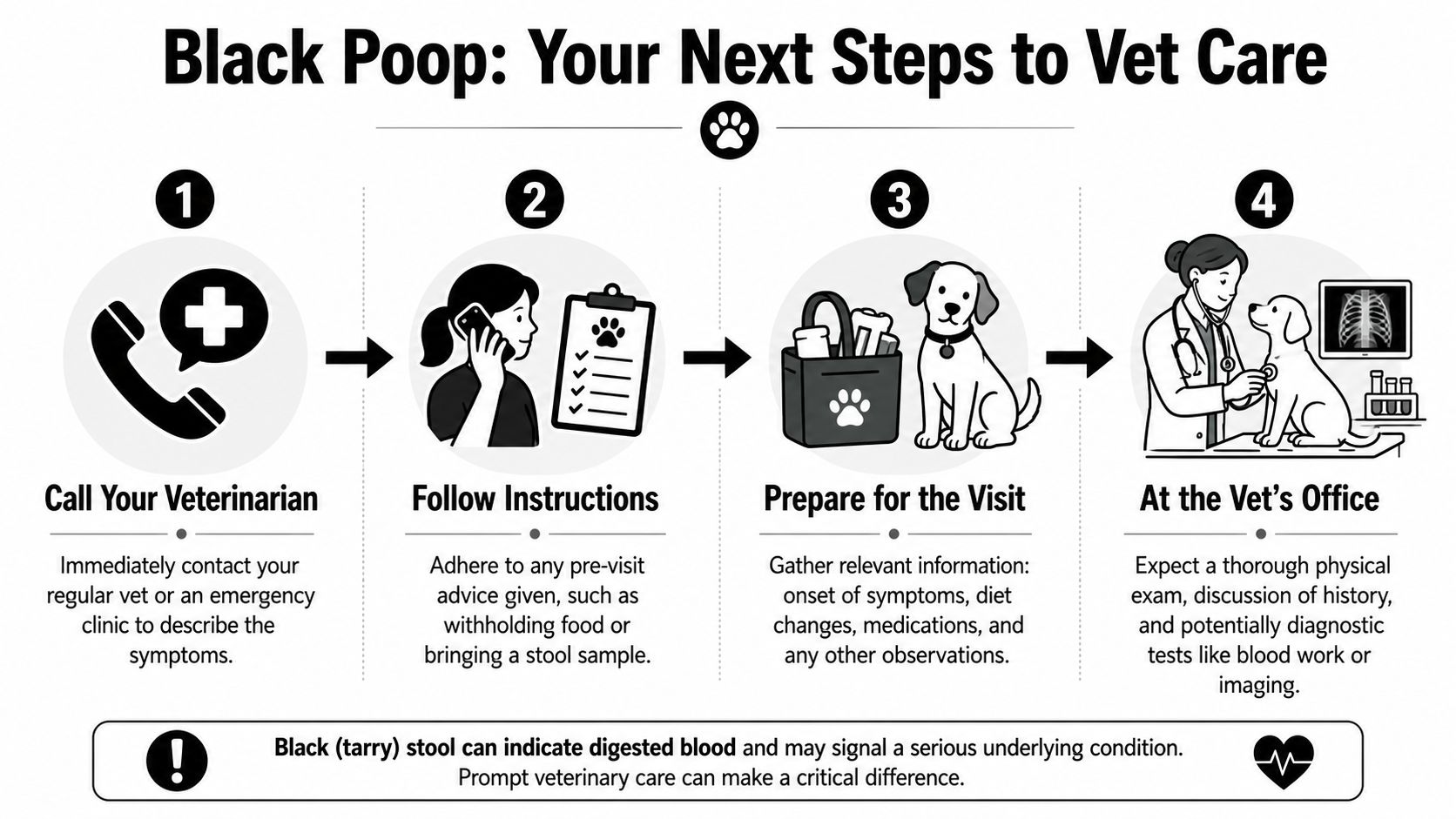
What to do immediately
Call your veterinarian or emergency clinic
Describe the stool clearly. Say black, tarry, sticky, or foul-smelling if that applies. Mention any vomiting, weakness, gum changes, recent medications, organ meats, charcoal, or possible toxin exposure.
Collect a fresh sample if you can do it safely
A sealed bag or clean container helps. Don't delay travel just to get one, but if it's easy to collect, bring it.
Don't start home treatment
Don't give random stomach remedies, extra food, supplements, or over-the-counter medications unless a veterinarian specifically tells you to.
Write down recent history
Note any new treats, supplements, bismuth products, iron, NSAID use, scavenging, chewing incidents, or changes in energy and appetite.
A quick visual overview can help settle your thinking before the car ride.
What the veterinarian may check
That usually means your vet will want to identify both the presence of blood loss and the source. A visit may include:
- Physical exam: Gum color, hydration, abdominal pain, heart rate, overall stability.
- Fecal analysis: Useful when parasites such as hookworms are part of the concern.
- Blood work: Helps assess anemia and organ function.
- Imaging: X-rays or ultrasound may help locate injury, foreign material, or other internal causes.
What helps the vet most
Bring details, not guesses.
- Medication history: Even one dose can matter if it's relevant.
- Diet changes: Especially liver, rich organ meats, or table scraps.
- Timeline: First black stool, repeat episodes, vomiting, appetite loss.
- Photos if available: A phone photo can help if the sample changes or you couldn't bring one.
The goal isn't to self-diagnose. The goal is to give the veterinary team clean, useful information fast.
Why Your El Paso Dog Groomer Is a Key Health Partner
Most owners think of grooming as coat care, nails, and convenience. A disciplined groomer sees more than that. Skin changes, ear odor, mobility issues, dental neglect, parasites, and residue around the rear can all show up during routine handling.
Observation is part of premium care
A groomer who works with a tight workflow and one-on-one handling is more likely to notice subtle changes. That might include dried residue in the sanitary area, unusual odor, signs of straining, or a dog that suddenly resists handling because their abdomen hurts.
That kind of observation matters in premium pet grooming. It matters even more in a city like El Paso, where dogs may spend a lot of time outdoors and owners may not always catch every bowel movement in real time.
Standards matter more than branding
That standard isn't just about accident prevention. It reflects a mindset. Close supervision gives a groomer more chances to see how a dog is moving, breathing, reacting, and eliminating stress. High-volume environments can move fast. Fast isn't always observant.
The best groomers don't diagnose. They notice, document, and tell owners when something looks off.
That's where El Paso dog grooming separates into two categories. One is basic throughput. The other is careful handling with enough discipline to catch what a rushed environment can miss. Owners looking for veteran-owned grooming often value that difference because disciplined workflows tend to produce calmer dogs, cleaner records, and more useful observations.
Simple Prevention and Booking Your Premium Grooming
Prevention starts at home. Dogs get into trouble through trash, dropped medication, backyard scavenging, sharp objects, parasites, and well-meant home treatments that weren't safe for them.
Daily habits that lower risk
- Secure trash and bags: Dogs don't need much time to grab leftovers, wrappers, or sharp scraps.
- Store medications high and closed: Iron products, stomach remedies, and other human items shouldn't be accessible.
- Stay current with parasite prevention: Follow your veterinarian's plan, especially for puppies and outdoor dogs.
- Watch rich foods: Organ meats can darken stool and muddy the picture if your dog gets sick later.
- Track stool changes: One photo and one written note can make a vet conversation much easier.
Why regular grooming supports wellness
Consistent grooming visits help owners keep better tabs on coat condition, skin health, sanitary hygiene, and behavior changes. That's part of a complete care routine, not a luxury add-on. It's also why many local owners pair veterinary care with premium pet grooming and a reliable check-in schedule.
For dogs with recurring digestive sensitivity, owners can also review this practical guide to dog food for dogs with sensitive stomachs when discussing diet routines with their veterinarian.
Practical care also needs to be accessible. In El Paso, routines stick when they're simple, consistent, and worth showing up for. A recurring affordable grooming promo like Snip & Style Saturday can make that easier for busy households that still want high-standard care without cutting corners.
If you want calm, detail-focused support from a veteran-owned grooming studio that values discipline, observation, and long-term pet wellness, book with Glo More Grooming. Reserve your Snip & Style Saturday slot, ask about concierge-level support, and give your dog the kind of El Paso dog grooming that treats careful observation as part of premium care. Book now and secure your spot before the next affordable grooming promo fills.