
When we talk about dog deworming medicine, we're really talking about protecting your dog from the inside out. It’s a specific treatment designed to get rid of internal parasites—unwanted guests like roundworms, hookworms, tapeworms, and whipworms. If left alone, these parasites can rob your dog of vital nutrients and lead to some serious health problems. Think of regular deworming not just as a treatment, but as a cornerstone of your dog's overall health.
Your Guide to Total Pet Wellness Through Deworming
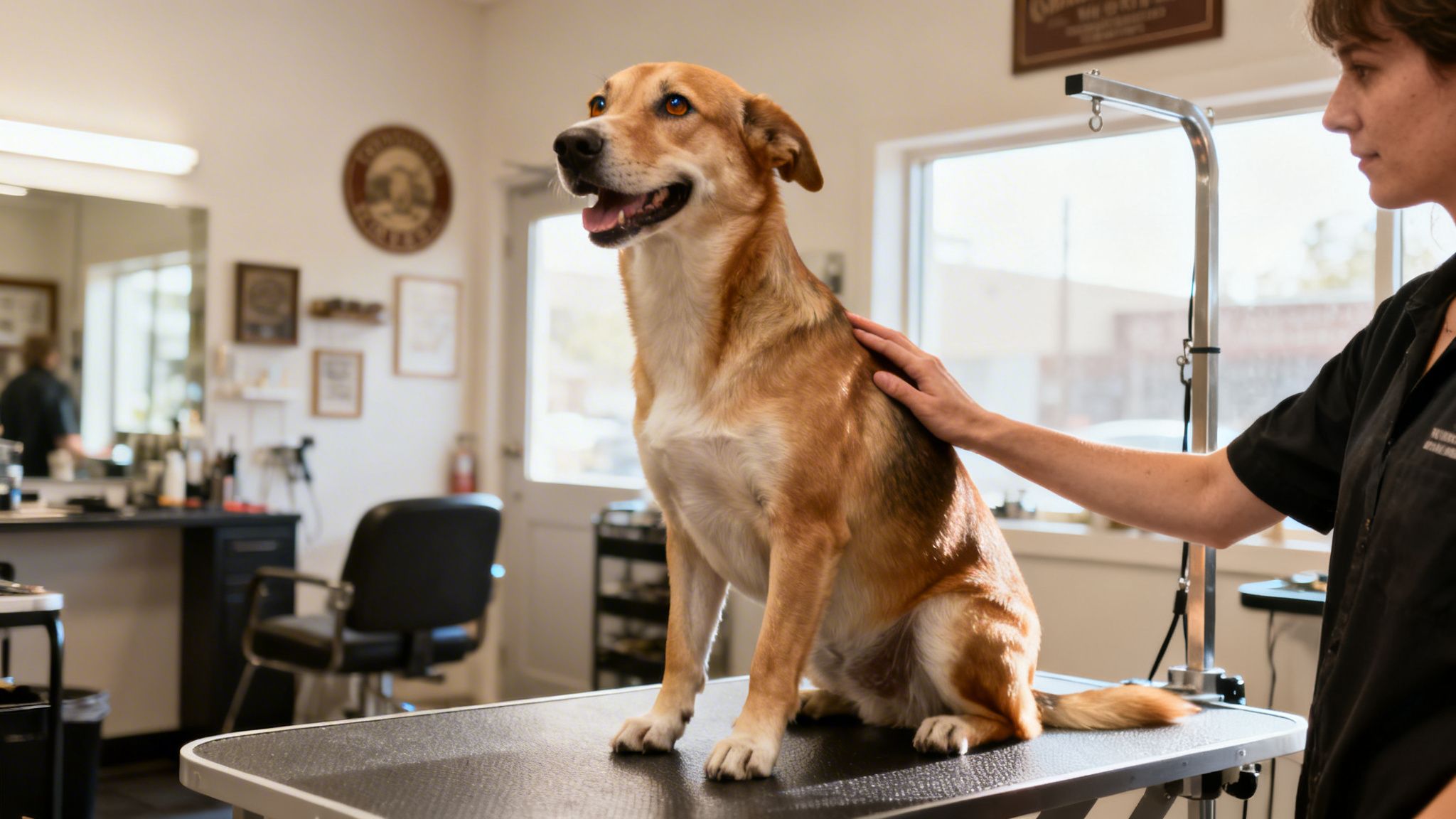
A healthy pet is a happy pet, and we believe that foundation starts with effective parasite control. It’s like building a house—if the foundation isn't solid, everything you build on top is at risk.
This guide is here to give you confidence. We’ll cover how to spot the signs of common parasites, make sense of the different types of dog deworming medicine, and establish a safe treatment schedule. You’ll walk away with practical, actionable insights you can use right away for your pet's seasonal care and daily routines.
Why Internal Health Matters
Here at Glo More Grooming, a veteran-owned grooming studio in El Paso, we get a unique, hands-on perspective on pet health. Our disciplined workflow and premium pet grooming standards mean we see clear as day how a dog’s internal wellness shows on the outside. A dog that’s free from parasites simply looks and feels better, with a shinier coat, brighter eyes, and more energy on the grooming table.
Our commitment to premium pet grooming goes beyond just a great haircut. It's about reinforcing your dog's complete well-being with pride and resilience.
We built our business with a long-term vision for pet care in the El Paso community. That means giving you the knowledge you need, long after your dog has left our table. We want to be your partner in helping your dog live a long, healthy, and happy life.
This is a big part of what makes our independent studio stand apart from large chains like PetSmart or Petco. Our one-on-one appointments allow us to get to know your dog and notice the small things—like subtle changes in their skin or coat—that might point to an underlying issue. We’re proud to serve the El Paso dog grooming community by combining our craft with helpful education.
For instance, during our monthly affordable grooming promo, like our popular “Snip & Style Saturday,” we love to chat with clients about actionable tips for their dogs' upcoming seasonal needs here in our region. This partnership approach is at the heart of who we are.
Ready to take that first step? Let's dive into how you can protect your best friend from these hidden threats. When you're ready, book your pet’s next appointment with Glo More Grooming to experience the difference a dedicated, caring team can make.
Meet the Unwanted Guests: What Parasites Affect Your Dog
To protect your dog, you first need to know what you’re up against. Internal parasites are the invisible thieves of the dog world, silently stealing nutrients and undermining your best friend's health from the inside out. Understanding these common culprits is the first step toward choosing the right dog deworming medicine and building a solid defense.
These aren't just a minor annoyance. Parasites can lead to everything from a dull coat and low energy to severe, life-threatening conditions. It's a threat pet owners are taking more seriously than ever. The global market for dog dewormers, which was USD 744.3 million in 2024, is expected to balloon to USD 1,882.2 million by 2035. This isn't just a statistic; it shows a massive shift in awareness, especially since infection rates in puppies can top 50% without proper care.
The Main Offenders: Intestinal Worms
Your dog can encounter these parasites almost anywhere—from a contaminated patch of grass at a local El Paso park to an accidental swallow of an infected flea. Four key offenders are the primary targets for most deworming treatments.
Roundworms (Toxocara canis): Think spaghetti. These incredibly common worms are a huge issue for puppies, who can get them from their mother before they're even born or through her milk. They set up shop in the intestines, causing that classic "pot-belly" look, poor growth, and diarrhea.
Hookworms (Ancylostoma caninum): Don't let their small size fool you. These tiny worms literally "hook" themselves to the intestinal wall to feed on your dog's blood. A bad infestation can quickly cause anemia, weakness, pale gums, and bloody stool, making them especially dangerous for young or small dogs.
Whipworms (Trichuris vulpis): Named for their distinctive whip-like shape, these parasites burrow into the large intestine. They're notorious for causing chronic, watery diarrhea (sometimes with blood), which can lead to significant weight loss and dehydration. Their eggs are also tough as nails and can survive for years in the arid El Paso soil.
Tapeworms (Dipylidium caninum): These long, flat worms are made of segments that look like tiny grains of rice. The most common way dogs get tapeworms is by swallowing a flea that's carrying the larvae. You might spot these "rice grains" around your dog's tail or in their bedding. While not as dangerous as hookworms, they still steal nutrients. The best defense here involves pest control, so check out our guide on fleas and ticks on dogs for essential seasonal care tips.
A Note on Heartworm
It’s absolutely critical to know that intestinal worms and heartworms are not the same thing. Heartworm (Dirofilaria immitis) is a completely different beast, transmitted by mosquitoes and taking up residence in the heart, lungs, and major blood vessels.
Heartworm disease is a separate and very serious condition that requires its own specific preventative medication. Standard dog deworming medicine for intestinal parasites will not protect your dog from heartworms.
Here at Glo More Grooming, we see firsthand the difference comprehensive parasite control makes. A well-protected dog has healthier skin, a fuller coat, and an unmistakable spark of energy. That’s why we always emphasize a two-pronged strategy: regular deworming for intestinal parasites and a separate, consistent preventative for heartworm, all guided by your veterinarian. This is a core part of our premium pet grooming philosophy.
Choosing the Right Dog Deworming Medicine
Picking a dewormer for your dog can feel overwhelming, with rows of boxes all promising the same thing. But it's not a one-size-fits-all situation. Using the wrong dewormer is like using a fly swatter to fix a leaky faucet—you need the right tool for the specific job. Choosing the right one is fundamental to your dog's health.
As groomers, we're focused on your dog's coat and skin, but we know that true health starts on the inside. A dog battling internal parasites won't have that vibrant, healthy glow we all love to see. That’s why we believe in empowering owners with clear, persuasive information to help them make the best choices for their four-legged family members.
Understanding Active Ingredients
When you look at a deworming product, ignore the flashy packaging for a second and find the active ingredients. These are the workhorses that actually fight the parasites. Each ingredient is a specialist, targeting specific types of worms.
Let's break down the most common ones you'll see:
- Pyrantel Pamoate: This is a go-to for many vets, especially for young puppies. It’s a very safe and effective ingredient that targets roundworms and hookworms. It works by paralyzing the worms, which then pass out of your dog’s system during a normal bathroom break.
- Praziquantel: If tapeworms are the problem, this is the ingredient you need. It essentially breaks down the tapeworm's outer defenses, causing it to be digested and eliminated.
- Fenbendazole: Think of this as a multi-tool. It's a broad-spectrum dewormer that gets rid of roundworms, hookworms, whipworms, and even some tapeworms. To be fully effective, it's usually given over a few days in a row.
- Milbemycin Oxime: You'll often find this powerhouse in monthly heartworm preventatives. It’s a great multitasker, providing protection against roundworms, hookworms, and whipworms in addition to preventing heartworm disease.
This map helps visualize the common culprits these medicines are designed to fight.
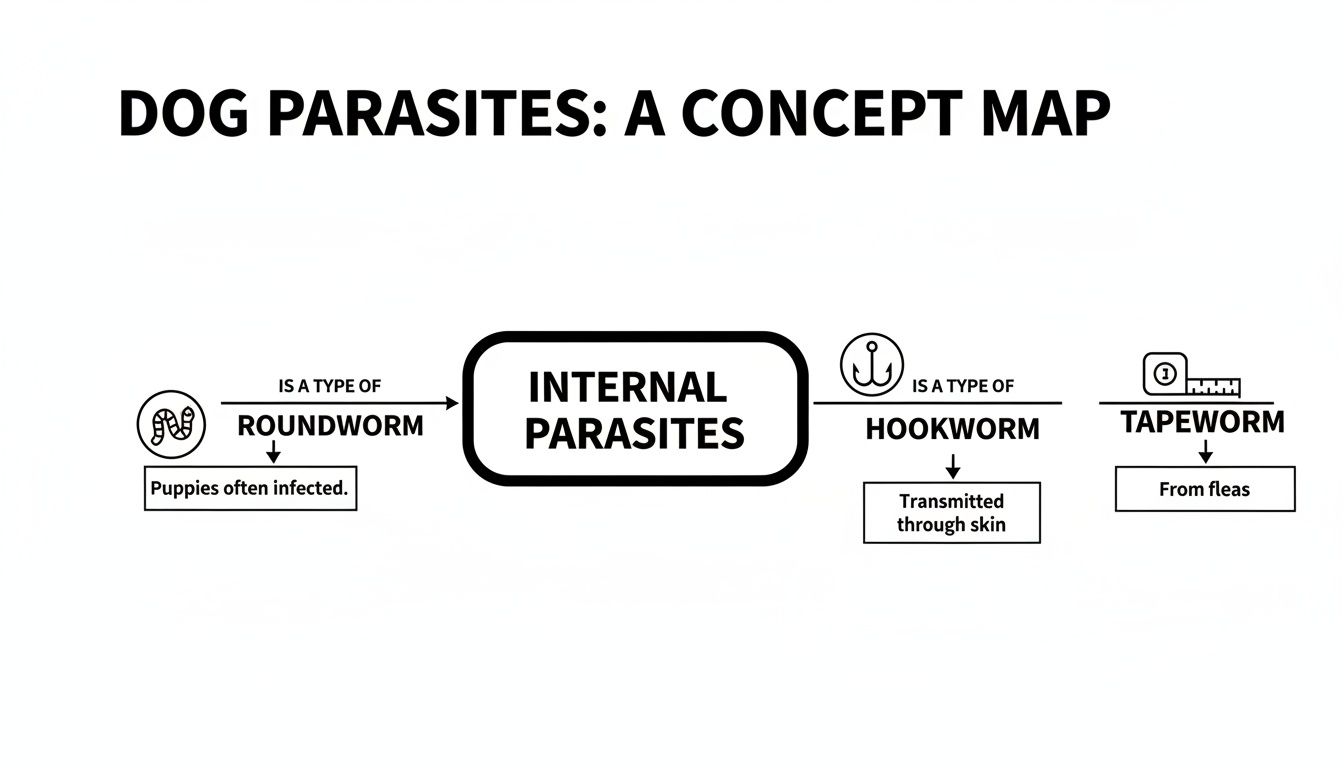
Seeing them laid out like this makes it clear: different worms require different battle plans.
Over-the-Counter vs. Prescription Medication
One of the biggest forks in the road for owners is whether to buy a dewormer at the store or get a prescription from the vet. Both have their place, but knowing when to choose which is key.
Over-the-Counter (OTC) Dewormers:
- Pros: They are easy to find at pet stores and online, offering a quick solution for common worms like roundworms and tapeworms.
- Cons: They are not a silver bullet. OTC products may not cover every type of parasite (like whipworms) and shouldn't be used to self-diagnose a serious problem.
Prescription Dewormers:
- Pros: Your vet can run a simple fecal test to know exactly what parasite you're dealing with and prescribe the most effective drug. This targeted approach is crucial. Many prescription heartworm preventatives also handle intestinal worms, giving you broad protection with one monthly dose.
- Cons: They require a vet visit, but the peace of mind and professional guidance are well worth it.
For routine prevention against the usual suspects, an OTC product might do the trick. But for a confirmed infection or for comprehensive, year-round protection, a prescription from your veterinarian is almost always the better, safer path.
It’s also critical to know that most dewormers targeting intestinal parasites do not protect against heartworm. That requires a specific preventative, which we explain in our guide to heartworm meds for dogs.
Common Dog Deworming Medicines at a Glance
To help you put all this information together, we've created a simple chart that breaks down the most common deworming ingredients. Think of it as a quick reference guide to have in your back pocket.
| Active Ingredient | Primary Parasites Targeted | Common Forms |
|---|---|---|
| Pyrantel Pamoate | Roundworms, Hookworms | Liquid, Chewable Tablet |
| Praziquantel | Tapeworms | Tablet, Injection |
| Fenbendazole | Roundworms, Hookworms, Whipworms, Giardia | Granules, Liquid |
| Milbemycin Oxime | Heartworms, Roundworms, Hookworms, Whipworms | Chewable Tablet |
Ultimately, knowing what’s inside that box of dog deworming medicine gives you the power to protect your best friend effectively. By understanding these key ingredients and working with your vet, you can create a deworming plan that keeps your dog healthy, happy, and parasite-free.
Creating an Effective Deworming Schedule
Think of deworming less like a one-time fix and more like a consistent wellness plan for your dog's insides. You can pick the best dog deworming medicine on the shelf, but if the timing is off, you’re always playing catch-up. A smart, consistent schedule is your best defense against pesky parasite problems.
This isn't about guessing or dosing whenever you remember. It's a strategy that should be tailored to your dog’s specific age and lifestyle. It’s the same disciplined approach we take here at Glo More Grooming. Our premium grooming standards and detailed workflow aren't just for a great haircut—they ensure we have a consistent look at your pet's health over time.
The Puppy Deworming Protocol
Puppies are in a league of their own. Their immune systems are brand new, making them incredibly vulnerable to worms. In fact, many puppies are born with roundworms passed down from their mother or get them through her milk. Because of this, a frequent and aggressive deworming schedule is absolutely critical for the little ones.
Most veterinarians follow a standard protocol designed to wipe out worms as they mature. An actionable puppy deworming routine looks like this:
- 2 and 4 Weeks Old: The first doses to get a jump on any worms present at birth.
- 6 and 8 Weeks Old: Follow-up doses that catch parasites that have matured since the last round.
- Monthly Until 6 Months Old: Regular treatments to provide ongoing protection as their immune system develops.
This proactive approach stops parasites before they can cause serious harm, like malnutrition or stunted growth. It’s always better to prevent a problem than to have to fix one.
Building a Schedule for Adult Dogs
Once your dog graduates from puppyhood, you can usually scale back the deworming frequency. But it’s not one-size-fits-all. A quiet apartment dog has a very different risk profile than an adventurous pup who loves visiting El Paso dog grooming salons, parks, and hiking trails.
For most adult dogs, deworming every 3 to 6 months is a solid baseline. However, you and your vet might decide on a more frequent schedule if your dog:
- Is a social butterfly at dog parks, daycare, or boarding kennels.
- Loves to hunt or has a habit of eating things they find on the ground.
- Lives with young children or anyone who is immunocompromised, as some parasites are zoonotic (can pass to humans).
This need for consistency is a major focus in the pet wellness world. In 2026, the pet dewormer market saw dogs making up a massive 37.6% share. North America was the leader with a 35.2% share of the market, driven largely by top vets recommending that 3-6 month schedule. Sticking to a schedule like this can cut down on parasite-related vet visits by up to 40%, saving you money and saving your dog from discomfort.
As a veteran-owned grooming business, we built our foundation on discipline and resilience. We see your dog’s health through that same lens. A consistent deworming schedule is a small, disciplined action that builds a resilient, healthy foundation for years to come.
The Groomer's Role in Your Dog's Health Schedule
While we’re groomers, not veterinarians, our hands-on role gives us a unique perspective on your dog’s well-being. Unlike a big-box store where pets are just a number, our one-on-one model means we get to know your dog and can spot subtle changes over time. We might be the first to notice if a coat looks dull, if energy levels are low, or if the skin seems irritated—all potential clues of an internal parasite problem.
This is where a partnership with a dedicated groomer really shines. We can give you a heads-up when something seems off, letting you know it might be time to check in with your vet about your dog’s deworming or vaccination needs. To learn more about how all these elements of preventative care work together, check out our comprehensive guide on your dog's vaccine schedule.
Ready to team up with a groomer who sees the bigger picture of your dog's health? Book your next appointment at Glo More Grooming, and let’s work together for your pet’s well-being.
Giving Deworming Medicine: Safety, Side Effects, and When to Worry

Giving your dog any medicine calls for a bit of care and attention. Your dog’s safety is always number one, and while modern dog deworming medicine is very safe, how you administer it matters. It’s not just about getting rid of worms, but doing it without causing your pup unnecessary stress or side effects.
This is definitely not a "more is better" situation. Getting the dose right is everything.
Why Accurate Dosing is Non-Negotiable
The single most important rule is to dose based on your dog's current, accurate weight. A few pounds might not seem like much, but it can make a huge difference in how effective—and safe—the medication is, especially for smaller dogs. Always follow the dosage instructions on the package or from your vet to the letter.
As a veteran-owned grooming business, we are all about discipline and doing things the right way. We bring that same mindset to the advice we give our clients. Just like we wouldn't use the wrong blade on a sensitive coat, you can’t guess the dose for a dewormer. A precise, disciplined workflow is what keeps your dog safe.
Common, Mild Side Effects (What to Expect)
So you've given the medicine correctly. What happens next? It’s pretty common for dogs to have some minor, temporary side effects as the dewormer starts working. The most frequent thing we see is a little tummy trouble. This happens because the dying parasites can irritate the lining of your dog’s intestines.
Don't panic if you see any of the following for a day or so:
- A bit of vomiting or diarrhea
- Not being very interested in their food
- Acting a little tired or sluggish
These signs usually clear up on their own within 24-48 hours. You might also notice dead worms in your dog’s poop for 2-3 days after treatment. It can be a little gross, but it’s actually a great sign that the medicine is doing its job!
When to Pick Up the Phone and Call Your Vet
Most of the time, deworming is a smooth process. But you know your dog best, and it's important to be watchful and trust your gut.
While a little upset stomach can be normal, you should never hesitate to call your vet if something feels off. Your peace of mind is important, and it's always better to be safe.
Contact your veterinarian right away if you notice any of these more serious signs:
- Vomiting or diarrhea that is severe or won't stop.
- Extreme tiredness, weakness, or being unresponsive.
- Any signs of an allergic reaction, such as hives, a swollen face, or trouble breathing.
- Neurological symptoms like stumbling, seeming disoriented, or having a seizure.
These reactions are rare, but they are emergencies that need immediate medical attention. At Glo More Grooming, our premium pet grooming service is built on earning the trust of El Paso pet parents. We want to empower you with real, practical knowledge for every part of your dog's care. By staying informed, you can make sure your dog’s treatment is both safe and successful.
Ready to partner with a groomer who looks at the whole picture of your pet’s health? Contact Glo More Grooming to book an appointment and see what our commitment to excellence is all about.
Your Partners in Pet Health: Groomers and Vets
Keeping your dog truly healthy isn't a one-person job—it really takes a team. You're the one in charge, of course, but your veterinarian and your groomer are two of the most important players on that team. Think of it as a safety net for your dog's health, where we all work together to catch potential problems early.
Your groomer is often the first to notice when something’s not quite right. Because we spend so much hands-on time with your dog, we’re in a unique position to spot the small, subtle signs of trouble you might miss at home.
The Groomer's Eye for Detail
A good way to think of us is as a detail-oriented inspector for your dog’s skin and coat. Sometimes, an internal issue like a parasite infection that requires dog deworming medicine will first show itself on the outside.
We're trained to look for these kinds of red flags:
- A coat that’s suddenly dull, dry, or brittle.
- New patches of skin irritation or redness.
- A surprising amount of shedding, especially when it's not typical for our El Paso seasons.
- Visible evidence of pests, like flea dirt, which is a major warning sign for tapeworms.
- Behaviors like "scooting," which could mean anything from blocked anal glands to tapeworms.
Here at Glo More Grooming, our one-on-one appointments and disciplined workflow mean we actually get to know your pet. This is a world away from the high-volume, assembly-line model you see at big-box chains like PetSmart or Petco. That personal relationship means we notice when your dog’s behavior or condition changes, which is a key part of providing top-tier care.
A Team Approach to El Paso Pet Care
We get it—life in El Paso gets busy. Between work, family, and trying to schedule vet visits, things can get overwhelming. As a veteran-owned grooming studio, we run on discipline, clear communication, and a long-term vision that goes beyond the grooming table.
We don't just see ourselves as dog stylists; we see ourselves as your partners in your pet’s well-being. We help bridge the gap between grooming appointments and vet check-ups so that nothing important gets overlooked.
This is exactly why we created our Concierge Service. For clients who could use an extra hand, we can help coordinate directly with your vet to pass along our observations. It’s a simple way to make sure your dog gets complete care and you get peace of mind. This dedication to teamwork is what makes our El Paso dog grooming service different.
Start building a stronger health team for your dog today. When you book an appointment with us, you aren't just getting a trim—you're getting another set of expert eyes on your pet. Be sure to ask about our monthly affordable grooming promo, like our “Snip & Style Saturday,” and let us provide the attentive care that supports a long, healthy life.
Don't wait for a problem to pop up. Book your appointment with Glo More Grooming now and let us be your trusted partner in your dog's health.
Your Dog Deworming Questions, Answered
It's completely normal to have questions about deworming. To help you navigate your dog's health with confidence, we've gathered some of the most common ones we hear from fellow owners at our El Paso dog grooming studio.
Can I Deworm My Dog Without Going to the Vet?
While you can find dewormers on store shelves, it's a bit of a guessing game. A vet can run a quick fecal test to see exactly which parasites, if any, are causing trouble. This way, they can prescribe the right medication for that specific problem.
Think of it like our approach to premium pet grooming—we always use the right tool for the job. A targeted treatment from your vet is always the safest and most direct path to getting your dog healthy again.
How Do I Know if the Deworming Medicine Is Working?
It can be a little jarring, but one of the most obvious signs the dog deworming medicine is effective is seeing worms in your dog's stool a day or two after treatment. That means the parasites are being flushed out.
Over the next few weeks, you should also notice your dog feeling much better—their appetite might return, they'll have more energy, and their coat will start to look healthier. This is an actionable insight for every pet owner: watch for positive changes as proof the treatment is working. If you're not seeing these improvements, it’s time to check back in with your vet.
Are Natural or Homemade Dewormers Safe?
We hear a lot about "natural" remedies like pumpkin seeds or carrots, but the truth is, they just aren't strong enough to wipe out a real parasite infestation. Relying on them can give you a false sense of security while the problem gets worse.
When it comes to your dog's internal health, it's best to stick with a medication that's been tested and approved by veterinarians for safety and effectiveness.
As a veteran-owned grooming business, we believe in using methods that are proven to work. We wouldn't take shortcuts with your dog's health, and we always stand by what the science and veterinary professionals recommend with pride and resilience.
What Happens if I Miss a Deworming Dose?
Life happens! If you realize you've missed a dose, just give it as soon as you remember. Then, get back on the regular schedule you discussed with your vet.
Try not to make it a habit, as a missed dose can leave a small window where your dog is unprotected. If you're ever unsure about the timing, a quick call to your vet’s office can clear things up. Consistency is what keeps them protected long-term.
At Glo More Grooming, we see ourselves as your partners in your dog's overall wellness. Our one-on-one appointments and monthly affordable grooming promo events, like Snip & Style Saturday, are all about giving your pet the focused, expert care they deserve. We stand apart from the chains by offering a personalized, veteran-led commitment to your pet’s lifelong health.
Reserve your promo slot or book an appointment with Glo More Grooming today and let us show you what makes our care different.