

If your dog ate a dryer sheet, act now: don't induce vomiting, remove any remaining pieces from the mouth, and call your vet or a pet poison hotline immediately. Dryer sheets contain cationic detergents that can be corrosive and highly toxic, and they can also create a dangerous blockage if swallowed.
You're probably reading this with a half-open laundry room door, a ripped sheet on the floor, and a dog looking completely unbothered. That's usually how this happens. One second it's a normal day, the next you're trying to decide whether this is a minor mess or a real emergency.
Treat it like an emergency until a veterinary professional tells you otherwise. That's the safest call every time. A dog that seems fine right now can still develop mouth burns, stomach irritation, vomiting, or signs of an obstruction later.
Good pet care starts with fast decisions and disciplined habits. In El Paso, where busy households juggle work, kids, travel, and pet care, small household products get overlooked. This one shouldn't.
A Moment of Panic Your Guide to What Happens Next
The first job is simple. Get your dog away from the laundry area and call for help. Don't wait to “see how they do” before making that call.
A dryer sheet isn't just paper-like fluff. It's a household chemical product with residue concentrated on a thin, easy-to-swallow sheet. Dogs chew it fast, swallow pieces unevenly, and can end up with both chemical exposure and a physical problem in the gut.
What to do in the next few minutes
Start here:
- Take away any remaining dryer sheets so your dog can't eat more.
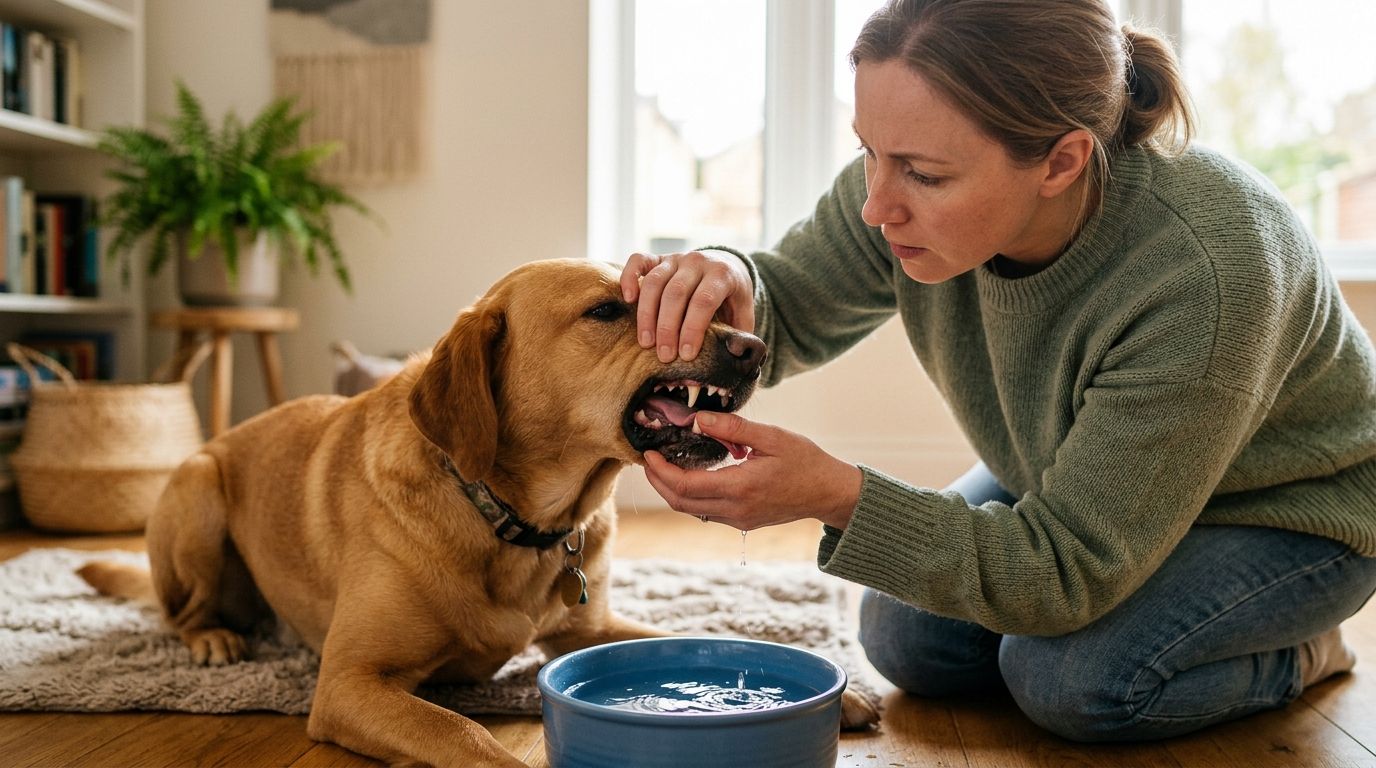
- Open your dog's mouth carefully and remove visible pieces if you can do it safely.
- Call your veterinarian or a pet poison hotline immediately.
- Keep the package or take a photo of it so the veterinary team can identify the product.
- Watch your dog closely for drooling, gulping, vomiting, coughing, or distress while you're getting instructions.
Fast, calm action matters more than perfect action.
If your dog is struggling to breathe, collapsing, or repeatedly gagging, skip the wait and head to an emergency veterinarian now.
Why I take this seriously
As a veterinary-minded grooming professional, I don't believe in downplaying preventable risks. Dogs get into things. That's normal. What matters is how quickly you respond and how disciplined your household routines are afterward.
That same discipline shows up in every part of strong pet care. It's why premium pet care should never feel chaotic, rushed, or careless. El Paso dog grooming clients who value structure usually bring that same mindset home, and their dogs are safer for it.
Immediate First Aid Steps for Your Dog
Here's the practical checklist I'd want any owner to follow if a dog ate a dryer sheet.
Start with safety and control
Get your dog into a quiet space. If they're pacing, excited, or trying to grab more laundry, you need to slow the scene down first.
Then do a quick check:
- Mouth check: Look for sheet fragments stuck to the tongue, gums, roof of the mouth, or back teeth.
- Breathing check: Listen for wheezing, choking sounds, or repeated gagging.
- Behavior check: Notice whether your dog seems painful, frantic, drooly, or unusually flat.
If your dog will let you, gently remove visible pieces. Don't dig deep into the throat. If you can't safely reach it, stop and let the vet handle it.
What your vet needs to know
Before you call, or while you're calling, gather useful details:
- What product it was: Fabric softener sheet, brand if known, used or unused.
- How much may be missing: One sheet, part of a sheet, or unknown.
- When it happened: Even an estimate helps.
- What your dog weighs and how they're acting: Calm, drooling, vomiting, lethargic, gagging.
If you've dealt with other household exposures before, you already know the pattern. The details matter. That's also true with related toxin concerns like whether cough drops are bad for dogs. Product ingredients change treatment decisions.
Do not induce vomiting at home. Veterinary experts, including Dr. Klein cited in poison control guidance, say it's never recommended without direct veterinary supervision or consultation with a certified Pet Poison Hotline representative because it can worsen corrosive injury to the esophagus and stomach lining, as noted by the AKC guidance on a dog eating a dryer sheet.
What not to do
Don't try home remedies. Don't offer oil, bread, milk, or “something bulky” to push it through. Don't assume a used dryer sheet is harmless.
Those choices waste time and can make your dog harder to assess. Your veterinarian may recommend monitoring, an exam, imaging, or supportive care depending on the amount eaten, your dog's size, and current symptoms.
A calm response beats a dramatic one. But a calm response still moves fast.
Understanding the Dangers of Dryer Sheets
A dryer sheet creates two separate risks. Owners often focus on the wrong one and miss the full picture.
Chemical injury from cationic detergents
The first danger is the residue itself. According to the Merck Veterinary Manual, cationic detergents in dryer sheets are corrosive and highly toxic, and they can cause severe outcomes ranging from ulceration of the mouth and esophagus to pulmonary edema and kidney failure, as summarized in this Merck-based veterinary toxicology discussion.
That matters because dogs don't have to eat a giant amount to get hurt. The material sits directly on sensitive tissues in the mouth, throat, stomach, and beyond. A dog may chew, swallow, and then start drooling or gulping because the chemical residue is already irritating tissue.
Physical blockage in the digestive tract
The second danger is mechanical. A dryer sheet doesn't digest well. It can wad up, pass unevenly, or combine with other stomach contents and create a gastrointestinal obstruction.
That risk changes with the dog in front of you. A small dog that swallows a large piece has less room for error. A dog with a history of eating socks, toys, or mulch already has a bad track record for turning a poor choice into a surgical problem.
Here's the difference in plain terms:
| Risk | What it does | Why it matters |
|---|---|---|
| Chemical toxicity | Burns and irritates tissues | Can affect the mouth, esophagus, stomach, lungs, and kidneys |
| Blockage | Gets stuck in the digestive tract | Can stop food and fluid movement and require urgent treatment |
If your dog also gets into medications, don't treat these incidents as unrelated bad luck. They often reflect the same home-access problem. That's why pet owners dealing with toxin risks should also understand issues like dextromethorphan for dogs, because common household products can become emergencies fast.
A used dryer sheet is still a toxin exposure. “Used” does not mean “safe.”
Professional pet care standards matter outside the salon. People hear “premium” and think it only means a nicer haircut. I disagree. Premium pet grooming should reflect a broader safety mindset. Clean tools, careful handling, product awareness, and disciplined workflow all come from the same core habit: paying attention before a problem grows teeth.
Symptoms to Watch For and When to Call the Vet
After the first call, your next job is observation. Don't stare at your dog in panic. Watch with purpose.
In the first hours
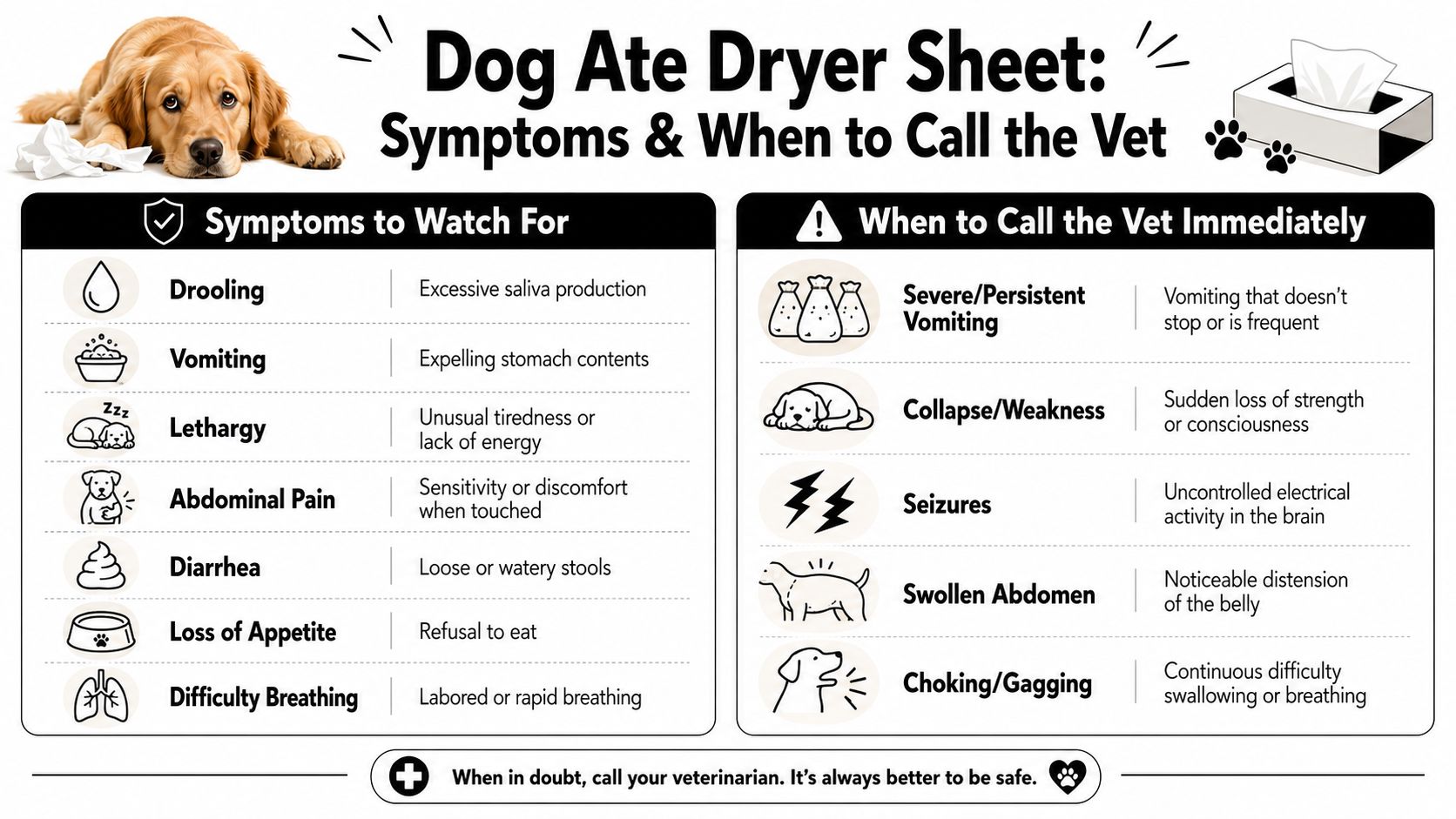
Early signs often come from irritation in the mouth, throat, or stomach. Historical poison control guidance notes signs such as excessive salivation, gulping, drooling, vomiting, sometimes with blood, pain, and fever. Those signs mean the exposure is active. They are not something to “sleep off.”
Watch for:
- Drooling or thick saliva: Often one of the earliest signs
- Lip smacking or gulping: Dogs do this when the mouth or throat feels wrong
- Vomiting: Once or repeatedly
- Mouth pain: Pawing at the face, refusing food, flinching when touched
- Restlessness or hiding: Pain can look quiet, not dramatic
Over the next day or two
Blockage concerns may show up later. That's why a dog can seem improved and still need prompt re-evaluation.
Pay attention to this shift:
- Poisoning-type signs tend to show up as drooling, mouth pain, vomiting, low appetite, and discomfort.
- Blockage-type signs often include repeated vomiting, abdominal pain, straining, bloating, or failure to pass stool normally.
If your cat or dog has ever shown unusual oral distress, you already know how fast foaming and drooling can escalate. This guide on cat foaming at the mouth covers a different species, but the same lesson applies: visible oral symptoms deserve attention, not guesswork.
Call your vet again if symptoms appear later, even if the first few hours seemed quiet.
Go in immediately for these red flags
Use this rule. If your dog is getting worse, you stop monitoring and start moving.
- Persistent vomiting
- Blood in vomit
- Swollen or painful abdomen
- Difficulty breathing
- Collapse or marked weakness
- Continuous gagging or choking
- Refusal to eat combined with lethargy
- Trouble passing stool
Most owners regret waiting longer. Almost nobody regrets calling too soon.
Prevention A Safer Home and a Cleaner Coat
The best response to a dryer sheet emergency is making sure there isn't a second one.
Tighten the laundry routine
Most household pet poison incidents happen because a product was easy to reach for ten seconds. That's all it takes.
Build a sharper system:
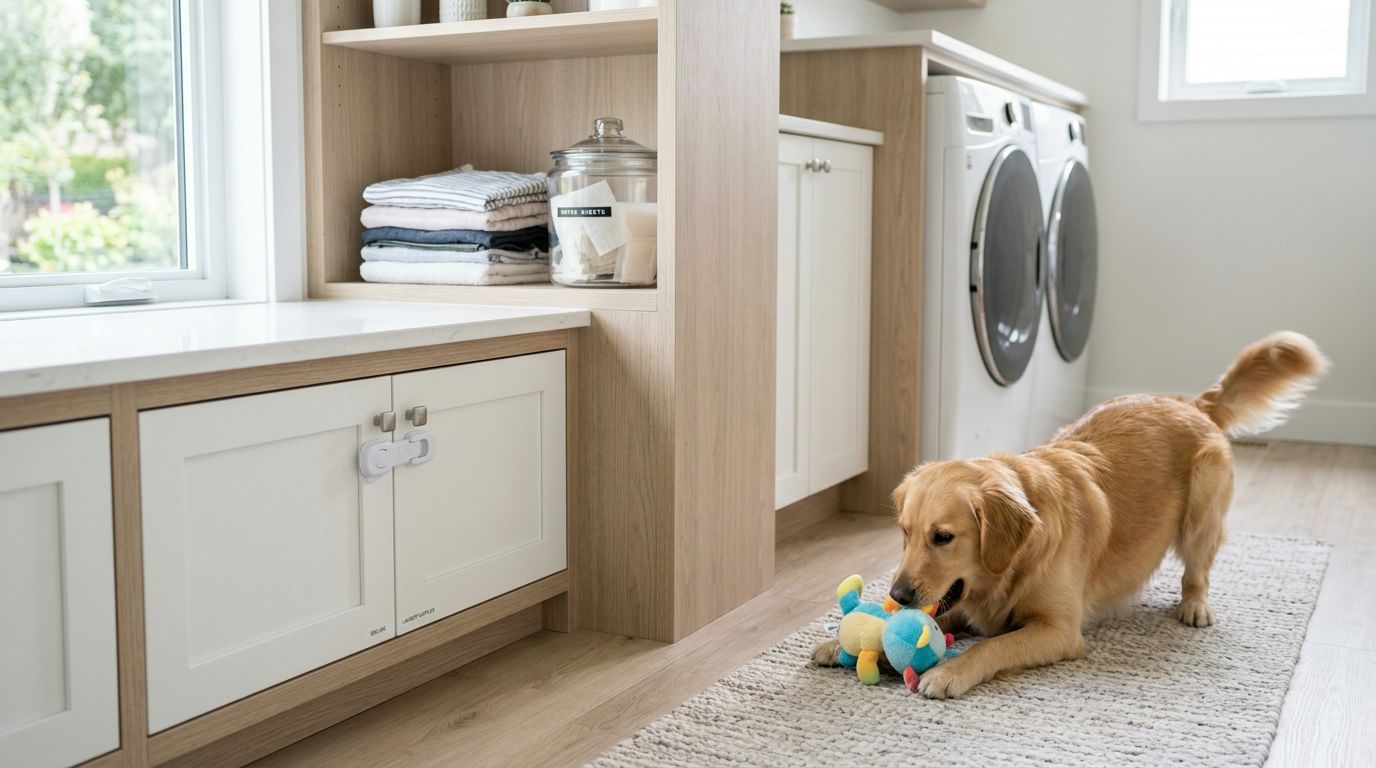
- Store sheets high and closed: Not in an open basket, not on top of the dryer.
- Check the floor after every load: One dropped sheet is enough.
- Empty lint traps and trash promptly: Curious dogs treat laundry debris like treasure.
- Use a dog-free zone during laundry: Especially for puppies and scavengers.
Disciplined workflow matters at home just as much as it does in professional pet care. A calm environment doesn't happen by accident. It comes from limits, routines, and clean handling.
Coat health matters too
Dryer sheet residue and other household product traces can end up on bedding, blankets, and surfaces your dog rubs against. Sensitive dogs can react to that exposure with skin irritation or general discomfort.
That's one reason I push regular coat care and not just occasional cleanup. Brushing, bathing, and skin checks help you catch irritation earlier. Seasonal care matters too. Dry weather, heavy bedding use, and indoor time can all increase contact with laundry products and residue.
For owners who want El Paso dog grooming with calmer handling, better hygiene habits, and premium pet grooming standards, this point matters. According to the Glo More Grooming approach to one-on-one care, the number of dogs on site is intentionally limited to provide a calm experience, efficient booking, and personalized care. That's the opposite of high-throughput handling.
Better grooming standards start with the same principle as poison prevention: fewer preventable mistakes.
If you want practical routines, keep them simple. Wash pet bedding carefully, store laundry products securely, check paws and coat after household cleaning days, and don't ignore low-grade itching just because it isn't dramatic.
Your Partner in Pet Wellness in El Paso
Pet care shouldn't feel fragmented. The vet handles one issue, the groomer handles another, and the owner is left stitching the whole story together. Good care works better when someone sees the full picture.
That matters in El Paso, where many pet owners need more than a quick appointment and a generic handoff. They need reliability, cleaner standards, practical support, and people who understand that a dog's wellness includes coat health, household safety, transport planning, and veterinary follow-through.
Why independent care stands apart
Big chains have scale. They don't usually have intimacy. That difference shows up when your dog is anxious, medically complex, elderly, recovering from a scare, or is better suited to one-on-one handling.
As a veteran-owned grooming business, Glo More Grooming backs that standard with a long-term view. Its Concierge Service offers personalized veterinary advocacy and coordinated travel, a level of white-glove support not found at chain groomers like PetSmart or Petco.
Here's what that kind of model signals to me:
- Clear standards: Fewer dogs on site means less chaos.
- Better communication: Owners get more individualized attention.
- Stronger continuity: Care isn't reduced to a rushed transaction.
- Real community presence: Local services can answer local needs.
Local care with real substance
El Paso pet families also need compassion, not just convenience. That's why details matter. A monthly affordable grooming promo like Snip & Style Saturday gives owners a practical way to keep up with coat care, and the $55 full-groom promotion for all sizes makes premium maintenance more accessible. Programs like Petals for Paws show a different kind of strength. They acknowledge grief and serve the community with respect.

That's the difference between a service provider and a true pet care partner. One processes appointments. The other builds trust, protects routines, and supports families through the ordinary and the hard moments.
If your dog ate a dryer sheet today, handle the emergency first. After that, tighten your home systems and choose care partners who operate with pride, discipline, and consistency.
Need support from a team that treats pet safety and coat care with the same discipline? Glo More Grooming offers premium pet grooming in El Paso with one-on-one handling, veteran-owned values, a calm workflow, and thoughtful options like Snip & Style Saturday. Book now, reserve your affordable grooming promo slot, or reach out for concierge-level support that goes beyond the basics.