

A dog starts coughing late at night. You open the medicine cabinet, see a familiar cough product, and wonder if the same ingredient that helps people might calm your dog down too. That moment is common, and it's exactly where many good pet owners get pulled toward a risky decision.
The hard part is that dextromethorphan for dogs isn't a simple yes-or-no topic. A veterinarian may use it in selected cases, but that doesn't mean an over-the-counter human product is safe to give at home. The label, the other ingredients, your dog's size, your dog's current medications, and the actual cause of the cough all matter.
Pet owners often run into similar confusion with other household products, which is why careful, species-specific guidance matters so much. If you've ever wondered about other human items around the house, this safety article on whether you can use Visine on dogs shows how often a familiar product can become the wrong choice for pets.
A Word of Caution for Concerned Pet Owners
A coughing dog can make anyone anxious. Some dogs sound like they have a dry, hacking cough. Others gag after the cough, pace, or seem restless. In other homes, the emergency starts differently. A dog gets into a purse, chews a bottle, and now you're left trying to read a torn label and figure out what was swallowed.
That's where calm matters most.
Veterinary medicine treats cough as a symptom, not a diagnosis. A mild throat irritation, kennel cough, chronic bronchitis, collapsing trachea, heart disease, airway inflammation, or something lodged in the throat can all look similar to an owner at home. If you give the wrong product too quickly, you can blur the picture your veterinarian needs to see and, in some cases, make the dog sicker.
Practical rule: If your dog is coughing and you haven't been told by your veterinarian to use a specific medication, pause before giving anything from the human medicine cabinet.
Owners also get tripped up because dextromethorphan is a real drug with real veterinary mentions. That can sound reassuring. But “used in dogs” is not the same as “safe in any cough syrup” or “a good first choice for every dog with a cough.”
A safer mindset is simple. Treat coughing, accidental ingestion, and combination cold medicines as veterinary issues first. Home treatment comes second, and only when your veterinarian has reviewed the exact product and your dog's history.
What Is Dextromethorphan and Where Is It Found
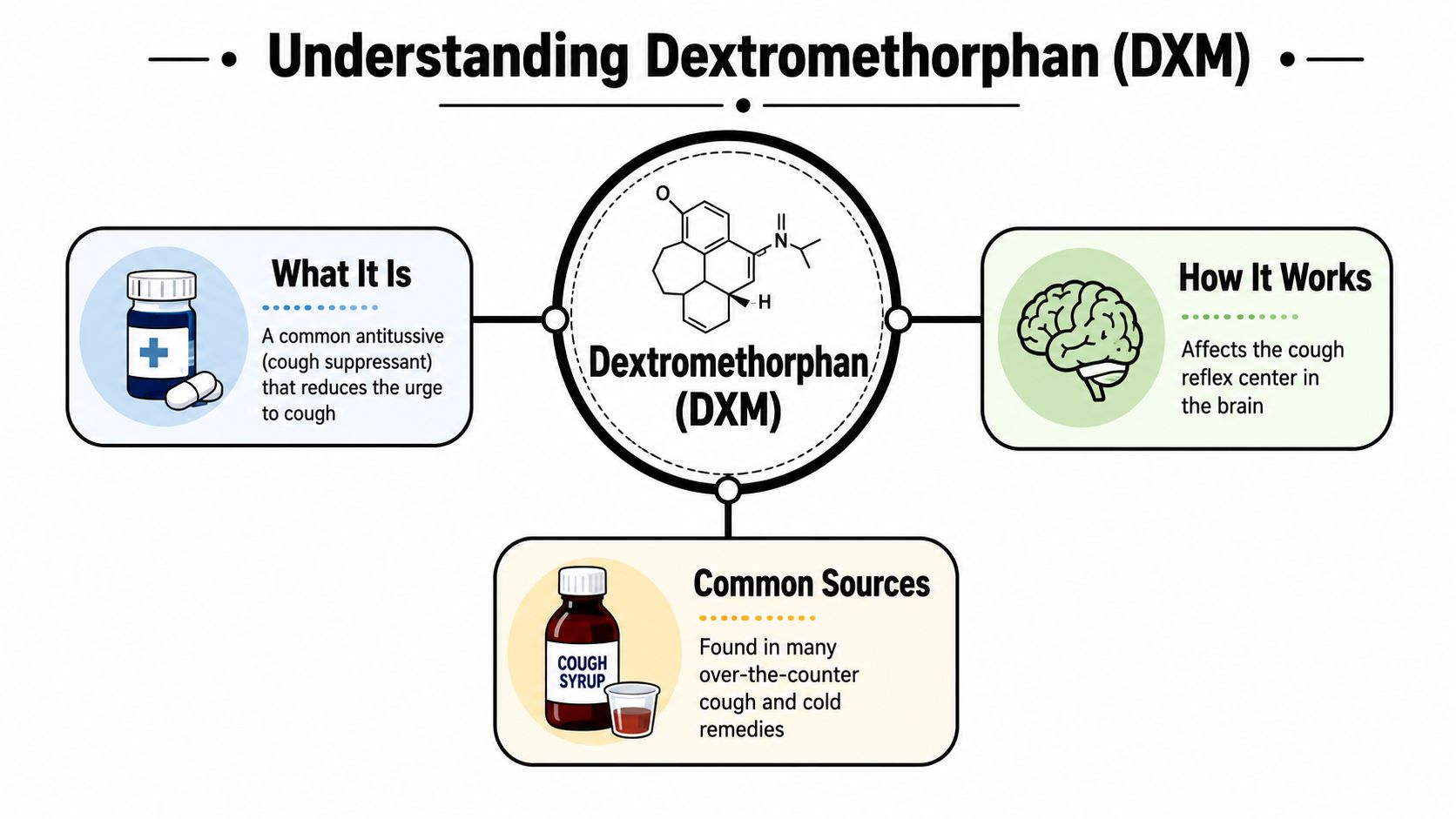
Dextromethorphan, often shortened to DXM, is a cough suppressant. In plain language, it acts on the cough reflex in the brain and can reduce the urge to cough. That basic idea is why so many owners notice it on store shelves and assume it might be appropriate for a dog.
How to spot it on a label
The fastest way to identify it is to ignore the front of the package and read the active ingredients panel. Brand names can be misleading because the same brand may sell several formulas. One version may contain dextromethorphan alone, while another contains dextromethorphan plus a decongestant, pain reliever, or sweetener.
Look for names such as:
- Dextromethorphan HBr on the active ingredient list
- Cough syrup products marketed for dry cough
- Cold and flu formulas that combine cough suppression with other symptom relief
- Liquids, gel caps, and tablets, since DXM can appear in several product types
Many owners recognize names like Robitussin DM or Mucinex DM, but the safe takeaway isn't to rely on a brand memory. It's to read the exact package in your hand. “DM” often signals dextromethorphan, but the full ingredient list still matters because one added ingredient can change the risk completely.
Why owners get confused
The confusion usually comes from two assumptions.
First, people hear “cough suppressant” and think every cough should be suppressed. That isn't true. Some coughs are protective, and some point to problems that need diagnosis rather than suppression.
Second, owners focus on the one ingredient they've heard of and miss the rest of the label. A bottle may contain dextromethorphan, but it may also contain ingredients that are more dangerous to dogs than DXM itself.
If you're holding a product and asking, “Does this count as dextromethorphan for dogs?” the better question is, “What are all the active and inactive ingredients, and has my veterinarian approved this exact formula?”
That distinction prevents a lot of emergencies.
Veterinary Use and Efficacy in Dogs
Veterinarians do sometimes use dextromethorphan in dogs, but they use it off-label. That means it isn't an approved, standard canine drug for routine home use. It also means the decision is clinical, case-specific, and usually much narrower than internet advice makes it sound.
A veterinary review in Today's Veterinary Practice notes that dextromethorphan is used for cough suppression and sometimes compulsive behavior, but its usefulness in dogs is limited because of poor bioavailability and little scientific proof of efficacy. That same review says reported canine dosing in the literature is typically 0.50 to 1 mg/kg every 8 to 12 hours and notes that controlled prospective studies are sparse. It also points out that in dogs with chronic bronchitis, maropitant reduced coughing at 2 mg/kg every 48 hours for 14 days, which helps explain why veterinarians often choose other options instead of relying on dextromethorphan alone, as summarized in this Today's Veterinary Practice review on antitussive medications for dogs and cats.
Why it often isn't the first choice
The key term owners usually haven't heard before is bioavailability. In practical terms, it means how much of the drug gets absorbed and becomes available to do its job. If bioavailability is poor, the medication may not produce a reliable effect after oral dosing.
That's a major issue here. A dog may receive the medication, but the results can be inconsistent or short-lived. From a veterinarian's point of view, that makes it less appealing when better-studied alternatives are available for the specific condition being treated.
What this means at home
This is why many veterinary professionals don't talk about dextromethorphan as a go-to dog cough remedy. They may reserve it for temporary symptom management in selected cases, but they often avoid it when the dog needs a more dependable plan.
A few practical examples help:
- A dog with a mild, irritating cough might be evaluated for short-term suppression if the veterinarian thinks that's appropriate.
- A dog with chronic coughing may need a different medication because a short, inconsistent effect isn't enough.
- A dog with an undiagnosed cough should not be treated casually from the medicine cabinet, because the underlying cause may be more important than the symptom.
A vet may prescribe a drug that contains dextromethorphan. That still doesn't make a random human cough product a safe substitute.
The biggest owner takeaway is this. Dextromethorphan for dogs exists in veterinary discussion, but it sits far from the center of evidence-based cough treatment.
Dextromethorphan Toxicity Signs and Timeline in Dogs
When a dog swallows dextromethorphan without veterinary direction, the safest assumption is that the situation deserves a phone call. The reason is straightforward. There is no established toxic threshold for pets in the available safety guidance, so you can't rely on a home calculation and assume a dose is harmless.
The American College of Veterinary Pharmacists notes that the recommended canine dose in practice is 2 mg/kg (0.9 mg/lb), that intoxication effects may appear over several hours, and that reported signs include tremors, seizures, heart-rate changes, and increased body temperature. VCA guidance, summarized on the same toxicology resource, adds that the drug is usually short-acting, may take about 1 to 2 hours to begin working, and generally stops within 24 hours. The same guidance warns against use with MAO inhibitors and certain products like amitraz collars or selegiline, as described in this pet poison control reference for dextromethorphan.
Signs owners may notice
Some dogs look mildly “off” at first. Others progress faster. Don't wait for a dramatic collapse before calling.
| Severity Level | Common Symptoms |
|---|---|
| Mild | Restlessness, unusual sedation, stomach upset, behavior that seems different from normal |
| Moderate | Tremors, poor coordination, marked agitation, noticeable heart-rate changes |
| Severe | Seizures, high body temperature, pronounced neurologic signs, worsening instability |
This table is meant for quick scanning, not home diagnosis. A dog can move from subtle signs to more dangerous ones over time.
Timing matters
Owners often make two mistakes with timing.
One is assuming that if the dog looks normal right away, the danger has passed. The other is assuming that a delayed reaction means the medicine wasn't the cause. Reported intoxication effects can show up over several hours, so early calm doesn't clear the risk.
Use a simple response pattern:
- Call promptly if your dog swallowed any dextromethorphan product without approval.
- Bring the package or take a clear photo of the ingredient panel.
- Track the time you believe the ingestion happened.
- Watch for changes in movement, alertness, temperature, and breathing while you head for help if advised.
The absence of an established toxic threshold means owners shouldn't guess. Veterinary toxicology is rarely a “wait and see unless it looks really bad” situation.
Hidden Dangers in Combination Cold Medicines
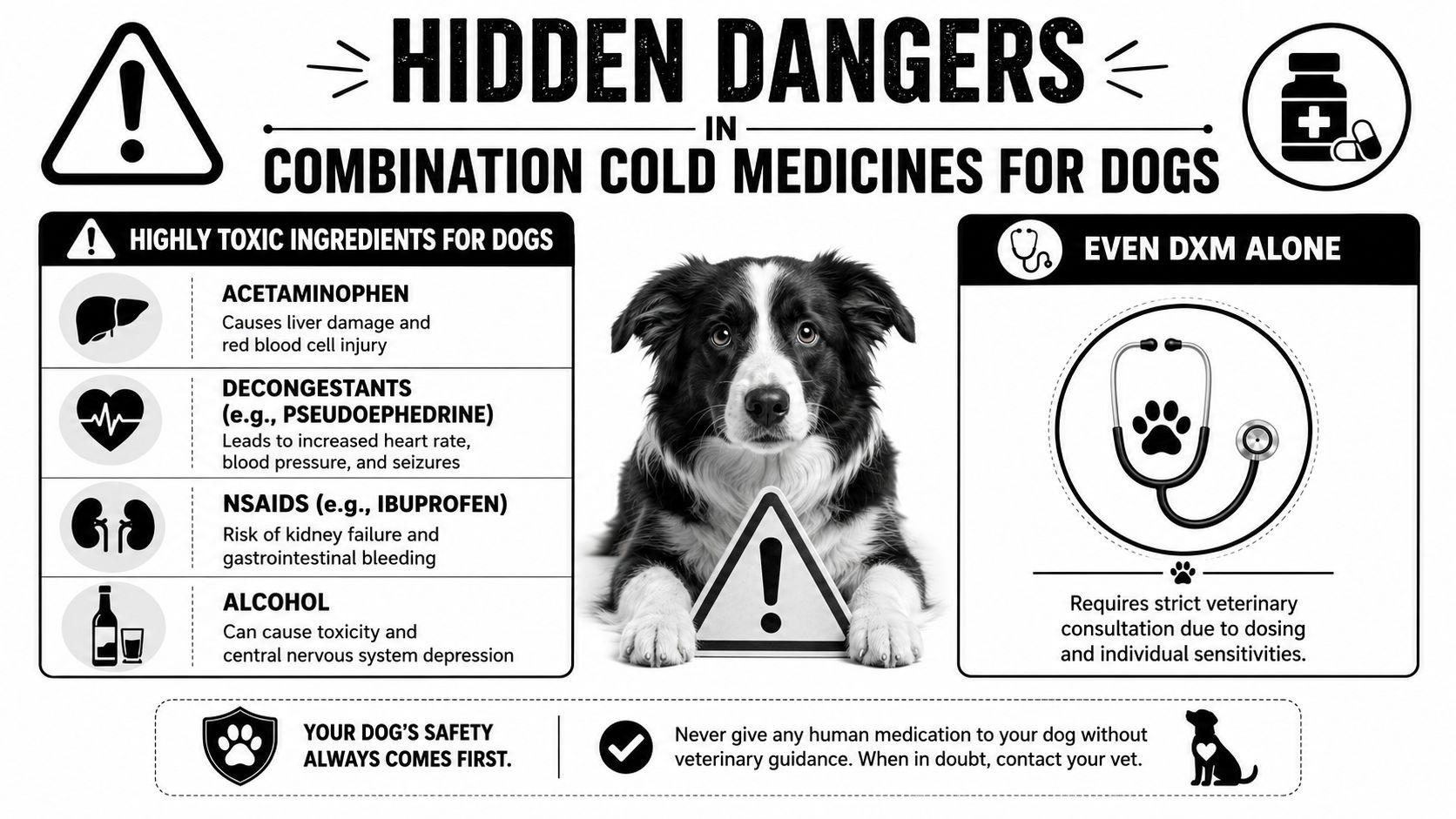
In many homes, the biggest risk isn't dextromethorphan by itself. It's the combination product wrapped around it. Human cold and flu medicines often stack multiple ingredients into one bottle, one gel cap, or one chewable dose. That design is convenient for people and dangerous for dogs.
Why the whole label matters
Owners often search one ingredient and stop there. That creates false confidence. A “cough” product may also include a pain reliever, a decongestant, alcohol, or sweeteners that are not appropriate for dogs.
The broad safety rule is simple: never judge a cough medicine by the front label. Judge it by every active ingredient, every inactive ingredient you can identify, and your veterinarian's approval of that exact product.
For another example of how everyday soothing products can hide risks, this guide on whether cough drops are bad for dogs is worth reading if your dog has access to bags, nightstands, or car consoles.
Ingredients that can change the situation fast
Some common add-ons in human cold medicines are far more concerning than owners realize.
- Acetaminophen can be dangerous to dogs and is not something owners should casually give in a mixed human formula.
- Decongestants such as pseudoephedrine or phenylephrine can create serious cardiovascular and neurologic problems.
- Alcohol may be present in liquid preparations and adds another layer of toxicity risk.
- Sweeteners such as xylitol are especially concerning in flavored products because even a medicine intended for cough support can become a poisoning emergency if sweetened improperly.
Drug interactions that owners may miss
Even if the formula doesn't contain an obviously dangerous extra ingredient, your dog's current medications still matter. VCA notes that dextromethorphan should be avoided with MAO inhibitors and warns about certain products such as amitraz collars or selegiline, which is one reason medication history is so important in every suspected ingestion case.
That creates a hidden trap for conscientious owners. A dog may already be taking behavior medication, cognitive support medication, or wearing a medicated collar. The owner sees “cough suppressant” and doesn't realize the interaction risk until signs begin.
Bring every relevant item to the vet if you can. The cough bottle, your dog's prescription list, supplements, and even collar information can all matter.
The safest interpretation of any multi-symptom human medicine is this: if it was designed to treat several human symptoms at once, it's usually the wrong place to start for a dog.
What to Do in an Emergency Your Vet's Protocol
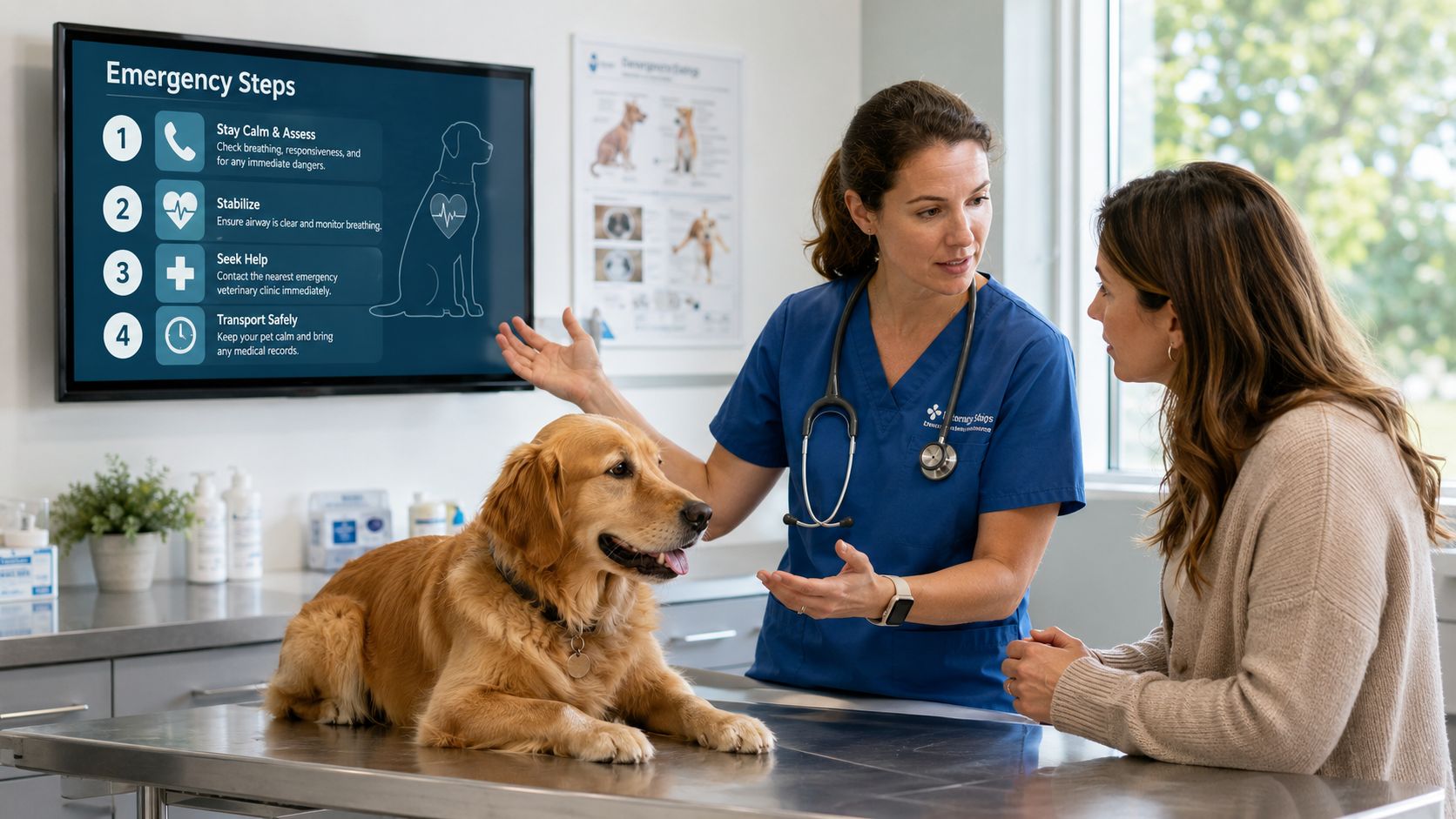
If your dog may have swallowed dextromethorphan or a human cough product, act quickly and methodically. Don't try home remedies, and don't induce vomiting unless a veterinarian tells you to do that.
What to do right away
Start with these steps:
- Call your veterinarian immediately. If your regular clinic is closed, call an emergency hospital.
- Have the product in your hand. Read the active ingredients and tell the clinic exactly what the label says.
- Estimate timing. Tell the veterinary team when you think your dog swallowed it.
- Report your dog's weight and medications. Current prescriptions, supplements, selegiline use, and medicated collars can all be relevant.
- Follow transport instructions. If they tell you to come in now, go.
If your pet is showing unusual oral secretions or distress from another possible exposure, this article on cat foaming at the mouth gives a good example of why fast veterinary evaluation matters when a symptom looks sudden and alarming.
What the veterinary team is likely to do
At the clinic, the team usually starts with a history and physical exam. They'll ask what was swallowed, how much may be missing, when it happened, and what signs you've seen since then.
From there, treatment depends on the timing, the product, and the dog's condition. Common emergency steps may include:
- Inducing vomiting, if the veterinarian decides it's appropriate and safe
- Activated charcoal to help bind material in the digestive tract in selected cases
- IV fluids for support and monitoring
- Treatment for symptoms such as tremors, seizures, temperature elevation, or heart-rate changes
Owners often feel better once they know what emergency care looks like in practice. This short video can help you understand the clinical setting and why prompt assessment matters.
What not to do
A few choices create extra problems:
- Don't wait for severe signs before making the call
- Don't rely on internet dose charts
- Don't assume a children's product is safer
- Don't separate one ingredient from the rest of the label
Getting the dog seen early gives the veterinary team more options. Waiting narrows those options.
Safe Cough Alternatives and Proactive Prevention
When owners ask about dextromethorphan for dogs, the deeper issue is usually the cough itself. A cough can come from infection, airway irritation, chronic bronchitis, heart disease, tracheal problems, or other conditions that won't improve just because the urge to cough is temporarily reduced.
Pharmacokinetic data in dogs show why dextromethorphan often falls short as a long-term answer. A study summary available through PubMed on dextromethorphan in dogs notes short elimination half-life, rapid clearance, and poor bioavailability, which makes sustained oral cough suppression difficult. Practical veterinary guidance also describes the effect as short-lived and better suited to temporary relief than chronic cough control.
Better habits for owners
A safer home routine looks like this:
- Store all medicines securely. Keep bottles in closed cabinets, not counters, bags, or bedside tables.
- Treat cough as a reason to call. If the cough is new, persistent, worsening, or paired with breathing changes, schedule veterinary care.
- Ask about dog-specific options. Your veterinarian may choose a better-studied antitussive or a treatment aimed at the actual cause.
- Track patterns. Note when the cough happens, whether it follows exercise or excitement, and whether your dog also gags, tires easily, or seems uncomfortable.
- Check your home products seasonally. Cold and flu season means more human medications are left within reach.
The practical goal isn't just avoiding one bad choice. It's building a household routine where accidental exposures are less likely and real symptoms get proper medical attention.
If you're in El Paso and want a care team that treats pet wellness with discipline, pride, and high standards, Glo More Grooming is built for that level of ownership. Their calm, one-on-one El Paso dog grooming approach stands apart from high-volume chains, with premium pet grooming, a convenient booking process, and the focused attention busy families appreciate. As a veteran-owned grooming studio, they pair clear standards with genuine care, and their monthly affordable grooming promo, Snip & Style Saturday, gives local pet owners a practical way to keep coats, skin, ears, and nails in top condition. Book now, reserve your promo slot, or contact Glo More Grooming to give your dog polished care that matches long-term health and comfort.