
You're probably here because your dog has had another rough day. Maybe it was loose stool before breakfast, grass-eating in the yard, or that uneasy look dogs get when their stomach just isn't right. Then you're left doing cleanup, second-guessing the food bowl, and wondering whether this is a simple diet problem or something deeper.
For a lot of owners, that cycle becomes exhausting. It also shows up in ways people don't always connect right away. A dog with a reactive stomach may arrive at grooming already uncomfortable, tense, gassy, or dehydrated. When digestion is off, skin and coat often look duller, the dog feels less settled, and the whole care routine gets harder than it should be.
The Link Between Diet and Your Dog's Well-Being
Sensitive digestion doesn't stay neatly in the stomach. It spills into energy, stress tolerance, stool quality, appetite, and coat condition. In a dry, hot place like El Paso, that matters even more because small routine problems can stack up fast if a dog is already running low on comfort.
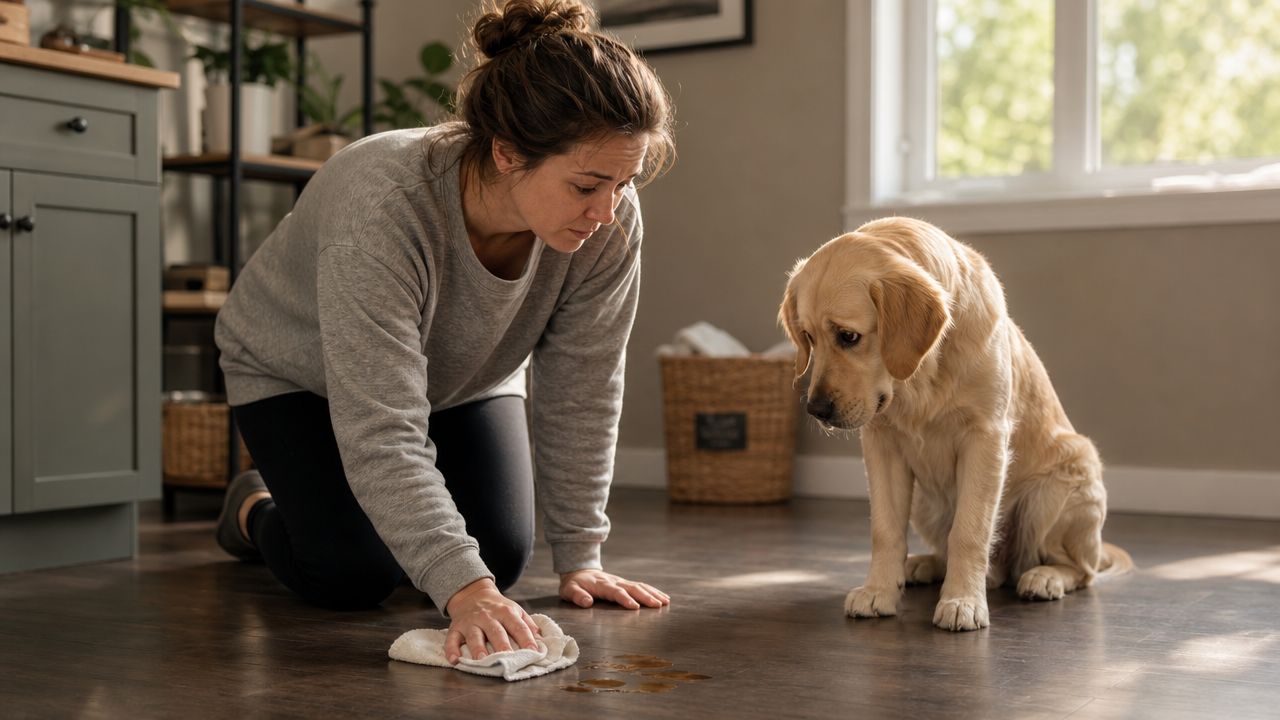
I see this pattern often in dogs that aren't dealing with one big crisis, but with repeated smaller disruptions. A food that's too rich. Too many treats from well-meaning family members. A stressful week. A sudden routine change. Then the dog starts showing it everywhere, including in the coat, skin, and overall tolerance for handling.
Why the old advice still matters
Historically, the starting point for a dog with stomach upset has been a short-term bland diet. Veterinary guidance commonly uses simple combinations such as boiled chicken or turkey with plain white rice or potato, and if the upset resolves quickly, usually within 48 hours, many dogs can return to their regular diet. If symptoms last longer, owners should contact a vet, according to PetMD's guidance on bland diets for dogs.
That advice still has value. It's practical, simple, and often useful for a temporary upset.
But it's not the full answer for dogs that keep circling back to the same digestive trouble. If your dog improves, then flares again after normal meals, random snacks, or stressful events, you're no longer just dealing with a one-off mess on the floor. You're managing a pattern.
Practical rule: Bland diets are a short reset, not a permanent nutrition plan for every sensitive dog.
What wellness looks like in real life
A dog that digests food well usually handles the rest of life better too. The appetite is steadier. Bathroom habits are more predictable. Grooming is smoother because the dog isn't arriving uncomfortable or restless. Even coat maintenance gets easier when the body isn't constantly reacting to something in the bowl.
That's why many owners start looking beyond homemade stopgaps and into more structured feeding choices such as fresh food for dogs or commercial sensitive-stomach formulas. The point isn't to chase a trend. The point is to remove friction from daily life and give the dog a routine the body can tolerate.
The connection owners often miss
A dog with digestive discomfort often becomes a dog with lower patience. That shows up during brushing, bathing, drying, nail work, and even simple handling at home. Owners sometimes assume the dog is being difficult, when the dog is really just worn down.
When the stomach settles, a lot of the rest settles with it. That's the foundation for better behavior, better coat quality, and a dog that feels more like itself again.
Identifying Causes of a Sensitive Stomach
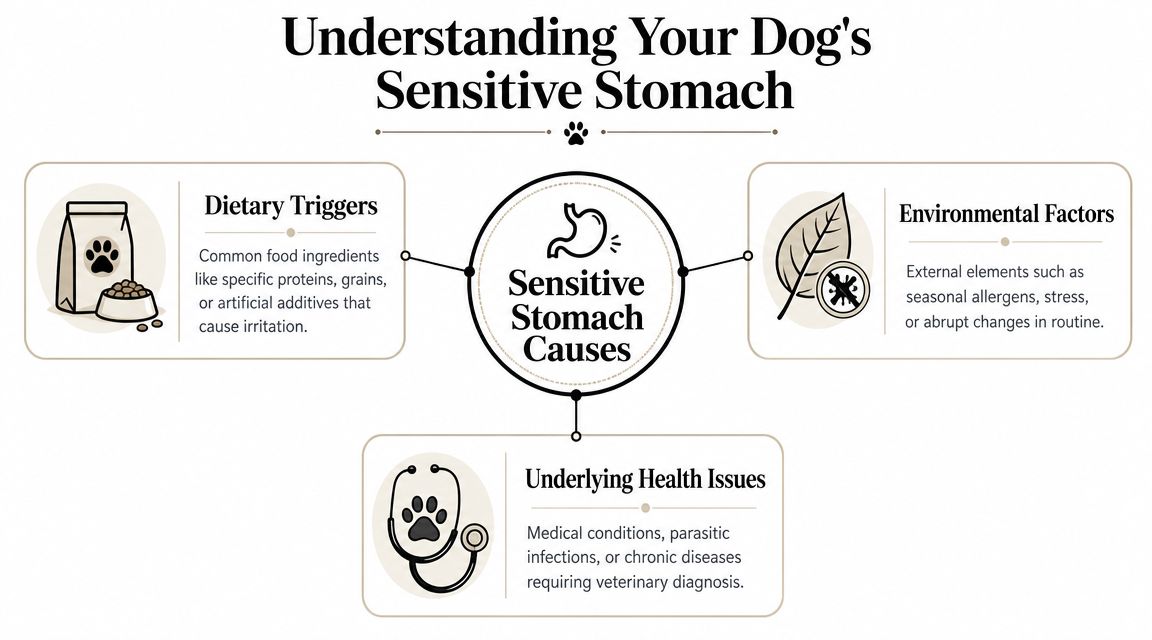
Owners usually start with the food bag, and that makes sense. But not every sensitive stomach starts with food, and not every recurring episode should be solved by switching brands again.
Dietary triggers
Some dogs react to specific ingredients. Others don't do well with rich foods, heavy treats, or formulas packed with extras they don't need. In these instances, owners often notice a pattern after certain proteins, chews, table scraps, or sudden food changes.
The hard part is that food reactions can look ordinary at first. Loose stool, occasional vomiting, extra gas, and inconsistent appetite all blur together. That's why changing three things at once usually creates more confusion than clarity.
Environmental pressure
El Paso dogs deal with heat, dry air, seasonal irritants, and a lot of routine shifts. Travel, visitors, boarding, storms, fireworks, and high-activity weekends can all put pressure on a dog that already has a delicate stomach. Some dogs swallow grass, drink too fast after outdoor time, or get worked up enough that their GI system starts reacting before the food is even the main problem.
Stress matters here more than people think. A nervous dog can develop digestive upset around changes in schedule, separation, or overstimulating environments. That includes chaotic pet care settings.
A dog that's overwhelmed by noise, waiting, and unfamiliar handling may show the fallout in the gut before the owner realizes stress is part of the picture.
Underlying health issues
This is the line owners shouldn't ignore. Chronic vomiting, diarrhea, or weight loss can reflect food intolerance, but they can also point to parasites, infections, or inflammatory bowel disease. The AKC emphasizes that veterinary consultation should be a primary step, and homemade bland diets are intended for short-term use only, as noted in AKC guidance on dog food for sensitive stomachs.
If you've been rotating foods and your dog still isn't right, that matters. If the dog looks uncomfortable week after week, that matters too.
A simple decision framework
Use this practical filter before buying another bag of food:
- Short, mild upset: If the issue is brief and your dog rebounds quickly, a short bland-food reset may be reasonable.
- Pattern after meals or treats: Start tracking proteins, fat level, extras, and anything fed outside regular meals.
- Stress-linked symptoms: Look at routine changes, travel, high-excitement days, and overstimulating settings.
- Ongoing or worsening signs: Stop experimenting and get veterinary input.
Owners lose time when they treat every stomach issue like a label problem. Sometimes it is. Sometimes it isn't.
What to notice outside the food bowl
Watch the whole dog, not just the stool. Is the dog reluctant to eat but eager for treats? Restless at night? More reactive to touch? Less tolerant during brushing or bathing? Those details help separate a picky eater from a dog whose body is telling you something's off.
That wider view often leads to better decisions than ingredient-chasing alone.
Choosing the Best Dog Food for Digestive Health
Once you know the issue is likely food-related, the next step is choosing the right type of diet, not just the loudest packaging. The market for dog food for dogs with sensitive stomachs has moved far beyond basic “chicken and rice” claims.
Veterinary recommendations now commonly include limited-ingredient diets, novel-protein diets, and hydrolyzed-protein diets. Digestible options often named by vets include Hill's i/d, Purina EN, and Royal Canin Gastrointestinal, while hydrolyzed choices such as Hill's z/d are used for more chronic allergy-related cases. Grain-free diets are no longer treated as a default fix and are used cautiously due to links with canine heart disease, as discussed by Gibsons Veterinary's review of sensitive-stomach diet options.
The three categories that matter most
A limited-ingredient diet is often a clean starting point. Fewer ingredients mean fewer possible triggers. That doesn't automatically make the food better, but it does make troubleshooting easier.
A novel-protein diet uses a protein your dog may not have eaten often, such as duck, venison, or rabbit. That can help when the dog has been exposed to common proteins over and over and may be reacting to them.
A hydrolyzed-protein diet goes further. The proteins are broken into very small pieces to reduce the chance of an adverse response. These diets are often part of a more serious plan for chronic GI cases or confirmed food allergies.
Comparing diets for sensitive stomachs
| Diet Type | Best For | Key Feature |
|---|---|---|
| Limited-ingredient diet | Dogs that need a simpler formula and easier troubleshooting | Fewer ingredients to reduce possible triggers |
| Novel-protein diet | Dogs that may react to common proteins like chicken or beef | Uses less common proteins such as duck, venison, or rabbit |
| Hydrolyzed-protein diet | Dogs with chronic GI issues or suspected food allergies | Protein is broken into very small pieces for improved tolerance |
What label reading should focus on
Don't get distracted by marketing language before you check the fundamentals.
Look first at these questions:
- What is the main protein? If your dog has cycled through chicken and beef repeatedly, a different protein source may be worth discussing with your vet.
- How complicated is the formula? Long ingredient decks make problem-solving harder.
- How rich is it? Sensitive dogs often do worse on heavy, fatty recipes.
- Is it sold as a trend or as a tool? Those are not the same thing.
For owners comparing options, high protein dog foods can sound appealing on paper, but more protein isn't automatically better for a stomach-sensitive dog. The right formula is the one your dog can digest consistently, not the one with the boldest front label.
The best food for a sensitive dog is often the least dramatic one on the shelf.
What tends not to work
Random rotation usually backfires. So does changing food because of one bad day without looking at treats, stress, routine, and fat content. Another common mistake is assuming “premium” always means “gentle.” Some expensive foods are still too rich or too busy for reactive dogs.
Choose food like you'd choose any serious care tool. Start with the problem you're solving, then match the formula to that problem.
Practical Feeding Strategies for Sensitive Dogs
Good food can still fail if the feeding routine is sloppy. Sensitive dogs need predictable handling around meals, transitions, and stressful events. That's especially true if your dog gets uneasy before car rides, appointments, or busy days away from home.
Early in any food change, keep the process simple and controlled.
How to transition food without creating a new problem
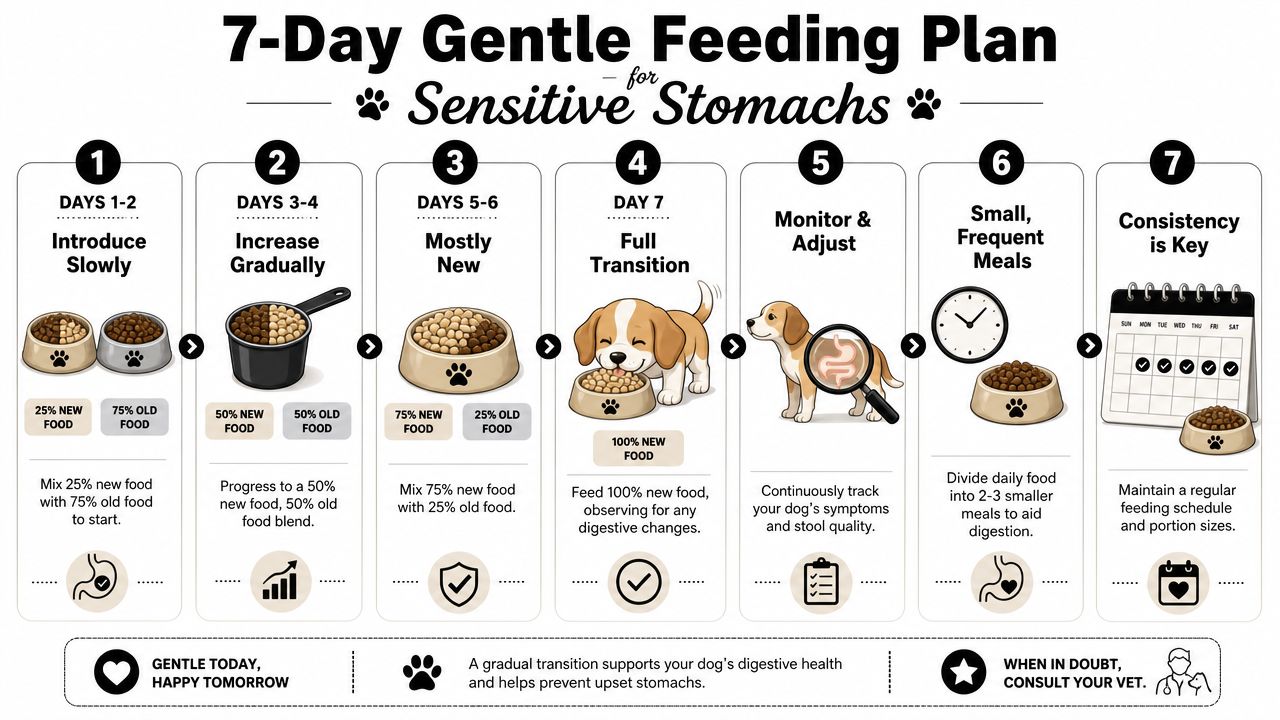
Abrupt food changes are a common GI stressor. Guidance for sensitive dogs recommends a gradual transition over about 7 to 10 days, typically starting with 25% new food, and lower-fat formulas are often preferred. If symptoms from a bland diet continue beyond about 48 hours, veterinary evaluation is advised, as explained in Redbarn's guide to choosing food for a sensitive stomach.
A practical schedule looks like this:
Days 1 and 2
Feed mostly the old food, with a smaller portion of the new food.Days 3 and 4
Move toward an even split if stool quality stays stable.Days 5 and 6
Shift to mostly new food.Day 7 and beyond
Complete the transition if your dog is handling it well.
If your dog is especially reactive, it's reasonable to move more slowly within that 7 to 10 day window instead of forcing the schedule.
Daily routines that help more than owners expect
Feeding strategy matters just as much as ingredient choice for many dogs.
- Keep meal times steady: Sensitive stomachs do better with routine.
- Cut table scraps completely: Small extras ruin clean diet trials.
- Watch fat load: Rich toppers, greasy treats, and high-fat add-ons can undo progress fast.
- Use fewer variables: Don't test a new food, new treats, and new supplements all at once.
- Consider smaller meals: Some dogs digest better when the daily amount is divided into smaller portions.
Here's a useful visual guide for owners who want to see the transition rhythm in action:
Feeding around grooming and other stressful events
Owners can make life easier for their dogs. Don't send a sensitive dog into a grooming appointment on a huge meal. A full stomach, car stress, and handling can be a rough combination.
Instead, aim for a calmer pattern:
- Before the appointment: Feed lightly if your dog does better with food on board, or feed earlier so there's time to settle.
- Skip rich treats before leaving: This isn't the moment for chews, scraps, or high-fat rewards.
- Bring water habits into account: Encourage normal hydration, but avoid frantic chugging right before departure.
- After the appointment: Offer the regular meal once your dog is home, calm, and fully settled.
Feeding reminder: The goal before grooming isn't “full.” It's comfortable.
What consistency really does
Consistency reduces noise. When the same food, same portion, and same timing happen day after day, it becomes easier to tell whether the food is helping. It also gives your dog a more stable physical baseline, which supports calmer behavior, steadier stools, and smoother recovery after busy days.
Owners often look for a miracle ingredient. In practice, the dogs that improve most are often the ones living on the most disciplined routine.
Your El Paso Action Plan for Pet Wellness
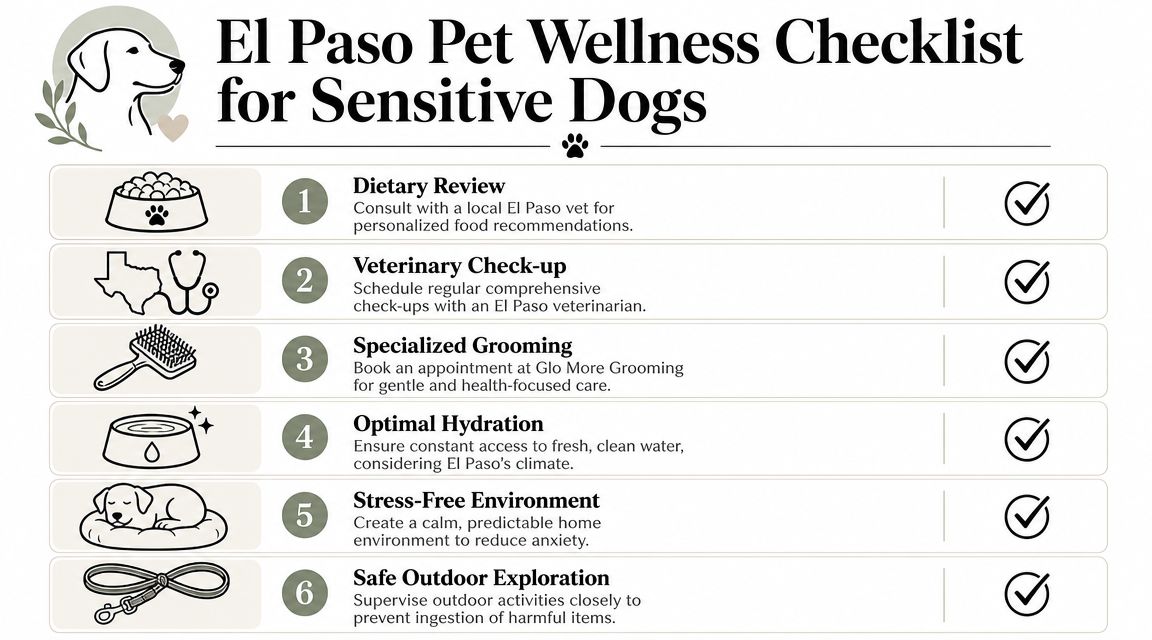
El Paso owners usually need a plan that works in real life, not a perfect one on paper. Work schedules are busy. Weather shifts can be rough. Dogs get stressed by travel, visitors, outdoor distractions, and sudden routine changes. If your dog has a sensitive stomach, the answer is a system you can repeat.
Build your decision process around three markers
A premium food for a sensitive dog can be judged by three technical markers: protein novelty, absence of artificial additives, and digestible fiber or prebiotic support such as FOS or chicory root. Hydrolyzed diets go even further by breaking proteins into very small peptides to reduce adverse reactions in chronic GI cases, according to Whole Dog Journal's guidance on food for sensitive stomachs.
That gives you a useful shopping filter.
When you compare foods, ask:
- Is the protein common or less familiar to my dog?
- Does the formula keep unnecessary additives out?
- Is there digestible fiber or prebiotic support built in?
Those questions do more work than front-of-bag promises.
A realistic weekly rhythm for El Paso owners
For many households, the strongest routine looks like this:
- Start with one main food: Don't rotate unless you have a reason.
- Keep treats matched to the diet: Random snacks are a common weak point.
- Protect hydration: Dry heat can make recovery from GI upset harder.
- Watch outdoor scavenging: Yard debris, dropped food, and who-knows-what on walks can derail progress.
- Keep stress low on errand days: Dogs often feel routine changes physically.
If budget is part of the picture, it helps to look at the long view instead of the sticker alone. Dog food cost matters, but so does the price of repeated trial-and-error, wasted bags, cleanup, and a dog that never feels settled.
Why environment belongs in the plan
A sensitive dog benefits from calm handling and fewer surprises. That includes the home, the feeding routine, and any care appointment. Big-box environments can work for some dogs, but reactive dogs often struggle in busy, high-traffic settings with noise, waiting, and multiple animals cycling through.
A more controlled approach usually serves sensitive pets better. Not because they need pampering, but because they need fewer stress triggers.
Keep your standards high and practical
Owners sometimes think “premium pet grooming” or better feeding discipline has to mean complicated. It doesn't. It means cleaner inputs, steadier routines, and less chaos.
For El Paso families, that can include:
- Regular coat care: Mats, trapped debris, and skin irritation add avoidable stress.
- Consistent scheduling: Dogs handle life better when the rhythm is predictable.
- A calm care environment: This matters for dogs whose gut reacts to tension.
- Smart use of promotions: An affordable grooming promo can help maintain standards without letting care slide.
That's also why many local owners look for El Paso dog grooming with a calmer setup instead of defaulting to chains. A dog that's already sensitive doesn't need more noise added to the day.
Commit to Your Dog's Health with Glo More Grooming
Sensitive stomach care comes down to ownership. Not blame. Not panic. Ownership.
That means paying attention to the food, the routine, the stress level, and the signals your dog gives you long before a problem turns into another emergency cleanup. It also means choosing care partners who respect process, hygiene, timing, and the dog's overall condition, not just the cosmetic result.
That standard is exactly why many owners seek out veteran-owned grooming with a disciplined workflow instead of settling for an assembly-line experience. Dogs with digestive sensitivity often do best when the whole routine feels controlled, calm, and deliberate. That includes feeding before appointments, coat maintenance between visits, and a lower-stress handling environment.
At Glo More Grooming, those values are built into the name itself: Greatness, Loyalty, and Ownership. The work reflects that. Clean craftsmanship. Limited dogs on site. A one-on-one experience that respects the dog's tolerance and the owner's trust. For busy families, that's not a luxury add-on. It's part of doing the job right.
If you've been looking for El Paso dog grooming that treats wellness as more than a haircut, you've found a service where premium standards are evident. The goal isn't volume. The goal is steady, high-level care that helps your dog feel better, look better, and handle life with less stress.
For owners balancing quality with budget, the monthly Snip & Style Saturday offer also makes room for consistency. An affordable grooming promo only helps if the standard stays high. That's the difference disciplined operations make.
Glo More Grooming brings premium pet grooming to El Paso with the calm, one-on-one care many sensitive dogs need. As a veteran-owned grooming studio, it pairs disciplined workflow with genuine attention to comfort, hygiene, and long-term wellness. If your dog needs a more thoughtful grooming routine, book now with Glo More Grooming, reserve a spot for Snip & Style Saturday, or reach out about concierge-level support for your pet's ongoing care.