
You're probably staring at an empty tank, a shopping cart full of reptile gear, or a list of conflicting advice from pet stores, forums, and videos. That's where most new owners get stuck. The hard part isn't buying supplies. It's figuring out how all the parts of a bearded dragon cage setup are supposed to work together.
A good enclosure isn't just a box with a lamp on top. It's a small, controlled ecosystem. Heat, UVB, climbing space, hiding spots, food placement, and even the room your dragon lives in all affect how safe and comfortable that habitat feels. When one part is off, the whole setup suffers.
The good news is that you don't need a flashy build to do this well. You need a thoughtful one. If you build the enclosure around the dragon's real needs instead of shortcuts, daily care gets easier and your pet has a much better chance to thrive.
Choosing the Right Enclosure Foundation
The first decision matters more than many reptile owners realize. If the enclosure is too small, everything else becomes harder. You'll struggle to create a proper temperature gradient, placement options get cramped, and the dragon loses room to move, climb, and choose where it wants to be.
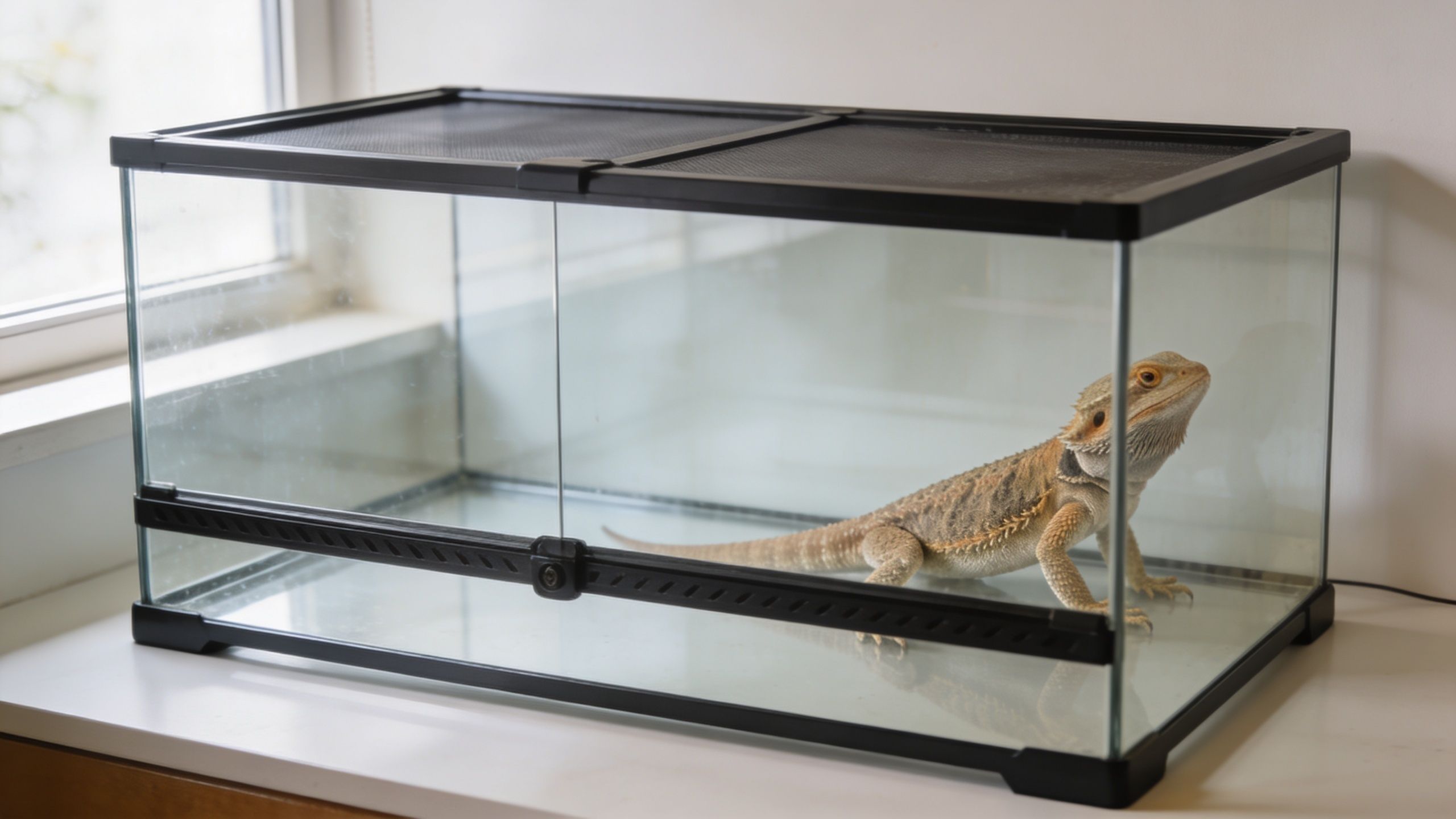
Modern care guidance has moved away from the old small-tank mindset. PetMD's bearded dragon care sheet says a juvenile can start in a 20-gallon tank, but an adult should have at least 40 gallons. The same source notes how enclosure standards have changed over time as keepers recognized the importance of thermoregulation, exercise, and natural movement. That shift is why many experienced keepers now skip the tiny starter setup and plan for a larger permanent home early.
Why bigger solves practical problems
A larger enclosure isn't about spoiling your dragon. It gives you room to do the basics correctly.
Here's what extra space helps you do:
- Create a warm-to-cool layout: Your dragon needs choices, not one uniform temperature.
- Add structure safely: A basking platform, hide, and climbing branches take up space fast.
- Reduce crowding around equipment: Lamps, ledges, and decor are easier to arrange without forcing the dragon too close to heat sources.
- Support normal behavior: Adult bearded dragons need room to turn, walk, climb, and reposition their bodies comfortably.
If you're brand new to reptiles, it also helps to read a broader beginner-pet guide like this pets for beginners resource, because many first-time owner mistakes come from choosing convenience over long-term housing.
Practical rule: Buy the enclosure for the dragon you'll have, not the baby you're bringing home.
Glass, PVC, or wood
Material changes how the enclosure behaves in your home.
Glass tanks are common and easy to find. They offer good visibility, but they can lose heat quickly and may create more reflections, which some dragons find stressful.
PVC enclosures are popular because they usually hold heat more steadily and are lighter than glass. They're often easier to customize for lighting and background structure.
Wood enclosures can work well when properly sealed. They tend to retain heat well, but sealing and cleaning matter more.
A simple buying filter
Before you buy, ask four plain questions:
- Can an adult live in this full time?
- Can I build a basking side and a cool side inside it?
- Can I mount or place lighting safely?
- Can I clean it without fighting the enclosure every week?
If the answer to any of those is no, keep looking. A strong foundation makes every later decision easier.
Mastering Your Dragon's Light and Heat
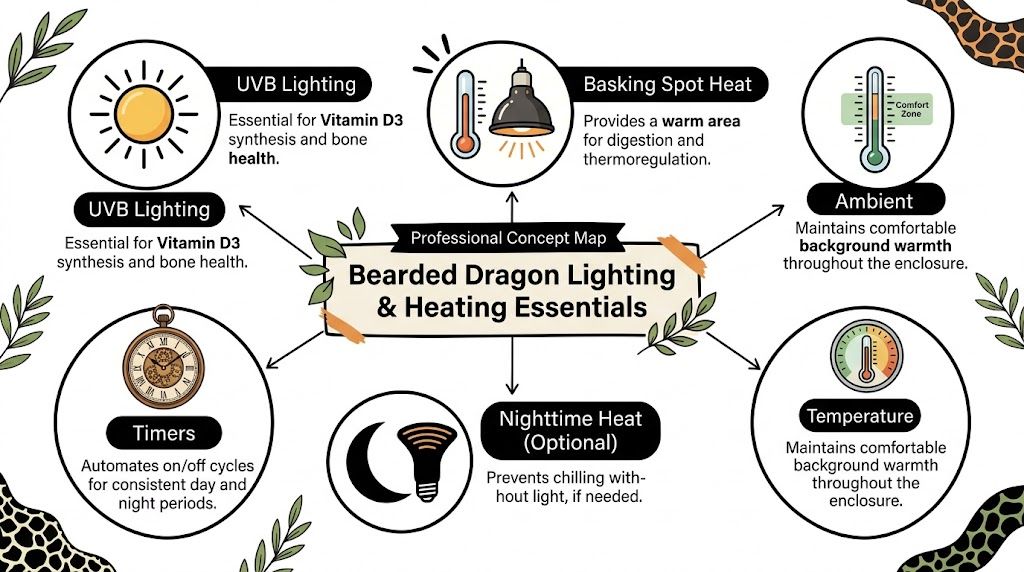
If enclosure size is the foundation, light and heat are the engine. Many setups look fine to the owner but feel wrong to the dragon. A bearded dragon doesn't just need “a heat lamp.” It needs a habitat with usable zones.
Think of the enclosure like a short environment. One end should function like a sunny, high-exposure area. The opposite end should feel like a retreat. Your dragon moves between those zones to regulate body temperature and light exposure throughout the day.
A visual overview helps before you start placing equipment.
Build the enclosure in zones
A good layout starts with the basking platform at one end. From there, you arrange the rest of the enclosure so the dragon can move away from the most intense heat and UVB without losing access to shelter or climbing options.
According to Swell Reptiles' guide to the ideal bearded dragon setup, a widely cited benchmark for an adult enclosure is 120 x 60 x 60 cm (4 x 2 x 2 ft), with larger preferred when possible. That same guide gives a very useful UVB placement method based on the distance from the basking point:
- 25 to 30 cm (10 to 12 in): use a 6% T5 or 12% T8 UVB tube
- 30 to 45 cm (15 to 18 in): use a 12% T5
- 45 to 60 cm (18 to 24 in): use a 14% T5
That detail matters because UVB strength changes with distance. Many beginners buy a good bulb, then place it at the wrong height and wonder why the setup still isn't working as intended.
What each light actually does
Not every bulb has the same job.
- Basking heat lamp: creates the hot spot your dragon uses for digestion and thermoregulation.
- UVB tube light: supports vitamin D3 synthesis and bone health.
- General enclosure light: brightens the space so the enclosure feels like daytime, not a dim cave.
- Timer-controlled cycle: keeps the day-night rhythm consistent.
Here's a helpful video if you want to see enclosure lighting and heating discussed in a more visual format.
Placement mistakes that cause trouble
Most problems come from placement, not effort. Owners often install the bulb first and figure out the basking platform later. Reverse that. Build the basking surface first, then match the lighting to the dragon's actual position when sitting on that spot.
Common errors include:
- Mounting UVB too high: the dragon doesn't get useful exposure at the basking site.
- Letting decor sit directly under intense heat: the perch becomes unsafe.
- Creating one bright hot center instead of a gradient: the dragon loses choice.
- Using smooth, low furniture only: the enclosure works mechanically but offers poor enrichment.
Swell Reptiles also recommends adding semi-arboreal perches, rough rocks or wood, and hides along the enclosure length so the dragon can explore while still staying within the heat and UVB gradient. That's the difference between a cage with equipment and a habitat with function.
If you want to understand why habitat dimensions and zone planning matter across species, this 10 gallon fish tank setup article offers a useful contrast in how enclosure design changes by animal.
The best bearded dragon cage setup lets the animal choose where to sit, not just where the owner placed the lamp.
Furnishing the Interior for Health and Enrichment
A well-lit, well-heated enclosure can still fail your dragon if the interior works against those systems. A basking lamp, UVB tube, and thermometer only do their jobs if the furniture lets the dragon move between comfort, shelter, and activity without stress. The enclosure should function like a small ecosystem, not a box filled with random accessories.
Flooring shapes that ecosystem more than many new owners expect. It affects traction, cleanup, hygiene, and how stable your heavy decor stays once everything warms up.
Substrate choices compared
New owners often get stuck on one question: loose or solid substrate? Start with the dragon's daily life instead. You need a surface that is easy to sanitize, gives secure footing, and keeps basking furniture from shifting.
Here's a simple comparison:
| Substrate | Ingestion Concern | Ease of Cleaning | Upfront Cost | Look |
|---|---|---|---|---|
| Tile | Lower | Easy | Moderate | Clean, natural if stone-look |
| Slate | Lower | Easy | Moderate | Natural and rugged |
| Reptile carpet | Lower | Moderate | Lower | Basic |
| Paper towels or no loose substrate | Lower | Very easy | Low | Plain |
| Loose sand | Higher concern for many owners | Harder | Varies | Natural-looking |
For many beginners, tile or slate is the easiest place to start. It stays put under rocks and branches, helps nails wear down naturally, and makes waste easy to spot and remove. Paper towels can also work well during quarantine, after a medical issue, or any time you need to monitor droppings closely.
Loose substrate can look attractive, but looks should come last. If the floor makes sanitation harder or creates uncertainty during feeding, it is working against the rest of the setup.
Build the layout around behavior
Your dragon uses the enclosure in loops. It basks, cools off, hides, climbs, watches, and returns to bask again. Good furnishing supports that loop.
Start with a stable basking platform that does not wobble or roll. Flat rock, securely supported slate, or a heavy ledge usually works better than stacked decor pieces. The goal is a predictable perch where the dragon can rest fully supported, turn around easily, and leave without jumping awkwardly.
Then add shelter. At least two hides give your dragon choices across the enclosure. One should sit in a warmer area, and one in a cooler area. A hide is not just a cave. It is a stress-reduction tool. If a dragon can retreat without losing all sense of security, it tends to settle faster and use the habitat more naturally.
Climbing pieces matter too. Bearded dragons are not tree-dwelling specialists, but they do benefit from low climbing opportunities, textured surfaces, and raised lookout spots. Branches, cork, and rough rocks can all work if they are anchored well and do not force the dragon into unsafe positions under the bulbs.
Keep pathways open
Crowding the middle with decor is a common beginner mistake. The enclosure should have clear travel routes from the basking zone to cooler resting spots. If your dragon has to squeeze, leap, or slide around furniture, the layout needs work.
A useful test is simple. Watch whether the dragon can move from one end to the other while staying partly hidden when it wants to, but still step into open space to bask, explore, or watch the room. That balance is what enrichment looks like in practice.
Interior pieces that earn their space
Choose decor that serves a clear purpose:
- A stable basking ledge: Wide enough for the whole body, with good grip
- At least two hides: One warmer, one cooler
- Textured climbing pieces: Wood, cork, or rock for grip and exploration
- A visual barrier or sheltered corner: Helpful for dragons that feel exposed
- Open floor space: Room to walk, turn, and chase food safely
Household stressors matter here too. A hide placed against the glass facing a busy hallway, speaker, or slamming door may be used less, even if the temperature is right. Vibrations from subwoofers, laundry machines, or heavy foot traffic can make an enclosure feel unpredictable. Put the most secure resting area where the dragon gets the least noise and disturbance.
That detail gets overlooked often.
If you want a useful comparison of how enclosure furnishing changes by species, this hermit crab cage habitat guide shows how different animals need very different layouts, even when owners are trying to create the same thing: security, access to resources, and room to behave normally.
A good interior does more than fill space. It lets the dragon choose warmth, cover, height, and movement without being forced into one spot.
Keep only one bearded dragon per enclosure. In a standard 4 x 2 x 2 setup, sharing space often creates competition and chronic stress, even when the enclosure looks large enough to a human eye.
Setting Up Feeding and Hydration Stations
Feeding areas are easy to overlook because they seem simple. Put down a bowl, add greens, done. In practice, placement affects cleanliness, stress, and how often you end up scrubbing the enclosure.
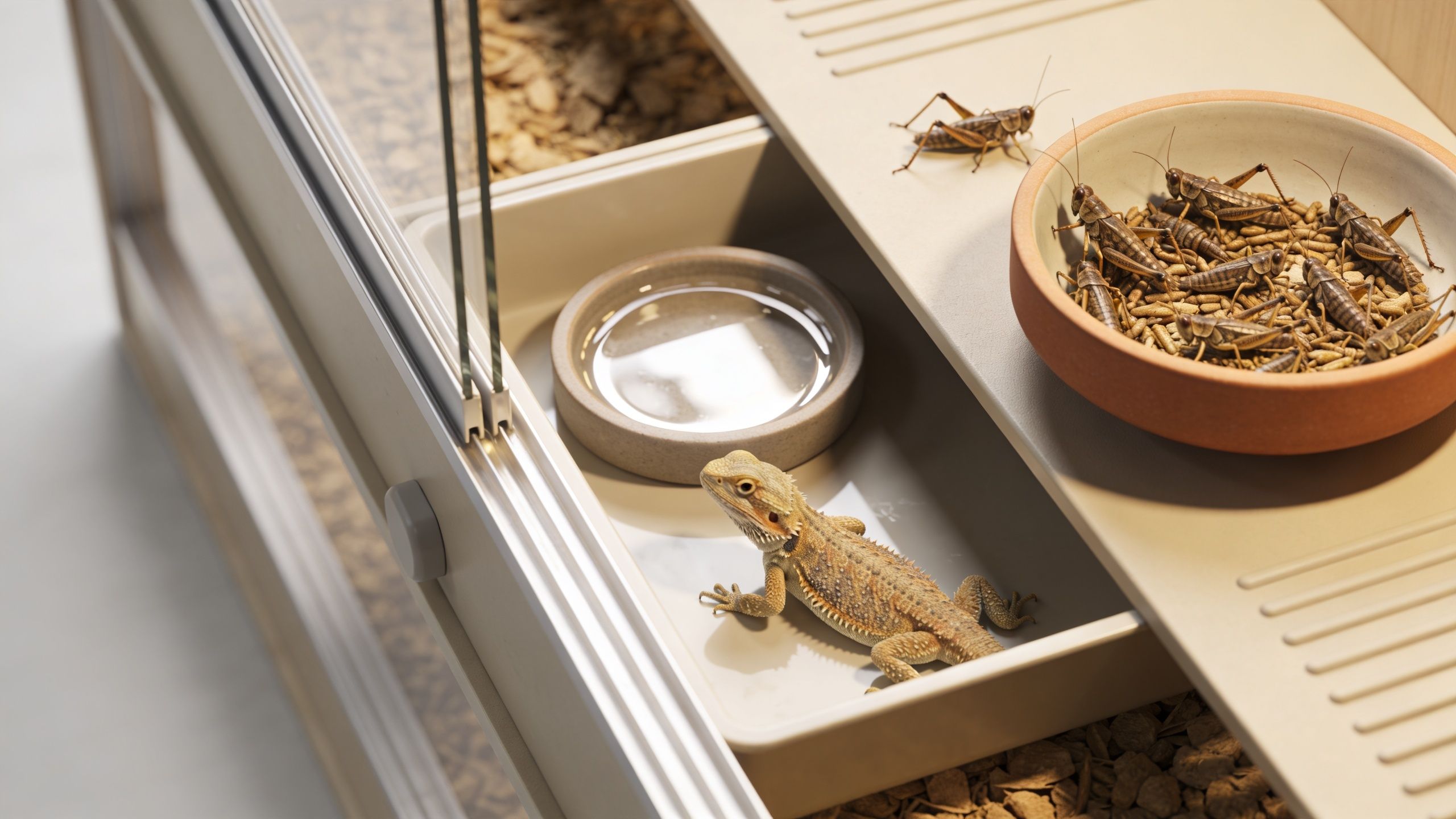
Keep food stations out of the main basking traffic lane. If salad sits directly under the hottest area, it dries fast and becomes less appealing. If insect dishes are placed where your dragon launches off a basking rock to chase prey, you'll spend more time dealing with scattered feeders and dirty surfaces.
A clean feeding layout
Use shallow, sturdy, non-porous dishes that don't tip easily. Many owners do well with one dedicated greens dish and a separate dish for insects when needed.
A simple routine works best:
- Place salads on the cooler side: They stay fresher longer.
- Keep water away from the hottest end: This helps avoid unnecessary humidity buildup near the basking zone.
- Choose smooth dishes: They're easier to disinfect than porous decor pieces used as bowls.
- Feed in an open area: It's easier to spot leftover food and waste.
Keep the routine boring
That sounds negative, but it isn't. A boring feeding station is a good one. You want a setup that's easy to wipe, easy to refill, and easy to inspect at a glance.
If your dragon tracks substrate into bowls, try moving dishes onto a flat tile feeding area. If greens wilt too quickly, shift the dish farther from direct heat and bright lamp spill. Small adjustments usually fix the issue faster than buying new gadgets.
Advanced Setup and Environmental Safety
A technically correct enclosure can still be stressful if it sits in the wrong part of the house. That's the missing piece in many care guides. Owners focus on bulbs, probes, and substrate, then place the enclosure beside a television, in a busy hallway, or near an appliance that shakes the stand.
That environment can wear on a dragon over time. Dragon's Diet's bearded dragon tank setup article highlights an underserved issue in care advice: noise, vibration, reflections, and household activity can contribute to stress. The article notes examples such as high-traffic kitchens, laundry rooms, and loud appliances, and describes signs owners often report, including hiding and appetite loss.
Tools that help you manage the habitat
The enclosure should be measured, not guessed.
Keep these tools in regular use:
- Digital thermometers with probes: Check the actual basking surface and other zones.
- A hygrometer: Helps you notice humidity shifts after cleaning or dish placement changes.
- Lamp timers: They keep the day-night cycle consistent even when your schedule changes.
- A stable stand: Reduces wobble and vibration from foot traffic.
Picking the best spot in the home
A better room is often quieter than convenient. Choose a place where the dragon can see normal life without being surrounded by nonstop movement.
Look for:
- Lower foot traffic: Not the busiest hallway in the home.
- Less appliance vibration: Avoid washers, dryers, and speakers.
- Controlled reflections: Glass near windows or mirrors can make the enclosure visually noisy.
- Predictable routine: Dragons do better when the environment doesn't constantly change.
If a dragon hides all the time in a setup that looks correct on paper, check the room before you rebuild the enclosure.
Your Weekly Maintenance and Troubleshooting Checklist
The best setup still fails if no one maintains it. Bearded dragon care gets easier when you treat upkeep like a routine, not a rescue mission. A few steady habits catch problems before they become expensive or dangerous.
Weekly care rhythm
Use a checklist that's simple enough to repeat:
- Daily check: Remove waste, refresh food and water, and glance at equipment.
- Surface check: Wipe obvious messes from tile, slate, bowls, and ledges.
- Behavior watch: Notice whether your dragon is basking, hiding more than usual, or ignoring food.
- Probe check: Confirm your measuring tools are still placed where they belong.
Common problems and what to question first
If your dragon isn't basking, don't assume stubbornness. Ask whether the basking surface is too exposed, too close to the lamp, or poorly positioned within the gradient.
If your dragon won't eat, review the basics in order:
- Environment first: heat, light, and stress
- Cleanliness second: dirty bowls and soiled surfaces
- Placement third: food dish location and room activity
If your dragon keeps hiding, remember that the problem might be outside the tank. Noise, vibration, and reflections can matter just as much as decor choices.
Maintenance protects welfare
Good keepers don't just build attractive enclosures. They keep them consistent. That means cleaning before odors build up, checking equipment before it drifts out of spec, and noticing behavior changes before the dragon starts declining.
A disciplined routine is what turns a decent bearded dragon cage setup into a reliable one. Your dragon learns the environment is predictable. You learn what “normal” looks like. That's when care stops feeling chaotic and starts feeling confident.
If you care about calm handling, disciplined care standards, and one-on-one attention for pets, Glo More Grooming brings that same mindset to El Paso dog grooming. As a veteran-owned grooming studio, Glo More Grooming stands apart from chain experiences with a quieter, more personalized approach, premium workmanship, and clear routines built around pet comfort. For local families looking for premium pet grooming with real value, keep an eye on monthly offers like Snip & Style Saturday, an affordable grooming promo designed to make polished care more accessible in the El Paso community. If your dog deserves focused, professional handling instead of an assembly-line appointment, book now and reserve your spot with Glo More Grooming.