
You're probably here because you've seen the same thing many pet owners see at some point: a tiny plastic box sold as a “home,” a simple starter setup, or a fast service that promises convenience but leaves out what the animal needs. With hermit crabs, that usually means a flimsy critter keeper. With dogs, it often means a rushed, noisy, one-size-fits-all grooming line.
That's the wrong standard.
A proper hermit crab cage isn't really a cage at all. It's a controlled habitat built around the animal's biology. The same principle applies across responsible pet care. Good care supports natural behavior, steady routines, comfort, and safety. Great care does it with discipline.
Owners who want stronger basics for any pet often benefit from reading broader beginner guidance, especially when comparing starter-pet marketing with real husbandry standards. A practical place to start is this guide to pets for beginners and what responsible ownership actually involves.
Beyond the Plastic Box Why Your Pet's Environment Matters
A cheap enclosure often looks harmless because it's clean, small, and easy to carry. That appearance fools beginners. In hermit crab care, that mistake shows up fast. Existing guidance is split between bare-minimum recommendations and much stricter welfare standards, and that gap leaves new owners vulnerable to bad buying decisions.
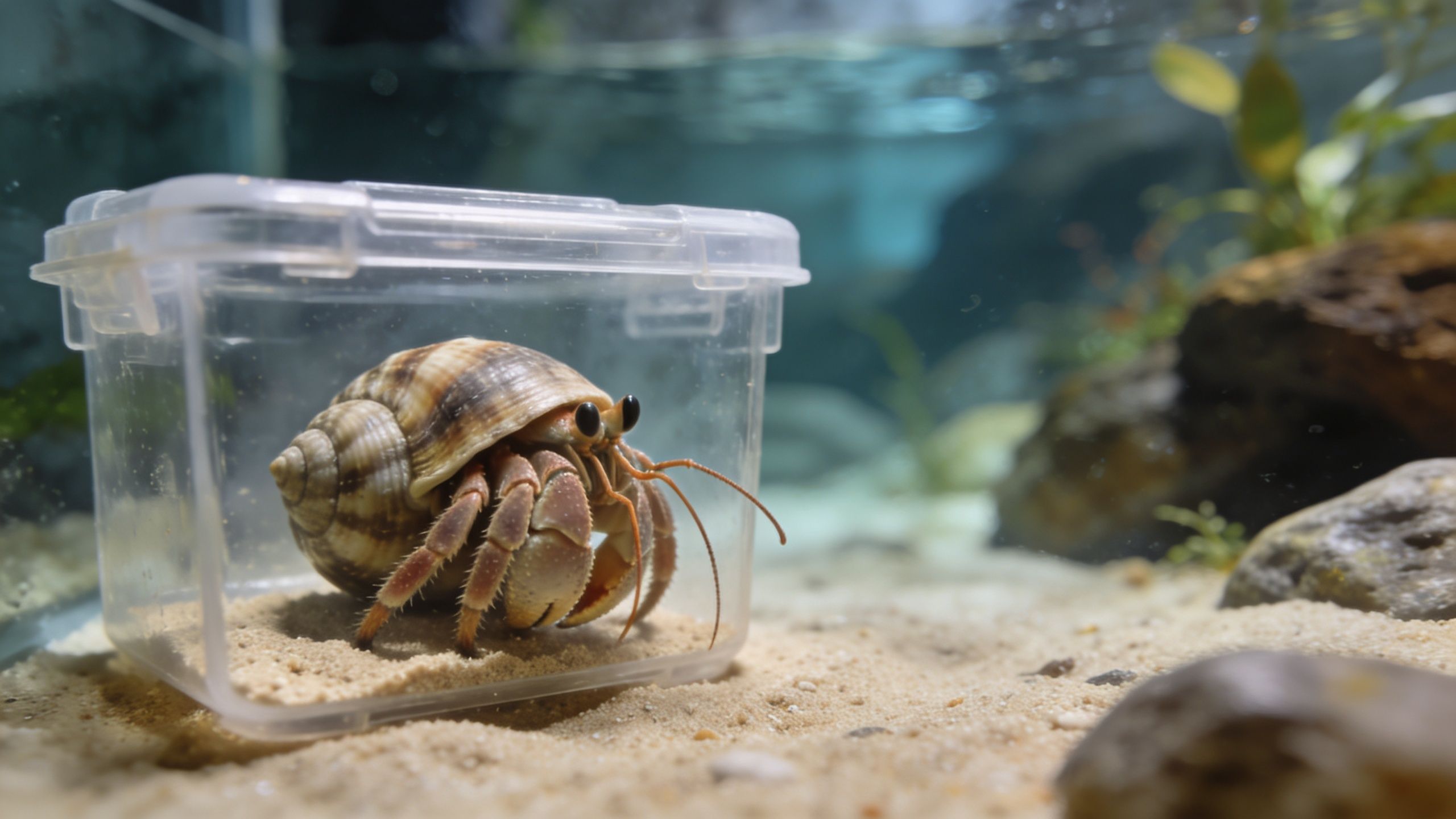
Commercial advice often starts small, but ethical advocates push much larger enclosures. That divide is documented in PetMD's hermit crab care sheet, which reflects how “starter” setups can leave owners with standards that are too low for long-term welfare. That's why so many experienced keepers reject tiny plastic carriers as real homes.
Survival isn't the same as thriving
A pet can remain alive in a poor setup for a while. That doesn't make the setup adequate.
Hermit crabs need space, humidity retention, stable temperatures, deep substrate, and a secure environment for molting and social behavior. A clear plastic keeper may be easy to sell, but it doesn't create a true habitat. It creates a holding container.
That same care principle carries over to every species. A dog doesn't benefit from a chaotic environment just because the appointment is fast. Animals do better when handlers shape the setting around what lowers stress and supports the body.
Practical rule: If the product or service is designed mainly for owner convenience, check whether it compromises the animal's actual needs.
What poor environments have in common
Whether you're evaluating a hermit crab cage or any other pet care setup, weak systems usually share the same flaws:
- They're undersized. The animal has no room to express normal behavior.
- They're unstable. Heat, humidity, noise, or handling changes too quickly.
- They're generic. The setup ignores species, age, size, and temperament.
- They're marketed as complete. In reality, they're often just a starting shell.
The better standard is more demanding. It asks what the animal needs to function well every day, not what looks acceptable on a shelf. That mindset is where quality pet care starts.
Choosing Your Foundation Tank Size and Security
Start with the container itself. For hermit crabs, the best choice is a glass tank, not a wire cage and not a lightweight plastic critter keeper. Size matters from day one, and small starter tanks become limiting faster than most owners expect.
According to Fluker Farms' hermit crab care sheet, a 10-gallon glass tank is the absolute minimum for 1 to 2 small hermit crabs, and each extra crab needs at least 5 additional gallons. The same guidance also notes that glass tanks with solid lids are recommended because wire cages can't retain the 70 to 90% humidity hermit crabs need for gill respiration.
A practical sizing mindset
Minimums keep owners from doing the worst thing. They don't automatically produce the best outcome.
If you're buying a hermit crab cage with any intention of keeping the crabs long term, it makes more sense to think ahead. Crabs grow. Group dynamics change. Molting space becomes more important over time. A setup that barely works at purchase often needs replacement soon after.
A simple decision table helps:
| Setup question | Better choice |
|---|---|
| Housing 1 to 2 small crabs | Start with at least the minimum glass tank |
| Adding more crabs | Increase volume as directed, not after problems appear |
| Choosing a lid | Use a solid or well-sealed top, not open mesh |
| Choosing materials | Favor glass over wire for climate control |
Security is more than escape prevention
A lid does two jobs. It keeps crabs in, and it keeps the environment stable. That second job is the one beginners underestimate.
An open or poorly covered top bleeds humidity. Once that happens, the entire habitat gets harder to manage. Heat fluctuates. Air dries out. The enclosure stops functioning as a habitat and starts acting like a room with decorations.
That same logic applies to any species-specific setup. Good care begins with a stable foundation, not improvisation.
For owners thinking more broadly about safe confinement and right-sized pet spaces, this guide to dog crate sizing and choosing the right fit is a useful parallel. The lesson is the same. Space and security have to match the animal in front of you, not a generic retail label.
A strong setup prevents problems quietly. A weak setup makes you manage emergencies that should never have started.
The Atmosphere of Care Mastering Temperature and Humidity
A hermit crab cage fails or succeeds on atmosphere. You can choose the right tank and still run a poor habitat if the internal climate drifts. For hermit crabs, that's not a comfort upgrade. It's basic life support.
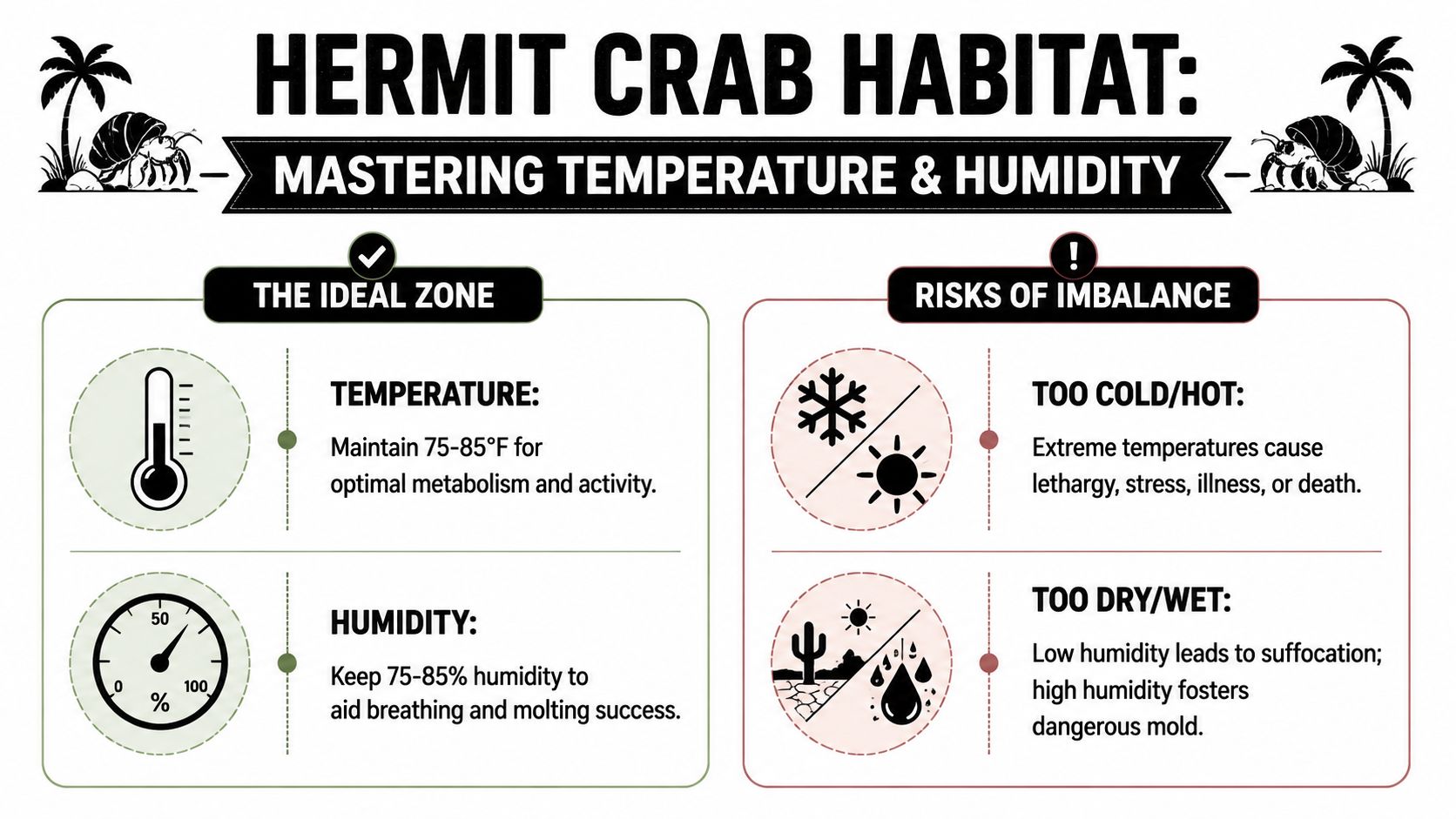
The target zone is narrow enough that casual setups struggle. Hermit crabs need 75 to 85°F and 75 to 85% humidity to support normal respiration and molting. A strong build starts with a larger tank and a sealed top because small, drafty enclosures lose control too easily.
What actually works
The most practical build advice in the source material is straightforward. This enclosure guide on Instructables recommends a minimum 20-gallon long glass tank, sealing the lid with plastic wrap or a glass top, and placing a lateral under-tank heater on the back wall. The same guide states that sealing the lid can reduce humidity loss by 90% compared to unsealed mesh.
That tells you two important things. First, climate control starts with retaining what you create. Second, heat placement matters. The goal is a gradient, not a hot box.
Common climate errors
Owners usually run into the same set of problems:
- Open mesh tops let humidity escape too quickly.
- Heat placed incorrectly creates dangerous hotspots.
- Small enclosures swing between warm and cool too fast.
- Dry room conditions work against the enclosure all day.
That last point matters even more in dry regions like El Paso, where low ambient moisture can work against any enclosed habitat. Hermit crab care makes the principle obvious, but dog owners deal with a similar reality. Dry air can leave skin and coat needing more disciplined maintenance, more regular inspection, and less neglect between appointments.
Climate control is never one tool. It's a system of enclosure choice, lid security, heating placement, and steady monitoring.
Precision beats improvisation
A well-run habitat doesn't rely on luck. It relies on repeatable conditions.
That's the broader lesson pet owners should carry into all care decisions. Better outcomes come from controlled routines, not rushed fixes. When owners choose premium care for any animal, they're often paying for that invisible discipline: fewer variables, cleaner workflow, calmer handling, and more attention to the details that keep small issues from becoming major ones.
Substrate and Enrichment Building a World to Explore
Once the tank and atmosphere are right, the interior has to support real behavior. Hermit crabs don't just need a container with food and a shell. They need a terrain that lets them dig, hide, climb, and move with purpose.
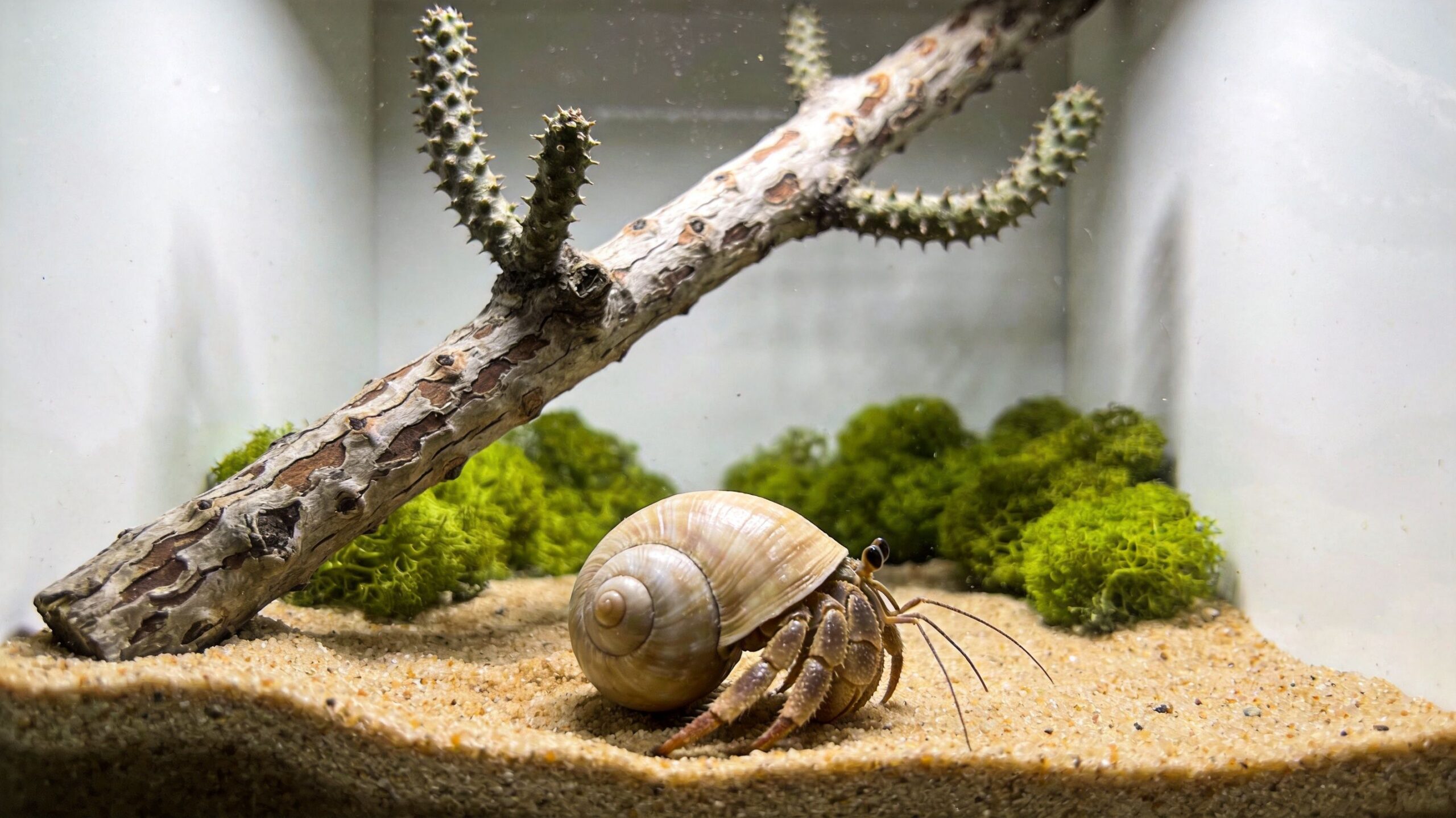
A sparse setup often looks neat to the owner. To the animal, it can be barren and stressful. The strongest hermit crab cage builds feel less like display boxes and more like functioning environments.
The floor matters most
The substrate is where many beginners cut corners. That's a serious mistake because molting depends on secure burrowing space.
According to The Tye-Dyed Iguana's hermit crabitat setup guide, substrate depth should be half the tank's height to support molting, and vertical climbing structures like cholla wood can double the effective volume of the enclosure. The same guide warns that gravel substrates are associated with a 70% higher infestation rate of mites.
That gives owners a clear hierarchy. Deep, suitable substrate first. Enrichment second. Decorative shortcuts last.
Building a usable interior
A better interior usually includes:
- Deep substrate that supports safe burrowing and molt privacy
- Climbing structure such as cholla wood or cork bark for vertical use
- Covered areas where the crab can retreat instead of sitting exposed
- Open pathways so the tank doesn't become a cluttered obstacle course
The best enclosures balance movement and shelter. Too empty, and the animal has nowhere to feel secure. Too crowded, and the usable floor area disappears.
This short visual can help owners think about layout and function before buying random accessories.
Enrichment isn't decoration
The strongest pet care setups don't stop at the bare minimum. They support the animal's natural pattern of life.
That idea applies far beyond hermit crabs. Surface-level care looks tidy in photos, but species-appropriate care asks deeper questions. Can the animal retreat? Can it move naturally? Can it perform the behaviors its body is built for?
Owners who care about that broader standard often find useful comparisons in other small-pet handling topics too, such as how safe gear choices affect comfort and control in animals like guinea pigs. The details differ by species. The principle doesn't.
The Daily Ritual Feeding Hydration and Maintenance
A good hermit crab cage doesn't stay good on its own. Daily care is what keeps the environment stable after setup day. That includes food, water, cleaning, observation, and emergency thinking.

A disciplined routine usually beats expensive gear. Owners who check conditions, refresh resources, and notice changes early prevent more problems than owners who only react after a pet appears distressed.
A practical care rhythm
For most keepers, the maintenance rhythm should include simple repeatable tasks:
- Check food and remove leftovers before they spoil.
- Refresh water access and make sure dishes remain usable and clean.
- Inspect the enclosure for odor changes, mold concerns, escape risks, and unusual inactivity.
- Review climate conditions so yesterday's stable setup doesn't drift unnoticed.
- Clean deliberately, not aggressively. Don't turn every maintenance session into a full habitat disruption.
That final point matters. A habitat should stay sanitary, but it also needs continuity. Constant overhandling can create its own stress.
Temporary housing is not a shortcut
Moves, storms, repairs, and sudden schedule changes put pressure on pet owners. Hermit crab guidance often leaves people underprepared in exactly those moments.
The ethical habitat standards discussed by LHCOS note that plastic storage bins can be used for emergency or temporary housing, but without proper ventilation and heating protocols they are not long-term solutions. That's a useful distinction. Emergency measures can buy time. They are not a substitute for proper care.
Keep a temporary plan before you need one. Improvised pet care is where small mistakes become preventable losses.
Routine teaches owners discipline
Hermit crab care offers a strong model for all pet ownership. The best care isn't built on occasional effort. It's built on repeatable maintenance.
Dog owners understand this quickly when they think in coat and skin terms. Bathing, brushing, nail care, ear cleaning, seasonal adjustments, and scheduled appointments work the same way. Waiting until the dog is matted, irritated, or overdue creates stress for the pet and extra work for everyone else.
A steady routine is also where promotions can help, if they encourage consistency instead of cutting corners. A monthly offer like Snip & Style Saturday works best when owners use it as part of a grooming schedule, not as a one-off rescue visit. That's the difference between bargain hunting and disciplined care.
Escaping the Cage for Good A Thriving Pet Awaits
The core lesson is simple. A hermit crab needs more than a plastic box. Any pet does.
A proper hermit crab cage has to account for size, security, humidity, temperature, substrate, enrichment, and daily upkeep. None of that is accidental. It comes from respecting the animal enough to build a setting around its real needs instead of settling for the smallest commercial option.
What that means for pet owners in El Paso
If you live in El Paso, you already know this region tests pet care routines. Dry conditions, busy schedules, travel needs, and seasonal shifts all expose weak systems. Pets do better when owners choose care that's structured, calm, and consistent.
That's why the bigger principle matters more than the species example. Good pet care is never just a transaction. It's an environment. It's workflow. It's standards. It's choosing people and practices that don't treat your animal like one more number in a line.
Why premium care stands apart
Chain services often promise speed and broad availability. That works for some owners. But high-volume systems can also feel impersonal, especially when your pet needs closer handling, steadier pacing, or a more controlled setting.
Premium pet grooming takes the opposite approach. It values restraint, cleanliness, patience, and individualized care. It doesn't assume every dog needs the same pace, same handling style, or same plan. That matters for puppies, seniors, anxious dogs, heavy shedders, dogs with dense coats, and dogs whose owners just want a more polished standard.
A veteran-owned grooming business also brings something many chains can't replicate. Clear discipline. Pride in workmanship. Accountability that stays local. Long-term vision instead of corporate uniformity.
The better standard is worth choosing
If this hermit crab cage guide proves anything, it's that shortcuts rarely stay cheap. They usually cost more in stress, replacement, corrective care, and preventable problems.
The same logic applies when choosing El Paso dog grooming. If you want premium pet grooming, cleaner workflow, a calmer experience, and a more personal standard than what many owners associate with large chains like PetSmart or Petco, it makes sense to choose an independent studio built around those values. If you also want an affordable grooming promo, monthly options can make that higher standard easier to maintain without losing consistency.
If you want El Paso dog grooming with disciplined standards, one-on-one attention, and the pride that comes from a veteran-owned grooming studio, book with Glo More Grooming. Reserve your spot for the next Snip & Style Saturday affordable grooming promo, ask about concierge-level support, and choose premium pet grooming that treats your dog like family, not like a slot on an assembly line.