
A guinea pig harness is extremely dangerous for your pet. Community welfare analyses tie harness use to a 70 to 85% risk of severe injury, and safer exercise comes from large, secure playpens instead of restraint.
A lot of pet owners look at a guinea pig harness and think they're doing something kind. Fresh air, a little exploration, a cute photo. The intention is loving. The product is still a bad idea.
As a pet care business built on discipline, safety, and accountability, we don't stay quiet when a popular product puts animals at risk. Good pet care isn't about what looks fun to humans. It's about what the animal's body and instincts can handle.
A Word of Caution for Loving Pet Owners
If you're searching for the best guinea pig harness, stop there. The right question isn't which one to buy. It's why these products keep getting sold when so many experienced owners and care communities have warned against them for years.
Guinea pigs aren't built like dogs. They aren't even built like other small pets people compare them to. They are prey animals with fragile frames, quick panic responses, and a body structure that doesn't tolerate restraint well.
Good intentions don't make a risky product safe
Most owners considering a harness aren't careless. They're trying to enrich their pet's life. They want outdoor time, movement, and bonding.
That instinct is good. The tool is wrong.
When an animal startles and bolts, the gear matters. With dogs, a properly fitted harness can be a useful safety tool. With guinea pigs, the same idea breaks down fast because the body underneath it can't absorb force safely.
Practical rule: If a product depends on a guinea pig staying calm under restraint, it already ignores how guinea pigs behave.
That same safety-first mindset applies across species. Pet owners make mistakes when they use products meant to solve a convenience problem instead of a welfare problem. The issue is similar to using the wrong eye product on a dog without checking whether it's appropriate first. If you've ever wondered how quickly a common household shortcut can become a health risk, this piece on whether you can use Visine on dogs makes the point clearly.
What responsible care looks like
A disciplined pet owner asks three questions before using any accessory:
- Does this match the animal's anatomy: Not the packaging, not the marketing, the actual body.
- Does this respect natural behavior: Guinea pigs freeze, dash, twist, and panic. They don't walk calmly under human control.
- Does this reduce risk under stress: If the answer depends on perfect conditions, it isn't a reliable setup.
That's why the safest approach is simple. Skip the harness. Build enrichment around secure space, hiding spots, supervised play, and movement without forced restraint.
The Hidden Dangers of Guinea Pig Harnesses
The numbers are ugly, and they should be. In community welfare analyses, guinea pig harness use correlates with a 70 to 85% risk of severe injury, including spinal fractures. Vets also noted a 40% increase in harness-related trauma visits since 2018, with 75% of cases involving guinea pigs under 1 year old, whose bones are 25% more brittle according to the discussion collected at The Guinea Pig Forum UK on harness injuries.
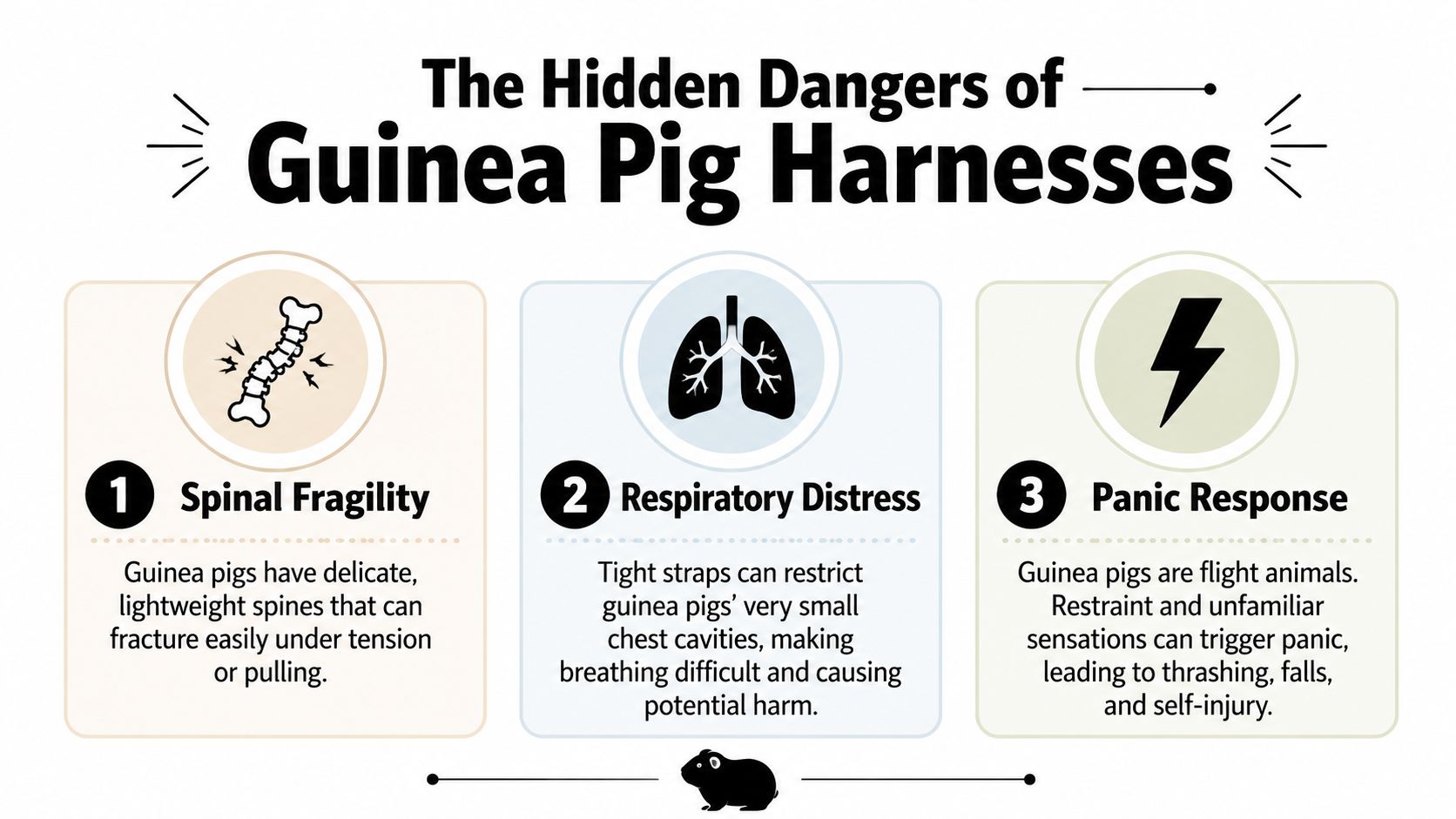
That's not a minor caution. That's a direct warning.
One panic response can do real damage
A guinea pig doesn't need a long walk for a harness to become dangerous. It only takes one twist, one bolt, or one sudden pull against the strap.
The main risks fall into three categories:
- Spinal trauma: A startled guinea pig can lunge hard enough to injure its back in a single motion.
- Respiratory compromise: Tight or shifting straps can press on a very small chest and airway area.
- Psychological stress: A prey animal that can't flee often escalates into panic, not calm exploration.
Even people who say they used a harness "gently" miss the point. The hazard doesn't come from your intention. It comes from the animal's reaction.
Guinea pigs don't understand leash pressure. They understand restraint, and restraint triggers fear.
"But dog harnesses are safe" doesn't translate
Small-pet owners are often misled by familiar gear in these situations. A harness can be appropriate for a dog because dogs are structurally and behaviorally different. They can be conditioned to follow pressure, move with a handler, and tolerate the sensation of body equipment.
Guinea pigs can't.
That difference matters in every pet care decision, including dog equipment. If you want a useful contrast, look at how martingale collars for dogs are discussed in the context of species-appropriate restraint and training. Dogs may benefit from carefully chosen gear. Guinea pigs don't belong in that category.
The stress cost is bigger than most owners realize
A harness doesn't just risk a visible injury. It can turn outdoor time into a threat event. A guinea pig that feels trapped may stop exploring, hide more, or become harder to handle afterward.
Owners often interpret stillness as acceptance. In prey animals, stillness can mean fear.
If your enrichment plan requires your guinea pig to override instinct, it's not enrichment. It's pressure.
Anatomy vs Accessory Why Harnesses Fail Guinea Pigs
A guinea pig harness fails at the body level. The product category is wrong before you even look at the buckle, fabric, or fit.
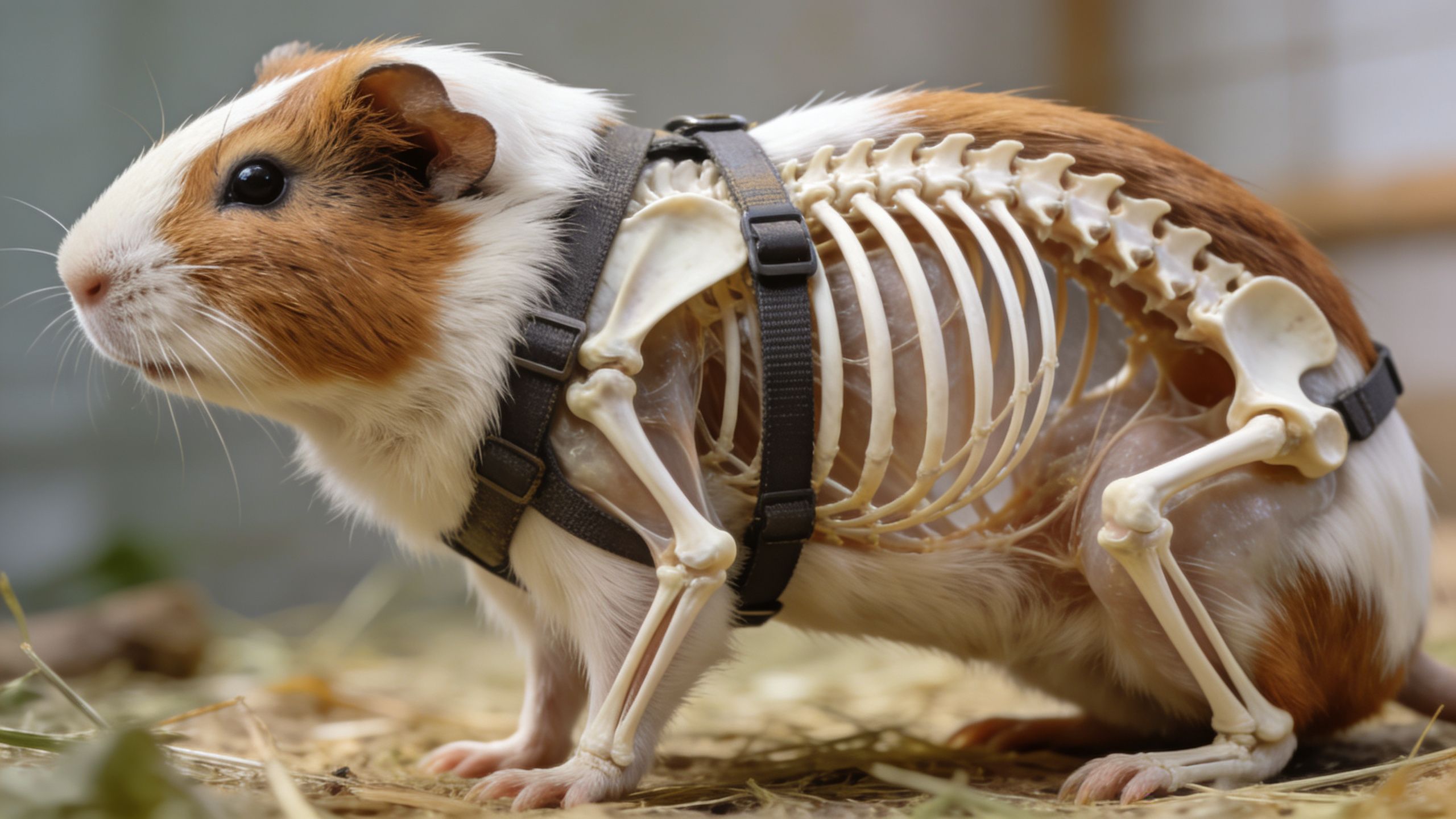
Guinea pigs are built for low, cautious movement, not for controlled restraint on a line. Their bodies are compact, their legs are short, and their spines do not tolerate sudden twisting or pulling well. Veterinary references on guinea pig anatomy and handling support the basic point: these are fragile small mammals that require gentle support, especially through the chest and back.
That matters because harnesses apply pressure to exactly the areas you should protect.
A soft harness still creates hard force
Owners often get pulled in by product language. Padded. Breathable. Adjustable. Escape-resistant.
None of that changes the mechanics. If a guinea pig startles, the harness transfers that force into the chest, shoulders, and spine. Softer material can reduce rubbing. It does not make panic safe.
As a groomer, I see this same mistake in other species. People assume better gear design fixes a bad gear decision. It doesn't. Proper fit matters for dogs, and dog collar size measurements are a good example of species-appropriate sizing. That logic stops with guinea pigs because the underlying restraint method is still unsafe for their anatomy.
Why the design fails in real movement
The risk is not theoretical. It shows up in ordinary prey-animal behavior: a sudden freeze, a sideways twist, a backward scramble, a burst forward.
Here is why those reactions make harnesses a poor choice:
| Issue | Why it matters |
|---|---|
| Delicate spine | Sudden tension can strain a back that is poorly suited to pulling force |
| Small chest and airway | Even light restraint can interfere with normal breathing and comfort |
| Low body weight | A small movement by the handler creates outsized force on the animal |
| Fast startle response | Twisting and bolting turn a fitted harness into a point of injury |
A harness can look secure on a calm guinea pig indoors and still become dangerous in one second outside. That is the standard that matters.
Safe equipment must protect the animal during the panic response, not only during the photo-ready moment when everything is quiet.
Guinea pigs do not need a better harness. They need an environment that lets them move without being attached to one.
Safe and Enriching Alternatives for Outdoor Time
If your goal is exercise, stimulation, and fresh air, you have better options. Safer options. More humane options.
The best replacement for a guinea pig harness is a secure playpen with shade, hideouts, and constant supervision. That setup gives the guinea pig room to move without putting force on the spine or chest.
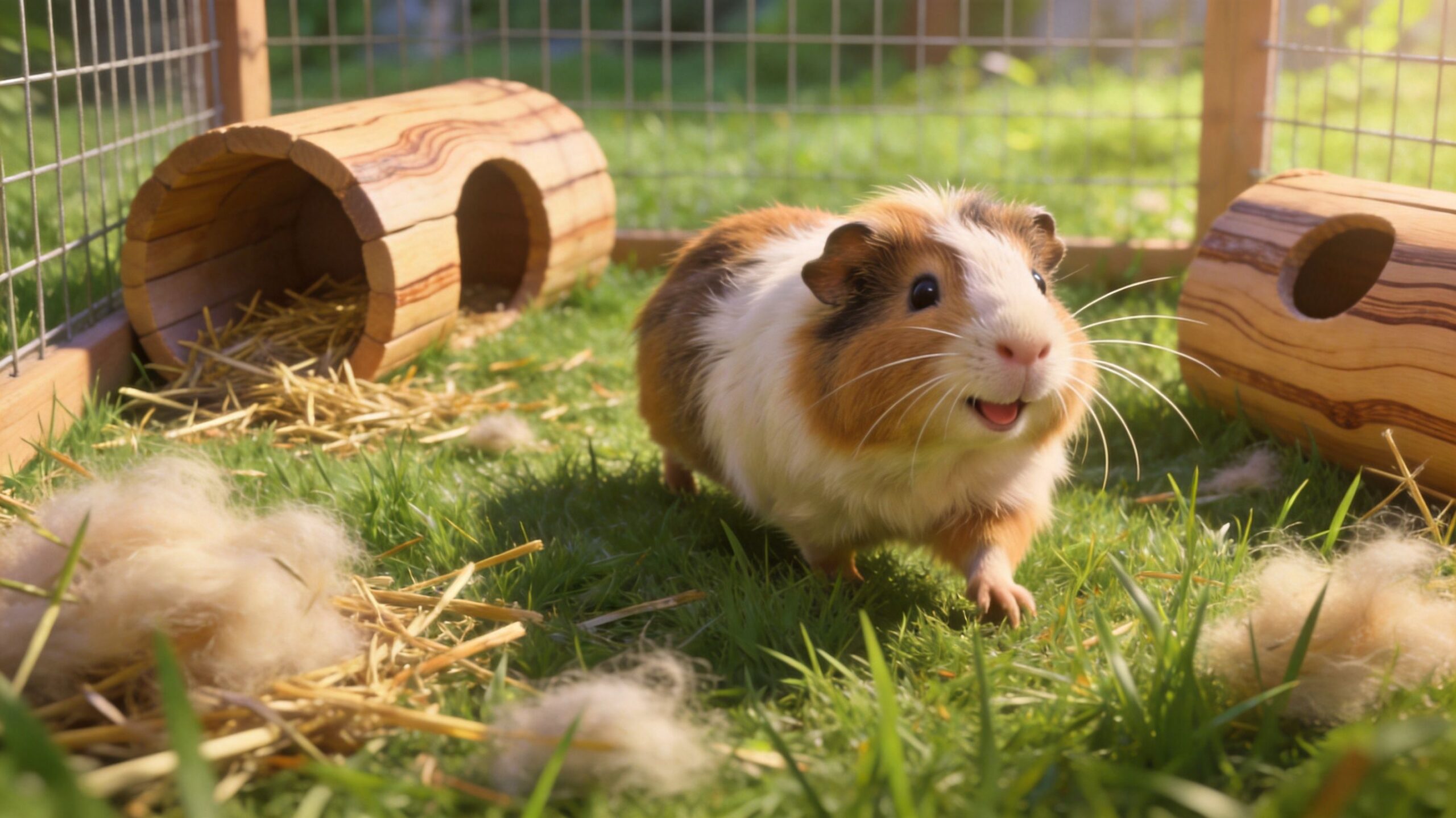
Better ways to give your guinea pig outdoor time
Use movement-based enrichment, not restraint-based access.
- Playpen sessions: Set up a secure pen on stable ground with full supervision, covered sections, and quick access back indoors.
- Hide-heavy layouts: Add tunnels, fleece forests, cardboard shelters, and low wooden hideouts so the guinea pig can retreat whenever it wants.
- Foraging routines: Scatter hay and safe chew items through the space to encourage natural exploration.
- Indoor floor time: If outdoor conditions are poor, create a pig-safe indoor zone with barriers, traction, and hiding spaces.
A good enrichment area should let the animal choose. Choice reduces stress. Forced movement raises it.
Skip the DIY trend too
Some owners see online tutorials and think homemade means safer. It doesn't. Emerging DIY harness trends on TikTok have drawn over 1 million views, and a 2025 to 2026 trend scan found 65% positive tutorials making unverified "zero injuries" claims, despite no veterinary data backing those claims, according to this YouTube short documenting the DIY harness trend.
That trend is part of the problem. It makes risky gear look creative and harmless.
Homemade adjustments don't change the underlying issue. They don't change the spine, the prey response, or the danger of sudden force. If anything, DIY gear can create extra uncertainty because fit, stitching, and pressure points are untested.
A simple enrichment routine that works
Try this practical rotation:
- Morning hay refresh in a roomy enclosure.
- Short supervised floor time in a blocked-off area with tunnels.
- Outdoor pen session only when weather, noise, and predator risk are controlled.
- Chew and forage reset with safe items to keep the mind busy.
You don't need novelty gear. You need a setup that respects how guinea pigs live.
Our Higher Standard of Pet Care in El Paso
Pet owners deserve straight answers, especially when product marketing gets ahead of animal welfare. That's true for small pets, and it's true for dogs.
One analysis of online discussions found that among 150 Reddit threads, 78% of guinea pig harness discussions cited injuries, while 22% of users reported escapes leading to predator attacks or accidents, as summarized in GuineaDad's discussion of why leashes are bad for guinea pigs. When sellers leave owners with vague promises and no meaningful risk context, experienced pet professionals need to speak plainly.
Real standards beat retail convenience
That principle matters in grooming too. A disciplined pet care operation doesn't chase volume. It protects the animal, controls the environment, and follows a repeatable workflow.
That matters in El Paso dog grooming, where local pet owners often have to sort through chain-store convenience, rushed appointments, and inconsistent handling. The difference with premium pet grooming isn't luxury language. It's standards.
Those standards look like this:
- One-on-one handling: Fewer pets on site means less chaos and less stress.
- Clear workflow: Intake, coat assessment, bathing, drying, clipping, ear care, and nail work happen in an orderly sequence.
- Breed and coat awareness: Long double coats, short wash-and-wear coats, and high-maintenance trims don't get treated the same.
- Heat-conscious routines: In El Paso, coat care, skin checks, and seasonal maintenance matter more because the environment is hard on pets.
Why veteran-owned discipline matters
A veteran-owned grooming business should operate with ownership, consistency, and respect for the animal in front of them. That's not branding fluff. It's a working standard.
Chains like PetSmart or Petco can serve a purpose, but large-volume models often can't match a tightly managed, independent workflow focused on calm handling and detail. Independent care has room for precision. It has room for accountability. It has room for community-minded touches too, including an affordable grooming promo that helps owners stay on schedule instead of waiting until the coat becomes a problem.
Good pet care starts with one habit. Stop accepting "probably fine" as the standard.
A monthly idea like Snip & Style Saturday works because it combines structure and accessibility. Pet owners get a predictable chance to book maintenance care, and pets benefit from consistency instead of long gaps between appointments.
Commit to Uncompromising Safety for Your Pet
A guinea pig harness is a bad purchase, even when the packaging calls it safe, soft, or adjustable.
As noted earlier, long-time guinea pig owners and rescue communities have spent years warning people away from harnesses. The reason is straightforward. The product asks a fragile prey animal to tolerate restraint that its body and instincts are poorly equipped to handle.
Good owners do not search for the least risky harness. They remove the harness from the plan and choose safer enrichment instead.
What responsible owners do instead
Use options that protect the spine, chest, and stress threshold of the animal:
- Choose a secure playpen instead of a leash
- Set up tunnels, hides, hay piles, and supervised floor time
- Use covered outdoor pens only when the temperature and surface are safe
- Ignore social media photos that make unsafe equipment look harmless
That is the standard. Species-appropriate care beats trendy accessories every time.
The same rule applies across pet care. In grooming, equipment should fit the animal, the restraint method should stay calm and controlled, and every handling decision should lower risk instead of adding it.
El Paso pet owners should expect that level of discipline from anyone trusted with their animals. A clean coat matters. Safe handling matters more.
If you're looking for Glo More Grooming, choose the team that treats pet safety as a fundamental requirement. For El Paso dog grooming, premium pet grooming, and a veteran-owned grooming experience built on discipline, ownership, and calm one-on-one care, reserve your appointment now. Ask about the affordable grooming promo through Snip & Style Saturday, and book early before slots fill.