
You already know the scene. You brush the couch, step away for ten minutes, and come back to a fresh drift of fur on the floor, the dog bed, your black shirt, and the vent by the window. In El Paso, that mess gets worse fast because dust, sun, and wind keep dragging loose coat through the house. The fix isn't magic, it's a disciplined grooming system that respects the dog's coat, the season, and the reality of living here.
The Honest Truth About Dog Shedding
You do not stop a healthy dog from shedding. You manage it with a steady grooming system, clean tools, and a schedule that matches the coat in front of you. Texas A&M's grooming guidance says brushing 3 to 4 times a week for 5 to 10 minutes can reduce shed hair, and it recommends bathing weekly during shedding season and 2 to 3 times a month when shedding is lighter (Texas A&M dog shedding guidance).
In El Paso, that discipline matters even more. Dry air, dust, and long windy stretches push loose fur deeper into upholstery, baseboards, and corners, then keep it there. Wait until the house looks filthy and you are already behind.
What shedding actually is
Shedding is a normal coat cycle. Hair grows, rests, and then releases when new hair is ready to come in. Dogs with different coat types, especially double-coated breeds, release more visible fur at certain times.
Practical rule: if you are trying to stop shedding completely, you are chasing the wrong goal. Tighten the routine, and the house gets cleaner.
My advice is blunt. Stop treating shedding like a problem you can erase. Treat it like coat maintenance, and you get better results, less mess, and fewer surprises on the furniture. That standard is what a serious grooming studio brings to the table, because clean coat work depends on method, not guesswork.
Diagnose What's Driving the Fur
Start with coat type, not panic
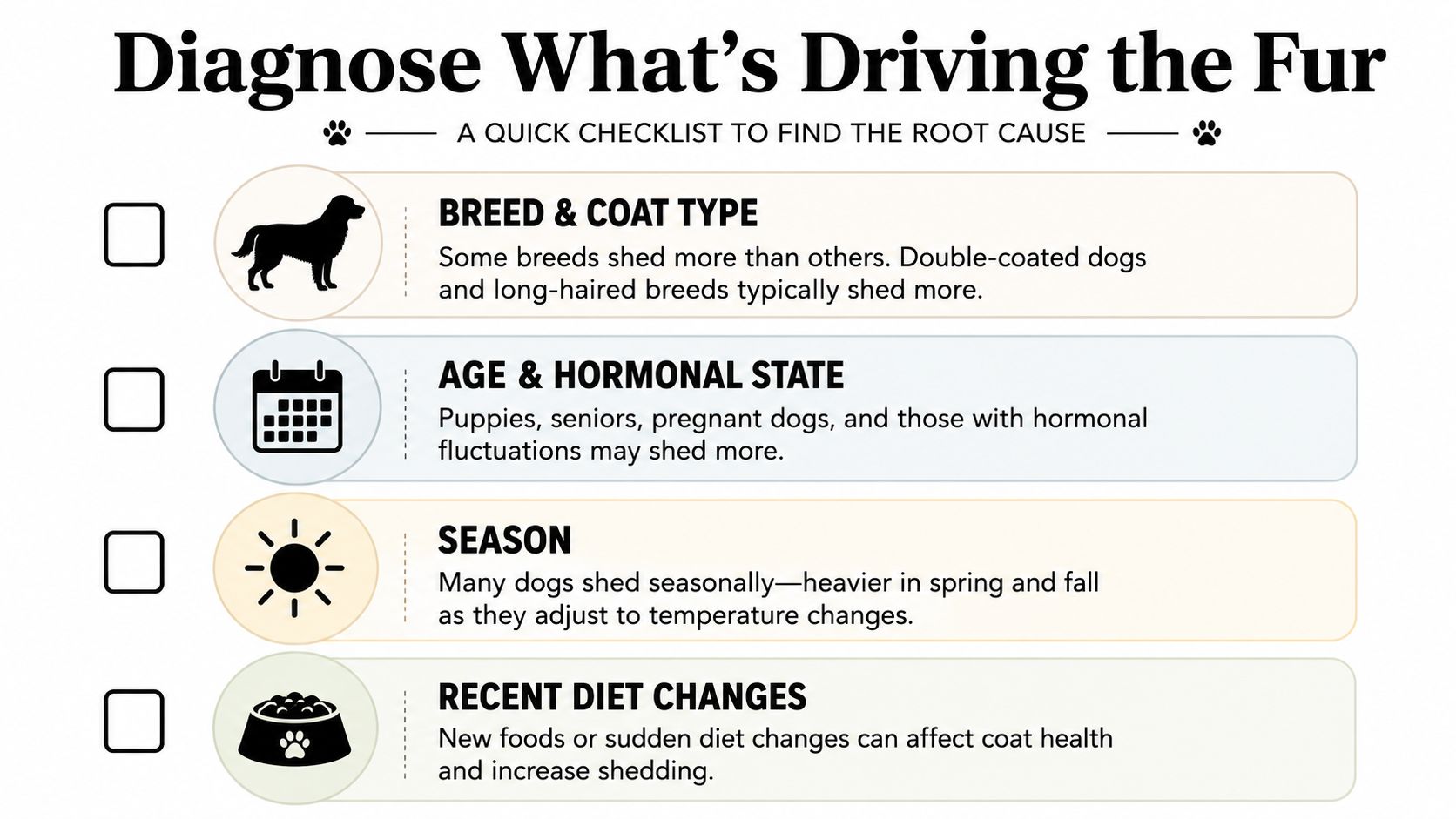
A Husky does not shed like a Beagle, and a senior dog does not shed like a young adult. Breed, coat type, and age set the baseline for how much hair you should expect to see, and that is where owners waste the most time. Double-coated breeds often blow out their coats seasonally, while short-haired dogs may shed less visibly but more steadily.
Understanding the shedding cycle
Shedding follows a normal coat cycle. Hair grows, rests, and releases when new hair is ready to come in. Dogs with different coat types, especially double-coated breeds, release more visible fur at certain times, and that pattern matters more than guesswork.
Practical rule: if you are trying to stop shedding completely, you are chasing the wrong goal. Tighten the routine, and the house gets cleaner.
Check the timing and the skin
Season matters too. Chewy's grooming guidance notes that many dogs shed more in spring and fall, so regular routines need to tighten during those coat changes (Chewy grooming guidance). If the shedding pattern changed suddenly, do not blame the brush first. Look at diet changes, stress, scratching, skin dryness, or a recent health issue.
A quick monthly check keeps you honest:
- Skin flakes: Dry, flaky skin points to a coat problem, not just loose fur.
- Bald patches: Missing hair in spots is not normal seasonal shedding.
- Oily feel: Greasy coat texture can mean the skin is not balanced.
- Scratching frequency: Constant scratching changes the whole picture.
- Water intake: Poor hydration shows up in coat quality sooner than many owners think.
WebMD's veterinary guidance notes that parasites, allergies, hormonal disease, poor nutrition, and stress can all cause abnormal hair loss, so a sudden change needs a closer look (WebMD excessive shedding in dogs). That is the cutoff I use with owners. If the shedding is even and seasonal, manage it. If the coat looks patchy, inflamed, or miserable, stop guessing.
Know when the coat is telling you something
Senior dogs deserve special attention because coat changes can hide other issues. A thinning coat in an older dog can look like normal aging until you notice scratching, weight change, or low energy. In El Paso's dry air, that kind of change stands out fast if you pay attention.
If the coat changed fast, the problem may not be grooming at all. Watch the skin, the appetite, and the dog's energy before you buy another tool.
The At-Home Grooming Workflow That Actually Works
Use the right order every time
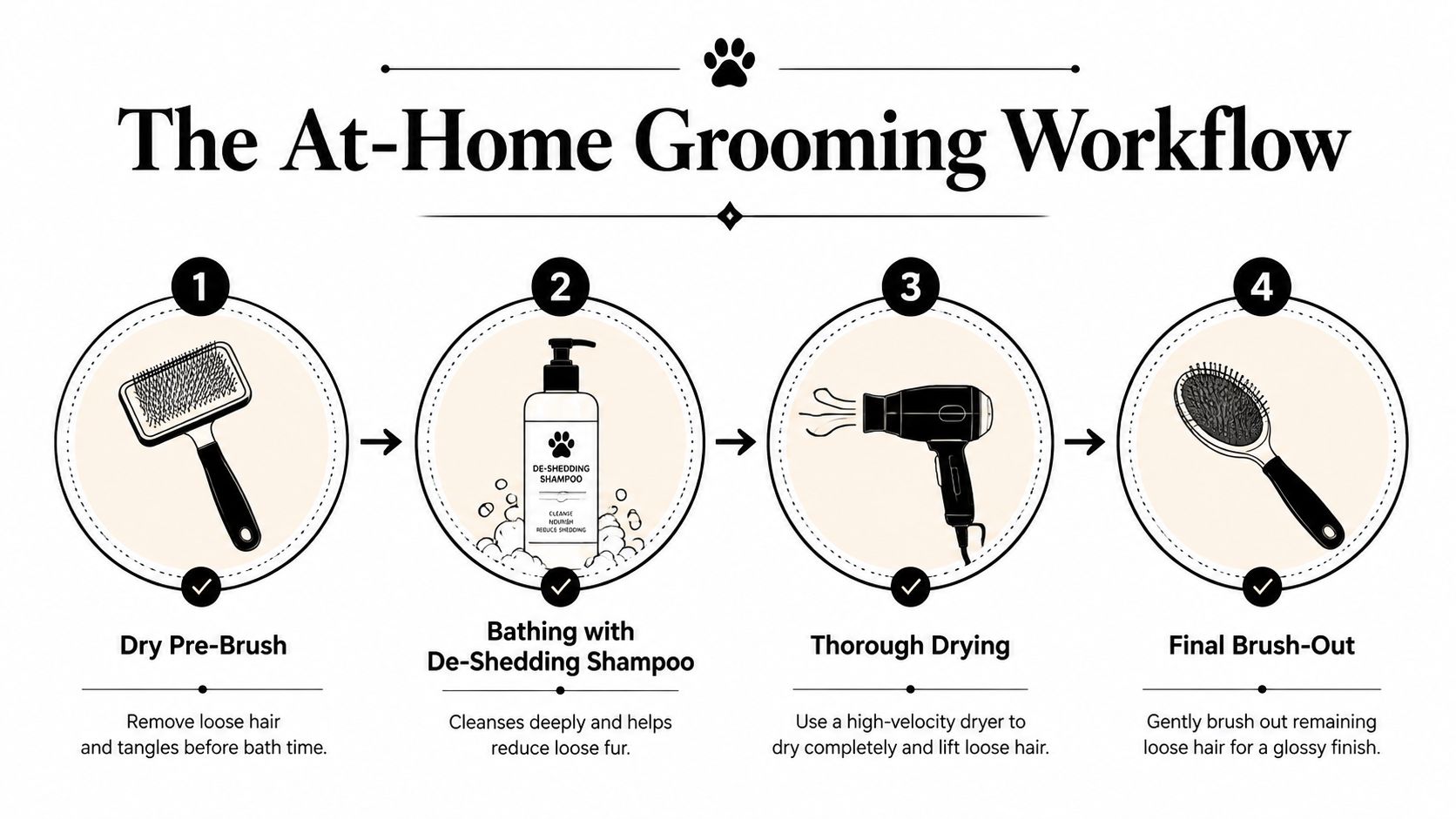
The best at-home shedding control follows a simple sequence. First, pre-brush the coat dry with a slicker brush or undercoat rake. Then bathe with a pH-balanced dog shampoo. After that, use a low-heat or cool blow-dry to push loose undercoat out, and finish with a second brush once the coat is fully dry.
That order matters because wetting mats tightens them and traps loose hair. It also matters because incomplete drying ruins the result. Grooming educators stress that the coat must be 100% dry before de-shedding, because damp undercoat stays compressed and keeps the hair locked in place (grooming workflow guidance).
Match the tool to the coat
Don't use the wrong tool and blame the dog. A bristle brush fits short, smooth coats. A slicker brush works better on medium or curly coats. A rake is the right call for long coats, especially when the undercoat is packed.
Texas A&M says brushing 3 to 4 times a week for 5 to 10 minutes is a practical standard, with weekly baths during heavy shedding and 2 to 3 times a month when the coat is calmer (Texas A&M dog shedding guidance). That's a real routine, not a wish list. If you can't keep up with that pace, the home setup isn't enough by itself.
PetMD also notes that routine brushing with the right tools, including a slicker brush, FURminator, or hand mitt, removes dead hair before it drops around the house (PetMD excessive shedding guidance). I'd add this from the floor-level reality of grooming in El Paso, short sessions done consistently beat heroic weekend efforts every time.
Best practice: brush dry, bathe clean, dry completely, then brush again. Skip any step and you leave hair behind.
If you want a deeper technique breakdown, the brushing method I trust is laid out here: how to brush dog hair. Use it as a standard, not a suggestion.
When a Professional Studio Beats the Living Room
A clean kitchen floor does not mean a clean coat. Home grooming handles routine shedding, but it reaches its limit when the undercoat is packed, the dog is anxious, or the drying step keeps getting rushed or skipped. At that point, a disciplined studio setup earns its place.
Why a one-on-one room gets better results
A calm, limited-traffic studio keeps the whole appointment on track. There is no scramble to push the next dog through, no constant noise, and no unfinished coat because the schedule is overloaded. A one-on-one workflow lets the groomer follow the full sequence correctly, pre-brush, bathe, dry with control, then hand-finish the coat.
That matters because the same process that works at home works better when it is done with professional tools and trained eyes. Specialty de-shedding shampoo, high-velocity drying, and a careful brush-out remove loose coat that casual grooming leaves behind. Professional grooming every 4 to 6 weeks helps keep shedding at a minimum because the coat gets cleaned out before the loose hair lands all over the house.
For owners who want a structured treatment instead of guesswork, a dedicated deshedding treatment for dogs keeps the process focused from start to finish.
Chains and premium studios do not run the same way
Big-box grooming can handle simple clipping. It is not built for the same disciplined, low-distraction coat work a premium grooming shop delivers. If a dog needs a slow, controlled de-shedding session, the environment matters as much as the brush.
Glo More Grooming in El Paso keeps that standard tight, with a home-based, one-on-one setup and a monthly Snip & Style Saturday full-groom promo at $55 for all sizes. The point is consistency. Families can keep premium pet grooming on the calendar instead of treating it like an emergency cleanup.
What a pro session catches that home care misses
A professional de-shedding visit also gives you a second set of eyes. A groomer spots skin irritation, greasy patches, coat breakage, and areas where the dog is shedding in a pattern that does not look normal. That early read saves time and keeps a small coat issue from turning into a bigger one.
A good grooming appointment should feel methodical, calm, and finished all the way through.
If you are comparing options for El Paso dog grooming, look for discipline, not just convenience. More dogs in the building does not mean better care. A tighter workflow usually does the job better.
Feeding the Coat From the Inside Out
The brush removes what is already loose. The diet decides how much loose hair is waiting to come out in the first place. That is why coat care starts in the bowl, not just on the grooming table.
Keep the basics steady
A balanced diet, omega-3 and omega-6 fatty acids, and steady hydration support skin and coat health. PetMD links diet, water intake, and coat condition to shedding, and it ties grooming results to consistent care and proper nutrition (PetMD shedding guidance). Keep food consistent, keep fresh water available, and stop changing meals without a clear reason.
Choose food with quality in mind. A high-protein dog food can support better coat condition over time, and Glo More Grooming points clients toward that kind of nutrition support on its site here: high-protein dog foods.
A steady feeding routine does more for shedding control than random diet experiments. Dogs in dry climates show the effects of sloppy nutrition fast, especially when the coat is already under stress from heat, dust, and indoor air.
Don't fall for shortcut thinking
Supplements and moisturizing shampoos can help coat quality, but they supplement grooming rather than replace it. Hound Therapy's de-shed guidance makes that point clearly, noting that de-shedding removes visible loose coat but does not stop shedding entirely (Hound Therapy de-shed guidance). That is the right mindset. Improve the coat, and you reduce the mess. Chase a miracle, and you waste money.
The two mistakes I see most often are over-bathing and human shampoo. Over-bathing strips protective oils and can leave skin dry. Human shampoo is built for human skin, not dog skin, so it can throw the coat off and make shedding worse.
Build a sane feeding rhythm
- Stick to a consistent diet: Constant switching makes it harder to read coat changes.
- Keep fresh water available: Dry skin shows up fast when hydration drops.
- Use dog-safe shampoo only: The right pH matters.
- Think support, not cure: Food and supplements help the coat hold up, but they do not replace grooming.
A premium grooming standard looks at coat health from every angle, not just a nice haircut. Feed the coat well, and the brush has less cleanup to do.
Winning the Battle Inside the House
A windy spring weekend in El Paso can undo a lazy grooming routine in a day. The dog shakes off after a walk, dust rides in on the breeze, and loose hair clings to the sofa before you've finished the coffee. That's not a failure, it's a signal that the home needs to work like part of the grooming system.
Clean where the dog lives, not just where you notice hair
Start with the resting zones. Washable throws on the bed, couch, or crate give you a fast reset point, and a quick vacuum on those surfaces prevents fur from packing into fabric. Use the right upholstery attachment, because a basic floor head won't pull hair out of seams and corners.
If you deal with allergies, HEPA filtration helps keep the fur and dust from getting kicked back into the room. A small brush-and-wipe station by the door also cuts the mess before it spreads. Keep a mitt, a towel, or a grooming brush there, and use it right after the dog comes in.
Time the cleanup to the grooming
Vacuuming immediately after a de-shedding session is not optional if you want the house to stay ahead of the mess. Brushing lifts hair, but some of it ends up on the floor, on the table, or in the air before it settles. Clean it up while it's still loose.
That habit turns the house into part of the workflow instead of a separate problem. Dogs shed, but they don't have to rule the furniture. A steady cleanup rhythm keeps the fallout manageable.
The best home setup is boring. You don't want a dramatic cleanup day, you want a system that never lets the fur pile up.
Keep it simple enough to repeat
Don't build a house routine you'll ignore after three days. A quick vacuum, a washable cover, and a brush by the door do more than fancy gadgets you never reach for. In El Paso, discipline beats decoration every time.
| Recommended Grooming Frequency by Coat Type | Brush at Home | Bath Cadence | Pro Grooming Visit |
|---|---|---|---|
| Short coat | Frequent brushing with a bristle brush or grooming mitt | About once a month, more often during heavier shedding | Every 8 to 12 weeks for many short-haired dogs |
| Medium or long coat | Brush several times a week with a slicker brush or rake | About once a month, tighter during spring and fall | Every 4 to 6 weeks for many undercoated or long-haired dogs |
| Heavy seasonal shedder | Short, repeated sessions work better than long ones | Every 2 to 4 weeks in peak shedding periods | Regular professional de-shedding on a set schedule |
Your 30-60-90 Shedding Plan and When to Call a Vet
Days 1 to 30
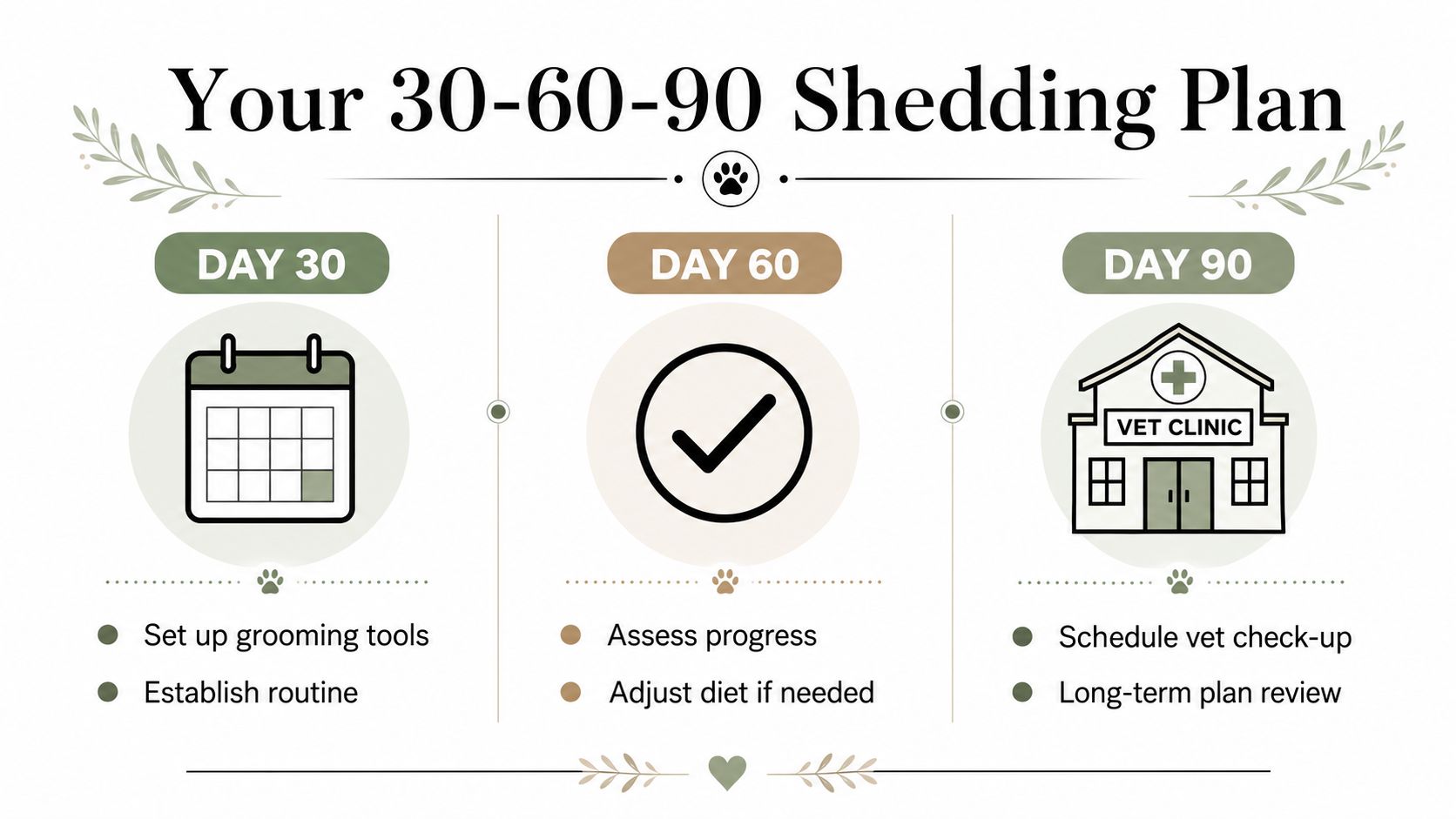
Set the tools first, then set the baseline. Pick the right brush for the coat, choose a safe shampoo, and get a professional starting point so you know what the coat looks like when it is handled correctly. If you want a routine you can keep, the first month needs structure, not guesswork.
Days 31 to 60
Tighten the schedule. Brush on the right days, watch the skin closely, and keep the diet steady so you can tell what is helping and what is noise. If the dog is still dropping hair all over the house, the routine is too loose or the coat needs a professional pass.
Days 61 to 90
Lock in the rhythm. Keep recurring grooming, adjust for the season, and follow a maintenance cycle you can maintain without scrambling. Snip & Style Saturday works well as a monthly reset for families that want an affordable grooming promo with a clean finish and no guesswork.
Know when the problem is medical
Some shedding is not a grooming issue. Bald patches, hot spots, sudden coat thinning, persistent scratching, greasy or smelly skin, and shedding paired with lethargy or weight change deserve a veterinary look. Sudden shedding paired with skin changes, lethargy, or weight loss should be evaluated by a veterinarian.
If the coat changed fast, stop experimenting at home. Book the vet if the dog looks uncomfortable, the skin looks wrong, or the shedding pattern does not fit the season. That is the line between maintenance and medicine.
Glo More Grooming keeps shedding control disciplined with one-on-one premium pet grooming, careful coat work, and a calm studio standard built for El Paso dogs. If you are ready to stop guessing and get a tighter routine, visit Glo More Grooming to book a session, reserve a Snip & Style Saturday slot, and give your dog a grooming plan that holds up.