
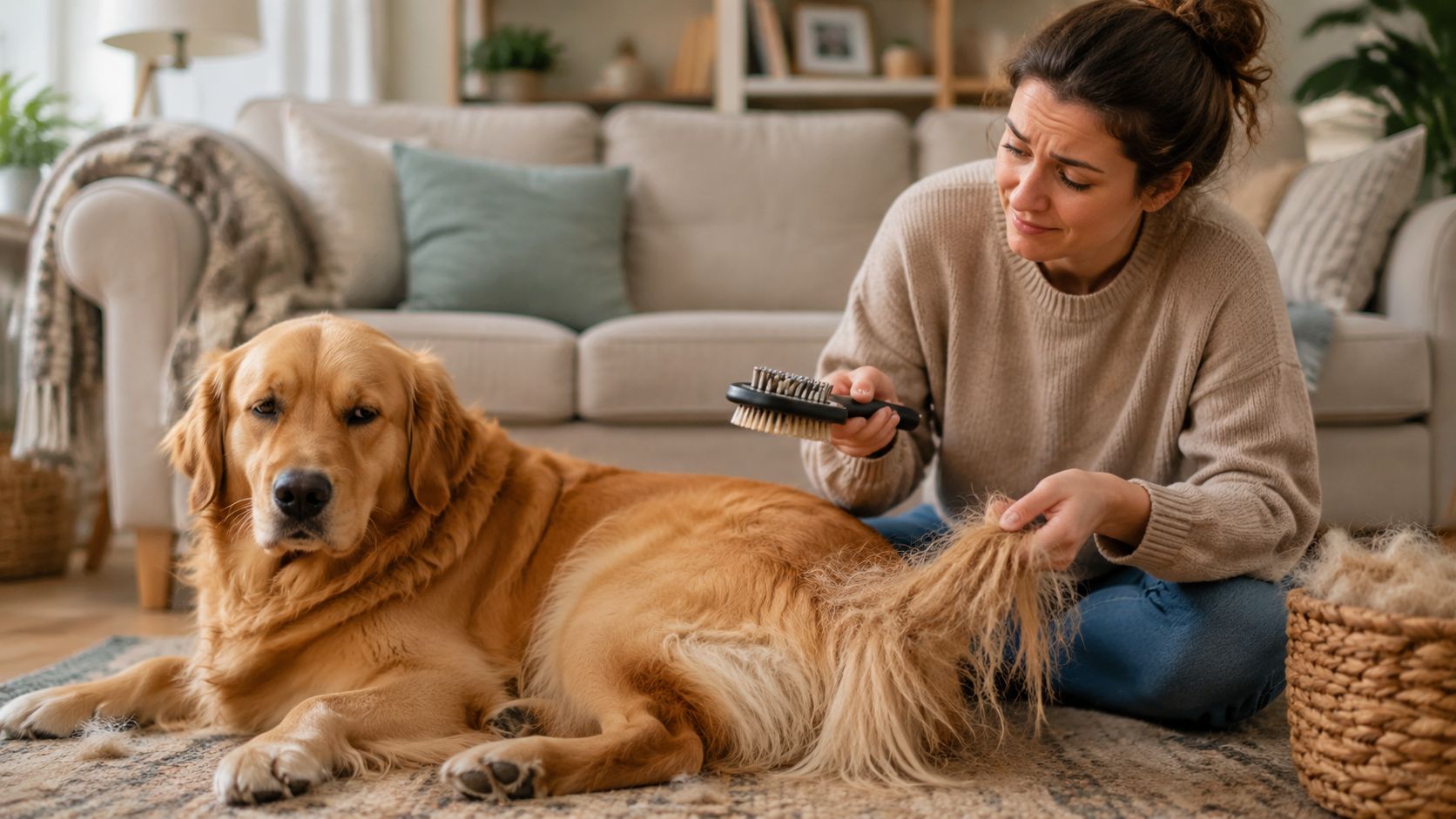
You're on the floor with a brush in one hand, treats in the other, and your dog is already over it. The top of the coat looks smooth, but the second you touch the legs or behind the ears, you hit snags. You brush longer, your dog gets less patient, and somehow the coat still doesn't feel fully clean or clear.
That's where most home routines break down. Brushing isn't just about making the coat look neat. It's a hands-on health check, a comfort issue, and a discipline issue. If the brush never reaches the skin, the coat can look fine on top while mats build underneath.
In El Paso, where dust, heat, and busy schedules can throw off even a good routine, pet owners need a method that works under real conditions. A veteran-owned standard starts with the same principle every solid operation does. Use the right tool, follow a repeatable workflow, and don't cut corners on safety.
Beyond the Basics Brushing with Purpose and Precision
A rushed brushing session usually fails for one reason. The owner is trying to cover the whole dog quickly instead of brushing with a clear purpose.
That difference matters. A disciplined brushing routine protects comfort, catches trouble early, and keeps your dog from carrying hidden mats that only show up when they're already tight to the skin. Premium grooming standards aren't about fancy language. They're about doing the job thoroughly enough that your dog feels the difference.
Why surface brushing doesn't hold up
A lot of owners brush what they can see. That works on a sleek coat for basic cleanup, but it doesn't hold up on dense, long, double, or curly coats. The outer layer can look polished while the undercoat stays packed.
That's why brushing needs a mission. You're not just removing loose hair. You're checking whether the coat is open, whether the skin can breathe, and whether high-friction areas are starting to bind up.
Practical rule: A clean-looking topcoat doesn't prove the coat is fully brushed.
The standard worth keeping
The best home routines follow the same values that define strong grooming work anywhere. Greatness means you don't settle for “good enough.” Loyalty means you handle your dog with patience, not force. Ownership means you take responsibility for the coat between appointments instead of waiting until small tangles become a hard reset.
That mindset is what separates premium pet grooming from chain-style volume work. Big-box environments can feel rushed and impersonal. A disciplined local approach keeps the focus on the dog in front of you.
For El Paso dog grooming, that local mindset matters. Dogs here deal with dry conditions, outdoor debris, and seasonal shedding swings. A brushing routine with purpose keeps the coat healthier, reduces avoidable discomfort, and makes every professional appointment easier on the dog and the owner.
Selecting the Right Brushes for Your Dog's Coat
Tools matter because every coat has a different job to do. If you use the wrong brush, you waste time. In some cases, you also create pain, breakage, or fresh tangles.
The biggest mistake I see owners make is assuming one brush can handle every coat and every condition. It can't. Coat type decides the tool. Coat condition decides how you use it.
Match the tool to the mission
Here's a practical guide for how to brush dog hair with a more professional setup.
| Coat Type | Primary Brush | Purpose | Secondary Tool |
|---|---|---|---|
| Short to medium straight or wavy coat | Slicker brush or bristle-style brush | Lift loose hair and smooth the coat back into place | Metal comb for finishing and detail work |
| Long coat | Pin brush or slicker brush | Open the coat in workable sections and remove tangles | Metal comb to confirm the coat is clear to the skin |
| Double coat | Slicker brush or undercoat-focused brush | Work through packed coat and remove loose undercoat methodically | Metal comb for spot checks and finishing |
| Curly or non-shedding coat | Slicker brush | Separate dense hair and help locate hidden tangles | Metal comb for final skin-level verification |
If your dog blows coat or leaves hair all over the house, a breed-specific shedding setup helps. For a more detailed breakdown, review this guide on choosing a dog brush for shedding.
One warning most owners never hear
Slicker brushes and combs must never be used on wet hair. Wet hair stretches up to 30% more than dry hair, which makes it more likely to snap when a metal comb drags through it, and that can create micro-tangles that later harden into mats, as noted in this professional dry-first dematting warning.
That's why a dry-first dematting protocol works better. If the coat is damp after a bath, dry it first. Then use your fingers to loosen problem spots before bringing in a slicker or comb.
Brushing a wet coat to “save time” usually creates more work later.
Practical tool choices that work
A few tool decisions make home grooming far more effective:
- For short coats: Use a brush that can lift loose hair, then smooth the coat back down.
- For long coats: Pick a brush that can open sections without skimming the surface.
- For dense or curly coats: Keep a metal comb on hand. It tells you whether the coat is clear.
- For face and paw work: Use a lighter hand and slower pace than you use on the body.
Affordable grooming promo offers can help with maintenance between full sessions, but even the best promo doesn't replace the need for correct tools at home. Professional results start with professional choices.
The Glomore Grooming Brushing Method
Most brushing problems come from one bad habit. Owners brush across the top of the coat instead of through it.
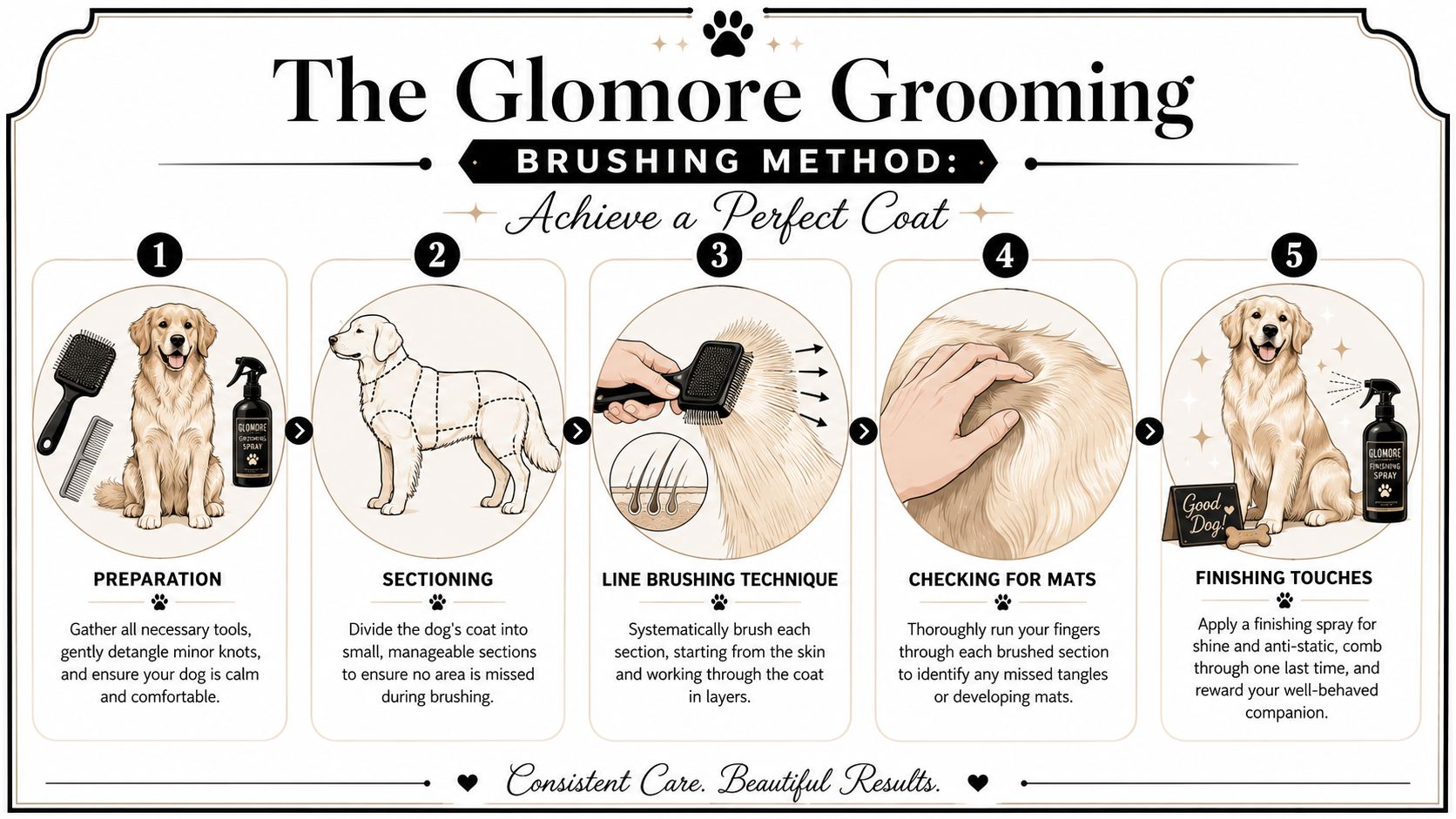
The professional fix is line brushing. It's the most effective methodology because you lift a section of hair, expose the skin, and brush the underside in small, sequential sections before moving up. If you skip that section-by-section approach, at least 80% of mats are missed in the undercoat, according to this line brushing guidance from Chewy.
Step one starts before the first stroke
Set your dog up on a stable surface. A towel-lined area helps catch loose hair and keeps the dog from sliding. Start only when the dog is calm enough to tolerate handling.
Have your brush, comb, and treats ready before you begin. Once you stop and restart too many times, a lot of dogs lose patience.
The actual line brushing sequence
Lift a small layer of coat with your free hand. Brush the hair underneath that lifted section in short passes. Then move up slightly and repeat.
This is the standard:
- Lift the coat: Create a clean line so you can see the skin.
- Brush underneath: Work from the exposed base of the hair outward.
- Move in small sections: Don't jump around the body.
- Check your work: If you can't see the skin while working, you're likely only brushing the top layer.
That skin-visibility check is the part many owners miss. On dense or non-shedding coats, that's the difference between actual maintenance and a cosmetic pass.
If you can't see the skin as you part the coat, you're not brushing all the way through.
Use a body order that reduces stress
A consistent pattern helps the dog know what's coming. The recommended order is Head, Back, Sides, Legs, then Tail, moving front to back and top to bottom, with a final metal comb check to make sure it glides through to the skin. That same routine also calls for a gentle, kind stroke and treat-based reinforcement during the session, as explained in this step-by-step brushing routine from Artero.
A few technique details matter:
- On short to medium straight or wavy coats: Brush against the grain first, then brush the coat back into place.
- Near the paws: Brush toward the paws, no matter where the hair sits on the body.
- Around the face: Cover the eyes with your hand while brushing to protect them.
- On the belly, genital, and anal areas: Slow down and handle these zones with extra care.
Legs deserve patience. They're a common trouble spot for matting, and working one leg per session can be the smarter move for dogs that get irritated easily.
Tackling Tangles Mats and Loose Hair
Not every tangle is a crisis. Some are small enough to work out safely. Others need professional handling before the dog ends up with pain, skin irritation, or a risky at-home cut.
The key is judgment. A disciplined owner knows when to maintain and when to call for backup.
What you can handle at home
A manageable tangle usually feels localized and still has some movement in it. You can separate a bit of hair with your fingers, support the base near the skin, and work slowly with a gentle stroke.
Use the same calm brushing order each time. Treats given at intervals help many dogs stay patient and cooperative, especially when you're dealing with a sensitive area rather than an easy stretch of back or side coat.
For owners who need a better maintenance routine, this guide on detangling dog hair safely is a solid next step.
What needs a groomer
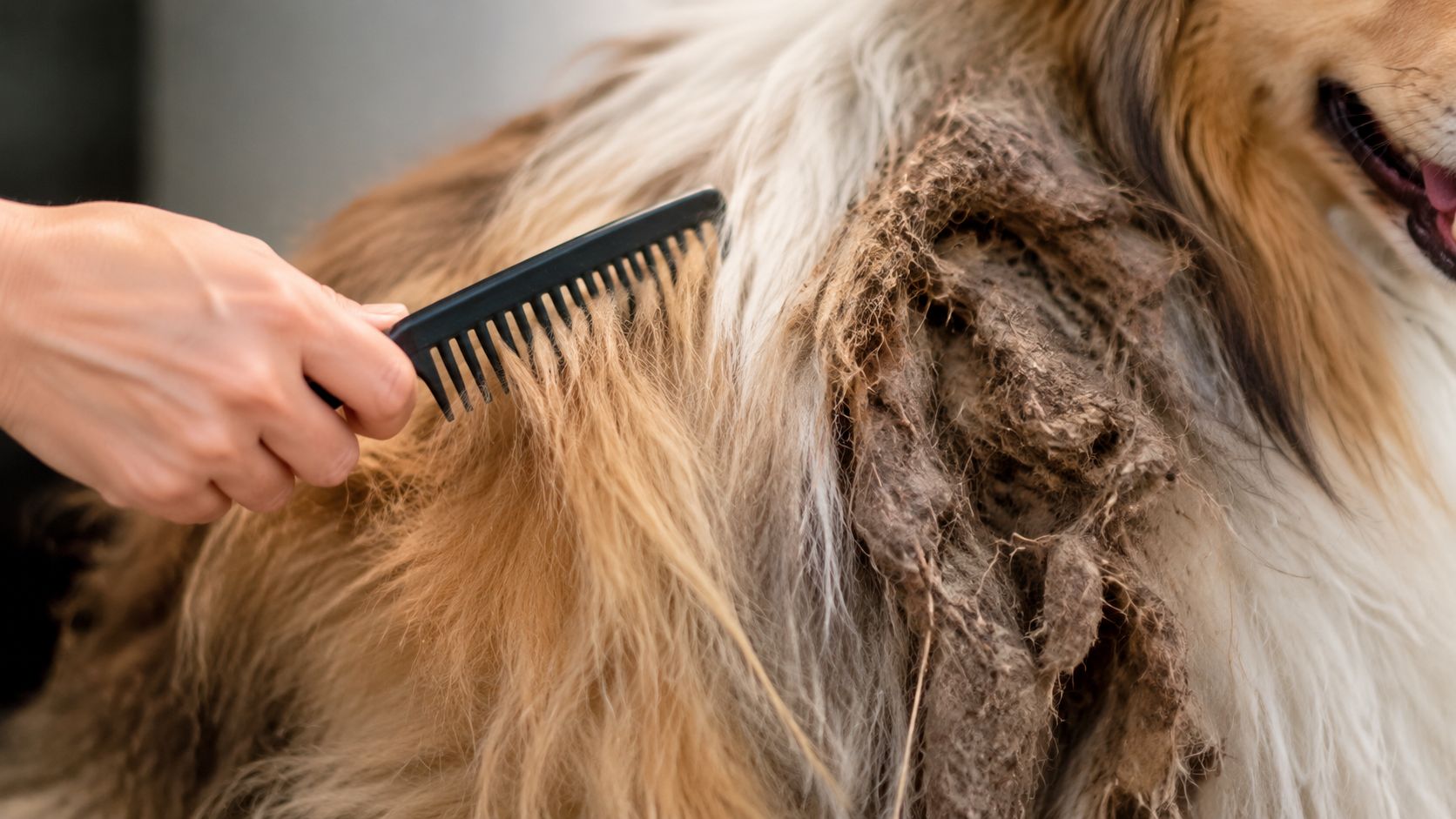
A mat has crossed the line when it's tight, widespread, close to the skin, or sitting in a friction zone like the armpit, behind the ears, near the collar area, or along the legs. Don't reach for scissors. Home cutting around mats is where accidents happen.
Watch this handling example before you try to work through a more difficult coat:
Use this quick filter:
- Work it out at home if: The tangle is small, the coat still separates, and your dog stays calm.
- Stop and book help if: The coat feels felted, the dog reacts sharply, or the skin underneath looks red or tender.
- Adjust for shedding season: Brush more often when loose coat starts building fast, especially in El Paso when dry weather and outdoor dust make hair pack together sooner.
When to Call for Professional Grooming in El Paso
Some coats move beyond home maintenance. That doesn't mean you failed. It means the dog needs a safer setup, better tools, and experienced hands.
If your dog has broad matting, skin sensitivity, strong resistance to brushing, or problem areas that keep returning, it's time to stop wrestling with the coat and book a professional. That decision matters even more if your dog gets anxious in high-traffic chain environments.
What to look for in a local groomer
In El Paso, standards matter. A city ordinance effective January 1, 2021 requires dog groomers to hold a license, complete formal training, obtain certification, and undergo a background check, according to this El Paso grooming ordinance report.
That should shape how owners choose care. Ask direct questions. Is the environment calm? Is the dog handled one-on-one or rotated through a busy back room? Is the workflow organized, or is your dog one of many stacked into a chain-style schedule?
Why local, one-on-one care stands out
A controlled appointment is often the better choice for nervous dogs, senior dogs, and coats that need patience. That's where a one-on-one dog grooming experience stands apart from larger chains like PetSmart or Petco.
Local owners also appreciate practical access points, not just premium language. A monthly example is Snip & Style Saturday, an affordable grooming promo that gives El Paso families a way to stay on schedule without lowering standards. That mix of precision and accessibility is what premium pet grooming should look like in a real community.
For busy households, veteran-owned grooming also signals something important. Clear standards. Accountability. Long-term thinking. Not just getting the dog out the door, but building a care routine that holds up over time.
Your Commitment to Greatness Loyalty and Ownership
A strong brushing routine says a lot about the owner behind it. It shows patience, consistency, and respect for the dog's comfort. That's what Greatness, Loyalty, and Ownership look like in daily practice.
Home care matters, but standards matter too. Professional grooming isn't just about a cleaner outline or a nicer finish. Safety is part of the service. The Pet Groomers and Stylists Alliance requires that no pet be left unsupervised on the grooming table or in the bathing tub, and that pets are closely and frequently monitored during drying, as stated in these professional grooming standards.
Keep the standard high
If you want your dog's coat in better condition, stick to the basics that work:
- Use the right brush: Match the tool to the coat instead of forcing one brush on every dog.
- Brush with a system: Calm dog, controlled setup, repeatable order.
- Respect the limits: Small tangles can be maintained. Tight matting needs professional handling.
- Choose accountable care: El Paso dog grooming should be safe, orderly, and transparent.
That's the difference between random upkeep and a real care standard. It's also why veteran-owned grooming resonates with so many families here. Discipline builds trust. Pride shows in the work. Resilience keeps the routine going even when life gets busy.
If you want support beyond home brushing, Glo More Grooming delivers premium pet grooming in El Paso with a calm, disciplined, veteran-owned grooming approach. Book now for one-on-one care, reserve your spot for the next affordable grooming promo like Snip & Style Saturday, or contact the team about concierge-level support for dogs that need specialized handling and dependable long-term care.