
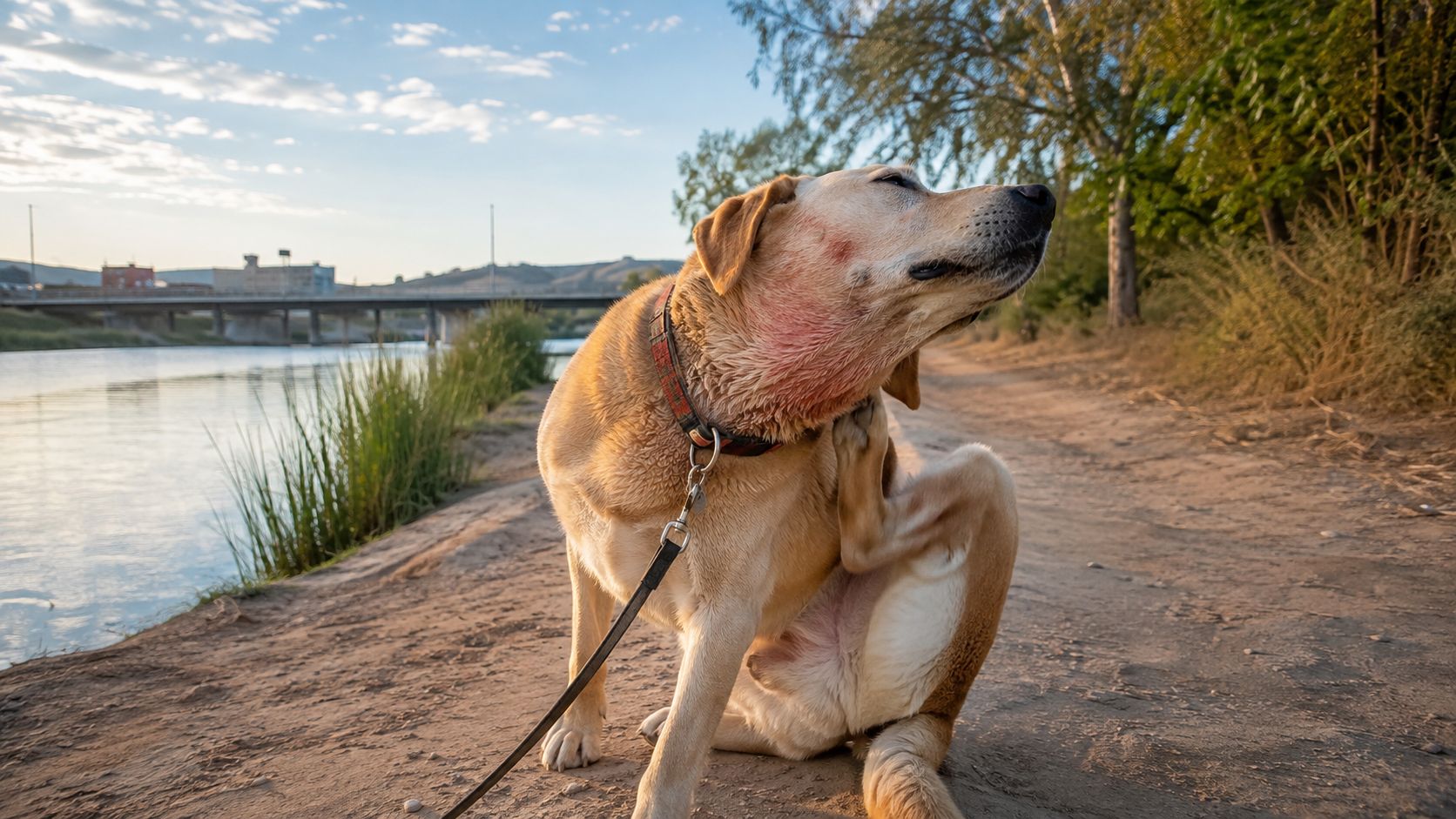
You pull your dog in from a late-June walk, and by the time you wipe off your shoes, he's back at the same spot behind his ear, scratching hard enough to make the skin look angry. In El Paso heat, that small irritation can turn into a wet, inflamed hot spot fast, and the clock starts running the moment the licking and chewing begin.
That's why hot spot spray isn't just another bottle on a shelf. Used early and used correctly, it can help calm the area, reduce microbial pressure, and give the skin a chance to recover before the problem spreads. In a climate like ours, where dogs deal with heat, dust, grass, and constant outdoor exposure, having a disciplined plan matters as much as having the right product.
Why Hot Spots Hit El Paso Dogs Harder Than Anywhere Else
A dog comes back from a walk near the Rio Grande, shakes out his coat, and starts working one spot near the neck like it's suddenly unbearable. By the time you part the fur, the skin is already red, moist, and irritated. That's the kind of flare-up I see in busy, real-world grooming, and in El Paso, the environment doesn't give that skin much mercy.
Hot spots, or acute moist dermatitis, are not slow, tidy problems. They can escalate quickly because the dog keeps scratching, licking, or chewing, which adds more trauma to already inflamed skin. Cornell notes that if a sore is more than 24 hours old, infection is likely and veterinary care is recommended, and it also warns that persistent licking and chewing can rapidly worsen the lesion. Cornell's hot spot guidance is the kind of reality check owners need before they assume a spray alone will fix everything.
Why local conditions make the problem feel bigger
El Paso dogs live with heat, dry air, and a lot of outdoor contact. Add in seasonal irritation, insects, and coats that hold debris close to the skin, and the odds of a flare-up go up. A tiny skin trigger can become a much larger problem when the coat traps moisture or the dog won't leave the area alone.
Practical rule: if your dog is scratching one place repeatedly, treat it as a skin problem first, not a behavior quirk.
That's why early hot spot spray use matters. The goal is to reduce surface irritation and keep the lesion from turning into a deeper infection while you're deciding whether home care is enough. For pet owners who want to build a prevention routine before summer peaks, preventative pet care belongs in the plan long before the next heat wave hits.
What Makes a Hot Spot Spray Work
A lot of products promise relief, but only some have meaningful veterinary support behind them. The most useful hot spot spray formulas rely on topical antiseptic logic, which means they are built to lower microbial load quickly while supporting local skin recovery. That approach matches what veterinarians have seen for years in canine bacterial skin problems, and it is the standard I look for before I put anything on an irritated dog in my El Paso studio.
The evidence favors chlorhexidine
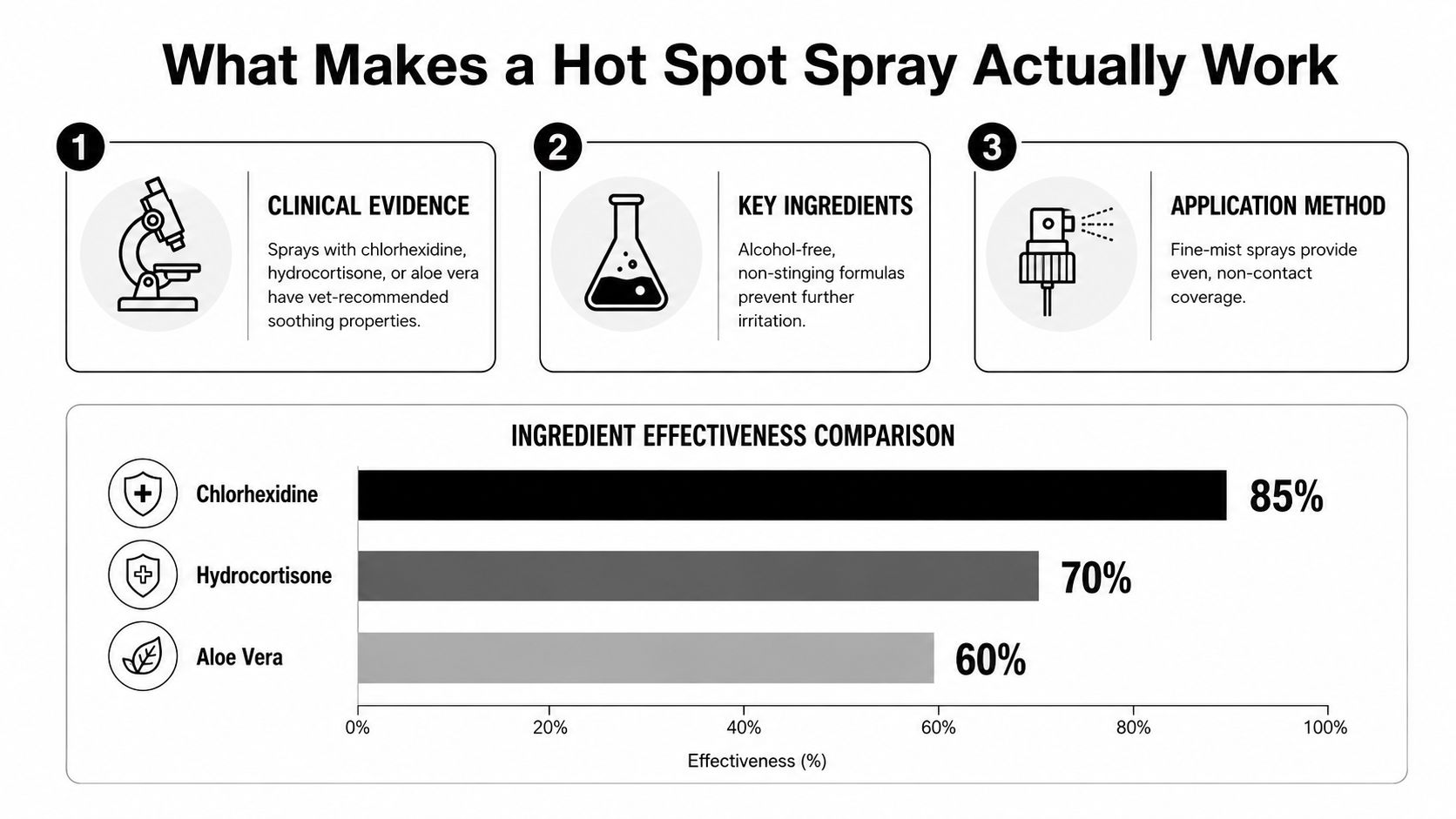
The strongest support in the verified data points to chlorhexidine. A 2012 review concluded there is strong evidence for chlorhexidine and, to a lesser degree, benzoyl peroxide in canine bacterial skin infections. More recent work points in the same direction. A 2021 randomized blinded trial reported chlorhexidine products resolved clinical signs in all dogs, including those with MRSP, and found topical chlorhexidine digluconate products may be as effective as systemic amoxicillin-clavulanic acid. A 2025 study showed daily topical application of 0.5% and 4% chlorhexidine significantly reduced skin bacteria after 2 weeks, while 0.05% did not produce a significant reduction. Veterinary dermatology review and related studies
That matters because the bottle label is not the whole picture. A spray that feels gentle is not automatically effective, and a strong scent does not mean the product is doing real work. In premium grooming, I read the label the same way I inspect a coat, carefully and without guessing.
What to look for in a formula
The practical qualities that usually matter most are straightforward. You want a product that can reach the skin, does not rely on unnecessary fragrance, and has a clear antiseptic purpose rather than vague comfort claims. A fine-mist application can help with even coverage, but the active ingredient still has to do the heavy lifting.
The bottle should tell you what it is for, what it contains, and how it is meant to contact the skin. If it is vague, I treat it as a weak choice.
A disciplined grooming workflow follows the same standard. You do not guess, and you do not spray blind. If you want a clean, skin-aware option built around sensitive-coat handling, sensitive skin dog shampoo belongs in the larger maintenance picture, even though it is not a treatment for an active lesion.
How to Prepare and Apply Hot Spot Spray Correctly
A good product still fails if the fur blocks it. Most owners don't underperform because they chose the wrong bottle, they underperform because they don't get the spray to the actual skin. That's the part a premium grooming routine never skips.
Start by opening access to the lesion
Part the fur away from the irritated spot before you do anything else. If the coat is dense or the area is matted, clipping may be necessary so the skin can be reached. The mechanical purpose is simple, the spray has to hit the lesion, not just sit on top of the coat.
Hold the sprayer close enough to control the pattern, then spray several times to cleanse the area. FDA-style directions in the verified data also emphasize spreading the fur away from the hot spot and using several sprays to cleanse the area. After that, wipe excess without pressing into the irritated tissue, because rubbing a raw hot spot only adds more trauma.
Use the regimen the label gives you
One medicated spray regimen in the verified data calls for twice daily for one week, then once daily for one more week, then every other day if needed. That kind of step-down schedule is typical of products meant for localized skin management, and it only works if the owner stays consistent. Skipping days, spraying too little, or smothering the area with product can all slow the response.
The main mistake I see is overconfidence. People spray once, the dog licks, the coat is still covering the area, and then they assume the product failed. Usually, the workflow failed.
- Part the fur first: The spray has to touch skin, not just hair.
- Clip if needed: Dense coat can hide the lesion and trap moisture.
- Cleansing beats guessing: Several sprays are meant to cleanse the area, not just perfume it.
- Leave the tissue alone: Wiping excess is fine, but rubbing the sore is not.
Ingredients to Look For and Ingredients to Avoid
A lot of consumer sprays sound soothing and end up being little more than packaging. I look at ingredients by what they do on irritated skin, not by the front label. If a bottle cannot clearly support a hot spot, it does not belong on one.
| Ingredient | Verdict | Why It Matters |
|---|---|---|
| Chlorhexidine | Look for it | Best-supported antiseptic in the verified data for canine bacterial skin problems, with newer studies showing meaningful microbial reduction. |
| Benzoyl peroxide | Can be useful | Supported to a lesser degree in the evidence base, so it belongs in the conversation but not above chlorhexidine. |
| Alcohol-heavy formulas | Avoid | They can sting irritated skin and make the dog fight the application. |
| Essential oils | Avoid | They add irritation risk without clear support for a hot spot lesion. |
| Human topical products | Avoid | Dogs lick, and products meant for people can be unsafe if ingested or used on compromised skin. |
| Vinegar or aspirin mixtures | Avoid | These DIY ideas show up often, but they lack reliable concentration control and can worsen the problem. |
Cornell's warning matters here, because human products can be harmful if ingested and dog-safe topical care is the better standard. That risk rises fast with hot spots, since dogs usually go straight back to licking the area. A product that seems harmless on paper can become a problem the moment it touches broken skin.
DIY sprays also tempt people because they sound cheap and quick, but hot spots do not reward guesswork. Concentration control, pH, and skin tolerance all matter, and most home recipes do not account for any of them. For owners building a calmer coat-care routine, grooming for sensitive skin is the right mindset, because prevention starts before the skin breaks.
When Home Care Is Enough and When to Call a Professional
A fresh, small spot can sometimes stay in the home-care lane if you catch it early and the dog quits chewing on it. The catch is that owners often wait until the skin has already turned angry and wet because the lesion looked minor at first. The same 24-hour threshold from Cornell applies here, if the sore has not improved within a day, professional care is the responsible move.
Watch for improvement, not just comfort
A working hot spot spray should make the area easier to manage, not just smell medicated. The signs are practical, the licking slows, the redness stops spreading, and the skin starts to dry instead of staying moist and inflamed. If the dog keeps going back to the same spot, the spray may still be fine, but the case has already moved past simple home care.
Persistent chewing changes the picture quickly. A spot that looks tolerable in the morning can look much worse by evening if the dog is left alone with it. I tell owners to treat the first day as a monitoring window, not a gamble on whether the skin will settle on its own.
If the dog will not leave the area alone, the wound is telling you more than the bottle is.
Escalate early, not late
Professional grooming and veterinary care are not a failure. They are the right next step when the lesion is older, deeper, or clearly not responding. In a disciplined studio, that means careful coat separation, hygiene-first handling, and a hard line between cosmetic grooming and skin intervention.
Glo More Grooming fits that bridge because the work is one-on-one and built around controlled handling, not rushed volume. In a chain setting, speed often wins. In a premium pet grooming studio, the dog's skin condition drives the workflow, not the clock. For owners who want a stronger daily routine between visits, how to brush dog hair gives a practical starting point.
Preventing Hot Spots Through Consistent Grooming and Aftercare
Hot spots don't start with the spray bottle. They start with trapped moisture, dirt, matting, and irritation that never got interrupted early enough. A steady grooming schedule cuts off those triggers before they turn into a red, chewing, miserable mess.
Build a routine that fits the season
In El Paso, that means paying attention when coats hold dust and when outdoor exposure ramps up. Brush regularly, check behind the ears, under the collar, around the legs, and anywhere fur mats against skin. If your dog gets sticky, dusty, or sweaty from a walk, don't let that sit until the next bath day.
Daily inspection is where prevention really happens. Look for a hot, damp patch, hair loss, or a spot the dog keeps revisiting with the tongue. Catching irritation early keeps you in the home-care lane instead of the urgent-care lane.
Use grooming as prevention, not cleanup
Regular professional grooming reduces the conditions that feed flare-ups, and that's where a one-on-one studio can stand apart from chain volume. Glomore Grooming's monthly Snip & Style Saturday promo is $55, and their grooming approach centers on a calm, controlled session rather than a rushed line of dogs. For owners who want a discipline-first maintenance habit, how to brush dog hair is a simple place to strengthen the routine.
Greatness, Loyalty, and Ownership only mean something when the work behind them is consistent. That's the long-term value of veteran-owned grooming, the standard holds up in hot weather, in allergy season, and when a small skin issue needs a careful human touch instead of another hurried appointment.
If your dog is scratching, licking, or already fighting a hot spot, don't wait for it to get worse. Glo More Grooming in El Paso offers disciplined, one-on-one premium pet grooming with a calm process that supports skin health and careful aftercare. Visit Glo More Grooming to reserve a consult or claim a promo slot before the next flare-up hits.