
Your terrier looked sharp after the last groom. Then a few weeks passed, and something felt off. The coat lost that crisp, wiry finish. The color looked flatter. The jacket felt soft instead of resilient.
That's usually the moment owners realize a standard clip didn't preserve the coat they thought they were maintaining.
Hand stripping dog grooming is the answer for many wire-coated breeds, but it isn't a quick add-on or a cosmetic trick. It's a specialized craft built on timing, restraint, coat knowledge, and disciplined handling. In a city like El Paso, where pet owners are paying closer attention to grooming standards, that distinction matters. It affects coat texture, skin comfort, long-term upkeep, and whether your dog still looks like the breed in front of you.
The Art and Science of a True Wiry Coat
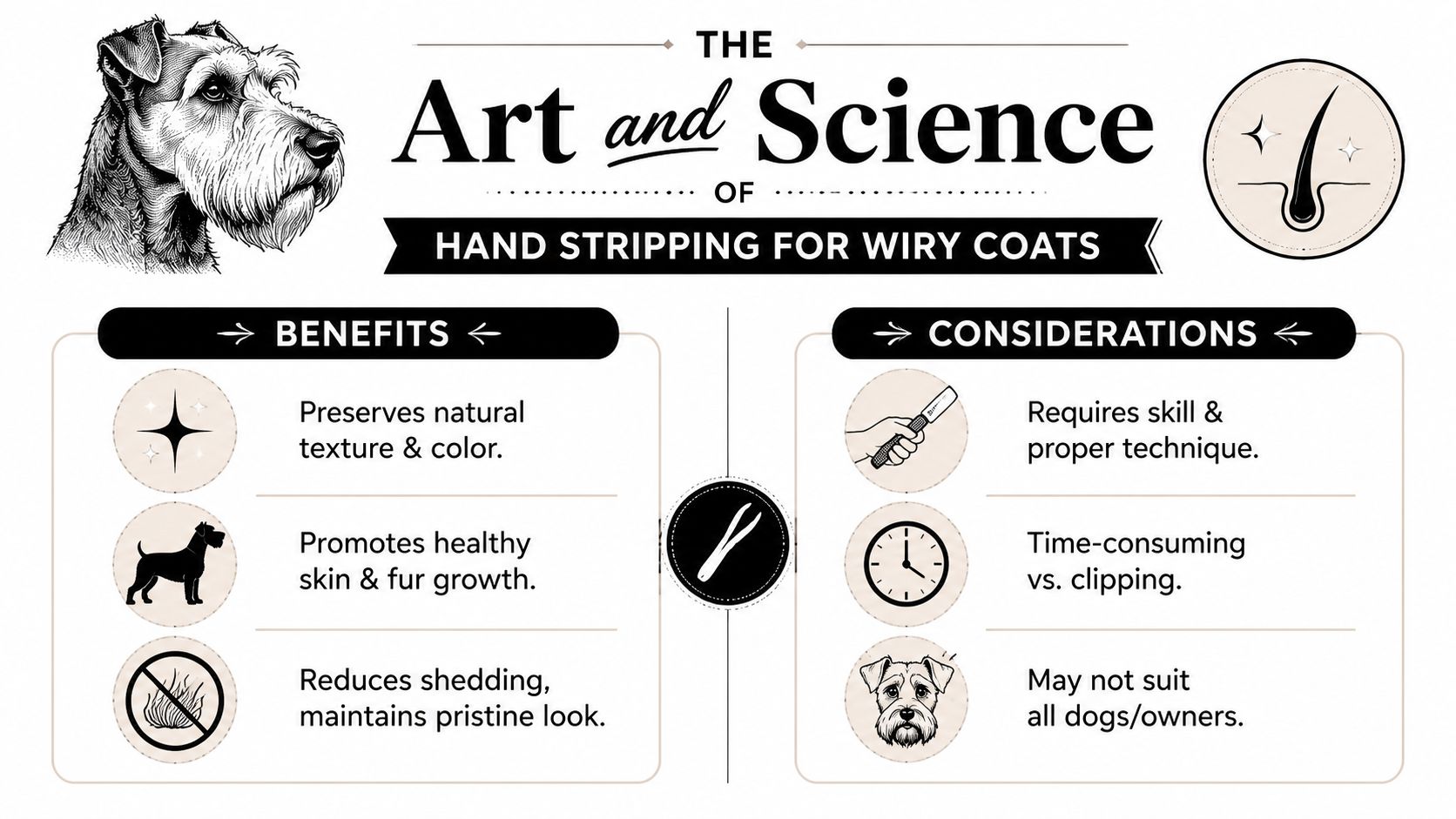
Hand stripping is a specialized grooming technique for wire-haired dogs, especially Terriers. The groomer manually removes dead outer guard hairs so the coat keeps its natural texture, pigment, and functional health. For most dogs, it's commonly recommended every 6 to 8 weeks according to MOSA Pet Spa's hand stripping overview.
Why clipping changes the coat
A clipper cuts hair at the surface. It does not remove the dead coat from the root. On a wire-coated dog, that shortcut often leads to the exact problems owners notice later. The coat softens, the color can dull, and the breed's proper harsh finish starts to disappear.
That's why breeds such as the Jack Russell Terrier, Scottish Terrier, and Wire-haired Fox Terrier often need a different approach than the average salon trim. Their coats were built to function a certain way. If you keep clipping a coat that should be stripped, you train the texture in the wrong direction.
Practical rule: If a wire coat keeps getting fluffier after every groom, the problem usually isn't shampoo. It's the grooming method.
What hand stripping actually preserves
Done properly, stripping removes dead guard hairs from the root so stronger new coat can come in behind them. That keeps the jacket firm, tidy, and closer to its original form. It also supports cleaner color and more consistent skin health over time.
Owners often think this is only for show dogs. It isn't. A pet terrier still benefits from the correct coat care, even if the goal is a manageable family companion rather than a ring-ready finish.
Here's where disciplined workflow matters:
- Correct timing matters: Some dogs are stripped during the seasonal shed, often in spring and autumn, when the coat is ready for a fuller renewal.
- Maintenance matters too: Other dogs do better on a rolled coat, where smaller sections are stripped every 2 to 4 weeks to keep the jacket even and tidy.
- Breed integrity matters: Hand stripping is the method that preserves the hard feel clipping can gradually erase.
Why this matters to El Paso owners
In a dry, demanding climate, coat function matters as much as appearance. Owners looking for El Paso dog grooming that respects coat type need to know the difference between a service that's fast and a service that's right. A true wire coat isn't maintained by rushing it. It's maintained by respecting how that coat grows, sheds, and renews itself.
Assembling Your Hand Stripping Toolkit
The biggest mistake beginners make is thinking the tool does the work. It doesn't. The tool only supports your grip, your timing, and your judgment.
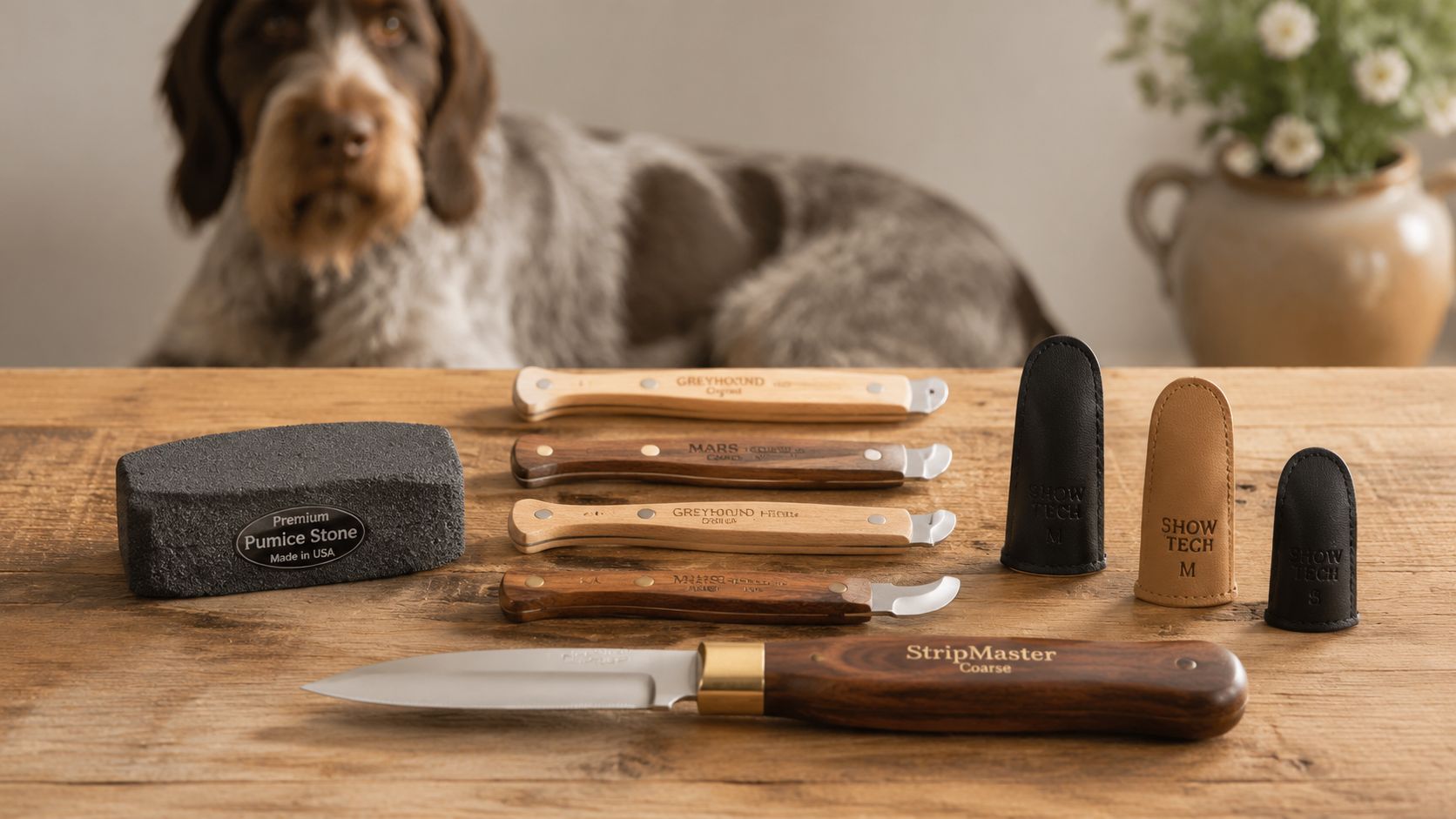
A disciplined setup for hand stripping starts with the right equipment in the right order. According to Christies Direct's hand stripping basics, core tools include latex gloves, grooming powder, stripping lava stones, and fine, medium, and coarse stripping knives. Stones are used for top trimming, knives for thinning, and the blade must be dull enough that it grips rather than cuts. You know the knife is functioning correctly when the removed hairs have roots and vary in length.
What each tool is for
Not every coat needs the same grip or finish. That's why professionals keep options on hand.
| Tool | Purpose in the workflow |
|---|---|
| Latex gloves | Improve grip and reduce hand fatigue during repetitive pulling |
| Grooming powder | Adds traction so dead coat can be held cleanly |
| Stripping lava stone | Useful for top trimming and refining the surface |
| Fine knife | Better for detail work and sensitive transitions |
| Medium knife | A reliable general-purpose option on many jackets |
| Coarse knife | Helps move through heavier or more mature coat |
The knife should not cut
That point needs to stay front and center. If the knife slices hair, you're not hand stripping. You're creating a clipping problem with a different handle.
A proper stripping knife is dull enough to hold dead hair without acting like a blade. In practice, that means you inspect what comes out. If you're seeing roots and uneven hair lengths, the tool is helping you pull. If the hair is uniformly cut, stop and reassess.
A stripping kit should support control, not speed. Speed without control ruins texture.
Clean coat is not always the right starting point
Many owners assume every grooming service begins with a fresh bath. Hand stripping doesn't work that way. A coat that's too clean can be harder to grip and harder to strip effectively. Preparation for this service is about traction, timing, and coat readiness, not making the dog look polished before the work starts.
If you're building your own setup, keep your tools simple and functional. A professional-quality work area matters more than having a drawer full of gadgets. For owners comparing equipment, a practical starting point is this guide to dog grooming supplies.
The Hand Stripping Technique Step by Step
Good hand stripping is calm work. You don't attack the coat. You read it, test it, and work with what the dog is ready to release.
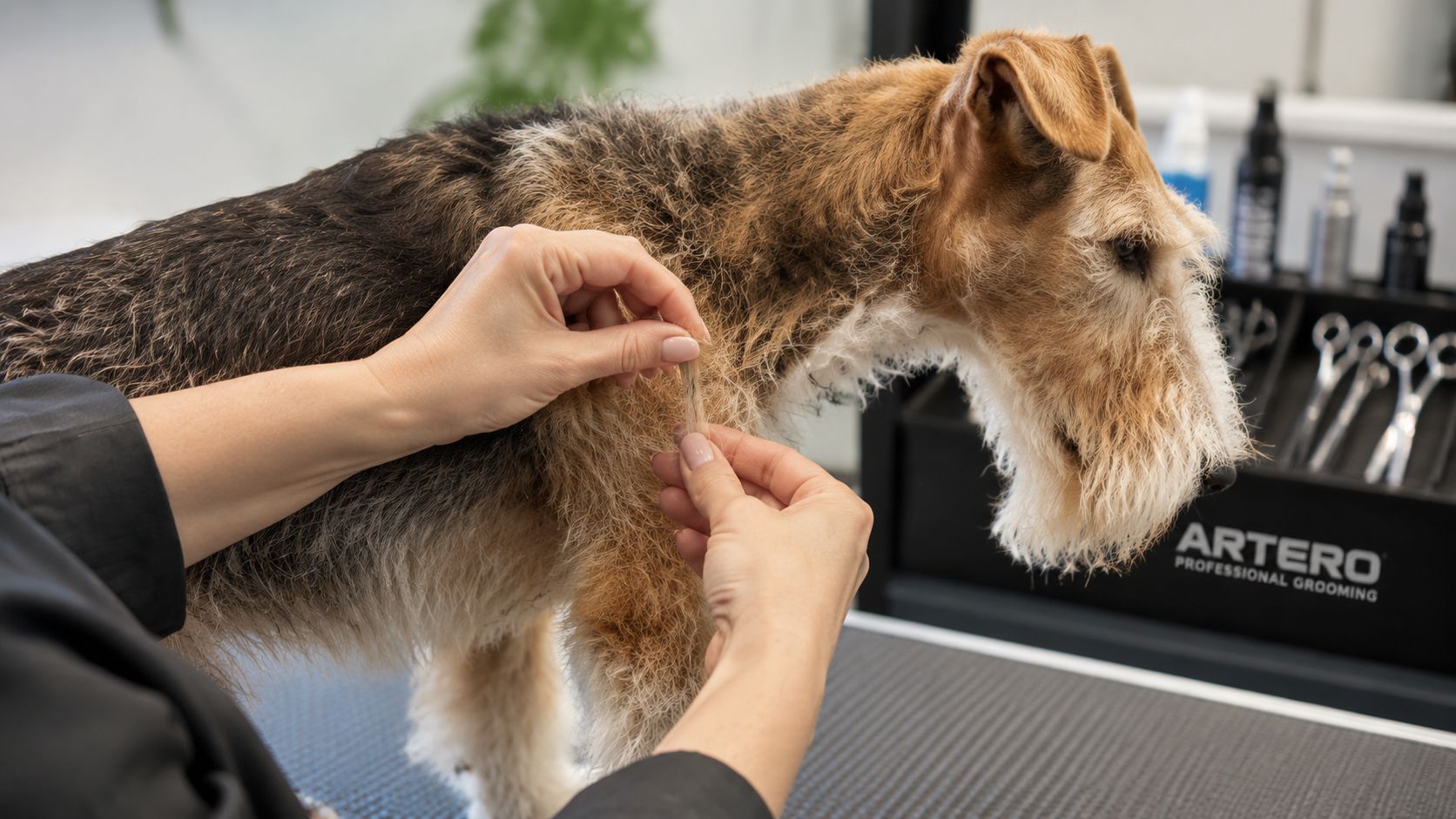
According to Clipit Grooming's hand stripping guide, coat quality is better when groomers avoid over-plucking, because pulling too many hairs at once can cause discomfort and leave the skin pink or red. The same guide notes that correct sequence is critical for regrowth, and beginners often learn best on a blown coat that is already falling out.
Start by reading the coat
Before any real pulling begins, the hands should inspect the jacket. A blown coat feels different from live coat. Dead hair gives way with less resistance. Live hair pushes back. If you ignore that difference, the dog tells you quickly by tightening up, fidgeting, or showing irritation.
The coat should be worked in small sections. One hand holds the skin taut. The other hand grips a small amount of coat and pulls in the direction of growth. Not upward. Not against the pattern. Straight with the coat.
That's where many self-taught attempts fail. People grab too much hair because they want visible progress. A skilled groomer does the opposite and works smaller, slower, and cleaner.
What the motion should feel like
The movement is short and controlled. You don't yank. You isolate a few hairs, secure the skin, and remove only what is ready.
A useful way to judge technique is by the dog's response and the skin's condition:
- Healthy release: Hair comes free cleanly, the dog stays settled, the skin remains calm.
- Warning sign: The dog flinches, the area gets pink fast, or the coat starts looking chewed instead of natural.
- Stop sign: Red spots, rash, or obvious discomfort mean the session needs to pause.
If the dog is in pain, the work is wrong or the coat isn't ready.
Sequence matters more than force
Each area of the body matures at its own pace. The shoulders, neck, back, and rear don't always strip the same way on the same day. A methodical groomer follows the coat's readiness, not a rigid rush to finish the outline.
That same discipline carries into pattern work on terriers and schnauzers. Maintaining breed expression takes judgment about which coat to remove, which to leave, and how transitions should lie. Owners who want to understand coat shape on rough-coated trims can compare that finish with classic Schnauzer grooming styles.
A visual walkthrough helps if you've never seen the hand positions in motion:
Patience protects the coat
A stripping session should feel deliberate. The groomer moves across the body in a pattern, reassesses often, and gives the dog short breaks when needed. This isn't a race to bare the dog down. It's coat management with restraint.
That's also why experienced groomers don't brag about how fast they can strip a dog. Fast hands without judgment create bald patches, ragged regrowth, and dogs that learn to hate the table.
Aftercare and Maintaining a Rolled Coat
The session isn't the whole job. What happens after stripping determines whether the dog stays comfortable and whether the coat remains manageable between appointments.
According to Pampered Paws N Claws on hand stripping services, a full strip often takes 1 to 2 hours, while a clipper trim may take 30 to 45 minutes. That same source notes that the longer the interval between appointments, the more time and cost are usually involved, and some groomers offer mini-strips at $1.25 per minute for maintenance clients seen every 2 weeks.
Immediate aftercare that helps
Right after a stripping session, the skin and follicles need a little respect. Keep the dog comfortable, avoid rough friction, and monitor for any sensitivity. If the coat was stripped correctly, the dog should not look inflamed or distressed.
Owners should also pay attention to routine handling for the next few days:
- Brush lightly: Don't scrub at the jacket or overwork the stripped areas.
- Watch the skin: Mild sensitivity can happen, but obvious irritation means the coat needs a break.
- Keep the routine calm: Hard play in brushy areas or rough rubbing from gear can irritate freshly worked skin.
Rolled coat is the premium maintenance option
A rolled coat means the dog is maintained in small sections on a regular schedule instead of being allowed to blow fully and then stripped all at once. That creates a steadier appearance and keeps the dog looking finished more consistently.
For owners who care about a polished outline year-round, rolling is often the smarter long-term routine. It spreads the labor out, supports even regrowth, and avoids the dramatic in-between stage that happens when a wire coat has gone too long.
The best-maintained wire coats rarely look overgrown. They're kept in rotation.
Seasonal care in real life
Some families only want a larger seasonal reset when the coat is ready to come out more fully. Others prefer tight maintenance because they travel, host often, or just want the dog tidy all the time. Both can work, but they produce very different results.
In El Paso, where dust, dry air, and outdoor exposure can make coat presentation feel rough faster, consistency matters. Owners who wait too long usually pay for that delay in time, finish, and comfort at the next appointment.
Troubleshooting and When to Trust a Professional
The internet makes hand stripping look more accessible than it is. A short video can show the motion. It can't teach feel, timing, or judgment under a live dog that shifts weight, tightens skin, or has a coat in poor condition.
That gap matters. According to Learn2GroomDogs on teaching yourself to strip, 2025 Grooming School Clinics data reports that 68% of self-taught individuals develop broken coats, where the hair is torn instead of pulled from the root. The same source says the content gap is the lack of quantitative data around the long-term consequences of skipping mentorship.
What broken coat looks like
A broken coat doesn't fail all at once. It usually starts with rough handling, bad tool use, or pulling coat that isn't ready. The surface may still look passable to an untrained eye, but the texture starts weakening and the regrowth becomes less reliable.
Common warning signs include:
- Chewed-looking finish: The jacket appears uneven rather than naturally layered.
- Soft regrowth: The harsh wire feel starts fading after repeated bad sessions.
- Skin stress: The dog gets pink quickly or becomes defensive when the same areas are touched again.
The DIY line most owners shouldn't cross
There's nothing wrong with learning basic coat maintenance. Light tidy work, regular observation, and understanding when a coat is blowing can make owners better caretakers. But full hand stripping without mentorship is where many people get into trouble.
This is one of those crafts where discipline beats confidence. Owners often assume patience alone is enough. It isn't. Timing, anatomy, pattern, and coat interpretation all matter. When those pieces are missing, people pull live coat, overwork one zone, or use a knife like a cutting blade.
Responsible owners don't prove anything by pushing through a service they can't perform correctly.
When professional help is the right move
Trust a professional when the dog has already been clipped repeatedly, when the coat is patchy, when the skin is getting irritated, or when you can't tell dead hair from live coat by feel. That choice protects the dog. It also protects what's left of the jacket.
A skilled groomer brings more than labor. They bring sequencing, body pattern, coat recovery strategy, and a safer workflow for a dog that may already have negative associations with grooming. In hand stripping, that's not a luxury. It's damage control before the coat gets further away from where it should be.
Premium Grooming Standards in El Paso
El Paso has taken grooming standards seriously in a way many communities haven't. That matters for owners searching for premium pet grooming instead of the fastest slot available.
According to KVIA's report on El Paso grooming rules, El Paso enacted the first grooming ordinance of its kind in the United States, requiring pet groomers to complete special training and obtain certification to be licensed, while also requiring background checks before hiring. That standard supports exactly what good grooming should already reflect. Training, discipline, and accountability.
Why local standards change the conversation
A city with higher expectations gives pet owners a better framework for asking smarter questions. Not just, “What does the groom cost?” but, “What method will you use on this coat?” “How many dogs are in the building at once?” “Who is handling my dog from check-in to pickup?”
That's especially important when comparing a one-on-one studio model with high-volume chains. Chains like PetSmart and Petco can be convenient. Convenience isn't the same as craftsmanship. Specialty coat work, including hand stripping dog grooming, demands focus and consistency that volume-driven workflows often struggle to provide.
What owners should look for in a premium service
A premium service should feel organized before the dog ever reaches the table. The booking should be clear. The expectations should be direct. The handling should be calm.
Use this checklist when evaluating El Paso dog grooming options:
- Coat-specific knowledge: Ask whether the groomer clips wire coats by default or understands stripping and maintenance planning.
- Disciplined workflow: Ask how many dogs are on site and whether the handling is one-on-one.
- Standards over volume: Ask who performs the service from start to finish.
- Practical value: Look for thoughtful offers, such as an affordable grooming promo, without sacrificing handling quality.
For owners who want a clearer sense of available local services, this overview of dog grooming services near you in El Paso is a useful place to start.
Veteran-led care stands apart
There's a difference between grooming as a transaction and grooming as a standard. A veteran-owned grooming business tends to understand that difference well. Discipline isn't branding. It's how appointments stay controlled, dogs stay safer, and quality stays consistent over time.
That same mindset shows up in community offers too. A monthly promotion like Snip & Style Saturday works when it's run with structure, not chaos. It gives families access to an affordable grooming promo while still respecting workflow, coat care, and the dog's experience.
In El Paso, owners have every reason to expect more than a quick bath, a loud drying room, and a rushed handoff. Premium grooming should be calm, skilled, and accountable. That's the standard worth choosing.
If your dog's wire coat has gone soft, dull, or hard to manage, trust a studio that treats grooming like a craft. Glo More Grooming delivers disciplined, one-on-one care in El Paso with the pride, precision, and long-term mindset pet owners deserve. Book now, reserve a promo slot, or contact Glo More Grooming to give your dog the level of care a premium coat requires.