
You notice the scratching first. Then the chewing at the base of the tail. Then one flea shows up on a light towel and suddenly your whole evening changes.
That’s common in El Paso, even when people assume the dry climate should keep fleas away. It doesn’t. A flea wash for dogs can help, but only when you treat it as one controlled part of a bigger plan. If you treat it like a quick bath and hope for the best, you usually end up with fleas in the coat, fleas in the bedding, and eggs developing where you can’t see them.
A disciplined wash matters. So do product choice, technique, timing, and knowing when to stop and bring in a professional groomer or your veterinarian. That’s the difference between temporary relief and an actual response.
The Unseen Battle Against El Paso Fleas
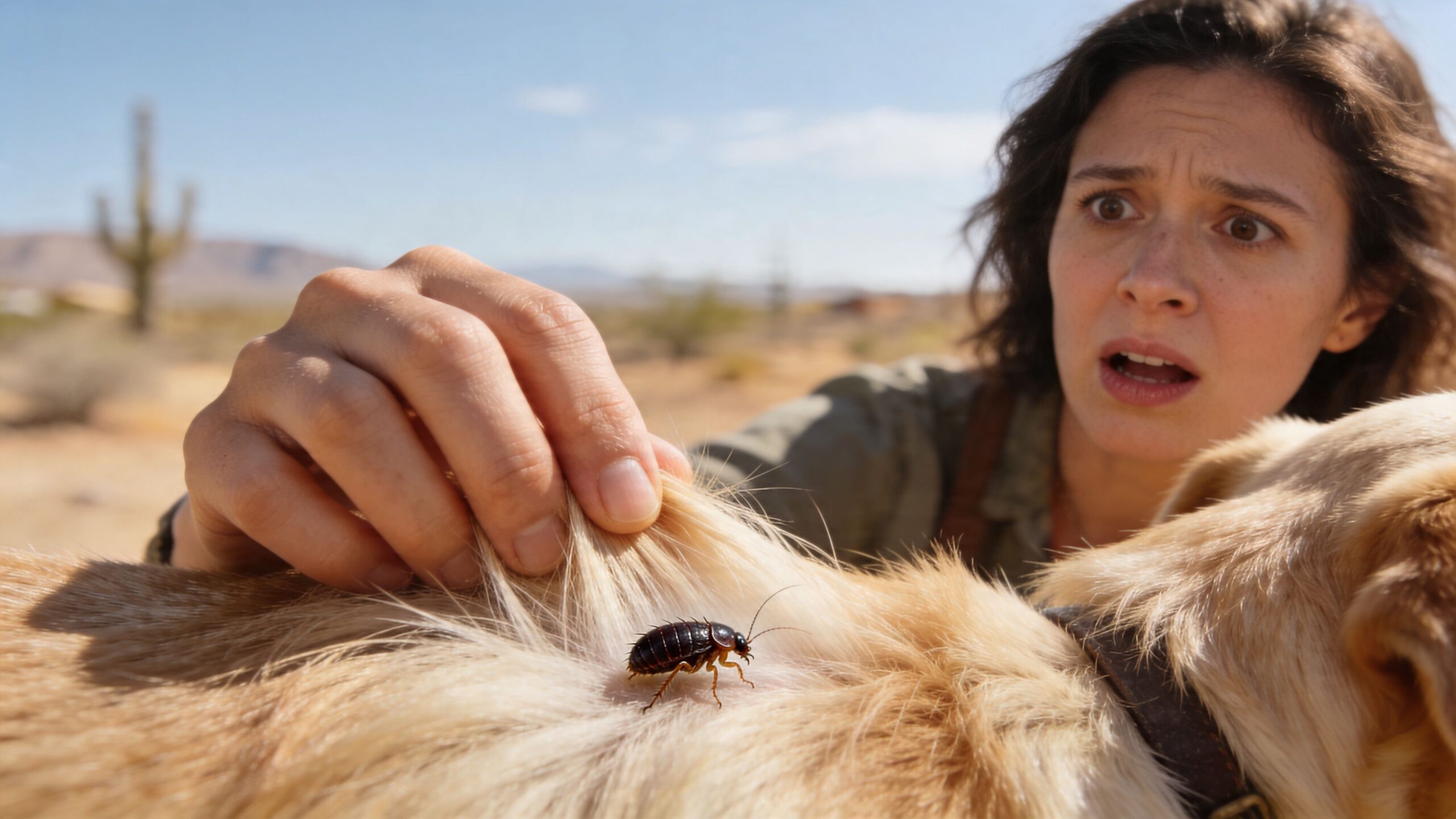
A lot of owners are surprised when fleas show up in a desert city. They shouldn’t be. Fleas don’t need your backyard to be lush if they can live inside your home, in rugs, bedding, floor gaps, and shaded resting spots.
Why dry weather doesn't solve the problem
Since the early 21st century, the cat flea (Ctenocephalides felis) has become the predominant flea found on dogs in the developed world. A single female flea can lay approximately 4,000 eggs on a host, and the full lifecycle from egg to adult can complete in two to three weeks, with larvae surviving best in protected indoor areas like deep carpet fibers and similar spaces, according to the dog flea overview.
That matters in El Paso because indoor conditions do the heavy lifting for the flea population. Your air conditioning, rugs, dog beds, laundry piles, and upholstered furniture can support the cycle even when the outdoor air feels harsh and dry.
If you’re dealing with active itching, hair loss around the tail base, or visible pests, it helps to understand the bigger pattern behind fleas and ticks on dogs. The insect on the coat is usually only the piece you can see.
What a flea wash can and can't do
A flea wash can knock down adult fleas on the dog and improve comfort. That’s useful. It also gives you a chance to inspect the skin closely, clear debris from the coat, and get honest about how far the problem has gone.
But a wash is not a complete strategy.
Practical rule: If fleas are on the dog, assume some part of the flea problem is already in the home.
That’s why a veteran-owned grooming mindset matters. Good results don’t come from panic. They come from order, consistency, and clean execution. At Glo More, the standard starts with control. Calm handling, limited dogs on site, and a clear workflow all matter because flea work gets sloppy fast when the environment is rushed.
The standard has to be higher than a panic bath
Owners often react by grabbing the first flea shampoo they find and starting the bath before they’ve even gathered towels. That creates stress for the dog and weakens the result.
A proper response starts with three questions:
- What am I trying to accomplish right now? Relief, reduction, cleanup, or ongoing prevention.
- Is my dog's skin already irritated? If yes, product choice becomes more important.
- Can I follow through after the bath? Bedding, floors, prevention, and monitoring all matter.
That’s the unseen battle. Fleas reward disorder. Dogs do better when the person handling the problem stays methodical.
Choosing Your Arsenal The Right Flea Wash Matters
Product choice changes the result. A flea wash that is too harsh can leave a dog cleaner for one day and far more irritated for the week that follows. A wash that is too mild may freshen the coat but leave you with very little flea reduction.
The right pick depends on the dog in front of you. Coat type, skin condition, age, stress level, and how heavy the flea load is all matter. In a calm grooming setting, those details get checked before the bottle is opened. In a big-box environment, owners often end up with a rushed recommendation or a shelf decision made under pressure.
What owners usually choose
The main categories look similar in the aisle, but they do different jobs.
| Shampoo Type | What It Does Well | Main Trade-Off | Best Fit |
|---|---|---|---|
| Medicated flea shampoo | Helps kill or remove fleas during the bath when contact time is correct | Can dry or irritate sensitive skin if the formula is strong or used too often | Short-term flea reduction on dogs with stable skin |
| Natural or herbal shampoo | Cleans the coat gently and may improve comfort during washing | Usually offers limited flea control by itself | Dogs that need a gentler wash and already have a larger flea plan in place |
| DIY soap-based wash | Can physically remove some fleas in a pinch | Easy to overdo, easy to choose the wrong ingredient, and often rough on the skin barrier | Emergency cleanup only, with caution |
| Professionally selected pH-balanced grooming product | Supports coat cleaning and skin comfort with controlled handling | Does not replace prevention or home treatment | Dogs that need careful skin-conscious care |
A bottle labeled "natural" is not automatically safer, and a medicated label is not automatically better. Good grooming is less about marketing terms and more about matching the formula to the dog's skin and the job at hand.
The biggest mistake with DIY washes
Owners get into trouble when they treat dog skin like human skin. Dish soap, homemade blends, and random online recipes can strip oil, sting inflamed areas, and make an already uncomfortable dog harder to handle at the next bath.
I have seen that play out plenty of times. The fleas were reduced, but the coat felt rough, the skin was pink, and the dog came back touchy around the belly and underarms. That is not a win.
The safer approach is simple. Use a dog-specific product, follow the label, and stop improvising once the skin looks irritated.
A practical way to decide
Use this filter before you buy:
- Healthy skin, mild to moderate flea problem: A well-chosen flea shampoo can be a reasonable cleanup tool.
- Redness, dandruff, scabs, hot spots, or recent scratching: Choose very carefully, and consider skipping the home wash until a groomer or vet weighs in.
- History of skin sensitivity or allergies: Avoid household products and harsh formulas.
- Need help between baths: Support products can help if they fit the larger plan. Our guide to flea spray for dogs explains where a spray makes sense and where it falls short.
A shampoo can remove fleas and still be the wrong product for that dog.
Why premium grooming standards matter here
Technique matters as much as formula. Contact time, rinsing quality, coat saturation, and calm restraint all affect whether a flea wash helps or turns into a stressful mess.
That is one reason professional care can be the better call, especially for nervous dogs, dense coats, or irritated skin. At Glo More Grooming, flea bath and dip service is handled in a controlled one-on-one setting built for close inspection and steady handling. That is very different from the noise, waiting, and rushed turnover that often come with chain grooming counters.
A disciplined flea wash should leave the dog cleaner, more comfortable, and easier to manage afterward. If the process is chaotic, the product choice usually will not save it.
Preparing for a Successful Flea Wash Operation
Preparation decides whether the wash is smooth or chaotic. Most at-home flea baths fail before the water even turns on. The dog is nervous, the owner is looking for a towel mid-bath, the shampoo is out of reach, and fleas get more escape routes than they should.
Build a calm setup first
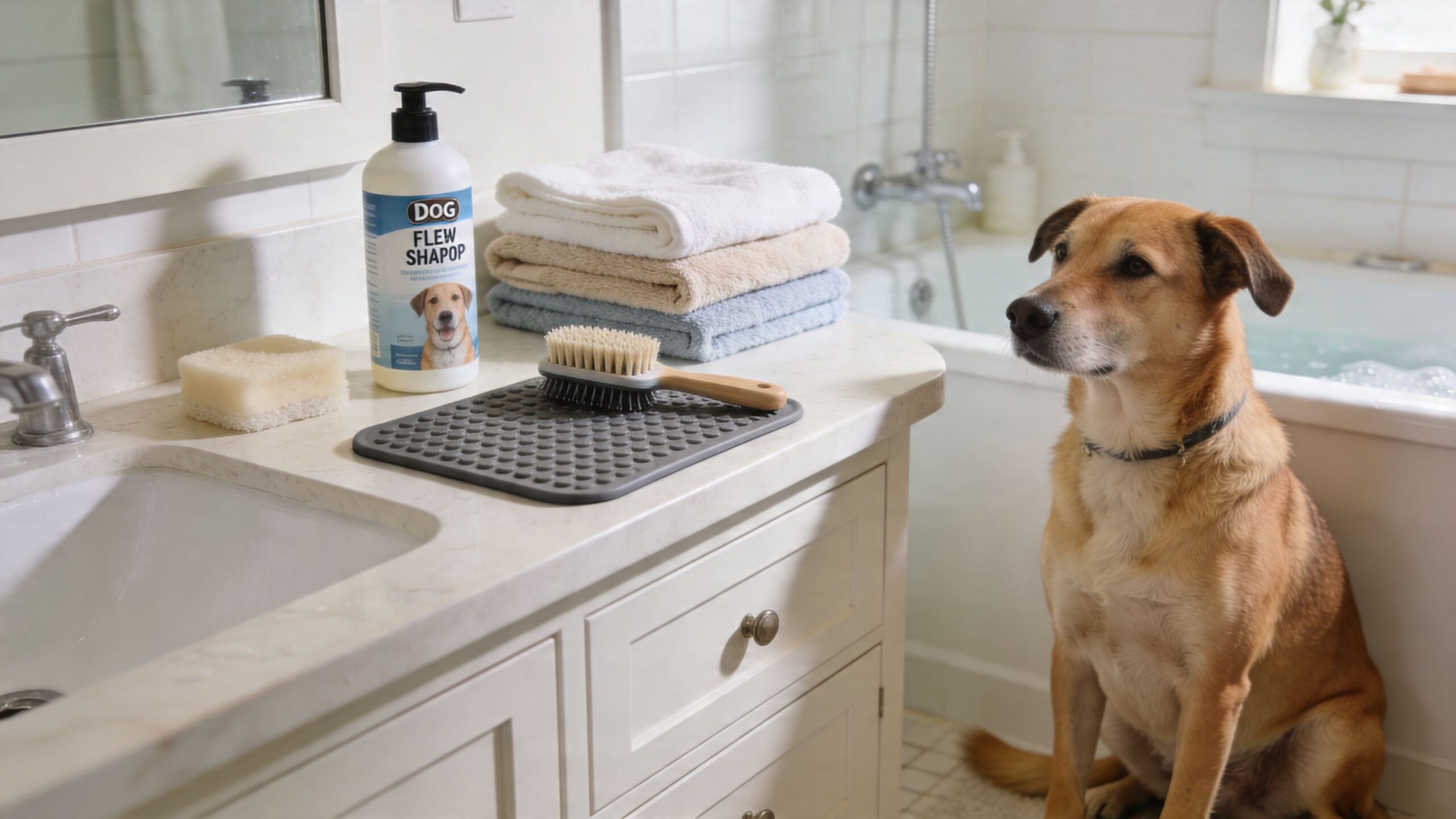
Set up the room before the dog enters it. That means:
- Non-slip footing: Use a mat or towel so the dog doesn’t scramble.
- Tools within arm’s reach: Shampoo, cup or sprayer, towels, flea comb, and a second dry towel.
- Warm water ready: Not hot. Not cold. The dog needs to stand still, not fight the bath.
- Door closed: Limit escape and keep the room controlled.
This is one place where chain-style grooming environments often work against the dog. Noise, waiting, multiple barking dogs, and rushed handoffs create tension. A one-on-one setup is cleaner and more predictable, which improves handling and inspection.
Do the coat work before the bath
Brush the dog out first if the coat allows it. Mats, packed undercoat, and thick debris make it harder for water and shampoo to reach the skin.
Check these areas carefully:
- Base of tail
- Belly and groin
- Armpits
- Neck and collar line
- Around the ears
If the coat is heavily matted, don’t assume a flea wash will penetrate evenly. Dense tangles can hide pests and trap moisture after the bath.
Use the neck ring correctly
An effective at-home flea wash method starts with a neck ring of lather. That helps stop fleas from fleeing upward to the head and ears, a common mistake that allows up to 80% of fleas to escape the bath. The same method also calls for a 5 to 10 minute lather time to immobilize and drown fleas effectively, as described in Whole Dog Journal’s homemade flea shampoo guidance.
That one step changes the whole bath. Without it, many owners push fleas exactly where they don’t want them.
Set the room before you set the dog in motion. A rushed start creates a messy bath.
Keep the dog's mindset steady
Some dogs don’t mind a bath. Others hate every second. You can lower the stress by keeping your movements deliberate and your voice low.
A few habits help:
- Walk the dog briefly first so they aren’t entering the bath full of pent-up energy.
- Trim nails beforehand if needed to reduce slipping and scratching.
- Skip rough restraint unless safety requires it.
- Have an exit plan with a towel ready the moment rinsing is done.
That’s disciplined workflow. It’s not dramatic. It’s just what works.
The Meticulous Application A Step-by-Step Walkthrough
Technique matters more than most owners realize. In a controlled study, even weekly bathing with a standard shampoo by trained personnel achieved a maximum flea reduction of only 79.2%. When one weekly bath was missed, efficacy dropped from 68.2% to 34.8%, according to this controlled shampoo efficacy study. That tells you two things. Shampoo alone has limits, and sloppy application makes those limits worse.
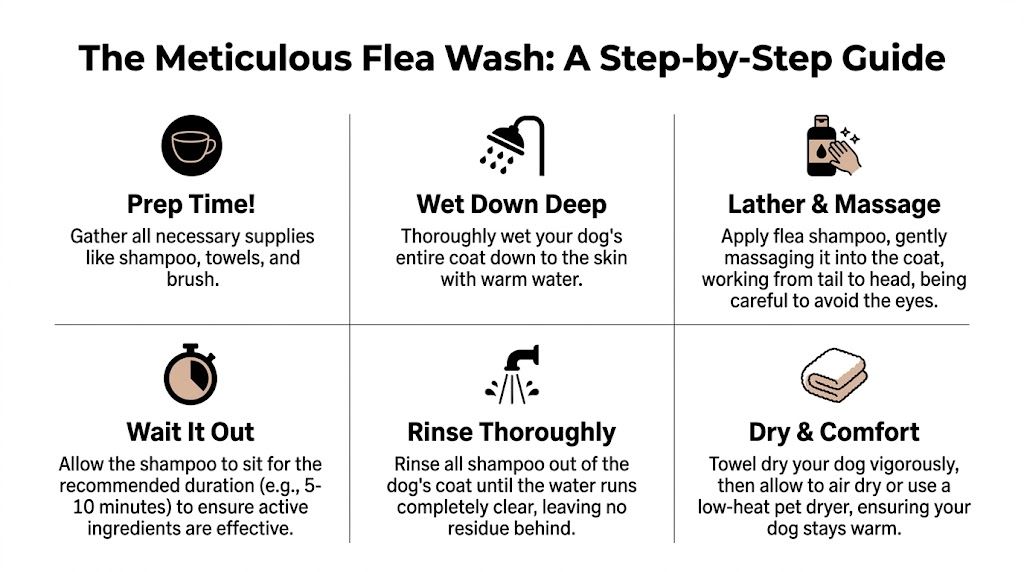
The visual below gives you the sequence. The execution still has to be careful.
Step one gets the coat ready
Don’t spot-wet the top layer and call it done. You need the coat wet down to the skin.
Use warm water and work slowly through the coat with your fingers. On thick-coated dogs, separate the hair as you wet it. If the underlayer stays dry, the shampoo won’t distribute correctly.
Start at the neck, then move down
Apply the first band of lather around the neck. That’s your barrier.
After that, work from the neck down the body. Cover the chest, shoulders, back, belly, hindquarters, legs, paws, and tail base. Use your fingertips to massage through the coat instead of just spreading shampoo over the surface.
Missed zones are where baths fail
The areas owners skip most often are:
- Under the collar line
- Inside rear legs
- Armpits
- Between paw pads
- Around the tail set
If your dog has a fuller coat, use a rubber brush or your fingers to part hair and get contact with the skin.
Let the shampoo sit
Contact time matters. If the product directions say leave it on, follow them. If you’re using a soap-based wash technique, the lather time still matters for physical flea knockdown.
Owners frequently get impatient. They rinse too early, then assume the shampoo “didn’t work.” In reality, they shortened the process.
A good handling routine during this stage:
- Keep one hand on the dog
- Prevent shaking if possible
- Watch the face and ears
- Speak calmly and keep movement quiet
To see the sequence in action, this walkthrough can help:
Rinse like residue is the enemy
Rinse thoroughly until the water runs clear and the coat feels clean, not slick. Residue can irritate skin and leave the dog uncomfortable after the bath.
Then towel dry firmly. For dogs who tolerate a dryer, use a low-heat pet-safe drying approach. Don’t blast hot air at irritated skin.
After the coat is damp but manageable, use a flea comb and inspect what remains. Focus on the face, neck, ears, and tail base.
Good grooming is controlled repetition. Wet fully, lather fully, wait, rinse fully.
Adjust for vulnerable dogs
Not every dog should be washed the same way.
Puppies and seniors
Keep the bath shorter, the water warmer, and the drying process immediate. They chill faster and fatigue faster.
Flat-faced breeds
Pugs, Bulldogs, Shih Tzus, and similar dogs need careful face handling. Don’t pour water over the nose and don’t let lather collect near the eyes or nostrils.
Dogs with irritated skin
Use extra caution if the skin is broken, inflamed, or painful. A flea wash may not be your first move in those cases. The dog may need veterinary guidance before any bath at all.
Premium pet grooming earns its place. Precision beats speed every time.
Beyond the Bath Winning the War on Fleas
A flea wash helps the dog standing in front of you. It does not solve the whole flea problem behind you, under you, or inside the house. If you stop at the bath, you leave the main job unfinished.
What actually changes the outcome
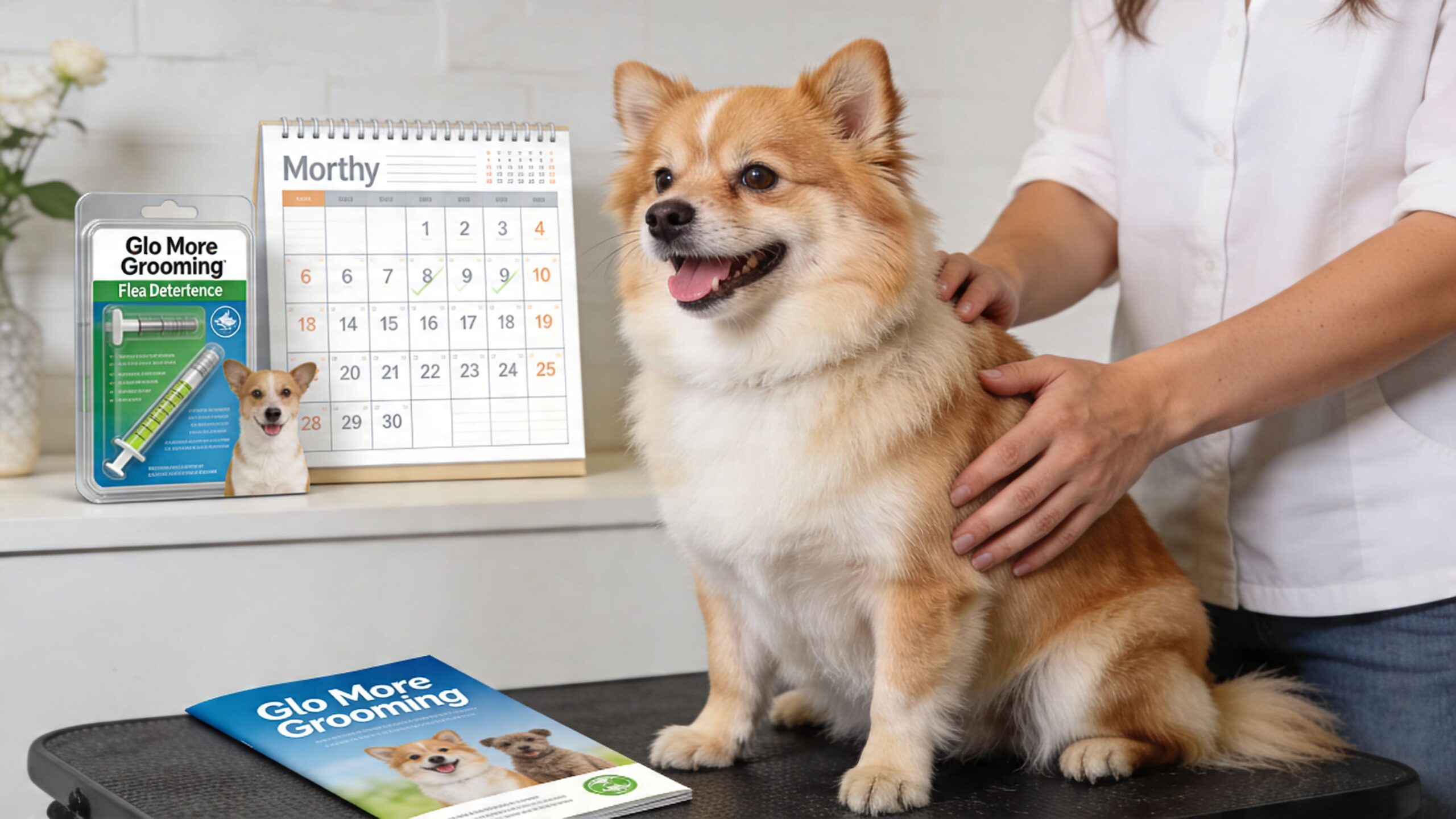
The efficacy gap between shampoos and preventative treatments is large. Topical indoxacarb maintains over 95% flea control for a month, while weekly shampooing in studies never exceeded 79.2% efficacy, according to this review of flea treatment efficacy. That’s why a flea wash should complement, not replace, veterinarian-prescribed monthly prevention.
That single point clears up a lot of confusion. A wash is a cleanup tool. Prevention is the protection layer.
The home has to be part of the plan
Fleas don’t respect the edge of the tub. Once you’ve washed the dog, shift immediately to the environment.
Use a routine like this:
- Vacuum floors and rugs: Focus on edges, furniture seams, and places your dog rests.
- Wash bedding: Dog beds, blankets, crate pads, and washable covers need attention.
- Clean resting surfaces: Car seats, couch throws, and entry mats matter too.
- Stay consistent: One cleanup day helps. Repeated cleanup breaks the cycle.
If your dog sleeps in multiple rooms, treat the whole pattern, not just one bed.
Build a monthly rhythm
Most owners do better when flea control is attached to a routine instead of a crisis. A monthly calendar works well.
For many families, that looks like:
| Task | Timing |
|---|---|
| Veterinary flea prevention | Monthly, as directed by your vet |
| Coat and skin check | Weekly |
| Bedding wash | Regularly, especially during active flea issues |
| Full grooming or bath service | On a recurring schedule |
| Home vacuuming focus | Increased during and after active flea activity |
That’s where El Paso dog grooming becomes part of maintenance, not just appearance. Regular coat care makes it easier to spot flea dirt, skin irritation, dry patches, and parasite activity before things snowball.
Promotions can support maintenance, not just style
A smart owner uses grooming appointments for more than a haircut. A recurring service schedule helps keep the coat open, the skin visible, and problems easier to catch early.
For budget-minded families, an affordable grooming promo can help keep that rhythm realistic. A monthly example is Snip & Style Saturday, which gives owners a set point in the calendar for a full groom routine rather than waiting until the dog is overdue and uncomfortable.
If you’re weighing product choices between baths, it’s worth reading about over the counter flea medicine and how that compares with a more complete prevention plan from your veterinarian.
The bath resets the dog. The routine protects the household.
Why this matters for serious owners
This is also where veteran-owned grooming means something practical. Discipline isn’t branding. It’s the habit of doing the unglamorous follow-through that keeps dogs comfortable.
Owners who win this battle usually do the same things well. They don’t improvise every month. They keep a schedule, choose products carefully, and stay honest about what requires a groomer and what requires a vet.
When to Call for Backup A Professional Groomer or Vet
You get the dog into the tub, lather starts, and the whole job falls apart. The skin looks angrier once the coat is wet. The dog is twisting, clawing for escape, or trying to bite the stream. At that point, grit alone is not the answer. Good judgment is.
Home flea washes have limits. A careful owner can handle a mild problem on a stable dog with healthy skin and decent bath manners. Once the infestation is heavy, the skin is damaged, or the dog cannot be bathed safely, the risk goes up fast for both pet and handler.
Call a groomer or vet if you notice any of the following:
- Fleas turning up again and again: You are finding active fleas during repeated checks, not an isolated straggler.
- Hot spots, scabs, raw patches, or bleeding skin: Flea shampoo can irritate compromised skin and make the dog more painful.
- Panic in the tub: Thrashing, snapping, screaming, or shutting down means the process is no longer safe or productive.
- Puppies, seniors, or medically fragile dogs: These dogs need tighter product selection, handling, and temperature control.
- No progress after honest effort: You treated the dog, cleaned the home, washed bedding, and the cycle keeps restarting.
The split between groomer and veterinarian is simple. A groomer handles coat access, safe bathing technique, flea comb-out, and calm restraint. A veterinarian handles diagnosis, skin infections, allergic reactions, prescription prevention, and cases where bathing alone will not solve the problem.
That difference matters in real life. I have seen dogs come in from rushed retail settings already over-stimulated, half-dried, and more distressed than when they arrived. An itchy dog with fleas does better in a controlled, one-on-one environment where the coat can be worked through methodically and the dog's stress signals are not ignored.
Glo More Grooming is the right call when the dog needs precise handling and a quieter bath process than the usual big-box traffic allows. The vet is the right call when the skin looks medically wrong, the dog seems ill, or the flea problem has moved beyond grooming support.
If your dog needs a flea wash for dogs handled with care, or you want a calmer premium pet grooming experience before the problem spreads through the house, book the appointment, ask about availability, or reserve a place in the next affordable grooming promo. El Paso owners who value disciplined handling, one-on-one care, and veteran-owned grooming standards usually save themselves trouble by stepping in early.