
You part your puppy’s fur to check a little itch on the belly, and there it is. A tiny black speck. Then another. For a lot of new dog owners, that moment hits fast. You go from “we’re doing great” to “how serious is this?”
The good news is that flea problems are manageable when you slow down and work in order. Panic leads people to grab the first bottle on a shelf, use the wrong product, or treat a puppy that’s too young for it. A calm, disciplined routine protects your puppy far better than guesswork ever will.
That matters in El Paso, where puppies still get outdoor exposure through yards, walks, patios, and shared spaces. Flea control isn’t just a comfort issue. It’s part of raising a healthy dog from the start, and it works best when owners understand what’s safe, what isn’t, and when grooming helps support the process.
Your Puppy's First Flea and Your First Step
A new puppy owner usually notices fleas in one of three places first. On the belly where the hair is thin, around the neck after scratching, or in the bedding after a nap. The first reaction is often the same. “I need to kill every flea right now.”
That urgency comes from love, but the first step isn’t to reach for a random flea product. The first step is to identify your puppy’s age and weight. For flea treatments for puppies, those two details decide what’s safe.
A very young puppy is not a small adult dog. Their bodies are still developing, and that changes the safety margin for medications and topicals. What’s routine for an older dog may be a bad choice for a baby puppy.
Start with observation, not overreaction
When you spot fleas, check a few basics before doing anything else:
- Look at the skin: Are you seeing a few fleas, a lot of flea dirt, or irritated red spots?
- Check your puppy’s behavior: Is the puppy mildly itchy, restless, or clearly distressed?
- Confirm age and weight: You need both before choosing any treatment.
- Inspect the bedding: Fleas on the dog usually mean fleas in the environment too.
Practical rule: If you don’t know your puppy’s exact age and current weight, pause treatment decisions until you do.
Owners also get confused by “natural” products that sound gentler. Gentle marketing doesn’t guarantee puppy safety. For young puppies, the safer move is often simpler: manual removal, a flea comb, clean bedding, and a call to your veterinarian before any medication touches the dog.
A steady routine beats a rushed one every time. That’s how you turn a worrying moment into a manageable plan.
Why Fleas Are a Serious Threat to Young Puppies
A young puppy can lose ground fast with fleas. In the grooming room, I have seen puppies come in with only a little scratching at home, then reveal flea dirt through the coat, irritated skin under the belly, and the worn-out look that tells you the body has been dealing with more than the owner realized.
That happens because a puppy has very little margin for error. An adult dog may carry a light flea burden and still act fairly normal for a while. A small puppy does not have that same reserve. Fleas feed on blood, and repeated bites can drain a young dog faster, irritate the skin faster, and start a cycle of scratching and chewing that is hard to interrupt once it gets going.
The problem is bigger than itch.
A flea infestation can affect a puppy in several connected ways:
- Blood loss: On a tiny body, repeated feeding matters more than many owners expect.
- Skin injury: Scratching, chewing, and rubbing can leave the skin inflamed and tender.
- Tapeworm exposure: Puppies can pick up tapeworms if they swallow infected fleas while grooming.
- Environmental pressure: Fleas in bedding, crates, rugs, and shaded yard areas keep putting the puppy back in contact with the same problem.
Professional groomers watch for this chain reaction because we work hands-on with the coat and skin. A veterinarian diagnoses and prescribes. A skilled groomer often sees the early physical signs first. In a dry, windy place like El Paso, owners sometimes assume skin irritation is only dust, weather, or seasonal dryness. Fleas can hide inside that picture, especially around the neck, base of the tail, groin, and underarms where a thick coat or puppy fuzz makes them easier to miss.
There is also a timing problem. Fleas do not stay only on the puppy. They move through the puppy, the bedding, the brush, the nap spot by the couch, and the yard. That is why grooming standards matter here. Good flea control is not just applying a product. It means checking the coat methodically, washing fabrics correctly, sanitizing tools, and noticing whether the skin looks mildly irritated or medically concerning.
Consistency is another weak point for many households. In a Merck Animal Health survey, veterinarians reported concern about missed flea and tick doses, while many pet owners felt confident they were staying on schedule. That gap matters. One late dose, one untreated bedding cycle, or one overlooked resting area can give fleas time to keep breeding.
If your veterinarian recommends medication later, it helps to understand how oral flea and tick medicine for dogs works so you can match prevention to your puppy’s age, size, and daily routine.
For a young puppy, fleas are not a cosmetic issue and not a grooming inconvenience. They are a health and safety issue that deserves the same disciplined attention as feeding, vaccines, and clean housing.
Choosing a Safe Flea Treatment by Age and Weight
Your puppy scratches once, then twice, and now you are standing in the pet aisle staring at a wall of products that all promise fast relief. Slow the process down. Safe flea treatment for a puppy starts the same way a good groomer starts any skin-service decision in the salon. We verify the basics before anything touches the coat or skin.
Start with three checks. Confirm your puppy’s exact age. Weigh your puppy today, not from memory. Then read the product label for both age and weight minimums before you look at brand claims or packaging.
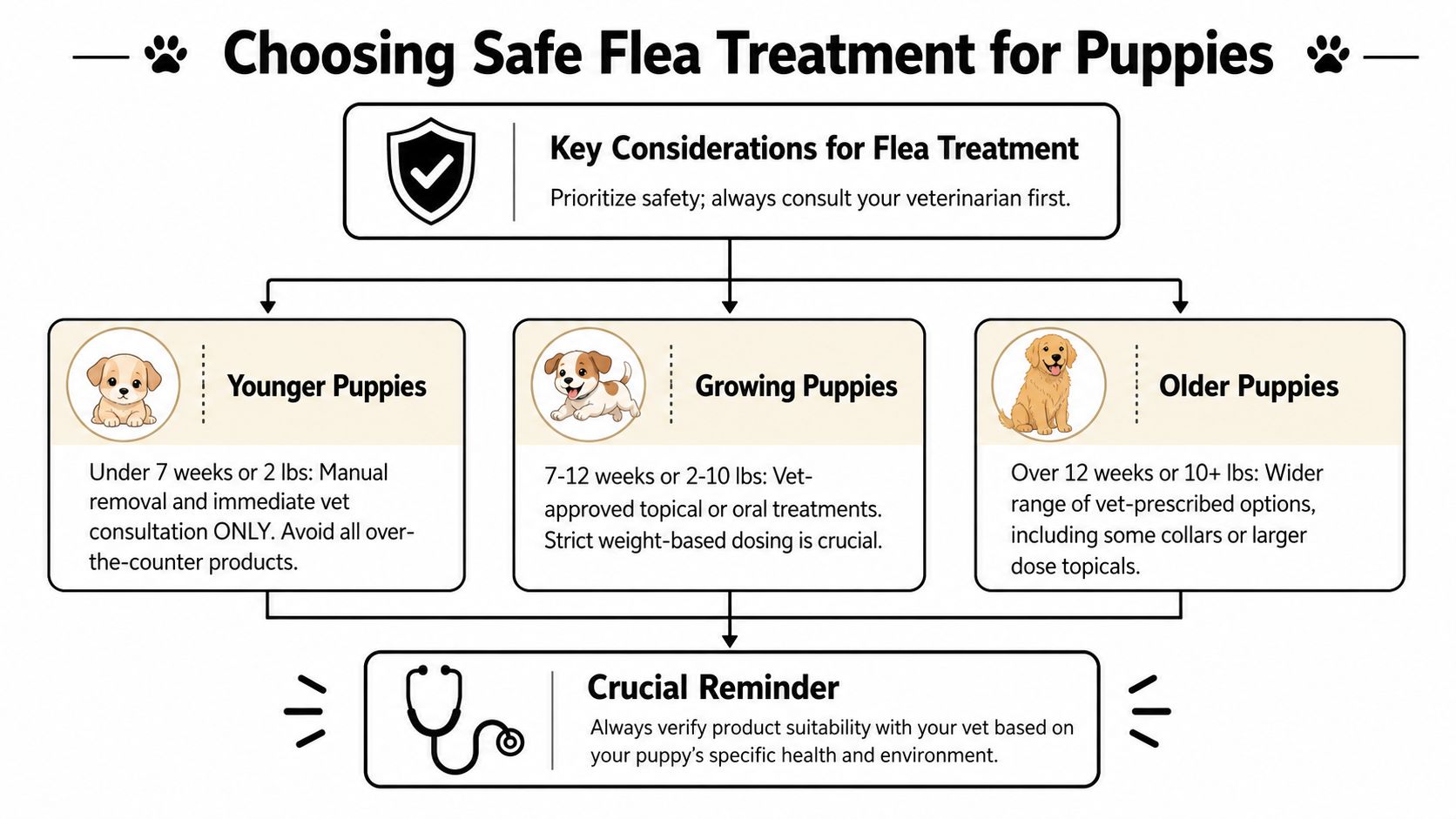
That order matters because puppies are still developing. Their skin barrier is more delicate, their body size changes quickly, and a dose that sounds close enough can still be wrong. In a professional grooming setting, we do not guess on coat condition, skin sensitivity, or product timing. Flea care deserves that same discipline at home, especially in El Paso, where heat can keep pests active and make owners feel pressure to act fast.
A simple decision table
| Puppy stage | What to focus on | Main caution |
|---|---|---|
| Under 4 weeks | Manual flea removal and environmental cleanup | No chemical treatments are approved |
| 4 weeks and at least 2 pounds | Emergency knockdown may be possible with the right product under vet guidance | Not the same as long-term prevention |
| 8 weeks and label-approved minimum weight | More preventive options may open up | Dosing still has to match the current weight |
How the main treatment types differ
Topical treatments
These go on the skin, not just the fur. On a fluffy puppy, that can be harder than it sounds. If the product sits on the haircoat instead of reaching the skin, coverage can be uneven. A groomer sees this problem often, which is one reason application technique matters as much as product choice.
Oral medications
Chews and tablets remove the coat-application problem. They can be a practical fit for puppies who bathe often, have dense coats, or wriggle too much for a precise spot-on application. If you want a closer look at how that category works, read this guide to oral flea and tick medication for dogs.
Collars
Some are labeled for puppies, but collars ask for careful label reading, correct fit, and close monitoring for skin irritation. On a growing puppy, fit changes fast. A collar that is too loose or too tight creates its own problems.
Shampoos and washes
A wash can remove fleas that are on the puppy right now. It does not automatically give lasting protection. Groomers deal with this misunderstanding all the time. A puppy can smell fresh, look clean, and still need a real prevention plan.
The age and weight rule owners miss
The safest choice is not the product with the strongest marketing. It is the one that matches your puppy’s current age, current weight, health status, and coat needs.
That sounds simple, but it's a common point of error for households. Puppies grow fast. A dose chosen from last week’s weight may already be off. Small breed puppies are at even higher risk of dosing mistakes because the margin for error feels small, and it is.
A groomer’s role helps here in a practical way. During a puppy visit, we are already handling the coat, checking skin condition, parting the fur to the skin, and noticing whether there is irritation, debris, flea dirt, or areas that should not have product applied. That hands-on view does not replace a veterinarian. It gives you another trained set of eyes before a small problem becomes a larger one.
Common mistakes to avoid
- Guessing the puppy’s weight instead of weighing the puppy
- Using a product labeled for older or larger dogs
- Splitting doses without veterinary direction
- Layering multiple flea products because one did not seem fast enough
- Treating the puppy but ignoring label instructions about timing and reapplication
Use the same standard a premium grooming studio uses. Verify first, apply carefully, and match the treatment to the puppy in front of you, not the package that happens to be on sale.
What to Do in a Puppy Flea Emergency
If your puppy has visible fleas right now, stay calm and work in sequence. You do not need ten products. You need a clean, safe response.
First actions that help right away
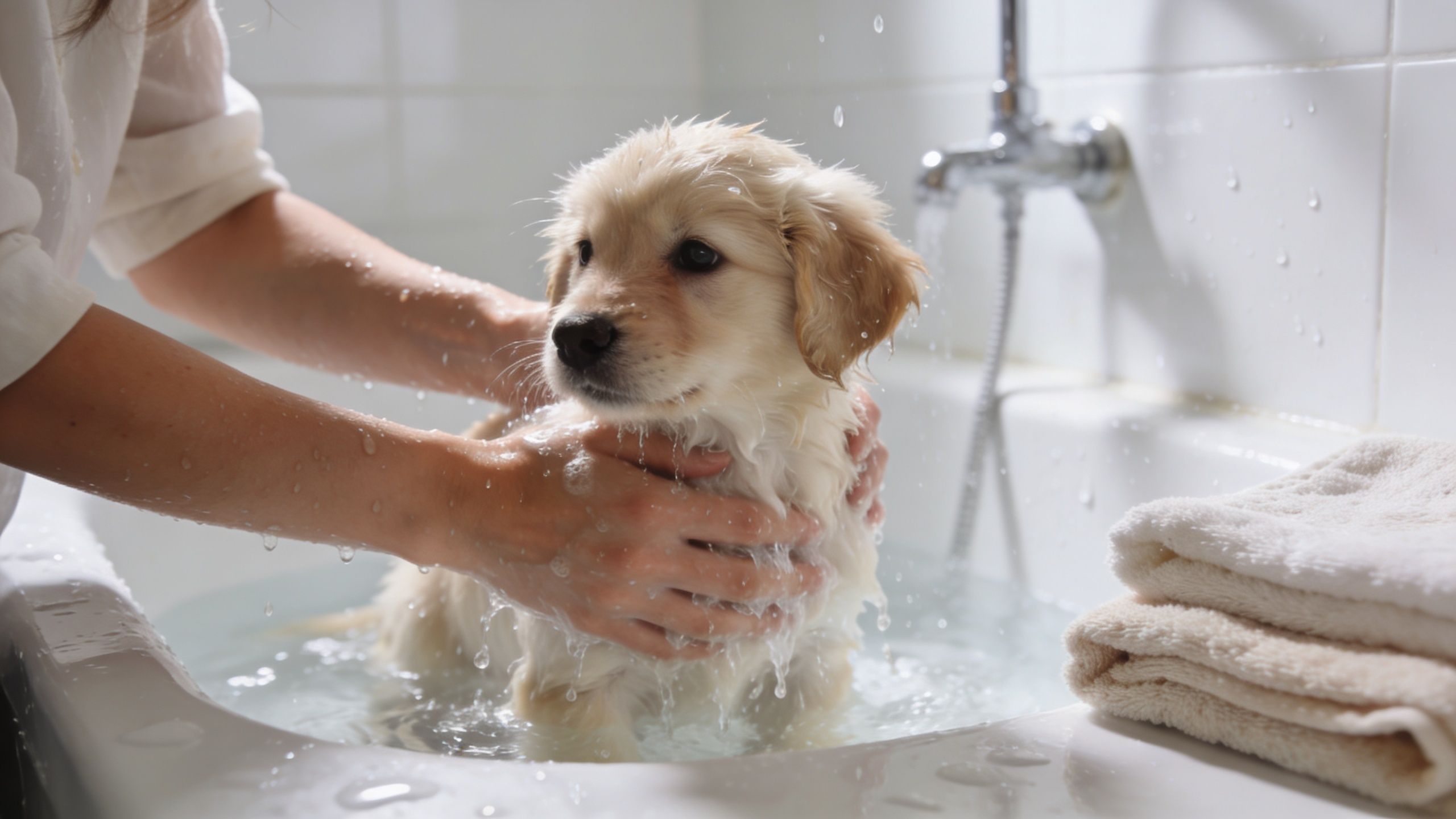
Start with physical removal. Use a flea comb, move slowly, and keep a bowl of soapy water nearby to trap what you remove. Pay close attention to the neck, armpits, groin, and base of the tail.
Then consider a gentle bath if your puppy is old enough, stable, and can be dried promptly. The goal is to remove live fleas and debris without chilling the puppy. If you need a closer look at that service category, review a professional flea wash for dogs.
When rapid knockdown matters
For acute infestations, AKC’s puppy flea protection guidance states that Capstar (nitenpyram) can be used for puppies as young as 4 weeks old and 2 pounds. It starts killing fleas within 30 minutes, achieves over 90% efficacy within 6 hours, and lasts 24 hours.
That makes it useful for a real-time flea problem. It does not make it a prevention plan.
Here’s a short visual walkthrough that can help you think through bath handling and calm puppy support during treatment:
A clean emergency checklist
Confirm age and weight first
Don’t give any oral or topical product until you know both.Use a flea comb
Manual removal gives you immediate information and immediate progress.Bathe carefully if appropriate
Keep water warm, handling gentle, and drying thorough.Call your veterinarian for the next step
Through this call, you confirm whether an emergency oral product or another treatment is right.Clean the puppy’s bedding the same day
Treating only the dog leaves fleas behind.
A flea emergency gets smaller the moment you stop reacting randomly and start doing the next right thing.
If your puppy seems weak, unusually quiet, or overwhelmed by the infestation, don’t wait on home care alone. Contact your veterinarian promptly.
The Glomore Grooming Difference in Puppy Flea Prevention
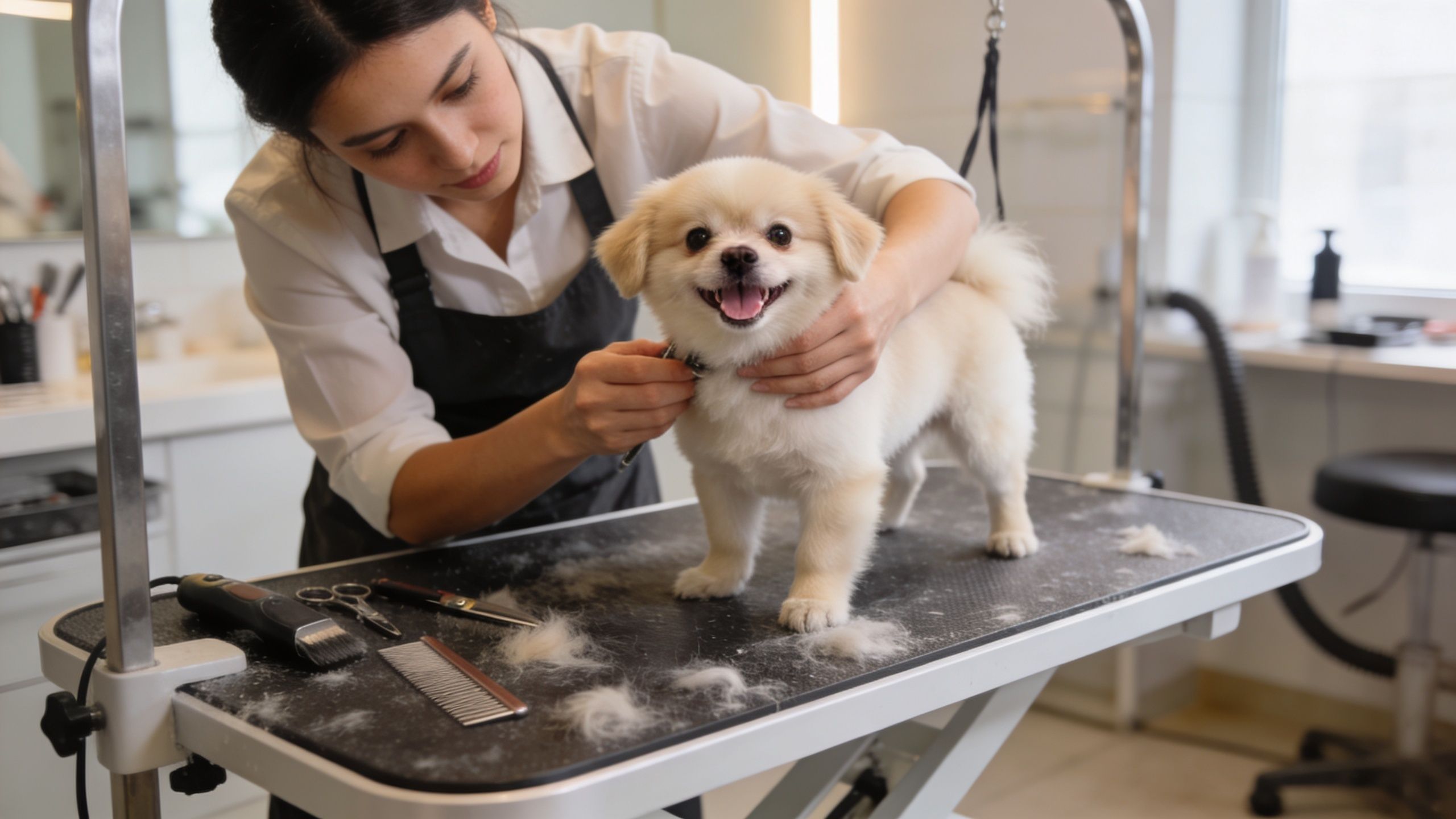
You book a puppy’s first groom because the coat looks messy, the scratching seems minor, and bath time at home has turned into a wrestling match. Then a trained groomer parts the coat under bright light, checks the skin, runs a flea comb through the neck and tail base, and catches the early signs many new owners miss.
That hands-on view matters. A veterinary visit guides diagnosis and medication. A grooming visit often reveals how well the plan is working on the actual puppy in front of you, especially once coat thickness, skin sensitivity, and puppy behavior enter the picture.
Why grooming standards matter during flea prevention
A good groomer does more than make a puppy look neat. The work also improves visibility.
Fleas hide where puppies are hardest to inspect at home. Around the collar line. Under a dense ruff. Near the tail. Between the back legs. On a wiggly puppy with a thick coat, owners often end up treating the fur instead of checking the skin. That is like spraying a raincoat when the problem is under the jacket.
Professional grooming solves part of that problem by creating a clean, parted coat and a calmer handling routine. Once the hair is separated and the puppy is supported correctly, flea dirt, irritation, scabs, and bite patterns are easier to spot. That practical view helps owners ask better questions before the problem grows.
What a premium grooming studio adds
In a premium setting, flea prevention is supported by process, not guesswork. That difference shows up in a few specific ways:
- Closer coat inspection: A groomer sees skin condition, debris, and trouble spots that disappear under fluff.
- Safer puppy handling: Gentle restraint and calm table work help young puppies tolerate combing, bathing, and drying with less stress.
- Cleaner tools and workspaces: Strong sanitation standards lower the chance of carrying pests or flea debris between appointments.
- Better owner guidance: You leave with clearer notes about what was seen on the coat and where follow-up care needs attention.
For puppies, routine matters as much as products do. Calm, repeated grooming teaches a puppy to accept being checked, touched, combed, and dried. Later, if you need to inspect for flea dirt or use a flea spray for dogs recommended for your situation, that handling foundation makes the process safer and less chaotic.
Why this matters in El Paso
El Paso adds its own layer of complexity. Puppies move from dry outdoor spaces to air-conditioned homes, from sunny walks to shaded yards, from apartment common areas to family living rooms. In that kind of climate, skin can already be irritated or dry, which makes flea-related discomfort harder for owners to read correctly.
A groomer who works with local dogs every day sees those patterns up close. We know when scratching looks like simple dryness, when it looks like flea activity, and when a puppy needs veterinary follow-up instead of one more home bath. That is practical experience earned with wet paws on the table, not just general advice.
The Glomore approach
At Glo More Grooming, the standard is disciplined, observant care. We pay attention to coat condition, puppy tolerance, sanitation, and the small clues that signal a bigger problem may be starting.
That matters even more for first-time puppy owners. You do not need someone who rushes through the appointment and hands back a scented puppy. You need a grooming partner who notices what changed, explains what it means in plain language, and helps you protect your dog before a minor flea issue turns into a health setback.
Good grooming supports good medicine. For young puppies, that partnership can make all the difference.
Securing Your Home and Yard from Reinfestation
If you treat the puppy but ignore the environment, fleas often come right back. Owners mistake that for “the product didn’t work,” when the problem is that the home and yard kept feeding the cycle.
Start with the spaces your puppy uses most. Bedding, rugs, crates, favorite corners, car blankets, and shaded outdoor spots all deserve attention.
A realistic home reset
For most homes, the right approach is simple and repeatable:
- Vacuum thoroughly: Focus on edges, soft furniture, rugs, and cracks around resting areas.
- Wash bedding often: Puppy blankets, crate pads, and soft toys should be cleaned regularly.
- Clean travel gear: Carriers, seat covers, and harness padding can hold flea debris.
- Ask your vet about environmental products: If the infestation is stubborn, your veterinarian may suggest a home treatment plan. You can also learn about support products such as flea spray for dogs.
Special care for puppies under 4 weeks
Owners require extra discipline. For puppies under 4 weeks, no chemical treatments are approved. In that situation, environment control becomes the frontline defense.
According to Business Insider’s guide on flea treatments for puppies, daily vacuuming of whelping areas can remove up to 95% of flea eggs and 85% of larvae, and frequent bedding washing is critical. That approach reduces reinfestation without exposing newborn puppies to chemical risk or repeated baths that can chill them.
What yard awareness looks like in El Paso
You don’t need a jungle yard to have flea pressure. Patios, shaded fence lines, dog runs, and spots where pets rest can all matter. In El Paso, mild periods can keep owners from realizing that parasite control still needs attention outside the peak heat.
A practical approach is to think in zones:
| Zone | What to check |
|---|---|
| Sleeping areas | Bedding, crate mats, blankets |
| High-traffic indoor spaces | Rugs, sofas, corners, baseboards |
| Outdoor rest spots | Shade, kennel areas, covered patios |
Keep the routine boring on purpose. Vacuum. Wash. Inspect. Repeat. Flea control succeeds when the environment stops giving fleas another place to live.
Commit to a Flea-Free Future with Glo More Grooming
A flea-free future starts with a routine you can keep.
Puppies do best when flea care is handled the same way a good groomer handles coat care. Small checks, done on schedule, prevent bigger problems later. You need a product that matches your puppy’s age and weight, a steady plan for baths and follow-up care, and a home environment that does not keep feeding the cycle.
That steady work matters in El Paso. Puppies here often move from cool indoor spaces to patios, yards, sidewalks, and shaded rest spots in the same week. Flea prevention is not only about what goes on your puppy. It is also about what an experienced set of hands notices during regular grooming. A trained groomer can spot flea dirt, skin irritation, coat changes, and areas a busy owner may miss, then help you act before the problem grows.
At Glo More Grooming, that practical standard guides every appointment. As an independent, veteran-owned grooming studio, the approach is calm, observant, and safety-first. We focus on clear handling, clean equipment, close coat inspection, and honest guidance that fits real life with a young dog.
If you want El Paso dog grooming with one-on-one attention, premium pet grooming that respects puppy safety, and an affordable grooming promo like Snip & Style Saturday to help you stay consistent, Glo More Grooming offers more than a fresh look. You get a grooming partner who understands that flea prevention is part of whole-puppy care.
If you want help keeping your puppy clean, comfortable, and on a disciplined care routine, book with Glo More Grooming. Reserve your spot, ask about Snip & Style Saturday, or reach out for guidance on building a safer flea-prevention routine for your dog.