
You’re brushing out your dog’s bedding, or maybe wiping down the back seat after a park run, and you spot something that looks like a dried grain of rice. Then you see another one near the tail. That moment gets a fast reaction from most owners because it should. It’s unpleasant, unexpected, and personal. Your dog shares your home, your routine, and in many cases your furniture.
The good news is that panic doesn’t help, but disciplined action does. Tapeworm problems usually become manageable when owners stop treating them like a mystery and start treating them like a system. You identify the source, use the right dog tapeworm medicine, follow through with hygiene, and prevent the cycle from restarting.
That mindset matters in El Paso. Warm weather, active dogs, and constant exposure to shared outdoor spaces mean pet care can’t be casual. High standards in grooming and hygiene aren’t cosmetic extras. They’re part of how owners catch trouble early and keep small issues from turning into repeating ones.
That "Grain of Rice" A Pet Owner's First Encounter
For many owners, the first sign isn’t a sick dog. It’s a small segment on a blanket, near the rear legs, or stuck in the fur under the tail. It often looks so minor that people second-guess what they’re seeing. Dried food? Lint? Grass seed?
Then they look closer.
Tapeworm segments can show up before a dog acts any differently. That’s why owners often feel caught off guard. The dog may still be eating, playing, and behaving normally, while the evidence sits right there in plain sight.
What owners usually notice first
A common sequence looks like this:
- Bedding check: You find a rice-like piece where your dog sleeps.
- Rear-end grooming: You notice dried segments clinging to fur around the anus.
- Scooting or licking: Some dogs start dragging their rear or fussing with that area.
- False relief: You clean it up once and hope it was random, then it appears again.
That pattern matters because delay usually creates repeat frustration. Owners clean the bedding, give a bath, and assume the issue is gone. It isn’t. If the dog has tapeworms, surface cleanup alone won’t solve the problem.
Practical rule: If you see rice-like segments on your dog or in their resting area, treat that as a reason to contact your veterinarian and review flea control immediately.
Steady, disciplined care beats guesswork. A lot of pet owners focus on the visible mess first. Experienced handlers focus on the chain behind it. What got into the dog, what medicine fits the case, and what part of the environment needs correcting so the problem doesn’t bounce back.
Why calm action works better than alarm
Owners often jump to one of two bad extremes. They either panic and assume the dog is in serious decline, or they minimize it and wait too long. Neither helps.
A better response is simple:
- Check the dog’s rear area and stool.
- Photograph what you found if possible.
- Contact your veterinarian for diagnosis and treatment guidance.
- Thoroughly inspect your flea prevention routine.
That last point is where many homes win or lose this fight. Tapeworm treatment can work well, but only when the owner addresses the actual route of infection too.
Decoding the Tapeworm Life Cycle in El Paso
A dog comes in for grooming with a clean coat, trimmed nails, and one detail that does not fit the rest of the picture. The rear coat has fresh debris, the dog has been chewing at the tail base, and the owner says flea control has been a little inconsistent. In my line of work, that combination puts tapeworm risk on the table fast.
Most canine tapeworm cases trace back to Dipylidium caninum, and the pattern matters more than the name. This parasite usually reaches dogs through fleas. That is why a sharp grooming inspection is often the first useful line of defense. You are not just looking for dirt or skin irritation. You are looking for the entry point that made the worm possible.
How the cycle actually works
The cycle is simple once you strip away the jargon.
- Tapeworm eggs enter the environment through shed segments.
- Flea larvae consume those eggs while developing in carpet, bedding, cracks, soil, or shaded outdoor areas.
- The parasite matures inside the flea as that flea becomes an adult.
- The dog swallows the flea, usually while licking, scratching, or biting at itchy skin.
- The tapeworm develops in the intestine and starts producing new segments.
- Those segments leave the dog and restart the cycle in the home or yard.
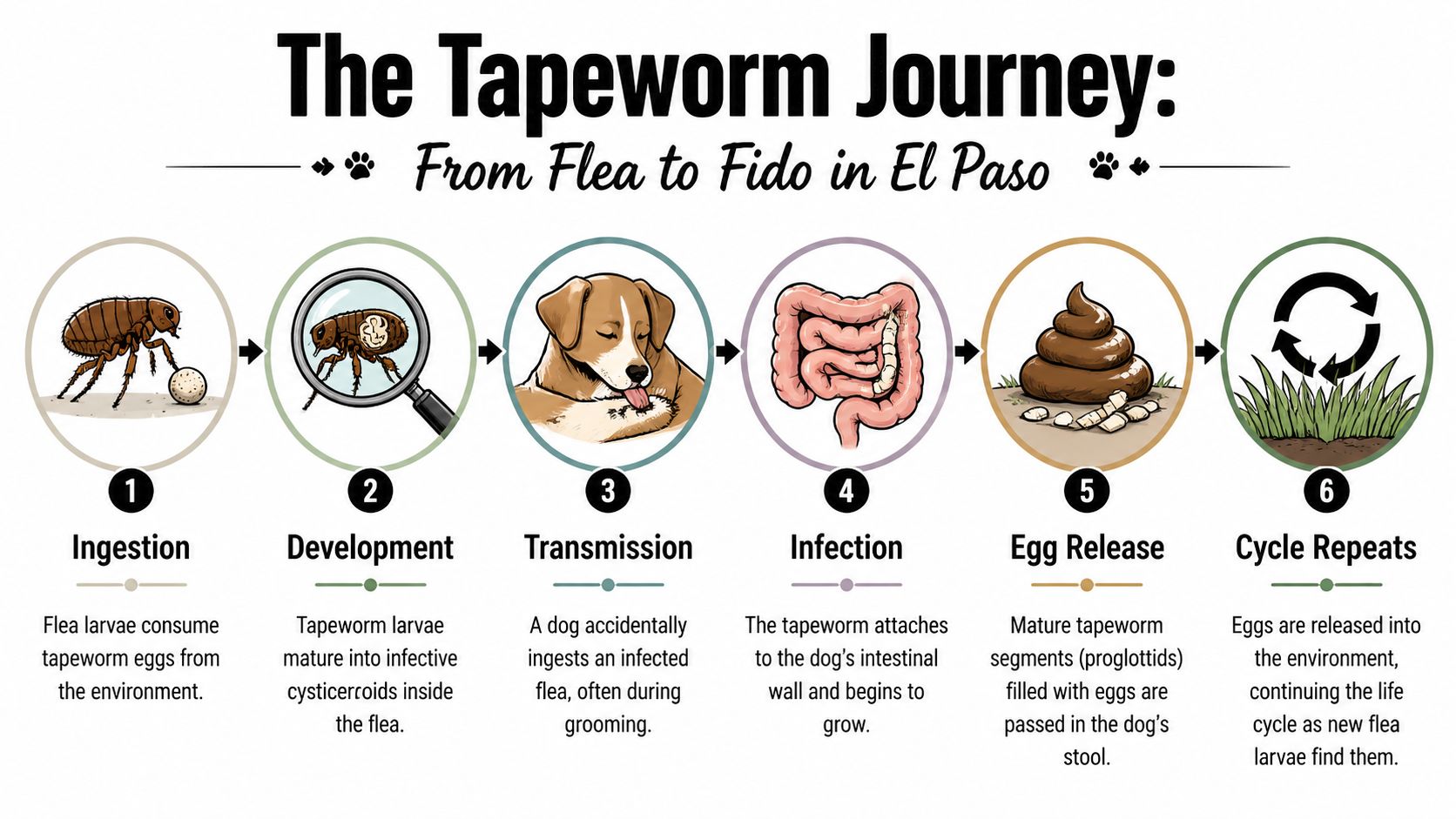
The practical takeaway is straightforward. Tapeworms in dogs are often a flea-ingestion problem with a worm showing up at the end.
Why El Paso changes the prevention standard
El Paso owners deal with a dry climate, warm stretches, dusty yards, and plenty of places where flea pressure can stay active longer than people expect. Analysts cited in Business Insider’s guide to dog dewormers note that the flea-tapeworm connection is the primary route of infection and that year-round flea prevention plays a central role in prevention.
That matches what experienced groomers and pet professionals see on the ground. Pets do not need a dramatic infestation to get into trouble. One missed preventive cycle, one contact point with another animal, or one low-grade flea issue in bedding can keep the chain going.
In this region, hygiene standards matter. A premium grooming routine helps spot flea dirt, skin irritation, overgrooming, and rear-end debris early, before an owner is dealing with repeated tapeworm exposure. For a broader look at local parasite pressure, see this veteran’s guide to fleas and ticks on dogs.
What owners often miss
Well-cared-for dogs still get tapeworms. The weak point is usually not love or effort. It is a small gap in the prevention chain.
I see the same trade-off often. Owners focus on what they can clean today, the bedding, the stool area, the coat, the visible mess. Those steps help with sanitation, but they do not remove the infected flea that started the problem or the next one waiting in the environment.
The visible segment is the warning. The flea cycle is the real problem.
That is why disciplined grooming hygiene and disciplined flea control belong together. If the flea side stays active, a dog can clear one tapeworm infection and pick up another soon after.
Choosing the Right Dog Tapeworm Medicine
A dog owner finds rice-like segments on the blanket, heads to the store, and grabs the first dewormer with a familiar label. That is a common reaction. It is also where dogs get under-treated, over-treated, or treated for the wrong parasite.
The right choice starts with the active ingredient, not the packaging. For tapeworms, the name to look for is praziquantel.
Praziquantel is the standard drug used to clear canine tapeworms. It is effective because it acts directly on the tapeworm in the intestine, which is why veterinarians routinely choose it when the signs fit tapeworm infection. In practical terms, if a product does not contain praziquantel, it may not solve a true tapeworm problem at all.
Tapeworm-only versus broad-spectrum products
Owners usually have two lanes to choose from. One is a tapeworm-only product. The other is a broader dewormer that includes praziquantel along with ingredients for roundworms, hookworms, or whipworms.
That choice depends on the case in front of you.
A tapeworm-only product often fits when:
- You have seen clear tapeworm segments and the dog otherwise seems normal
- The problem appears isolated, with no history suggesting other intestinal worms
- You need direct treatment without adding unnecessary actives
A broader product often fits when:
- The diagnosis is less clear
- The dog has mixed symptoms, such as loose stool, poor condition, or repeated parasite issues
- A veterinarian wants to cover more than one intestinal parasite at once
Here is the practical difference:
| Brand Name | Primary Active Ingredient(s) | Target Parasites | Access (OTC or Prescription) |
|---|---|---|---|
| Droncit | Praziquantel | Tapeworms | Prescription |
| Elanco Tapeworm Dewormer | Praziquantel | Tapeworms | OTC |
| Drontal Plus | Praziquantel plus other actives | Multiple intestinal parasites including tapeworms | Prescription |
| Panacur C | Fenbendazole | Broad intestinal parasite coverage, but not a primary tapeworm treatment | OTC or veterinary guidance depending on use context |
| VIRBANTEL | Praziquantel, pyrantel pamoate, febantel | Multiple parasite classes | Prescription |
One point matters here. Not every dewormer covers tapeworms. Owners often assume any worm medicine will do the job. It will not. Fenbendazole products, for example, are useful in many deworming plans, but they are not the first pick for the classic flea-related tapeworm case.
OTC convenience versus veterinary precision
Over-the-counter access is helpful, especially when an owner knows what they are looking at and can weigh the dog accurately. In a straightforward case, an OTC praziquantel product may be reasonable.
There are trade-offs.
OTC treatment makes the most sense when the dog is stable, the signs are familiar, and the owner can follow the label exactly. Prescription treatment is the better route when the dog is very young, medically complicated, already taking other drugs, or showing signs that do not line up neatly with tapeworms alone.
That distinction matters in grooming as much as medicine. In my line of work, hygiene often reveals the first warning signs, but it also shows when something is no longer simple. A clean coat can still hide a parasite issue. A disciplined grooming routine helps catch the evidence early. It does not replace a proper diagnosis or the right product selection.
Brand name matters less than formula
Owners can waste time comparing boxes, colors, and marketing claims. Compare the formula instead.
Some products contain praziquantel alone. Others combine it with pyrantel pamoate and febantel to cover additional intestinal parasites. The FDA-approved label for Virbantel broad-spectrum dewormer tablets shows how these combination products are designed for wider parasite coverage in dogs.
That wider coverage can be useful, but more ingredients do not automatically make a product better. If the problem is a straightforward tapeworm case, a focused praziquantel product may be all that is needed. If the dog may have more than one intestinal parasite, the broader formula may save time and avoid repeat treatment plans.
For a closer look at product types, dosing forms, and common use cases, review this guide on dog deworming medicine for different parasite situations.
What works and what wastes time
What works:
- Correct weight-based dosing
- Choosing a product that includes praziquantel for tapeworms
- Veterinary input when symptoms are mixed, severe, or recurring
- Pairing treatment with disciplined hygiene and flea control
What wastes time:
- Choosing a dewormer by brand recognition alone
- Assuming all intestinal worm medicines treat tapeworms
- Using leftover tablets from an old treatment plan
- Treating the dog while ignoring the coat, bedding, and other hygiene warning signs
In El Paso, that last point deserves attention. Dry conditions, travel between indoor and outdoor spaces, and missed flea prevention can keep the cycle active longer than owners expect. Premium grooming hygiene is often the first line of defense because it helps spot flea dirt, skin irritation, coat changes, and rear-end debris before the problem turns into a repeat infection. Medicine clears the current worms. Sharp grooming standards help keep the dog from ending up right back where it started.
Administering Medicine Safely and What to Expect
A common El Paso scenario looks like this. The owner finally gets the right tapeworm medicine, gives the tablet, and then spends the next 24 hours wondering whether it worked, whether the dog swallowed it, and whether the segments in the stool mean the problem got worse.
Good treatment is less dramatic than that. It starts with accurate dosing, calm administration, and knowing what a normal response looks like.
Dose by actual weight, not by memory
Praziquantel products are dosed by weight. In practice, that means weighing the dog now, reading the label carefully, and matching the product strength to the dog in front of you, not the dog you remember from six months ago.
One verified product example lists a large-dog tablet containing 136.0 mg praziquantel per tablet, and the same product information notes that fasting is neither necessary nor recommended before administration. The broader prescribing references used earlier in this article also note that oral praziquantel dosing is weight-based, with higher-dose decisions reserved for veterinary direction in more complicated cases (VMD product information for praziquantel dog tablets).
A few rules keep owners out of trouble:
- Use a current weight: If the dog sits near the cutoff between sizes, call your veterinarian or pharmacist before you dose.
- Read the full label: Some products are dosed by tablet count. Others are dosed by milligram strength.
- Do not mix leftovers: Old tablets and half-finished treatment plans create dosing mistakes and muddy the record if the dog needs follow-up care.
In grooming, small details matter. Parasite care works the same way. The right medicine can be undercut by a bad weight estimate.
Getting the pill down cleanly
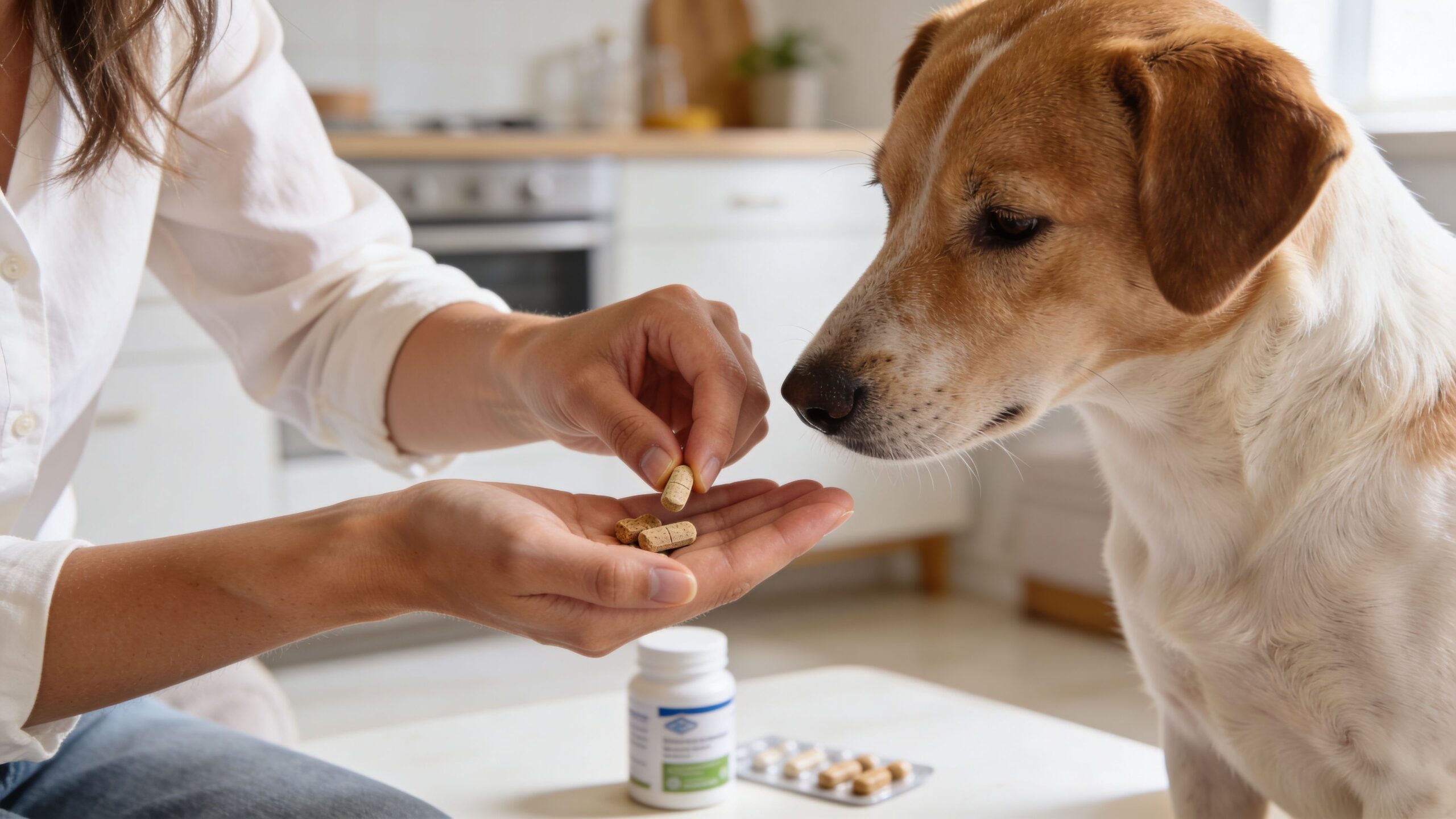
The best method is the one that gets the full tablet into the dog without turning the process into a fight. Some dogs take medication in a soft treat. Others need direct pilling and a quick check that the tablet was swallowed.
Use a small amount of food if the label allows it. Watch the dog after dosing. Dogs that “chew and stash” can spit out a tablet behind a water bowl or in bedding, and that missed dose gets mistaken for treatment failure.
If your dog also needs parasite prevention on the flea side, ask your veterinarian about oral flea and tick medication for dogs that fits your dog’s age, weight, and health history. That matters in El Paso homes where indoor-outdoor routines and warm weather can keep parasite exposure active.
What you may see after treatment
Owners often notice segments in the stool after treatment and assume the medicine did not work. In many straightforward cases, passed segments are part of the expected response.
Praziquantel acts quickly after administration, so owners may see evidence of worm clearance within hours or by the next day, as noted earlier from the verified product material.
Seeing passed segments after treatment can mean the medication is working.
Some dogs act completely normal after treatment. Others may have mild stomach upset. The bigger concern is whether the full dose stayed down.
This short video offers a useful demonstration of practical pill-giving technique:
Call your veterinarian if you notice:
- vomiting soon after dosing
- uncertainty about whether the dog swallowed the full tablet
- repeated visible segments after appropriate treatment and follow-up
- diarrhea, lethargy, appetite loss, or other signs that suggest more than an uncomplicated tapeworm case
From a groomer’s standpoint, this is also the time to tighten up hygiene. Wash bedding, check the coat closely, and pay attention to flea dirt, rear-end debris, and skin irritation. Medicine clears the current infection. Clean handling and sharp observation help keep that treatment from being wasted.
Prevention The Ultimate Standard of Care
A common El Paso pattern looks like this. A dog gets treated, the visible segments stop, everyone exhales, and two or three weeks later the scratching starts again. In my line of work, that usually points to a prevention gap, not a mystery.
Medicine clears the current tapeworm burden. Long-term control depends on stopping the dog from swallowing infected fleas again. As noted earlier, reinfection can happen quickly when flea pressure stays in the home, yard, or coat.

Why prevention beats repeated treatment
Repeated deworming without correcting flea exposure wastes time, money, and confidence. The medication may do its job exactly as intended, but the dog returns to the same environment and picks up the same problem again.
That is why prevention has to cover the dog, the home, and the places the dog rests.
In El Paso, heat, dust, and long flea seasons make that standard even more important. Owners need a routine they can maintain, not a burst of effort after symptoms show up.
The required habits for El Paso homes
Strong prevention is built on plain, repeatable work:
- Stay current on flea control: Use the preventive your veterinarian recommends and keep the schedule tight. If you are weighing product types, this guide to oral flea and tick medication for dogs can help you compare options.
- Wash bedding often: Clean crate pads, blankets, and favorite sleeping spots on a set schedule.
- Watch the yard and entry points: Pay attention to shaded rest areas, fence lines, patios, dog runs, and spots near doors where pets linger.
- Check the rear and tail base during grooming: Those areas often reveal flea dirt, irritation, or residue before an owner notices anything in the stool.
- React early to scratching and chewing: A sudden change in licking, scooting, or skin irritation deserves a hands-on inspection.
Grooming is the front line of prevention
Many owners still treat grooming as cosmetic care. That misses one of the best early-warning systems they have.
A disciplined grooming routine creates regular inspection points. You see the coat up close. You handle the tail base, the belly, the groin, the paws, and the rear. You notice flea dirt, bite irritation, dandruff, debris, and hair loss before the dog has weeks to keep swallowing infected fleas. That is the practical advantage a careful groomer brings to parasite prevention, and it is one reason premium hygiene matters so much in a dry, dusty city like El Paso.
At home, the standard is the same. Slow down. Brush thoroughly. Part the coat. Check the skin. Clean tools between uses. If a professional is doing the work, choose a setting that values close handling and observation over speed.
The owners who stay ahead of tapeworm problems usually keep a steady hygiene routine and catch small warning signs early.
What high-standard owners do differently
They track flea prevention dates instead of guessing.
They use grooming sessions as health checks, not just cleanup.
They keep bedding, crates, and common rest areas clean even when the dog looks fine.
They understand the trade-off. Prevention takes routine effort up front, but it is far easier than repeating treatment and chasing reinfection through the house.
That is also why community promotions matter when they support consistency instead of rushed care. A once-monthly option like Snip & Style Saturday can help families stay on schedule with an affordable grooming promo while keeping hygiene and observation built into the month.
For El Paso dog owners searching for El Paso dog grooming, premium pet grooming, veteran-owned grooming, or a dependable affordable grooming promo, the difference is not branding. It is disciplined care, clean handling, and trained eyes on the small details that keep minor parasite issues from turning into repeat problems.
What to Do When Standard Treatments Fail
Most tapeworm cases respond as expected. When they don’t, owners usually assume one of two things. Either the medicine was useless, or the dog got reinfected. The second explanation is more common, but it isn’t the only one.
Recent veterinary reporting has added another possibility.
Verified data notes that Cornell University documented emerging cases of praziquantel-resistant Dipylidium caninum in dogs, and that when standard treatments fail despite excellent flea control, owners should work with a veterinarian on alternatives, as described by Cornell University College of Veterinary Medicine’s report on emerging Dipylidium caninum resistance.

Rule out the common failure points first
Before anyone assumes resistance, check the basics with discipline:
- Was the product praziquantel-based?
- Was the dose correct for the dog’s current weight?
- Did the dog receive the full tablet?
- Were fleas fully controlled on the dog, in the home, and in the yard?
- Was what you saw persistent shedding, or residual passage after treatment?
Those questions solve a lot of confusion.
When to ask the vet harder questions
If the medication was correct, the dose was accurate, and flea control has been consistent, then it’s reasonable to ask your veterinarian whether persistent tapeworm shedding could reflect reinfection from a missed source or a less typical response to treatment.
Ask clearly:
- Could this still be flea-driven reinfection?
- Do you want a stool sample or visual confirmation of segments?
- Is a different medication strategy appropriate?
- Should we review every parasite preventive the dog is currently on?
Persistent segments after proper treatment deserve follow-up, not repeated guesswork.
Owner advocacy matters. Calm records help. Keep the package, note the dose date, document visible segments, and write down what flea preventive the dog is on. That gives the veterinarian something useful to work from instead of a rough memory.
Your Partner in Pet Health FAQs and Next Steps
Good parasite control isn’t one product. It’s a chain of habits. Clean handling, regular inspection, smart medicine choices, and strict flea prevention work together. When one link slips, tapeworms find room.
Owners who handle this well usually stay practical. They don’t overreact to the sight of a segment, but they don’t shrug it off either. They treat it as a signal to tighten the routine.
Common questions owners still ask
Can people get tapeworms from dogs
It’s possible, but the practical concern for most households is still the flea route. The bigger day-to-day priority is preventing flea exposure, keeping hands clean after handling pets or waste, and not letting children interact carelessly with infested areas.
Do natural remedies work as dog tapeworm medicine
Natural remedies are a common hope, especially for owners trying to avoid pharmaceuticals. The problem is reliability. When a dog has tapeworms, owners need treatment that targets the parasite directly and predictably. In practice, vague home remedies create delay more often than results.
How often should a dog be dewormed for tapeworms
That depends on the dog’s risk, diagnosis, and flea exposure. Some owners hear blanket advice and apply it to every dog. A better approach is to follow veterinary guidance based on the dog’s actual environment, symptoms, and preventive routine. If fleas are active or recurring, the answer may involve more than just repeating dewormer.
Is seeing segments after treatment always bad
Not necessarily. As noted earlier, passage of segments after treatment can fit the expected action of praziquantel. What matters is whether the issue clears and stays cleared once the flea problem is under control.
A working standard for owners
If you want a practical checklist, use this one:
- Inspect regularly: Look at bedding, stool, and the coat around the tail.
- Treat accurately: Use the right product and exact weight-based dosing.
- Control fleas relentlessly: The root cause has to be handled at the same time.
- Keep records: Note dates, product names, and anything you observe.
- Escalate when needed: If the pattern doesn’t resolve, involve your veterinarian promptly.
That’s the standard strong owners hold. Not perfection. Consistency.
For pet families in El Paso, that standard matters even more. Local climate pressure, active lifestyles, and shared environments mean prevention has to be built into ordinary care, not saved for emergencies. That’s where grooming, hygiene, and parasite control stop being separate tasks and become one disciplined system.
If you want a higher standard of El Paso dog grooming built around clean workflow, close observation, and real pride in pet wellness, book with Glo More Grooming. Our premium pet grooming approach is calm, one-on-one, and rooted in the discipline you expect from a veteran-owned grooming business. If you’ve been looking for an affordable grooming promo, ask about Snip & Style Saturday and reserve your slot now.