
You have the sweater in your cart. The color looks right. The style looks right. Then the sizing chart shows up, and everything slows down.
That is where most dog owners get stuck. A dog sweater size chart looks simple until you realize one brand’s medium can fit nothing like another brand’s medium, and a sweater that looks fine on the couch can bunch at the shoulders, rub under the legs, or slide back by the first walk.
A good fit starts with disciplined measuring, not guesswork. That matters even more in El Paso, where dogs move between cool mornings, warm afternoons, dust, sun, tile floors, car rides, and post-groom outings. A sweater should protect comfort without restricting movement or wrecking a clean coat.
This guide keeps the process practical. No fluff. Just what works, what fails, and how to use a dog sweater size chart the right way.
How to Measure Your Dog Accurately
Most sizing problems start before the chart. The tape goes in the wrong place, the dog is sitting, or the measurement gets taken over a bulky harness.
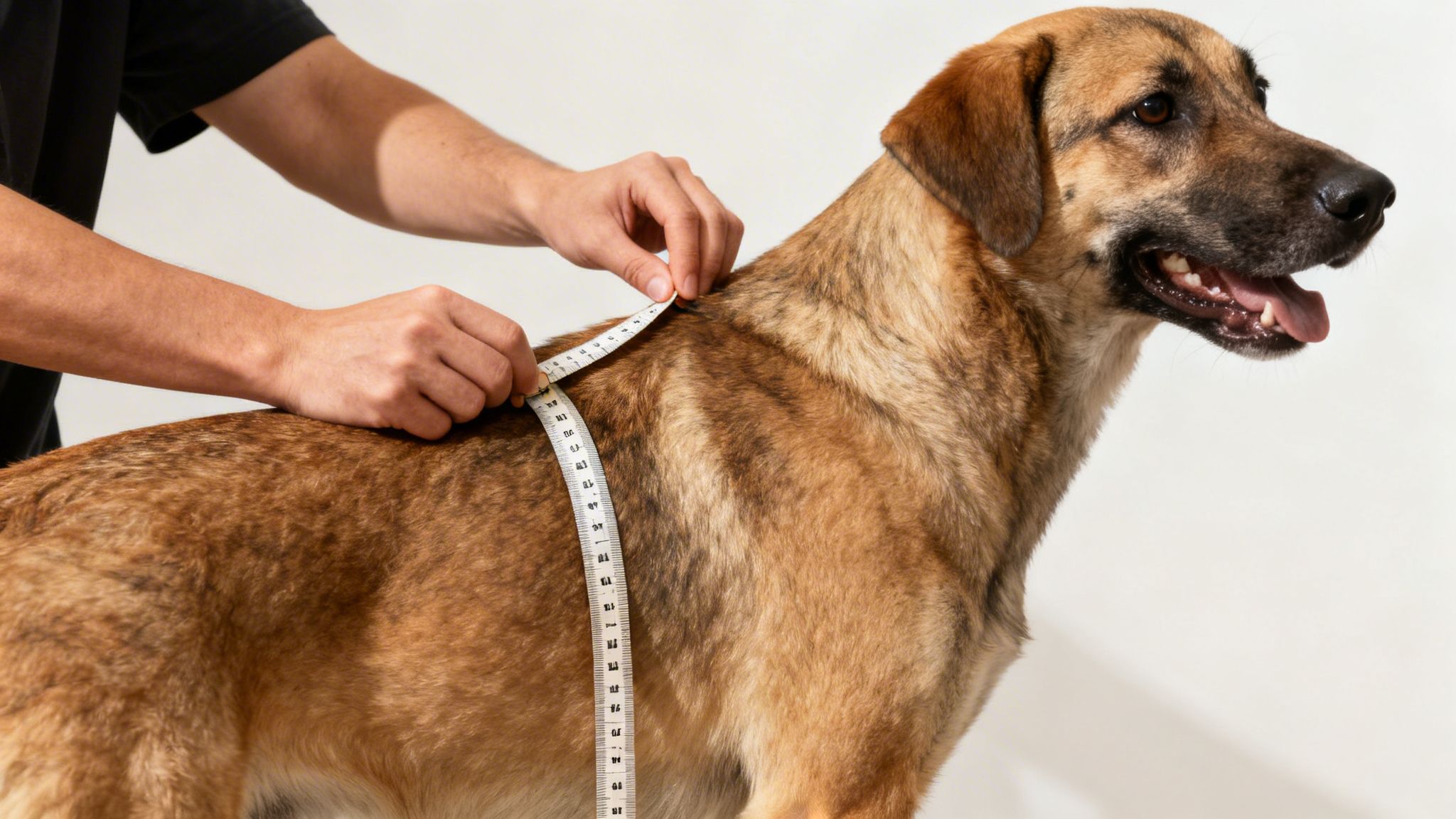
The clean method uses three measurements. According to Spark Paws’ sizing guidance, standard dog sweater charts rely on back length, chest girth, and neck girth, measured with a soft tape while the dog is standing, with the tape snug but not tight and enough room for the two-finger rule.
The three measurements that matter
Back length
Measure from the withers, the ridge between the shoulder blades, to the base of the tail. Do not start from the collar if the collar sits higher than the sweater neckline.Chest girth
Wrap the tape around the widest part of the ribcage, just behind the front legs. This is usually the deciding measurement when the chart and the dog disagree.Neck girth
Measure where the collar normally sits. If you need help getting that fit right, this guide on dog collar sizing is useful for comparing neck placement and comfort.
The measuring standard that prevents bad purchases
Use a soft tailor’s tape. Keep the dog standing on all fours. Record the numbers right away in the notes app on your phone or on paper.
Then apply the two-finger rule. Slide two fingers between the tape and the body at the neck. That small bit of ease helps the sweater stay comfortable during walking, sitting, and lying down.
Tip: Measure a calm dog, not an excited one. A twisting dog can turn a decent estimate into a bad order.
What does not work
A few shortcuts fail almost every time:
- Eyeballing by breed: Two Frenchies can wear very different sizes.
- Using weight alone: Weight helps, but body shape decides fit.
- Measuring over thick gear: Harnesses and layered clothing distort the reading.
- Measuring while seated: A curved spine shortens the back measurement.
If your dog falls between two sizes, lean toward the roomier option unless the brand says otherwise. Tight sweaters create more problems than slightly longer ones.
The Ultimate Dog Sweater Size Chart
A dog sweater size chart is a starting point, not a guarantee. The smartest way to use one is to compare your dog’s actual measurements against a general baseline, then check the brand’s chart before buying.
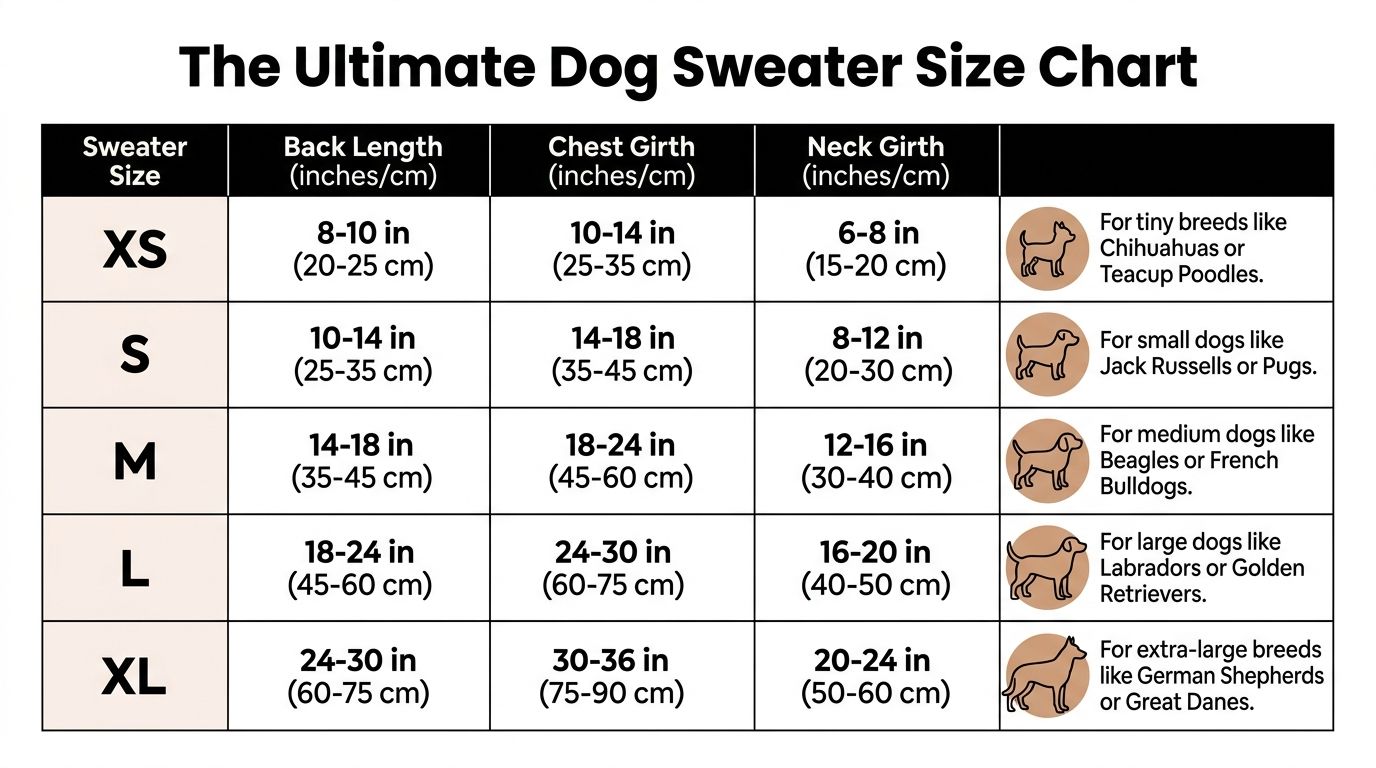
Chilly Dog’s guide shows why brand differences matter. Their dog sweater sizing chart states that XX-LARGE fits a dog with 40 cm back length, 76.20 to 83.82 cm chest, and 18.14 to 27.22 kg weight, while XXX-LARGE fits 44 cm back length, 91.44 to 96.52 cm chest, and 27.22 to 36.29 kg weight. That spread is a reminder to trust the tape, not the label.
General Dog Sweater Size Chart
| Size | Chest Girth (in) | Back Length (in) | Weight (lbs) | Example Breeds |
|---|---|---|---|---|
| XS | 12-16 | 8-14 | 5-10 | Chihuahua, Yorkie |
| S | 16-18 | 9.5-16 | 10-20 | Shih Tzu, Beagle |
| M | 18-22 | 11.5-20 | 20-35 | Corgi, Border Collie |
| L | 22-26 | 14-24 | 35-50 | Wheaten Terrier, Pit Bull |
| XL | 26-32 | 19-29 | 50-65 | Vizsla, Dalmatian |
| XXL | 31-38 | 22-32 | 65+ | Lab and Golden mixes |
The table above reflects benchmark size ranges compiled from major brand guides in the verified data.
How to read the chart correctly
Use the chart in this order:
- Start with chest girth: It usually determines whether the sweater can go on comfortably.
- Check back length next: This tells you whether the sweater will cover properly without riding too far back.
- Use weight as a secondary check: Helpful for comparison, not the main decision-maker.
A chart gets you close. The brand chart gets you closer. Your tape measure makes the final call.
Breed-Specific Sizing and Measurement Conversion
Breed labels help, but they are not a substitute for measuring. They give you a rough lane. They do not give you the answer.
The Foggy Dog’s size guide lists XS for breeds like Chihuahuas at 5 to 10 lbs with a 12 to 16 inch chest, M for Corgis at 20 to 35 lbs with an 18 to 22 inch chest, and XL for Dalmatians at 50 to 65 lbs with a 26 to 32 inch chest. That same guidance recommends sizing up by 1 to 2 inches for deep-chested breeds like Dachshunds, with a 10% girth allowance for better comfort.
Quick breed examples by body type
Use breed examples as a first filter:
- Toy and very small dogs: Chihuahuas and similar builds often fall into XS, but neck openings vary a lot by brand.
- Compact small dogs: Pugs and Jack Russells may share size labels, even though their chest shapes differ.
- Mid-size dogs: Corgis often need special attention because of their body length relative to chest size.
- Large athletic dogs: Dalmatians can wear an XL by chest while needing a different cut through the shoulders.
If you own a curly-coated dog, body outline can be deceptive after the coat grows out. A freshly trimmed poodle may size differently than the same dog a few weeks later. Owners of that coat type may find this overview of miniature poodle characteristics helpful when thinking about coat volume and shape.
Inches to centimeters conversion
Some charts use inches. Others use centimeters. Keep both.
| Inches | Centimeters |
|---|---|
| 8 | 20.32 |
| 10 | 25.40 |
| 12 | 30.48 |
| 14 | 35.56 |
| 16 | 40.64 |
| 18 | 45.72 |
| 20 | 50.80 |
| 22 | 55.88 |
| 24 | 60.96 |
| 26 | 66.04 |
| 28 | 71.12 |
| 30 | 76.20 |
| 32 | 81.28 |
The practical rule
Breed is a clue. Measurements are the standard. If the chart says one thing and your tape says another, trust the tape.
Choosing the Right Fit for Unique Body Shapes and Coats
A basic dog sweater size chart works for average builds. Many dogs are not average.
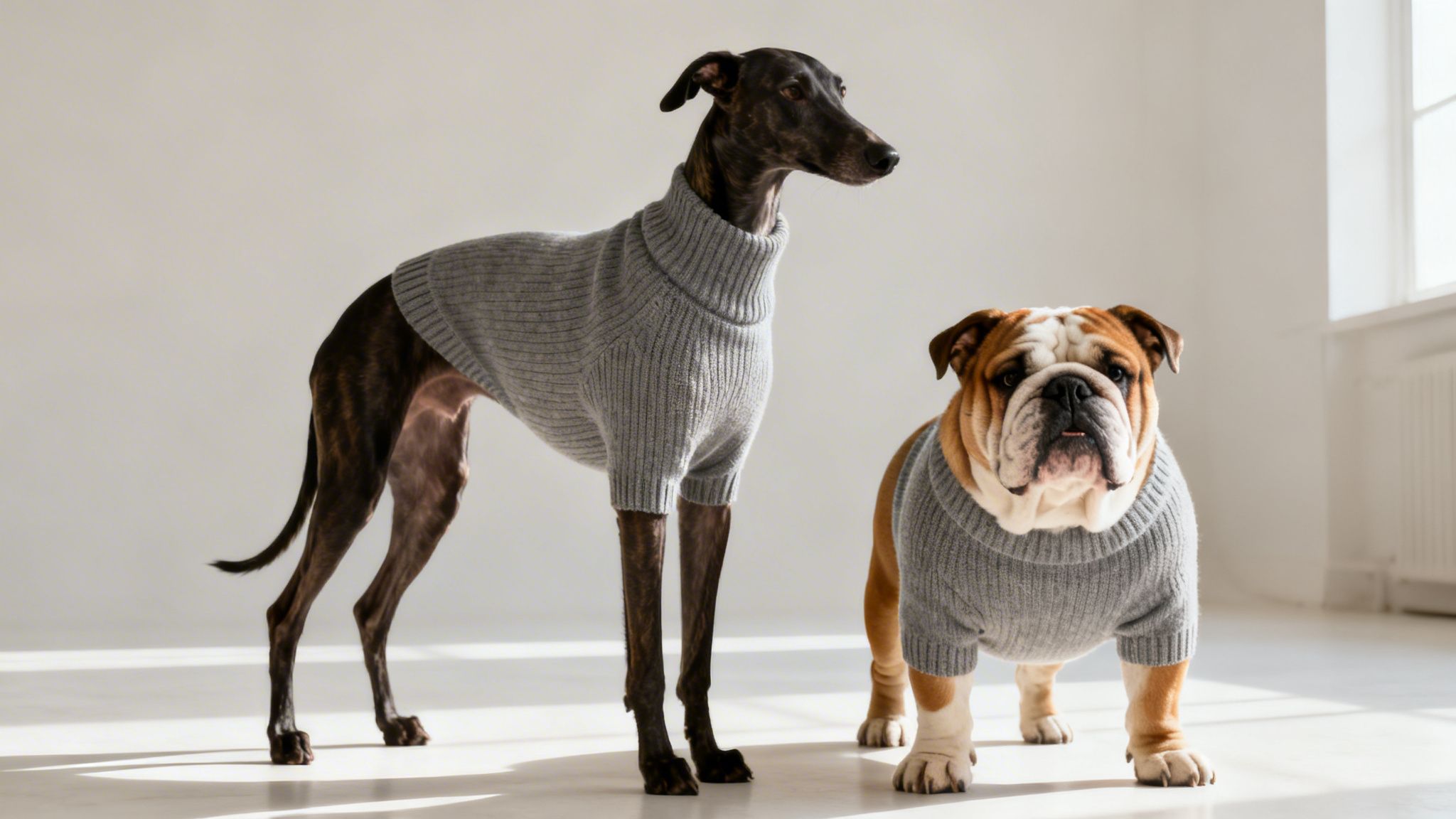
A slim Greyhound, a broad Bulldog, and a long Dachshund can all land near the same weight range and still need completely different sweater cuts. Owners who ignore body structure usually end up with twisted hems, exposed lower backs, or pressure across the chest.
Dogs that break the standard chart
Deep-chested dogs need extra room through the front without a sloppy neck opening. If the sweater fits the back but pinches the ribcage, it is the wrong choice.
Barrel-chested dogs need room at the chest and shoulder, not extra fabric dragging over the rear. Pugs and Bulldogs often expose how unreliable back-length-only shopping can be.
Long-bodied dogs usually need more coverage along the spine but not always a larger chest. That mismatch is where many standard pullovers fail.
Coat type matters too. A fluffy dog carries more volume than a short-coated dog with the same frame. If you regularly maintain undercoat or seasonal shedding, the tools you use can change how a sweater fits week to week. Good brushing makes a difference, especially with dense coats, and this guide on a dog brush for shedding helps owners manage that bulk before fitting clothes.
Key takeaway: The better the coat is maintained, the more consistent your sweater fit becomes.
A visual fitting walkthrough helps when your dog’s shape sits outside the middle of the chart.
What responsible fitting looks like
Choose the sweater that matches the dog’s build, not just the dog’s size category. A responsible owner watches how the sweater sits at the neck, under the front legs, and over the lower back after a few minutes of movement. If the fabric shifts hard to one side, pulls at the armpits, or lifts when the dog sits, the fit is wrong.
Common Sizing Mistakes and How to Avoid Them
Most bad sweater purchases come from simple shortcuts. People rush the process, trust the breed label, or buy for appearance first and movement second.
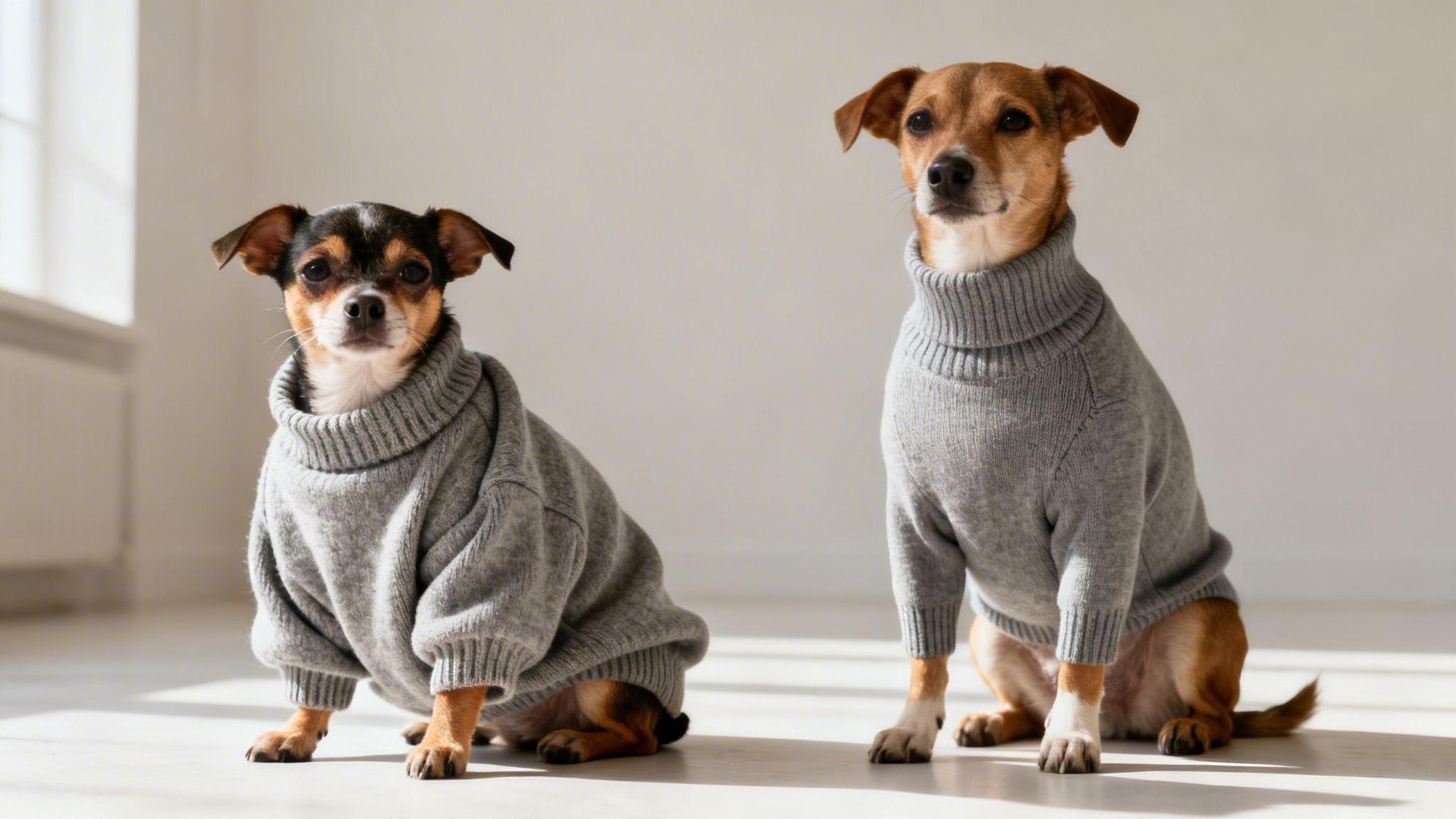
The sweater may still go on. That does not mean it fits.
The mistakes that cause most problems
Picking by size name alone
Small, medium, and large are not standardized across brands. A label tells you almost nothing without the chart.Ignoring the chest measurement
Owners often shop by back length because it feels easier. That is backwards. If the chest is wrong, the whole garment fails.Forgetting what goes underneath
A dog that wears a harness under a sweater needs more room than a dog wearing the sweater alone.Measuring over thick coat buildup
Dirt, packed undercoat, and matted areas change how a garment sits and where it rubs.
The better standard
Treat sizing like equipment fitting, not like costume shopping. Put the dog in a calm standing position, measure carefully, and compare each number to the brand chart. Then test the fit after the sweater is on.
Look for these signs:
- Neckline stays flat: It should not choke, gap badly, or slide.
- Front legs move freely: No pinching at the armpits.
- Back coverage stays put: It should not roll or shift after walking.
- Chest panel lies smooth: Tight horizontal stretch lines usually mean the fit is too small.
Practical tip: If a sweater fits only when the dog is standing still, it does not fit. Dogs sit, turn, trot, and curl up.
The goal is not a photo-ready fit for thirty seconds. The goal is a stable, comfortable fit through real movement.
Why a Perfect Sweater Fit Protects Your Premium Groom
A clean groom and a well-fitted sweater should work together. When they do not, the coat pays the price.
A sweater that is too tight can press friction points into the chest, neck, and front legs. A sweater that is too loose can twist, collect debris, and rough up the coat with constant shifting. Either problem can flatten styling, disturb brushed areas, and leave the dog looking less polished long before the next appointment.
Where fit affects coat condition
Freshly cleaned coats behave differently than dirty coats. Clean hair moves more freely. It also catches friction more easily if the garment is rough, tight, or unstable.
That matters in practical ways:
- A snug arm opening can create rubbing behind the legs.
- A loose belly fit can drag and pick up outdoor dust.
- A stretched neckline can spoil the neat outline around the chest and shoulders.
- A poor fabric choice can create static or surface fuzz on a recently finished coat.
Why one-on-one care changes the result
This is one area where independent grooming standards beat the chain approach. In a premium setting, the dog is not moving through an assembly line. The coat, trim, skin condition, and handling needs all get individual attention.
That changes clothing decisions too. A dog with a close trim may need a smoother interior fabric. A fluffy dog may need more room through the chest and shoulder. A dog with a hand-scissored finish benefits from a sweater that preserves the outline instead of crushing it.
El Paso adds another layer to the equation. Dust, wind, and quick weather swings can all affect how long a groom stays looking crisp. A properly fitted sweater helps shield the coat during transport, errands, and early morning walks without turning that protection into another grooming problem.
A premium groom is not just about the day of the appointment. It is about how the dog carries that care afterward.
Sweater Care Tips to Prevent Shrinkage and Stretching
A good fit can be ruined in one wash. The sweater was correct when you bought it. Then heat, rough agitation, or bad storage changed the shape.
Laundry habits that preserve fit
Read the care label first. If the garment is wool, fleece, or a cotton blend, do not assume they behave the same.
Use these habits:
- Wash gently: Cooler water and a gentler cycle are usually safer than aggressive washing.
- Skip high heat: Heat can shrink knitwear and distort stretch panels.
- Reshape before drying: Lay the sweater flat and smooth it back into shape.
- Store folded, not hanging: Hanging can pull the body long and warp the neckline.
Watch for hidden fit changes
Some sweaters do not shrink evenly. The chest may tighten while the length barely changes. Others stretch at the neck after repeated pulling over the head.
Check the garment every few washes:
- Does the neck opening still sit correctly?
- Has the chest become tighter?
- Are the leg openings curling or twisting?
- Has the sweater grown longer and looser through the body?
If the answer is yes, stop using it for long wear. A sweater that has lost shape often causes rubbing even when it still looks usable.
Well-kept gear lasts longer; it also keeps fitting the dog you measured.
Your El Paso Expert for Premium Grooming and Sizing
El Paso dog owners do not need more generic advice. They need reliable standards, clear handling, and someone local who understands how climate, coat condition, and routine all affect comfort.
That is where an independent studio stands apart from chain traffic and one-size-fits-most recommendations. Premium pet grooming is not only about a clean bath, a haircut, or a tidy nail trim. It is about precision. A dog that is measured correctly after grooming has a far better chance of wearing clothing comfortably and keeping that polished look intact.
What sets local, disciplined care apart
A veteran-owned grooming business should run with clear standards. Calm handling. Clean workflow. No chaos for the dog. No rushed handoff for the owner.
That matters because sizing is easier when the coat is clean, the dog is settled, and the handler is paying attention to details like chest depth, neck set, and body shape. Big-box environments may process more dogs. They rarely offer the same one-on-one continuity.
Why local relevance matters in El Paso
El Paso brings its own demands. Dogs here deal with dust, warm afternoons, cooler starts, and frequent car travel. A sweater that fits badly can trap debris, shift constantly, or mash down a coat right after grooming.
Owners looking for El Paso dog grooming often want more than convenience. They want consistency and someone who takes pride in doing the job right. That same mindset applies to sweater fit, seasonal coat care, and practical routines that keep dogs comfortable between appointments.
If you also keep an eye out for an affordable grooming promo, local shops with monthly specials can offer a better balance of value and individualized care than a chain model built around volume.
Frequently Asked Dog Sweater Sizing Questions
Some questions come up every season. The answers are simple if you stay disciplined.
What if my dog is between two sizes
Go up, not down, when the fit is close. A little extra room is usually easier to manage than a sweater that binds at the chest or shoulders.
Pay attention to where the dog falls between sizes. If the chest is near the upper limit of one size, the next size is often safer.
Should I buy based on puppy size now or future growth
For young dogs, plan ahead. According to Onlinezoo’s sizing data, puppies under 2 years can grow 20 to 50% annually, and the AKC guidance referenced there recommends upsizing. The same source notes that charts now span from dogs under 1 kg with XXS chest 26 to 28 cm to 35 kg+ dogs with XL chest 97 to 99 cm, reflecting the wider range of modern sizing.
If you are buying for a puppy, avoid a tight fit that will be outgrown almost immediately. A little extra room is the practical choice.
Can I use a baby sweater or a human sweater instead
Usually, no. Human clothing is not cut for canine shoulders, chest depth, leg placement, or tail set. Even if it goes on, it may restrict movement or rub in the wrong places.
Dog sweaters are built around dog anatomy. That matters.
Why do proper charts matter so much
Proper sizing saves hassle; it also improves comfort and cuts down on trial-and-error buying.
Is weight enough to choose a sweater
No. Weight is only a supporting detail. Dogs with the same weight can have very different ribcages, necks, and back lengths.
Use the tape. Then use the chart.
If you want hands-on help from a local team that values precision, discipline, and real one-on-one care, book with Glo More Grooming. As a veteran-owned grooming studio serving El Paso, Glo More Grooming pairs premium standards with practical support, including guidance that helps protect your dog’s coat, comfort, and style. Ask about Snip & Style Saturday, the monthly affordable grooming promo, and reserve your spot now for El Paso dog grooming that stands apart from the chain experience.