
Your dog hears the clippers come out and disappears under the table. You finally coax them into the car, arrive at a busy grooming counter, and wonder whether the appointment will be a quick trim or a full struggle. That uncertainty is exactly why a dog nail trim appointment deserves a calm plan rather than a rushed add-on.
In a disciplined El Paso studio, nail care starts before the first clip. The groomer checks the dog's nails, dewclaws, handling history, and stress signals, then chooses a safe pace. That approach supports healthier maintenance, clearer communication, and a more predictable experience for both dog and owner.
What a Professional Dog Nail Trim Appointment Really Involves
A dog arrives with one split nail, a curled dewclaw, or paws that have become difficult to handle. The groomer must decide what can be trimmed safely, how the dog responds to restraint, and whether the appointment should pause. A professional visit follows that assessment instead of treating nail care as a quick add-on.
A UK primary-veterinary-care dataset recorded 2,440 nail-clipping cases involving 3,380 events among 2,250,741 dogs under care, with nail clipping representing 5.64% of cases (Journal of Small Animal Practice study). 59.4% of cases listed nail clipping as the primary reason for the visit, showing that owners often seek help after a problem has already developed.
The intake should cover recent snags, broken nails, licking, limping, and any dewclaw that may have been missed. The same dataset found clipping restricted to the dewclaw in 11.39% of cases, so each toe deserves inspection rather than attention only to nails that touch the floor.
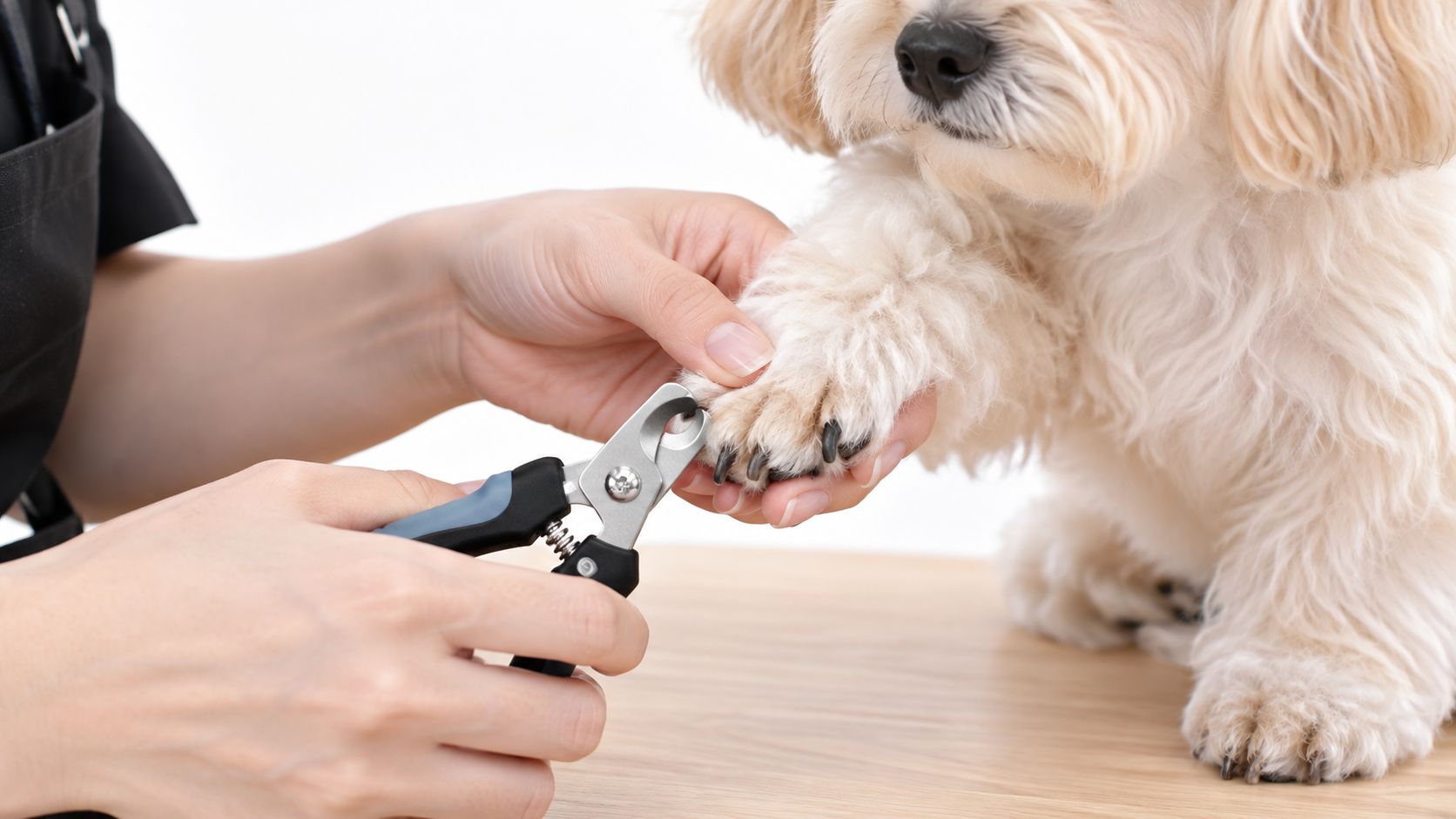
A calmer workflow protects cooperation
One-on-one handling gives the groomer time to watch posture, breathing, paw tension, and attempts to withdraw. The session can slow down, change position, or pause before the dog reaches a defensive response. High-volume chain grooming often prioritizes quick handoffs and throughput, while a private appointment can set the pace around the individual dog.
At Glo More Grooming, Greatness, Loyalty, and Ownership guide practical standards such as limited dogs on site, a clean workstation, deliberate handling, and clear owner communication. The studio's dog nail cutting service suits owners seeking focused nail care instead of an improvised final step.
Before leaving, confirm which nails were checked, what was trimmed, and whether any area needs veterinary attention. Clear notes also make the next visit easier to plan around work, travel, El Paso heat, and sudden weather changes.
How to Book and Time Your Appointment for Healthy Nails
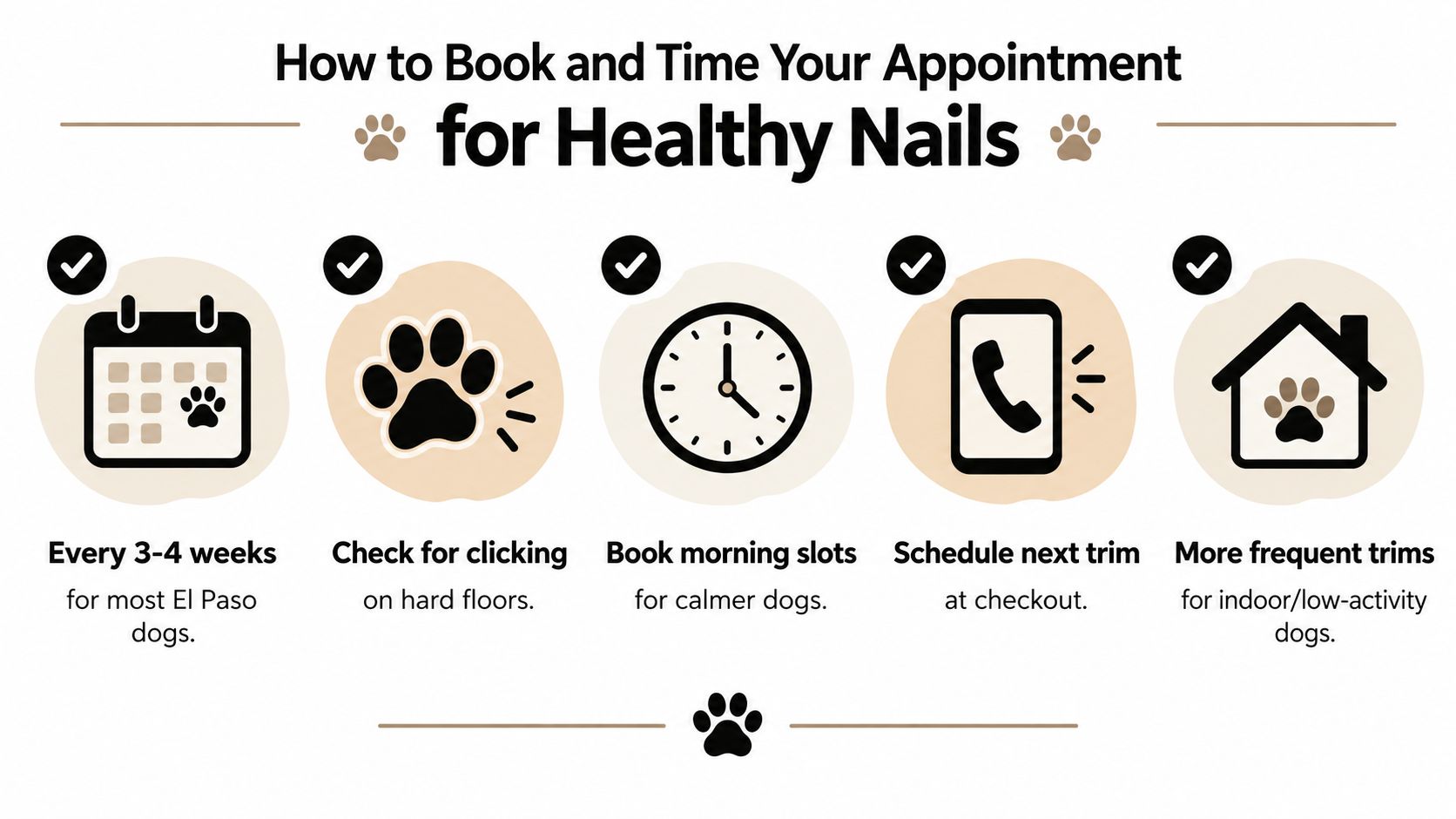
A reliable appointment schedule starts with your dog's routine, not a fixed calendar rule. Many dogs need trims every 3–4 weeks, while active dogs that regularly walk on pavement may manage 4–6 weeks between visits (dog nail trimming guide). Dogs with low activity or frequent contact with carpet, grass, and indoor flooring may need appointments every 2–3 weeks, because those surfaces provide less natural wear.
Use the calendar as a starting point, then check the nails themselves:
- Use the floor test: Clicking on hard floors or visible ground contact while your dog stands means it is time to schedule. Do not wait for a snag.
- Review activity: Pavement can wear nails naturally. Short walks, soft surfaces, and indoor routines require closer observation.
- Book around temperament: Morning may suit a dog that settles early. A familiar day and time may work better for a dog that reacts to schedule changes.
- Reserve the next visit: Ask about the next appointment before leaving if your dog has a history of overgrowth, quick sensitivity, or nail trauma.
- Check El Paso conditions: Extreme heat, cold, and travel disruptions can make an appointment harder on the dog. Reschedule rather than adding a difficult trip during unsafe conditions. The VCA handling exercises for trimming nails also support gradual cooperation before the visit.
Build maintenance into the service you already use
If your dog already has a bath or full-groom appointment, adding nail care can reduce extra handling and travel. Glo More Grooming includes nail trims with its full-groom offering and also provides standalone nail care, allowing the appointment to match the dog's actual needs instead of treating nails as a rushed final task.
For families watching the budget, the monthly Snip & Style Saturday promotion offers a $55 full groom for all sizes. Reserving that monthly slot early can connect nail maintenance with coat and hygiene care, while a recurring appointment reduces the chance of waiting until the nails become difficult.
A broad reference from VCA nail-trimming guidance notes that trimming every six to eight weeks can still be good practice. Treat that interval as a starting point, not a replacement for watching clicking, ground contact, activity, and your dog's individual history.
Calming Strategies to Prepare Your Dog Before You Arrive
A dog that resists paw handling on appointment day needs preparation before the car ride. Work at home in brief sessions and stop before your dog becomes tense. Touch one paw, deliver a high-value treat, and release. Repeating this routine builds cooperation without turning the living room into a grooming battle.
Show the clippers separately. Let your dog look at the tool, receive a reward, and watch it leave. Once that response stays relaxed, touch the tool lightly to the paw without cutting. The goal is familiarity, not finishing a full trim at home.
Practice cooperation instead of control
A controlled welfare study involving 35 companion dogs in a mock veterinary setting found fewer stress signals among dogs trained with choice and without restraint. The difference was statistically significant, reported as W = 52, p = 0.003 (Puppy Pedicures welfare study).
Use a simple cooperative-care sequence:
- Invite the paw: Reward your dog for placing a paw near your hand or offering it voluntarily.
- Touch briefly: Handle the toes for a moment, then release.
- Add the tool: Pair the clipper's presence with food before making contact.
- Pause early: End after a successful repetition rather than pushing toward all four feet.
- Keep restraint minimal: Hold only as much as safety requires, and pause or reposition when that can solve the problem.
Forced holding can increase freezing and struggling, making future visits slower and less predictable. A loose posture, quiet voice, and measured movements give your dog fewer reasons to escalate. One-on-one handling at a veteran-owned El Paso studio also allows the groomer to adjust the pace instead of moving your dog through a chain-style queue.
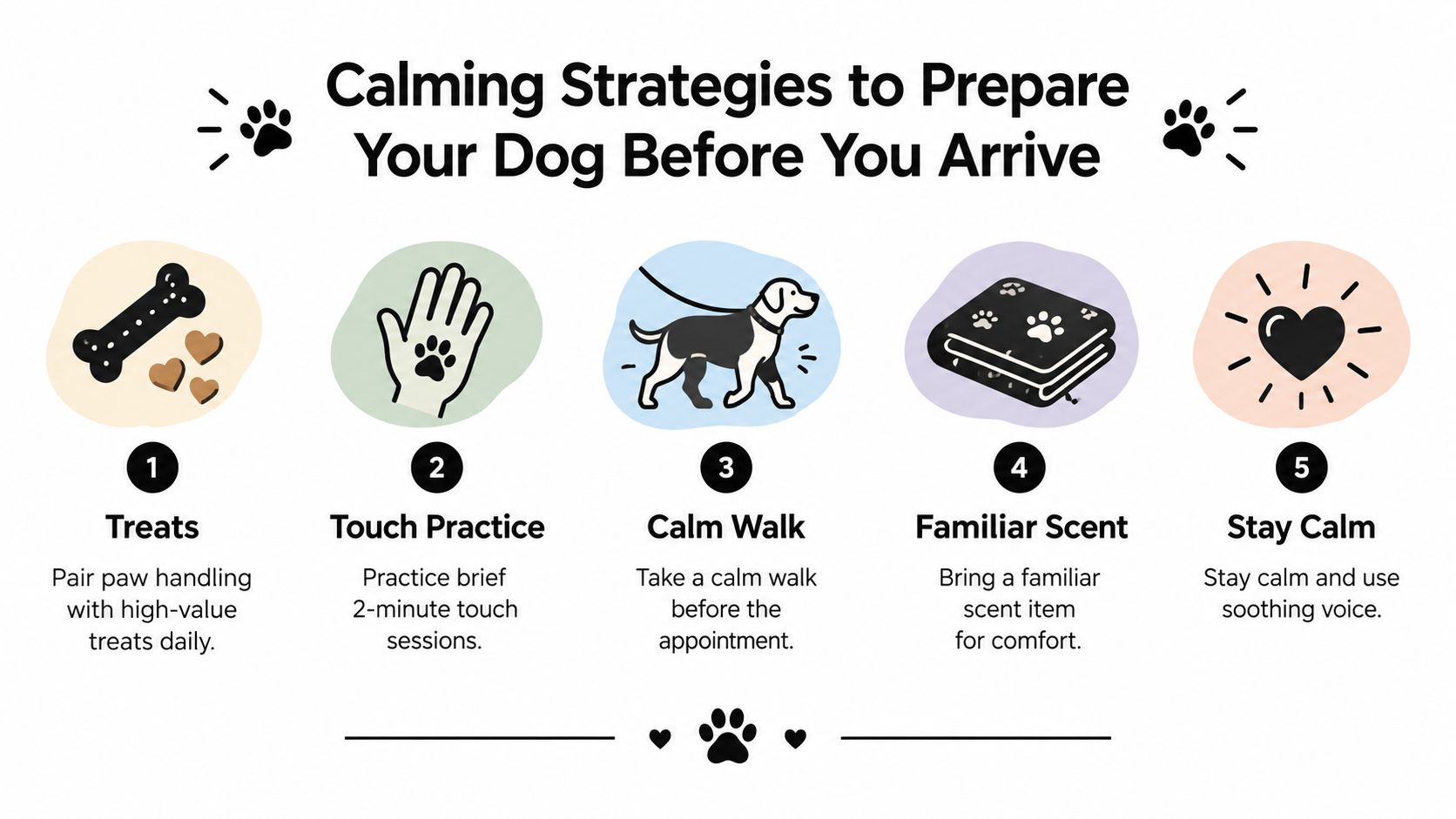
Take a quiet walk before leaving, but avoid arriving with your dog exhausted, overheated, or overstimulated. Bring familiar treats, relevant vaccination or medical notes, and a small blanket or scent item if the studio permits it. More home exercises are covered in this guide to ways to calm an anxious dog.
What to Expect During the Trim and What to Ask Your Groomer
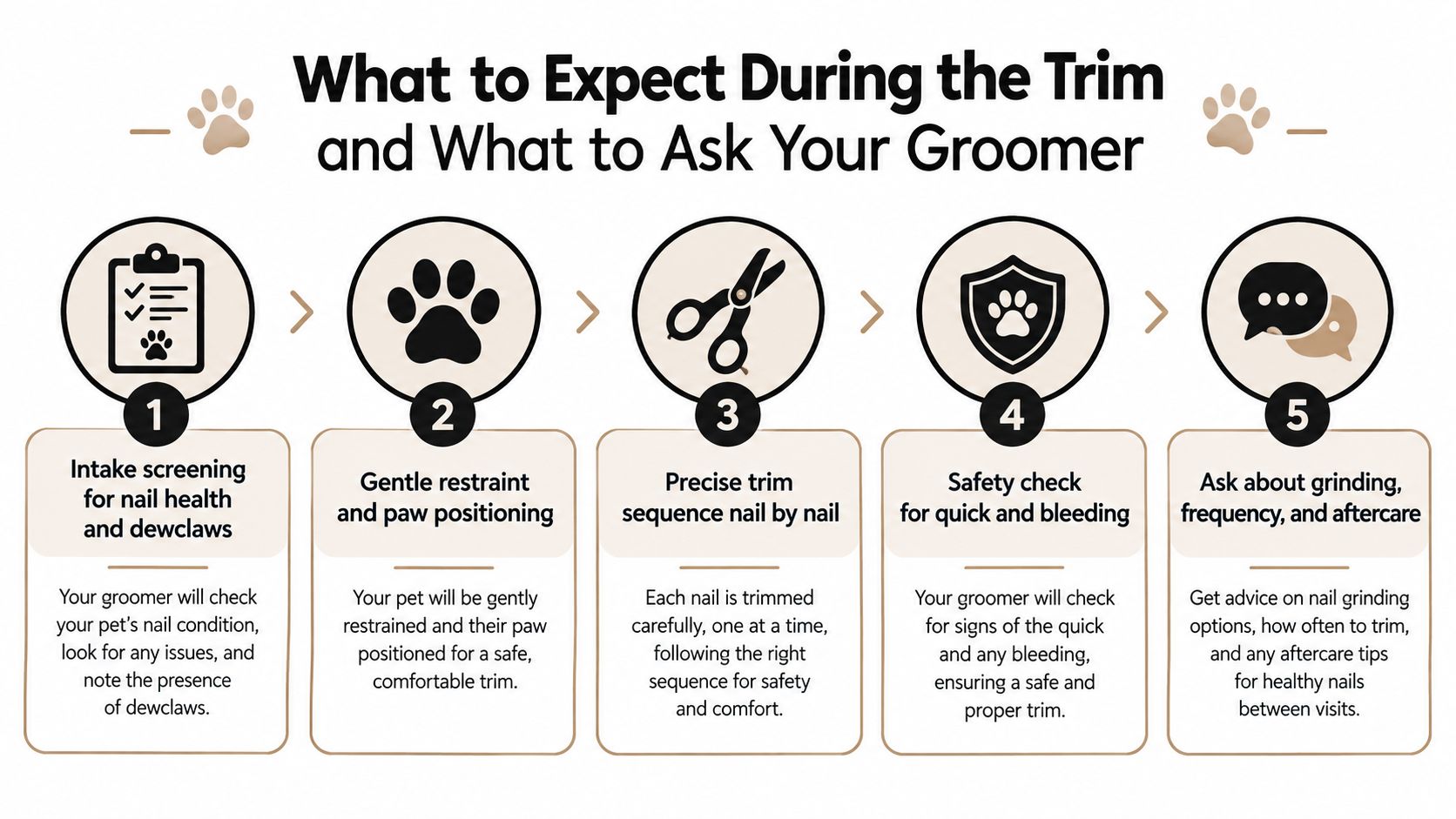
A professional appointment begins with an assessment, not an immediate clip. The groomer checks nail length, cracks, swelling, sensitivity, dewclaws, and signs that require veterinary attention. Overgrown, ingrown, or broken nails are common reasons for clipping, so nail condition should guide the plan rather than remain an afterthought.
The trim should proceed one nail at a time. The groomer secures the paw without excessive pressure, removes a controlled amount, checks the cut surface, and observes the dog before continuing. Clippers may suit some nails, while a grinder can smooth edges or support a gradual approach. The right choice depends on the dog's tolerance, nail condition, and safety.
Questions that reveal the standard of care
Ask these questions before handling begins:
- Handling style: How will you respond if my dog pulls away or freezes?
- Pause signal: What behavior tells you the dog needs a break?
- Tool choice: Will you clip, grind, buff, or combine methods?
- Dewclaws: Have you checked every dewclaw, including less visible ones?
- Aftercare: What should I watch for at home?
- Follow-up: What interval fits my dog's activity and nail growth?
Look for specific answers. “We'll hold them still” does not explain how the groomer will protect the paw or respond to fear. A better plan describes positioning, reduced pressure, pauses, and the point at which safety takes priority over finishing every nail.
A study in Veterinary Sciences found that nail clipping produced fear, anxiety, and stress in many dogs and cats. A related summary of a 43,517-dog dataset reported that 35.2% of dogs specifically feared nail trims (Veterinary Sciences study). Those findings support a stress-sensitive approach. In a calm, one-on-one El Paso appointment, the groomer can watch small changes in posture and breathing, pause before struggling escalates, and make the next visit more predictable.
Why a Premium One on One Studio Outperforms Chain Grooming
High-volume chains such as PetSmart and Petco can be convenient for owners who prioritize broad availability and a familiar retail location. The trade-off is that a walk-in-oriented environment may expose a nervous dog to more noise, more transitions, and less control over pacing. A home-based studio can limit the number of dogs present and keep the appointment centered on one animal.
Glo More Grooming's model is veteran-owned grooming built around independence, discipline, and a long-term vision for dependable service in the El Paso community. Greatness, Loyalty, and Ownership are not slogans to display at the door. They're operating standards that shape scheduling, cleanliness, communication, and follow-through.
| Feature | Glo More Grooming Premium Studio | Typical Chain Walk In |
|---|---|---|
| Setting | Limited-dog, home-based environment | Retail or high-volume grooming area |
| Handling | One-on-one attention with room to pause | Workflow shaped by multiple appointments |
| Scheduling | Streamlined booking and planned follow-up | Availability may vary by location and staffing |
| Care planning | Nail, coat, and dog-specific needs discussed together | Service often selected from a standard menu |
| Convenience | Full grooming, touch-ups, and concierge support | Broad retail access and familiar chain format |
Choosing care for the El Paso climate
El Paso pet care requires practical timing. Heat advisories can make travel and waiting uncomfortable, while freezing conditions create a different safety concern. Owners who work long hours or travel with pets may also need more than a trim, which is where a concierge model can help with personalized support, veterinary advocacy, and coordinated travel by car or air.
Premium pet grooming doesn't mean every dog needs the same package. It means the service is matched to the dog's temperament, nail condition, coat, household routine, and owner's schedule. For owners seeking broader care, full-service dog grooming can combine nail maintenance with bathing, haircutting, styling, ear cleaning, and other selected services.
The strongest choice is the one that keeps your dog safe, your schedule manageable, and the maintenance routine consistent. For many El Paso families, that means choosing a focused studio instead of treating nail care as a rushed retail errand.
Aftercare Routines and Booking Your Next Premium Appointment
After the trim, watch your dog's movement and attitude before heading into a busy outing. Check each paw for unusual licking, sensitivity, swelling, or bleeding. Persistent pain, swelling, or bleeding warrants veterinary advice. A quiet return home makes it easier to separate normal adjustment from a problem needing professional attention.
Between visits, surface and activity affect nail growth. Pavement may file nails naturally, while soft indoor flooring allows length to build sooner. Check the nails during routine brushing, after walks, and when your dog stands on a hard floor. Book before dramatic overgrowth makes the next trim harder.
Keep the maintenance cycle simple
Use a repeatable routine:
- Check paw and nail length during normal handling.
- Note whether nails click on hard floors.
- Consider activity, pavement exposure, and indoor surfaces.
- Adjust for El Paso heat, cold, travel, and seasonal schedule changes.
- Reserve the next appointment while the last visit is still fresh.
As noted earlier, timing varies with the dog and environment. General guidance may range from three to eight weeks, with examples including every 3–4 weeks for most dogs, 4–6 weeks for some active pavement walkers, and 2–3 weeks for inactive dogs on soft surfaces. Another general recommendation is six to eight weeks, adjusted for activity and surface contact. Your dog's nails, not a rigid calendar, should make the final call.
A monthly Snip & Style Saturday slot can simplify routine care for families seeking an affordable grooming promo. A standalone appointment fits dogs that only need nail attention. Consistency supports cooperation, while long gaps can leave nails harder to manage and make the next visit more intimidating.
Glo More Grooming provides calm, one-on-one El Paso dog grooming, including focused nail trims, full grooming, and concierge-level support for busy pet owners. Visit Glo More Grooming to book your dog nail trim appointment, reserve a Snip & Style Saturday slot, and choose veteran-owned premium pet grooming.