
You've got a dog who needs more than a quick rinse. Maybe your Border Collie mix came back from an El Paso dust storm with grit in the coat, or your senior Shih Tzu has nails clicking across the tile and tangles forming behind the ears. You want the dog clean, comfortable, and handled safely, but you also want to know what you're paying for before handing over the leash.
Full service dog grooming is best understood as a maintenance discipline, not a beauty appointment. It combines coat care, skin observation, nail work, ear cleaning, sanitary trimming, and finish styling in one controlled visit. The right workflow makes the appointment calmer for the dog and more useful for the owner.
What Full Service Dog Grooming Actually Means
A Saturday morning drop-off in El Paso can reveal the difference quickly. Your Border Collie mix may pull toward the door, react to another dog, or freeze when a stranger reaches for the collar. A full-service groomer doesn't put the dog in a tub, wash away the dust, and attach a bandana. One trained person remains accountable for the dog's condition, handling, safety, and finished result from intake through pickup.
The appointment usually begins with a pre-brush and coat assessment. Loose fur is removed, tangles are identified, and mats are addressed according to their severity. A groomer should explain when a mat can be safely worked out and when removing it would be kinder than forcing a brush through sensitive skin.
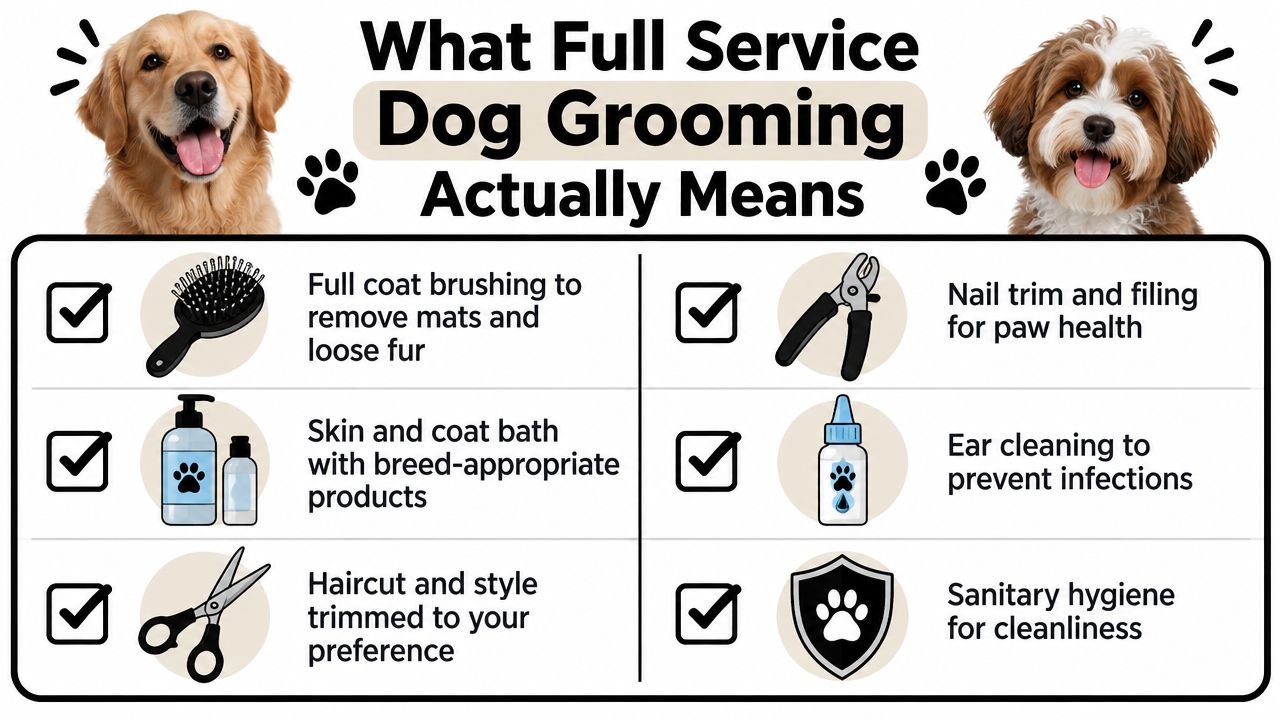
The complete service in one workflow
The bath follows the coat assessment. A premium appointment uses warm water, coat-appropriate shampoo, conditioner when suitable, and thorough drying rather than treating every dog with one generic formula. Dense double coats, curly coats, oily skin, and sensitive skin all require different judgment.
The finishing work can include:
- Coat shaping: A hand or scissor finish, clipper work, breed-inspired trim, or custom length based on the owner's preference and the dog's coat.
- Paw care: Nail trimming or grinding, paw-pad cleanup, and sanitary trimming where hair collects debris.
- Ear maintenance: Ear cleaning and plucking only when appropriate for the individual dog, never as an automatic step without checking the ear.
- Optional add-ons: Teeth brushing, de-shedding treatments, flea work, and gland expression may be available when the dog's needs and the groomer's scope make them suitable.
Bathing and brushing remain the largest service category in the broader pet grooming market, accounting for 38.2% according to Grand View Research's pet grooming services market analysis. That makes sense at the table. A haircut may change the outline, but clean skin, a separated coat, dry roots, trimmed nails, and hygienic ears support the dog's everyday comfort.
A dog wash can solve dirt and odor between appointments. It won't replace a full groom when the coat needs dematting, clipping, nail maintenance, ear care, or a sanitary trim. Full service means the dog leaves with the maintenance tasks handled together, not just with a wet coat that smells better.
Inside a Premium One-on-One Grooming Appointment
A premium one-on-one visit should feel orderly from the owner's perspective because the groomer has already built the order into the process. For most breeds, budget 90 minutes to three hours, depending on size, coat density, condition, temperament, and requested finish.
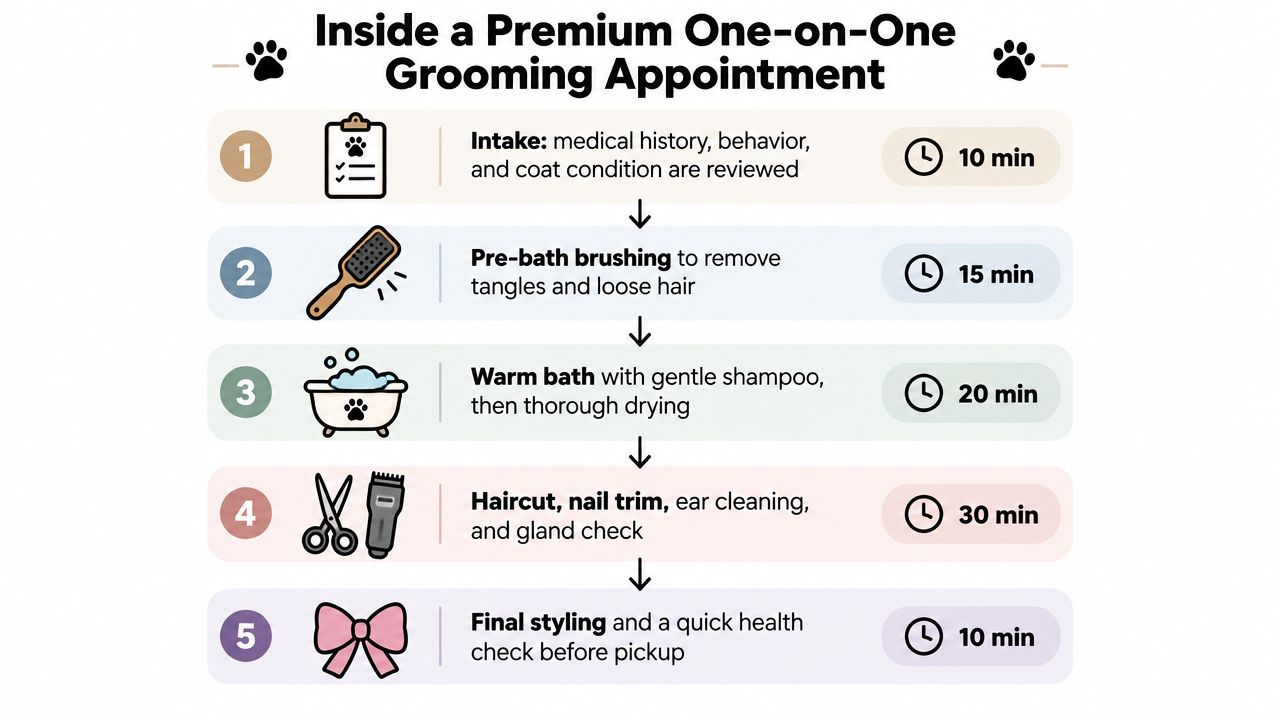
The dog's five stages
1. Intake comes before water. The groomer reviews vaccination records, medical history, behavior, coat condition, allergies, previous grooming experiences, and the requested style. This is also where a clear price quote should be discussed. If the coat is matted or the dog needs extra handling, the owner should know before the clippers start.
2. Prep protects the finish. Brushing before the bath separates loose hair and exposes tangles. Washing a heavily tangled coat can tighten those tangles, so prep isn't decorative work. It determines whether the bath and haircut can be completed comfortably.
3. The bath matches the dog. Warm, temperature-controlled water and coat-specific products remove dust, oils, pollen, and buildup. A groomer may use a conditioner for manageability or a gentler product when the skin needs a less aggressive approach.
4. Drying reaches the skin layer. Towels remove surface water, then forced air separates the coat. Grooming guidance recommends removing as much water as possible first, using high-velocity air in a ventilated area, and brushing midway so air reaches the skin rather than only the outer coat. Groomer to Groomer's drying guidance explains why this matters for dense, double-coated, and curly-coated dogs.
Practical rule: A fluffy outer coat isn't proof that the roots are dry. The groomer needs to separate the coat and check the skin layer.
5. The table work completes the appointment. Haircutting or scissoring, nail trimming, ear cleaning, paw-pad work, sanitary trimming, and any agreed add-ons happen after the coat is clean, dry, and ready to handle. The final hand-off should include what was completed, any skin or coat observations, photos when available, and a note about the next visit.
For a closer look at a calm, individualized workflow, review one-on-one dog grooming at Glo More Grooming.
The technical details matter during drying. A purpose-built dryer should remain below 140°F / 60°C and typically sit 6 to 12 inches from the coat, as outlined in canine coat drying guidance from Paws Tales. Microfiber towels can absorb about seven times their weight in water, so good towel preparation reduces the workload before forced air begins.
What Drives the Price of a Full Groom
The price reflects labor and judgment, not just shampoo. A full groom requires water, electricity, products, equipment cleaning, sanitation, insurance, handling skill, drying time, and finishing work. A basic bath leaves out many of those precision tasks, which is why comparing the two as if they were the same service leads to confusion.
Size is only the first variable. A small dog with a curly, compact coat may require more technical clipping than a larger short-coated dog. Two dogs at a similar weight can also differ sharply in price if one arrives with a dense, tangled coat and the other arrives brushed and ready for a routine trim.
Price Drivers in a Full-Service Groom
| Variable | Effect on Price | Typical Range |
|---|---|---|
| Dog size | Larger bodies generally require more product, drying time, handling, and table work. | Varies by size and studio |
| Coat length and density | Long, curly, or dense coats take more brushing, drying, and finishing. | Varies by coat |
| Matting or heavy shedding | Dematting and de-shedding add labor and may change the safest haircut plan. | Quoted after assessment |
| Requested style | A simple maintenance trim differs from a breed-standard or detailed custom finish. | Varies by style |
| Behavior and handling | Reactive, fearful, elderly, or physically limited dogs may need slower, more careful handling. | Quoted by appointment needs |
| Add-ons | Teeth brushing, flea work, de-shedding, gland expression, and specialty styling add separate tasks. | Varies by service |
The coat's condition at drop-off is one of the most avoidable cost drivers. Brushing at home doesn't need to create a show coat, but it should prevent small tangles from becoming a full dematting project. Ask the groomer which brush, comb, and schedule fit your dog. A slicker brush and metal greyhound comb can work well for some coats, while a short coat may need only a rubber curry tool and a bathing routine.
A regular appointment also spreads effort more sensibly. Guidance commonly places bathing around every four to eight weeks, nail trims around every three to four weeks, and weekly ear checks with cleaning as needed, according to Dog Grooming Basics. The ASPCA's dog grooming guidance gives a less frequent general bathing minimum of at least once every three months, while noting that outdoor activity and skin problems can call for more frequent care. Those intervals aren't a universal prescription. They show why your dog's coat, lifestyle, and skin condition should shape the quote.
For a practical explanation of service pricing, see how much a full-service groom costs. Ask for the starting price, what changes it, which add-ons are optional, and what happens if the coat condition differs from the booking description.
Building a Year-Round Grooming Routine
A full groom works best when it becomes part of the household calendar. Waiting until the coat is packed with mats, the nails click constantly, or the dog smells strongly turns a manageable appointment into a longer and more stressful one.
A useful starting rhythm is every four to six weeks for many dogs, then adjust based on coat type, skin, age, activity, and tolerance. El Paso's dust, strong sun, dry air, and seasonal shedding can change what your dog needs. A short-coated dog may need more frequent cleansing after outdoor activity, while a double-coated dog may need extra brushing during a shed cycle rather than a shorter haircut.
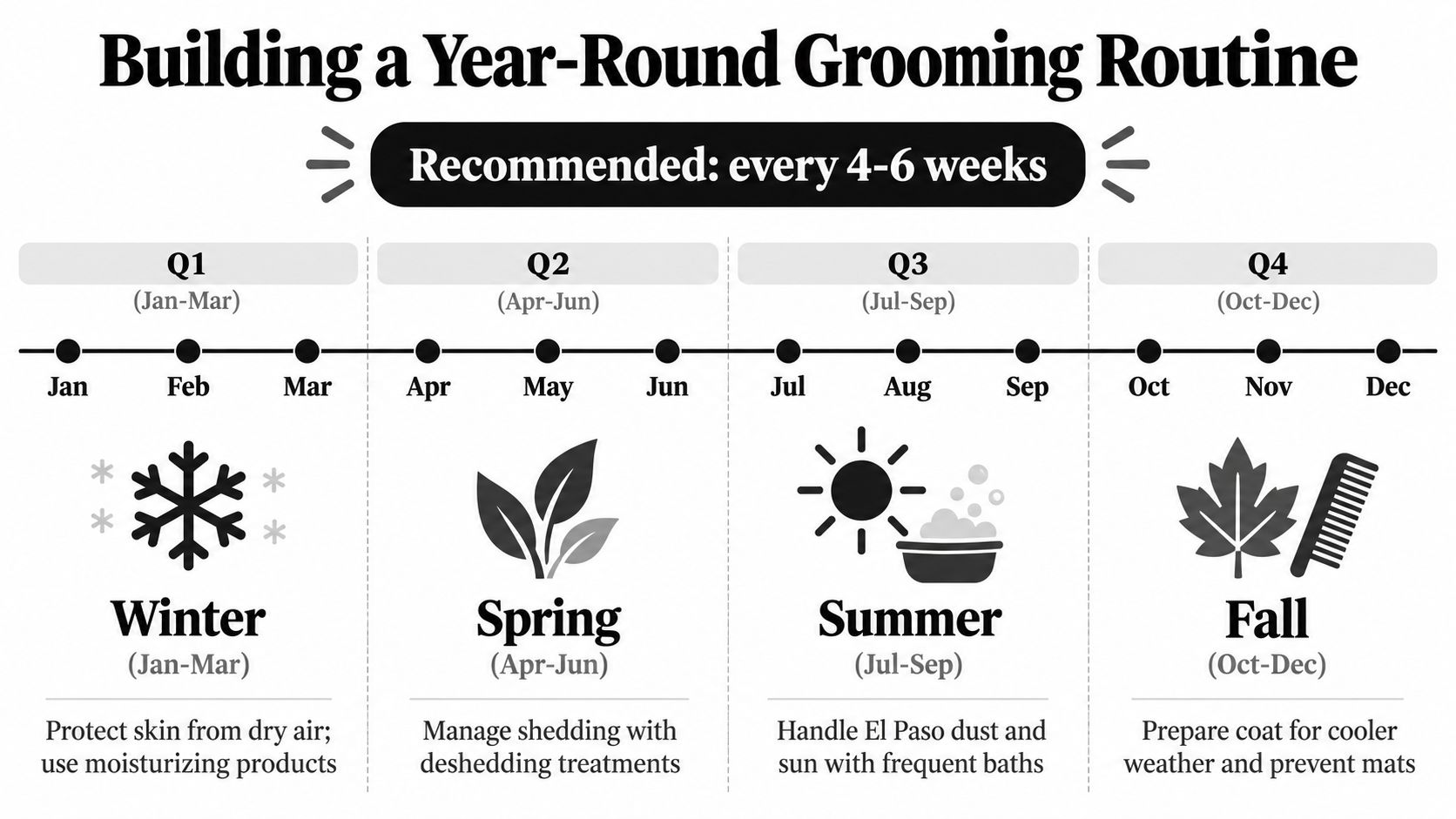
A practical El Paso calendar
Winter calls for skin awareness. Dry indoor air can leave some dogs flaky or uncomfortable, so tell the groomer about scratching, redness, or changes in coat texture. If your dog wears a jacket, check the collar, chest, armpits, and harness areas for friction and developing tangles.
Spring is the season for coat control. Double-coated and heavy-shedding dogs often need daily brushing during spring and fall shedding seasons, according to seasonal grooming guidance from Woofie's. A de-shedding treatment can be useful, but aggressive shaving isn't the automatic answer for a double coat.
Summer requires a skin check, not a shorter cut. Dust and outdoor exposure can leave debris close to the skin. Bathing, drying, paw inspection, and checking for irritated areas matter more than chasing an arbitrary haircut length.
Fall is the time to protect the feet and coat. Prepare paw pads for dust and outdoor debris, inspect between toes, and remove loose seasonal coat before it packs into mats. A groomer's notes should track nail length, coat condition, skin observations, and what worked at the last visit.
Put each appointment into the same household budget category as food, flea prevention, and routine care. A predictable monthly allocation is easier to manage than an emergency dematting charge or a rushed appointment before travel. If you want a recurring local example, a monthly Snip & Style Saturday can turn a full groom into an affordable grooming promo while helping families keep the cadence intact.
Choosing Between a Studio a Chain and a Mobile Unit
El Paso owners have three practical grooming models to weigh. A one-on-one studio emphasizes controlled handling and continuity. A chain salon may offer broader appointment availability and a familiar retail location. A mobile unit brings the service closer to home and can reduce travel for dogs that struggle with car rides.
The right choice depends on the dog, not the logo on the building. A calm short-coated dog may do well in a busy salon. A senior with limited mobility, a reactive dog, or a pet that becomes distressed around unfamiliar animals may benefit from a quieter setting with fewer transitions.
Studio vs Chain vs Mobile Grooming in El Paso
| Factor | One-on-One Studio | Chain Salon | Mobile Unit |
|---|---|---|---|
| Dog stress | Usually fewer dogs, people, and transitions in the work area. | More activity, shared sounds, and changing staff may raise stress for some dogs. | Convenient and familiar home surroundings can reduce travel stress, though the van's equipment may still feel unfamiliar. |
| Hygiene control | A limited-dog workflow can make cleaning and separation easier to manage. | Shared facilities require disciplined cleaning between dogs and attention to kennel flow. | The unit is dedicated to the appointment, with sanitation depending on the operator's process. |
| Groomer continuity | Strong continuity when the same groomer handles intake, work, and hand-off. | Continuity can vary with staffing and scheduling. | Often more personal, but availability may depend on route planning. |
| Senior or reactive dogs | A calm, slower appointment can support careful handling and observation. | High-volume pacing may not suit every temperament or physical limitation. | One dog at a time can help, but the groomer must still assess behavior and safety. |
| Convenience | Requires travel to the studio, but drop-off and pickup can be predictable. | Retail locations may be familiar and accessible. | Reduces owner travel and may suit busy households. |
| Cost logic | You pay for focused labor, controlled capacity, sanitation, and follow-through. | Lower prices may reflect higher volume and standardized services. | Higher pricing can reflect travel, fuel, route time, and private service. |
Industry data describes mobile and at-home grooming as among the faster-growing segments, with owners seeking less travel and lower stress for pets, as discussed in the market analysis of dog grooming models. The trade-off is that a mobile appointment isn't automatically better. Check the van's drying setup, sanitation practices, emergency plan, and whether the same groomer returns consistently.
For owners comparing local prices, published estimates place a studio full groom around $65 to $110, a chain salon around $45 to $80, and mobile grooming around $90 to $150, as outlined in the service comparison used for this guide. Treat those figures as planning ranges, not promises. The actual quote still depends on size, coat, condition, behavior, and requested work.
A useful shortcut is simple. Westside and Eastside owners with a predictable schedule may prefer a studio relationship. Busy households that can't spare travel time may choose mobile care. Owners prioritizing retail convenience may choose a chain, but should ask who will groom the dog, where the dog waits, and how the salon handles anxious or reactive behavior.
Veteran-Owned Standards and El Paso Community Roots
A veteran-owned grooming studio should earn trust through operating habits, not a slogan. Independence matters because the owner can set the workflow, limit capacity, decide how records are kept, and build a long-term relationship with clients instead of following a chain-wide volume model.
At a disciplined veteran-owned grooming business, standards should be visible in the details:
- Documented sanitation: Tools, tubs, tables, floors, and high-touch areas follow a repeatable cleaning process between dogs.
- Controlled traffic: A single-dog-at-a-time workflow reduces unnecessary exposure to noise, crowding, and unfamiliar animals.
- Written follow-through: Coat condition, nail length, skin observations, handling notes, and requested style are recorded after each visit.
- Clear escalation: If the groomer sees a suspicious lesion, painful ear, severe matting, or another concern outside grooming scope, the owner receives a direct explanation and a recommendation to involve a veterinarian.
- Consistent communication: The hand-off covers what changed, what the dog tolerated, and what the next appointment should address.
The health side of grooming deserves honest boundaries. Groomers can observe skin, coat, ears, paws, and nails, but they don't replace a veterinarian. Market reporting describes growing interest in breed- and skin-specific care, hydrotherapy, massage, and wellness-oriented add-ons, while research on pet dog grooming services also connects routine ear and nail maintenance with preventive care conversations. That makes a groom more valuable as an observation point, but medical diagnosis and treatment still belong with the veterinary team.
El Paso also rewards local accountability. A studio serving Westside and Eastside families sees the same dogs repeatedly, remembers how each dog handles drying, and notices when a normally manageable coat changes. Relationships with local rescues, shelter partners, veterans, and first responders can make community support practical instead of occasional. Discounts for veterans and first responders work best as ongoing programs with clear terms, not random one-off offers.
For dogs that tense up, vocalize, snap, or shut down during grooming, dog grooming for anxious dogs should begin with an honest behavior conversation. A calm setting doesn't remove every risk, but it gives the groomer more room to adjust handling, timing, tools, and expectations.
The federal market also recognizes veteran business ownership as more than a label. The U.S. Department of Veterans Affairs veteran-owned business support explains that eligible Veteran-Owned Small Businesses may receive advantages when bidding on government contracts through VetCert. For a local grooming owner, that policy context supports a broader commitment to independence, planning, resilience, and service.
Booking Your First Full Service Appointment in El Paso
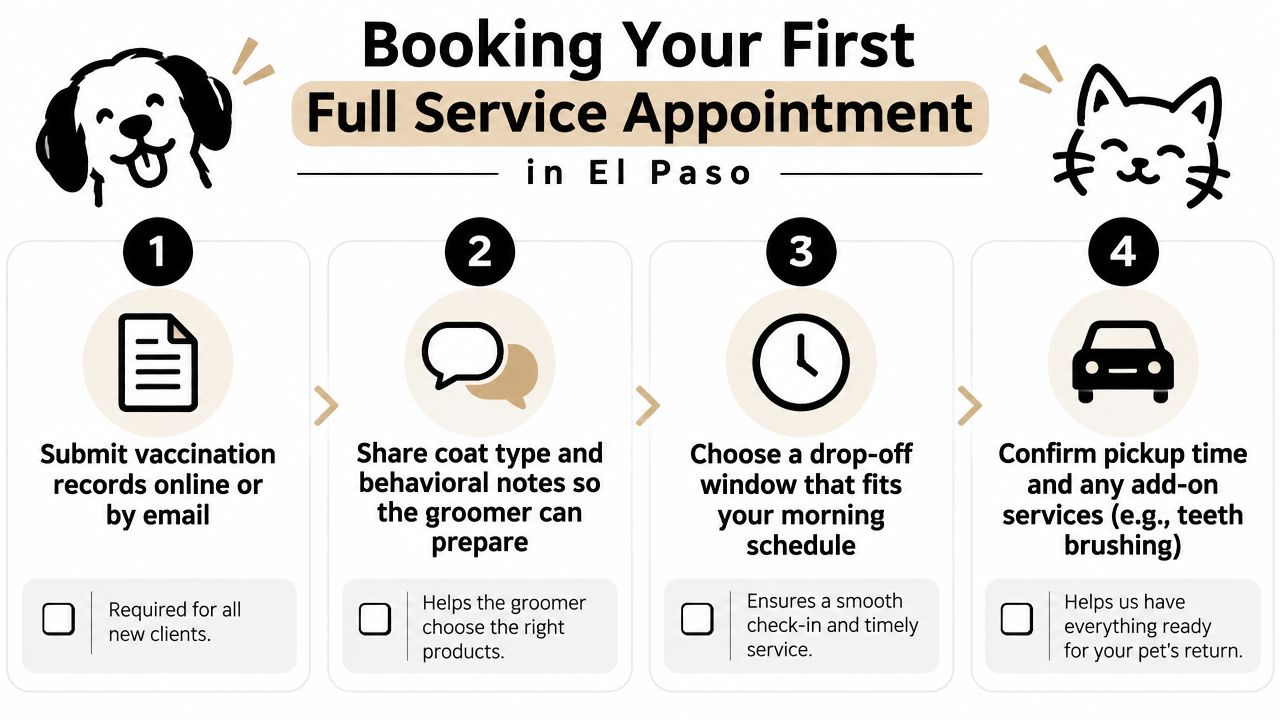
The smoothest first appointment starts before the dog arrives. A premium studio should ask questions that affect safety and price, not just collect a name and breed. Be ready to describe the coat, brushing routine, prior grooming history, behavior around dryers and feet, medical conditions, allergies, medications, mobility limits, and the finish you want.
What to send before drop-off
- Vaccination records: Submit the records online or by email if the studio requests them. New-client documentation protects the grooming environment and prevents delays at arrival.
- Coat and behavior notes: Mention mats, shedding, skin irritation, ear sensitivity, nail-trim history, reactivity, fear of dryers, and whether your dog has ever needed a break during grooming.
- Style preferences: Provide a clear maintenance length, a reference photo when useful, and permission for the groomer to recommend a safer or more practical finish if the coat condition requires it.
- Timing needs: Choose a drop-off window and confirm when pickup is expected. Don't promise a rushed pickup if the dog's coat requires careful drying or detailed finishing.
Bring a secure leash, vaccination proof if it hasn't already been submitted, a favorite treat, and written medication instructions. Tell the groomer about medication timing rather than placing pills in the bag without explanation. The studio generally provides the tub, shampoo, conditioner, towels, dryer, brushes, combs, clippers, shears, nail equipment, cleaning supplies, and finishing products.
El Paso scheduling changes with the coat calendar. Short-coated breeds may find same-week availability during quieter periods, while spring and fall coat-blow seasons can require a lead time of four to six weeks. Booking ahead isn't about creating artificial urgency. It prevents owners from waiting until a coat is uncomfortable or a travel date is close.
Ask these questions before confirming:
- Who will handle the dog from intake through pickup?
- What does the base full groom include?
- How are mats, heavy shedding, flea concerns, or difficult handling quoted?
- What happens if the dog shows pain or a health concern?
- How will the groomer document recommendations for the next visit?
- Can the dog have a meet-and-greet before a full appointment?
Glo More Grooming is a home-based El Paso studio offering size-based full grooming packages with a bath, haircut, styling, ear cleaning, and nail trim, along with touch-up sessions, luxury bath and blow-dry options, and selected complimentary add-ons. Its monthly Snip & Style Saturday offers a $55 full groom for all sizes, giving local families a concrete affordable grooming promo to plan around.
If your dog needs more than routine salon care, ask about the Concierge Service, which provides personalized support that can include veterinary advocacy and coordinated travel by car or air. That level of planning can matter for busy professionals, travel-heavy households, and owners who need one person to track the dog's grooming and care details.
Reserve your first full-service appointment with Glo More Grooming in El Paso, and share your dog's coat, behavior, and schedule so the studio can prepare the right workflow. Contact the studio to request a quote, arrange a meet-and-greet for an anxious dog, or reserve the next Snip & Style Saturday promo slot before your routine slips.