
You know the moment. You finish a bath, run your fingers along the coat, and find a tight patch behind the ear or under the front leg that wasn't there before. That's where a dog hair detangler stops being a convenience item and starts being part of basic coat care, because mats don't just sit on top of the fur, they tug at skin, trap debris, and turn a simple brush-out into a fight.
A disciplined grooming routine changes that outcome. In real shops, the difference between a dog that brushes out cleanly and one that needs a shave-down usually comes down to timing, coat type, and whether the groomer respected the workflow instead of rushing it. For El Paso dog owners dealing with heat, dust, and active outdoor schedules, that matters even more, because friction builds fast on dry coats and long hair.
Why Dog Hair Detanglers Matter for Coat Health
A mat is rarely a surprise to the dog. By the time an owner spots the clump, the coat has usually been under strain for a while, from skipped brushing, repeated friction, and skin that has not been getting enough air. In a multi-program NIH/PMC study, 13% of ASPCA-NYPD Partnership cruelty cases involved general hair matting concerns and/or strangulating hair mat wounds, and 93% of those cases involved long-haired dog breeds (PMC study on medically necessary grooming and matting).
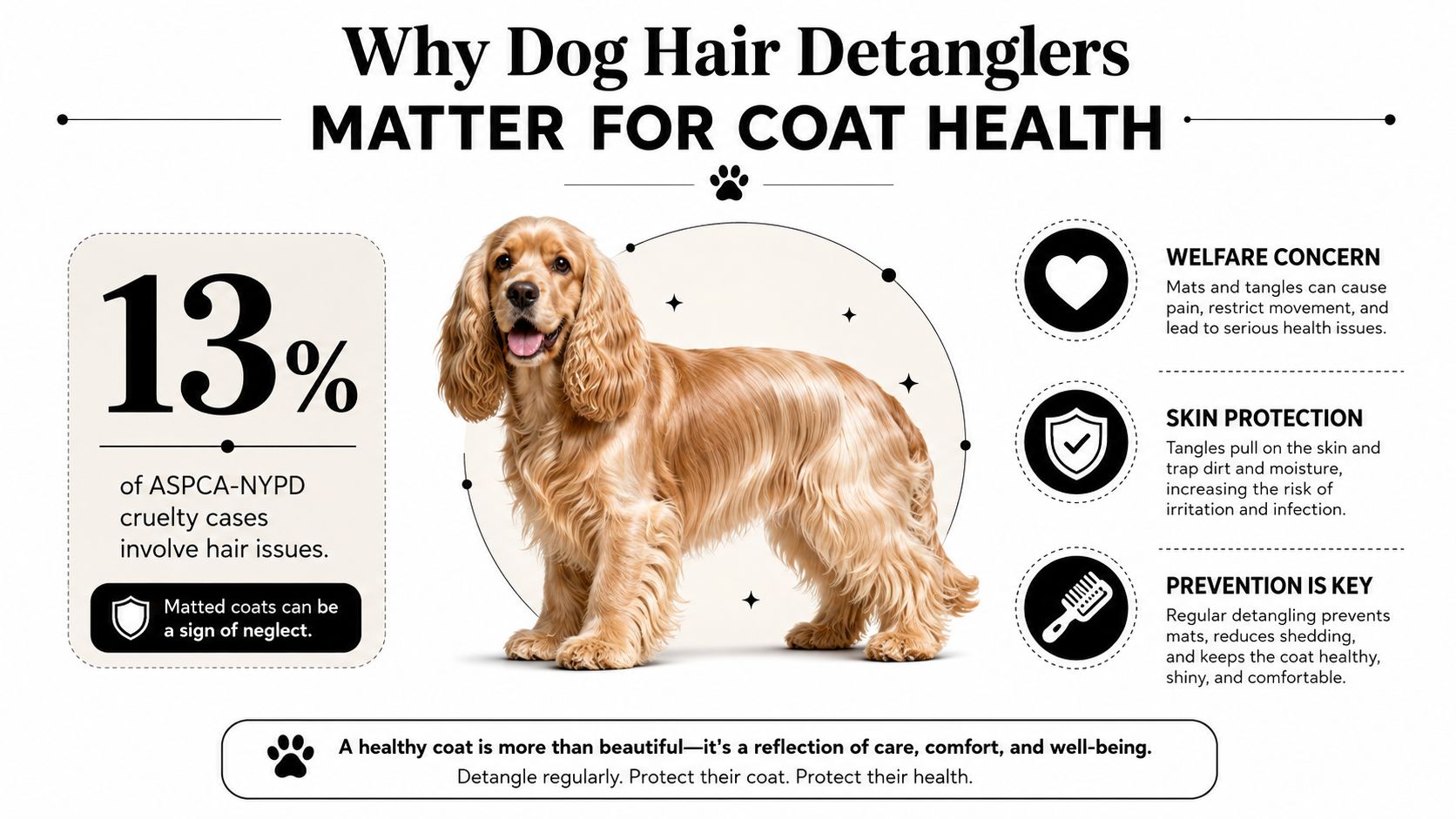
Coat health is welfare, not vanity
That study also found that 77% of medical grooming services in one program were for long-haired breed types. The pattern matches what a working groomer sees every week. Longer coats, curlier coats, and high-maintenance coats keep generating detangling work, and once the undercoat starts binding, the coat behaves less like hair and more like felt.
A good detangler lowers friction, softens the strand, and gives the comb a cleaner path without forcing the dog to brace through every pass. It still leaves the mechanical work in place. That is the part owners often miss. Detangler spray supports the brush, it does not replace it.
Practical rule: if a dog keeps getting the same mats in the same spots, the problem is not the spray bottle. It is the grooming rhythm.
For El Paso homes, consistency matters even more. Heat, dust, and outdoor play increase coat drag, especially on feathering, ears, armpits, and collars. A steady detangling habit protects coat quality, saves time, and keeps grooming from turning into an emergency.
How to Detangle Dog Hair Safely at Home
A safe detangling session starts before any brush touches the coat. Mist the knot or mat with a leave-in product, let it rest briefly, work the hair apart with your fingers, and then comb from the ends inward. Grooming suppliers recommend saturating heavily matted areas, massaging the coat, waiting up to 5 minutes, teasing the mat apart by hand, and only then brushing through (PetEdge detangler guidance).

The brush should follow the fingers
The sequence works because it is mechanical, not magical. The spray lowers drag so fibers glide instead of binding, and the fingers help you find the loose edge of the tangle before a comb goes in. On dry coats, that order matters even more, because a dry mat tightens fast when a tool is forced through it.
Chewy's grooming guidance says to spray matted fur thoroughly, let it soak in for 1 to 2 minutes, and then use a slicker brush or metal comb, starting near the skin and working outward (Chewy matted dog hair guide). Another grooming guide recommends holding the spray 6 to 8 inches away, waiting 3 to 5 minutes, and working one mat at a time without forcing it (BarkBus dematting guidance). Those details matter because rushed brushing leads to breakage, stress, and accidental skin contact. For denser knots, the same patient approach described in Glomore Grooming's dematting guide fits the way professional groomers break work into controlled passes.
Use the right hand pressure
A slicker brush and a metal comb are the usual tools, but the hand doing the work matters just as much. Hold the coat steady with one hand, separate the mat into small pieces, and stop the moment the dog braces, turns, or shows discomfort. Once the comb starts moving cleanly, let the tool do the work instead of increasing your grip.
If the mat will not open after proper saturation and patient teasing, stop there. The safer next step is a professional demat, not a harder push. That is the line a veteran groomer keeps in place when the coat is tight, close to the skin, or too compact to release cleanly.
Store-Bought Versus Homemade Dog Hair Detangler Options
Store-bought sprays earn their place when the coat needs repeatable performance. A good formula gives consistent slip, predictable cleanup, and fewer variables during the session. That matters in a home routine because a coat that stays manageable between groomings is easier to keep under control, and a vet-style shampoo routine supports that same discipline, as outlined in Glomore Grooming's shampoo guidance.
The tool matters just as much as the spray. Purpose-built brushes use tooth layouts meant to reach deeper layers while reducing unnecessary tugging on wet or dry fur, which is why geometry and hand control matter as much as the product itself (PetEdge detangler product details). Detangling works best when the spray and the brush support each other, not when either one is expected to do all the work.
What works, what doesn't
Homemade mixes can help with light tangles, especially when the coat only needs a little glide and the dog already accepts brushing without resistance. They are less reliable once mats are dense, close to the skin, or sitting in a high-friction area like the collar line or behind the ears. At that point, a spray alone will not give the comb enough slip to do clean, honest work.
A veteran groomer keeps the rule simple. Once the fur starts following the comb, apply a light spritz to the area that needs help, not to the whole coat. Lubrication supports the tool, it does not replace patient sectioning or steady hands.
| Detangler Option Comparison | Best For | Limitations | Cost Range |
|---|---|---|---|
| Store-bought leave-in spray | Routine brush-outs, post-bath maintenance, mild tangles | Can't dissolve tight mats on its own | Varies by brand |
| Store-bought spray plus quality comb | Long coats, curlier coats, repeated maintenance | Still needs patient hand work | Varies by brand and tool |
| Homemade diluted conditioner mix | Light tangles, occasional use, budget-conscious owners | Inconsistent results, more residue risk | Usually lower |
| Professional grooming product set | Coats that mat fast or need structured maintenance | Higher upfront cost than DIY | Varies by service and product |
For owners who think in full coat-care systems, the choice comes down to control. Store-bought products usually give steadier results, while homemade blends can be useful for simple maintenance if the coat is already in good shape. The more prone a coat is to matting, the more important it becomes to keep the detangler step targeted, supported by the right shampoo, and paired with disciplined brush work rather than used as a rescue shortcut.
When to Stop DIY and Call a Professional Groomer
There's a clean line between a small tangle and a mat that can hurt the dog. Mats under the ears, in the armpits, or close to the skin are the ones I treat with extra caution, because those areas move, rub, and tighten fast. Tight matting should never be cut at home with scissors or clippers if you can't clearly see and protect the skin beneath it.
Three signs the job has crossed your limit
If the mat won't break open after proper spray saturation and gentle finger work, stop. If the dog leans away, vocalizes, snaps, or freezes during brushing, stop. If the mat covers a large area or feels welded to the skin, stop.
Those are not signs of failure. They're signs that the coat needs a more controlled setup, a steadier hand, or more time than most home sessions allow. In a premium setting, the point isn't speed, it's a calm result with fewer chances for accidental injury.
A stressed dog doesn't need a louder session. It needs a cleaner decision.
That's where a disciplined, one-on-one studio makes a real difference. In El Paso, a veteran-owned grooming shop like Glo More Grooming can handle matted dogs in a calmer, more focused environment, while also offering concierge-style support for clients who need coordinated help. The value isn't in hype, it's in reduced chaos, smaller dog counts on site, and a workflow built around handling limits correctly.
Prevention Routines and Breed-Specific Coat Care
The easiest mat is the one that never forms. Regular brushing still does the heavy lifting, because coat friction starts long before a knot turns into a problem. Grooming guidance from Glomore Grooming's brushing advice points in the same direction as what holds up in the salon, steady brush-outs keep coats manageable, and the coat stays easier to maintain when care happens on a schedule instead of only after tangles show up.
Match the routine to the coat
Long-haired breeds need the most attention because tangles tighten fast and hold onto debris. Medium-coated dogs with undercoats need regular de-shedding and consistent brush-outs so loose hair does not pack down underneath. Short-haired dogs still need weekly attention, because loose hair, static, and dirt create friction even when the coat looks low-maintenance.
For El Paso homes, dry air makes static more noticeable and makes dry coat friction harder to ignore. An anti-static leave-in can help the brush move cleanly and keep the coat from grabbing every time the dog shakes or rolls. A regular grooming rhythm, at home or in a studio, keeps the coat under control before it starts resisting the brush.
Here's the framework I trust:
- Long-haired coats: brush often enough to catch tiny knots before they tighten.
- Undercoats and mixed coats: use a de-shedding brush and follow with a comb.
- Short coats: keep up weekly brush-outs so loose hair does not settle in.
- Busy households: schedule grooming before the coat reaches the “too far gone” stage.
For a practical brush-out guide, Glomore Grooming's brushing advice matches the same maintenance-first standard. That is the mindset that keeps a coat glossy, manageable, and easier to live with.
Book Your Premium Grooming Appointment Today
Home care and professional grooming work best together. Daily brushing, the right detangler, and a clean coat-care routine keep mild tangles in check, while premium pet grooming handles deep mat removal, styling, sanitation, and the kind of finish home tools can't safely replicate.
That's where a veteran-owned grooming studio stands apart from chain-volume work. In a calm El Paso dog grooming setting, the goal is focused handling, fewer distractions, and a coat plan built around the dog in front of you, not a conveyor belt. For clients who want an affordable grooming promo, Snip & Style Saturday offers a monthly full-groom option at $55 for all sizes, and that makes disciplined care easier to keep on schedule.
If you're comparing options, ask what the salon does with a matted coat before the bath, how it handles one-on-one appointments, and whether the workflow protects the dog's skin as much as the final look. That's the difference between quick service and premium pet grooming.
Glo More Grooming offers calm, one-on-one veteran-owned grooming in El Paso, along with detangling support, full-groom care, and monthly promo access for dogs that need consistent coat maintenance. If your dog needs safer mat removal or a cleaner brush-out routine, visit Glo More Grooming and reserve a spot before the next Snip & Style Saturday fills up.