
By the time most El Paso owners reach out for a dog bath and haircut, they're already dealing with the same pattern. The coat feels dusty no matter how much they wipe it down, the paws are picking up grit, the outline of the haircut is gone, and the dog is either overdue or starting to dread the process. That's where the quality of the grooming environment starts to matter just as much as the haircut itself.
A proper full groom isn't just soap, clippers, and a quick handoff. It's a controlled process built around coat condition, skin comfort, safe handling, and calm pacing. In a city like El Paso, where desert dust, dry air, and outdoor routines work against coat health, owners need more than a basic wash. They need a standard.
Why a Premium Bath and Haircut Matters in El Paso
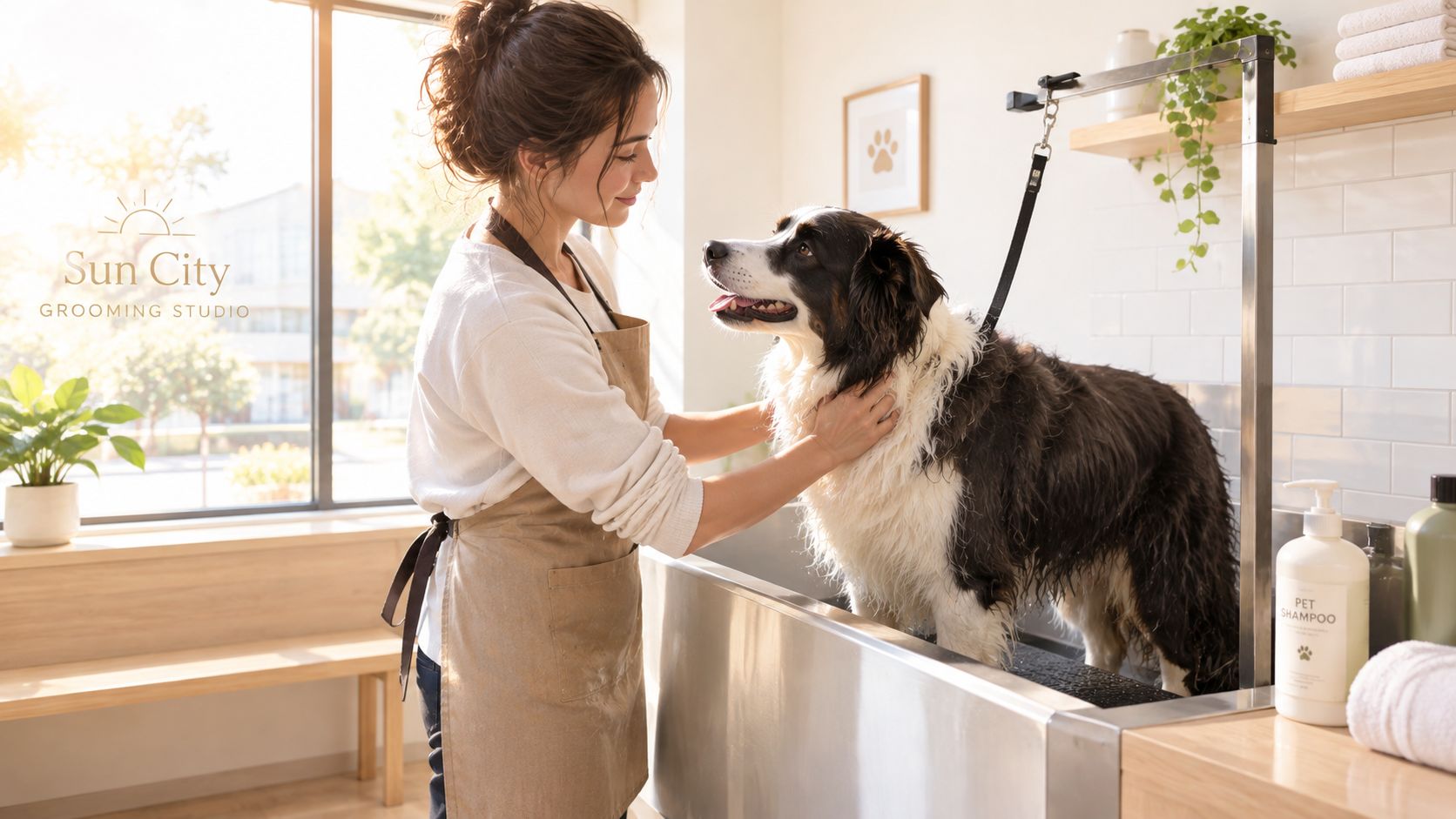
At 7:30 on a Saturday morning, a dog that has been rubbing through dust all week walks into a quiet studio instead of a crowded grooming floor. Before the bath starts, the coat gets checked by hand from nose to tail. That first inspection tells an experienced groomer what kind of appointment the dog needs. I look for packed undercoat, tight spots behind the ears, dry skin, foxtails in the feet, coat break from sun exposure, and dirt sitting close to the skin where a quick wash will not touch it.
That is the difference between a routine appointment and a premium one. The standard starts with careful assessment and controlled handling, not speed.
El Paso conditions change the work
El Paso is hard on coats. Dust settles deep into double coats. Dry air leaves skin flaky faster than many owners expect. Dogs that spend time in backyards, open lots, or on desert trails often come in with fine grit in the legs, belly, and feathering, plus burrs or plant debris that hide until the coat is opened up.
Hard water adds another trade-off. If the coat is not rinsed and dried with discipline, residue stays behind and the finish looks flat. On dark coats, you see dullness. On lighter or thinner-coated dogs, you often feel the dryness first.
A clean haircut depends on prep. If the coat is not brushed out, rinsed clean, and dried fully, the clipper work and scissor finish suffer.
Industry guidance backs that up. The National Pet Care Authority grooming standards note that brushing and dematting should happen before bathing, since water can tighten mats and make humane coat decisions harder if the dog arrives in poor condition.
Why one-on-one care changes the result
In a one-on-one, veteran-owned grooming studio, the groomer controls the pace from check-in to finish. That matters for dogs that shut down in noisy rooms, dogs that spin up around barking, and older dogs that need breaks at the right time instead of being pushed through a line. The trade-off is simple. High-volume grooming moves more dogs. Individual studio grooming gives more attention to each dog's skin, coat, behavior, and safety.
That setup also makes quality easier to see. Fewer dogs on site means fewer distractions, less cross-traffic, and less pressure to rush table work. Safety practices such as non-slip tubs, secure tables, and proper flooring support that calmer process, as outlined in the PPGSA standards of care for safety and sanitation.
For owners comparing a basic appointment to high-end dog grooming in El Paso, the value is not extra fluff. It is steadier handling, cleaner finish work, better hygiene, and a dog that leaves looking cared for by hand instead of processed on a schedule.
Preparing Your Dog Before the Appointment
Most bad grooming visits don't start in the studio. They start at home with a dog who arrives tangled, overfed, overexcited, or with key information left unsaid. A little prep changes the whole appointment.
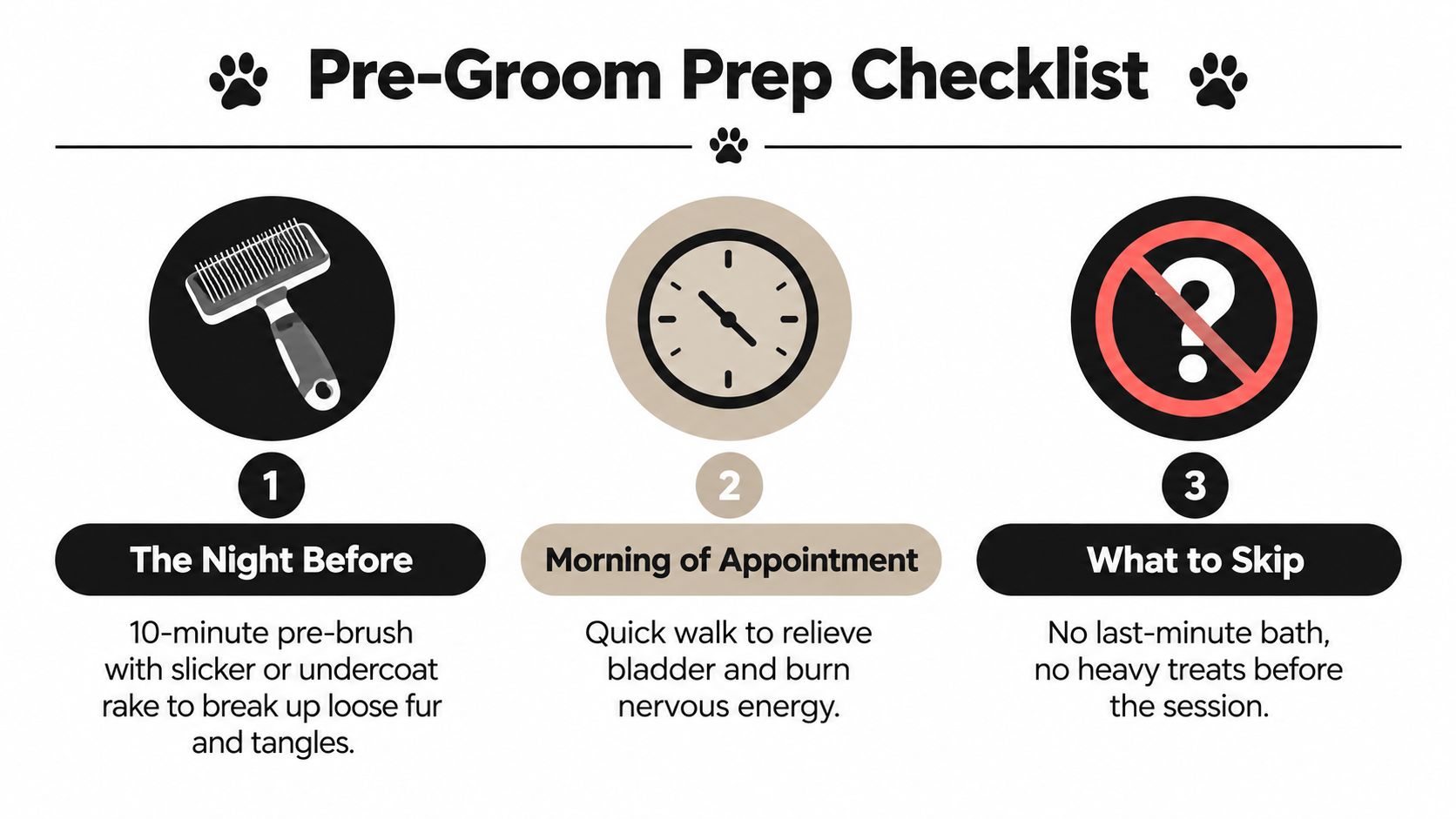
The night before
Start with a short coat check. Ten minutes with a slicker brush or undercoat rake can save a lot of discomfort later, especially if you catch buildup early. Focus behind the ears, inside the armpits, around the collar line, and around the back legs. Those spots mat first.
If you hit a small tangle, work it apart gently. If it's tight to the skin, don't soak it, don't spray it at random, and don't cut at it with kitchen scissors. That usually turns a manageable problem into a safety issue.
The morning of the appointment
Keep the morning simple. A quick potty walk helps. A long, stimulating outing right before drop-off usually doesn't.
Use this checklist:
- Brush lightly again: A fast pass over friction spots helps the groomer spend time finishing the coat instead of opening minor tangles.
- Hold meals ahead of drop-off: Giving food a bit earlier helps avoid carsickness and an upset stomach during the appointment.
- Go easy on water right before arrival: Let your dog drink normally through the day, but avoid the last-minute gulping that can make anxious dogs uncomfortable in transit.
- Skip a home bath: A half-rinsed shampoo job or damp undercoat makes professional prep harder, not easier.
- Bring secure gear: Use a labeled leash or harness that's easy to handle safely.
A groomer can work with dirty hair. A groomer can't do clean work on a dog who arrives frantic, matted, and uncomfortable.
What to bring and what to say
Bring updated vaccine records, your current phone number, and any emergency contact details you want on file. If your dog does better with a familiar comfort item, bring a favorite toy that won't interfere with the groom. If nails are a concern, owners often pair full-groom visits with a separate dog nail trim appointment when they're staying on a tighter maintenance schedule.
Don't rely on memory at check-in. Write down the details that matter:
- Behavior triggers: Dryer sensitivity, paw handling issues, fear around the face, reactivity with strangers.
- Skin concerns: Hot spots, recent itching, dry patches, healing scrapes.
- Style request: Short but not shaved, rounded face, cleaned feet, teddy-bear head, leave tail full.
That kind of intake saves time and prevents guesswork. Good grooming starts before the first brush stroke.
What Happens During a Full Groom
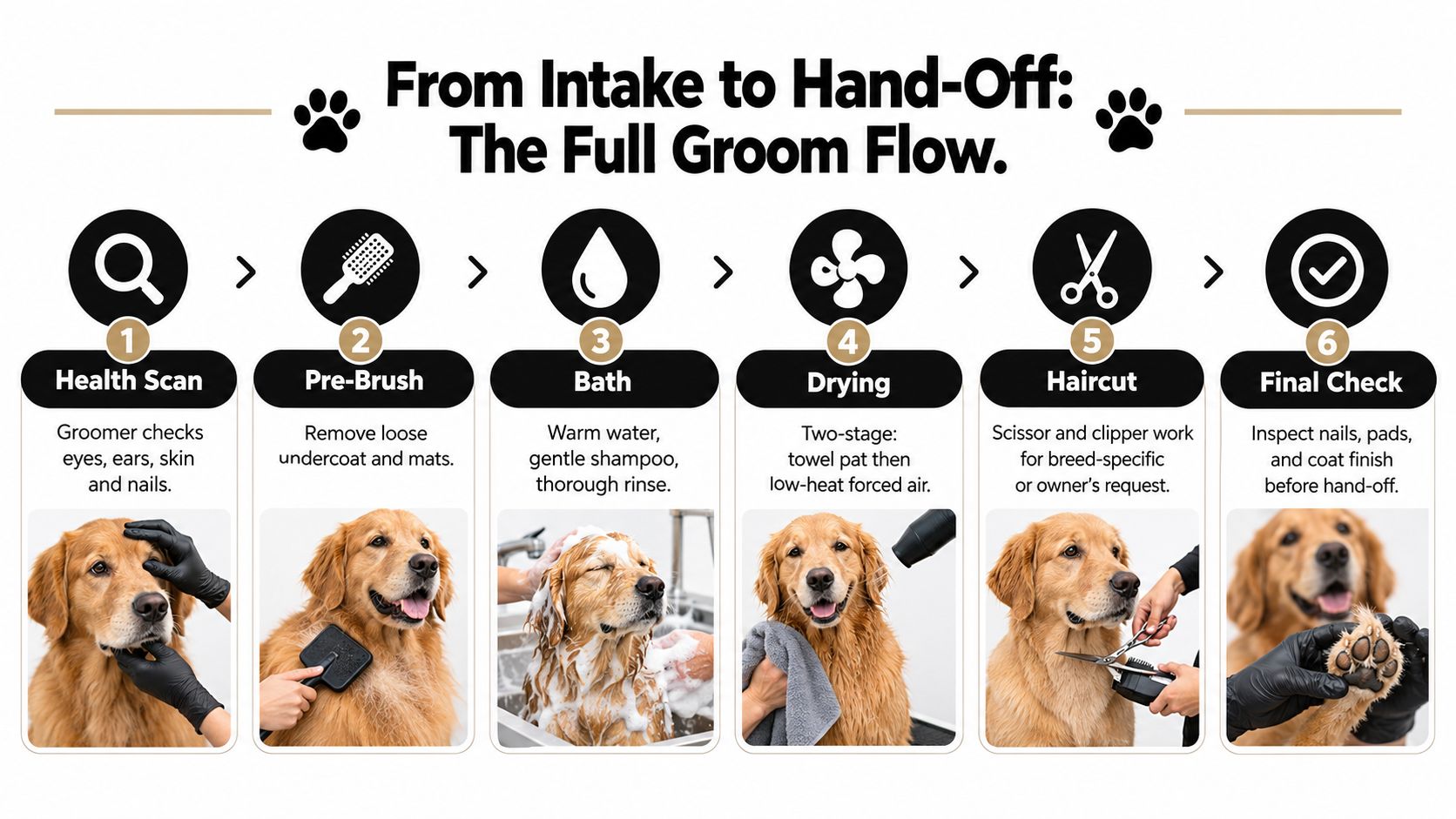
A proper full groom follows an order for a reason. If a dog gets bathed before the coat is assessed and brushed through, hidden mats tighten, skin issues get missed, and the haircut suffers. Owners usually notice the face and body length at pickup. Groomers see the quality problems much earlier.
Here's the visual breakdown of the process first.
Intake and prep work
The first few minutes set the tone for the whole appointment. I check eyes, ears, skin, paws, nails, sanitary areas, and coat condition before water touches the dog. That quick hands-on review tells me whether I am dealing with packed undercoat, tight matting, tender spots, flea dirt, or irritation that changes how far I can safely go.
Then the coat gets prepped. Brush-out, comb-through, and light dematting happen before the bath because wet tangles pull tighter and become harder on the dog. On heavy coats, that prep also shows where coat is thinning, where dirt is packed near the skin, and whether the requested style is realistic for that day.
Bathing, drying, and coat preparation
The bath should fit the dog in front of you. Thick double coats need a different wash and rinse approach than a fine drop coat or a short, oily coat. Shampoo has to reach the skin, rinse clean, and leave no residue behind. If the dog needs a second wash, it gets one.
Drying is part of the haircut, not a separate chore. A damp coat will not scissor cleanly, and a curly coat that dries unevenly will not hold an even finish. Dogs also tend to show their stress most clearly during drying, so pacing matters. The handler needs to watch body language, adjust pressure and airflow, and keep the dog from getting overloaded. A published dog grooming protocol study noted increased nose licking after grooming, which is one of several stress signals groomers should watch during procedures.
To see the grooming flow in action, this walkthrough helps owners connect each stage to the finished result.
The haircut phase owners actually notice
Once the coat is clean, fully dry, and combed out, the haircut can be shaped with control. Blade or guard length, leg balance, topline, head shape, feet, and sanitary work all depend on that prep. If the coat is still damp, blown out unevenly, or left tangled, the finish looks choppy no matter how fast the clipper work gets done.
A full service usually includes several small details owners do not always see during drop-off, but they matter:
- Face work: Careful trimming around the eyes, muzzle, and chin so the expression looks balanced and the dog can see clearly.
- Feet and pads: Hair removed from paw pads to help with traction and reduce debris buildup.
- Sanitary trim: Close cleanup in the belly and rear for comfort and hygiene.
- Ear care: Basic ear cleaning when the ear condition and the dog's tolerance make it safe to do.
- Nails: Trimmed or ground with attention to the quick, especially on dark nails or overgrown feet.
If you are comparing packages, review what a full-service dog grooming visit includes before you book. A real full groom covers the prep, bath, drying, haircut, and finish work as one disciplined service, not a quick bath followed by a rushed clipper pass.
One-on-One Studio Care Versus Chain Grooming
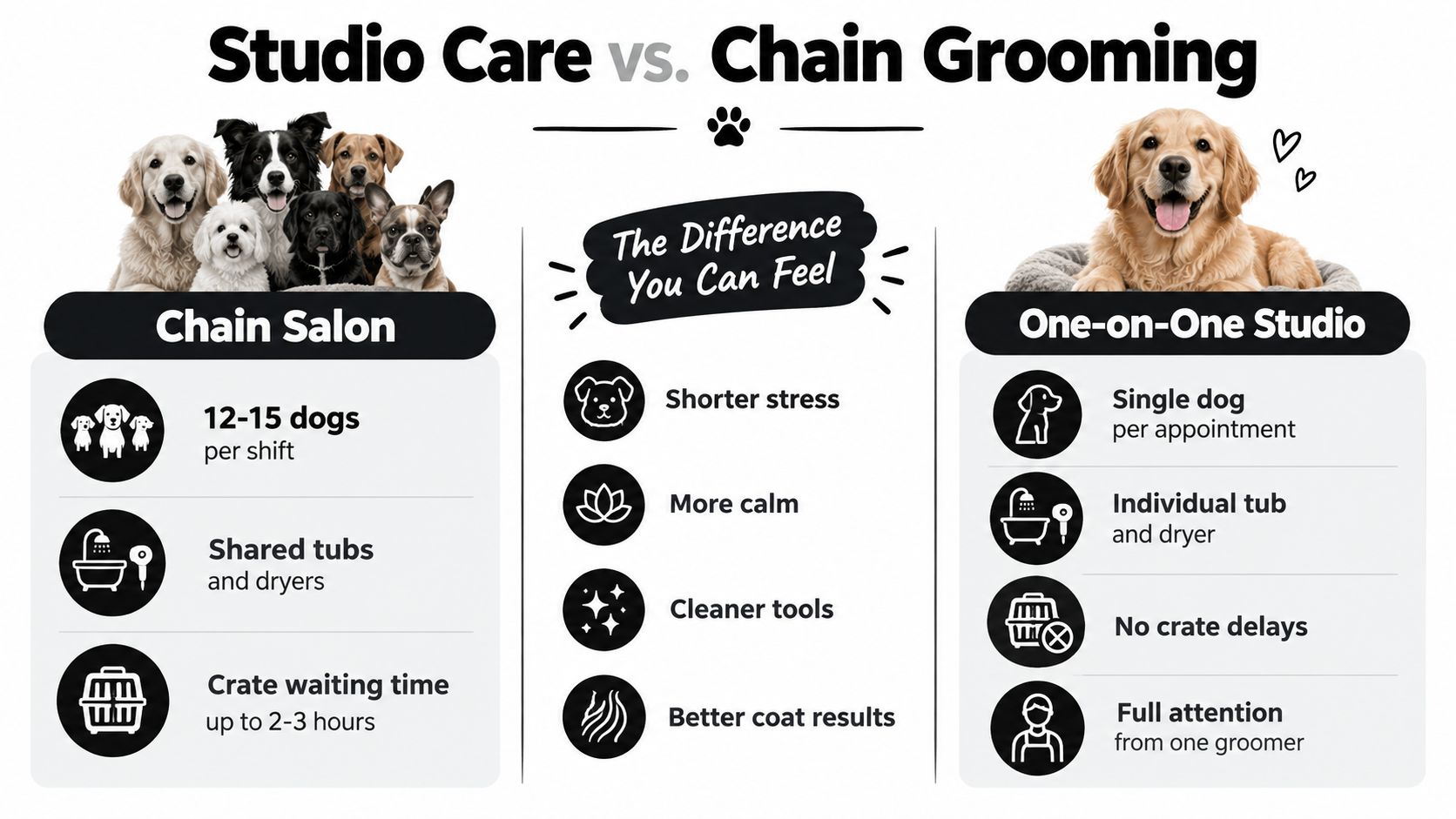
El Paso owners usually choose between two grooming models. One is volume-based. The other is attention-based. The haircut might have the same name on paper, but the experience for the dog is different.
What high-volume grooming usually looks like
Chain salons are built to move dogs through a schedule. Dogs may rotate through shared tubs, shared drying zones, kennel time, and multiple handlers during a single visit. That setup can work for easy dogs with low coat maintenance and low stress sensitivity, but it often creates friction for puppies, seniors, anxious dogs, and dogs that need careful finish work.
The weak point isn't always the staff. It's the model. Once the room gets loud, the pace changes.
What one-on-one studio grooming does better
One dog. One groomer. One station. That setup gives the handler a cleaner read on the dog's body language from start to finish. It also reduces the stop-and-start pattern that can wear dogs down.
A salon study of 42 dogs found that dogs with owner absence showed significantly more stress signals, while dogs groomed more than twice showed fewer stress signals. Sex and size were not significant factors in that study, according to the salon stress research summary. That doesn't mean every dog needs the same setup. It does mean consistency and handling style matter.
Calm dogs hold still longer. Still dogs get cleaner lines, safer trims, and a better overall finish.
Why this matters in El Paso
For local owners searching for El Paso dog grooming, the practical question isn't whether chains can bathe a dog. Of course they can. The better question is whether your dog benefits from a quieter room, tighter hygiene control, fewer transitions, and direct communication with the person holding the tools.
That's where a private studio stands apart from PetSmart or Petco. If your dog gets overstimulated, has a difficult coat, or needs patient handling around ears, paws, or face work, individualized care usually produces the stronger result.
How Often Your Dog Actually Needs This Service
Most owners wait too long, then feel forced into a bigger appointment than they wanted. The right schedule keeps the dog cleaner, the haircut easier to maintain, and the appointment less stressful.
Start with coat type, not habit
Humane World for Animals advises that long-haired dogs generally need a full professional or at-home grooming with bath and haircut every four to eight weeks, while short-haired dogs benefit from a monthly bath. The same guidance recommends nail trims every three to four weeks, and the ASPCA adds that dogs should be bathed at least once every three months, with more frequent baths for dogs that spend lots of time outdoors or have skin problems, as outlined in Humane World for Animals grooming guidance.
That lines up with what works in the grooming room. Dogs with hair that keeps growing need a recurring schedule. Dogs with shorter coats may need less haircutting, but they still collect dust, dander, and loose coat.
Recommended grooming frequency by coat type
| Coat Type | Full Groom Interval | Notes |
|---|---|---|
| Long-haired companion coats | Every 4 to 8 weeks | Best for dogs that need regular brushing, bathing, and haircut maintenance |
| Short-coated breeds | Bath monthly, haircut only if needed | Helpful for dust, odor, and seasonal skin comfort |
| Double-coated dogs | Regular bath and thorough de-shedding based on coat condition | Focus on undercoat removal, feet, nails, and sanitation |
| Continuously growing coats | Stay on a recurring haircut schedule | Prevents eye obstruction, paw debris buildup, and loss of shape |
El Paso dogs usually need season-aware scheduling
Environment changes the calendar. A house dog that barely leaves tile floors won't book like a doodle that hikes, rolls in caliche dust, and tracks half the trail back home. Active dogs need more coat management because desert debris settles fast, especially in feet, feathering, and dense undercoat.
One more reason not to wait too long is simple demand. One market summary reported that bathing and brushing made up 32.1% of grooming demand in 2025, dogs accounted for 71.3% of grooming revenue, professional grooming frequency had risen 34.2% since 2020, and the average owner used professional grooming 5.8 times in 2025, according to the pet grooming services market overview. Owners are booking grooming as routine care now, not rare cleanup.
Seasonal Care, Promos, and Booking the Next Visit
El Paso doesn't give dog owners a neutral climate. Spring packs coats with loose undercoat and windblown grit. Summer puts paws, skin, and sanitary areas under pressure. Fall starts coat change again. Winter can leave skin dry even when the dog doesn't look dirty.
What to book by season
The appointment should match the season, not just the calendar date.
- Spring coat blowout: Ask for de-shedding attention if your dog is dropping coat hard and carrying packed undercoat.
- Summer cleanup: Keep sanitary areas, paw pads, and outline work tidy so the dog stays easier to maintain in heat and dust.
- Fall reset: This is a good time to correct overgrowth, restart brushing discipline, and clean up feet after a busy outdoor season.
- Winter conditioning: Some dogs need fewer baths and better moisture support rather than repeated stripping shampoos.
One market report noted that dog grooming remains seasonal, with spring and summer demand typically 25 to 35 percent higher, and it also pointed to rising interest in anxiety-reducing grooming approaches and about 30% demand growth in 2025 for door-to-door grooming, walking, and vet teletriage, according to the pet service market report. That tracks with what busy households already know. Good slots go fast when shedding peaks and holiday schedules tighten.
Why promos matter when they're built right
An affordable grooming promo only helps if the standards stay high. A monthly event like Snip & Style Saturday works because it gives owners a predictable chance to book a full bath and haircut at a reduced rate without dropping to assembly-line grooming. It's useful for families managing multiple dogs, first-time clients testing a new studio, and regulars who want to stay ahead of coat buildup.
Concierge pickup and drop-off also matter in a military city. Shift workers, medical staff, and Fort Bliss families don't always have flexible midday windows. When scheduling is one-on-one, walk-ins usually don't fit cleanly. That's not a flaw. That's the point. Limited appointments protect the pace of the work.
Book the next groom while the coat still looks good. Waiting until it falls apart costs more time, more comfort, and usually more coat length.
Book Your Groom With Confidence
A clean, calm dog bath and haircut doesn't happen by accident. It starts at home with brushing out small tangles, checking friction spots, timing meals sensibly, and showing up with the right information in hand. From there, the appointment should move through a professional sequence that respects the dog and the craft: health scan, pre-brush, bath, full rinse, complete dry, haircut, ear care, nail work, and final finish.
What owners should expect every time
If you're paying for premium pet grooming, expect structure. Expect clean tools, controlled handling, and a groomer who notices skin condition, coat texture, and stress signals before they pick a blade length. Expect a result you can see in the trim line, feel in the coat, and maintain at home for the next few weeks.
The broader grooming market keeps expanding. One industry estimate placed the global pet grooming services market at USD 6.89 billion in 2024, with a projected rise to USD 10.35 billion by 2030 at a 7.33% CAGR from 2025 to 2030. The same summary cited a U.S. pet grooming services market of USD 2.06 billion in 2024, forecast to grow at a 6.7% CAGR from 2025 to 2030, as noted in this pet grooming industry statistics summary. Growth doesn't guarantee quality. It just means more owners are learning that grooming is routine care, not an occasional extra.
The practical booking rhythm
Owners often ask whether they should separate the bath from the haircut. Sometimes yes. Sometimes no. One industry summary reported that 41% of owners groom their dogs at home, 30% take them to a grooming salon, and 9% use mobile grooming services. The same source said 84% of pet owners groom their dogs at least once a year, owners who use professional groomers do so an average of five times annually, and the average professional grooming cost is around $60, according to the 2026 pet grooming industry summary. The right decision depends on coat type, maintenance habits, and how much shape you want to keep between visits.
For some El Paso dogs, a bath-and-blow-dry visit between full cuts is enough. For others, especially coats that keep growing, staying on a regular full-groom schedule prevents matting, stress, and heavy correction work. If you want to try one structured appointment without overcommitting, the monthly Saturday promotion is a practical entry point. Glo More Grooming offers a once-monthly $55 full-groom promotion for all sizes as a straightforward option for owners who want to test a one-on-one studio routine in real conditions.
A veteran-owned studio should reflect discipline, independence, and long-term standards. That's more than branding. In Texas, veteran-owned business status has a real policy basis, including state support and documentation around ownership and control, as described by the Texas Veterans Commission for entrepreneurs. In the grooming room, that should show up as consistency, pride in finish work, and a clear standard that doesn't bend just because the day gets busy.
If your dog needs a proper bath, a clean haircut, nail care, ear cleaning, and a calmer one-on-one process, Glo More Grooming offers full grooming, bath-and-blow-dry services, concierge support, and the monthly Snip & Style Saturday promo in El Paso. Reserve your slot now, or reach out if you want help choosing between a bath-only visit and a full groom for your dog's coat and routine.