
Bringing home a day gecko often starts the same way. You see that electric green body, the bright red markings, the alert eyes, and suddenly a glass terrarium doesn't feel like decor. It feels like a responsibility.
That first burst of excitement is great, but it can also lead new keepers into rushed setups and generic care advice. Day geckos don't do well with generic. They reward people who pay attention to details, follow a disciplined routine, and build their enclosure around the animal's real needs instead of what looks nice on a shelf.
That's why strong day gecko care is less about collecting supplies and more about thinking like a keeper. You're creating a small tropical world with the right height, heat, humidity, light, and structure so your gecko can climb, bask, drink, shed, hunt, and rest the way its body expects.
Welcoming a Living Jewel into Your Home
A first-time owner usually notices color first. Then comes movement. A day gecko doesn't slink around at night like many other geckos. It's active in daylight, quick on vertical surfaces, and constantly reading its environment. That combination makes the animal feel vivid and present in a way that surprises people.
Most day geckos in the Phelsuma group share a few traits that shape their care. They're diurnal, so daytime lighting matters. They're arboreal, so floor space isn't the main priority. They're also delicate. Their skin and stress response mean they're better appreciated as an observational pet than a handling pet.
That's where many beginners get confused. They assume a beautiful reptile wants the same kind of interaction as a bearded dragon, or they copy a simple tropical setup that keeps humidity high but doesn't create useful climbing and basking zones. The gecko might survive, but it won't show the confidence, appetite, and steady behavior that tell you it's thriving.
Practical rule: If a setup helps your gecko choose where to climb, warm up, cool down, hide, and drink, you're thinking like a keeper instead of a decorator.
A good keeper also learns to be steady. Reptile care isn't about dramatic fixes after problems appear. It's about routines. Morning misting. Evening checks. Watching the animal's grip, posture, color, and appetite. Small actions done consistently matter more than expensive gear used carelessly.
That proactive mindset is what separates smooth long-term care from constant troubleshooting. It's also what makes day geckos so rewarding. When the enclosure is right, you don't just keep a reptile alive. You get to watch a highly specialized animal use every part of the habitat you built for it.
Creating the Perfect Vertical World
A day gecko rarely uses a cage the way a ground-dwelling lizard does. It reads the habitat from top to bottom. The upper third is where it warms up, watches, and often feels safest. The middle becomes its highway system. The lower areas act as retreats, humidity pockets, and backup space when it wants less light or activity. Once you see the enclosure as a three-story tree instead of a box, the design choices start to make sense.
For that reason, height matters more than floor space. Giant day geckos need a much taller enclosure than many first-time keepers expect, and even smaller species do better when you give them more climbing room than the bare minimum. A cramped vertical setup often leads to a gecko that hides awkwardly, misses good basking positions, or spends too much time pressed against the glass because the habitat does not offer enough usable levels.
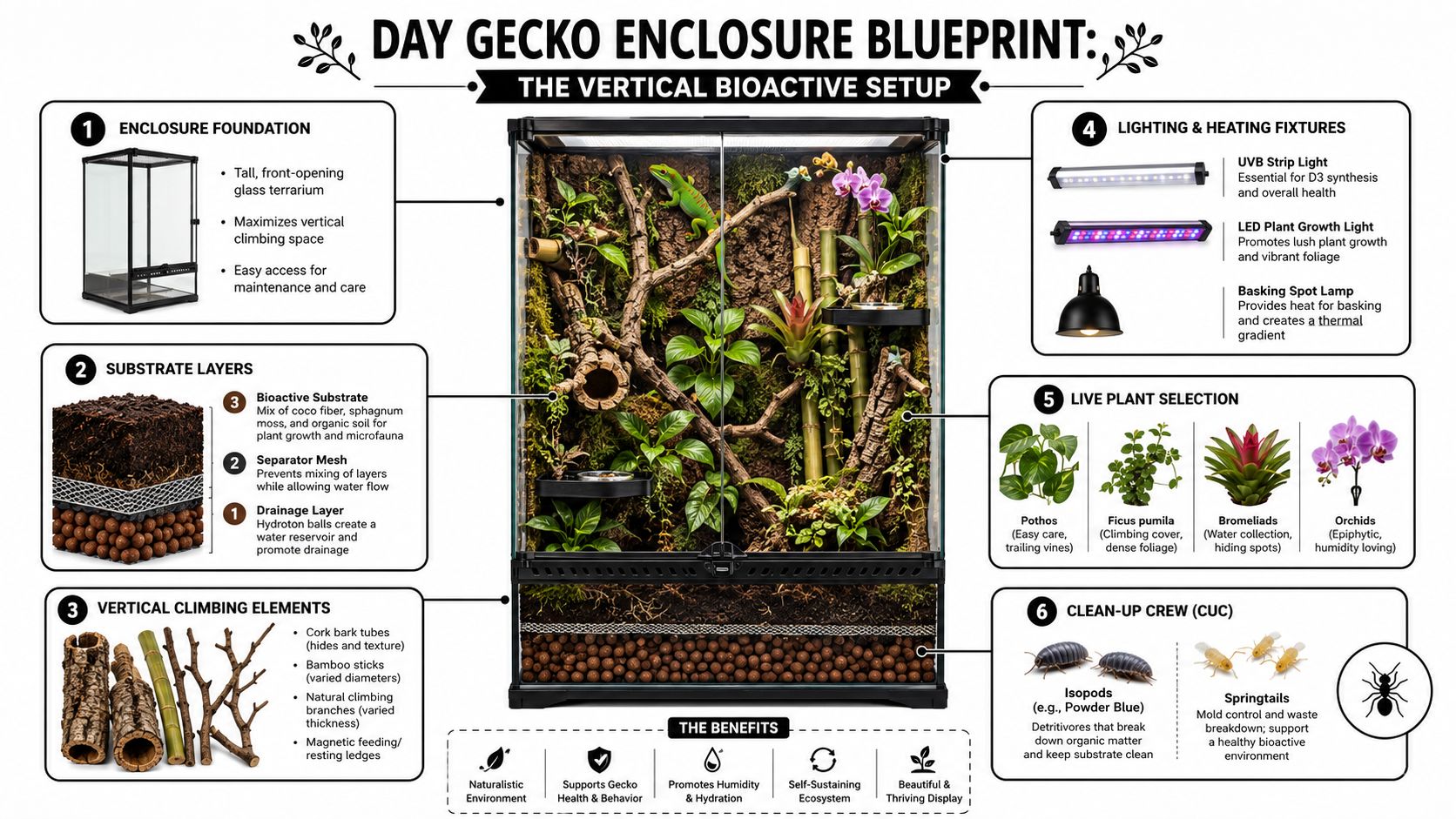
A visual blueprint helps make that easier to picture.
Start with the enclosure shell
A tall, front-opening glass terrarium makes routine care easier and less stressful for the gecko. Front access lets you change water, clean glass, feed, and adjust plants from the side instead of dropping your hand in from above. To a day gecko, an overhead hand can feel like a predator.
Choose an enclosure with enough height to build layers, not just enough volume to meet a basic size target. You need an upper basking zone, protected mid-level routes, and lower cover. That layout gives the gecko choices throughout the day, which is one of the best ways to prevent stress before it starts.
Keepers who also house other reptiles will recognize the same planning principle in this bearded dragon cage setup guide. The species are different, but the core idea is the same. Build around natural behavior.
Build the habitat from the bottom up
A planted, bioactive-style enclosure works well for many day geckos because it supports live plants and helps the enclosure hold moisture in a controlled way. Controlled is the key word.
The base needs layers with separate jobs:
- Drainage layer to collect excess water
- Separator mesh to keep substrate from sinking into that wet area
- Moisture-friendly substrate to support roots and hold some humidity without staying waterlogged
That last point prevents a common beginner mistake. A tropical enclosure should not feel soaked all the time. Constantly wet lower layers can foul the substrate, stress plant roots, and create surfaces that stay slick or dirty. You want a habitat that holds moisture like a forest floor, not one that behaves like a sponge you never wring out.
This matters even more with juveniles. Young day geckos often shed in small pieces and use leaves, bark, and textured perches to work old skin free. If the enclosure is bare or poorly layered, you lose some of the helpful micro-areas that support clean sheds and normal movement.
Add climbing structure before decorations
Climbing materials do the primary work of the enclosure. Decorative items only help if they also create routes, cover, or resting spots.
Use a mix such as:
- Bamboo stalks for straight climbing lanes and upper perches
- Cork bark tubes for sheltered movement and hiding spots
- Branch networks with different diameters to strengthen grip and foot placement
- Magnetic ledges or feeding shelves for raised resting and feeding stations
Try to create more than one path to the warm, bright upper zone. That way the gecko can move between light, shade, and cover without crossing open glass every time. A good setup works like a small jungle trail system. The animal should be able to travel, pause, hide, and bask without looking exposed at every step.
One simple test helps here. Stand in front of the enclosure and trace three routes with your eyes from bottom to top. If you can only find one obvious path, add more structure.
Here's a useful walkthrough to see how vertical layout pieces come together in a planted setup.
Use plants as functional cover
Live plants shape behavior. Broad leaves catch water droplets after misting, break up sight lines, and give the gecko secure resting surfaces near useful parts of the enclosure. Dense foliage also helps shy individuals settle in faster because they can observe the room without feeling fully exposed.
That cover becomes even more useful across the year. As seasonal lighting length changes, many day geckos adjust where they spend time in the enclosure. Extra plant cover and layered perches let them fine-tune their exposure instead of forcing them into one bright, open zone all day.
Good furnishing has a disciplined purpose. Each item should solve a problem.
| Enclosure element | What it helps with |
|---|---|
| Broad-leaf plants | Drinking surfaces and visual cover |
| Upright bamboo | Climbing lanes and basking access |
| Dense foliage | Security and stress reduction |
| Elevated ledges | Feeding access and resting points |
A strong setup looks natural, but it also guides behavior. Each perch, plant, and branch should give the gecko a clear reason to use that space.
Mastering the Microclimate
You turn on the enclosure lights in the morning, and your day gecko stays hidden, skips basking, and starts having patchy sheds a week later. New keepers often blame diet first. More often, the problem started with the microclimate.
A day gecko lives inside a stack of conditions, not a single room temperature. Heat, humidity, airflow, and light all overlap from top to bottom and from day to night. If one piece is off, the others stop working as well. A basking spot that is too cool can reduce digestion. Air that stays wet all day can make the enclosure stagnant. Low surface moisture can leave a juvenile struggling to shed around the toes.
Temperature that creates choices
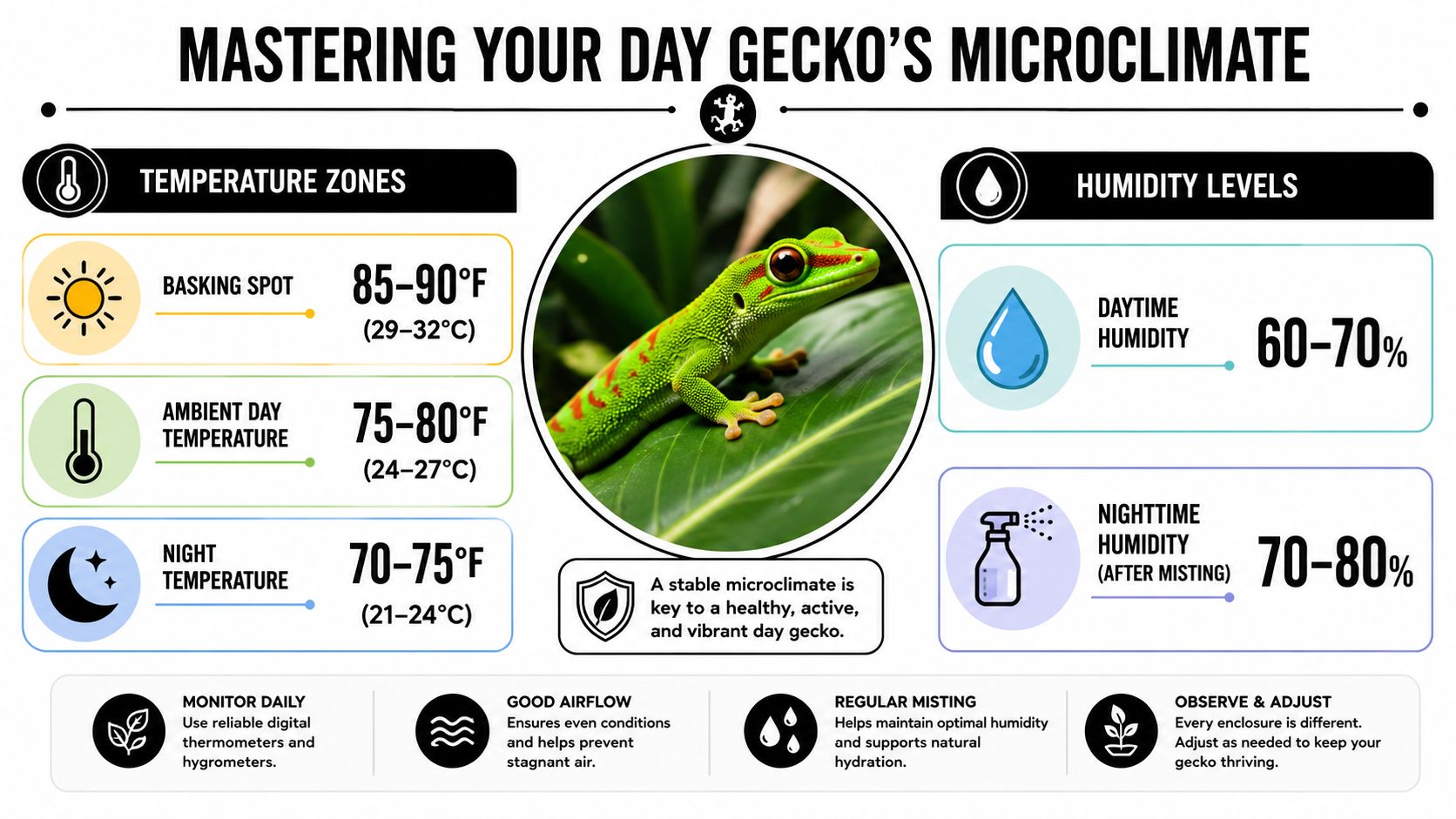
Heat should work like a staircase, with the warmest perch near the top and cooler retreat areas lower down and behind cover. That gradient lets your gecko warm up, cool down, and digest properly without being forced into one setting all day.
For Giant Day Geckos, keep a hot basking area, a clearly cooler mid-to-lower zone, and a nighttime drop rather than trying to hold the enclosure at one flat number. Smaller species such as Peacock and Lined Day Geckos usually use a milder version of that pattern. The exact target depends on species, enclosure height, and how close the animal can get to the heat source, so check your care references and measure the surface where the gecko sits, not just the air on the back wall.
A reliable setup uses two readings. One thermometer should track the basking area near the upper perches. Another should track the cooler zone. Without both, you are guessing.
Humidity that supports drinking and shedding
Humidity is not only a percentage on a screen. It is also droplets on leaves, damp bark that dries later, and a daily rhythm your gecko can predict.
Day geckos often drink from surfaces after misting, especially leaves and glass. That is why a planted enclosure usually works better than a bare one for hydration. Broad leaves catch beads of water where the gecko already spends time. Juveniles benefit from this even more because they dehydrate faster and can run into shedding trouble sooner than sturdy adults.
A good pattern is moist nights, drinkable mornings, and a drier daytime period with airflow. That rhythm helps with hydration while lowering the risk of stale, constantly wet conditions. As noted earlier, some keepers maintain moderate baseline humidity with a stronger overnight rise for species that come from wetter habitats. Watch the animal, not only the gauge. A gecko licking often after misting, shedding cleanly, and using different levels of the enclosure is telling you the environment is working.
Use a routine like this:
- Morning misting leaves droplets for drinking after lights come on
- Evening misting raises moisture before the cooler night period
- Leafy plants and cork surfaces hold water where the gecko expects to find it
- Daytime drying between mistings reduces the chance of a stuffy, soggy enclosure
Hydration for a day gecko is built into surfaces and daily timing, not just a water bowl.
For keepers who also work with other reptiles, this difference is easier to spot when you compare species side by side. This snake care overview for reptile hydration and enclosure habits is a helpful reminder that reptiles do not all drink or use moisture the same way.
Light that changes with the season
Light does more than help you see the gecko. It sets the animal's daily schedule and supports normal calcium use through UVB exposure. A gecko that basks under proper light is regulating far more than body temperature.
Seasonal timing matters too, and beginner guides often skip it. DubiaRoaches notes that Giant Day Geckos do well with about 11 hours of light in winter and 13 hours in summer. That small shift helps mirror the yearly rhythm the species evolved with.
You do not need to overhaul the enclosure every season. A timer and gradual adjustments are enough. Shorten or lengthen the photoperiod in small steps, then watch behavior. Good seasonal husbandry is proactive husbandry. It gives your gecko cues before stress shows up as poor appetite, dull activity, or erratic basking.
That same preventive mindset helps with shedding. Juveniles grow quickly, which means they shed more often and have less margin for dry conditions. If you notice toes, tail tips, or the face holding shed, treat it as a husbandry signal first. Check nighttime humidity, misting coverage on leaves, and whether the gecko has secure resting spots near the humid upper foliage. Small corrections made early are much easier than fixing retained shed after it tightens.
A Balanced Diet for a Vibrant Gecko
Feeding a day gecko is where new keepers often swing between two mistakes. Some rely too heavily on insects and ignore balanced fruit-based feeding support. Others use only a prepared gecko diet and forget that many day geckos are enthusiastic hunters that benefit from chasing prey.
A better approach is to think in layers. Your gecko needs variety, consistency, and supplementation that matches the rest of the husbandry. A perfect feeding plan on paper won't do much if lighting is poor or hydration is inconsistent.
Use insects as more than moving snacks
Good feeder insects give your gecko exercise and nutrition, but only if the insects are worth eating. Crickets and dubia roaches are common staples because they move well and are easy to offer in appropriate sizes. The key is gut-loading, which means feeding the insects well before your gecko eats them.
That changes the quality of the meal. A poorly fed cricket is basically motion. A well-fed one becomes a much better nutrient vehicle.
Here's a practical way to think about feeder quality:
- Choose the right size so your gecko can strike and swallow comfortably
- Feed the feeder insects well before offering them
- Rotate feeder types when possible to avoid a one-note diet
- Watch how your gecko hunts because appetite and strike accuracy tell you a lot
Add a quality gecko diet for balance
Many keepers also use a commercial complete gecko diet as part of the routine. These fruit-based mixes can help support consistency, especially for geckos that like licking soft foods from cups or ledges. They're helpful because they make it easier to offer a balanced option on a repeatable schedule.
The best way to use a prepared diet is as part of a system, not as a random extra. Mix it fresh, place it where your gecko can find it easily, and remove leftovers before they spoil. Raised feeding cups often work well because they fit the gecko's climbing habits.
Supplement with purpose
Calcium and vitamin support matter, but they only make sense when the rest of the enclosure is doing its job. A gecko with proper UVB, hydration, and heat can use food more effectively than one living in a poorly managed enclosure.
Rather than guessing, keep a simple feeding notebook with entries like:
| What to note | Why it matters |
|---|---|
| Insect type offered | Helps you track variety |
| Whether insects were dusted | Keeps supplementation consistent |
| Interest in prepared diet | Shows preference changes over time |
| Appetite and body condition | Helps catch problems early |
A gecko that's bright, alert, and eager to investigate feeding spots usually gives you confidence that the daily basics are working. A gecko that starts refusing familiar food, dropping hunting interest, or looking less healthy deserves a full husbandry review instead of a rushed food change.
Proactive Health and Wellness
You notice your day gecko missed its usual morning rounds. It stays in one corner, turns down food, or leaves bits of shed clinging to its toes. Moments like that can feel alarming for a first-time keeper, but they are also useful. They tell you where to look. Good health care with day geckos starts long before an emergency. It starts with learning the small daily patterns that show whether the enclosure is supporting the animal's body through growth, shedding, and seasonal changes.
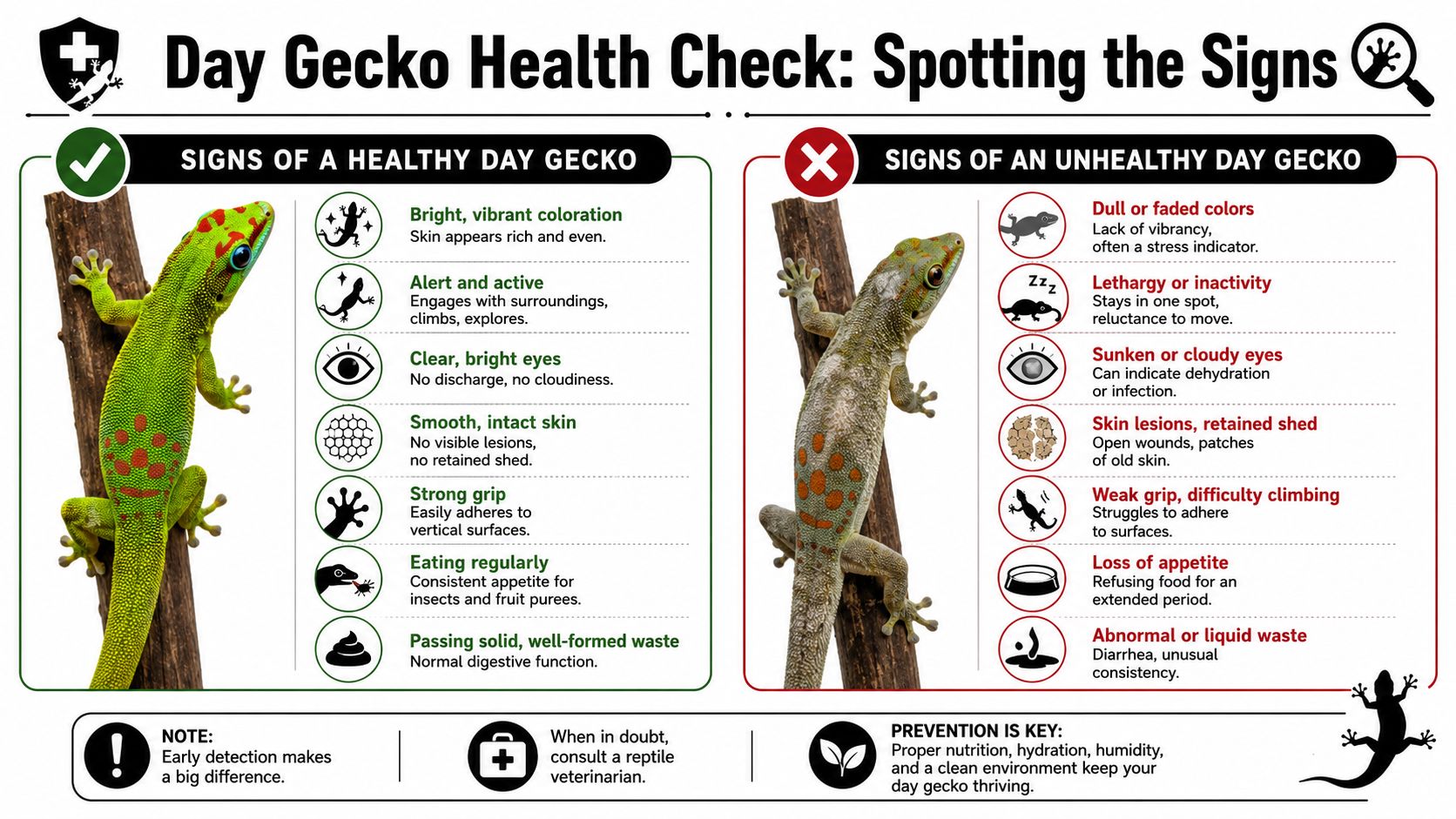
A healthy day gecko usually looks sharp and put-together. Eyes stay clear. Skin lies flat and even. Toes grip glass and branches with confidence. Appetite stays steady, and the gecko uses different parts of the enclosure across the day instead of parking in one spot all the time.
That baseline matters because day geckos often show husbandry problems before they show obvious illness. A duller appearance, weaker grip, repeated poor sheds, less interest in food, or a sudden change in activity often points back to the setup. Light, heat, hydration, and nutrition work together like parts of one system. If one piece slips, the others do not work as well.
Signs that deserve attention
Watch for changes in pattern, not just dramatic symptoms. A gecko that stops moving between basking, feeding, and cover areas is telling you something. The same goes for a gecko that starts missing jumps, clinging less securely, or shedding badly more than once.
Season also matters here, and many beginner guides skip that. As day length shifts through the year, activity and appetite can shift with it. A slight seasonal slowdown is different from a gecko that is becoming weak, dehydrated, or chronically inactive. Keeping notes on lighting hours, appetite, shedding dates, and behavior makes those differences easier to read. That record helps you prevent problems instead of reacting late.
Preventing metabolic stress
Long-term weakness usually develops gradually. A gecko living under poor UVB, weak basking conditions, or inconsistent calcium support may still eat for a while, but its body is running on a poor foundation. Over time, you may notice reduced grip, awkward climbing, lower activity, or a less solid body condition.
The fix is rarely one product. Reconsider the whole setup. Review bulb age and placement, basking access, supplement routine, and whether your gecko can use the warm and bright areas you provide. The goal is to build a daily environment that supports normal function, not just to respond once the gecko looks unwell.
Stuck shed in juveniles needs extra care
Young day geckos need a gentler approach than many larger reptiles. Their skin is delicate, their toes are tiny, and rough “help” can do real damage. If a juvenile has retained shed, use a calm, minimal-intervention plan. Reptilian Arts notes that very shallow, closely supervised soaks for juvenile day geckos should be brief and should avoid any head submersion.
The bigger lesson is prevention. Repeated stuck shed often means the enclosure is missing something the gecko needs to shed on its own. A proper temperature gradient supports normal body function better than making the whole enclosure uniformly damp. Juveniles especially benefit from that balance, because they grow quickly and shed often.
A practical response plan looks like this:
- Check humidity, airflow, and temperature zones before touching the gecko
- Use only a very shallow soak if retained shed is not releasing on its own
- Never peel shed off by force
- Inspect toes, tail tip, and around the eyes closely, because tight retained shed can cut off circulation or irritate sensitive tissue
- Track whether the problem repeats during growth spurts or after seasonal lighting changes
Keepers who have worked with sturdier reptiles sometimes expect physical intervention to be safer than it is with day geckos. This Argentine black and white tegu care guide highlights that reptile care methods do not transfer neatly from one species to another. Day geckos reward a lighter hand and a sharper eye.
One simple habit helps more than people expect. Do a short visual check every day, then a more careful review each week. That routine helps you catch the small signs early, which is usually when day gecko health problems are easiest to correct.
Understanding Day Gecko Behavior
Day geckos are best understood by watching patterns, not by chasing interaction. A lot of first-time owners want reassurance that their gecko likes them. Usually, the more useful question is whether the gecko feels secure in its environment.
These animals are usually look-but-don't-touch reptiles. Their skin is delicate, they're fast, and they don't tend to enjoy frequent handling. That doesn't make them unfriendly. It means your relationship is built through observation, routine, and respectful care rather than physical contact.
What common behaviors often mean
A day gecko that changes color intensity, bobs its head, puffs its throat, or patrols the front glass is giving you information. The trick is reading the behavior in context.
- Head-bobbing or posture displays often relate to alertness, territorial feeling, or visual communication
- Firing up or down in color can reflect mood, basking status, stress, or activity level
- Glass surfing may happen when the gecko feels exposed, overstimulated, or unsettled by the enclosure layout
- Freezing in place can mean the gecko is assessing movement around it
A single behavior doesn't tell the whole story. A gecko that's bright and active near feeding time is different from one that glass-surfs all day in a bare enclosure with little cover.
Read behavior alongside the environment
Good keepers learn to ask different questions. They stop asking only, “Why is my gecko doing that?” and start asking, “What in the enclosure might be shaping that behavior?” If the animal hugs one corner, the thermal layout might be off. If it hides constantly, cover might be too sparse. If it's jumpy during routine care, your approach to the enclosure may be too abrupt.
The gecko is always responding to something. Behavior is often the earliest husbandry feedback you'll get.
The more consistent your routines are, the easier behavior becomes to interpret. Feed at similar times. Mist on schedule. Move calmly around the enclosure. That steady rhythm helps your gecko settle, and it helps you notice the difference between normal alertness and real stress.
Your Day Gecko Care Checklist
The easiest way to stay ahead of problems is to turn care into a repeatable routine. When your tasks are clear, you don't have to rely on memory or panic-searching whenever something looks off. Good day gecko care works best when it feels organized and calm.
A checklist also helps you separate true problems from normal variation. If temperatures are on target, humidity is being maintained properly, food is offered consistently, and the gecko is behaving normally, you can be more confident in your husbandry.
Daily rhythm
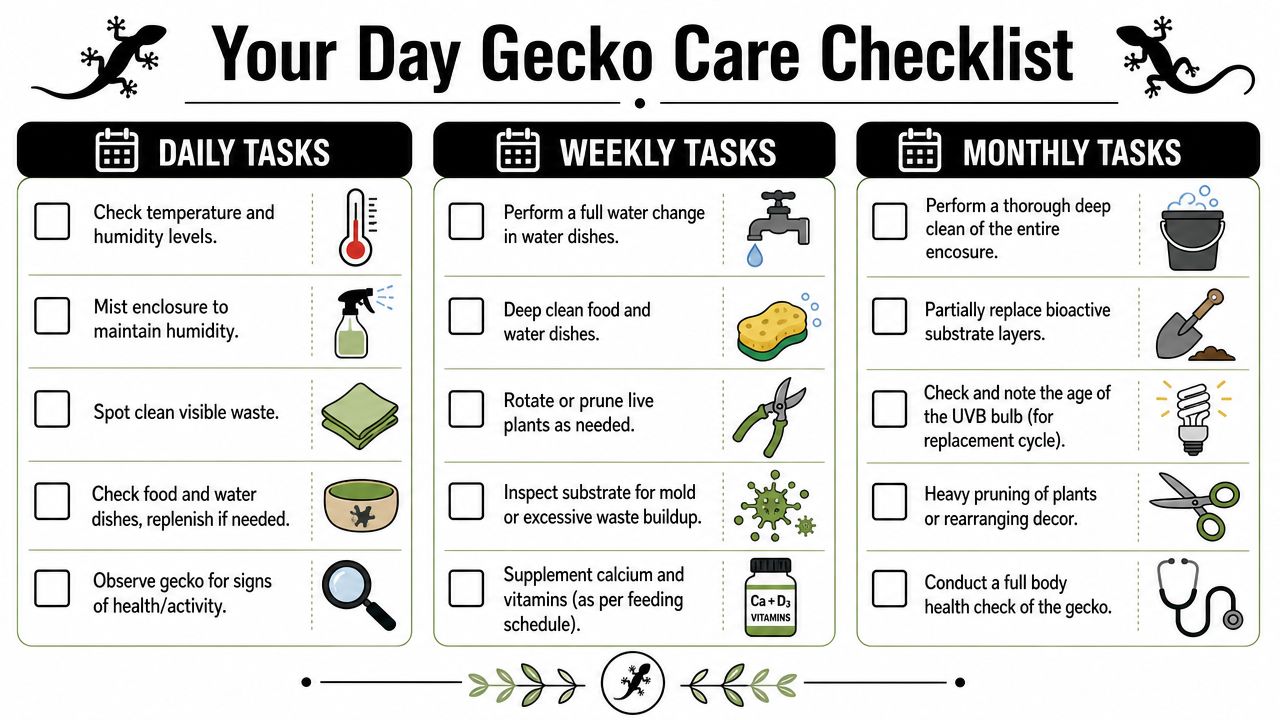
Your daily tasks should be simple enough that you will do them every day.
- Check heat and humidity so you catch drift before it becomes a health issue
- Mist the enclosure on schedule so your gecko has access to droplets for drinking
- Spot-clean visible waste to keep the enclosure sanitary
- Observe the gecko briefly for activity, grip, posture, and appetite cues
Weekly maintenance
Weekly tasks are about preserving enclosure quality and preventing little issues from building up.
- Clean food and water items thoroughly even if they don't look dirty
- Inspect leaves, perches, and glass for residue or buildup
- Review feeding variety and supplement use so the diet stays balanced
- Trim or reposition plants if needed to keep pathways and basking access open
Monthly review
Monthly care is where disciplined keepers stay ahead. You don't need to rebuild the enclosure constantly, but you do need to review how the system is functioning.
| Monthly task | What you're checking |
|---|---|
| Deep-clean selected surfaces | Hygiene and residue control |
| Inspect substrate and drainage | Moisture balance and cleanliness |
| Review lighting equipment | Reliable output and safe placement |
| Perform a head-to-tail visual check | Skin, eyes, toes, tail, and body condition |
Day Gecko Species at a Glance
The table below is a quick reference, not a substitute for species-specific reading. Adult size and temperament can vary by individual, so use it as a starting point.
| Species | Common Name | Adult Size | Basking Temp | Temperament |
|---|---|---|---|---|
| Phelsuma grandis | Giant Day Gecko | Larger than the smaller commonly kept species in this guide | 95°F | Bold, alert, often display-oriented |
| Phelsuma laticauda | Gold Dust Day Gecko | Small to medium | Warm basking area with vertical choices | Active, quick, observant |
| Phelsuma klemmeri | Neon Day Gecko | Small | Warm basking area with strong cover | Fast, delicate, best for low-handling homes |
One last point matters more than any shopping list. Don't judge your care by how elaborate the enclosure looks. Judge it by whether the gecko behaves like it belongs there. Strong grip. Confident climbing. Reliable shedding. Steady feeding. Calm use of the whole space. That's what success looks like.
If you care this much about detail, you'll probably value the same standards in the rest of your pet care routine. For El Paso families who want El Paso dog grooming with disciplined workflow, calm one-on-one handling, and the pride that comes from a veteran-owned grooming business, Glo More Grooming stands apart from chain experiences like PetSmart and Petco. Their approach to premium pet grooming reflects the same habits that make strong reptile keeping work. Clear standards, careful observation, and consistent execution. If you're also looking for an affordable grooming promo, ask about Snip & Style Saturday and reserve your slot now. Contact Glo More Grooming today to book, secure a promo appointment, or learn more about concierge-level support for your pet.