
The popular advice is wrong: don't start with color hype. Start with proof. A chocolate merle Pomeranian is not a magic category or a separate “designer” breed, it's a brown-based Pom carrying recessive chocolate genetics plus the merle pattern, and that distinction matters because buyers get burned when sellers lean on appearance and skip the paperwork. If a breeder can't explain the nose pigment, the merle pattern, and the pairing behind the litter in plain English, keep your wallet closed.
What a Chocolate Merle Pomeranian Actually Looks Like
A true chocolate merle Pomeranian has a very specific look, and buyers should read that look as proof, not as decoration. The coat starts on a brown or chocolate base, then merle breaks that pigment into lighter patches, so you see warm cocoa, café-au-lait, tan, beige, or even silvery areas across the body. A proper chocolate merle also usually shows a brown nose, which is one of the clearest practical signs that you are seeing chocolate rather than a diluted shade such as lilac. (Reference)
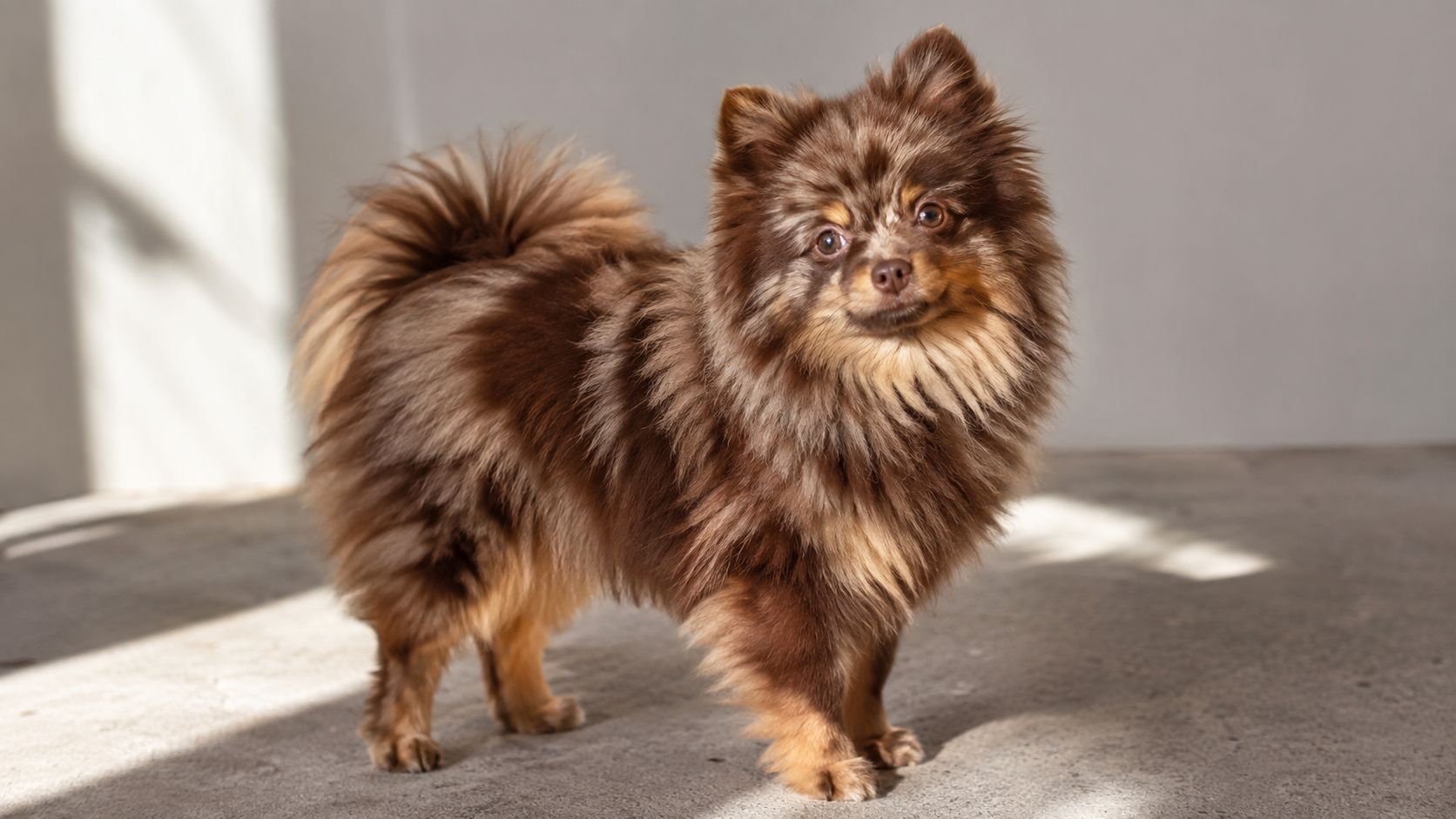
Read the coat like a buyer, not a fan
Photos mislead buyers all the time. Chocolate sable can look muddy or warm brown in the right light, and cryptic merle may show very little obvious marbling even though the pattern still matters genetically. A pretty face does not settle the question. You need to know whether the pigment break-up is real, whether the nose is brown instead of black, and whether the breeder can explain why the coat looks the way it does.
Practical rule: if the seller talks about “rare color” before they talk about pigment, they are selling marketing first and puppy second.
The smartest buyers ask one direct question, what parts of this dog are base color, and what parts are merle pattern? That question cuts through the fluff fast. It also shows whether the breeder understands the dog they are producing, or just knows how to write a flashy ad.
The Genetics Behind Chocolate and Merle
Chocolate and merle are separate genetic traits that can appear in the same dog, and buyers should treat that as a verification problem first, a color story second. Chocolate is recessive to black, so two chocolate carriers can produce chocolate puppies even when the parents do not look brown. The Pomeranian Club of America treats merle as a pattern, not a separate color, which is the right way to think about it if you want to avoid paying for labels instead of proof.
The pairing is the whole point
Merle breeding is where the risk sits, and the litter math is not something a serious buyer should ignore. The breed-club source says merle-to-merle pairings average 25% full-colored, 50% merle, and 25% defective white puppies, while merle-to-full-color pairings produce 50% merle and 50% full color with no defective whites. Responsible breeders avoid merle-to-merle matings completely, because those pairings create avoidable welfare problems and tell you a lot about the breeder's standards.
| Expected Litter Outcomes by Breeding Pair | Full Color | Merle | Defective White |
|---|---|---|---|
| Merle to merle | 25% | 50% | 25% |
| Merle to full color | 50% | 50% | 0% |
A chocolate merle puppy comes from at least one chocolate carrier parent and at least one merle parent. That is the basic genetic setup buyers should verify before money changes hands. Demand DNA test results, a clear pedigree, and the parents identified by name. If the breeder cannot show how the puppy was produced, or dodges the question with color talk, walk away.
A one-on-one groomer handles this kind of coat differently too. The coat pattern does not excuse sloppy upkeep, and it does not make the dog easier to maintain. A groomer who works breed by breed will check how the coat lies, how the color breaks across the body, and whether the owner is trying to hide a weak coat behind a flashy label. That practical handling matters because the wrong seller will sell the color, while the right breeder and groomer pay attention to the dog.
The right question is not “Is this a rare color?” It is “Can you prove how this puppy was produced?”
Why Chocolate Merle Is Rare and Why That Matters
“Rare” is a marketing word, not a quality standard. Pomeranians already have small litters, with independent breed summaries describing average litter size as 1.9 to 2.7 puppies. A chocolate merle pairing does not usually produce a big batch of puppies, and only a portion will show the look buyers are chasing. (Reference)
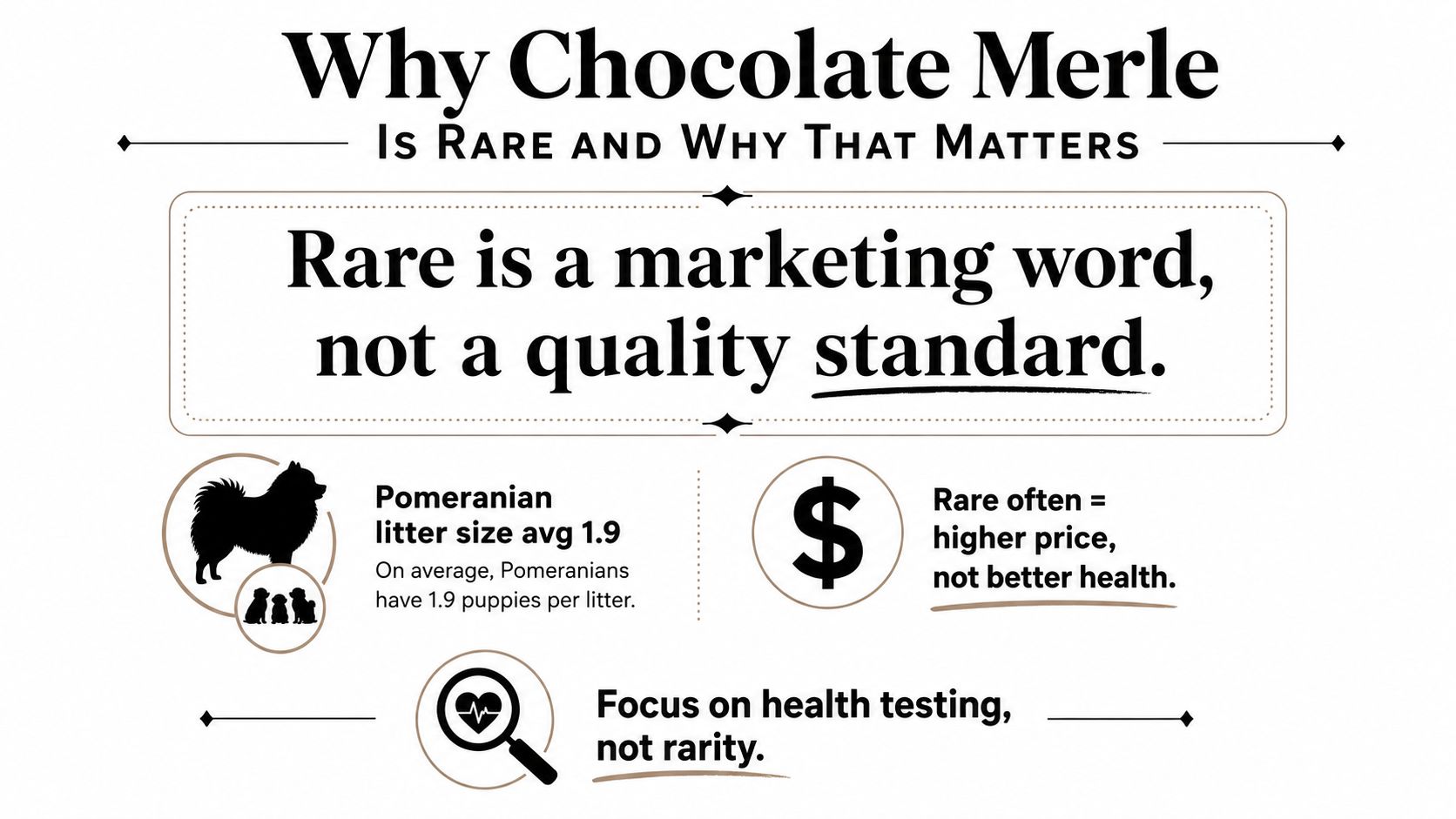
Scarcity is biology and policy, not magic
The Kennel Club in the UK is blunt on the official standard, saying “any other colour or combination of colours, including merle, [is] unacceptable”. That does not mean a chocolate merle cannot exist. It means the color sits outside the traditional standard, and that status shapes how breeders, buyers, and registries treat it. (Reference)
So yes, a chocolate merle can draw attention. No, that does not make it a better dog. A fair price should reflect health testing, pedigree clarity, and breeder discipline, not just the fact that the coat looks different on social media.
Rare color also hides weak breeding habits. If a seller demands a premium but cannot explain the pairing, the litter size, or the registration issue, you are not buying exclusivity. You are paying for uncertainty.
How to Verify a True Chocolate Merle Before You Buy
Start with what you can see, then demand proof. A true chocolate merle should show a brown nose leather, brown or pinkish-brown paw pads, and pigment changes beyond the coat, including blue or odd-colored eyes and mottled eye rims, nose, and pads. Visual guidance also warns that cryptic or phantom merles may not look obviously merle, so appearance alone is a weak filter. (Reference)
Use a checklist, not seller language
- Brown nose leather: If the nose is black, question whether you are looking at chocolate at all.
- Paw-pad pigment: Look for brown or pinkish-brown mottling instead of trusting a sales description.
- Eye color: Blue or odd-colored eyes can appear in merle dogs, but they do not prove anything about breeding quality.
- Coat patches: You want clear lighter patches on a brown base, not a washed-out photo or a heavy filter.
- DNA test results: Ask for proof of the merle gene and the chocolate gene, plus the sire and dam.
DNA is the part buyers should insist on. Visual cues can mislead you, and a dog can look muted or sable while still carrying merle genetics. Ask for pedigree documentation, then check the parents yourself. If a breeder gets defensive about that request, they are protecting their markup, not their breeding program.
A real breeder should be comfortable showing the parent dogs, the test results, and the reason the puppy looks the way it does.
Health Concerns Specific to Chocolate Merle Pomeranians
Merle is not a harmless style choice, and buyers who treat it like one are taking a real risk. In merle-colored dogs, veterinary guidance links the pattern to deafness, blindness, increased intraocular pressure, microphthalmia, and colobomas. The coat may look striking, but the pigment pattern can affect the eyes and ears in ways that are easy to miss at first glance. (Reference)
Small breed, long life, real caution
The breed itself is known for a relatively long life, and kennel club guidance places Pomeranian life expectancy in the low-teens. That matters because merle risk does not define the whole dog. A Pomeranian can still be a steady companion for years, but only if the breeding pair was chosen well and the dog's sensory needs are handled with care. (Reference)
The salon side matters more than many admit. A dog with eye or hearing vulnerability does not need a noisy, chaotic floor and a screaming dryer in its face. It needs slower handling, better observation, and a groomer who notices when a dog tenses, blinks, or startles. The calmer the setup, the easier it is to work around the breed's vulnerabilities without adding stress.
Daily care should stay gentle and deliberate. Clean the face carefully, dry the ears fully, and avoid rough handling around the eyes. A merle Pom should not be treated like a bulk-order toy dog. Sensitive dogs do better when the person holding the scissors watches their response instead of rushing the table. For coat upkeep that keeps stress down, a shedding control routine for dogs is worth using as part of the broader care plan.
Grooming and Daily Coat Care That Actually Fits the Breed
A chocolate merle Pom still has the breed's dense double coat, so the routine is about coat management first and color second. Brush two to three times a week minimum, then go daily during seasonal shedding. Use a pin brush, a slicker brush, and a metal comb so you get through the topcoat and into the undercoat instead of just polishing the outside. For broader coat-loss management, this guide on shedding control for dogs is worth a look.
Keep the routine tight
Bathing should support the coat, not strip it. Use a schedule that keeps the skin clean without over-washing out natural oils, and pay attention to tear staining on lighter patches because it shows up more clearly on merle or diluted markings. If the face is clean but the eyes still water, you're looking at a grooming visibility issue, not just a cosmetic one.
For El Paso, the desert changes the playbook. Hot pavement can be hard on paw pads, so check footing before walks and trim with the season in mind. Spring and fall often call for a shorter, cleaner trim schedule because the coat starts moving harder in those transitions, while cooler desert winters still need coat integrity so the dog doesn't get clipped into discomfort.
A one-on-one groom matters here because table time is limited and dryer noise stays lower. That gives the groomer more control over a small dog's body language and more room to work without crowding. A merle Pom doesn't need pampering for show, it needs a disciplined workflow that respects a toy-breed frame and a dense coat.
Why Glo More Grooming Fits a Chocolate Merle Pomeranian
A home-based, one-on-one setup is the opposite of the chaos most chains build into the day. For a small, potentially sensory-sensitive Pom, fewer dogs on site means fewer triggers, fewer distractions, and cleaner handling. That's the kind of environment a chocolate merle dog benefits from, especially when the owner wants careful coat work instead of a rushed conveyor-belt appointment.
The structure matters more than the slogan
PetSmart and Petco can work for routine pet owners, but a rare-color Pom doesn't need high-volume grooming traffic and shared drying bays. It needs precision. A single-dog workflow gives the groomer time to watch pigment-heavy areas, handle the face carefully, and keep the session calm from check-in to pickup. For more detail on the handling model, see one-on-one dog grooming.
Snip & Style Saturday adds a practical angle for budget-conscious owners, with a $55 monthly full-groom promo across all sizes. That kind of offer gives owners a predictable rhythm without pushing them into a bargain-bin experience. The bigger point is discipline, not discount chasing.
Glo More Grooming also runs as a veteran-owned grooming studio with a long-term vision, and that shows up in the way standards are kept steady instead of improvised. Concierge Service is there for owners who need white-glove support, including veterinary advocacy and travel coordination. That's not chain behavior, that's ownership with accountability.
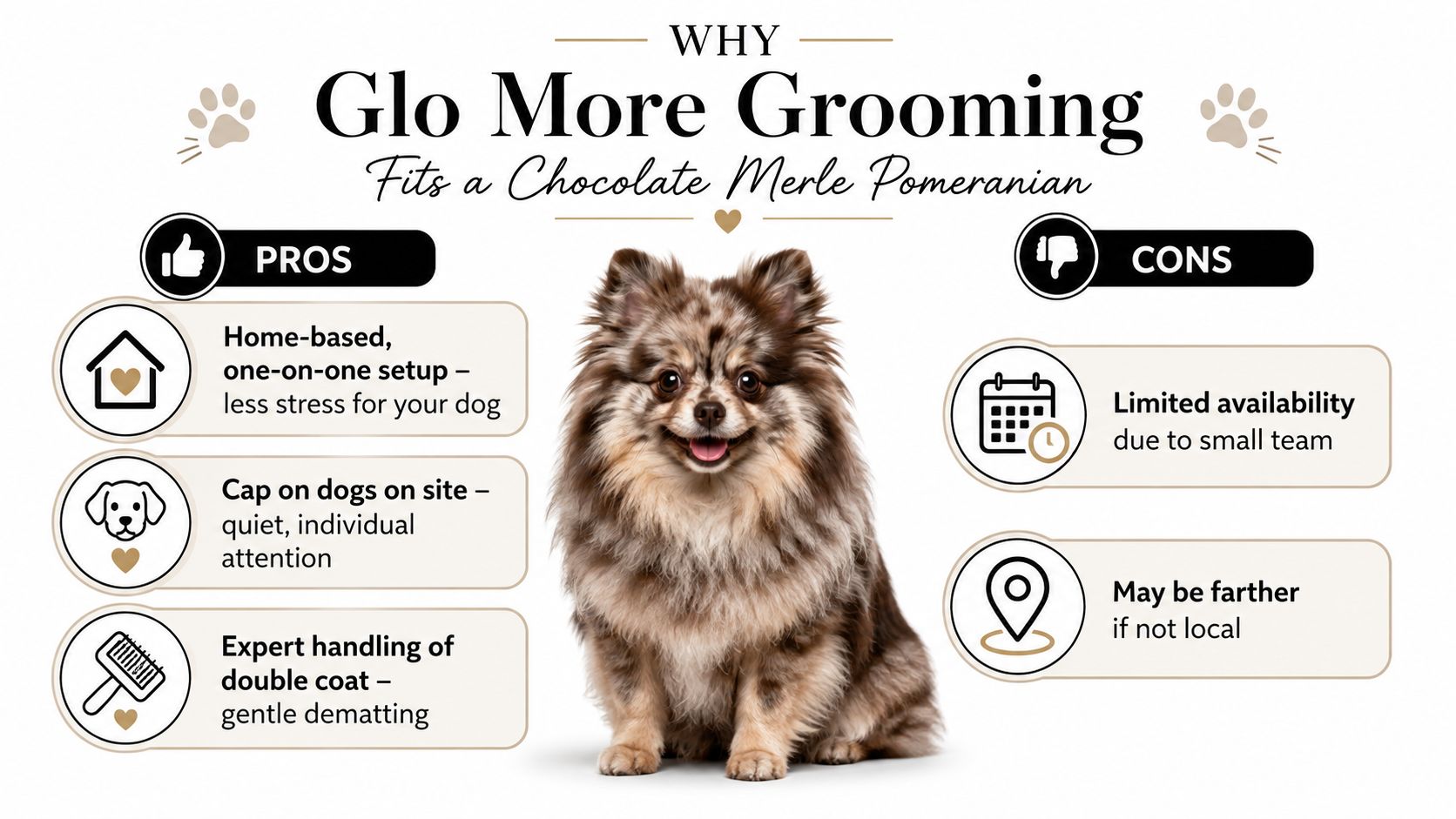
Bottom line: if you care about a rare-color Pom, choose the groomer who controls the environment instead of the one who hopes volume makes up for it.
Pricing, Adoption, and a Smart Buying Plan
Published breed guides place chocolate merle Pomeranians at roughly $2,000 to $5,000, with exceptional examples reaching up to $10,000 depending on breeder, location, and pedigree. (Reference) That range makes sense once you break it down. DNA testing, registration paperwork, health guarantees, and breeder reputation all push a puppy toward the higher end, while vague listings and weak documentation usually sit where the risk is.
Budget for the whole dog, not just the puppy
The first-year cost picture isn't only the purchase price. You still need vet visits, vaccinations, and a steady grooming cadence, and traveling owners may also want concierge-level support when schedules get messy. If you're comparing service tiers, dog grooming prices is the right place to see how a professional grooming budget is typically structured.
Adoption is a better fit for some buyers. Breed-specific rescues and Pomeranian clubs sometimes rehome older dogs or special-needs dogs, and that route can be smart if your goal is companionship rather than a color chase. It also keeps the focus where it should be, on fit, temperament, and care needs instead of fantasy pricing.
If you're buying, do it with a plan. Verify the genotype, check the pedigree, and budget for grooming that matches a toy breed with a dense coat and real sensory considerations. If you're adopting, ask about coat condition, eye care, and handling history before you commit.
If you want a calmer, more disciplined grooming experience for a chocolate merle Pomeranian, book with Glo More Grooming and ask about a one-on-one session, Snip & Style Saturday, or concierge support. The studio's premium pet grooming approach fits El Paso dog grooming needs without the noise and volume of chain shops. Reserve your promo slot now and get the coat care, handling, and consistency this breed deserves.