
Yes, dogs can get a form of impetigo called canine impetigo, also known as puppy pyoderma, and it primarily affects puppies and young dogs under 12 months of age. The good news is that it's generally treatable, and unlike the human version, it's not contagious to humans or other dogs.
A lot of El Paso owners first notice it the same way. You roll your puppy over for a belly rub, and there it is. A cluster of little bumps, some crusting, maybe a rash across the groin or lower belly. Your mind goes straight to the worst-case scenario.
That reaction makes sense. Skin problems can look alarming fast, especially on young dogs.
In a disciplined grooming environment, skin changes are one of the first things that stand out. A careful set of eyes can catch trouble early, whether it's dandruff, irritation, flea-related scratching, or something more specific like impetigo. That matters in El Paso, where heat, dust, dry air, and inconsistent home bathing routines can all make fragile puppy skin easier to irritate.
That Unsettling Rash A First Look at Canine Skin Issues
The most common story goes like this. A puppy comes home from play, settles down, and later that evening the owner spots red bumps on the belly. The dog still wants to eat, play, and be held, so it doesn't seem like an emergency. But the skin definitely doesn't look right.
That's where people get stuck. Is it bug bites? Allergies? Mange? Did the shampoo cause it? Can dogs get impetigo, or is that only something people get?
The answer is yes, dogs can get it. In young dogs, it's often called puppy pyoderma, and while it needs attention, it usually responds well when owners act early and keep the routine clean, calm, and consistent.
What owners usually notice first
In real life, the first signs often aren't dramatic. They're small. A few pimple-like spots. Light crusting. A puppy licking more than usual. The belly and groin tend to get noticed first because the hair is thinner there and the skin is easier to see.
For owners already dealing with flaky skin or irritation, it also helps to understand that not every rash is the same. A dry coat problem and a bacterial skin infection can overlap visually, which is why a close look matters. If your dog has persistent flakes or irritation, this guide on dog dandruff causes and skin triggers can help you separate dryness from something that may need a vet's diagnosis.
Practical rule: If the skin looks worse over a day or two instead of better, stop guessing and get veterinary eyes on it.
Why calm observation beats panic
Owners sometimes make the rash worse by scrubbing too hard, trying multiple products at once, or applying home remedies that sting damaged skin. That approach rarely helps. Good care starts with restraint.
Watch the location, note whether your puppy is scratching or licking, and check whether the rash is limited to the surface or spreading. Then call your veterinarian. A measured response protects the dog better than frantic treatment experiments.
What Is Canine Impetigo Really
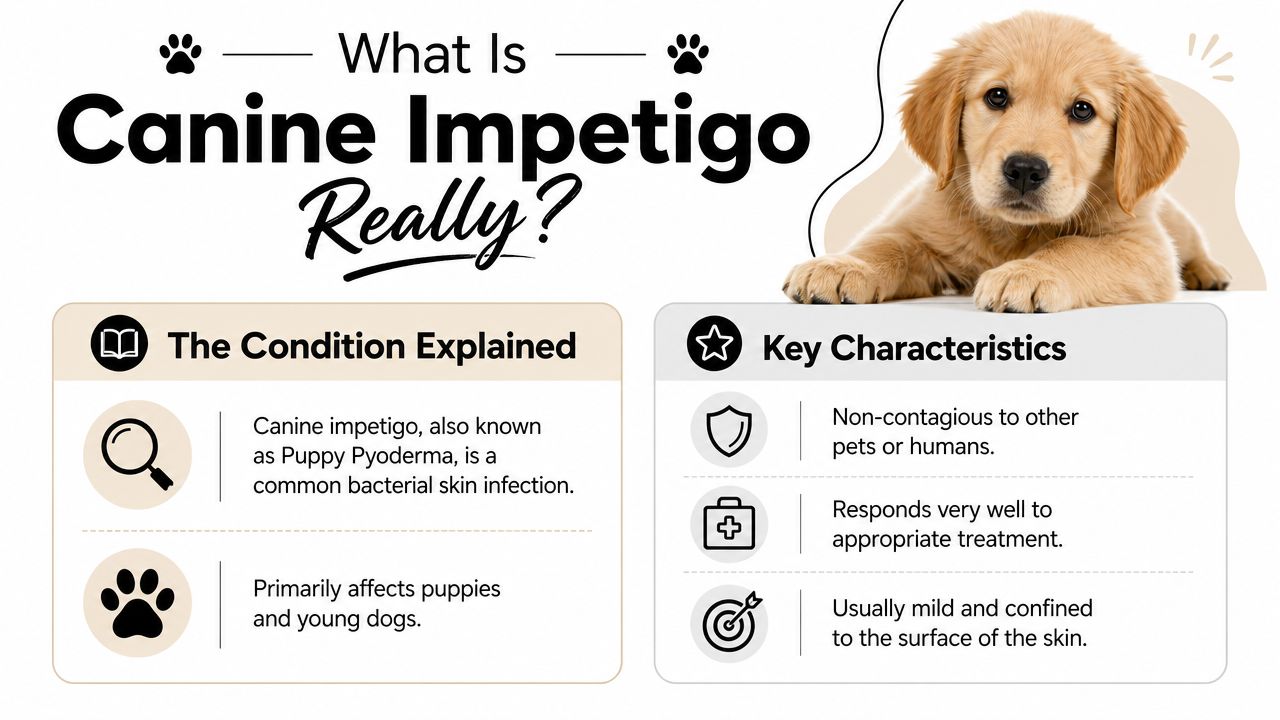
Canine impetigo, also called puppy pyoderma, is a superficial bacterial skin infection that mainly affects puppies and young prepubescent dogs under 12 months of age, and it is not contagious to other dogs or humans, according to this veterinary overview of canine impetigo.
What's happening in the skin
The simplest way to think about it is this. Your dog's skin normally carries bacteria that live there without causing trouble. Problems start when the skin barrier gets weak or damaged.
That damage can come from scratching, biting, fleas, mange, urine scalding, stress, poor sanitation, or an immune system that isn't holding the line well. Once the upper layer of skin is compromised, the bacteria can move into that shallow surface layer and create pustules and crusted sores.
This is one reason puppies get it more often. Their skin and immune defenses are still developing, so they don't have the same resilience as a healthy mature dog.
How it differs from human impetigo
The word “impetigo” alarms people because they associate it with a contagious childhood infection in humans. In dogs, the condition is different in an important way. The canine version is considered superficial and non-contagious.
That doesn't mean owners should ignore cleanliness. It means the practical issue isn't isolation from the family. The primary priority is reducing the triggers that let the skin break down in the first place.
A useful way to frame it:
| Issue | Human impetigo | Canine impetigo |
|---|---|---|
| Contagiousness | Highly transmissible | Not contagious to dogs or humans |
| Typical patient | Often young children | Puppies and young dogs |
| Main concern | Prevent spread | Repair the skin barrier and treat infection |
Healthy skin is a barrier system. When that barrier gets compromised, common surface bacteria can turn into a skin infection.
Why environment still matters
Even though canine impetigo isn't considered contagious in the way human impetigo is, poor hygiene and crowding still create bad conditions for skin health. Young dogs in dirty, damp, overcrowded spaces have a harder time keeping skin intact and dry.
That's the trade-off owners need to understand. Cleaning matters. But smart cleaning matters more than aggressive cleaning.
Symptoms to Spot and When to Call the Vet
The lesions usually show up where the coat is thinner and the skin is more exposed, especially the belly and groin. Owners often describe them as little pimples, blisters, or circular crusted spots.
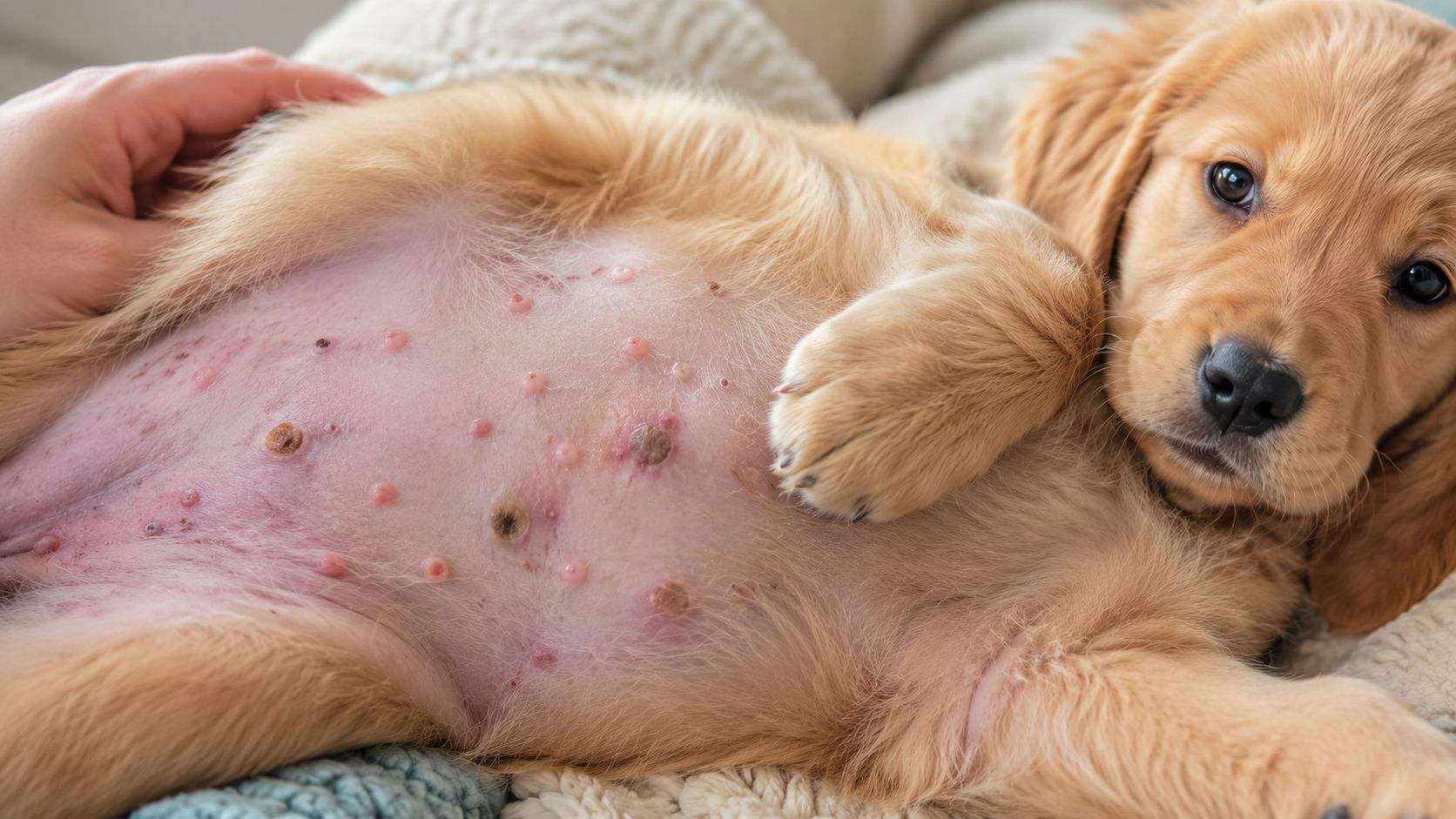
A veterinarian's job is to confirm what you're seeing, because several skin conditions can look similar in the early stage. Canine impetigo is a superficial, non-follicular subcorneal pustular infection triggered by Staphylococcus bacteria, and diagnosis relies on a thorough history and physical examination to evaluate crusty lesions and rule out problems such as parasitic dermatitis, as explained in this clinical summary on understanding impetigo in dogs.
What to look for at home
Use this as a practical checklist:
- Pustules or blisters: Small raised bumps that may contain pus.
- Crusting: Spots may break open and dry into a yellowish or tan crust.
- Location pattern: Belly, groin, and sometimes the limbs are common sites.
- Mild itching or licking: Some puppies fuss at the area, while others barely react.
- Surface-level rash: The skin may look irritated without the deep swelling you'd expect from a more serious wound.
Some puppies act totally normal. That can fool owners into waiting too long.
When a vet visit shouldn't wait
Call your veterinarian if the rash is spreading, if your puppy is scratching hard enough to damage the skin further, or if the lesions don't look like simple mild irritation. Also book the visit if your puppy has fleas, recent parasite exposure, poor coat quality, or recurring skin flare-ups. Those details matter because the rash may be secondary to a larger problem.
This video gives a useful visual reference for what puppy skin irritation can look like in practice:
Don't self-diagnose every belly rash as impetigo. The right diagnosis depends on pattern, history, and what else is driving the skin inflammation.
What the appointment often involves
Most owners expect a complicated process. Usually, the first step is more basic than that. Your vet will ask about age, environment, scratching, bathing, flea control, diet, recent stress, and where the lesions began.
That history is valuable because the rash itself may be only the visible part of the problem.
Veterinary Treatments and Supportive Home Care
Once a veterinarian confirms impetigo, treatment is usually straightforward. The key is consistency. Stopping halfway because the skin “looks better” is one of the easiest ways to drag the problem out.
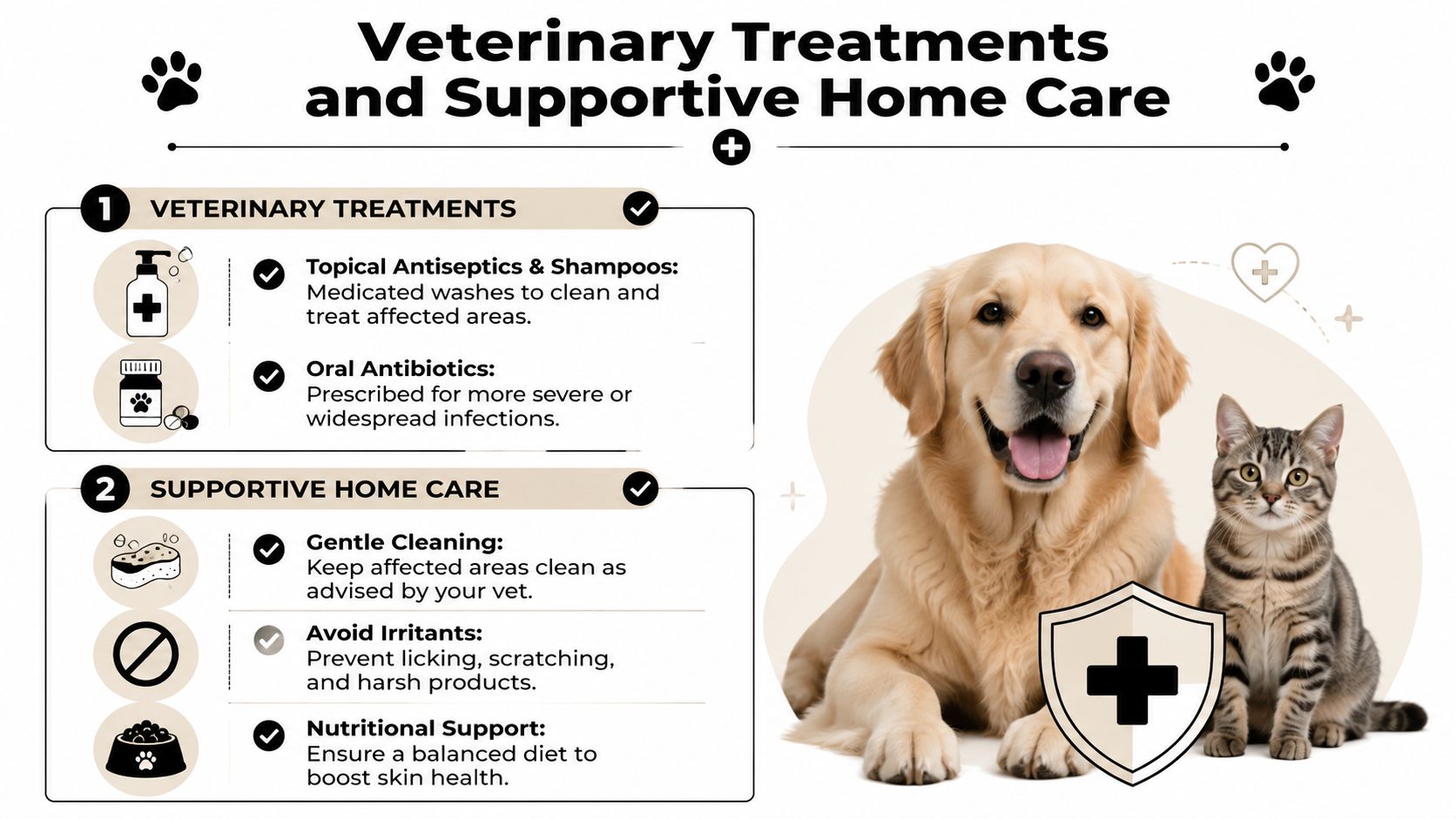
According to this treatment guide for puppy impetigo, the standard approach often includes systemic antibiotics such as cephalexin for six to eight weeks, along with topical antibacterial shampoos containing chlorhexidine, which typically produce a good clinical response within fourteen days.
What usually works
Veterinary treatment generally falls into two buckets.
| Treatment type | What it does |
|---|---|
| Topical therapy | Medicated shampoos help clean the skin surface and reduce bacterial load |
| Systemic antibiotics | Oral medication is used when the case needs more than surface treatment |
Topical care tends to be the first practical step for milder cases. Oral antibiotics come in when the lesions are more persistent, more widespread, or when the veterinarian decides the puppy needs broader support.
Home care that helps instead of hurts
Owners have a real role in recovery. Good home care supports the medical plan. Bad home care can undo it.
- Keep the area clean and dry: Moisture encourages more irritation. After bathing, don't leave the belly damp.
- Follow the shampoo schedule exactly: Medicated products work best when used as directed, not randomly.
- Stop licking and scratching: If the puppy keeps reopening the area, healing slows down.
- Wash bedding and keep living areas sanitary: Clean surroundings reduce repeated irritation.
- Use only vet-approved products: Don't layer essential oils, peroxide, harsh soaps, or leftover human products onto inflamed skin.
If your dog also struggles with dry or itchy skin between appointments, a practical overview of dog shampoo options for dry itchy skin can help you avoid products that strip the coat.
What usually doesn't work
Owners often lose time on the same mistakes:
- Daily scrubbing: More cleaning isn't always better.
- Switching products too fast: If you change shampoo every few days, you can't tell what's helping.
- Ignoring root causes: Fleas, allergies, and poor sanitation will keep the cycle going.
- Stopping medication early: The skin may look better before the infection is fully resolved.
Home-care priority: Keep the skin calm. Friction, moisture, and random products usually make superficial infections harder to clear.
Why Your Groomer Is Your First Line of Defense
A strong groomer doesn't diagnose disease. That's the veterinarian's lane. But a disciplined groomer often sees skin changes before the owner does, especially on the belly, groin, armpits, and inside the legs where problems can hide under coat or posture.
That's one reason premium pet grooming matters. In a rushed, high-volume setup, the goal is often throughput. Dogs move from kennel to tub to table on a tight production rhythm. In a one-on-one model, the groomer can slow down, part the coat carefully, note texture changes, and flag concerns before they become bigger problems.
Why disciplined workflow matters
El Paso raised the bar in 2020 when the city adopted the nation's first city-specific pet grooming ordinance, requiring licensed groomers to complete special training and certification, a move that supports accountability and premium grooming standards and disciplined workflow, as reported by this KVIA report on El Paso's grooming ordinance.
That standard matters locally. It tells owners something important. Grooming isn't just cosmetic work. It's skilled handling, sanitation, observation, restraint, and safety.
For owners comparing El Paso dog grooming options, the actual difference isn't just haircut style. It's process. Chains like PetSmart or Petco often operate on scale. Independent studios with strict limits and one-dog focus can offer calmer handling and closer coat assessment. If you want to understand how that model works in practice, this look at one-on-one dog grooming is worth reading.
What a careful groomer actually notices
A groomer with standards will often catch early warning signs such as:
- Belly irritation: Small bumps, redness, or crusting in low-hair areas.
- Behavior shifts: A puppy that suddenly resists belly handling or leg touch.
- Coat clues: Oily patches, scaling, flea dirt, or urine-related irritation.
- Bathing damage: Skin that looks stripped, overly dry, or inflamed after too much washing.
That last point gets missed all the time. Owners think more bathing equals better hygiene. In reality, poor technique or harsh frequency can weaken the skin barrier.
A groomer should never be just a stylist. The best ones act like sharp, steady observers who know when to pause and tell the owner, “This needs a vet.”
The safety side of premium grooming
Professional standards also protect dogs during the grooming process itself. The Professional Pet Groomers and Stylists Alliance states that pets should not be left unsupervised on the table or in the bathing tub, and they must be closely monitored during drying, according to the Alliance standards for pet grooming safety.
That kind of care matters even more for puppies with sensitive skin. Calm handling reduces stress, limits frantic scratching, and keeps a skin issue from getting more inflamed during the visit.
Build Resilience with The Glo More Standard
The best prevention plan is simple, but it has to be consistent. Keep the coat clean without overdoing it. Stay on top of fleas and parasites. Feed well. Dry the skin thoroughly after baths. Pay attention to the belly, groin, and any area your dog suddenly licks more than usual.
The mistake a lot of owners make is over-correcting. They see a rash and start bathing every day. That usually backfires. Clinical guidance has warned that over-bathing can dry the skin and increase infection risk, a point that often gets lost in generic skin-care advice, as noted in this dermatology discussion of impetigo in puppies.
A routine that holds up in real life
For most dogs, resilience comes from steady habits:
- Check skin during handling: Belly rubs, drying time, and brushing sessions are all inspection opportunities.
- Don't chase every spot with a new product: If the skin is inflamed, random experimentation usually adds irritation.
- Use professionals as partners: A veterinarian handles diagnosis and treatment. A skilled groomer helps you stay ahead of the next problem.
- Schedule care before things get messy: Preventive grooming is easier on the dog than crisis grooming.
That's where premium pet grooming earns its place. Clean craftsmanship, controlled scheduling, and a calm environment aren't luxuries when you're protecting skin health. They're practical standards. For families looking for veteran-owned grooming with a long-term mindset, that disciplined approach makes a real difference.
Owners also appreciate options that make quality care easier to maintain. A monthly event like Snip & Style Saturday gives El Paso families an affordable grooming promo path without settling for chain-style volume or rushed handling. That combination of access and standards is what keeps dogs comfortable over time, not just tidy for a day.
If your puppy has a rash, don't wait for it to become a bigger problem. Book with Glo More Grooming for disciplined, one-on-one, El Paso dog grooming built around skin awareness, calm handling, and premium standards. If you've been looking for premium pet grooming, veteran-owned grooming, or an affordable grooming promo like Snip & Style Saturday, reserve your slot now and give your dog the kind of care that catches issues early and puts welfare first.