
Garlic is extremely toxic to cats and should never be given, not even in small amounts. In an average 10-pound cat, less than 1/2 teaspoon of minced garlic or less than 1/8 teaspoon of garlic powder can be enough for severe toxicity.
If you're reading this because your cat licked garlic off a plate, stole a bite of seasoned meat, or got into leftovers on the kitchen counter, act like it matters. It does. The biggest mistake cat owners make is assuming a cat is safe because it still looks normal right after exposure.
The Unmistakable Answer and a Hidden Danger
A lot of people ask, can cats eat garlic if it was only a tiny bit, mixed into food, or cooked. The answer is no. Not raw, not cooked, not powdered, not hidden in sauce.
The danger that catches people off guard is timing. The most important gap in owner awareness is that symptoms can take 24 to 72 hours to appear, which creates a false sense of security after a small exposure, and that delay makes the wait-and-see approach dangerous because red blood cell damage may already be happening beneath the surface, as noted by PetMD's overview of garlic poisoning in cats.
What owners get wrong
You see your cat sniff the cutting board. Maybe it licks some garlic butter or a little residue from pasta sauce. Then nothing happens right away. No vomiting. No collapse. No obvious distress.
That calm window fools people.
Practical rule: If your cat got into garlic and still seems fine, that is not reassurance. That is the window to call your veterinarian.
This is one of those pet emergencies where visible symptoms lag behind the actual injury. Owners often think the problem starts when the cat looks sick. In reality, the problem starts when the garlic is eaten.
What you should do with that information
Don't monitor at home and hope for the best. Don't try internet remedies. Don't assume a “lick” doesn't count.
Use a disciplined response:
- Remove access immediately: Take away the food, plate, seasoning, or trash source.
- Figure out the form: Fresh garlic, garlic powder, minced garlic, seasoned leftovers, and garlic supplements all matter.
- Call a veterinarian right away: Even if your cat is active, hungry, and acting perfectly normal.
In premium pet care, details matter. That mindset applies far beyond grooming. Strong routines, close observation, and fast action save animals.
Why Garlic Is a Potent Toxin to Cats
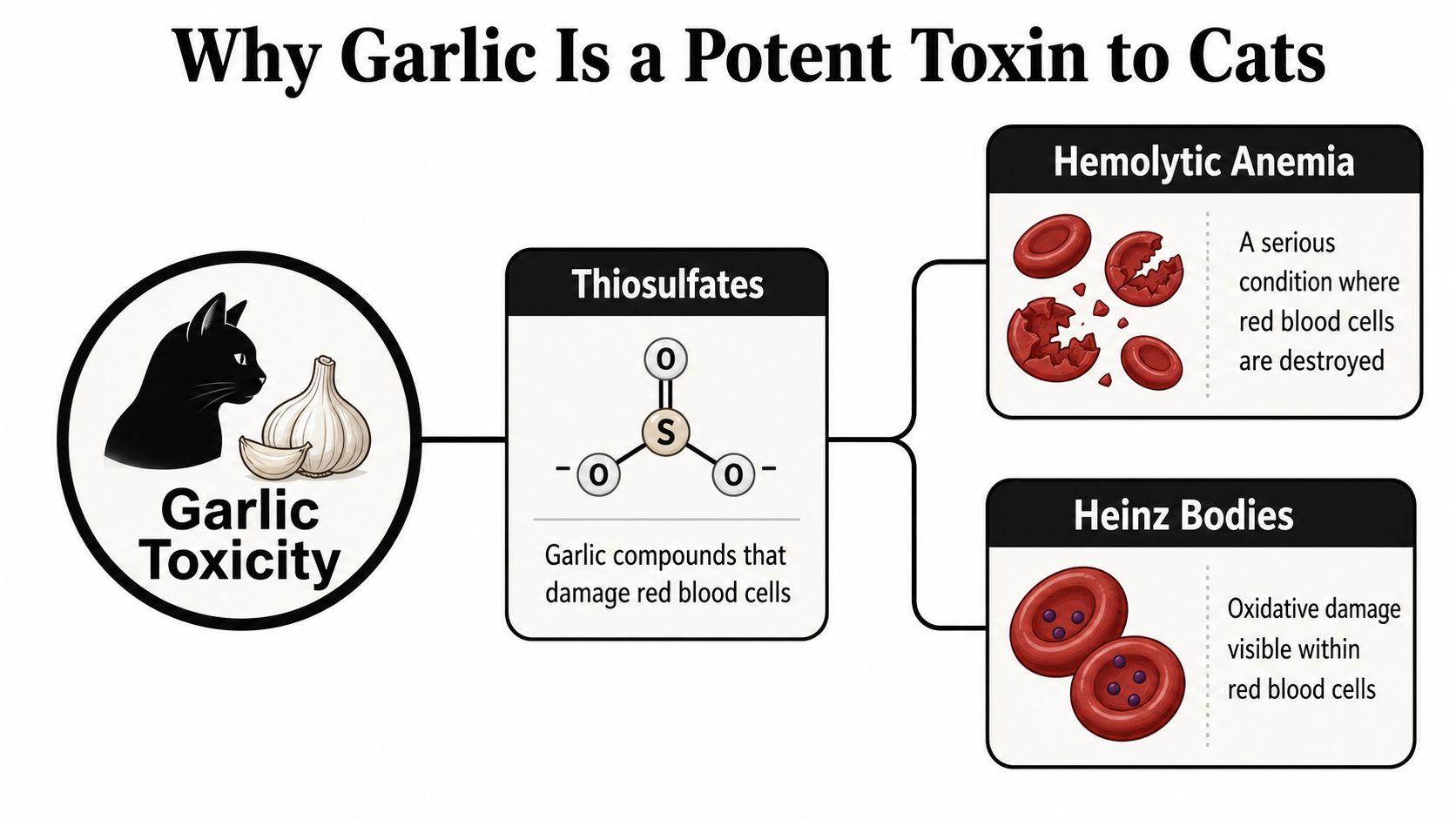
Garlic is dangerous because it contains thiosulfate and other organosulphur compounds that damage a cat's red blood cells. That injury can lead to Heinz body hemolytic anemia, and cats are the most susceptible species to this form of toxicosis. Garlic is also 3 to 5 times more potent than onions, according to Chewy's feline garlic toxicity guidance.
What that actually means
Think of red blood cells as oxygen delivery vehicles. Your cat needs those cells intact and functioning. Garlic's compounds damage those cells through oxidative stress, almost like corrosion attacking something that needs to stay smooth and strong to keep working.
When enough red blood cells are damaged, the body can't carry oxygen normally. That's when anemia becomes more than a lab result. It becomes an emergency.
Two terms worth understanding
- Heinz bodies: These are changes inside red blood cells that show oxidative damage.
- Hemolytic anemia: This means red blood cells are being destroyed faster than the body can replace them.
You don't need to memorize the biology. You need to remember the consequence. Garlic attacks the blood.
Garlic isn't just an “upset stomach” food for cats. It's a blood toxin.
Why cats are hit harder
Humans eat garlic all the time. Some dogs may tolerate exposures differently. Cats don't get that margin. Their system makes them especially vulnerable to Allium plants, and garlic is one of the worst offenders.
That's why casual household thinking gets pets in trouble. People assume a small amount in human food must be mildly irritating at worst. With cats, that assumption is reckless. If garlic is in the recipe, the food is off limits.
Understanding the Toxic Dose A Little Goes a Long Way
The dose that can hurt a cat is small enough to shock most owners. Garlic is approximately five times more toxic to cats than onions, and in an average 10-pound cat, less than 1/2 teaspoon of minced garlic or less than 1/8 teaspoon of garlic powder can be sufficient to cause severe toxicity, according to Purina's cat garlic safety article.
The forms that count
Owners often focus on raw cloves and miss the common exposures that happen every day in kitchens.
- Minced garlic: A small amount mixed into food still counts.
- Garlic powder: This is especially easy to underestimate because the quantity looks tiny.
- Cooked garlic: Cooking doesn't make it safe.
- Seasoned human food: Sauces, marinades, meats, and leftovers can all carry risk.
- Supplements or concentrated products: If garlic is an ingredient, keep it away from cats.
What “tiny amount” looks like in real life
A smear on a plate. Residue on foil from garlic bread. A bite of shredded chicken seasoned by a well-meaning family member. Powder dusted over table scraps.
Those aren't harmless exceptions. They're exactly how accidental poisoning happens.
If your cat had access to food with garlic, stop trying to calculate whether it was “enough to matter.” The threshold is low enough that guessing isn't good enough. Call your veterinarian and give precise details about what your cat got into.
Signs of Garlic Poisoning in Your Cat
The signs you see at home may show up late, and that's what makes this dangerous. By the time a cat looks obviously ill, the blood damage may already be significant.
Early warning signs
Watch for changes that seem subtle at first:
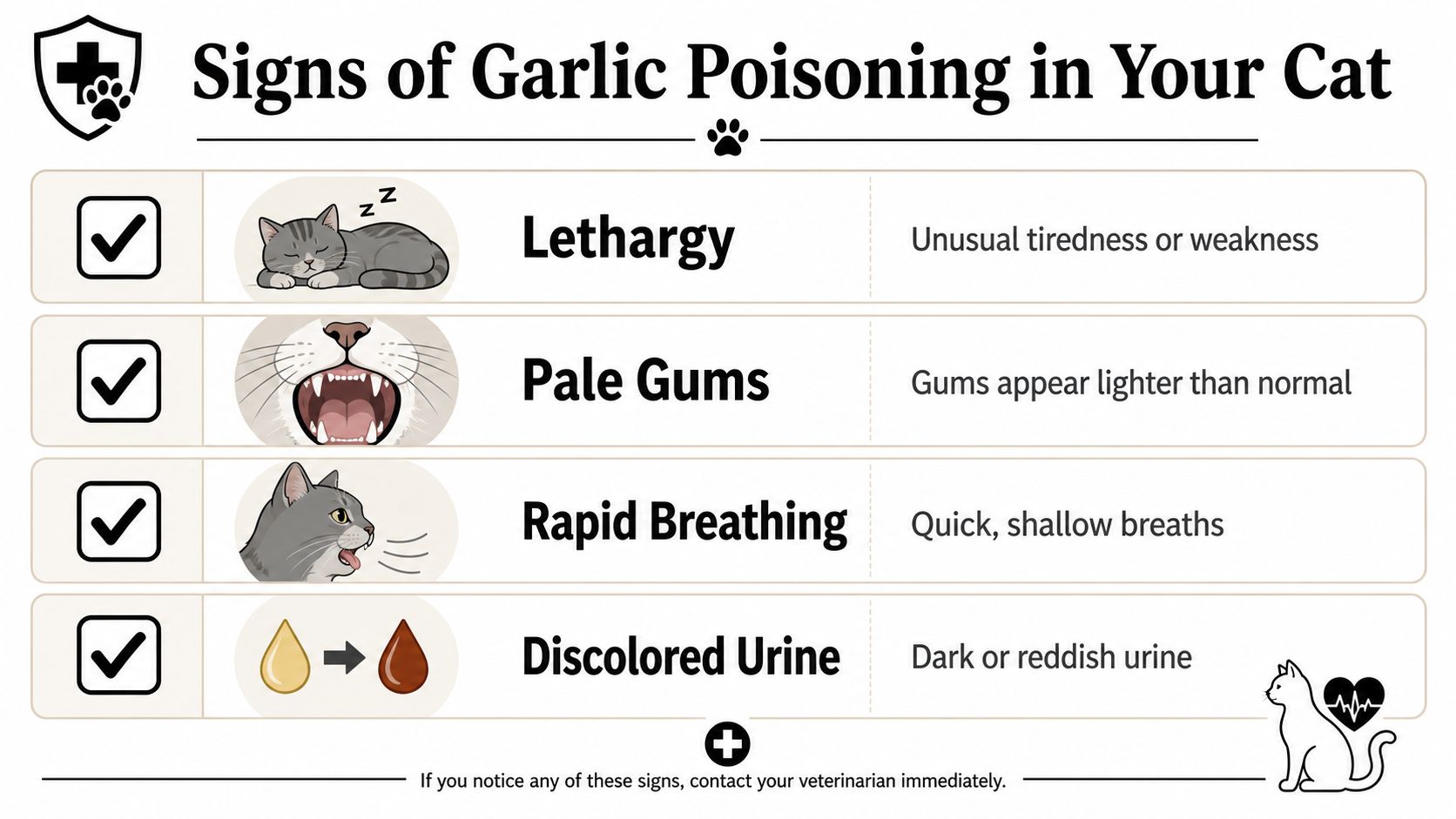
- Lethargy: Your cat seems tired, slow, or less responsive than usual.
- Weakness: Jumping, climbing, or walking may look off.
- Reduced interest in normal activity: A social cat may hide or withdraw.
These signs are easy to dismiss, especially in a cat that had only a minor exposure. Don't dismiss them.
Advanced red flags
More serious signs point toward worsening anemia and demand urgent care:
- Pale gums: Healthy gum color fades.
- Rapid breathing: The body is trying to compensate.
- Dark or reddish urine: This can signal breakdown products from damaged red blood cells.
If your cat has oral irritation, drooling, or strange mouth symptoms after a suspected toxin exposure, our guide on cat foaming at the mouth and when it signals an emergency can help you recognize another pattern that deserves fast veterinary attention.
Check your cat in good light. Gum color and breathing effort tell you more than appetite alone.
Don't rely on a single symptom
Some cats won't show every sign. Some won't show obvious distress until the condition has progressed. That's why symptom-checking is never a substitute for an immediate veterinary call after garlic exposure.
If you know your cat ate garlic, treat the exposure itself as the warning sign.
What to Do Immediately If Your Cat Eats Garlic
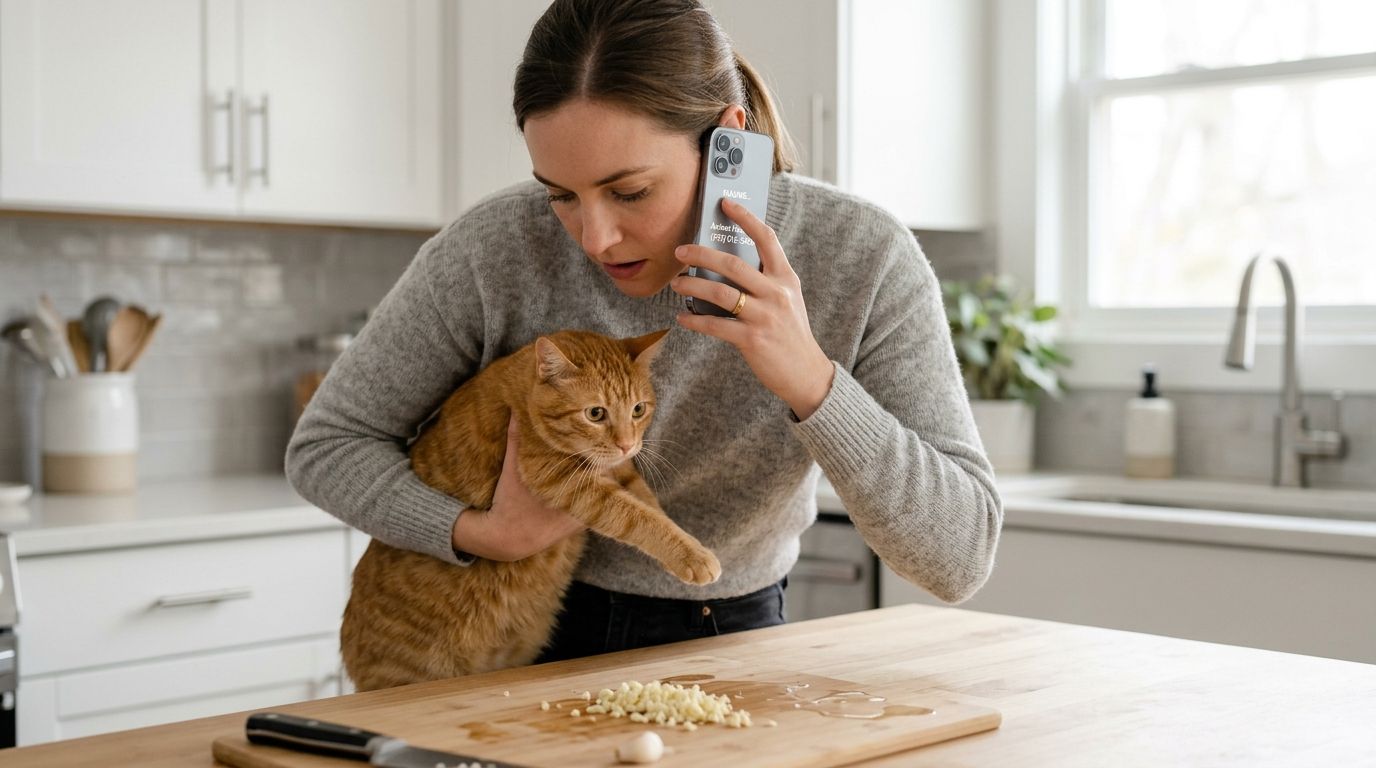
Move fast. Don't wait for symptoms, and don't try to manage this with home fixes.
Clinical symptoms are often delayed for 24 to 72 hours, life-threatening cases may require oxygen supplementation and potentially blood transfusions, IV fluid therapy is used to help protect the kidneys, and even asymptomatic cats need blood tests within 24 hours of suspected ingestion, according to this veterinary garlic toxicity guide.
Your first moves
Take the garlic source away
Remove the food, wipe the area, and keep your cat away from plates, trash, and pans.
Gather the facts
Tell the vet what form it was, when it happened, and your best estimate of how much was involved.
Call a veterinarian immediately
This is the right move even if your cat is acting normal.
Don't induce vomiting unless a veterinarian tells you to
Home attempts can make things worse.
Follow through on evaluation
If your vet recommends exam and bloodwork, go. Delayed anemia is not something to gamble on.
What the clinic may do
Veterinary teams don't guess with garlic exposure. They assess the risk, examine your cat, and decide what support is needed based on timing and clinical findings.
That may include monitoring, blood tests, supportive care, and in severe cases more aggressive treatment. Knowing that helps owners act with more confidence instead of freezing up.
For another example of why immediate response matters after household ingestion accidents, read our article on what to do if a dog ate a dryer sheet.
A short visual walkthrough can also help you stay calm and focused during a pet emergency.
Your job at home is speed, accuracy, and follow-through. Your vet's job is treatment.
Our Commitment to El Paso Pet Safety and Wellness
Good pet care starts before the emergency. In El Paso homes, garlic exposure usually comes from everyday family food, not from someone intentionally feeding a cat a clove. That means prevention has to be practical and consistent.
Keep cats away from prep areas. Don't share seasoned meats. Seal leftovers quickly. Tell children and guests that “just a taste” of table food isn't harmless when garlic is involved.
Common foods with hidden garlic
| Food Item | Why It's a Risk |
|---|---|
| Pasta sauce | Garlic is often cooked in, so it may not be visible |
| Garlic bread | Butter and crumbs make it easy for cats to lick |
| Seasoned chicken or beef | Owners may share meat without realizing the seasoning matters |
| Soup or broth | Garlic can be mixed throughout the liquid |
| Takeout leftovers | Mixed ingredients make exposure easy to miss |
| Marinades and pan drippings | Concentrated flavor often includes garlic |
Why standards matter in all pet care
El Paso's pet groomer licensing ordinance took effect on January 1, 2021 and requires formal training and certification, as reported by KVIA's coverage of the city's pet groomer licensing rules. Those civic standards matter.
What matters just as much is whether a pet business operates with discipline every day.
That's where independent care stands apart from chain environments. In local El Paso dog grooming, owners often tell us they want calm handling, clean routines, and professionals who notice small changes before they become bigger problems. High-volume chains like PetSmart and Petco typically work with multiple overlapping appointments. A more controlled, one-on-one model supports closer observation and a steadier experience.
The local standard we believe in
Veteran-owned businesses tend to build around accountability, not shortcuts. That mindset shapes better pet routines across the board. It supports stronger check-in habits, cleaner handling, better communication, and a long-term view of animal wellness.
For families who want more structure in their pet routine, our guide to preventative pet care habits that help owners stay ahead of problems is a solid next read.

Owners in El Paso also want care that matches real life. That means premium standards without chaos, and value without cutting corners. A strong example is a once-monthly affordable grooming promo that still protects service quality: Glo More Grooming's Snip & Style Saturday offers full grooming for $55 on all dog sizes once a month, with a complimentary ear cleaning or nail trim included, and appointment slots are intentionally limited to protect one-on-one service quality, as shown on the Glo More Grooming website.
That balance matters. It shows what premium pet grooming should look like in this city. Disciplined workflow. Limited on-site volume. Real attention. Long-term trust. That's the difference people feel when they choose veteran-owned grooming over rushed chain scheduling.
If you want pet care built on discipline, calm handling, and genuine El Paso community standards, book with Glo More Grooming. Reserve your spot now, ask about Snip & Style Saturday, and choose the kind of premium, one-on-one care that doesn't cut corners.