
Most advice about Animax for dogs starts with, “It's a topical antibiotic.” That description is incomplete, and in ear cases it can be dangerously reassuring. Animax is a prescription veterinary combination with antimicrobial, antifungal, and corticosteroid activity. It may help the right lesion, but it isn't a casual first-aid cream, especially when the eardrum hasn't been examined.
For El Paso owners, medication safety and grooming prevention belong in the same conversation. A careful grooming routine can help keep ears, skin folds, paws, and coats easier to inspect, while a veterinarian must handle pain, infection, recurring inflammation, and any concern involving hearing or balance.
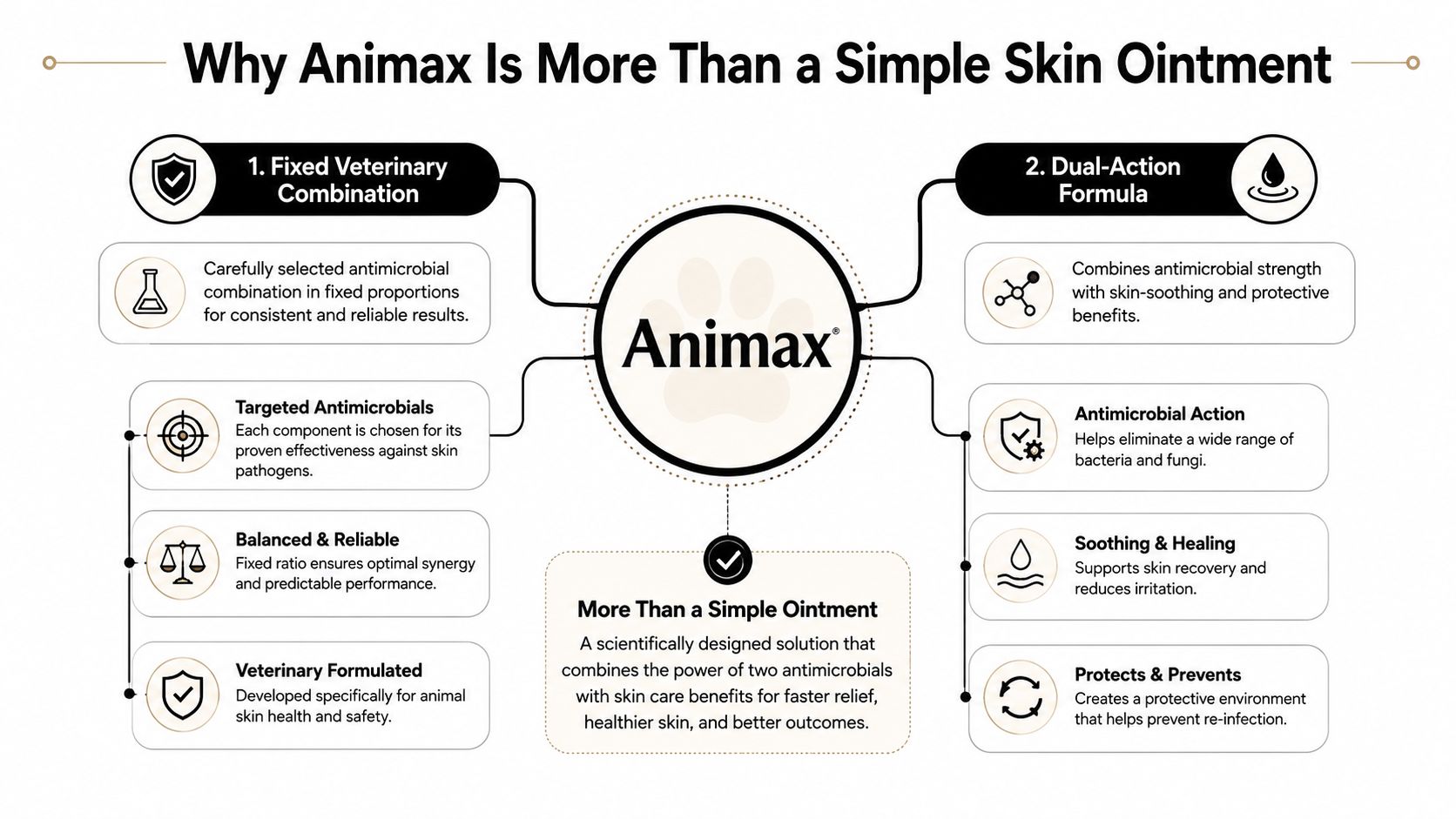
Why Animax Is More Than a Simple Skin Ointment
Animax is an FDA-approved veterinary medication labeled for dogs and cats only. Its approved uses include acute and chronic otitis with varied causes, interdigital cysts, anal gland infections in dogs, and inflammatory skin conditions complicated by bacterial or Candida albicans infections. Those indications appear in the FDA-approved DailyMed label entry for Animax.
That range explains both its usefulness and its limits. Animax combines two antimicrobials, one antifungal, and one corticosteroid, so a veterinarian may choose it when inflammation overlaps with suspected bacterial or fungal involvement. The same broad action also means the product requires more judgment than a single-purpose skin ointment, especially around the ear canal.
Why diagnosis changes the decision
A red patch, itchy ear, interdigital lump, or irritated anal gland area can result from parasites, allergies, bacteria, yeast, trauma, moisture, foreign material, or an underlying skin disorder. Animax may quiet redness and discomfort while the original trigger continues, making early improvement an unreliable sign that the condition is resolved.
A recurring ear problem deserves particular caution. Before an owner reuses an old tube, a veterinarian may need to examine the ear canal, assess the eardrum, and select treatment based on the actual cause. The FDA historical record identifies the original approval as NADA #140-847, confirming that Animax is a regulated veterinary drug with defined labeling, as shown in the FDA FOI summary for Animax.
Practical rule: Treat the diagnosis, not merely the visible redness.
For El Paso clients, prevention also has a place. Regular professional grooming can keep ears, paws, skin folds, and coats cleaner and easier to inspect, though it cannot replace veterinary care for pain, discharge, recurring inflammation, or hearing and balance changes.
Human soothing products require the same caution. Guidance about calamine lotion on dogs is separate from Animax, but the rule is consistent: match any topical product to the lesion, location, and animal.
How the Four Active Ingredients Work Together
The formulation gives Animax its broad reach. The veterinary product information for Animax identifies nystatin 100,000 units/mL, neomycin sulfate 2.5 mg/mL, thiostrepton 2,500 units/mL, and triamcinolone acetonide 1 mg/mL in a polyethylene and mineral oil base.

Think of the ingredients as different tools in one kit, not as interchangeable versions of the same medicine.
- Nystatin is the antifungal component. It targets susceptible fungal organisms, including Candida albicans, when that type of involvement is part of the diagnosed condition.
- Neomycin sulfate is an aminoglycoside antibiotic used against susceptible bacteria. Its presence is one reason ear safety deserves special attention.
- Thiostrepton provides a second antibacterial action. Combining two antibacterial agents can be useful when a veterinarian is addressing a mixed or complicated lesion within the labeled scope.
- Triamcinolone acetonide is the corticosteroid. It reduces inflammation, redness, and itching, which can make a painful dog more comfortable while the antimicrobial components address susceptible organisms.
Convenience has a trade-off
One ointment can be simpler than coordinating several separate products. That convenience can matter when a dog has a lesion involving more than one type of infection or substantial inflammation. It can also create a false sense that every cause has been covered.
The corticosteroid deserves particular respect. Topical absorption can contribute to systemic effects such as increased thirst, urination, appetite, and weight gain, according to PetMD's Animax medication guidance. Those signs don't automatically prove a medication reaction, but they should be reported, particularly if the application continues or covers a large area.
A broad formula also doesn't guarantee that the drug is appropriate for an unknown lesion. It may calm the surface while delaying a closer look at allergies, parasites, resistant infection, foreign material, or a deeper ear problem. Use the combination because the veterinarian has identified a reason for its components, not because four ingredients sound automatically stronger.
Safe Application Steps and Dosing Guidelines
Safe use begins with following the veterinarian's directions and the product label, not estimating from another dog's prescription. The FDA label uses severity-based dosing. Mild inflammations may be treated from once daily to once weekly, while severe cases may be treated two to three times daily, as stated in the Animax dosing information on DailyMed.
For skin lesions
Prepare the area. Wash your hands and follow the veterinarian's instructions for cleaning. The area should be accessible, and surrounding hair may need professional clipping if it blocks inspection or traps moisture.
Use the prescribed amount. Don't substitute a generic “pea-sized” rule for the directions you received. The correct quantity and frequency depend on the lesion, location, and clinical assessment.
Apply gently. Spread the ointment over the affected area without scrubbing painful skin. If your dog reacts sharply, stop and contact the veterinary team rather than forcing the application.
Prevent licking. A recovery cone, protective garment, supervision, or another veterinarian-approved method may be needed. Licking can remove the medication and further traumatize the lesion.
Track changes. Note whether redness, discharge, odor, swelling, or itching is improving. Worsening discomfort, spreading inflammation, or new discharge needs veterinary review.
For ear use, never improvise by inserting the ointment deeper into the canal. The veterinarian should determine whether the product belongs in that ear and how it should be delivered.
Application checkpoint: If you're changing frequency, stopping early, restarting an old tube, or treating a new body site, call the prescribing veterinarian first.
Keep the container closed and stored according to its label. Don't share it between pets, and don't assume a prescription for one dog applies to another dog with similar-looking symptoms.
A calm handling routine reduces struggling. Work in a quiet area, use steady support rather than restraint that causes panic, and ask a veterinary professional to demonstrate ear application when you're uncertain.
The Otic Toxicity Risk Every Owner Must Understand
The deciding factor for using Animax in a dog's ear is whether a veterinarian has confirmed an intact tympanic membrane.
The manufacturer reports hearing loss with varying recovery and requires the eardrum to be intact before ear use. If medication reaches the middle ear, it may injure the cochlea or vestibular apparatus, as described in Dechra's Animax safety information.
What otic toxicity can look like
Otic toxicity refers to medication-related injury affecting hearing or balance. Owners may notice:
- Hearing changes: Your dog may stop responding to familiar sounds or seem unusually detached.
- Head tilt: A persistent tilt can indicate vestibular involvement, although ear disease itself can also cause it.
- Circling or unstable walking: Circling, stumbling, or loss of balance requires urgent veterinary attention.
- Sudden behavioral change: Pain, disorientation, or reduced hearing may leave a dog anxious or unusually withdrawn.
The veterinary dermatology review of topical ear options describes inner-ear hair-cell damage as a mechanism behind cochlear and vestibular deficits. These effects can involve both ears and may progress.
Stop first, investigate second
If hearing or balance changes appear during treatment, stop the medication immediately and contact a veterinarian. Do not give another dose while waiting for signs to pass, and do not assume a head tilt belongs to the original infection.
Repeated or prolonged ear treatment makes the picture harder to interpret. The clinician may need to reassess the canal and eardrum, review previous medications, and select another approach. A recurring ear problem may also require investigation of causes such as parasites, including concerns addressed in this guide to dog ear mite treatment.
Keep the ear dry and report discharge, odor, pain, or any change in balance. Routine grooming ear cleaning cannot replace an otoscopic examination. In El Paso grooming appointments, the practical safety boundary is clear: grooming staff can help maintain clean, dry outer ears, but they should not diagnose infection, assess the middle ear, or confirm an intact eardrum. That preventive routine can reduce irritation and unnecessary medication exposure, while veterinary examination remains necessary whenever disease is suspected.
When Broad-Spectrum Treatment Is the Right Choice
Animax can make sense when a veterinarian identifies a lesion where its antibacterial, antifungal, and anti-inflammatory actions fit the clinical picture. It becomes a weaker choice when owners use it as a shortcut for every itchy ear or irritated patch.
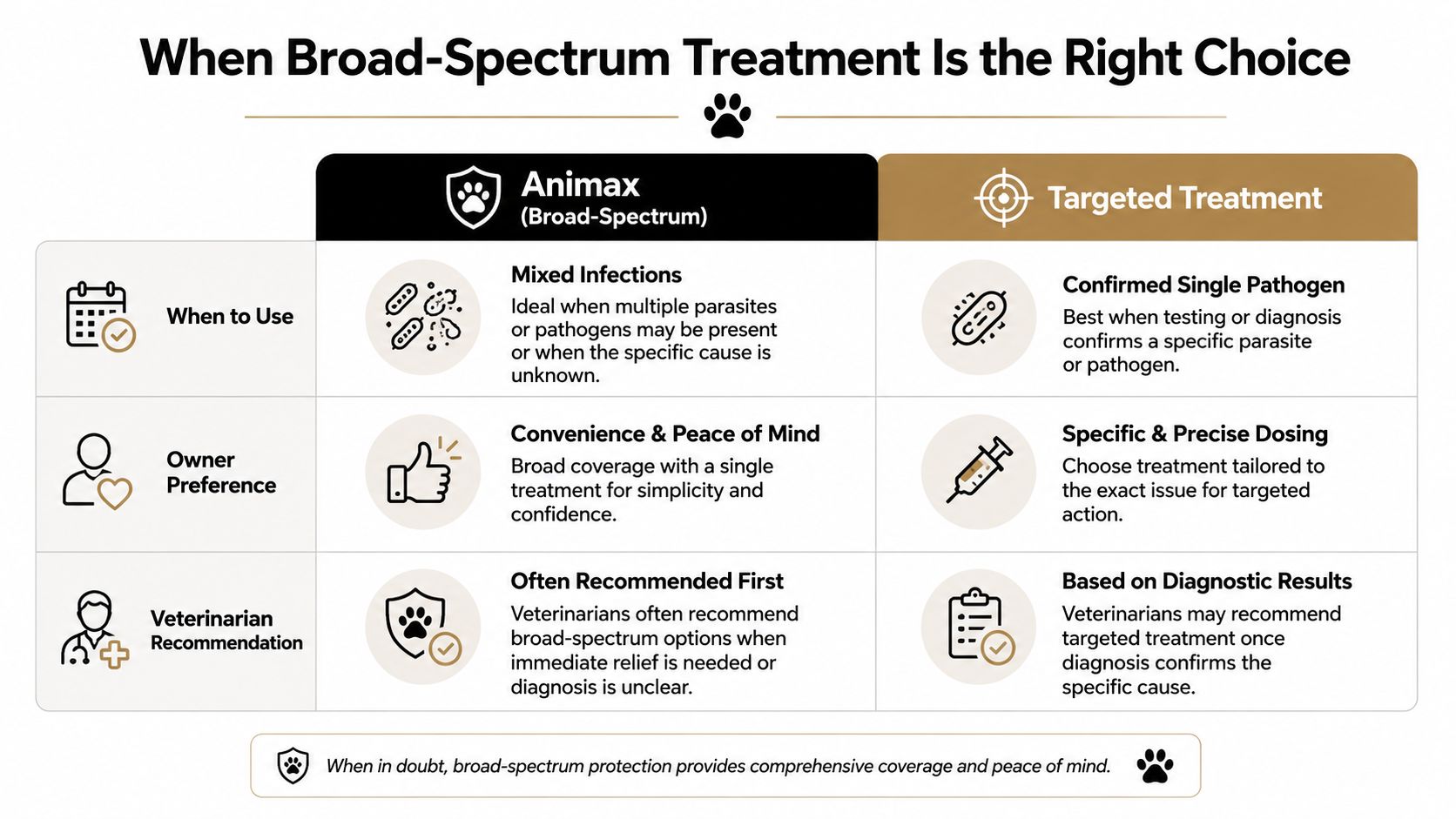
| Decision point | Broad-spectrum Animax | Targeted treatment |
|---|---|---|
| When it may fit | A veterinarian suspects mixed inflammation with bacterial or fungal involvement within the labeled uses | The clinician identifies a specific organism, cause, or noninfectious condition |
| Main advantage | Several therapeutic actions in one prescription ointment | A narrower plan may reduce unnecessary exposure to unrelated drug components |
| Main concern | It can mask signs while an underlying trigger remains active | It may require more diagnostic work before treatment begins |
| Recurring disease | Convenience alone is not enough | Ear-canal evaluation, testing, or a different formulation may be more appropriate |
Questions worth asking
Ask what the veterinarian believes is causing the problem, whether the eardrum was examined, and what improvement should look like. For a recurrent case, ask whether the ear canal needs additional evaluation or whether testing would help identify a resistant or unexpected organism.
Also ask how long to continue, what signs mean the treatment should stop, and whether the corticosteroid component changes monitoring for your dog. These questions don't challenge the prescription. They help you use it correctly.
Broad-spectrum therapy isn't automatically wrong. It can be practical when the diagnosis supports several components at once. The mistake is treating convenience as proof that the drug is the best fit.
A better question than “Is Animax the strongest option?” is “What problem are we treating, and how will we know the plan is working?”
Preventing Recurrence Through Premium Grooming Routines
Medication addresses the active problem. Grooming helps owners find the next problem before it becomes a crisis.
Healthy dogs often do well with baths every 4 to 12 weeks, but the right cadence depends on coat type, lifestyle, and skin condition, according to Virginia Tech's veterinary bathing guidance. Industry guidance also commonly places many healthy dogs around a 4 to 6 week routine, with more frequent attention for active, dirty, itchy, or allergy-prone dogs, as described in this dog bathing and grooming guide.
What prevention looks like in El Paso
El Paso dogs may move between dry outdoor conditions, dusty activity, warm weather, swimming, and indoor air conditioning. No single schedule fits every coat, but a disciplined routine can include:
- Coat inspection: Look for mats, damp areas, redness, odor, and debris during every grooming visit.
- Ear awareness: Clean only as appropriate, avoid aggressive probing, and refer pain, discharge, persistent odor, or head shaking to a veterinarian.
- Paw and skin-fold care: Keep vulnerable areas visible and dry, especially after outdoor activity or bathing.
- Seasonal adjustment: Increase observation when heat, dust, outdoor time, or allergy symptoms change your dog's normal pattern.
- Written follow-up: Record what was noticed so recurring signs don't become a cycle of forgotten symptoms and leftover medication.
Premium pet grooming should never diagnose otitis or replace veterinary care. Its value is disciplined observation, controlled bathing, thorough drying, careful coat management, and a calm setting where subtle changes are more likely to be noticed.
Glo More Grooming is one El Paso option offering full grooming packages with bathing, haircut, styling, ear cleaning, and nail trimming, along with one-on-one sessions and a limited-capacity studio approach. Owners dealing with reactive skin can review guidance on sensitive-skin dog shampoo and discuss product choices with the grooming team and veterinarian.
The prevention mindset separates thoughtful care from repetitive treatment. A clean, dry, well-inspected coat doesn't guarantee that a dog won't develop ear or skin disease, but it gives owners a better chance to notice changes early and seek the right professional.
Book Your Dog's Next Grooming Session in El Paso
A responsible approach to Animax has two parts. First, use the medication only for the diagnosed condition and follow the veterinarian's instructions, especially when an ear is involved. Second, build a grooming rhythm that keeps the coat manageable, the skin visible, and routine changes easier to spot.
That approach fits the values behind G.LO., Greatness, Loyalty, and Ownership. Glo More Grooming is a veteran-owned grooming business in El Paso built around independent ownership, disciplined standards, and a long-term vision rather than a chain workflow. Its limited-capacity, one-on-one model is designed for calmer handling and consistent attention, while local competition from large chains such as PetSmart and Petco makes clear standards and personal accountability important to owners comparing El Paso dog grooming options. The local market already includes chain groomers and independent locations, as shown by El Paso grooming provider Pets N Bubbles.
For families watching their budget, Snip & Style Saturday is a once-monthly $55 full-groom promotion for all sizes, making it a practical example of an affordable grooming promo without abandoning a structured service experience. The studio also offers Petals for Paws, a tribute program with custom floral arrangements for families grieving a beloved pet.
Choose your timing around your dog's coat, activity, and skin needs. Reserve the monthly promotion if it fits your schedule, or ask about a full groom, touch-up, luxury bath and blow-dry, or concierge support for more involved pet-care logistics.
Glo More Grooming provides calm, one-on-one premium pet grooming in El Paso, including bathing, styling, ear cleaning, nail care, and coat-focused inspection that supports safer preventive routines. Visit Glo More Grooming to book your dog's next session, contact the studio about current availability, or reserve a Snip & Style Saturday promo slot.