
Your dog won't stop scratching. They shake their head, rub one ear against the couch, then look at you like something is seriously wrong. You lift the ear flap and see dark, gritty debris that doesn't look like normal wax. At that point, most owners are trying to solve two problems at once. They want relief fast, and they want a plan that works.
That's where dog ear mite treatment needs more discipline than guesswork. Ear mites can be treated, but the treatment only works well when veterinary care and grooming maintenance support each other. For busy families in El Paso, that connection matters. Medication handles the infestation. Clean, structured follow-through helps keep the ears from sliding back into irritation, debris buildup, and repeat problems.
A Veteran-Owned Approach to Your Dog's Ear Health
In practice, ear trouble often starts the same way. A dog who was fine last week suddenly starts scratching hard enough to wake the house at night. Then comes the head shaking, the tenderness around the ear, and the dark residue that tells you this isn't a routine bath-day issue.
That kind of discomfort deserves a calm, direct response. Not panic. Not random over-the-counter drops. A proper plan.
A disciplined approach matters because ear mites aren't just surface dirt. They irritate the ear canal, trigger inflammation, and create the kind of debris that can make the ear harder to treat if it isn't cleaned correctly. Owners often lose time by trying product after product before getting a diagnosis. That usually means the dog stays uncomfortable longer, and the ear gets more inflamed.
What a solid plan looks like
A strong response usually follows this order:
- Get a veterinary diagnosis first. Ear mites can look similar to other ear problems, and guessing wrong sends treatment off course.
- Clean the ear the right way. Medication can't do its job well if thick debris is still coating the canal.
- Use the medication your veterinarian selected. The best option depends on your dog, the severity of the irritation, and whether there's a secondary ear issue.
- Control the environment and other pets. If one animal is treated and the rest aren't, reinfestation becomes a real risk.
- Stay on prevention. Once the infestation is cleared, consistent ear care matters.
Practical rule: Ear problems get expensive and frustrating when owners treat symptoms before they confirm the cause.
That mindset is familiar in veteran-owned grooming culture. Standards matter. Workflow matters. You don't cut corners in the middle of a job and expect a clean result at the end. For pet wellness, the same principle holds. In El Paso dog grooming, especially in a premium pet grooming setting, the best outcomes come from consistency, clean handling, and follow-through that doesn't break down after the first appointment.
Recognizing the Signs of Ear Mites in Your Dog
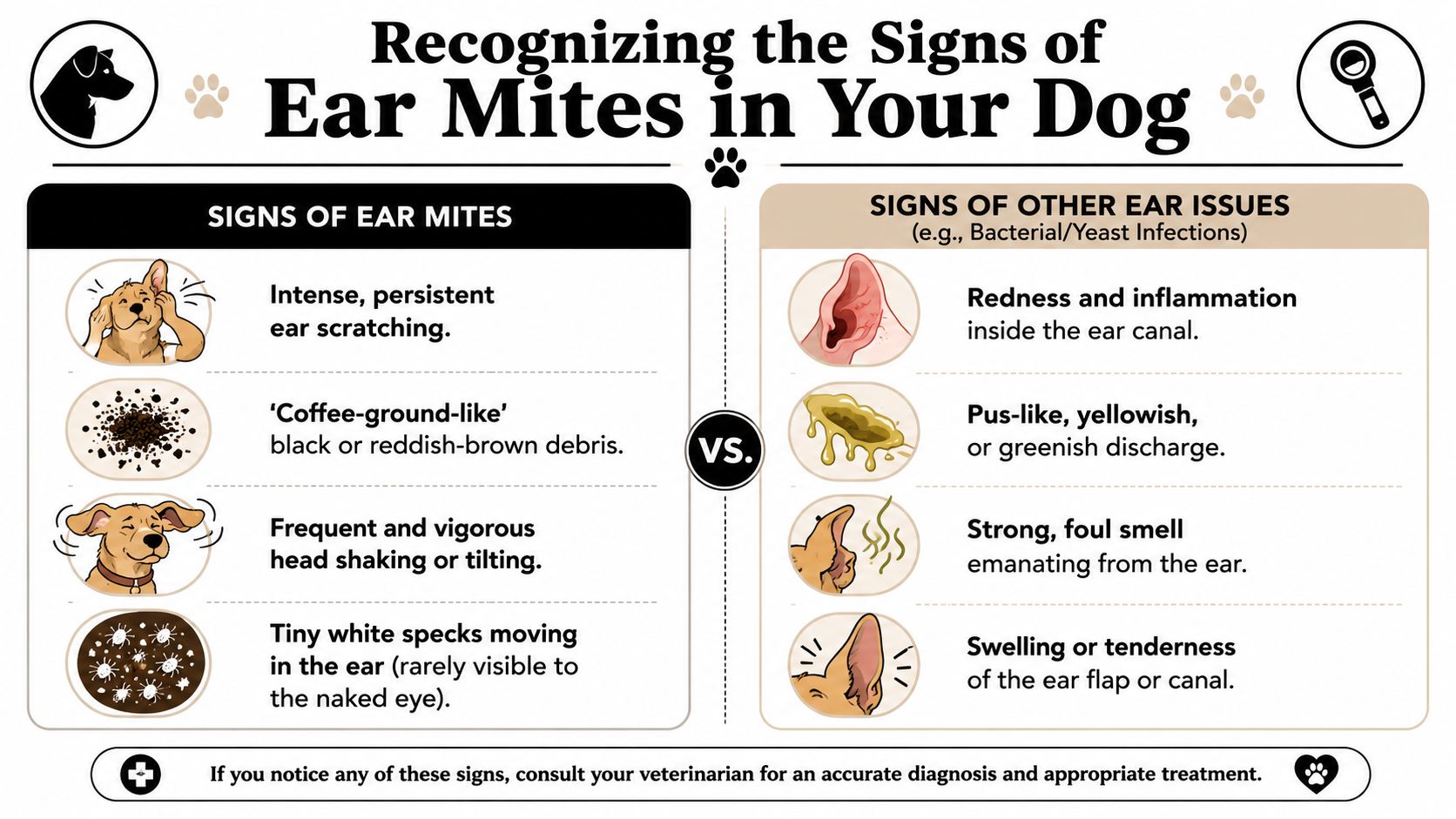
Ear mites leave clues, but they can still be mistaken for other ear conditions. Owners often notice scratching first. The more telling sign is the type of discharge.
If the debris looks dark, crumbly, and a lot like coffee grounds, ear mites move higher on the list of possibilities. Dogs with ear mites also tend to shake their heads often, paw at their ears, and irritate the skin around the ears from repeated scratching. In some cases, the area around the ear starts looking rough because the dog can't leave it alone.
Signs that should get your attention fast
Watch for this combination:
- Dark, gritty debris that resembles coffee grounds rather than smooth wax
- Persistent scratching focused on the ears and side of the head
- Frequent head shaking or ear rubbing against furniture or flooring
- Sores or hair loss near the ears from self-trauma
That said, not every irritated ear means mites. Bacterial and yeast infections can also cause redness, discharge, and obvious discomfort. Those cases may produce a different kind of debris, a stronger odor, or more swelling.
Why diagnosis has to come before treatment
A veterinarian needs to confirm what you're dealing with. That's essential. Ear mite treatment only works well when the diagnosis is correct, and many dogs also have secondary inflammation that changes the treatment plan.
There's another practical reason not to skip the exam. Ear mite infestations in dogs require thorough ear cleaning with a ceruminolytic agent to remove wax and debris before and during treatment, allowing acaricide medications to contact the mites effectively, as noted in this veterinary review on ear cleaning and otic treatment. In plain terms, built-up material can shield the mites and reduce medication contact.
If you're seeing “coffee-ground” debris, don't assume and don't wait. Book the vet visit, then build the grooming routine around the diagnosis.
That's especially important in El Paso, where dust, heat, and regular outdoor activity can already leave some dogs with more ear debris than owners expect. Good observation helps. Accurate diagnosis wins.
Executing a Safe and Effective Ear Cleaning Protocol
Once the vet confirms ear mites, cleaning becomes the first hands-on job. Many owners either underdo or overdo it. Both cause problems. Too little cleaning leaves debris behind. Aggressive cleaning can make a painful ear even angrier.
A safer approach is controlled, gentle, and repeatable.
The basic home setup
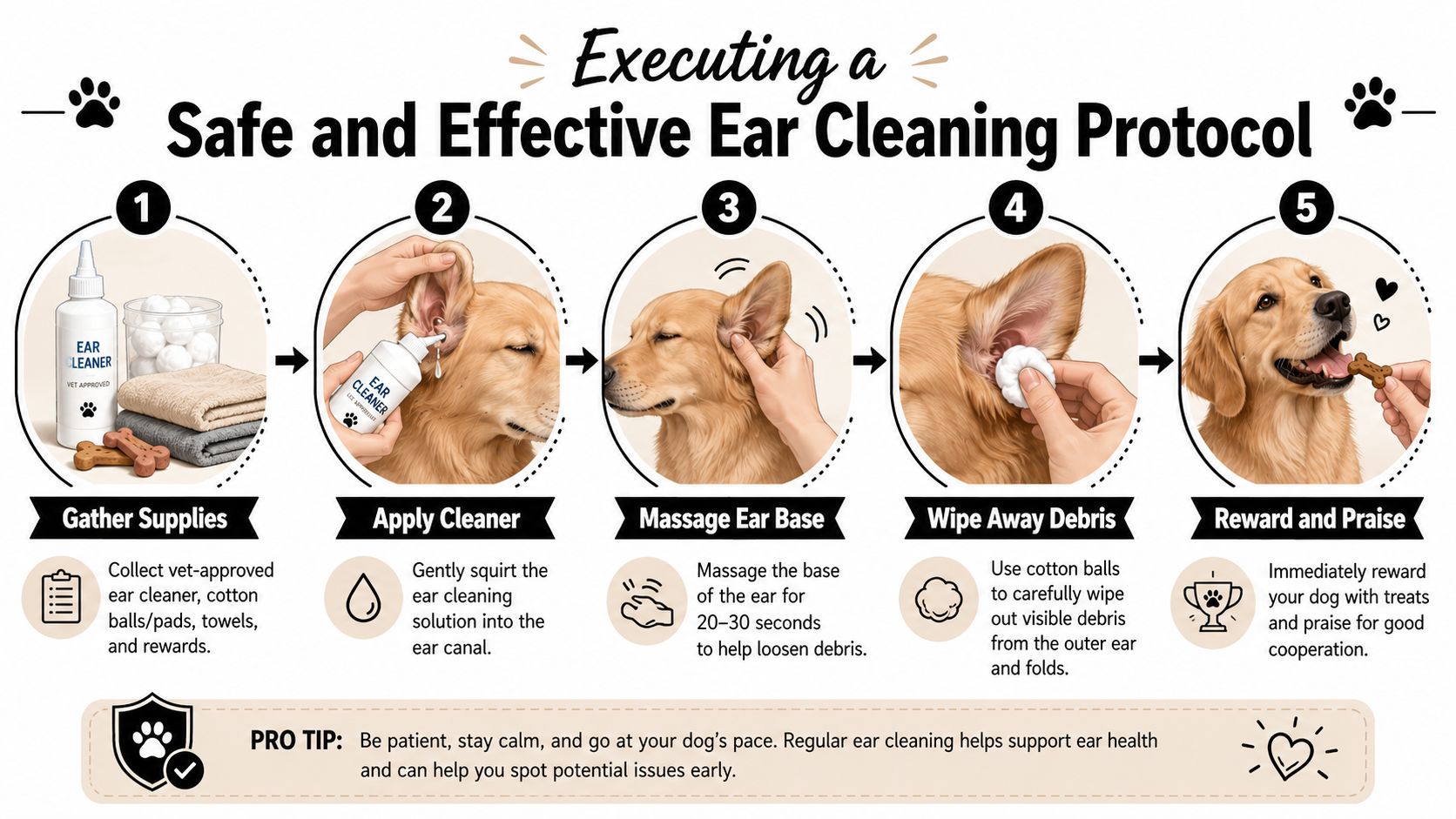
You don't need a crowded toolkit. You do need the right items:
- Veterinarian-approved ear cleanser
- Cotton balls or soft gauze
- A towel
- Treats for cooperation
Never use cotton swabs down inside the ear canal. They can push material deeper and create a bigger problem than the one you started with.
The cleaning sequence that makes sense
Fill the ear canal with the cleanser your veterinarian approved. Then massage the base of the ear so the solution can loosen wax and debris. After that, let your dog shake. That shake is useful. It helps bring loosened material outward where you can wipe it away from the visible part of the ear.
For owners who want a visual reference, this short demonstration is helpful before you start handling a sore ear at home.
After the shake, wipe away what you can see. Don't dig. Don't scrape. Don't keep going just because you still see some staining. The goal is to clear debris safely, not to make the ear look cosmetically perfect in one sitting.
Why consistency matters more than force
Veterinary guidance on dog ear mite treatment emphasizes a structured, multi-step protocol. The ear canal should be filled with a veterinarian-approved ear cleanser to remove cerumen and exudate, which otherwise shield mites and reduce drug penetration; a typical protocol involves once-daily cleaning for 7–14 days until cytology confirms resolution, according to Veterinary Partner's ear mite treatment guidance.
That's a major reason disciplined workflow matters in premium pet grooming. Ear care isn't about rushing through a messy task. It's about repeatable handling that the dog can tolerate. If you want a more service-focused breakdown of safe maintenance habits, this guide on ear cleaning for dogs is a useful companion to your veterinarian's instructions.
Handling tip: If the ear is very painful, stop trying to “finish the job” at home and call your vet. A dog that flinches hard or cries out is telling you the ear needs medical reassessment, not more pressure.
Modern Veterinary Treatments for Ear Mite Eradication
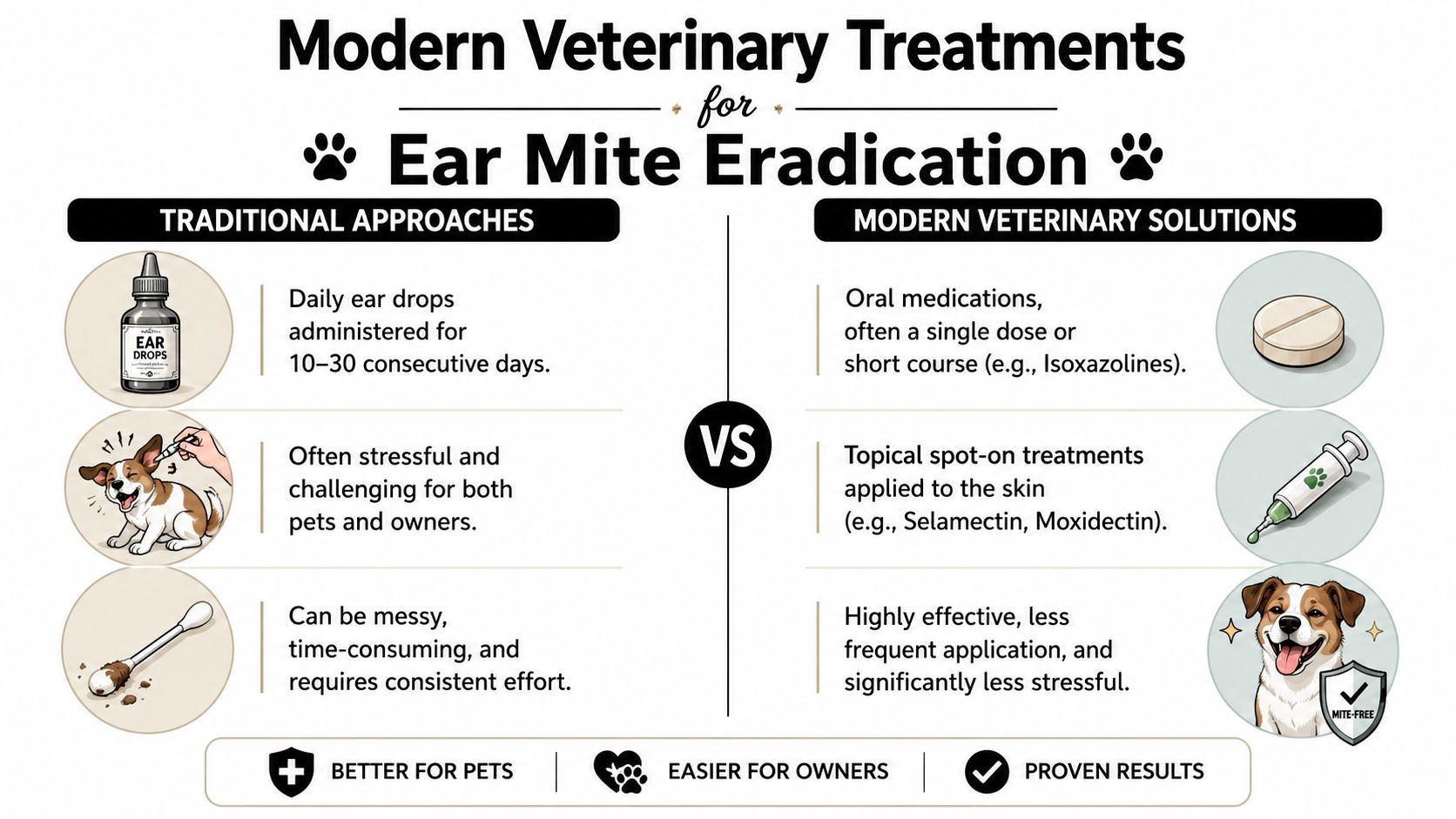
Dog ear mite treatment has changed. Older treatment plans often depended on repeated topical drops for weeks, and owner compliance was the weak point. Daily ear medication sounds manageable until you've got a sore, resistant dog and a household trying to get out the door on time.
Modern veterinary treatment is more practical.
Older regimens versus newer options
Historically, many dogs were treated with topical insecticide drops for 21–30 days to cover the full ear mite life cycle, and older over-the-counter products often took 3–4 weeks of repeated application. Newer macrocyclic lactones and isoxazolines can eliminate ear mites in most dogs within 7–10 days after a single dose or short-duration treatment, according to this veterinary summary on ear mites in dogs and cats.
That difference matters in practice. Less wrestling. Less missed dosing. Less chance that the treatment plan falls apart halfway through.
The main treatment categories owners should ask about
Here's the practical comparison:
| Treatment type | What owners should know |
|---|---|
| Topical spot-on products | Products with selamectin and moxidectin are licensed for dogs in major markets such as the U.S. and can control ear mites along with fleas and intestinal worms. |
| Oral isoxazolines | Medications such as NexGard, Bravecto, Simparica, and Credelio are approved for dogs and have demonstrated high efficacy in field trials, often clearing infections in a single dose while also helping protect against re-infestation. |
| Older ear-drop routines | These can still have a place in some cases, but they're usually more labor-intensive and easier for owners to mishandle or abandon early. |
For busy households, the trade-off is usually convenience versus complexity. A modern systemic product may be easier to give and easier to complete. A traditional ear-drop routine may look straightforward on paper but can be difficult if the dog hates ear handling.
The smart move is to ask your veterinarian direct questions. Is there a single-dose or short-course option for this dog? Does the pet also need anti-inflammatory care or treatment for a secondary infection? Is the ear too painful for home cleaning right now?
That's where premium grooming and veterinary care should complement each other. Medical treatment clears the infestation. Grooming maintenance supports cleaner ears, better observation, and fewer missed warning signs later.
Securing Your Home and Protecting Other Pets
If one dog has ear mites, think bigger than one pair of ears. Ear mites spread between pets, and reinfestation often happens because owners focus on the obvious patient and overlook the rest of the household.
This is the part of dog ear mite treatment that people skip when they're tired. It's also the part that prevents the whole process from starting over.
Treat the whole household, not just the scratching dog
Veterinary guidance is clear on this point. All household-accessible pets that can harbor ear mites, including other dogs, cats, and ferrets, should be treated simultaneously, even if asymptomatic, because reinfestation commonly comes from untreated animals and contaminated bedding or living areas, as explained in Today's Veterinary Practice on treating and preventing ear mite infestations.
If you've got a cat who seems perfectly fine, that doesn't mean the cat is irrelevant to the problem. Silent carriers can keep the cycle going.
For multi-pet homes that include both species, practical cat guidance matters too. This resource on ear mites in cats treatment can help owners think through the household side of the problem more completely.
Your home cleanup checklist
Use a direct routine and finish it fully:
- Wash bedding in hot water, including crate pads, blankets, and favorite sleeping covers.
- Clean resting areas your pets use often, especially couches, rugs, and corners where they pile up together.
- Sanitize grooming items such as brushes, combs, and washable fabric accessories.
- Clean toys and carriers that move between pets.
- Stay coordinated so every pet starts treatment on the schedule your veterinarian set.
One untreated pet can undo the work you put into the treated one.
In El Paso homes, where dogs often move between indoor cooling and outdoor play, fabrics and shared resting areas matter more than many owners realize. Keep the cleanup tight. Keep all pet care on the same timeline. That's how you break the transmission cycle instead of chasing it.
The Glomore Standard for Long-Term Prevention
Once the mites are gone, prevention becomes the ultimate test. At this point, owners decide whether ear care will stay a routine or drift into “we'll deal with it when it looks bad again.” The second option usually costs more comfort, more time, and more hassle.
Long-term prevention works best when grooming supports veterinary care without trying to replace it.
Grooming has a real role, but it has limits
A balanced view matters. Once a veterinarian has lined up a treatment plan and infection or inflammation is under control, regular professional ear cleaning and gentle drying, especially after bathing, can lower relapse risk and support preventive care, even though grooming salons are not a substitute for medical treatment, as discussed in PetMD's guidance on ear mites in dogs.
That distinction matters in premium pet grooming. A disciplined groomer should notice ear debris, odor, tenderness, or unusual sensitivity and tell the owner to get veterinary care. A responsible groomer should also know when not to over-handle an irritated ear.
What consistent prevention looks like in real life
A solid maintenance plan is simple enough to keep:
- Check the ears regularly. You're looking for debris, odor, redness, and handling sensitivity.
- Dry ears gently after bathing. Moisture and leftover debris create conditions that can lead to repeat irritation.
- Keep grooming appointments consistent. Sporadic care makes small problems easier to miss.
- Ask your vet about parasite prevention. Many modern preventives cover more than one parasite concern at once.
That's one reason many owners choose veteran-owned grooming over a chain environment. In a one-on-one setting, there's usually more attention to detail, a calmer pace, and less of the assembly-line feel people often associate with places like PetSmart or Petco. For El Paso dog grooming clients who want a premium pet grooming experience, that difference shows up in handling quality, hygiene standards, and follow-through.

Why local discipline matters in El Paso
El Paso pet owners deal with real-world conditions that punish inconsistency. Dust, dry weather, active dogs, and packed schedules can all make ear maintenance easier to postpone than it should be. That's why a veteran-owned grooming mindset fits so well here. Clear standards. Calm handling. Long-term vision.
Owners also appreciate practical value, not just polished language. A once-monthly special like Snip & Style Saturday gives families an affordable grooming promo option while keeping preventive care on the calendar. That matters for households trying to balance premium care with a realistic routine.
If your focus is prevention after treatment, this guide on how to prevent ear infections adds useful maintenance perspective.
Good prevention doesn't look dramatic. It looks scheduled, clean, observant, and consistent.
For owners comparing services, that's the key competitive gap. Chains can process volume. A disciplined, independent studio can build a relationship around the details that protect long-term wellness.
If your dog is dealing with ear discomfort, or you want a cleaner prevention routine after veterinary treatment, Glo More Grooming offers El Paso dog grooming built around premium pet grooming standards, calm one-on-one care, and the pride of a veteran-owned grooming studio. Reserve your next appointment, ask about Snip & Style Saturday, and secure your affordable grooming promo before the schedule fills. Book now or contact Glomore Grooming to keep your dog's ear care on a stronger long-term plan.