
El Paso heat can turn an ordinary dog walk into a dangerous exposure before an owner notices anything is wrong. A warm vehicle, sun-heated pavement, a thick coat, and the excitement of travel can combine quickly, especially for dogs that pant heavily, carry extra weight, or have short, flat faces. Preventing heat stress requires more than leaving out a water bowl. It requires a disciplined system for evaluating conditions, limiting exposure, screening before grooming, transporting safely, and responding correctly when warning signs appear.
For dog owners searching for how to prevent heat stress, the most reliable approach is proactive. Set rules before the walk, appointment, or car ride begins. In a premium pet grooming setting, those same rules guide every decision, from intake to drying and release.
Understanding Heat Risk and Safe Exposure Limits
El Paso's dry climate can create a misleading sense of safety. Low humidity may make the air feel less oppressive to people, but dogs still absorb heat through exertion, direct sun, hot surfaces, and restricted airflow. A dog's coat, body condition, breed structure, age, and health also change how quickly heat load builds.
The heat index gives owners a practical starting point. A peer-reviewed study using National Weather Service categories places dog exposure in these ranges: below 80°F is Safe, 80°F to 90°F is Caution, 90°F to 103°F is Extreme Caution, 103°F to 124°F is Danger, and 125°F or higher is Extreme Danger. Use those categories to decide whether outdoor activity should be shortened, moved indoors, or canceled. This heat-index classification for dog exposure provides a clearer framework than relying on air temperature alone.
Build the decision before leaving home
When the heat index reaches the caution range, keep activity brief and stay close to shade and water. At extreme caution, avoid strenuous play and choose a cool indoor activity instead. A published operational policy advises limiting dogs outside to 20 minutes at heat-index caution, 10 minutes at extreme caution, and allowing no outdoor exposure at danger or extreme danger. The operational heat-index policy for dogs can help families establish firm household rules.
Schedule walks before 8 a.m. or after 7 p.m. on warm days, a veterinary recommendation that reduces exposure during the hottest part of the day. Never assume a quick bathroom break is harmless if the surface burns, the dog is struggling to breathe, or shade isn't available. For broader seasonal planning, review preventative pet care for hot-weather routines.
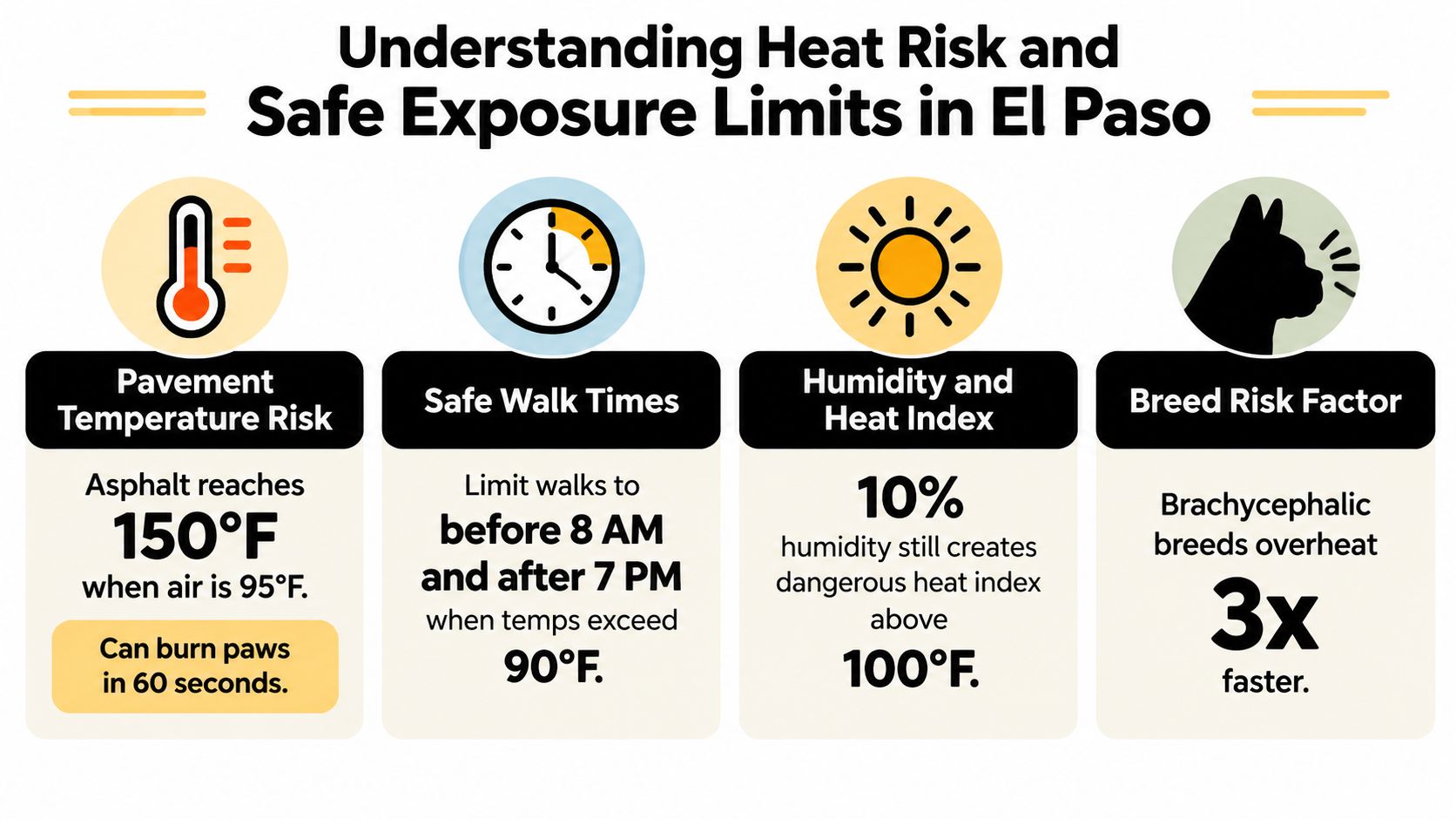
Brachycephalic dogs, overweight dogs, older dogs, and dogs with underlying health concerns need a more conservative plan. Heat prevention works when owners respond to the dog and the environment together, not to the calendar alone.
Recognizing Early Warning Signs and Pre-Groom Screening
Heavy panting is obvious, but it may not be the first sign that a dog is losing control of its body temperature. Thick, rope-like drool, a suddenly quiet posture, reluctance to stand, or gums that look unusually red can appear while the dog is still walking or entering a salon. Owners should treat changes in behavior as information, not stubbornness.
Healthy gums are generally pink. Brick-red gums, weakness, glassy eyes, vomiting, collapse, confusion, or worsening breathing indicate a serious escalation that requires urgent veterinary guidance. A rapid pulse felt behind the front leg adds another reason to stop activity and begin cooling. Don't wait for a dog to collapse before taking action.
A disciplined intake protects the dog
A premium grooming studio should assess the dog before service begins. At intake, the groomer observes posture, panting, drooling, responsiveness, gait, gum color, and breathing effort. Skin elasticity can offer context about hydration, but it isn't a substitute for veterinary assessment. If the dog arrives overheated after traveling across El Paso, the appointment should be postponed while the owner seeks medical guidance.
The screening process also includes practical questions. How long was the dog in the vehicle? Was the air conditioning running continuously? Did the dog exercise before leaving home? Does the dog have a history of breathing difficulty, heat intolerance, or anxiety during grooming? These answers help the groomer decide whether service is appropriate or whether safety requires a pause.
The infographic below summarizes the early signs that deserve immediate attention.

A temperature reading above 103°F should be treated as a reason to postpone grooming and contact a veterinarian, as reflected in the screening guidance shown above. Owners can review early stress signals in dogs before an appointment and report anything unusual. A groomer can't make a safe decision with incomplete information, and a short delay is always preferable to forcing a dog through a service while compromised.
Why Premium Pet Grooming Standards Matter in Summer
Summer grooming safety depends on the environment around the dog, not just the haircut itself. A high-volume salon may involve crowded holding areas, unpredictable wait times, repeated barking, and multiple transitions between kennels, tubs, tables, and release areas. Each added delay can increase anxiety and physical effort.
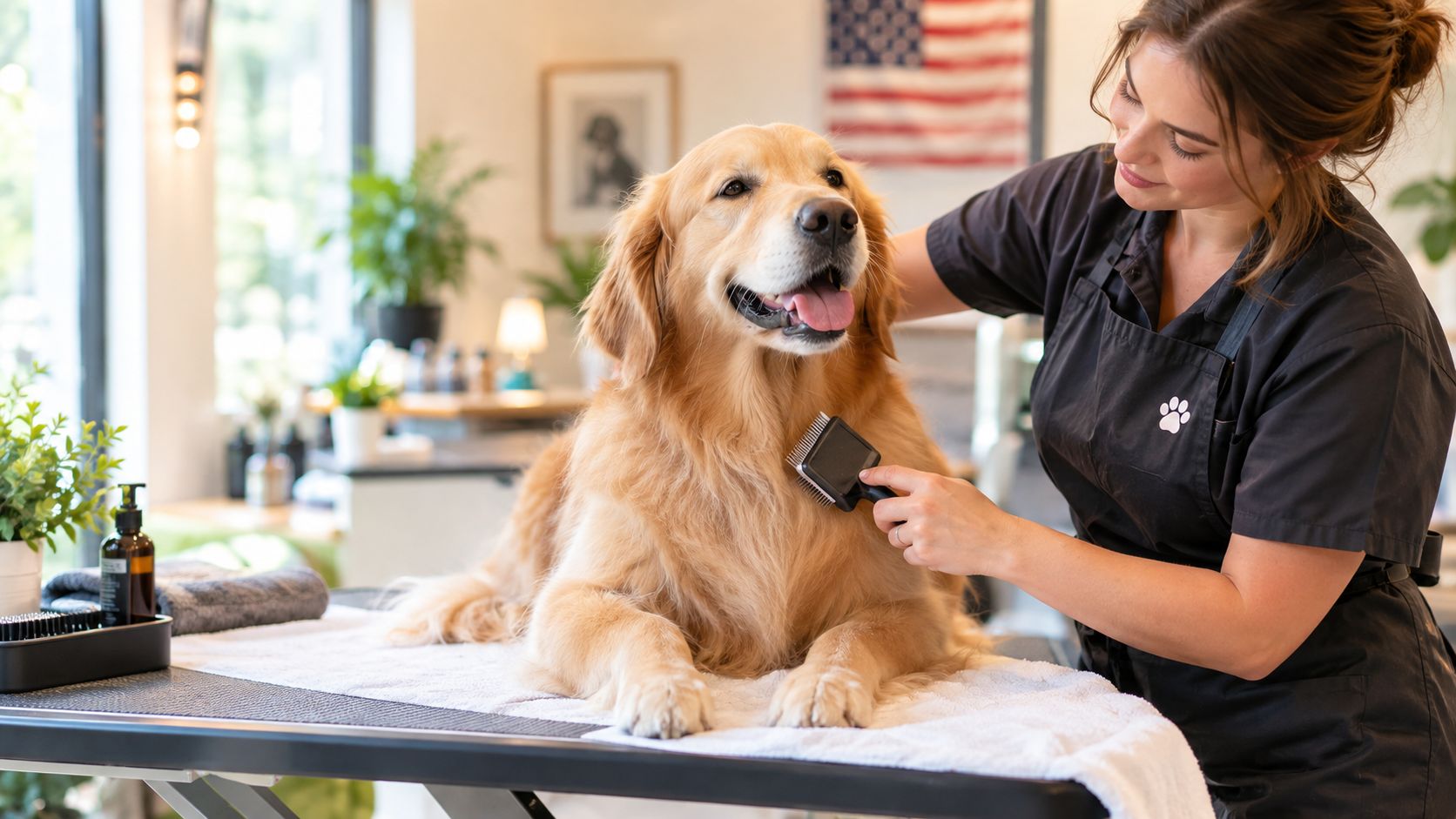
An independent studio can design the workflow around controlled movement. Limiting the number of dogs on site reduces crowding and makes it easier to observe each animal's breathing, posture, and behavior. Climate control, clean equipment, prepared stations, and scheduled arrivals also reduce the time a dog spends waiting in a lobby or parked vehicle.
Comparing the operating experience
| Grooming environment | Summer safety consideration |
|---|---|
| High-volume chain salon | Waiting, multiple dogs, and less predictable timing can make exposure harder to control. |
| Independent appointment studio | Scheduled arrivals and limited on-site capacity support closer observation. |
| Home-based or mobile workflow | Climate-controlled surroundings can reduce outdoor transitions when properly managed. |
The distinction between a chain such as PetSmart or Petco and a disciplined, independent studio isn't just about presentation. It concerns whether the workflow gives the team enough time to notice a dog that arrives stressed, overheated, or unable to tolerate handling.
A veteran-owned grooming business also brings a useful operating philosophy: prepare the station, follow the standard, document the exception, and never let speed override safety. At Glo More Grooming, the stated model limits the number of dogs on site and supports a calm, one-on-one process. That approach fits owners who want premium pet grooming with clear standards rather than a rushed handoff.
Hydration Strategies and Safe Transport Protocols
Water matters, but timing and access matter just as much. Keep fresh water available at home, carry a portable bowl during outings, and offer small opportunities to drink before and after activity. Don't force a large amount of water into a distressed dog, and don't treat water alone as permission to continue exercising in unsafe conditions.
Use the coolest practical schedule. Veterinary guidance recommends exercising dogs before 8 a.m. and after 7 p.m. on warm days, with frequent breaks and free access to water. Shade helps, but it doesn't erase heat load. A cooling mat, ventilated indoor rest area, and a damp towel placed where the dog can choose to lie can support comfort, provided the dog remains supervised.
Transport deserves its own checklist
Never leave a dog in a parked car. Vehicle interiors can become life-threatening very quickly, even when the windows are cracked. Run the air conditioning before loading the dog, keep airflow moving throughout the trip, and avoid stops that require the dog to remain unattended.
Use a secured crate or harness that allows normal breathing and posture. Avoid wrapping a dog tightly in blankets or placing a stressed dog in a poorly ventilated carrier. Plan the route so the dog moves from a cool home into a cool vehicle and then directly into a climate-controlled destination.
Transport rule: If the car can't remain cool and attended from departure to arrival, postpone the trip.
Busy El Paso owners can reduce exposure by choosing scheduled pickup, drop-off, or coordinated travel support when available. A service such as pet transportation support from Glo More Grooming can help organize a controlled transition, but owners should still disclose heat sensitivity, breathing concerns, age, and recent exercise before travel.
For a grooming appointment, pack water, leave early enough to avoid rushing, and call ahead if conditions change. A dog that arrives panting hard after a hot drive may need recovery and veterinary assessment, not immediate grooming.
Emergency First Aid and the Cool First Protocol
Many owners instinctively load an overheated dog into the car and drive straight to the veterinarian. That instinct gets the dog moving toward help, but recent guidance highlights a more urgent priority: cool first, transport second. A hot dog can continue accumulating heat during the drive, especially if the vehicle isn't already fully cooled.
The first action is to stop activity and move the dog into shade or an air-conditioned space. Call a veterinarian or emergency clinic while another person begins cooling. Don't wrap the dog in a heavy blanket, pour ice-cold water over a collapsed dog, or force water into its mouth.
Match cooling to the dog's condition
For a young, healthy dog that is alert and able to stand, veterinary guidance highlighted by UNSW supports shallow cold-water immersion as an effective option. Keep the dog's head above water and monitor breathing continuously. For a geriatric or highly stressed dog, wet the coat and use a cool fan instead, watching for distress and avoiding an uncontrolled drop in temperature.
Offer small amounts of cool water only if the dog is alert and able to swallow. Cooling should begin immediately while veterinary contact is made. The UNSW report on cooling heat-stressed dogs emphasizes the practical difference between beginning treatment at the scene and delaying all action until arrival.
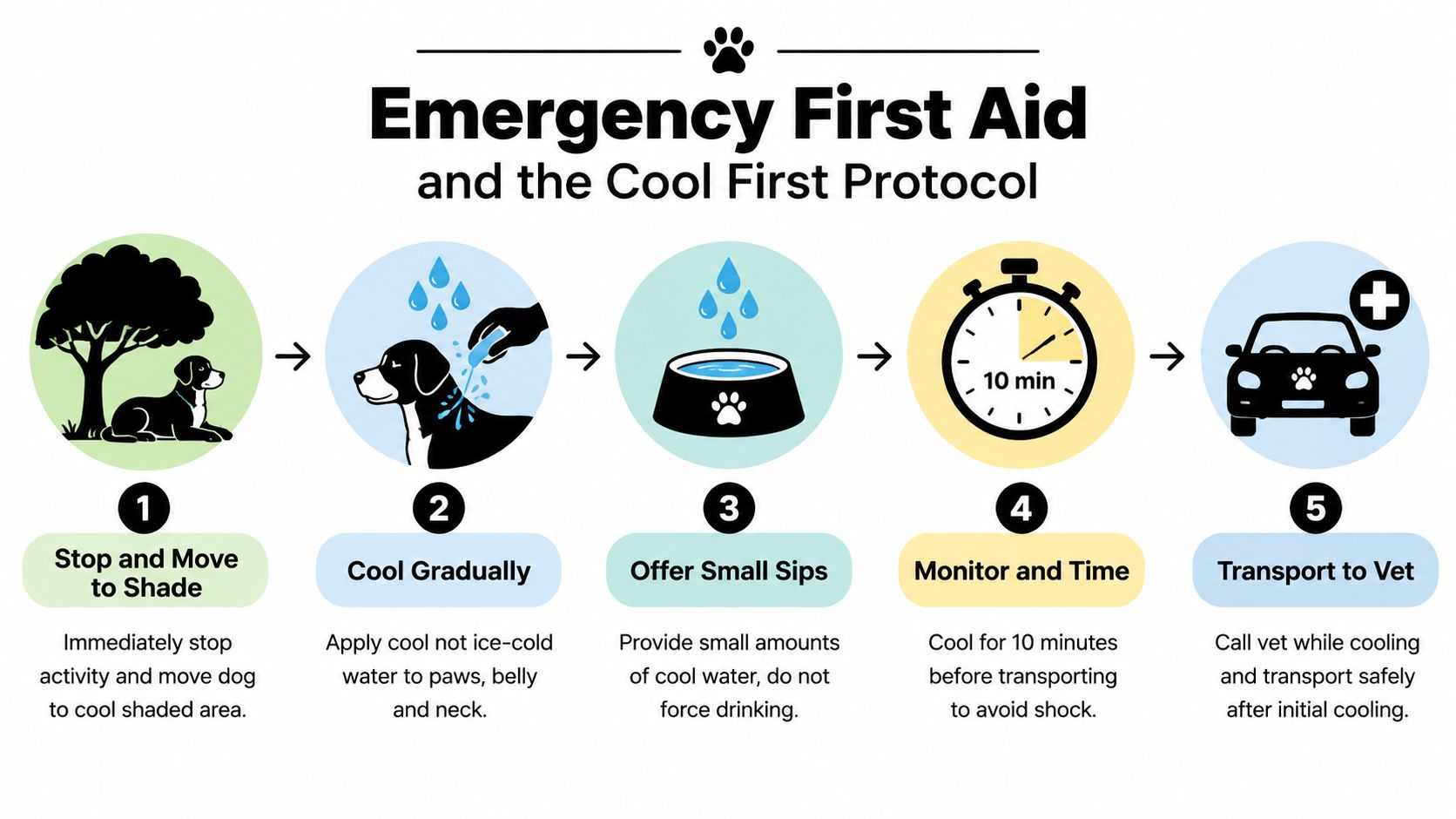
Seek emergency veterinary care immediately for collapse, confusion, seizures, vomiting, severe weakness, abnormal gum color, labored breathing, or any symptom that worsens. Continue cooling during preparation for transport, but don't delay the veterinary journey once initial cooling has started. The safest sequence is simple: shade, cool, call, monitor, then transport.
The video below provides another visual reference for recognizing and responding to heat emergencies.
Seasonal Care Routines and Booking Your Next Visit
A reliable summer routine begins before temperatures peak. Check the day's heat index, choose early or late exercise, inspect paws after outdoor time, and keep indoor resting areas cool. Brush and maintain the coat consistently so loose undercoat, mats, and debris don't complicate grooming or make inspection difficult.
A professional grooming schedule should reflect the dog's coat, lifestyle, age, and tolerance. A haircut isn't a substitute for shade, water, or responsible transport, and shaving isn't automatically the safest answer for every coat type. The right service removes discomfort, supports cleanliness, and gives a trained professional another opportunity to notice skin changes, unusual fatigue, or handling intolerance.
Turn seasonal care into a household system
Use a simple routine:
- Before activity: Check the heat index and surface temperature, then choose an indoor alternative when conditions are unsafe.
- During activity: Carry water, stay near shade, watch breathing and posture, and end the outing at the first unusual sign.
- Before grooming: Confirm the appointment time, avoid a hot car ride, and disclose recent exercise or symptoms.
- After grooming: Keep the dog cool, offer water, and observe behavior during the return home and the rest of the day.
Community access matters too. Snip & Style Saturday is a monthly $55 full-groom promotion for all sizes, giving El Paso families an affordable grooming promo while preserving a scheduled, professional experience. A recurring appointment is easier to manage than waiting until the coat becomes heavily matted or the dog is uncomfortable.
Glo More Grooming is built around Greatness, Loyalty, and Ownership, with a veteran-owned independent model and a long-term commitment to disciplined care in the El Paso community. Owners who value clean craftsmanship, calm handling, and clear communication should reserve appointments before the season becomes crowded.
Glo More Grooming provides premium pet grooming with a controlled, one-on-one workflow, seasonal safety awareness, and concierge support for clients who need coordinated travel care. Visit Glo More Grooming to book your next appointment, reserve a Snip & Style Saturday slot, or contact the studio about safe transport options for your dog.