
Pine needles are only mildly toxic in small amounts, but they are not harmless. The bigger threat to dogs is usually physical injury, including punctures from sharp needles and irritation from sticky pine sap.
If you're reading this because your dog just nosed around a pine tree, chewed a fallen branch, or came back from the yard with sap in the coat, stay calm and get practical. This isn't usually a panic-and-sprint situation. It is a pay-attention-and-act-fast situation. In El Paso, where yards, dry landscaping, seasonal decor, and outdoor time all mix together, this is a real-world pet care issue, not a rare one.
The Truth About Pine Needle Toxicity in Dogs
A dog sniffing under a pine tree isn't automatically in danger. But if that dog starts chewing and swallowing needles, you're dealing with a problem that deserves attention.
Mildly toxic does not mean safe
When people ask, are pine needles poisonous to dogs, the clean answer is this: not severely poisonous in the way some plants are, but still risky enough that you shouldn't ignore exposure. Most dogs that nibble a few needles may develop mild stomach upset, or they may show no symptoms at all. That's the part that causes confusion. Owners see one dog get away with it and assume the risk is low across the board.
That's a mistake.
Pine needles can irritate the digestive system. A small amount may lead to drooling, nausea, vomiting, loose stool, or general discomfort. A larger amount raises the stakes. More material in the stomach and intestines means more irritation and a greater chance that the problem shifts from mild toxicity to a physical emergency.
What changes the risk
The first question isn't just, "Did my dog eat pine needles?" The better questions are:
- How much was eaten. A brief chew isn't the same as active swallowing.
- What size is your dog. Smaller dogs have less margin for error.
- What happened after. Vomiting, drooling, gulping, or refusing food matters.
- Was sap involved. Sticky residue adds another layer of trouble.
Practical rule: Treat pine needle ingestion like a problem that can escalate. Don't wait around because the word "mild" sounds comforting.
Chemical concern versus physical hazard
This distinction matters. Some owners focus only on whether something is toxic, as if the answer ends there. It doesn't.
With pine needles, the chemical issue is usually the smaller part of the conversation. The more important concern is what these sharp, rigid needles can do on the way in and after they're swallowed. That means a dog can be in trouble even if classic poisoning isn't the main issue.
Here's the disciplined approach I recommend:
- Stop access immediately. Move your dog away from the tree, branch pile, or fallen needles.
- Check the mouth. Look for visible needles caught in the lips, gums, or tongue if your dog will let you do it safely.
- Watch behavior, not guesses. A dog that keeps licking, pawing at the mouth, swallowing hard, or acting uncomfortable needs closer attention.
- Don't shrug it off because it was "just a plant." Plenty of plant-related problems are mechanical, not chemical.
Owners who stay calm and observant usually make better decisions than owners who either panic or dismiss the issue. Good care isn't dramatic. It's disciplined.
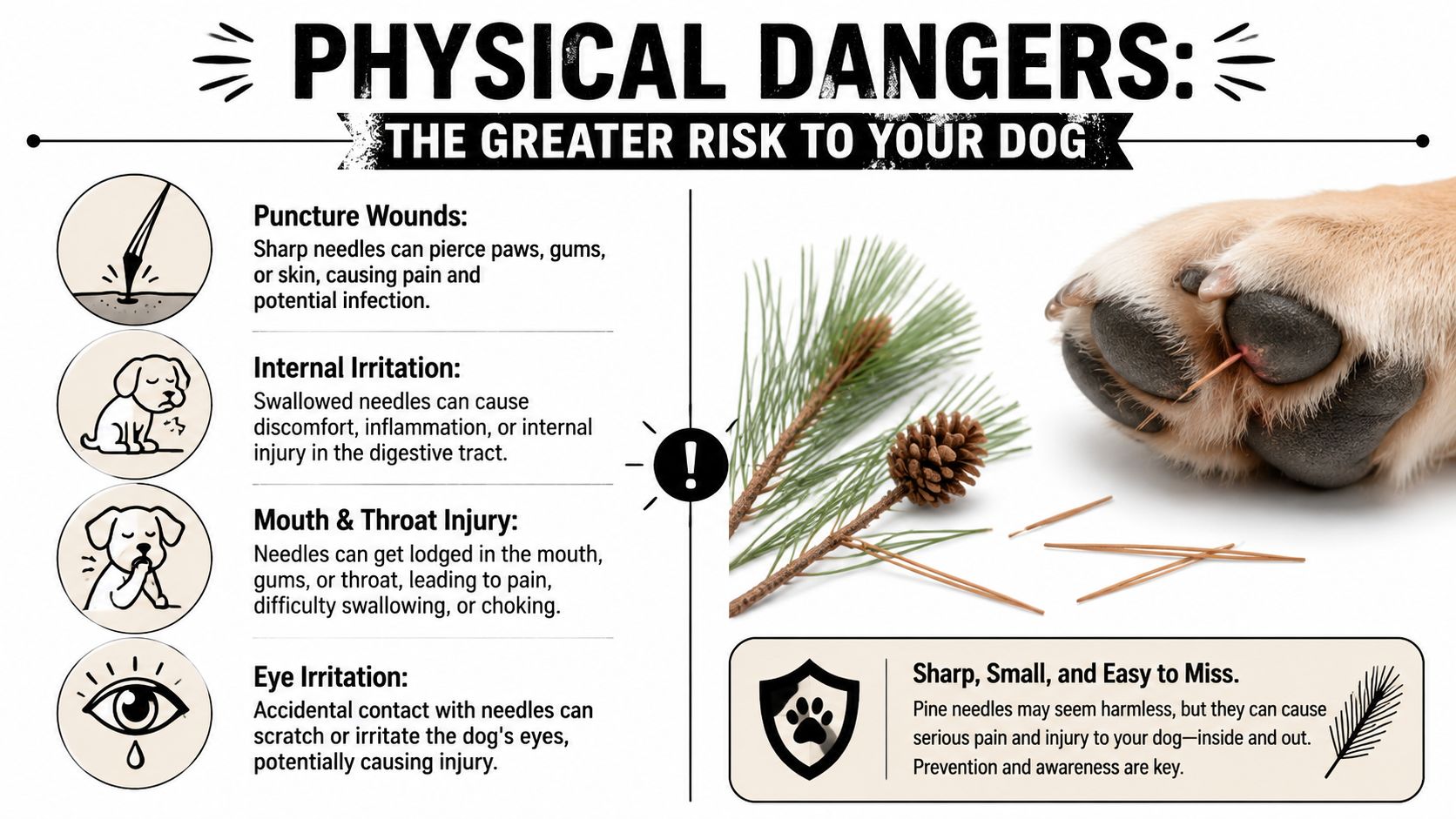
Physical Dangers The Greater Risk to Your Dog
The issue with pine needles isn't usually poison. It's structure. They're sharp, stiff, dry, and easy to miss in grass, mulch, holiday debris, and coat tangles.
Where dogs get hurt
A pine needle can create trouble in several places before it ever reaches the stomach.
- Paws. Dogs step on needles, especially in yards, near tree bases, or around dropped holiday greenery. That can mean a puncture, limping, or licking at one foot over and over.
- Mouth and gums. Dogs explore with their mouths. Needles can lodge between teeth, in the roof of the mouth, or along the gums.
- Throat. A swallowed needle can scrape tissue or get caught long enough to trigger gagging, coughing, or frantic swallowing.
- Eyes. Dogs pushing through branches can get scratched or irritated around the eye.
A dog doesn't need to eat a large amount to get hurt. One sharp needle in the wrong place is enough.
Internal irritation and blockage risk
Once swallowed, pine needles don't suddenly become soft and harmless. They remain pointed plant material moving through tissue that isn't designed to handle it. That can mean irritation, pain, vomiting, or refusal to eat.
In worse cases, a dog may struggle to pass the material. That's where owners get into dangerous territory. A blockage or significant internal injury is not a home-care project. It needs a veterinarian.
Pine Needle Risks At-A-Glance
| Risk Area | Potential Danger | Severity |
|---|---|---|
| Paws | Puncture wounds, tenderness, licking, limping | Moderate to serious |
| Mouth | Needles stuck in gums, tongue, or palate | Moderate to serious |
| Throat | Pain, gagging, trouble swallowing, choking risk | Serious |
| Stomach and intestines | Irritation, vomiting, possible internal injury or obstruction | Serious |
| Eyes | Scratches, redness, tearing, sensitivity | Moderate to serious |
| Skin and coat | Sap buildup, matting, skin irritation, licking residue | Mild to serious |
Pine sap is messy and more than a cosmetic issue
Sap causes a different kind of problem. It clings to fur, traps dirt, and creates dense sticky patches that pull at the skin. Dogs then lick at those spots, chew at the coat, or rub themselves on furniture and carpet. That can turn a cleanup issue into a skin issue fast.
Sap near feathering, paw fur, belly hair, or long ear hair is especially annoying because it grabs debris and tightens into mats. If you try to scrub it out with random household products, you can make the coat worse and irritate the skin underneath.
This is why premium pet grooming isn't just about looks. Proper cleanup is part of proper care.
Symptoms to Watch For and When to Call an El Paso Vet
The best owners don't guess. They watch for clear signs, they act early, and they know the difference between monitoring and emergency care.
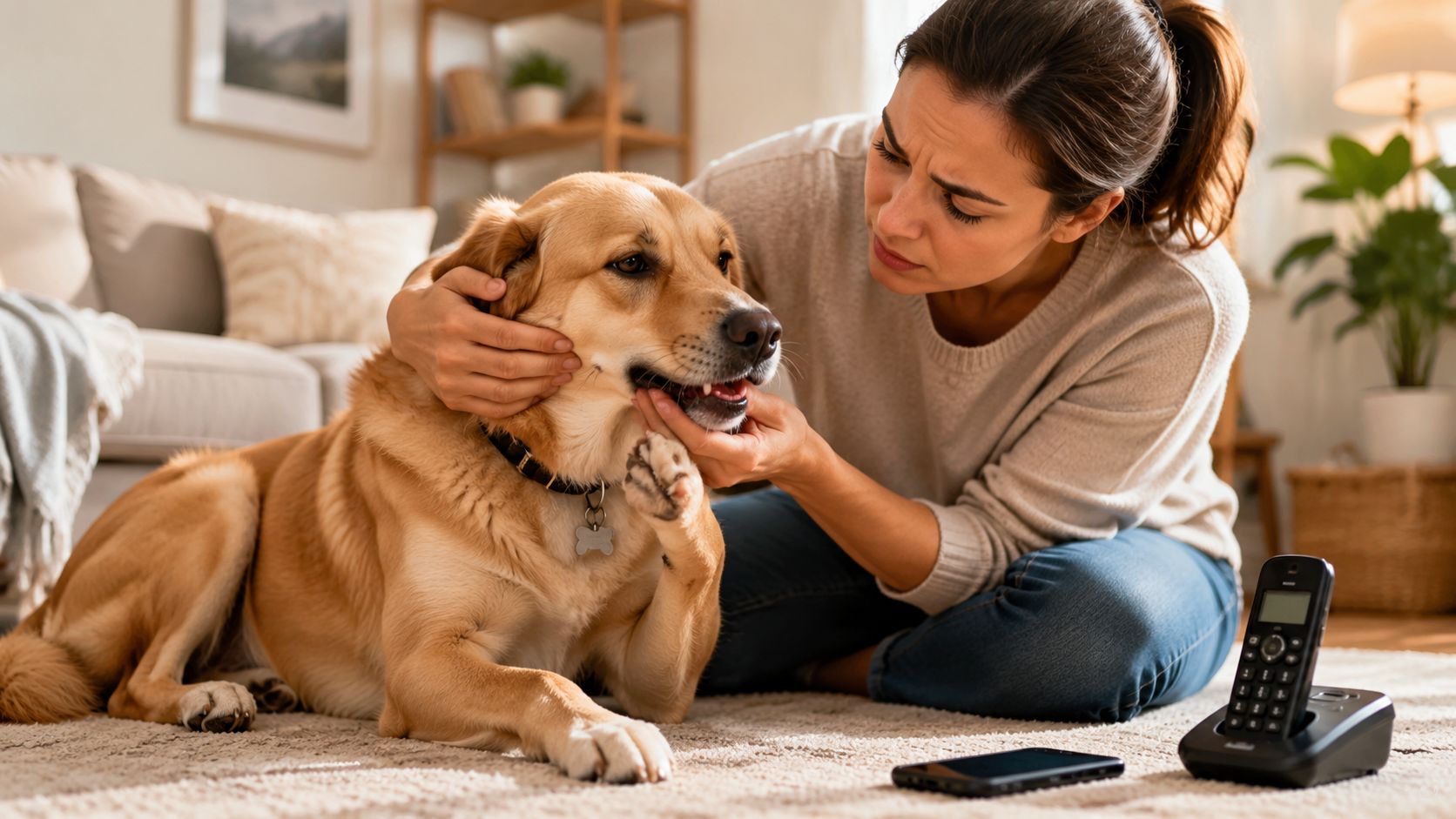
Symptoms that deserve attention
Watch your dog closely after known or suspected exposure. The signs can start with the mouth, move to the stomach, or show up as general discomfort.
- Drooling or lip licking. This often points to irritation in the mouth or nausea.
- Pawing at the mouth. Dogs do this when something feels stuck or painful.
- Gagging or repeated swallowing. Think throat irritation or an object caught where it shouldn't be.
- Vomiting. One episode may be mild. Repeated vomiting is a different story.
- Loose stool. Digestive upset can follow ingestion.
- Loss of appetite. A dog that skips food after chewing needles needs monitoring.
- Lethargy. If your dog seems flat, uncomfortable, or withdrawn, pay attention.
- Abdominal tension or pain. Restlessness, hunching, or reluctance to move can signal a deeper issue.
- Eye redness or squinting. This matters if your dog ran through branches.
When to monitor at home
Home monitoring can make sense when the exposure was limited and your dog is acting mostly normal.
Choose observation if your dog:
- Chewed only a little and you didn't see active swallowing
- Keeps drinking and acting normally
- Has mild stomach upset that resolves quickly
- Isn't gagging, choking, or struggling to swallow
During that monitoring window, keep things simple. Offer water. Feed bland, familiar food only if your dog wants it. Keep activity calm. Check the mouth and paws again in good light. If you're dealing with another odd ingestion concern, this guide on what to do if your dog ate a dryer sheet is another good reminder that foreign material problems often matter as much as toxicity questions.
Owner standard: If symptoms continue, escalate. Waiting too long is where manageable situations turn expensive and painful.
When to seek immediate veterinary care in El Paso
Call an El Paso veterinarian promptly if your dog shows any of the following:
- Persistent vomiting
- Gagging, coughing, or choking sounds
- Trouble swallowing
- Pawing frantically at the face
- A swollen, painful, or bleeding mouth
- Obvious abdominal pain
- Weakness or collapse
- Blood in vomit or stool
- A painful eye, squinting, or sudden tearing after branch contact
This short video gives a useful general reminder about seasonal pet hazards and why quick action matters when decorations, plants, and tree debris are involved.
If you live in El Paso, don't waste time searching every forum on the internet while your dog keeps retching or refusing water. Call your vet. Local care beats online speculation every time.
Prevention Strategies for Your Home and Yard
Prevention is where disciplined pet ownership shows up. You don't need a perfect house or yard. You need routines that cut avoidable risk.
Indoor holiday tree protection
If you bring a live tree into the house, manage it like a dog hazard from day one. Fallen needles don't stay in one neat circle. Dogs track them, lick them, and find them before you do.
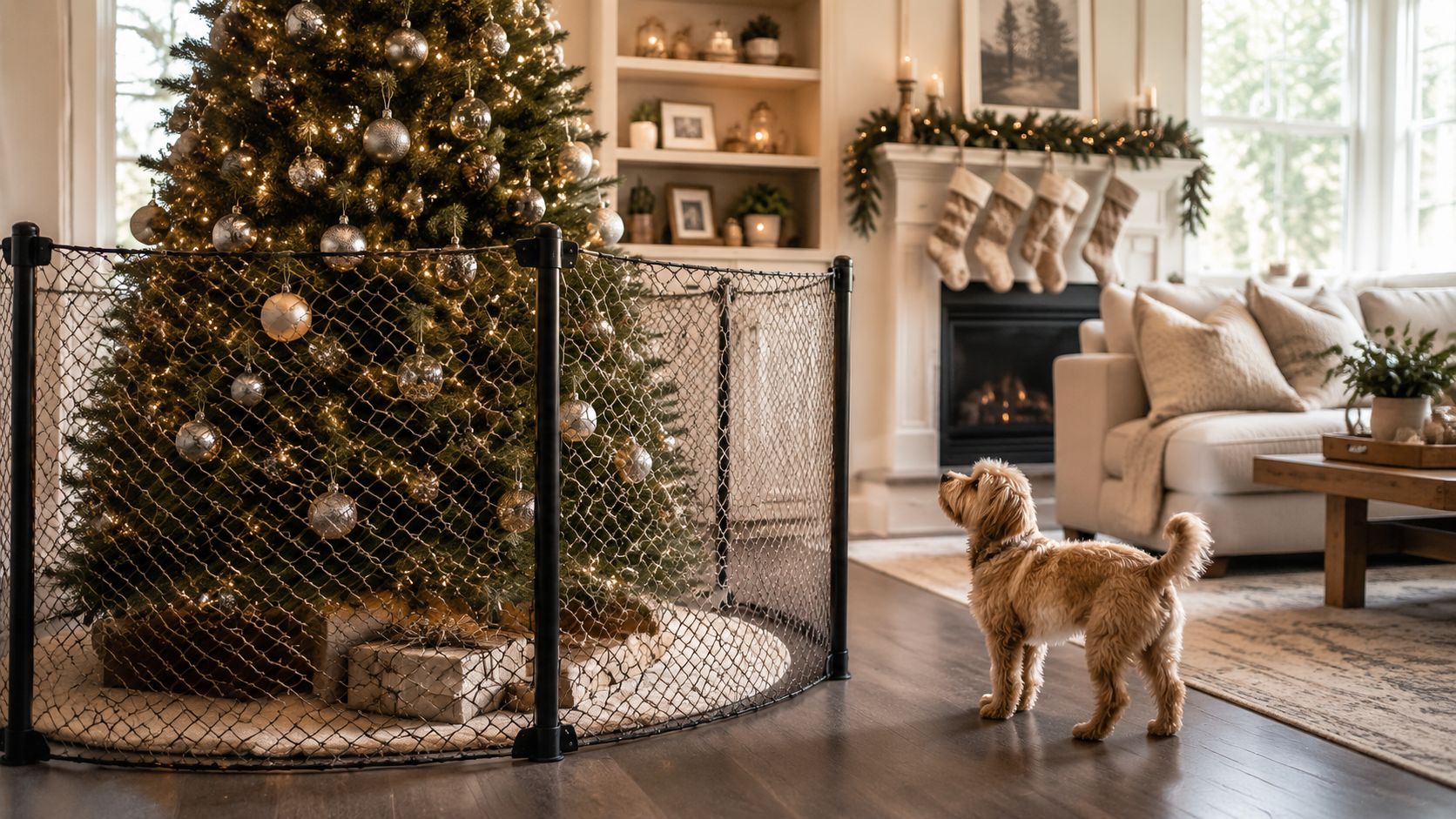
Use these habits:
- Sweep daily. Needles on the floor are an invitation.
- Block access. A gate works better than verbal correction for most dogs.
- Keep lower branches clear. Dogs target what they can reach.
- Cover the tree base area. You want fewer chances for sniffing, licking, and debris collection.
- Skip edible decorations. Food smells pull dogs toward the whole setup.
A lot of El Paso households keep decor up through gatherings and family visits. That means more foot traffic, more dropped debris, and more open doors. Tight routines matter more during busy weeks, not less.
Yard management that actually works
Backyards with pine trees need maintenance. That's not overkill. That's responsible ownership.
Try this routine instead of waiting for a problem:
- Rake and remove buildup regularly. Don't let a play area double as a debris field.
- Create a cleaner potty and play zone. Give your dog a part of the yard that's away from the heaviest needle drop.
- Inspect paws after outside time. It takes a minute and catches a lot.
- Brush out the coat after yard exposure. Needles hide in feathering, paw tufts, and tail hair.
- Address parasites while you're at it. Outdoor dogs need full-body checks, and this guide to getting ticks off dogs safely fits right into that routine.
Keep your dog's environment boring in the best way. Fewer surprises on the ground means fewer emergencies later.
Seasonal care is part of the standard
This is also where local pride and resilience show up. Good pet owners in El Paso don't just react to weather, surroundings, and holiday clutter. They plan around them. That's how you protect paws, coats, and stomachs without turning every outing into a crisis.
If your dog is a scavenger, don't rely on training alone. Supervise. Redirect. Clean up fast. Strong routines beat wishful thinking.
Aftermath Cleanup and Premium Grooming Solutions
A dog that walks through pine debris doesn't just bring home a few needles. The coat can collect sharp fragments, sticky sap, dust, leaves, and grit all at once. Long coats hide the mess. Double coats trap it. Curly coats lock it in.
Why home cleanup often goes wrong
Most owners mean well, then make the same mistake. They head straight to the tub.
Water alone usually doesn't solve sap. It can spread stickiness, tighten tangles, and make trapped debris harder to separate. Add vigorous scrubbing, and now the dog is uncomfortable, the coat is knotting, and the skin underneath is getting irritated. That's not a cleanup plan. That's a setback.
Common DIY mistakes include:
- Using dish soap aggressively and drying the skin
- Cutting at mats with household scissors and risking injury
- Pulling needles out of tangled fur without stabilizing the skin
- Ignoring paw fur and belly hair, where debris often hides longest
What a proper cleanup should include
A professional-level cleanup uses patience, sectioning, coat knowledge, and the right products. It should involve a controlled process, not random scrubbing.
That process usually means:
- Coat assessment first. You need to know whether you're dealing with surface debris, sap patches, compacted undercoat, or mats.
- Targeted detangling. Work the problem area before making it worse with water.
- Safe product selection. Not every cleaner belongs on a dog's skin.
- Careful drying and comb-through. During this step, missed needles often reveal themselves.
- Paw and sanitary area detail work. These spots get overlooked at home all the time.
If you want to keep your dog's coat in better condition between appointments, this guide on how to brush dog hair the right way is worth your time. A dog that gets regular brushing is easier to inspect after yard exposure, and that's a real advantage.
Pine sap in the coat is not just ugly. It pulls, mats, traps dirt, and invites licking. Handle it early.
Clean coat, calmer dog, better outcome
Dogs feel the difference when cleanup is done correctly. Less pulling. Less stress. Less skin irritation. Better airflow through the coat. Cleaner paws. Better comfort getting back to normal routines.
This is also where premium grooming standards matter in a practical way, not a flashy way. Clean tools, disciplined workflow, controlled handling, and careful coat work protect the dog. That's what good grooming is supposed to do.
The Glo More Standard for El Paso Dog Grooming
If you want rushed volume, chain grooming can give you that. If you want calm handling, cleaner workflow, sharper standards, and a dog that isn't treated like part of an assembly line, the choice is obvious.
Why local beats big-box chaos
Pet parents in El Paso have options, but not all grooming environments are built the same. Chains like PetSmart and Petco are familiar. Familiar doesn't mean better. High-traffic grooming floors can feel noisy, rushed, and impersonal. For sensitive dogs, anxious dogs, seniors, and coat-heavy breeds, that matters.
El Paso dog grooming should reflect the dog's actual needs, not the pace of a retail schedule.

A disciplined studio model stands apart because it prioritizes:
- One-on-one attention over crowded throughput
- Clear sanitation habits over rushed turnover
- Calm, structured handling over overstimulation
- Craftsmanship over corner-cutting
The value of veteran-owned independence
There is a different standard that comes from ownership with pride behind it. Veteran-owned grooming isn't just a label. It signals discipline, accountability, and a long-term view. That means cleaner execution, stronger routines, and a refusal to drift into sloppy habits.
In a city like El Paso, local businesses with backbone matter. Independent operators build trust one appointment at a time. They don't hide behind a corporate script. They build a reputation the hard way.
That same standard shows up in the details:
- Premium pet grooming that treats coat care as health support, not just appearance
- Affordable grooming promo options that still respect quality
- Community-minded offers like Snip & Style Saturday
- A long-haul vision rooted in service, consistency, and pride
Some dogs need glamour. Every dog needs standards.
If you care about calm service, polished results, and a grooming experience built with ownership and resilience, choose the studio that acts like quality is a responsibility, not an upsell. That's how dogs get safer handling, cleaner coats, and better outcomes across seasons.
Your dog deserves more than rushed care and crossed fingers. For trusted Glo More Grooming, book now, reserve a spot for the next Snip & Style Saturday, and choose the kind of premium, veteran-owned care that reflects real standards for El Paso pets.