
You’re brushing your dog after a walk, and there it is. A flea darting through the coat, or worse, a tick latched near the ear. That moment changes the whole week. Now you’re checking bedding, vacuuming floors, watching for scratching, and wondering whether your dog’s current prevention is doing the job.
That’s a common reality in El Paso. Dogs here don’t live in a bubble. They move through yards, parks, patios, trails, boarding situations, and grooming appointments. Parasites take advantage of every gap in routine, especially when owners get busy or assume one product works better than it really does.
I’m direct about this because I’ve seen the practical side. Fleas don’t just irritate skin. Ticks don’t just create an ugly surprise. They affect coat quality, comfort, handling, hygiene, and the entire grooming process. If you care about clean results, healthy skin, and a disciplined care routine, parasite control isn’t optional. It’s foundational.
Oral flea & tick medication for dogs has become a major part of modern prevention for a reason. It’s clean, convenient, and for many households, easier to stay consistent with than messy alternatives. But convenience alone isn’t enough. You need to know how these products work, where they shine, where they don’t, and when safety questions deserve a real conversation with your veterinarian.
This guide gives you that full picture from a practical El Paso perspective. Not chain-store advice. Not vague internet talk. Real, vet-informed guidance tied to coat care, hygiene standards, and the kind of consistent routine serious dog owners should expect from themselves.
A Pet Owner's Guide to Parasite Prevention in El Paso
A dog in El Paso can pick up trouble fast. One backyard break, one hike, one play session, one stop at a friend’s house, and now you’re dealing with scratching, chewing, hot spots, or a tick you didn’t see the night before. In a region where pets stay active through most of the year, parasite prevention has to be treated like a routine, not a seasonal panic move.
Owners usually notice the problem late. The dog seems a little restless. Maybe the coat starts looking rougher than usual. Maybe there’s more licking at the paws or tail base. By the time a flea shows up on your comb or a tick turns up during a bath, the problem has already been active.
What matters in real life
The best prevention plan is the one you’ll follow with discipline. That’s the point a lot of people miss. A product can be excellent on paper and still fail in the home if doses get delayed, application gets skipped, or the dog hates the process.
For many households, oral flea & tick medication for dogs makes sense because it removes a lot of the friction. There’s no oily strip down the back. No worrying about whether a bath washed something off. No residue sitting on the coat before a grooming appointment.
Practical rule: If your prevention plan is hard to repeat on schedule, it’s not a strong plan.
Why grooming standards start with parasite control
Healthy skin and a clean coat don’t happen by accident. Fleas inflame skin. Ticks create stress, irritation, and potential health concerns. A dog that arrives with live parasites also changes the handling protocol, the bathing approach, the sanitation process, and the quality of the final result.
That matters in El Paso dog grooming, especially if you want premium pet grooming instead of rushed, high-volume work. Clean craftsmanship starts with a dog that’s protected, comfortable, and safe to handle closely.
A disciplined owner looks at parasite prevention the same way a disciplined groomer looks at prep work. You don’t cut corners at the foundation and expect polished results at the end.
How Oral Flea and Tick Medications Actually Work
A dog comes into the salon in El Paso with a clean-looking coat, but the skin tells a different story. Flea dirt at the tail base. Fresh scratching. A tick tucked behind the ear after a hike. That is why owners need to understand how oral flea & tick medication for dogs works, not just whether the box says it kills pests.
Oral products work from inside the body. Your dog swallows the chew or tablet, the active ingredient enters the bloodstream, and the flea or tick is exposed after it bites. The medication is not sitting on the haircoat, which matters for dogs that get bathed often, swim, or stay on a tight grooming schedule.

From a groomer’s perspective, that is a practical advantage. I do not have to work around a fresh greasy strip on the back, and owners do not have to wonder whether a proper bath reduced protection. In El Paso, where dust, heat, and frequent washing are part of real dog care, that convenience matters.
What the active ingredients do
Many prescription oral flea and tick products for dogs belong to the isoxazoline class. These drugs affect the parasite’s nervous system after it feeds. The result is paralysis and death.
That is the plain-English version, and for most owners, it is the one that matters.
The bigger point is timing. Oral meds kill well, but the parasite usually has to bite first. If you want a stronger grasp of how these products compare with store-bought options, read our guide to over the counter flea medicine for dogs.
A real example with fluralaner
Fluralaner is the active ingredient in Bravecto chews. Merck states that fluralaner kills fleas within 2 hours of administration, reaches 100% tick kill by 48 hours, and maintains ≥98% efficacy for 12 weeks against re-infestation challenges, with that long action linked to its slow clearance and 12 to 19 day half-life in dogs on the Bravecto chews product page.
That long duration is a strong fit for busy households. Fewer doses usually means better compliance, and better compliance means fewer gaps in protection.
Here’s a short visual explainer if you want to see the concept in a simple format:
Why oral meds fit real grooming routines
Oral meds solve several practical problems that show up in the salon every week.
- No residue on the coat: Helpful for dogs booked for regular baths, desheds, or full grooms.
- No wash-off concern: A systemic product stays active through normal bathing.
- Simple for many owners: One chew is often easier to give on schedule than careful skin application.
- Useful for active El Paso dogs: Good choice for dogs that pick up dust, debris, and desert grime and need frequent cleanup.
For coat health and hygiene, that matters more than many owners realize. A dog with parasite stress often shows it in the skin first. More scratching, more irritation, more chewing, more damage to the coat. Good prevention supports cleaner skin, better comfort, and a better grooming result.
Choosing Your Protection Oral Meds vs Alternatives
If you want the blunt answer, oral meds are often the easiest option for busy owners. They’re clean, simple, and reliable when prescribed and given correctly. But they are not magic, and they are not the right answer for every dog.
The biggest point many owners miss is this. Systemic oral medications like Bravecto and Simparica require a flea or tick to bite the dog to be exposed to the medication. This means they kill pests effectively but do not offer repellent action, leaving a window of time for pathogens like Lyme disease to potentially be transmitted before the tick dies, as noted by High Plains Animal Hospital’s flea and tick overview.
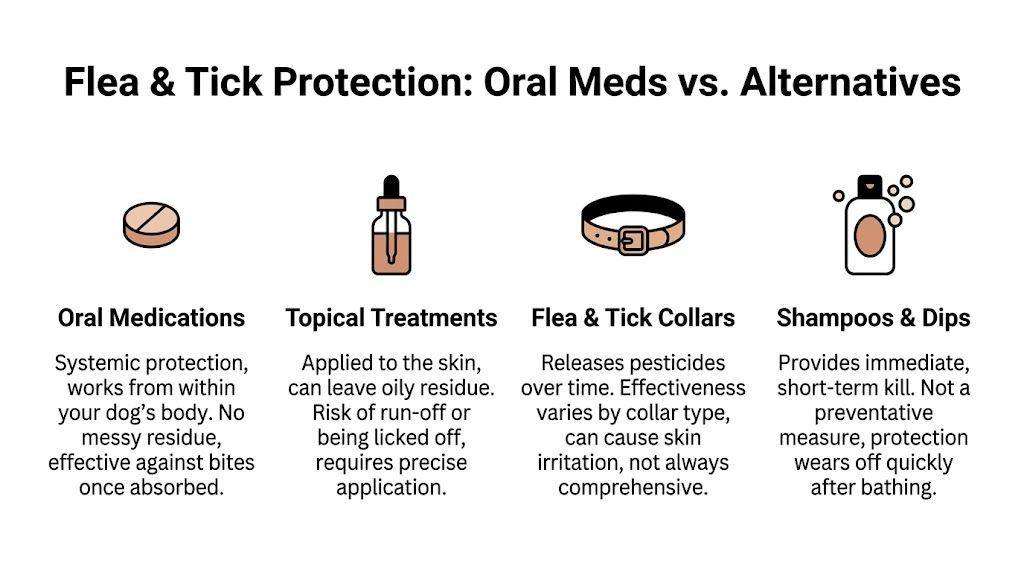
That doesn’t make oral products bad. It means you should stop thinking of them as an invisible force field. They kill well. They do not repel on contact.
Flea and Tick Prevention Methods Compared
| Attribute | Oral Medications | Topical Treatments | Flea/Tick Collars |
|---|---|---|---|
| How they work | Systemic. Parasite must bite to be exposed | Applied to skin and coat surface | Active ingredients released over time from collar |
| Coat feel | Clean, no residue on coat | Can leave oily or damp residue | No coat residue, but collar sits on skin and coat |
| Bathing and swimming | Strong practical fit because product isn't washed off the coat | Owners may worry about runoff or reduced confidence after frequent bathing | Depends on collar type and fit |
| Application style | Chew or tablet, simple for many homes | Requires precise placement on skin | Requires correct fit and monitoring |
| Repellent action | Not repellent in the way many owners assume | Varies by product | Varies by collar |
| Best fit | Busy owners who want a clean routine | Owners comfortable with hands-on monthly application | Owners who want a set-it-and-monitor-it option |
My practical take on each option
Oral meds are the best fit for owners who value routine discipline and hate mess. They’re especially useful when dogs get regular baths or need polished coat handling. For many homes, this is the most realistic system to maintain.
Topicals can work, but owners need to apply them correctly every time. Bad placement, residue concerns, and the general hassle factor lead a lot of people to become inconsistent.
Collars can be convenient, but they’re not my first choice for every dog. Some dogs scratch at them, some households don’t love them around kids, and some owners assume the collar is doing more than it really is.
Where shampoos fit
Shampoos and dips are not long-term prevention. They have a place, but that place is immediate cleanup, not sustained defense. If you’re relying on bath products alone, you’re reacting after the fact.
For owners comparing store-bought options before speaking with their veterinarian, this guide on over-the-counter flea medicine is a useful starting point.
Bottom line: Pick the method you’ll use correctly, and understand exactly what it does. Convenience matters, but clarity matters more.
Safety Side Effects and Dosing Discipline
A common El Paso mistake goes like this. The dog starts scratching, the owner grabs whatever flea product is on hand, the weight is guessed, the dose date is forgotten, and now nobody knows whether the dog is protected or overmedicated. That is how preventable problems start.
Oral flea and tick medication works best in disciplined homes. I recommend it for many dogs because it keeps prevention clean and practical, but I do not recommend casual use. These are real medications. Treat them that way.
The main safety concern owners should know is straightforward. Isoxazoline products have been associated with rare neurologic reactions in some dogs, including tremors, ataxia, and seizures. The FDA addresses that risk in its fact sheet for pet owners and veterinarians about isoxazoline flea and tick products. If your dog has a history of seizures, tremors, unexplained wobbliness, or prior medication reactions, bring that up before the first dose, not after.
From the grooming side, I see another pattern. Owners often focus on killing fleas and forget the dog in front of them. A dog in poor skin condition, with inflamed bite marks, overbathing, or heavy scratching, needs a more thoughtful plan. Medication choice, bathing schedule, and coat recovery should work together. If you are dealing with active irritation between appointments, a flea wash for dogs can help with immediate cleanup, but it does not replace a prevention plan.
What disciplined use looks like
Good results depend on boring habits done correctly every time.
- Use your dog’s current weight. Do not estimate and do not use an old number from months ago.
- Follow one plan. Do not combine oral meds, topicals, collars, and random store products unless your veterinarian gave you that exact plan.
- Do not split doses on your own. These products are dosed by weight range for a reason.
- Log the date you give it. Missed doses leave gaps. Extra doses create avoidable risk.
- Read the label every time. Brand names sound familiar. Active ingredients and directions can differ.
Dogs that need extra caution
Some dogs deserve a slower, more careful decision.
That includes dogs with prior seizures, balance problems, unusual sensitivity to medications, complex prescription schedules, and very small body size. Puppies, seniors, and dogs with chronic health issues also deserve a quick vet check before you settle on a long-term product.
In a grooming setting, these are often the dogs that show stress fast. They itch harder, skin flares faster, and coat quality falls off sooner in our dry, dusty El Paso conditions. Prevention still matters. Product selection just needs more care.
What to watch after dosing
Pay attention after the first dose and after any product change. Watch appetite, energy, coordination, vomiting, diarrhea, scratching, and overall behavior. If your dog seems off, call your veterinarian the same day and say exactly what product was given, how much was given, and when.
Do not guess. Do not wait to see if it passes.
My recommendation
For healthy dogs with owners who stay organized, oral meds are often the cleanest and most reliable option. For dogs with a seizure history, unexplained neurologic signs, or owners who struggle to keep dates straight, I want a tighter conversation with the vet before anything is started.
Safety is not just about the product. It is about correct dosing, honest medical history, and a routine you can maintain.
Oral Meds and Your Grooming Routine The Glo More Standard
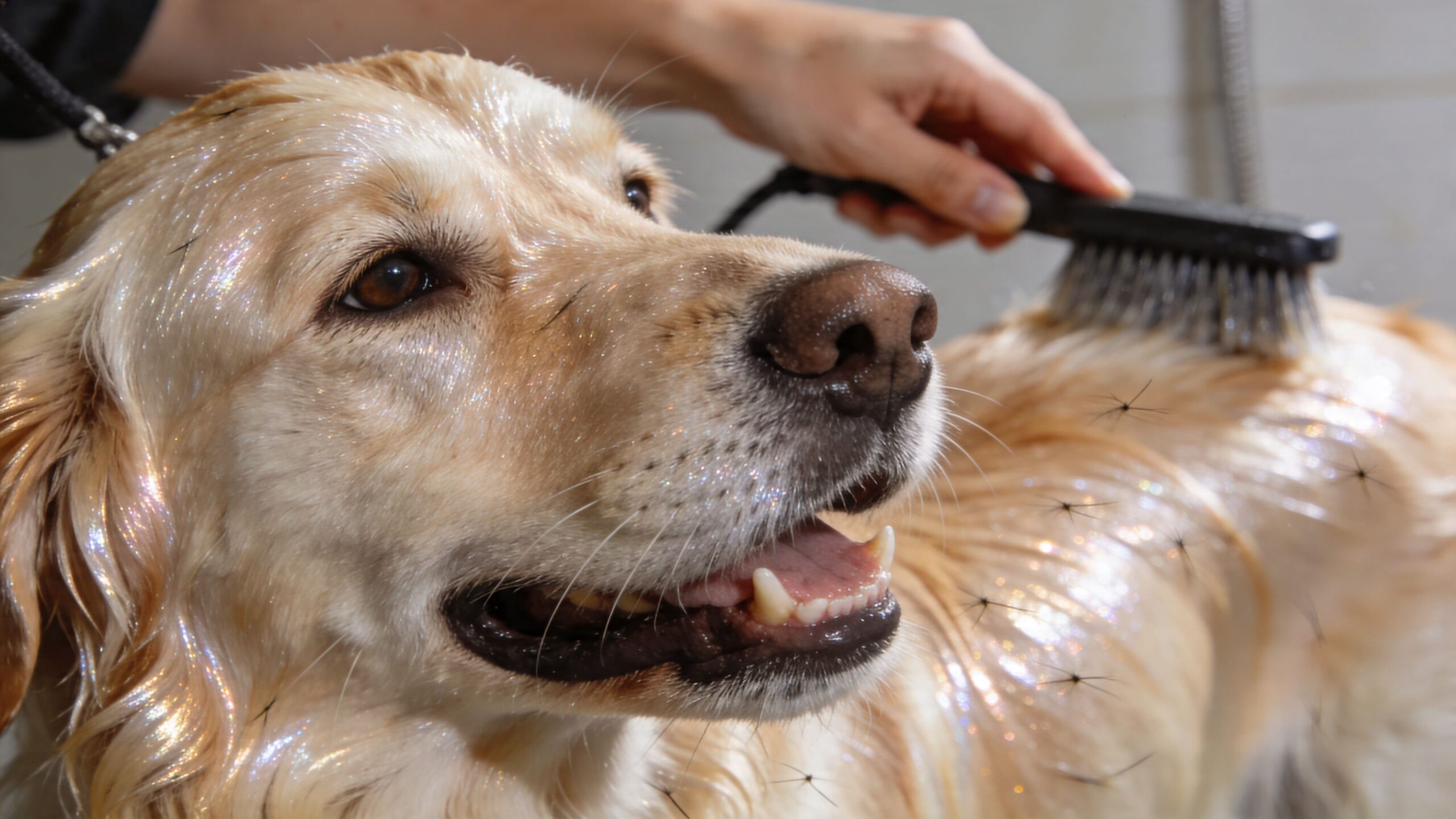
From a grooming standpoint, oral meds solve one of the most annoying problems in coat prep. They don’t leave residue on the haircoat. That matters more than people realize.
A clean groom depends on a clean canvas. When a dog comes in greasy from a recent topical application, the coat can feel coated, separate differently, and require extra handling judgment. With oral products, that issue usually disappears. The coat behaves like a coat should.
Why this matters in a premium setting
In premium pet grooming, workflow and hygiene standards have to stay tight. Dogs are handled closely. Brushes, tubs, tables, loops, dryers, and finishing tools all depend on a clean process. A dog with active fleas isn’t just uncomfortable. It disrupts the whole environment.
Oral prevention helps because it supports a cleaner maintenance routine between appointments. It also avoids the timing awkwardness some owners feel after applying topicals and then wondering whether it’s okay to bathe or groom.
What to do if your dog has live fleas before grooming
If your dog has visible live fleas and the appointment is close, speed matters. Nitenpyram (Capstar) achieves more than 90% flea mortality within 4 hours, and giving it 30 to 60 minutes before a grooming appointment can eliminate live fleas, reduce contamination of the grooming environment, and lower irritation during the bath, according to the Capstar product information.
That makes Capstar useful as a fast cleanup tool. It is not the same as a long-term prevention plan. It’s the immediate response product when you need to knock down live adult fleas quickly.
A smart routine looks like this:
- Call ahead if you found fleas: Don’t surprise your groomer.
- Ask your vet whether Capstar fits your dog: Especially if your dog is sick, stressed, or already on multiple medications.
- Use the fast-acting product before the visit if advised: This can reduce live flea activity before the bath.
- Follow with a longer-term prevention plan: Otherwise you’ll keep repeating the same problem.
If you’re dealing with active infestation cleanup, this guide on a flea wash for dogs can help you think through the bathing side.
Oral meds make coat work better
This is the simple grooming truth. A residue-free coat is easier to wash, dry, fluff, brush, and finish well. That’s one reason oral flea & tick medication for dogs fits so well into a polished grooming routine.
A dog that arrives clean, protected, and comfortable is easier to groom well. Better prep produces better results.
This is also where independent, standards-driven grooming stands apart from big-box volume environments. Chains like PetSmart or Petco often have to move fast across many dogs. A disciplined workflow values control, sanitation, and one-on-one attention. Prevention choices affect that standard more than most owners realize.
Year-Round Protection An El Paso Imperative
In El Paso, inconsistency is the enemy. Owners get busy, the dog seems fine, the weather looks mild, and a dose gets delayed. Then another one does. That’s how coverage gaps happen.
In this context, longer-acting oral products can be beneficial. A survey across major markets found that dog owners using 12-week oral fluralaner achieved 24% to 73% more months of flea and tick coverage per year than owners using specific monthly oral alternatives, which improved adherence to recommendations for year-round protection in the published adherence study on fluralaner.

That matters because the best product in the world won’t help if the owner doesn’t keep up with it.
Why owners fall off schedule
Most missed prevention doesn’t come from bad intentions. It comes from ordinary life.
- Busy calendars: Families juggle work, school, travel, and home demands.
- False sense of security: If the dog isn’t scratching, owners assume they’re fine.
- Mess avoidance: Some owners delay topicals because they dislike the application process.
- Poor reminder systems: If it’s not on the calendar, it gets forgotten.
Longer-duration options don’t fix carelessness, but they do reduce the number of times an owner has to get it right.
Build a year-round routine you can keep
This is the routine I’d recommend for a serious dog owner in El Paso:
- Pair prevention with a recurring calendar event: Grooming, payday, or another fixed household marker.
- Ask your vet for the simplest effective schedule: Complexity kills consistency.
- Check skin and coat during brushing: Don’t outsource all awareness to the medication.
- Keep the whole prevention picture in view: Flea and tick control often sits alongside broader parasite planning, which is why owners should also understand related topics like heartworm meds for dogs.
A local mindset beats seasonal guessing
Desert living doesn’t give owners permission to get lazy. Dogs still travel through parasite exposure zones. They still visit yards, sidewalks, dog-friendly spaces, and homes where other pets come and go. Year-round discipline is the stronger strategy.
For owners looking for structured care touches without overspending, an affordable grooming promo like a monthly Snip & Style Saturday can also serve as a reminder point in the calendar. Tie grooming, coat checks, and prevention review together. That’s how responsible owners stay ahead instead of reacting late.
When to See Your Vet and How Glo More Can Help
Some issues belong with a groomer. Others belong with a veterinarian right away. Know the difference.
Call your vet promptly if your dog has any of these after taking an oral flea or tick medication:
- Tremors or shaking
- Stumbling or poor balance
- A seizure or seizure-like episode
- Sudden weakness
- Vomiting that concerns you after dosing
- Behavior that feels distinctly abnormal for your dog
You should also call your vet if your dog had a known tick bite and then seems unwell afterward. Owners sometimes wait because the dog is “mostly acting normal.” That’s a mistake. If something feels off, report it early.
What a groomer can do, and what a groomer can't
A disciplined grooming professional can notice coat issues, skin irritation, flea dirt, attached ticks, overgrooming, and signs that a dog is uncomfortable. That’s useful. It is not a medical diagnosis.
A veterinarian decides which oral product fits your dog, whether a reaction might be medication-related, and what testing or treatment is appropriate after parasite exposure.
Good pet care has clear lanes. Groomers support. Veterinarians diagnose and prescribe.
Practical support for busy owners
Busy professionals often need help staying organized, asking the right questions, and coordinating care without dropping details. That’s where a strong concierge-style support system can make life easier. Not by replacing the vet, but by helping owners stay prepared, informed, and consistent.
That kind of support matters in a city like El Paso, where schedules get packed and pet care can slip from proactive to reactive faster than people expect.
Frequently Asked Questions About Oral Medications
Can puppies take oral flea and tick medication?
Some can, depending on the product, age, weight, and veterinary guidance. Don’t assume a product that works for your adult dog is automatically right for a puppy. Check the label and ask your veterinarian.
What if my dog vomits after taking the pill?
Call your veterinarian and tell them the product name, dose, and timing. Don’t automatically redose on your own. The right answer depends on how much time passed and your dog’s condition.
Can I combine an oral product with another flea treatment?
Only if your veterinarian says to. Owners get into trouble when they stack products because they’re frustrated and want faster results. More product does not automatically mean better protection.
Are oral meds better than topicals?
For many owners, they’re more convenient and easier to keep consistent with. But “better” depends on your dog’s health history, your lifestyle, and whether you understand that oral medications work after the parasite bites.
If my dog is on an oral med, should I still check for ticks?
Yes. Absolutely. You should still do hands-on checks after outdoor time. Medication is one layer. Owner awareness is another.
What’s the smartest next step?
Talk to your veterinarian about the safest effective option for your dog, then commit to a routine you can maintain. If you’re serious about coat quality, hygiene, and comfort, parasite prevention belongs in the same conversation as brushing, bathing, and nail care.
If you want El Paso dog grooming with high standards, clean workflow, and a team that respects the full picture of pet wellness, book with Glo More Grooming. As a veteran-owned grooming studio, Glo More brings disciplined one-on-one care, polished results, and a long-term mindset that stands apart from chain grooming. If you’ve been looking for premium pet grooming or an affordable grooming promo like Snip & Style Saturday, reserve your spot now and give your dog the level of care they deserve.