Yes, you should blow-dry your dog after a bath. Done properly, drying is a two-step process of towel drying first, then a dog-safe dryer, and some grooming guidance even breaks the workflow into 5 passes for smaller dogs, 8 for medium dogs, and 10 to 12 for large dogs.
If you're standing in your bathroom with a soaked dog shaking water across the walls, don't treat drying like the last optional chore. Treat it like part of the bath itself. A wet coat that stays damp too long can turn a routine wash into a skin problem, a matted coat, or a miserable afternoon for your dog.
That standard matters in El Paso. Dry air outside doesn't mean your dog's undercoat, paw pads, armpits, or ears are drying correctly. Surface fur can feel fine while moisture stays trapped where it causes trouble.
A disciplined grooming workflow fixes that. That's how a veteran-owned grooming business should operate. No shortcuts, no guessing, no "good enough." In El Paso dog grooming, premium care starts when the bath ends.
Beyond the Bath Why Proper Drying Is a Non-Negotiable Standard
Your dog is clean, standing on the bath mat, and already starting to shiver while the top of the coat looks almost dry. That is the moment owners make a bad call. They stop too early, assume the rest will dry on its own, and leave moisture trapped where skin problems start.
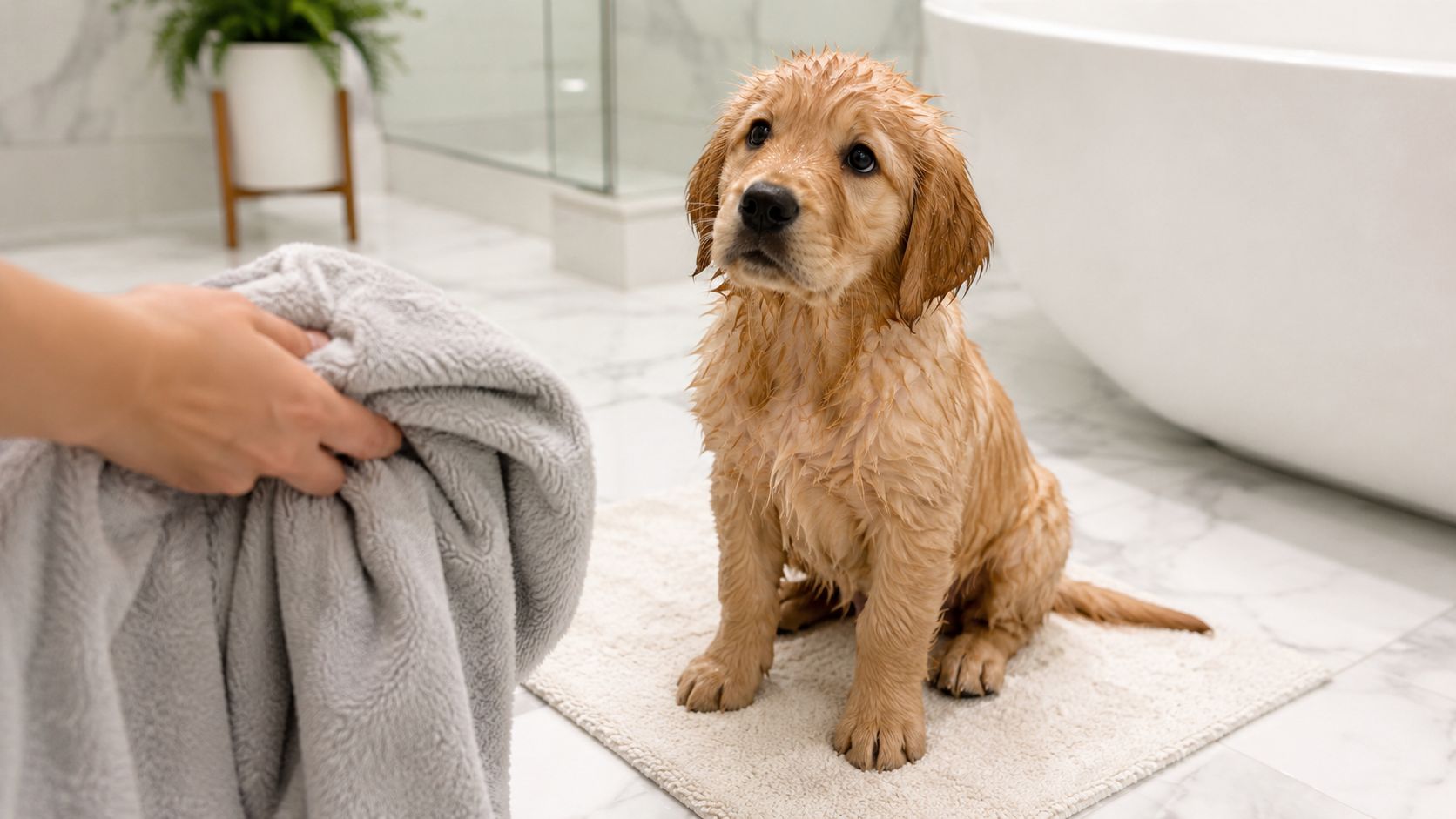
A proper bath ends with a fully dried coat. Anything less is incomplete grooming. Serious groomers know the finish matters as much as the wash because comfort, skin condition, and coat quality all depend on what happens after the rinse.
The standard is simple. Towel off the bulk water. Use controlled airflow with a dog-safe dryer. Dry all the way to the skin without overheating the dog. Then inspect the coat with your hands, not just your eyes. If the coat still feels cool underneath, it is still wet.
Disciplined grooming distinguishes itself from shortcut grooming through thoroughness. Big-box chains and rushed owners often settle for a dog that looks dry from three feet away. The Glo More standard requires a dog that is thoroughly dry in the dense coat, behind the ears, under the collar line, through the feathering, and down the legs. Surface dryness does not count.
That matters even in El Paso. Dry air can fool you fast. A coat can feel fine on top while moisture stays trapped close to the skin, especially on double-coated dogs, doodle mixes, spaniels, shepherds, and any dog with thickness in the undercoat.
If you handle bathing at home between appointments, use a real process instead of guesswork. This guide on how to groom a dog at home is a solid starting point. The rule stays the same. Washing the dog is only half the job. Drying the dog correctly finishes it.
The Hidden Dangers of Improper Drying Health Risks You Cannot Ignore
A damp dog doesn't just look unfinished. A damp dog can become a skin and coat problem fast.
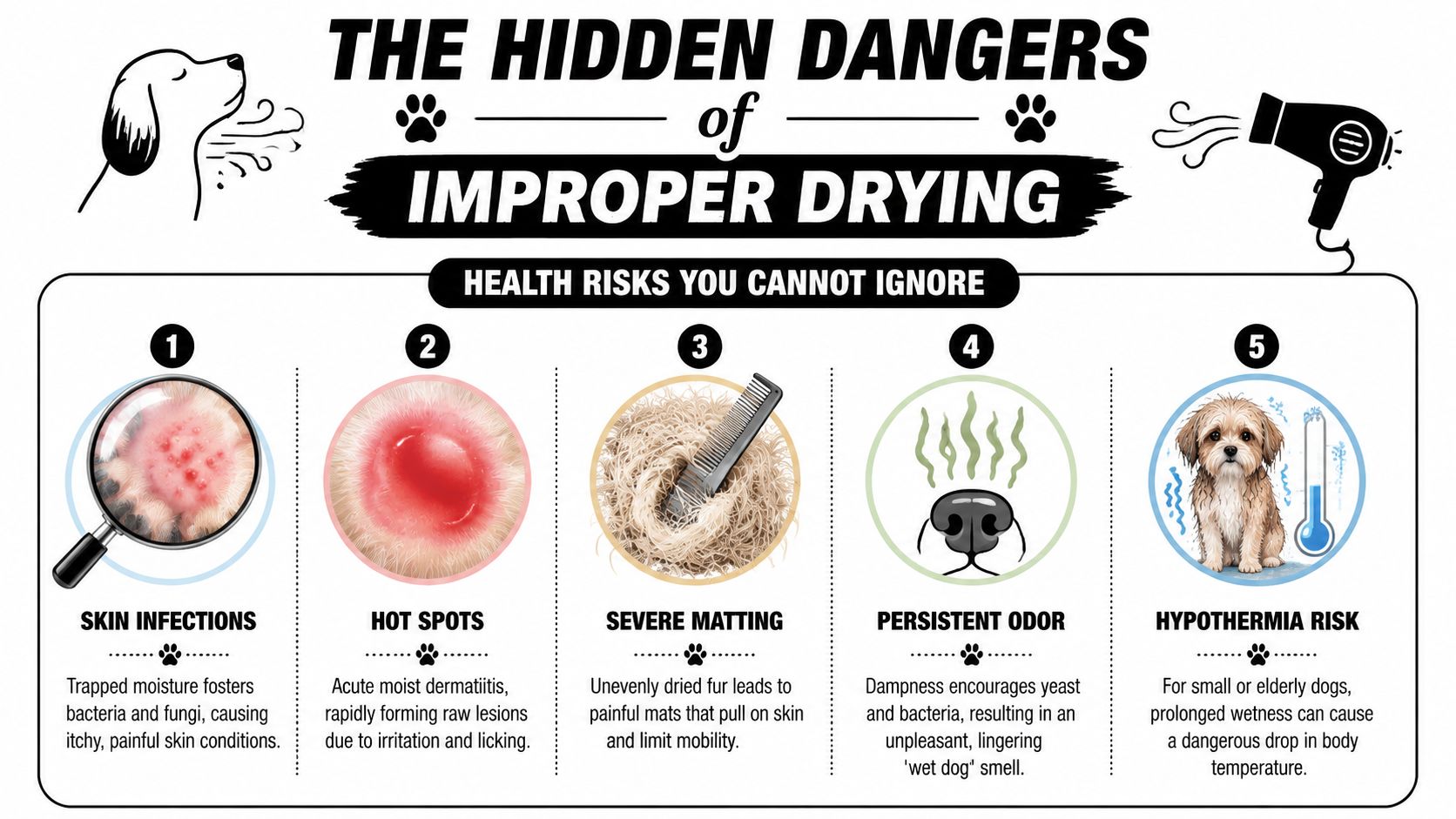
Think about a wet towel left bunched up in a corner. It doesn't stay fresh. It turns stale, musty, and unpleasant because moisture lingers where air can't reach. A dense dog coat behaves the same way when owners towel off the surface and stop there.
One grooming reference puts it plainly: air-drying a dog is not recommended in many grooming contexts because trapped moisture can persist in the paw pads and under the armpits, where it increases the risk of fungal growth and can contribute to ear infections. The same guidance recommends towel drying first and then controlled blow-drying instead of leaving the coat wet to dry on its own, as noted by Animal Behavior College's dog-drying guidance.
Where trouble starts first
The problem areas are predictable:
- Paw pads get overlooked, stay damp, and hold grime.
- Armpits trap moisture because the skin folds and hair rubs together.
- Ears and nearby coat stay humid if the dog's head and neck aren't dried carefully.
- Dense undercoats keep water close to the skin long after the top layer feels almost dry.
Those areas don't need drama to become a problem. They just need time and moisture.
Here's a visual walkthrough that helps explain why the drying stage matters so much:
What owners usually miss
Improper drying often leads to issues that develop gradually:
| Risk | What it means for your dog |
|---|---|
| Skin irritation | Damp skin stays uncomfortable and can become itchy |
| Fungal growth | Moisture trapped in tight areas creates the wrong environment |
| Ear problems | Wetness around the ears can contribute to infection risk |
| Matting | Hair dries unevenly, clumps together, and tightens |
| Odor | That stubborn wet-dog smell often means moisture is still hanging around |
A clean dog shouldn't stay damp for hours. If the skin is still wet, the grooming process is unfinished.
That matters even more for owners trying to stretch time between appointments. Brushing a half-dry coat can lock in tangles. Leaving a long coat damp can turn tomorrow's brushing session into a painful dematting job. Good drying prevents problems that owners often mistake for bad luck.
The Glo More Standard Tools and Techniques for a Perfect Finish
The right answer isn't "blast the dog with heat." The right answer is controlled airflow, correct distance, and a repeatable workflow.
Human hair dryers are the wrong tool. A proper dog-drying setup uses equipment built for coat work, not scalp styling. Groomer guidance recommends a high-velocity dryer with variable speed, starting on a low setting, keeping the nozzle about 6 inches from the body, and avoiding direct airflow into the ears, eyes, or genitals. The same guidance notes that drying time commonly ranges from about 20 to 40 minutes, with longer sessions for thick or double coats, according to these useful dog-drying tips from My Pet Command.
The tool standard
If you're drying at home or evaluating an El Paso dog grooming provider, check for the basics:
- High-velocity dryer with variable speed so the handler can lower intensity for sensitive dogs and increase airflow where the coat is dense.
- Absorbent towels to remove bulk moisture before the dryer ever turns on.
- Brushes matched to coat type because brushing while drying helps separate coat layers and finish cleanly.
- Safe nozzle control so airflow moves across the body instead of being forced into sensitive areas.
If you need a starting point for home equipment, this roundup of grooming supplies for dogs helps owners understand what belongs in a real grooming setup.
The method standard
A disciplined drying routine looks like this:
- Towel first. Press and blot. Don't scrub the coat into knots.
- Start low. Let the dog settle before increasing airflow.
- Work in sections. Neck, shoulders, body, legs, chest, and tail. Don't bounce around.
- Check the skin level. Surface fluff means nothing if the base of the coat is still damp.
- Brush while drying when appropriate. This matters most on coats that tangle or compact easily.
Field rule: Use the dryer for airflow, not heat. Dry the coat. Don't cook it.
Coat type changes the job
A Maltese, a Shih Tzu, and a German Shepherd don't get dried the same way.
A single coat often needs careful sectioning and brush control so the hair dries smooth without tangling. A double coat demands patience because water hides near the skin. A curly or doodle-type coat needs deliberate line work with the brush so mats don't tighten as the hair dries.
One factual option for owners who don't want to manage that process at home is the bath and blow-dry service offered by Glo More Grooming, which directly covers the post-bath drying stage discussed here.
At-Home Drying vs Professional Service A Clear Choice for El Paso Pets
Most at-home drying sessions break down the same way. The dog is tired. The owner is rushed. The towel is overloaded. The blow dryer is too loud, too hot, or both. The job ends early because everyone has had enough.
That doesn't make the owner careless. It means the setup is working against them.
What home drying gets wrong
Expert guidance warns that human hair dryers should not be used on dogs because their heat and noise can be harmful, and dog dryers should be kept away from the face and ears. The American Kennel Club recommendation included in that expert guidance is to acclimate dogs gradually to sound and airflow, using low settings and short sessions with treats, because stress reduction is part of safe drying, as explained in this guide to drying your dog after a bath.
That point gets missed all the time. Drying isn't just mechanical. It's behavioral.
When owners ask, "Should I blow dry my dog after a bath?" they're often really asking a different question. "Can I do this safely without turning my dog into a nervous wreck?" Sometimes yes. Often, not consistently.
Professional care changes the environment
The biggest difference isn't just better equipment. It's control.
Compare the two:
| At home | Professional one-on-one setup |
|---|---|
| Household distractions interrupt the dog | Focused handling keeps the session structured |
| Wrong tools increase stress or risk | Dog-appropriate tools match the coat and temperament |
| Owners stop early when the dog resists | Experienced workflow finishes the dry correctly |
| Bathrooms and patios aren't built for coat work | Grooming spaces are arranged around safety and efficiency |
For dogs that are noise-sensitive, a calmer setup matters. For thick-coated dogs, complete drying matters. For busy professionals in El Paso, both matter.
Large chains like PetSmart and Petco operate on volume. That model works for retail. It doesn't always serve dogs that need calm handling, patience, and a methodical finish. A tighter, lower-volume approach gives dogs more breathing room and gives handlers time to do the job right. That's the value of one-on-one dog grooming.
Some dogs don't need more speed. They need less chaos.
Our Commitment in Action Promotions and Premium Services
Standards mean nothing if owners cannot book them at a realistic price and on a realistic schedule. Good grooming should be available to regular families, not just clients paying for top-tier packages.
Drying is part of the job. It is not an add-on, and it is not the step you skip to save time.
Owners hear plenty of bad advice after a bath. Let the dog air dry. Towel dry and call it good. Rush through the coat because the dog looks dry on top. Those shortcuts are common, especially in high-volume settings. They are also the reason dogs leave with damp undercoats, frizz, trapped moisture, and preventable skin trouble.
Glo More takes a stricter approach. If a dog is booked for a bath, the drying process is handled with the same discipline as the wash itself. The goal is simple. Send the dog home clean, dry to the skin where appropriate for the coat, and comfortable.
Real access to proper care
That standard should not be reserved for rare special occasions. El Paso owners need practical ways to get professional drying and coat care without being pushed into rushed, assembly-line service.
That is why service options matter. Price matters too. The key is keeping the method consistent instead of cutting steps on lower-cost appointments. Big-box chains often chase volume. A serious grooming shop protects the process first.
What that looks like in practice
Glo More puts that commitment into clear service choices:
- Snip & Style Saturday gives families a scheduled chance to book a full groom at a promotional rate without dropping the core coat-care steps.
- Bath and blow-dry services cover dogs that do not need a haircut but still need a proper wash and full dry.
- Concierge support helps busy professionals who need dependable scheduling, higher-touch care, and organized help beyond a basic visit.
That mix serves real households. Some owners need to watch cost. Others need time back. Both still deserve disciplined handling, proper drying, and a finished dog that was not pushed through a noisy retail pipeline.
Glo More is a veteran-owned grooming business, and that shows in the standard. Clear process. Clean execution. No shortcuts where your dog's skin, coat, and comfort are concerned.
The Final Inspection Your Dog Deserves a Higher Standard of Care
Your dog is standing in the living room after the bath, looking clean on the surface while the undercoat is still damp against the skin. That is where careless grooming fails. A proper finish means the coat has been checked by hand, the skin has been protected, and the dog leaves fully dry, steady, and comfortable.
Recent instructional content has pushed more owners toward better habits, including towel-first drying, controlled cool air, brushing during the dry, and lower-noise handling for sensitive dogs, as shown in this recent dog-drying instructional video. That approach is sound. Speed is not the standard. Complete, controlled drying is the standard.
The standard your dog should get every time
Run this inspection after every bath:
- Check the skin, not just the topcoat: Part the coat with your fingers and confirm the hair underneath is dry.
- Control the airflow: Keep air off the eyes, inside the ears, and away from the genitals.
- Watch the dog's body language: Panting, flinching, crouching, and frantic turning mean your process needs to change.
- Brush with discipline: Use the right brush for the coat and work methodically. Do not rake through damp mats.
- Stop if you cannot finish correctly: Incomplete drying at home is worse than a bath that should have been handled by a pro from the start.
Your dog does not report missed moisture, skin irritation, or overheating. You are responsible for catching it.
So the answer to "Should I blow dry my dog after a bath?" is yes, if you can do it with control, patience, and dog-safe equipment. If you cannot, hand the job to someone who can.
That is the line Glo More Grooming holds. Final inspection is not a formality. It is the moment where shortcuts get exposed or standards get proven. Big-box chains often move to the next dog before the job is properly finished. A disciplined grooming shop does not.
El Paso dogs deserve better than a quick towel-off and a hopeful guess. They deserve a coat checked to the skin, sensitive areas handled correctly, and a finish that protects health as much as appearance.
If you want that level of care, book with Glo More Grooming. Ask about Snip & Style Saturday or request a premium bath and blow-dry built around your dog's skin, coat, safety, and comfort.