
Your Pekingese is scratching behind the ears again. You lift the coat, feel a knot near the skin, and suddenly the haircut question stops being about “cute styles” and starts being about comfort, hygiene, and what your dog can realistically maintain in El Paso heat.
That's where many owners get stuck. They search for Pekingese dogs haircuts, see a gallery of fluffy trims and short clips, and still don't know which choice protects the coat, reduces tangles, and fits daily life. A disciplined grooming plan solves that confusion. The trim comes second. Coat condition comes first.
Why Pekingese Haircuts Matter More Than Style Alone
By the time a Pekingese owner notices a problem, the coat has often been struggling for a while. The warning signs are usually small at first. A snag behind the ear. Damp coat under the chin. Feathering near the rear that starts to clump after potty breaks. Left alone, those spots turn a beautiful coat into a sore, hard-to-manage one.
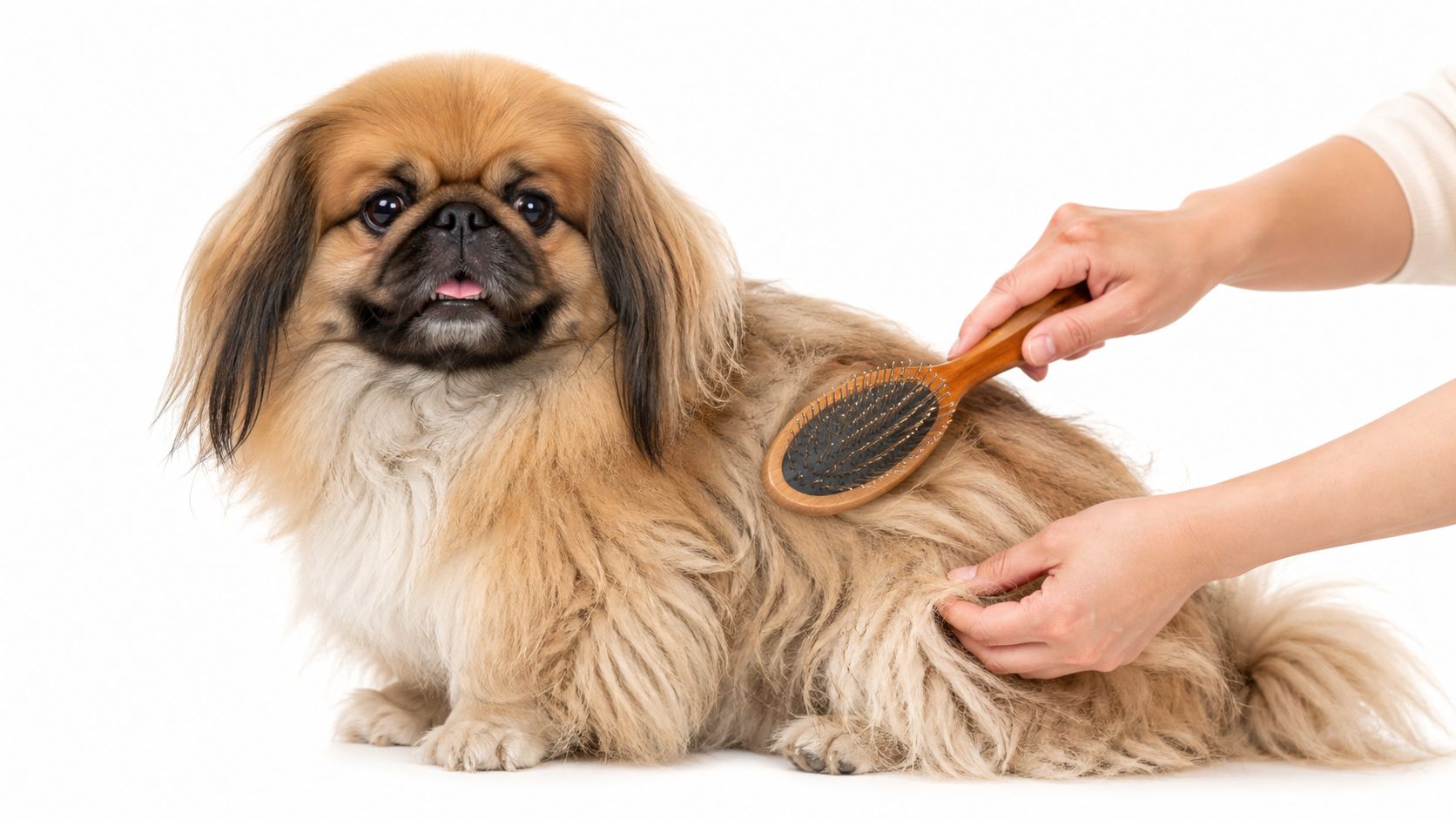
That is why a haircut should be treated as a coat-health decision first and a style choice second. On a Pekingese, trim length affects brushing access, moisture control, friction in high-rub areas, and how much debris the dog brings in from daily life. In El Paso, heat, dust, and dry air add another layer to that decision. A shorter outline may reduce cleanup on one dog, while another dog needs more coat left in place for protection and only targeted tidying where mats keep forming.
Owners are often surprised by one basic fact. A haircut does not correct neglected coat care. It changes the amount of coat you must maintain after the appointment.
Surface fluff can stay soft while the coat underneath tightens close to the skin. That is why a disciplined groomer parts the coat, checks the dense areas by hand, and studies friction zones before recommending a trim. In a premium one-on-one grooming setting, that assessment matters as much as the clip itself because the right plan matches the dog, the coat condition, and the owner's real routine at home.
A useful rule is simple. If you cannot separate the coat cleanly near the skin in the ears, armpits, rear, or chest, the problem is maintenance access, not fashion.
The best Pekingese haircut usually answers practical questions such as these:
- How much brushing can the owner keep up with each week
- Which areas mat first on this individual dog
- How much outdoor dust, sidewalk heat, and bathroom cleanup the coat handles
- Whether the goal is a fuller outline, easier hygiene, or less daily coat drag
That approach makes grooming more honest and more helpful. A long trim can work well for a dog with steady home brushing. A moderate tidy trim can be kinder for a family that wants easier upkeep without taking the coat too short. A hygiene-focused shape around the rear, feet, chest, and ears can solve many comfort problems while preserving the breed's protective coat structure.
Haircuts work best as part of broader preventative pet care. When owners wait until mats are packed in, style options shrink and the dog's comfort usually drops with them.
In other words, the prettiest trim is the one your Pekingese can live in comfortably between appointments.
Understanding the Pekingese Double Coat and Its History
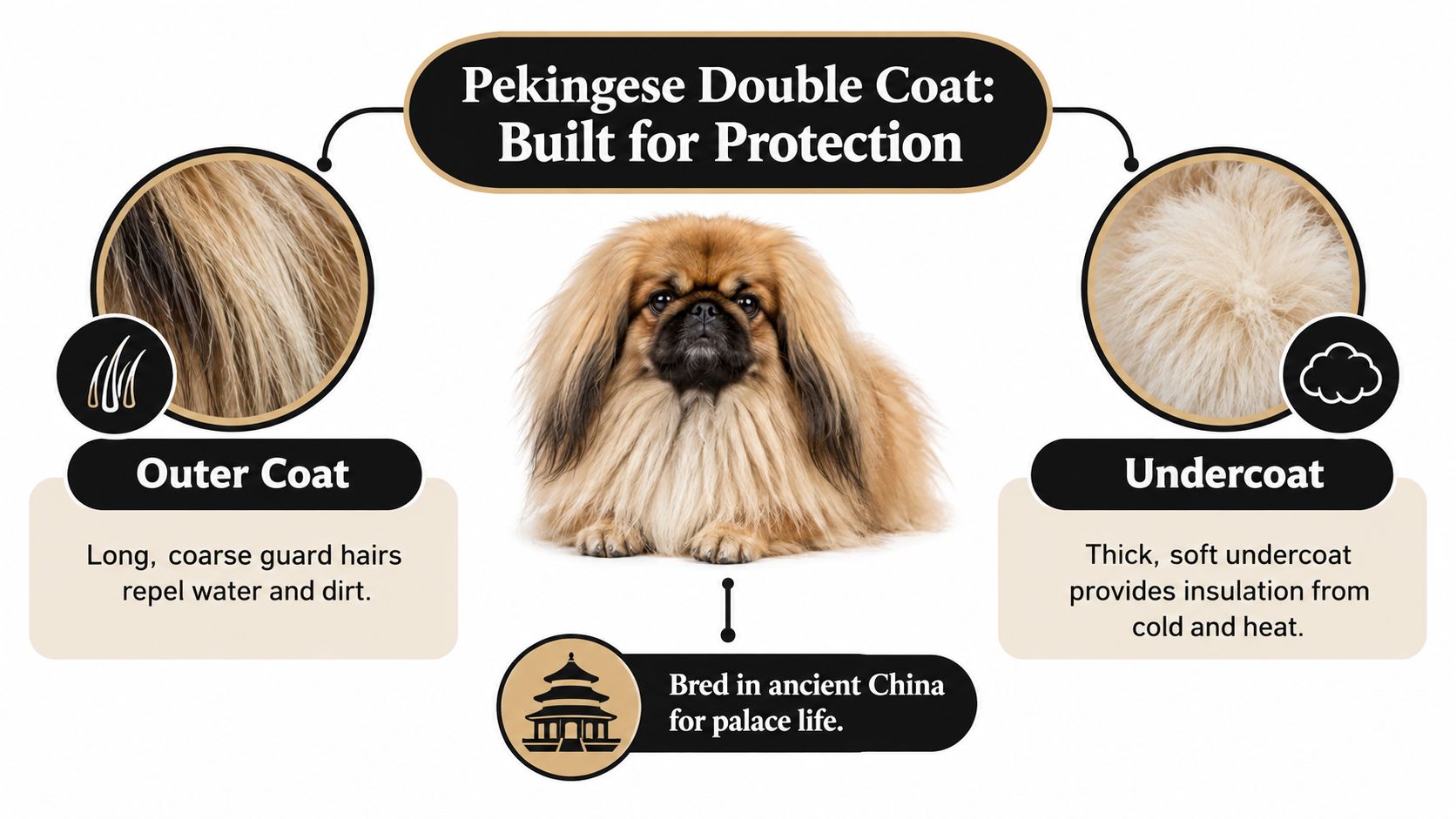
A Pekingese coat is a working coat. Long hair is only the visible part. Under that outer layer sits a softer undercoat, and the two layers do different jobs. Once you understand that, haircut choices get clearer, especially in a hot, bright place like El Paso where sun exposure, dust, and ground heat all affect comfort.
The double coat has two jobs
The outer coat works like a shield. It helps reduce direct sun exposure, catches some dirt before it reaches the skin, and takes the wear that comes from daily movement. The undercoat sits closer to the body and adds insulation. Together, those layers help the dog regulate exposure to heat, weather, and friction.
That is why coat length should be chosen with restraint. Shorter is not automatically cooler for a double-coated dog. If too much protective coat is removed, the dog may lose shade over the skin and become more vulnerable to sunburn, hot surfaces, and coat texture changes as it grows back. Basic grooming guidance for the breed reflects that caution in this Pekingese grooming overview.
In practical grooming terms, the question is usually not, “How short can we go?” The better question is, “How much coat can we preserve while still making daily care realistic?”
The breed's history still shows in the haircut
Pekingese were developed as companion dogs in imperial China, and breed histories from the American Kennel Club's Pekingese breed information trace that heritage to the royal court and the breed's distinctive lion-like presentation. That background matters because the full mane, heavy feathering, and broad front are part of the breed's identity, not random ornament.
A modern pet trim does not need to copy a show outline exactly. It should still respect the coat's architecture. If the chest frill, ear feathering, and body outline are removed too aggressively, the dog can lose both protection and the recognizable Pekingese expression people love.
Preservation grooming in real life
Preservation grooming means keeping the structure that protects the dog, then adjusting the parts that cause trouble at home. That often includes the feet, sanitary area, rear furnishings, and selected coat around the chest or ears.
For many families, this is the sweet spot. The dog keeps a protective layer, but the coat becomes easier to comb, cleaner after potty breaks, and less likely to drag through dust and debris. Owners who want that balance often do well with a grooming plan for long-haired dogs rather than a very short clip.
A one-on-one grooming approach helps here because trim length is matched to the actual coat in front of you. A dense, packed coat in El Paso summer may need more reduction than a well-maintained coat with clean line-brushing at home. The style still matters. Coat health comes first.
Popular Pekingese Haircut Styles Explained
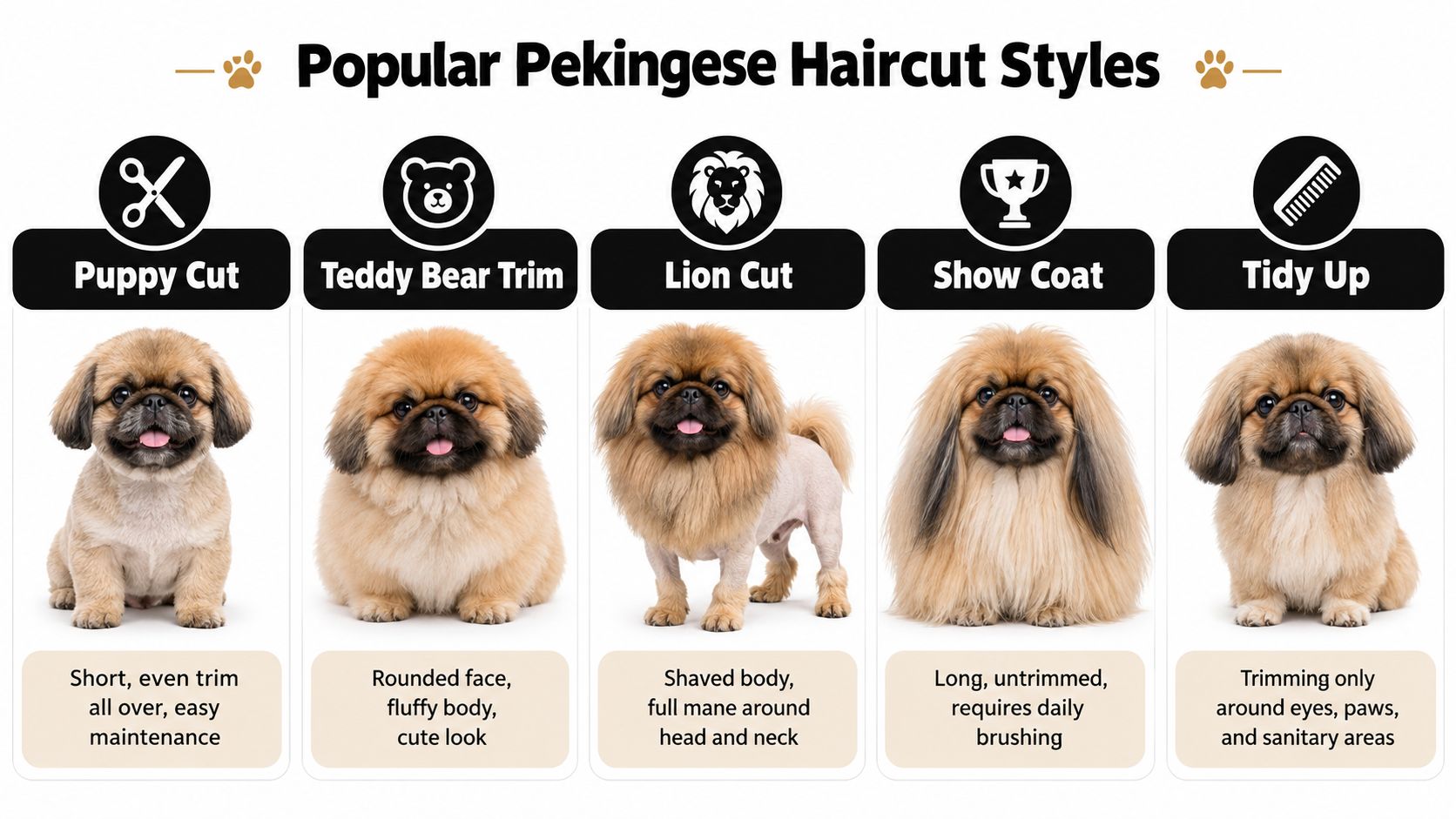
Most Pekingese dogs haircuts fall into a few recognizable categories. The style names sound simple. The day-to-day upkeep behind them isn't always obvious.
The puppy cut
This is the trim many pet owners ask for first. In plain language, it means the coat is shortened into a softer, more even outline while still leaving enough length to avoid a stark clipped look.
It suits owners who want less drag on the ground and fewer tangles in furniture-heavy areas. It also fits households where brushing happens regularly, but not at a show-coat level. If you like a rounded, approachable look, you may also want to read about what a teddy bear cut for dogs means, since many owners mix those terms.
The teddy bear trim
This style keeps the expression soft and rounded. The face appears fuller, and the body is shaped to look plush rather than dramatic.
Owners often love it because it photographs well and still feels pet-friendly. The catch is that a cute rounded finish still needs disciplined combing. If the face, chest, and leg furnishings stay fluffy, they can still tangle.
The lion cut
This is the most visually dramatic option. The body is clipped shorter while the mane area and some tail coat are left fuller for contrast.
Here's where a groomer-educator needs to be frank. The lion cut is recognizable, but it's not automatically the smartest choice for every Pekingese. It changes coat protection significantly, and for a double-coated dog that matters.
A quick visual can help you compare the common options before you settle on one.
The show coat and the tidy-up
A show coat keeps the breed's long outline with minimal sculpting. It's elegant, but it asks for steady owner participation. This is not a low-effort choice.
A tidy-up is often the most underrated answer. Instead of changing the whole silhouette, the groomer trims around the eyes, feet, paws, rear, and any coat that's collecting mess. Many adult Pekingese live very comfortably in this category because it respects coat function while improving hygiene.
A tidy-up often gives owners the biggest comfort gain with the least disruption to the coat.
Pekingese Haircut Styles at a Glance
| Haircut Style | Length and Look | Upkeep Level | Best For |
|---|---|---|---|
| Puppy Cut | Shorter, even pet trim with a soft outline | Moderate | Families who want easier upkeep without removing the breed's charm |
| Teddy Bear Trim | Rounded face, plush body, cute expression | Moderate to high | Owners who enjoy styling and regular brushing |
| Lion Cut | Shorter body with fuller mane and tail emphasis | High decision sensitivity | Owners drawn to a bold look who understand coat-protection tradeoffs |
| Show Coat | Long, natural outline with minimal trimming | High | Dedicated brushers and owners who want the classic silhouette |
| Tidy Up | Trim only around eyes, feet, paws, and sanitary areas | Lower overall disruption, still needs coat care | Owners who want hygiene and comfort without major length loss |
Match the style to the household
A retired owner with time for daily coat work may enjoy a fuller profile. A busy professional may do better with a puppy cut or tidy-up. A senior dog with frequent bathroom cleanup needs may benefit from practical rear and foot trimming even if the body stays longer.
That's where premium pet grooming stands apart from rushed volume work. The style shouldn't be chosen from a poster alone. It should fit the dog's coat, the owner's habits, and the environment the dog lives in.
How Short Is Too Short for a Pekingese
This is the question many owners in warm climates ask, and it deserves a straight answer. On a Pekingese, very short isn't automatically safer or cooler.
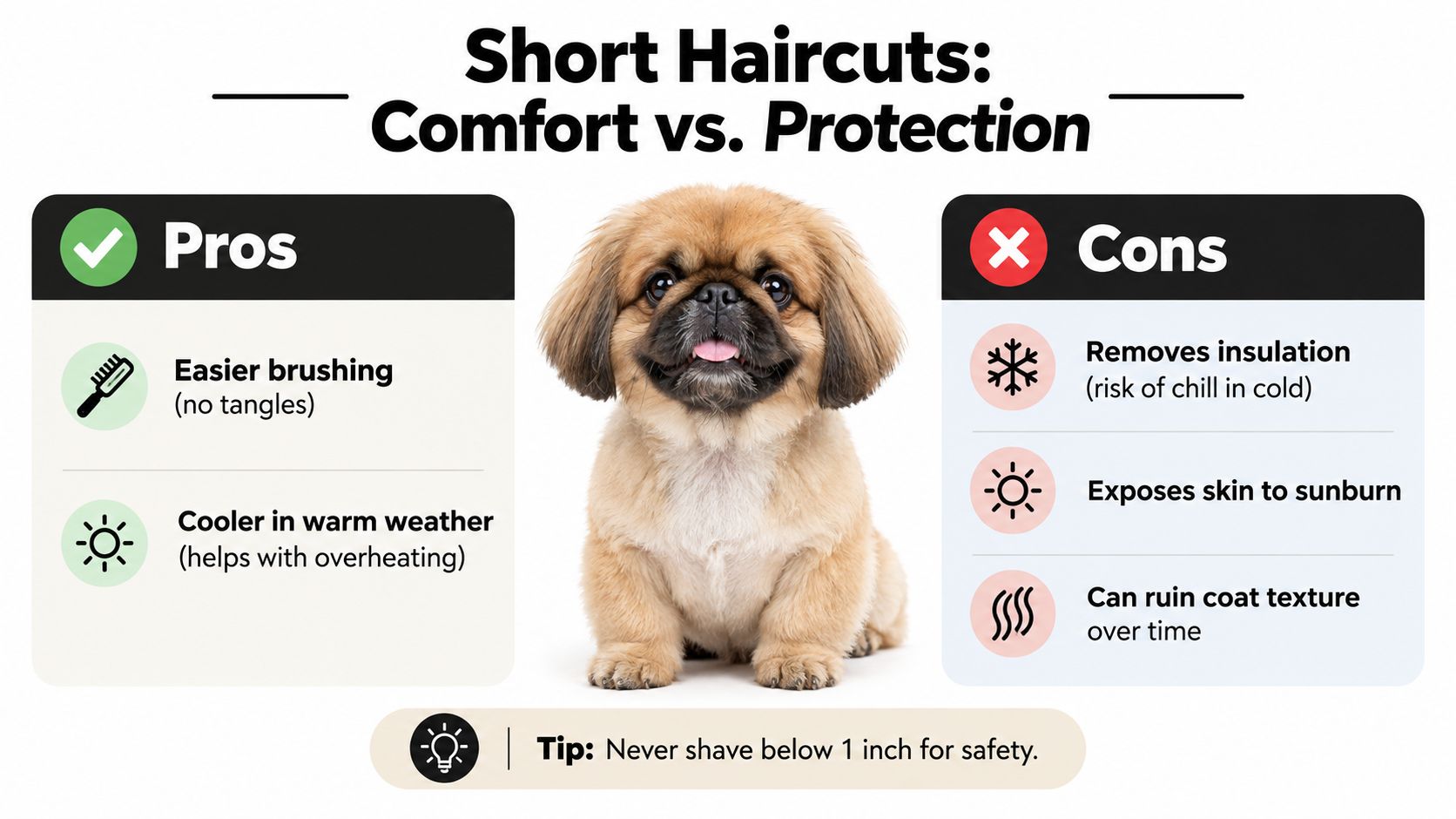
Breed guidance warns that Pekingese should be shown with minimal grooming, and veterinary-facing guidance says shaving is generally best avoided unless medically necessary because removing the protective outer coat can increase exposure to skin injury and sun-related damage while changing the coat's insulating function, according to the AKC Pekingese breed standard PDF.
The shorter-is-cooler myth
Owners often mean well. They see a thick coat, feel El Paso heat, and assume a very close clip will bring relief.
But the coat does more than create warmth. It also helps buffer exposure. If a Pekingese spends time outdoors, rides in the car for errands, or walks on bright sunny days, removing too much outer coat can create a new problem. The dog may lose some of the very protection the coat was providing.
When a moderate trim makes sense
A moderate trim can improve comfort if the current coat is catching debris, matting repeatedly, or dragging in ways that trap heat and grime. That's different from taking the coat extremely short.
Use these questions before deciding:
- Does the coat mat despite regular brushing: If yes, a practical reduction may help.
- Does your dog spend time outdoors often: If yes, think carefully about sun exposure and skin coverage.
- Is the problem whole-body length or specific zones: Many times the trouble is feet, rear furnishings, ear fringes, or chest coat.
- Is there a medical reason: In those cases, your veterinarian's guidance comes first.
If the issue lives in four problem spots, don't solve it by removing protection from the entire body.
Smarter alternatives than full-body shaving
Many dogs don't need a drastic reset. They need better coat editing.
A groomer may recommend:
- shorter shaping on the underside,
- cleaner lines around the feet,
- a neater sanitary trim,
- reduced bulk in mat-prone furnishings,
- and a more disciplined brushing routine at home.
That approach is especially sensible in El Paso dog grooming, where heat is real but so is sun intensity. For a double-coated breed, comfort usually comes from strategic trimming, thorough de-shedding, proper drying, and coat separation. Not taking everything off.
Maintenance Routines That Keep Every Haircut Looking Great
By day ten, a Pekingese trim often tells the truth. The outline may still look tidy, but the coat at the ear base starts to felt, the leg feathering gathers dust, and the feet begin to spread like slippers. That is why maintenance is part of the haircut itself. For this breed, style holds only when the coat stays open, clean, and properly separated.
A useful way to read your dog's routine is to ask one question first: what is this haircut trying to protect? In El Paso, the answer is rarely just appearance. It is skin coverage from sun, enough airflow through the coat, and less friction in the places that mat first. A shorter pet trim needs one kind of upkeep. A fuller outline needs another. Both still depend on regular hands-on care at home.
Daily coat habits
Brush with a purpose, not just for minutes on a clock.
For many Pekingese, a brief daily session works better than letting the coat build up for several days and then trying to fix everything at once. Use line brushing so you reach the coat near the skin. Part a small section, brush that layer through, then move upward. Surface brushing can make the top look neat while hidden tangles keep tightening underneath.
Pay close attention to the friction zones:
- behind the ears,
- under the collar or harness,
- in the armpits,
- under the tail,
- and along the leg feathering.
Those spots behave like the folds in a wool sweater. They rub, compress, and knot faster than the rest of the body.
Weekly checks that prevent setbacks
Once a week, stop grooming for appearance and inspect for function. Use your fingers as much as your brush.
Check these areas:
- Ear bases: Feel for small, firm knots before they turn into mats.
- Rear furnishings: Catch residue early so it does not dry into the coat.
- Feet and pads: Remove packed fur, dust, and debris that change the foot shape and tracking.
- Skin access: Part the coat in a few places. If you cannot easily see skin, the coat is getting too dense or too compressed.
Owners who prefer a structured grooming schedule often book a full service that includes bathing, drying, trimming, ear care, and nails through Glo More Grooming. The value is less about pampering and more about resetting the coat before small problems spread.
A haircut lasts longer when friction is managed early.
Bathing and drying rhythm
Bathing helps only if the coat is dried all the way through. A damp undercoat can tighten tangles, trap debris, and flatten the shape of the trim.
A practical rhythm for many Pekingese is a regular bath schedule paired with recurring full grooms, with timing adjusted to coat length, outdoor time, and how quickly the dog mats. Wahl's Pekingese grooming overview notes monthly bathing as a common pattern, with full grooming often scheduled every 6 to 8 weeks.
After the bath, dry in sections until the coat separates cleanly. That step matters more than many owners expect. On a double coat, drying is what restores loft, exposes loose undercoat, and shows whether the haircut still has balance.
Seasonal adjustments
Season changes can make a good trim seem harder to manage even when the haircut itself is fine. During heavier shedding periods, the coat often needs more brushing and better blow-drying to clear old undercoat before it compacts.
VCA Hospitals on grooming and coat care for dogs explains that dogs with heavier undercoats benefit from more attentive grooming during seasonal coat changes. For a Pekingese, that may mean adding an extra brushing session during the week or scheduling a bath sooner than usual to help release trapped coat.
Signs it is time to rebook
Watch the coat, not the calendar alone.
A refresh is usually due when:
- hair starts falling into the eyes,
- the rear coat stays messy after cleanup,
- the feet look round and overgrown,
- the same small knots keep returning,
- or brushing suddenly takes much longer than it did two weeks ago.
Those are coat-health signals first. The style change is just the visible part. In a one-on-one grooming setting, those details are easier to catch and adjust before the next haircut has to correct preventable damage.
Choosing the Right Look for Your Lifestyle in El Paso
A Pekingese haircut that works in one home can fail in another. In El Paso, the decision gets even more personal because climate, dust, walking habits, and owner schedule all shape what's realistic.
El Paso County had 286,385 dog license registrations in 2024, showing a substantial local market for attentive dog care. In a community with that many dogs, owners have options. Question isn't whether you can find a groomer. It's whether you can find a workflow that respects your dog's coat and your calendar.
Start with your real week
Forget the ideal version of your routine. Use the one you live.
- Frequent outdoor walkers: Keep protection in mind and favor moderate trims with clean feet and sanitary shaping.
- Mostly indoor lap dogs: You may keep more length if you'll stay consistent with brushing.
- Busy households: Choose a practical pet trim you can maintain between appointments.
- Older dogs or sensitive dogs: Prioritize comfort, shorter handling sessions, and low-tangle zones.
Why one-on-one care feels different
A Pekingese often does better in a calm setting with fewer distractions. Coat evaluation, brushing prep, drying, trimming, and finish work all improve when the workflow is controlled and not rushed.
That's one reason some owners prefer veteran-owned grooming studios over large chains like PetSmart or Petco. A chain can be convenient, but high-volume scheduling often pushes speed. A more independent studio can put more focus on coat condition, handling style, hygiene discipline, and individual trim decisions.
The right groomer doesn't just ask what style you want. They ask what your dog can maintain.
Premium doesn't have to mean out of reach
Owners often hear “premium pet grooming” and assume it means unnecessary extras. It shouldn't. Premium standards really mean cleaner process, calmer handling, clearer trim planning, and stronger consistency over time.
That can still work alongside an affordable grooming promo. For example, a once-monthly event such as Snip & Style Saturday can help owners keep a regular schedule without waiting until the coat gets difficult. That kind of structure supports long-term coat health, which is especially valuable in a city where dry conditions can make neglected coats feel rough fast.
There's also something meaningful about supporting a local, independent business built with resilience and discipline. A veteran-owned grooming operation tends to signal standards, accountability, and long-term vision. For many El Paso families, that matters as much as the haircut itself.
Book Your Premium Pekingese Groom With Confidence
The right answer for most Pekingese dogs haircuts is simple. Protect the coat first, then shape the style around real life.
That means choosing a trim your dog can wear comfortably, your schedule can support, and your groomer can maintain with discipline. A dramatic photo isn't the goal. A clean coat, healthy skin coverage, tidy hygiene zones, and a calm grooming experience are the goal.
What confident owners do differently
They don't wait for mats to force the decision. They book on a rhythm. They ask for targeted trimming where the dog needs help. They treat brushing, bathing, and grooming appointments as one connected system.
They also choose care environments carefully. One-on-one handling, limited dogs on site, clear hygiene standards, and polished finish work matter for a breed like this. So does communication. If your groomer can explain why a certain length helps, you're in better hands than if they only point to a style chart.
The long view matters
A Pekingese coat isn't managed in one appointment. It's managed over time.
That's where pride, resilience, and consistency show up. A steady grooming rhythm protects comfort in summer, keeps bathroom areas cleaner year-round, and preserves more of the coat's natural character. For El Paso pet owners who want strong standards without chain-style guesswork, that long view makes all the difference.
Book now if your dog is overdue. Reserve a promo slot if your schedule needs structure. Contact the studio if you want help choosing a practical trim length before the next full groom.
If your Pekingese needs a haircut that respects coat protection, comfort, and day-to-day upkeep, Glo More Grooming offers one-on-one El Paso dog grooming with disciplined standards and thoughtful trim planning. You can book a full groom, ask about Snip & Style Saturday, or reach out for guidance on a coat-health-first trim that fits your dog and your routine.