
Your dog sees the clippers come out and starts backing away. You tighten your grip on the paw. Your dog pulls harder. You hesitate because you've hit the quick before, or you're scared you will this time. By the end, nobody feels good about it, and the nails still aren't right.
That struggle is common because nail care sits at the intersection of handling, technique, and trust. It isn't just about shortening a claw. It's about whether the dog learns that grooming is safe, predictable, and controlled, or something to resist every time.
In El Paso dog grooming, this matters more than many owners realize. Busy schedules, hot pavement, indoor lifestyles, and inconsistent routines can all leave nails growing longer than they should. Premium pet grooming starts with the basics done correctly, and polished paws are one of those basics. A disciplined nail routine protects comfort, movement, and the overall grooming experience.
The End of the Nail-Clipping Struggle
A lot of owners come into nail care with the same assumption. Clipping is faster, so it must be better. In practice, speed often creates the exact problem people want to avoid. One wrong angle, one anxious flinch, one rushed cut, and the dog remembers it.
That's why routine maintenance matters so much. In veterinary clinics, nail clipping is the primary reason for 59.4% of all nail-related visits, and failing to maintain nail length contributes to preventable problems like overgrown nails and broken claws, according to this veterinary prevalence study on canine nail disorders. That should reset how owners think about the subject. Nail care isn't cosmetic cleanup. It's standard health maintenance.
Some dogs tell you early that clipping isn't the right starting point. They stiffen when the paw is handled. They snatch the foot back at the sight of metal. They tolerate bathing and brushing but panic at the pressure of a clipper blade closing around the nail.
Nail grinding for dogs changes the rhythm of the appointment. Instead of one decisive cut, the groomer removes small amounts with control.
That slower, more precise method often helps dogs who've built a fear around clipping. It also gives owners a safer path when nails are dark, thick, or already too long. If your dog's nails are already past the point of simple maintenance, this guide on how to cut overgrown dog nails safely is a useful next read before you attempt any major correction at home.
Why the struggle usually gets worse
Owners often make the same mistake. They wait until the clicking on the floor gets loud, then try to fix everything in one session. The dog is already uncomfortable. The nails are already long. The owner is already nervous.
That combination creates force-based handling, and force almost always costs you cooperation later. A calm, disciplined workflow works better. Handle the feet regularly. Keep sessions short. Stop before the dog tips from uncertain into defensive.
What grinding changes
Grinding gives you room to think while you work. You can shape the edge, shorten little by little, and avoid the harsh finish clippers often leave behind. For dogs that dread abrupt pressure, that difference matters.
Premium grooming standards aren't built on doing things the fastest way. They're built on doing them the cleanest, safest way possible.
Grinding vs Clipping A Clear Comparison
Clippers still dominate many homes because people grew up using them. The market reflects that habit. Manual nail clippers hold 54.2% of global revenue, yet the broader dog nail trimmer market is projected to grow at a 7.39% CAGR from 2026 to 2033, which points to rising interest in tools like grinders, according to this dog nail trimmer market report. That shift makes sense from a practical standpoint. For most owners, grinders are the safer tool because they remove the high-risk moment of cutting into the quick and leave a healthier rounded finish.
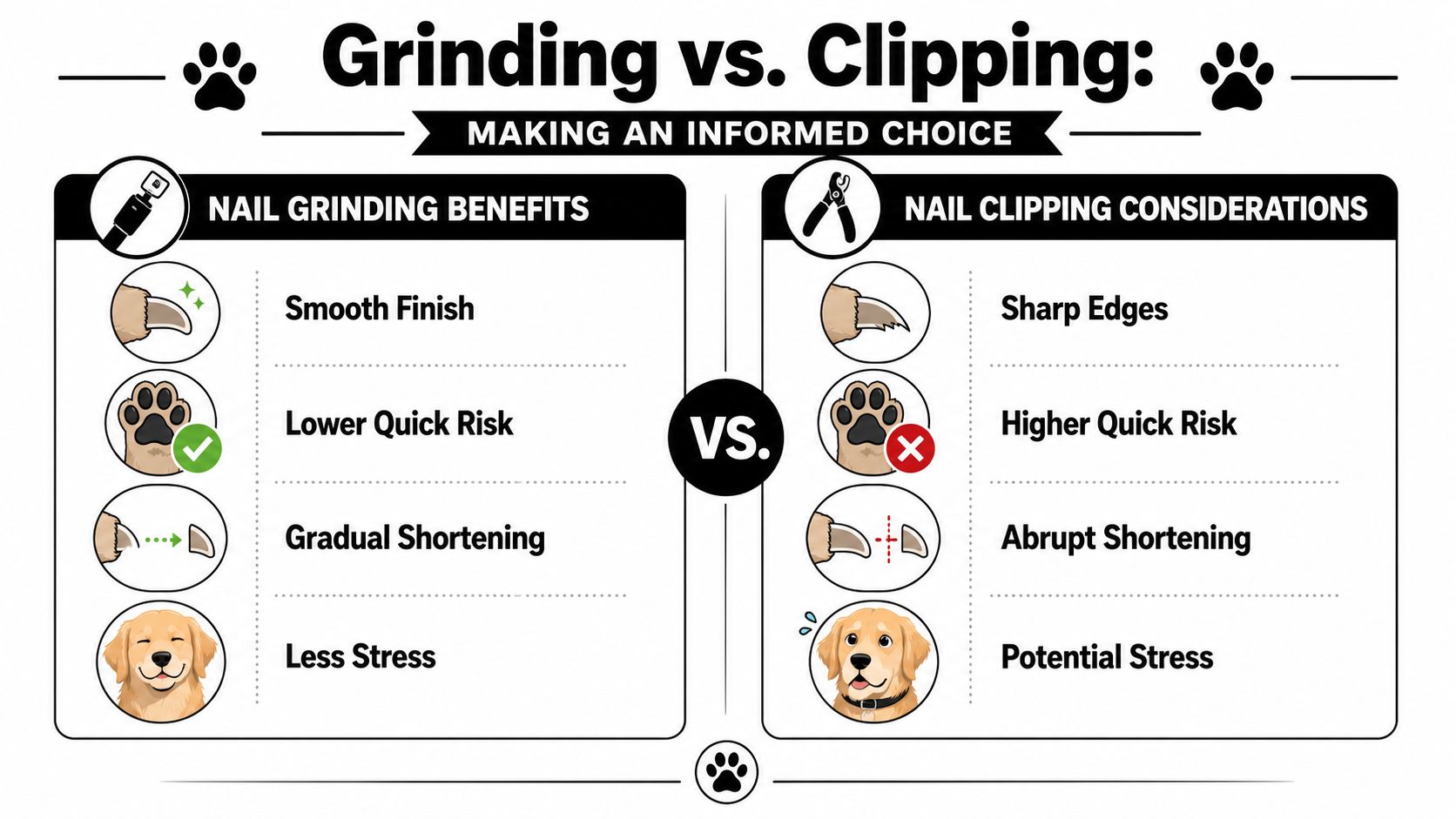
Side by side reality
| Method | What it does well | Where it creates problems |
|---|---|---|
| Grinding | Gradual shortening, rounded finish, better control on dark or thick nails | Takes more patience, requires noise and vibration training |
| Clipping | Fast when the dog is easy to handle and the nail is simple to read | Sharp edges, abrupt pressure, higher risk when the dog jerks or the quick is hard to see |
Grinding usually wins in four situations:
- Dark nails: You can remove tiny amounts instead of guessing where the quick might be.
- Thick nails: The tool can shape gradually where clippers may compress the nail first.
- Dogs with clipper history: Many dogs react more to the squeezing pressure than to the sanding itself.
- Finish quality: Rounded nails scratch less than freshly clipped edges.
What owners often underestimate
Clipping demands commitment to the cut. Once the blades close, there's no partial undo. That's where inexperienced hands get into trouble. Grinding lets you check your progress every second.
Practical rule: If your dog is wiggly, has black nails, or has already had a bad clipping experience, grinding is usually the more forgiving option.
That doesn't mean clippers never have a place. Skilled groomers still use them strategically. Sometimes a tiny tip removal followed by smoothing is efficient. Sometimes a dog tolerates clipping well and only needs edge cleanup. The point is not loyalty to a tool. The point is choosing the method that creates the safest result for that dog on that day.
Why premium standards favor control
High-volume settings often reward speed. Premium pet grooming rewards judgment. A calm dog with a carefully shaped nail is a better outcome than a rushed trim that “got done” but left stress behind.
That's one reason nail grinding for dogs has become the method many careful owners and professionals prefer. It aligns with precision, not guesswork.
Essential Tools and Uncompromising Safety
The grinder itself matters, but the operator matters more. A cheap tool in disciplined hands usually beats an expensive tool used carelessly. Owners shopping for an at-home setup should focus on control, grip, and predictable handling.
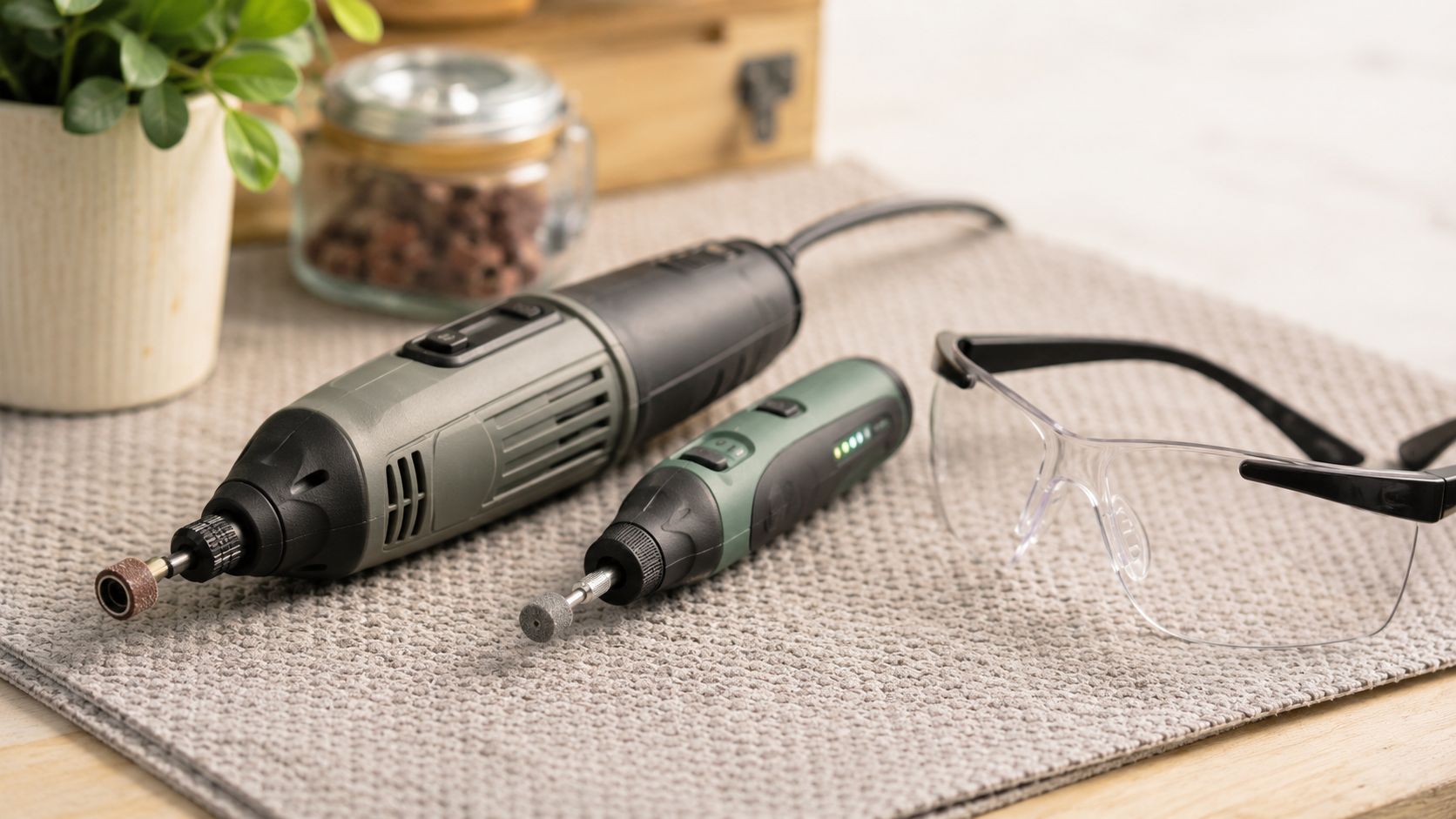
What to look for in a grinder
Start with features that reduce surprises during the session:
- Variable speed: Lower speed helps with timid dogs and first sessions.
- Comfortable shape: If your hand slips or cramps, your technique will fall apart.
- Corded or cordless fit: Cordless tools are easier to position. Corded units are useful when you want uninterrupted power.
- Replaceable sanding parts: Worn surfaces create drag and inconsistency.
If you're still deciding between clipper styles and grinder setups, this breakdown of dog nail cutter options and grooming tools helps owners compare what's practical for home use.
The hidden problem most guides miss
A lot of basic tutorials tell people to use short contact on the nail, then move on. That's correct, but incomplete. A critical and underreported risk in nail grinding is thermal injury from friction and vibration, especially in dark nails, where owners can't easily see what's happening beneath the surface. Generic advice often says “1-2 seconds per nail” without explaining how heat builds in the nail core, which can cause invisible inflammation and teach the dog to fear the grinder, as discussed in this nail grinding safety article.
That matters because a dog may not react dramatically in the moment. Some dogs tense, pull back slightly, or start refusing the paw on the next nail. Owners misread that as stubbornness. Often it's discomfort.
Heat is one of the quietest ways to ruin trust during a nail session.
Safe handling rules that actually work
Use short pulses. Lift off. Reposition. Check the nail. Then repeat. Don't sit on one spot and “finish the job” in a single pass.
A cleaner routine looks like this:
- Stabilize the toe, not the whole leg. Controlling the toe gives you accuracy without wrestling the dog.
- Work in brief touches. Let the nail cool between contacts.
- Change the angle slightly. That shapes the edge instead of burning one point.
- Watch body language closely. A head turn, lip tension, or paw withdrawal means pause.
- End before the dog is exhausted. A partial success is better than a full fight.
Dogs that need extra caution
Some dogs don't mind the sanding but hate the sound. Others tolerate the sound but react to vibration through the nail. Dark-nailed dogs need especially careful handling because visual landmarks are limited. Thick nails can also trap heat faster than people expect if the operator gets impatient.
That's the difference between generic grooming advice and disciplined workflow. Premium grooming doesn't rely on luck. It relies on pressure control, tool awareness, and the humility to stop when the dog has had enough.
A Cautious Owners Guide to At Home Grinding
The best at-home sessions don't start with the grinder touching the nail. They start with the dog learning that participation is voluntary and predictable. That single change fixes a lot of battles before they begin.
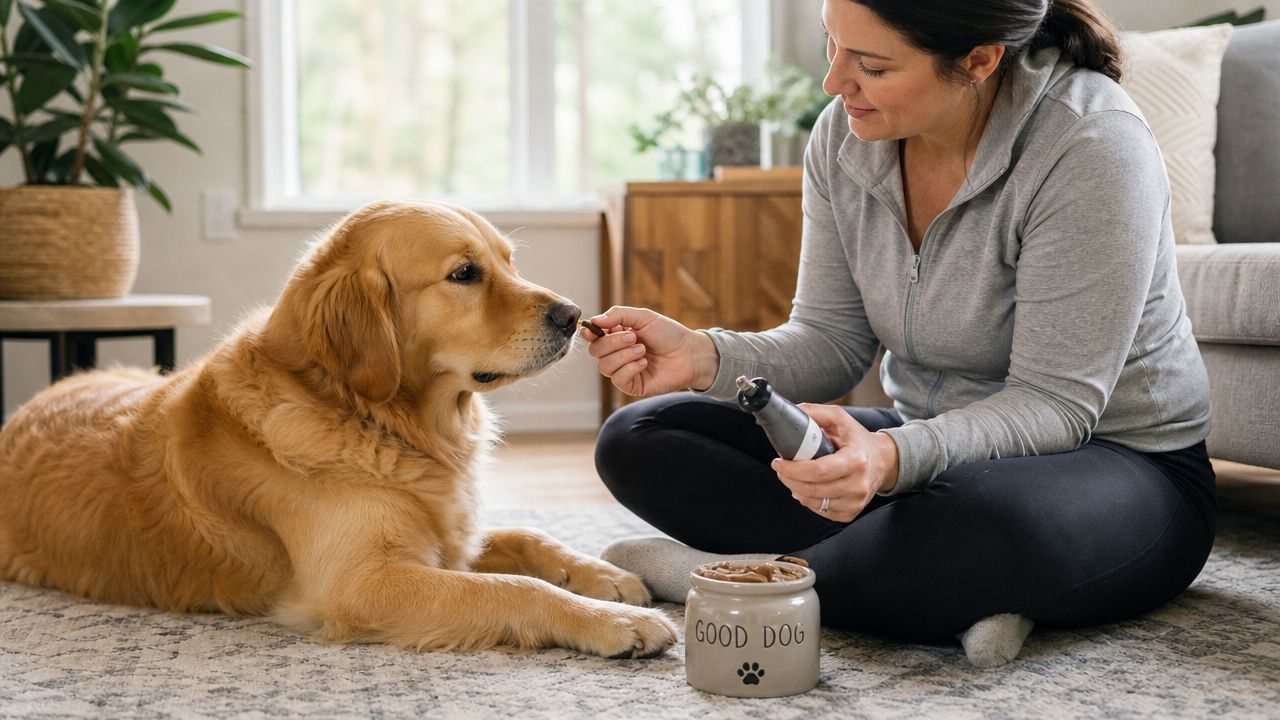
Most owners hear the word desensitization and assume it means “keep exposing the dog until they stop reacting.” That approach is often too blunt. A better method is cooperative care. The dog learns a consent button, meaning a simple behavior that says, “I'm ready, continue,” and they can remove that signal to stop the process. That shift from forced tolerance to dog-controlled participation reduces stress and improves long-term compliance with grinders, as outlined by the American Kennel Club's nail trimming guidance.
A simple home progression
Choose one position your dog can repeat. Resting the chin on your leg, placing a paw on your hand, or standing calmly on a mat all work. The key is consistency.
Then build the routine in stages:
- Stage one: Put the grinder on the floor. Reward your dog for looking at it calmly.
- Stage two: Pick it up without turning it on. Touch the shoulder or side with the back of the tool, not the nails yet.
- Stage three: Turn it on at a distance. Reward calm observation.
- Stage four: Hold the paw. Turn the grinder off before the dog worries.
- Stage five: Touch the grinder to one nail briefly, then stop.
Don't chase progress. If the dog gets uneasy, return to the last easy step and end there.
What a consent button looks like
The consent behavior should be clear and easy for the dog to stop. A paw resting in your palm is one option. A chin rest is another. If the chin lifts, the session pauses. If the paw pulls away, you stop.
Owner reminder: The stop signal is part of the training, not a failure of the training.
That lesson matters for anxious dogs. When they discover they can pause the process without being pinned down, many begin offering the behavior more confidently.
A short demonstration can help owners see the rhythm of handling and grinder timing:
When to stop the session
End early if you see repeated paw snatching, tucked posture, hard staring, lip licking under tension, or a sudden refusal to approach the setup. Those aren't signs that the dog needs you to “push through.” They're signs that the dog has reached their limit for that session.
For many owners, success at home means one or two nails done well, then quitting while trust is intact. Nail grinding for dogs is a skill. It improves with repetition, not pressure.
The Glo More Standard Why Pros Matter in El Paso
At-home work has value. It helps owners maintain progress between appointments and teach better handling habits. But professional work still offers a level of control and consistency most households can't match, especially when a dog is anxious, the nails are dark or overgrown, or the owner is already hesitant.
That standard matters in El Paso. Effective January 1, 2021, El Paso became the first city in Texas to require professional dog groomers to be licensed, certified, and background-checked, according to local reporting on the city's grooming ordinance. That raised the bar for accountability, and it should. Pet owners deserve to know who is handling their dog and what standards guide that work.
Why chain grooming often falls short
The biggest difference between a premium studio and a chain isn't branding. It's workflow. Chains such as PetSmart and Petco often operate in a high-volume environment. That setup can push dogs through a tight rotation with multiple distractions, overlapping noise, and less flexibility to slow a session down for a sensitive pet.
A disciplined independent studio works differently. The standard is calmer handling, clearer timing, and better judgment around when to proceed, when to adjust, and when to stop. That's especially important for nail work, where the dog's emotional state affects the outcome as much as the tool does.
What premium pet grooming looks like in practice
At Glo More Grooming, the model is built around premium pet grooming rather than throughput. The studio limits the number of dogs on-site at the same time so each appointment stays calm and one-on-one, and the monthly Snip & Style Saturday promotion includes full grooming for $55 across all dog sizes with a complimentary ear cleaning or nail trim, as described on the Spring Hill dog grooming services page.
That detail matters for local families looking for an affordable grooming promo without giving up quality. It also matters for busy professionals who need reliability, clean standards, and a booking process that respects their time.
The value of veteran-owned discipline
A veteran-owned grooming business should feel different. Not louder. Not harsher. More disciplined.
That discipline shows up in small things owners notice immediately:
- Clear standards: Dogs aren't stacked into a chaotic holding pattern.
- Calm handling: The pace adjusts to the pet instead of forcing the pet to match the schedule.
- Ownership: If something needs more time or a different approach, the standard doesn't bend.
- Long-term thinking: The goal isn't just to finish today's appointment. It's to build better grooming tolerance over time.
For El Paso dog grooming clients, that's a meaningful distinction. Local owners don't need a generic corporate experience. They need skilled hands, accountability, and a shop that treats nail work as part of whole-dog care, not a rushed add-on.
If you're deciding where to go for regular maintenance, this page on where to get my dog's nails cut in El Paso gives a practical starting point for comparing options.
Good nail work is quiet, precise, and repeatable. The dog should leave cleaner and more comfortable, not more suspicious of the next visit.
Your Top Nail Grinding Questions Answered
How often should I grind my dog's nails?
It depends on growth rate, activity, and how quickly the nails start affecting movement or floor contact. The better rule is simple. Don't wait for long nails to announce themselves loudly. Check them routinely and maintain them before they become a correction job.
What if my dog has black nails and I can't see the quick?
Use the most conservative approach possible. Grind in very small increments, pause often, and inspect after every pass. Black nails remove your visual margin for error, so patience becomes your safety system.
Is it normal for my dog to hate grinding at first?
Yes. Some dogs react to the sound, some to the vibration, and some to paw handling in general. The answer usually isn't stronger restraint. It's slower conditioning, shorter sessions, and a cleaner consent-based routine.
Can I switch from clipping to grinding?
Yes, and many owners should. Dogs that dislike the squeeze and snap of clippers often do better with gradual shaping. The transition goes best when you separate tool introduction from actual trimming for the first few sessions.
Should I grind all the nails in one sitting?
Not always. Owners often push for completion when the smarter goal is preserving cooperation. If your dog gives you two relaxed nails and a good emotional finish, that session did its job.
What's the biggest mistake beginners make?
Trying to overpower uncertainty with speed. They hold the paw tighter, stay on the nail too long, and lose track of the dog's body language. Good nail grinding for dogs looks controlled and almost uneventful.
When should I stop trying at home?
A professional should step in when the dog is escalating, the nails are severely overgrown, the owner is too nervous to stay steady, or every session is damaging trust. There's no prize for doing it alone if the dog keeps getting more fearful.
If each attempt makes the next one harder, the routine needs to change.
Reserve a Spot for Polished Paws and Peace of Mind
Healthy nail care comes down to three things. Skill, patience, and standards. Whether you maintain paws at home or hand the job to a pro, the goal is the same. Keep the dog comfortable, keep the process calm, and don't cut corners on safety.
For El Paso families who want premium pet grooming without the chain-store atmosphere, a disciplined studio makes the difference. If you've been searching for El Paso dog grooming that values one-on-one care, veteran-owned grooming standards, and an affordable grooming promo that still respects quality, your next appointment should reflect that standard.
Ready for polished paws without the stress? Book with Glo More Grooming to reserve your appointment, ask about the Snip & Style Saturday promo, and get one-on-one care from a veteran-owned grooming studio built on premium standards.