
When you discover a mat in your cat's fur, your first instinct might be to grab a pair of scissors. Please, don't. Dealing with matted hair is a delicate process where a disciplined workflow and premium grooming standards must come first, and scissors are the number one cause of serious grooming accidents.
How you tackle matted cat hair removal really depends on how bad the situation is. You might be able to gently tease out a small, loose tangle with your fingers or a good steel comb. But for severe, tight mats, the only truly safe option is to have them clipped out by a professional who understands the precision required.
Why Matted Cat Hair Is a Serious Health Issue
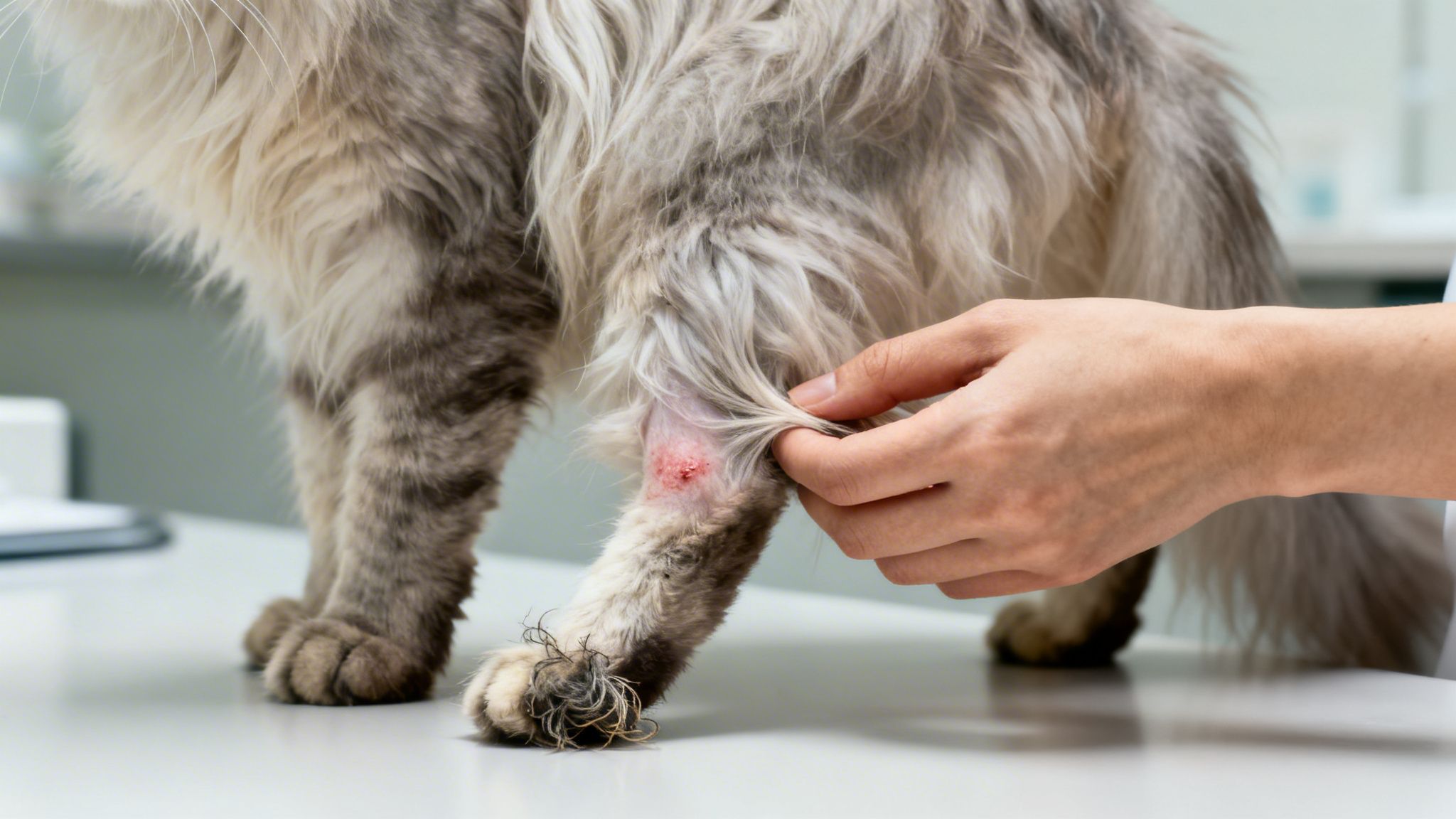
As a veteran-owned business, we founded GloMore Grooming on the principles of Greatness, Loyalty, and Ownership. That military-honed discipline applies directly to our work, especially when it comes to a pet's well-being. And let me be clear: matted fur is much more than a cosmetic issue. It's a painful and progressive health problem that requires immediate attention.
A mat is a tangled, hardened clump of fur that pulls constantly on the skin. Imagine wearing a piece of clothing that's several sizes too small, 24/7. That's what a mat feels like to your cat. This unrelenting tension can cause bruising, skin irritation, and even open sores that are hidden from view.
The Hidden Dangers of Matted Fur
Underneath that tight knot of fur, a dangerous micro-environment is forming. It's warm, dark, and moist—the perfect breeding ground for bacteria, yeast, and parasites like fleas. What starts as a simple tangle can quickly spiral into a painful skin infection. Even here in the dry El Paso climate, a mat traps moisture against the skin, creating its own set of problems unique to our regional pet care needs.
The numbers don't lie. Matted fur is a significant health hazard, linked to up to 25% of feline skin issues seen in vet clinics. For long-haired breeds like Persians, this is an ongoing battle; without monthly grooming, mats can form in 60-70% of cases.
Professionals can resolve these painful clumps 80% more efficiently and safely than most at-home attempts, which dramatically reduces a cat’s stress. Staying on top of grooming can prevent 90% of mat-related vet visits, saving you upwards of $300 a year. You can learn more about these pet grooming industry trends and the data behind them.
At GloMore Grooming, we treat grooming as essential healthcare. Our disciplined workflow focuses on one pet at a time with meticulous care—a stark contrast to the high-volume model you’ll find at big-box chains like PetSmart or Petco. For us, it’s always quality over quantity, a testament to our long-term vision for pet wellness in the El Paso community.
Assessing the Severity of the Mats
Before you even think about trying to remove a mat, you need to know what you’re up against. Your cat's safety depends on you honestly evaluating the situation and knowing when to call for backup.
This quick reference guide provides actionable insights to help you assess your cat's matted fur and decide on the safest course of action.
Matting Severity Assessment Chart
| Severity Level | Visual and Tactile Clues | Recommended Action |
|---|---|---|
| Mild | Small, loose knots, often behind the ears or on the belly. You can easily feel skin underneath and see space between the mat and the skin. | Attempt to gently tease apart with fingers. If that fails, use a steel comb or dematting tool, always holding the fur at the base to prevent pulling. |
| Moderate | Larger, denser clumps. The mat is closer to the skin, and it's difficult to see or feel the skin underneath. The fur feels tight. | Proceed with extreme caution. May require a dematting tool used by someone with experience. If your cat shows any sign of pain, stop immediately. |
| Severe | Large, hard, and flat mats tight against the skin (called "pelting"). The skin may look red, flaky, or have an odor. The cat is visibly in pain. | Do not attempt removal at home. This requires professional clipping with specialized tools. Trying to remove this yourself will likely injure your cat. |
When in doubt, always err on the side of caution. An expert can resolve the issue safely and give you a plan to prevent it from happening again.
So, take a close look at the mat.
- How close is it to the skin? If a mat is pulled so tight you can't slip a comb between it and the skin, that's a "pelted" coat. This is a job for a professional, full stop.
- How big is it? A single, small knot is one thing. Large sheets of matted fur covering the back, belly, or armpits are far more dangerous to tackle yourself.
- How is your cat reacting? Pain is your non-negotiable stop sign. If your cat hisses, cries, or tries to bite when you touch the area, they're telling you it hurts. It's time to call in an expert.
Our goal is to give pet owners the knowledge to care for their animals confidently, while being the trusted experts you can call when things get tough. A proactive grooming plan is the best defense against painful matting. Consider grabbing one of our affordable grooming promo slots, like our practical monthly promo, "Snip & Style Saturday," to get on a healthy schedule.
If you're unsure at all, or if the matting looks severe, the decision is simple: contact a professional groomer or your vet. Don't risk hurting your cat. Ready to talk to an expert who puts safety first? Book now or reserve your promo slot by contacting GloMore Grooming today.
Gathering Your Tools for Safe Mat Removal
Getting mats out of a cat’s coat safely has everything to do with what happens before you even touch the fur. From my experience, rushing in without a plan is the fastest way to stress out your cat and, frankly, risk an injury. It’s all about creating a calm, controlled environment with a disciplined workflow.
First things first, find a quiet spot. You want a room where you won't be interrupted by other pets or family members walking through. The best time to tackle this is when your cat is already mellow, maybe after a good nap. Remember, cats feed off our energy, so if you’re calm and confident, they’re much more likely to be, too. This pride and resilience in your approach will translate to your pet.
The Right Equipment for the Job
I can't stress this enough: please, put the household scissors away. Trying to cut out a mat with scissors is one of the most common ways cats get seriously hurt. Their skin is incredibly thin—almost like paper—and it’s far too easy to cut them. Professional tools are designed specifically to protect that delicate skin, reflecting premium grooming standards.
Here’s what you absolutely need in your toolkit:
- A Good Steel Comb: You'll often hear this called a "greyhound comb." It has both wide and narrow teeth, making it perfect for teasing apart the very edges of a small, manageable mat.
- Mat Splitter or Dematting Rake: These tools have sharp, curved blades that are recessed for safety. They are designed to slice through the knot rather than just pulling on it, which is much more comfortable for the cat. You have to be extremely careful with these, always keeping the blades pointed away from the skin.
- Clippers with a Safety Blade: For any mat that is tight, large, or just won't budge with a comb, clippers are your only safe bet. A #10 blade is the industry standard for this kind of work. It cuts short enough to get underneath the mat but leaves enough fur to help protect the skin from irritation.
- Cornstarch or Grooming Powder: This is a great little trick for greasy mats. A little sprinkle of cornstarch helps absorb the oil, giving you a better grip to gently pull the hairs apart.
In professional grooming, there are no shortcuts to safety. Investing in the proper tools isn't just an extra cost; it's a fundamental part of keeping your pet safe and comfortable. This is a core belief at our veteran-owned grooming studio.
Setting Up Your Cat and Your Workspace
With your tools ready, it’s time to get your cat comfortable. You can hold them in your lap, place them on a sturdy table with a non-slip mat, or even ask a friend to help hold them steady. A few treats and some soft, reassuring words can go a long way in making this a less stressful experience.
Good lighting is non-negotiable. You need to be able to see exactly where the mat ends and the skin begins. A poorly lit area is just asking for an accident.
Now for the most important part of your technique: always, always keep the skin taut. Use your free hand to hold the base of the mat flat against your cat's body. This simple action prevents you from pulling the skin up toward the comb or clippers, which is how nicks and cuts happen. Honestly, mastering this one hold is what separates a safe grooming session from a dangerous one. If you're looking for more guidance on what to buy, we've put together a handy list of essential grooming supplies for pets.
This kind of careful, methodical approach is what we believe in. It’s about empowering you with the right skills while also being here for the tough jobs that really need a professional.
Think of our monthly affordable grooming promo, “Snip & Style Saturday,” as a great way to hit the reset button on your cat’s coat with an expert’s help. It's much better to be proactive than to wait until a mat becomes a painful problem.
And if you look at a mat and feel even a little bit unsure, just stop. Knowing when to call for backup is the smartest thing you can do. Contact GloMore Grooming today to book an appointment or save a spot in our next promo.
A Practical Guide to Removing Minor Mats at Home
Alright, you’ve got your tools and a quiet space. You’re ready to tackle some of those smaller mats. The key here is patience—tons of it. This isn't a race. We're aiming for a safe, calm process that shows your cat that grooming isn't something to fear. This disciplined workflow is a point of pride.
Think of it this way: every positive experience you create now builds trust and makes future grooming sessions a whole lot easier for both of you.
Starting with Your Fingers and a Steel Comb
Before you even think about picking up a tool, start with your hands. Gently try to pull the very edges of the matted clump apart. It’s surprising how often you can loosen up a small knot just by carefully working at it with your fingers.
If the mat is a bit stubborn, it's time to introduce the steel comb. How you hold the fur here is everything.
- Anchor the Skin: Use your non-dominant hand to pinch the fur at the base, right between the mat and your cat’s skin. This simple move is your best defense against painful pulling and is what keeps your cat from getting agitated.
- Work from the Outside In: Take the wide-toothed end of your comb and gently pick at the tips of the mat. Never, ever try to drag the comb through the middle of the clump.
- Use Short, Gentle Strokes: You’re not trying to yank the whole thing out at once. Think of it like you're chipping away at the problem, bit by bit. Short, deliberate strokes are much more effective and won't hurt your cat.
This careful prep work is exactly what defines premium pet grooming. It’s all about respecting the animal and trusting the process.
The Absolute No-Scissors Rule
I’m going to be blunt here: never use scissors to cut out a mat. A cat’s skin is incredibly thin and stretchy. It is frighteningly easy to accidentally pull that skin up into the mat as you're cutting, which can cause a serious gash requiring an emergency vet visit. There are zero exceptions to this rule. It is, without a doubt, the most dangerous mistake you can make when grooming at home.
At Glomore Grooming, we've seen the painful results of well-intentioned but misguided DIY scissor attempts. This is a non-negotiable safety standard for us. The risk of injuring your cat is just too high, which is why professionals only use specialized clippers and tools designed to keep the skin safe. We stand apart from chain groomers like PetSmart and Petco by enforcing this level of uncompromising discipline.
This is the exact progression of tools we use in the salon for safe and effective matted cat hair removal.
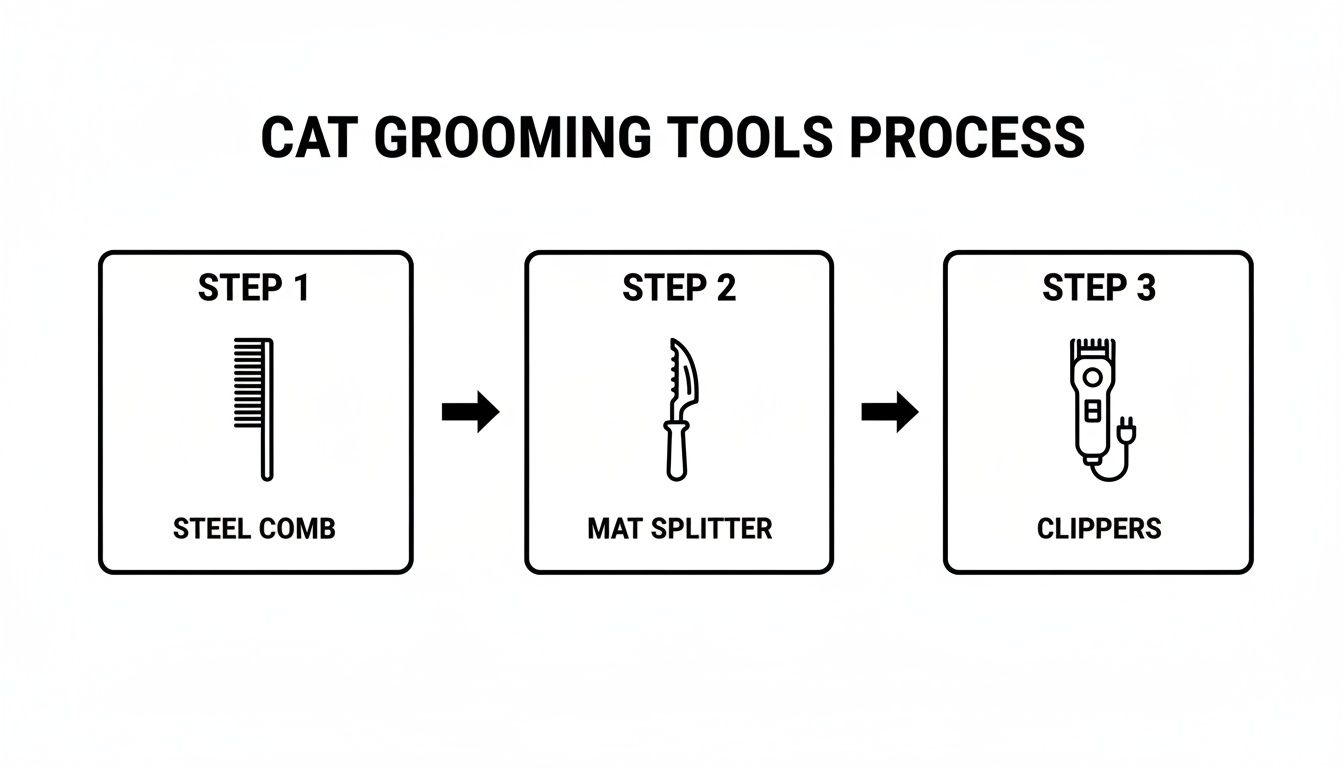
This disciplined workflow always puts safety first. You start with the least invasive tool and only move to more advanced equipment like clippers when it's absolutely necessary.
When to Use a Mat Splitter
For a really tough mat that just won’t give way to the comb, a mat splitter can be your next step—but you have to use it correctly. This tool has a sharp, recessed blade that slices through the mat, breaking it into smaller, more workable pieces.
- Keep Your Grip: Just like with the comb, hold the fur firmly at the base to keep the skin pulled taut and out of harm's way.
- Work Vertically: Place the splitter at the edge of the mat and use a short, sawing motion away from the skin, almost like you’re slicing a tiny piece of bread.
- Break It Down: The goal isn’t to remove the entire mat with the splitter. You're just trying to break it into smaller sections that you can then tackle with your steel comb.
Be incredibly careful here. If you feel any serious resistance or see your cat getting upset, stop right away. That’s a clear signal the mat is too tight or too close to the skin for this tool to be used safely.
The growing need for safe matted cat hair removal is a huge reason the pet grooming industry is booming. The global market is set to jump from $7.75 billion in 2026 to an estimated $11.80 billion by 2032. Here in the U.S., where 72% of owners get professional help with grooming, untreated mats can lead to vet bills over $200 in 30% of cases. A pro session might run $50-100, but it can cut the risk of infection from improper home attempts by as much as 75%.
While this guide focuses on cats, the same core principles of safety and technique apply to dogs. For more on that, you might find our guide on how to groom a dog with matted fur helpful.
Here at GloMore Grooming, we're always ready to help our El Paso community with these grooming headaches. If you're looking at a mat and feeling in over your head, please don't risk it. We’re here to help.
Knowing When to Call a Professional Groomer
As a pet owner, one of the most important skills you can develop is knowing your own limits. This isn't about giving up; it's about responsible care. Knowing when to step back and call for professional backup is what keeps your cat safe. While you can certainly tackle a minor tangle, trying to remove severe mats yourself is a dangerous gamble that can cause serious pain, skin injuries, and lasting trauma for your cat.
This is exactly why the professional grooming industry is thriving. The global market is projected to jump from USD 19.5 billion to a massive USD 46.7 billion by 2036. In the U.S. alone, 72% of pet owners rely on professionals for good reason. Up to 40% of long-haired cats suffer from mats that get out of hand, often leading to vet bills that average $200-500. Having a pro handle matted cat hair removal can slash that risk by an incredible 70%. You can read more about the growth of the global pet grooming industry on OpenPR.com.
Expert care isn't just a service; it's a safety net for both your pet and your wallet.
Red Flags That Signal It's Time for a Pro
There are some situations that absolutely demand the specialized tools and steady hand of an expert. If you spot any of these signs, please put the comb down and pick up the phone. Your cat's safety depends on it.
- Pelting: This is when a mat becomes a tight, hard shell of fur right against the skin. You can't even slip a comb between the mat and the skin. This condition is incredibly painful because it’s constantly pulling.
- Large Matted Areas: The matting isn't just a spot—it covers a whole section of their body, like their entire back, belly, or legs. These large mats are not only impossible to remove safely at home, but they also restrict movement and can hide serious skin problems underneath.
- Signs of Skin Irritation: You see red, flaky, or raw skin under or around the mat. You might even find sores or scabs. A foul odor is a huge red flag, often pointing to a nasty infection brewing beneath the fur.
- Obvious Pain or Distress: Your cat hisses, growls, cries, or tries to bite the moment you touch the area. Pain is a non-negotiable stop sign. Pushing through will only terrify them and make things worse.
At GloMore Grooming, we operate by a simple but unbreakable rule: first, do no harm. Trying to fix severe matting without the proper skills and equipment goes against everything we stand for. We see it as our duty to step in when a situation is beyond what an owner can safely handle. That’s a core value of our veteran-owned grooming philosophy, channeling pride and resilience into every service we provide.
Why Glomore Grooming Stands Apart
In the El Paso dog grooming scene, we offer a level of discipline and individual focus that’s worlds away from the high-volume chain stores. Our one-on-one appointments mean your pet gets our undivided attention in a calm, quiet setting. We don't just shave a mat and send you on your way; we assess your cat's stress levels, skin health, and the root cause of the problem.
Our studio is built on a long-term vision of pet wellness, not just quick fixes. We work to build a partnership with you. After we’ve safely resolved the immediate issue, we’ll give you a proactive plan for seasonal care and regular maintenance. Our real goal is to prevent severe matting from ever happening again. You can see the standards we uphold in our guide to El Paso's mobile dog groomers.
This is what premium pet grooming is all about—resilience, pride in our craft, and an unwavering commitment to your pet’s well-being. We even offer an affordable grooming promo, like our practical "Snip & Style Saturday" event, to help make consistent, professional care accessible for everyone in our El Paso community.
Don't let a small problem turn into a painful emergency. If you're dealing with a tough mat, make the right call for your cat. Contact Glomore Grooming today to book an appointment or reserve your promo slot.
A Proactive Grooming Routine to Prevent Future Mats
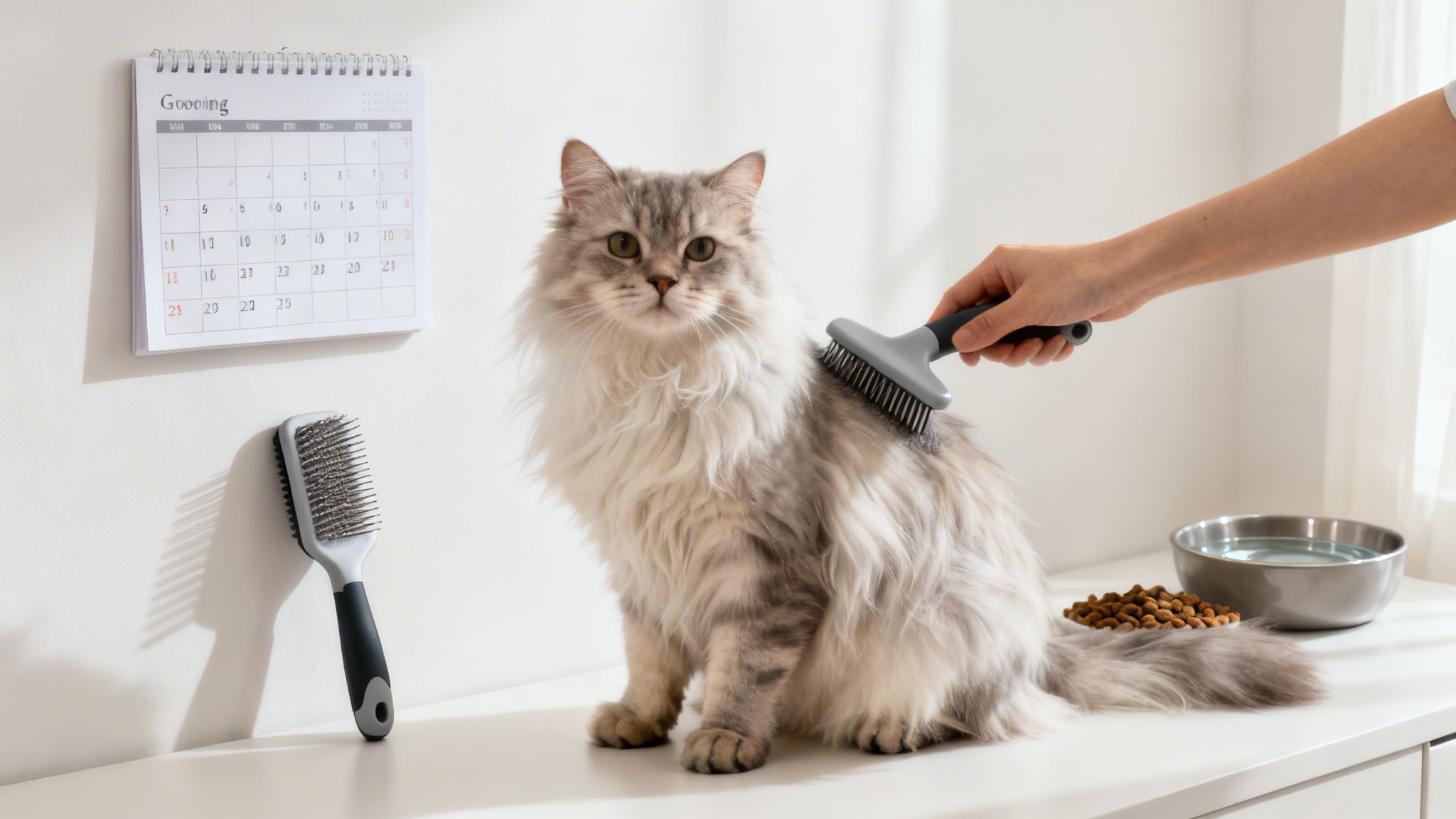
The single best way to handle matted cat hair removal is to prevent mats from ever forming. Once you've dealt with a tangle, the real work begins: building a routine that keeps your cat's coat healthy, comfortable, and mat-free for good.
Think of it less as a chore and more as a daily ritual that strengthens your bond. It's about shifting from reacting to problems to proactively ensuring your cat's well-being with a disciplined workflow.
Make Daily Brushing a Habit
For cats with medium to long fur, a daily brushing session is the gold standard. Even for short-haired cats, a few sessions a week make a world of difference. This small commitment is your best defense against the tiny tangles that can quickly escalate into painful, tight mats.
Consistency is everything. A calm, five-minute brush every day is far more effective than a stressful, hour-long session once a month after knots have already set in. Short, positive sessions build trust and help your cat see grooming as a normal, even pleasant, part of their day.
Choose the Right Tools for Your Cat's Coat
Using the wrong brush won't just be ineffective—it can be painful and make your cat hate being groomed. Having the right tools for your cat's specific coat type is fundamental to premium pet grooming.
Here's a quick look at the essentials:
- Slicker Brush: With its fine, short wires, this brush is a lifesaver for medium and long-haired cats. It gets deep into the coat to remove the loose undercoat and tiny tangles before they can snowball.
- Steel "Greyhound" Comb: This is a non-negotiable tool for any cat parent. Use the wide-toothed side to gently work through the coat, then flip to the fine-toothed side to double-check your work and catch any sneaky knots, especially behind the ears and under the legs.
- Bristle Brush: This is a great finisher. For long-haired cats, it smooths the topcoat, and for short-haired cats, it's perfect for distributing natural oils, leaving the fur healthy and gleaming.
At our veteran-owned grooming studio, we know that having the right tool for the job is half the battle. You wouldn't use a wrench to hammer a nail, and the same principle applies here. Your cat's coat deserves the right equipment for effective, pain-free care. Our pride comes from this professional, disciplined approach.
Diet and Hydration Play a Key Role
A healthy coat truly starts from the inside. A high-quality diet rich in omega fatty acids gives your cat's body the building blocks for strong, resilient hair that’s less likely to break and tangle. Hydration is just as important, as dehydrated skin can lead to a dry, brittle coat that mats easily.
Living in El Paso, we see the effects of our dry desert climate on pets all the time. The arid air can zap moisture from a cat’s skin and fur, making them more prone to matting. This is a regional pet care need we understand deeply. Make sure your cat always has fresh, clean water available. If you have concerns, talk to your vet about adding a supplement like fish oil to their diet.
Create a Grooming Calendar
Good intentions are great, but a schedule gets things done. At GloMore, we plan everything from our daily appointments to our affordable grooming promo events like "Snip & Style Saturday." You can do the same at home with a simple calendar—this is an actionable tip for any pet owner.
- Daily: 5-minute brush-out (especially for long-haired cats).
- Weekly: A thorough check with a steel comb for any forming knots.
- Monthly: Nail trim and a general wellness check.
This structure turns grooming into a reliable habit, not something you only remember when you feel a knot. It’s this proactive mindset that separates our approach from big-box groomers like PetSmart or Petco. We’re not just here to fix today’s problem; we’re your partners in a long-term wellness plan for your pet.
If you’re ready to get ahead of matting and build a routine that works, we’re here to guide you. Book an appointment with GloMore Grooming or reserve your spot in our next Snip & Style Saturday promo to start your journey toward a mat-free future.
Common Questions About Matted Cat Hair
Even the most diligent cat owner can run into a matted fur situation. It happens. Over the years, we've heard just about every question you can imagine when it comes to those stubborn knots. Here are a few of the most common ones we answer for folks here in the El Paso community.
How Much Does Professional Mat Removal Cost?
The price really depends on how serious the matting is and how much time it takes to fix safely. For a few small, localized mats, many groomers might add a small fee to a standard grooming package, usually somewhere between $15 and $50.
However, if your cat has severe, widespread matting—what we call "pelting," where the fur forms a solid, tight shell against the skin—it's a whole different ballgame. This often requires a full-body shave-down, which is a delicate and time-consuming process. In these cases, you can expect the cost to be $100 or more. To help make this expert care a little more accessible, we run an affordable grooming promo at GloMore Grooming, a practical example being our monthly “Snip & Style Saturday.”
Can I Just Shave My Cat’s Mats Off Myself?
Please, don't. I know it can be tempting to try and handle it yourself, but we strongly advise against it. This is one of those situations that looks much easier than it actually is. A cat’s skin is incredibly thin—almost like paper—and it’s frighteningly easy to accidentally pull that loose skin up into the clipper blades.
Professional groomers are trained to use specific tools (like a #10 blade, which is very short and safe) and techniques to get under the mat without ever touching the skin. We learn how to hold the skin taut and let the clippers do the work. The risk of causing a serious, painful cut at home is just too high. This is a job best left to the pros.
At GloMore Grooming, our whole philosophy is built on preventing these painful situations in the first place. We're not a high-volume chain like PetSmart or Petco; our independent, veteran-owned grooming studio focuses on one-on-one wellness and building a relationship with your pet. It’s about being proactive, not just reactive.
What Are the First Signs a Mat Is Forming?
The absolute best defense is catching mats before they get out of control. The first signs are usually subtle, and you’ll find them in spots where there’s a lot of friction. Here are some actionable insights for your weekly routine:
- Clumpy or "Sticky" Fur: The next time you're petting your cat, run your fingers deep into their coat. Pay attention to the areas behind the ears, in their armpits, on their belly, and at the base of the tail. If you feel small clumps that seem a little sticky or tangled, that's a mat starting to form.
- A "Spiky" Look: Does the fur in a certain area look a bit spiky or separated instead of soft and uniform? That's often an early warning sign.
- Your Comb Catches: If you're brushing your cat and the comb always snags in the exact same spot, you've found a problem area. That's a knot tightening up.
How Do I Find a Reputable Groomer in El Paso?
Finding the right person for the job is everything, especially when it comes to the delicate task of matted cat hair removal. I'd recommend looking for an independent groomer who focuses on one-on-one appointments. A veteran-owned grooming studio like ours, for instance, tends to operate with a high level of precision and pride in the work, driven by a long-term vision.
When you call, ask them directly about their experience with cats and how they handle severe matting. A truly professional groomer will always prioritize your cat's safety and comfort above all else. They should be able to walk you through their process and explain exactly what needs to be done and why. For El Paso dog grooming and cat care, you want someone who is invested in your pet’s long-term well-being and who stands apart from the impersonal service of large chains.
If you're dealing with a tough matting problem or just want to get ahead of it with a good grooming routine, we're here to help. At GloMore Grooming, we bring our core values of Greatness, Loyalty, and Ownership to every animal we see. Book now or reserve your promo slot today!