

When a dog dies, individuals don’t need grand words first. They need the next right step.
You may be holding a collar, staring at an empty bed, or replaying the last walk in your mind. You may also be trying to make decisions you never wanted to make. That mix of heartbreak and logistics is one of the hardest parts of pet loss.
Learning how to memorialize a dog isn’t about choosing the most elaborate tribute. It’s about choosing what feels honest, manageable, and meaningful for your family. Some people need a quiet ritual at home. Others need a written eulogy, a memory book, a keepsake, or help from a local service that can handle details with care. All of those are valid.
Thoughtful memorial care has become more visible because more families now see pet loss for what it is: the loss of a loved one. The global pet memorial services market was valued at approximately USD 2.8 billion in 2024, reflecting that wider cultural shift toward honoring a pet’s life with intention and respect, according to pet memorial services market research from DataHorizzon.
Navigating the First Few Days After Loss
The first few days often feel foggy. Even simple choices can feel too heavy. That’s normal.
If your dog has just passed, don’t try to solve everything at once. Focus on immediate care, then on remembrance. In that order.
Start with the practical decisions
Call your veterinarian first if your dog passed at home, or speak with the care team if the passing happened at a clinic. Ask them to walk you through your aftercare options slowly. Most families choose between cremation and burial, and each comes with emotional and practical trade-offs.
A short checklist helps:
- Confirm aftercare arrangements. Ask whether you want private cremation, communal cremation, or burial if local rules allow it.
- Request keepsakes before transport. If you want a paw print, nose print, fur clipping, or final photo, ask immediately.
- Choose who will handle logistics. If you’re too overwhelmed, let a trusted family member or a concierge-style service make calls and coordinate details.
- Gather essentials later, not now. Food bowls, medications, leashes, and bedding can wait until the initial shock softens.
Practical rule: If you think you might want a keepsake, request it now. It’s much easier to decide later whether to display it than to regret not having the option.
Decide what needs to happen today and what can wait
Some tasks are urgent. Many are not. The body will need prompt aftercare. Most other choices can wait a day or two.
Use this simple guide:
| Task | Timing |
|---|---|
| Contact vet or aftercare provider | Same day |
| Request paw print or fur keepsake | Same day |
| Inform close family members | Same day or next day |
| Choose memorial service details | Within several days |
| Sort toys, beds, and daily items | When you feel ready |
Families often do better when one person acts as the point of contact. That reduces repeated explanations and helps preserve emotional energy.
For a step-by-step guide to the immediate logistics, what to do when a pet dies can help you think clearly during those first decisions.
Give yourself permission to do less
Grief creates pressure where there shouldn’t be any. People worry about “doing it right.” They worry about being too emotional, or not emotional enough. They worry about making the wrong memorial choice too quickly.
There isn’t a perfect response to this loss. There is only the response that gets you through today with care.
If you can, eat something small. Drink water. Answer only the messages you have the energy to answer. If your dog was part of a household with children or other pets, keep the day as calm and predictable as possible. Gentle routine won’t erase grief, but it can make the room feel less chaotic.
Planning a Meaningful Memorial Service
A memorial service for a dog doesn’t need to look formal to be meaningful. In practice, the most healing services are usually the ones that sound, feel, and move like the dog being remembered.
One family may gather in the backyard at sunset, place a favorite tennis ball near a framed photo, and tell one story each. Another may go alone to a walking trail, read a letter out loud, and sit in silence for ten minutes. Both are real memorials.
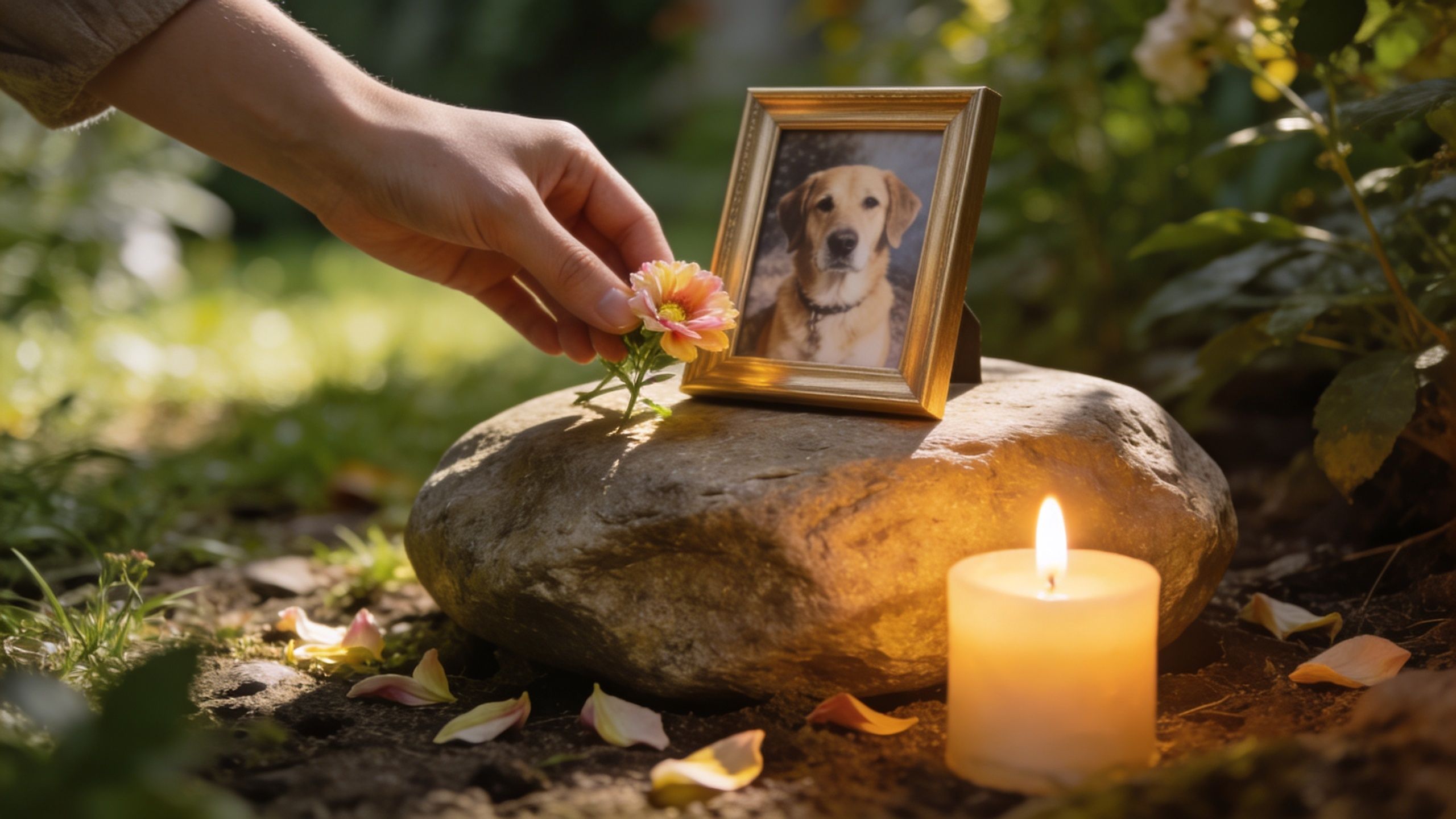
Small services often feel more personal
The most effective memorials usually have one strong anchor. That anchor might be a place, an object, or a shared ritual.
Here are a few approaches that tend to work well:
- A home remembrance corner. Set out a photo, collar, candle, and favorite toy in one calm space. This works well for people who want a private place to visit daily.
- A favorite-location goodbye. Visit a yard, porch, park, or room your dog loved. Say their name. Speak to them directly. Keep it simple.
- A story circle with family or friends. Ask each person to share one habit they’ll never forget. Funny memories help more than people expect.
- A living tribute. Plant a tree, flowers, or a small container garden in your dog’s honor.
Some of the most comforting memorials aren’t elaborate. They’re specific. A water bowl by a photo. A leash folded beside a candle. A story that only your family would understand.
Choose a format that matches your grief style
People often force themselves into a ceremony style that doesn’t fit. If public emotion feels exhausting, skip the gathering. If private silence feels too lonely, invite others in.
This comparison can help:
| If you need… | A memorial that fits |
|---|---|
| Privacy | A letter, candle ritual, or solo walk |
| Shared support | A small gathering with stories and photos |
| Ongoing remembrance | A memorial shelf, garden, or framed tribute |
| Action | Donation of supplies or time in your dog’s name |
In El Paso, local climate matters too. Outdoor memorials can be beautiful, but heat and wind can make them harder than expected. If you’re planning a backyard tribute, morning or evening is usually more comfortable than midday. If you want something lasting outdoors, choose materials that can hold up through regional weather instead of paper or delicate fabric.
Let the memorial reflect your dog’s real life
A meaningful service should sound like your dog. If your dog was mischievous, don’t make the tribute stiff and solemn. If your dog was calm and strongly attached to one person, a quiet private ritual may feel more honest than a group event.
You can include:
- Objects with history such as a travel blanket, tag, brush, or worn leash
- Sensory details like their favorite song, place, or scent
- Acts of care such as donating unopened food, bedding, or toys
Families sometimes worry that a simple memorial is “not enough.” It is enough if it helps you say goodbye in a way that feels true.
Creating Lasting Keepsakes and Physical Tributes
Physical memorials matter because grief is physical. People reach for the collar. They hold the tag. They want something they can touch when the absence feels sharp.
That’s why keepsakes can help so much when you’re deciding how to memorialize a dog. A service honors a moment. A physical tribute gives that love somewhere to live afterward.
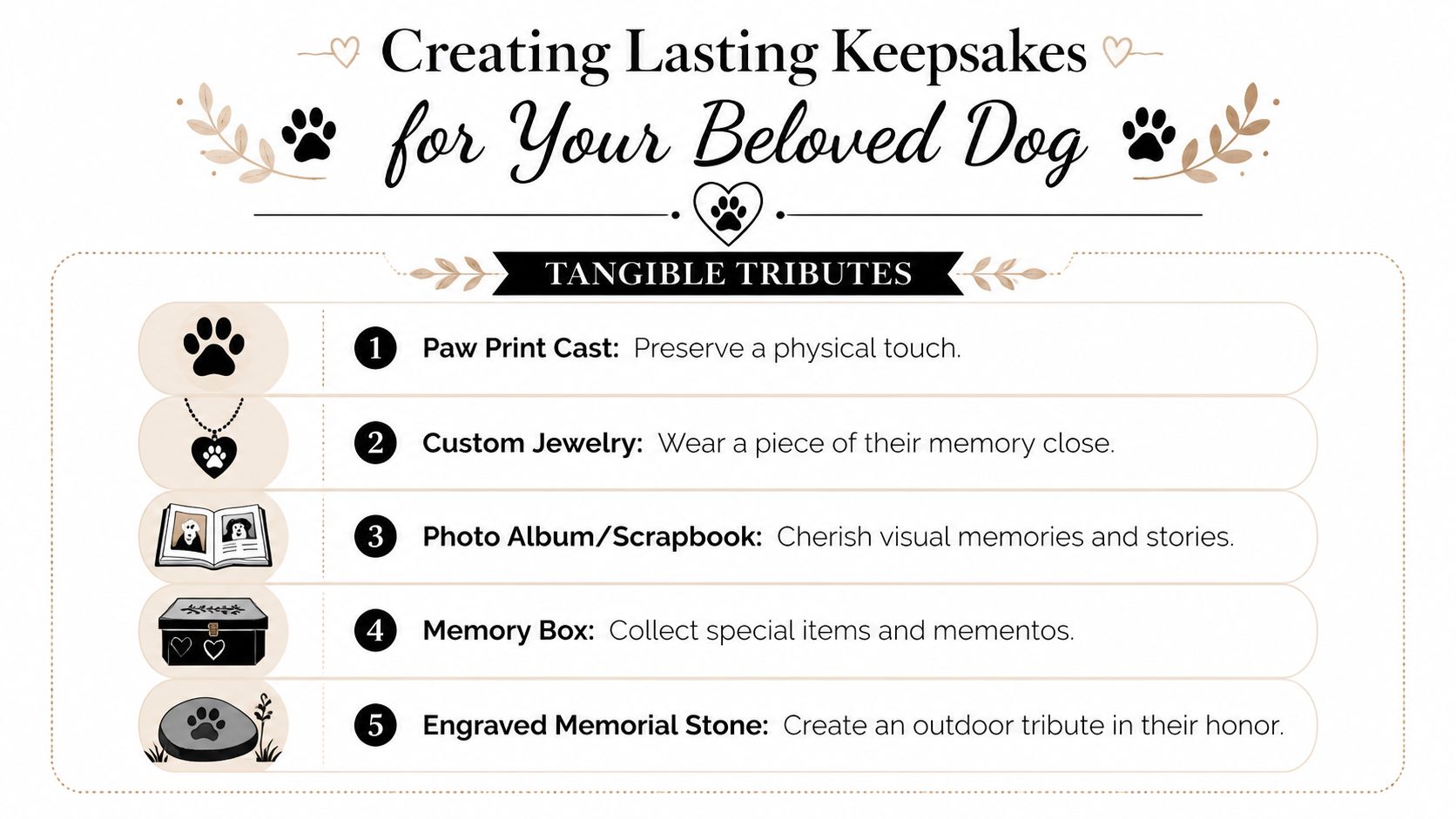
What works well and what often doesn’t
Some keepsakes age beautifully. Others become clutter because they were chosen too quickly.
These options usually hold up well over time:
- A shadow box with a collar, tags, photo, and a small written note
- A custom portrait that captures expression, not just appearance
- A memorial stone for a garden, patio, or entryway
- Jewelry or ash-based keepsakes for people who want daily closeness
- A professionally saved fur clipping stored cleanly and labeled
What tends not to work as well is buying several generic items in the first week. Too many objects can leave you with a pile of memorial products that don’t comfort you. One carefully chosen tribute is usually more meaningful than five rushed ones.
For more ideas you can use or adapt, pet memorial gift ideas for meaningful remembrance can help narrow the options.
Build a memory book while details are still close
A pet memory book is one of the most practical and healing keepsakes because it combines structure with emotion. It also gives grief a task, which can be useful when the days feel disorganized.
Evidence in the guidance from Whisker and Fang on creating a pet memory book notes that structured memory books started within 30 days of loss show 76% higher completion rates, and using acid-free archival materials plus personal elements like handwritten notes can increase emotional catharsis by 64%.
A good memory book usually includes:
- A dedication page with your dog’s name, dates, and a short tribute.
- A life timeline from puppyhood or adoption through later years.
- Everyday memories like sleeping positions, favorite snacks, odd habits, and routine walks.
- Physical inserts such as a sympathy card, copied tag image, paw print photo, or fur envelope.
- A closing letter saying what your dog changed in your life.
Helpful standard: Use acid-free pages, photo corners, and labeled envelopes for fragile items. If you build the book carefully, it becomes an heirloom instead of a temporary scrapbook.
A video example can make the process feel less intimidating:
Don’t overlook the final grooming keepsake
One detail many families appreciate later is a clean, neatly presented fur clipping. This works best when it’s handled with care and labeled properly, not tucked loosely into a tissue or plastic bag.
In a disciplined grooming workflow, keepsake items should be clean, separated, and stored in a way that preserves them. That matters. A memorial object doesn’t need to be expensive to be valuable. It needs to be handled respectfully.
If you have other pets at home, you can also include a group photo, shared walking gear, or a page about the household dynamic. That often helps when the loss affects more than one animal and more than one person.
How to Write a Eulogy for Your Dog
Writing a eulogy can feel impossible until you stop trying to make it sound important.
It doesn’t need polished language. It needs truth.
Many grieving owners begin privately, then later feel ready to share. That pattern is common. Research summarized in this pet bereavement study repository found that 74.7% of pet owners initially mourn privately, while 58.2% eventually seek social support. A eulogy can bridge those two experiences. It gives you a place to begin alone and, if you choose, words to speak with others later.
A simple way to start
Don’t begin with the day your dog died. Begin with who your dog was.
Write short answers to these prompts:
- What did your dog do that made everyone smile?
- What daily routine felt most like “us”?
- What nickname did you use?
- What comfort did your dog give you during hard seasons?
- What will you miss in ordinary moments?
If tears interrupt, stop and come back. That isn’t failure. That’s the work.
A usable eulogy template
This structure helps when your mind feels scattered:
Opening
State your dog’s name and what they meant to you.
Example: “This is for Daisy, my shadow, my walking partner, and the gentlest dog I’ve ever known.”Personality
Describe what made your dog unmistakably themselves.
Mention quirks, habits, and energy.Shared life
Recall a few concrete memories.
Car rides, morning greetings, the sound of paws on the floor, the way they waited at the door.Gratitude
Say what your dog taught you or gave you.Goodbye
End.
“Thank you for your loyalty. Thank you for your joy. I’ll carry you with me.”
Write the first draft as if no one else will read it. You can always trim it later for a service, a social post, or a card.
What makes a eulogy feel real
Specificity matters more than elegance. “He stole socks and slept by the bathroom door every night” is stronger than “He was the best dog ever.” General praise is true, but details are what bring your dog back into the room for a moment.
If speaking aloud feels too hard, you still have options:
- Read only the opening and closing
- Ask someone else to read it for you
- Print it and place it beside a photo
- Keep it private in a journal
A eulogy doesn’t have to perform grief. It only has to honor love.
Finding Support with Local Memorial Services
At some point, most grieving families hit a limit. They can handle the emotion or the logistics, but not both at the same time.
That’s when support matters. Not because grief should be outsourced, but because certain tasks are easier when another steady hand helps carry them.

Why local help can feel different
Professional pet aftercare and memorial support has expanded as more owners seek compassionate services. The pet aftercare field has seen a 30% increase in membership for its leading association over five years, reflecting demand for more thoughtful memorial care, as noted earlier in the bereavement research.
In real life, local support often works better than a large chain model for one reason. Communication is usually clearer. You’re more likely to know who is handling your dog’s keepsake items, who is returning your call, and who is responsible for each step.
That matters when details are emotional.
What to look for before saying yes
Use practical criteria, not just comforting language. Ask direct questions.
| What to ask | Why it matters |
|---|---|
| Who handles the pet and the keepsakes? | You want accountability |
| How are paw prints, fur clippings, and photos labeled? | Prevents mix-ups |
| What is the turnaround for memorial items? | Reduces uncertainty |
| Can they coordinate with a veterinarian if needed? | Helps when you’re overwhelmed |
| Do they offer quiet, one-on-one support? | Important for raw grief |
A careful provider should be able to answer these without sounding evasive or rushed.
Support is useful when it reduces decision fatigue. If a service creates more confusion, more follow-up, or more emotional labor, it isn’t helping enough.
Local relevance matters in El Paso
El Paso pet owners often juggle long workdays, family obligations, and travel across the city. That makes concierge-style help especially useful during loss. A provider who understands local schedules, transportation needs, and the practical realities of the area can remove friction from an already painful week.
For families who also value high handling standards in regular care, that same discipline often carries into memorial support. Clean workflow, limited on-site volume, and one-on-one handling aren’t just grooming preferences. They shape how respectfully keepsakes and final tribute details are managed.
One local option is Glo More Grooming, a veteran-owned grooming studio in El Paso that also offers Petals for Paws, a tribute program with custom floral arrangements for grieving families. Its service model includes one-on-one handling, concierge support, and a structured workflow that can also help with memorial keepsakes and final presentation. For owners already looking for El Paso dog grooming, premium pet grooming, a veteran-owned grooming option, or an affordable grooming promo like Snip & Style Saturday, that kind of continuity can matter when care shifts from routine appointments to remembrance.
That’s also where independent care often stands apart from chains such as PetSmart or Petco. The difference isn’t size alone. It’s the amount of individual attention, continuity, and accountability a family receives during a very personal moment.
Embracing the Grief Journey and Finding Help
Grief after losing a dog doesn’t move in a straight line. One day you may function well enough to answer emails and run errands. The next day, seeing a leash by the door can stop you cold.
That doesn’t mean you’re going backward. It means love is still active.
What healing usually looks like
Healing rarely means “moving on” from your dog. It usually means learning how to carry the relationship differently. The bond changes form, but it doesn’t disappear.
That’s why practical memorials can help. A eulogy gives language to the loss. A service gives shape to goodbye. A keepsake gives your hands somewhere to place love. Support gives you room to do less when you don’t have much capacity left.
If you’re in a household with children, partners, or other pets, expect grief to look uneven. One person may want to talk constantly. Another may go quiet. One dog in the home may search doorways or sleeping spots for days. Try not to judge these differences too quickly.
Gentle ways to support yourself
A few steady practices can make grief feel less isolating:
- Keep one small ritual such as lighting a candle or saying goodnight
- Save one visible item like a framed photo or collar, instead of putting everything away at once
- Talk to people who understand pet loss, not only people who minimize it
- Seek pet loss support resources if your grief feels stuck, overwhelming, or lonely
If you need a starting point for emotional support, pet loss grief support resources can help you find guidance that meets you where you are.
When outside help is the right call
If your sleep has collapsed, daily functioning feels impossible, or guilt is taking over your thoughts, extra support is appropriate. Many people benefit from pet loss hotlines, online grief communities, or a counselor who takes animal bonds seriously.
Grief has no neat timetable. You don’t need to justify why this hurts as much as it does.
Be patient with anniversaries, favorite seasons, and firsts. The first walk without them. The first morning you don’t reach for the bowl. The first time you laugh at an old memory and cry immediately after. Those moments are part of mourning, and part of healing too.
Your dog’s life mattered. The grief proves it. The memorial doesn’t have to be perfect to be worthy.
If you’re in El Paso and want a calm, practical partner as you go through remembrance, Glo More Grooming offers one-on-one care, disciplined handling standards, and support services that can help lighten the load during a difficult time. If you’re planning ahead for ongoing care, looking for an affordable grooming promo, or ready to ask about tribute support such as Petals for Paws, book now, reserve your promo slot, or contact Glo More Grooming when you’re ready.