
Your dog jumps up for the usual welcome, presses in close, and then the smell hits. Most owners in El Paso have had that moment. You love the dog. You don't love the breath.
Bad breath gets brushed off as normal all the time, but that's where people get in trouble. Sometimes it's leftover food odor. Sometimes it's the first sign that plaque, gum irritation, or a deeper oral problem has been building for a while. A dog breath freshener can help, but only if you use it with clear eyes and the right routine.
At a disciplined grooming studio, wellness isn't separate from presentation. Clean coat, clean ears, trimmed nails, calm handling, and close observation all work together. That standard matters even more in El Paso, where busy schedules, dry conditions, and hard-running dogs can make little hygiene issues easier to miss.
Beyond the Bad Breath A Commitment to Canine Wellness
A lot of owners notice breath issues during ordinary moments. Morning cuddles on the couch. Loading the dog into the car. Leaning down after a bath. The smell seems minor at first, so they look for the quickest spray, chew, or additive they can find.
That instinct makes sense. It just shouldn't be the final step.
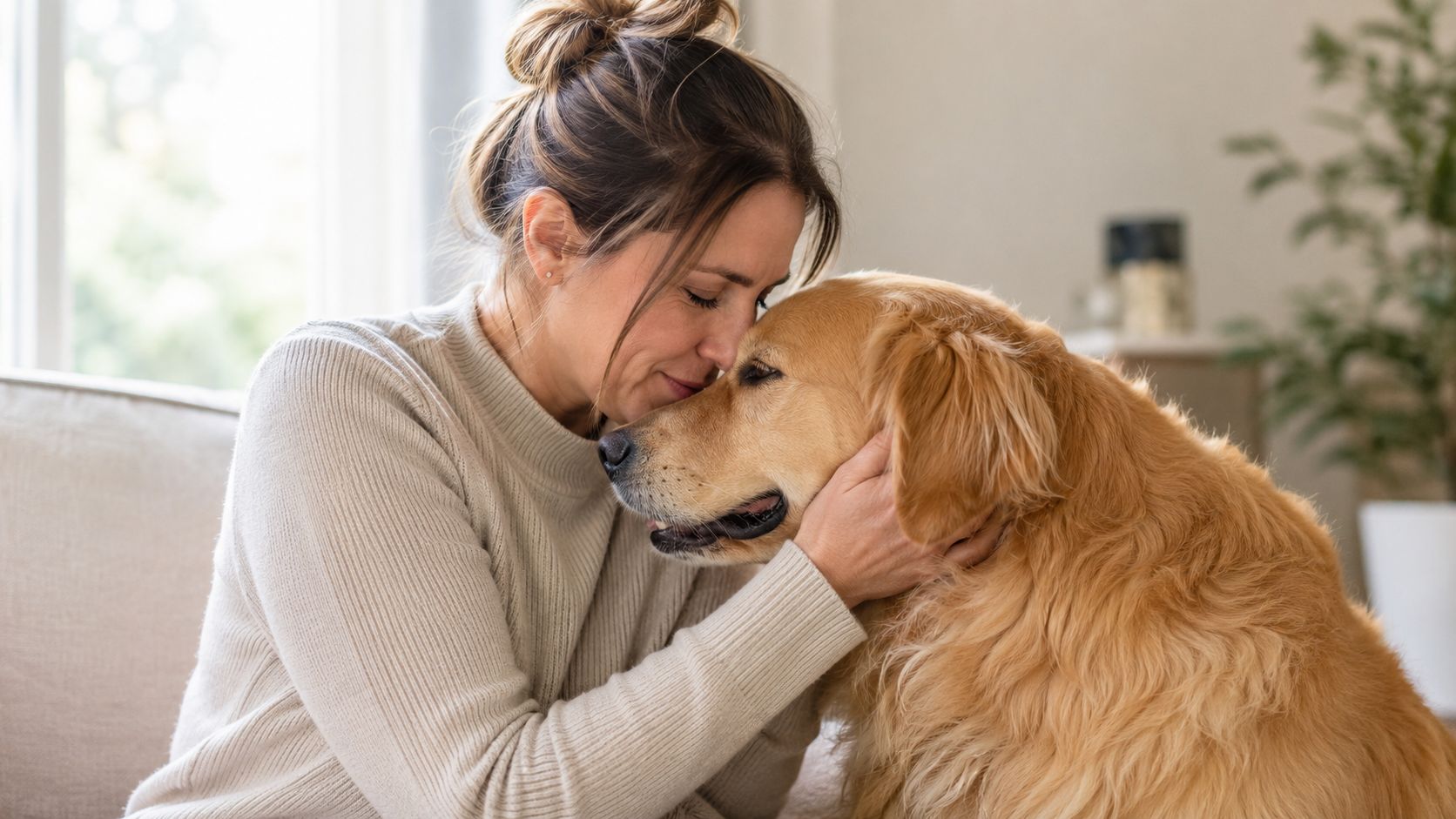
Bad breath is a comfort issue and a health signal
A dog's mouth tells you a lot. Foul odor can point to dirty teeth and irritated gums, but it can also show up with oral injury, something stuck in the mouth, or broader health concerns. That's why strong owners don't settle for masking the smell. They look at the whole animal.
In a premium pet grooming setting, that same mindset applies. The standard isn't just, “Does the coat look good?” The standard is, “Did anyone slow down enough to notice what needs attention?”
Practical rule: If your dog's breath changes suddenly, gets much stronger, or comes with drooling, pawing at the mouth, or trouble eating, stop shopping for breath products and call your veterinarian.
Discipline matters more than gimmicks
Veteran-owned grooming comes with a certain mindset. You build routines. You respect standards. You don't cut corners because the dog can't explain what hurts. That's the difference between thoughtful care and assembly-line handling.
For owners, that means treating oral care as part of total maintenance:
- Check the mouth regularly: Lift the lips and look at the gumline.
- Notice behavior changes: Slower chewing and food dropping matter.
- Use fresheners as support: They help most when they back up real hygiene.
- Stay consistent: Daily attention beats occasional overcorrection.
That commitment is what separates serious care from cosmetic care. In El Paso dog grooming, the polished finish matters, but the foundation matters more. When people want premium pet grooming from a veteran-owned grooming studio, they're usually looking for both. They want their dog handled with pride, patience, and standards that hold up over time.
Why Your Dogs Breath Smells Bad
Bad breath usually starts with residue, not mystery. Food particles stay in the mouth. Bacteria feed on them. Plaque forms along the teeth and gumline. If that buildup stays in place, it hardens into tartar. Then the gums get inflamed, the mouth gets more painful, and the odor gets worse.
That's why smell is often the symptom, not the root problem.
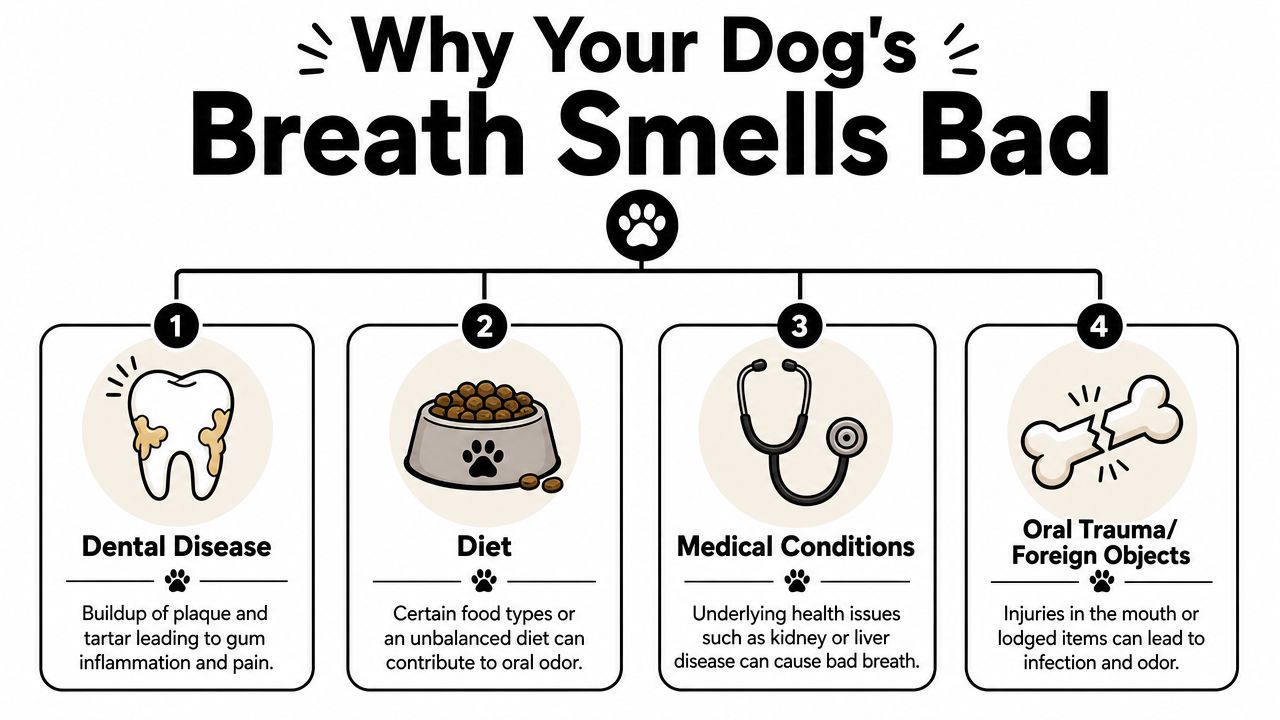
The common causes owners should know
Think of the mouth like a yard. If you pull weeds early, the space stays manageable. If you ignore them, roots spread and damage everything around them. Plaque works the same way.
The most common causes include:
- Dental disease: Plaque and tartar near the gumline can lead to inflamed gums, pain, and stronger odor.
- Diet issues: Some foods, scavenging, and garbage-raiding leave lingering smell and residue.
- Medical conditions: Breath can change when a dog has a larger health issue that needs veterinary attention.
- Oral trauma or foreign material: Sticks, fractures, sores, and lodged debris can create infection and smell fast.
What fresheners can and cannot do
Owners get misled when products promise a clean-mouth result from a surface-level fix. Veterinary guidance treats dog breath fresheners as helpers, not replacements for oral hygiene. The most evidence-based options are VOHC-certified dental chews, daily or near-daily brushing with dog-safe toothpaste, and veterinary-approved water additives, while xylitol and alcohol-based sprays are flagged as unsafe or poor substitutes for real dental care, according to veterinary guidance on dog breath fresheners and oral hygiene.
Bad breath that keeps returning usually means the mouth needs cleaning, not stronger perfume.
Red flags worth taking seriously
Don't wait for a dramatic problem. Watch for patterns.
- Red gums: Healthy gums shouldn't look angry or swollen.
- Heavy tartar: Yellow or brown buildup near the base of the teeth is a warning sign.
- Mouth sensitivity: Pulling away when touched isn't random.
- Changes in eating: Chewing on one side, hesitation, or dropping kibble can point to pain.
Once you understand the cause, the product aisle gets easier to sort through. You stop asking, “What covers the smell fastest?” and start asking, “What helps clean, reduce buildup, and fit my dog's routine safely?”
Your Arsenal Against Bad Breath Sprays Wipes Chews and Additives
The market is full of products that promise fresh breath. Some are useful. Some are mostly convenience. A few shouldn't go anywhere near your dog. The right pick depends on your dog's tolerance, your consistency, and whether the product is helping hygiene or just masking odor.
Veterinary guidance is clear on two points. Many breath products are adjuncts, not cures, and ingredient screening matters because xylitol can cause life-threatening hypoglycemia in dogs. Products should be made for dogs and, ideally, carry the VOHC seal, as noted in this veterinary review of dog breath fresheners.
What each product type actually does
Some dogs accept almost anything. Others act like a toothbrush is an insult to their bloodline. Match the tool to the dog in front of you.
| Dog Breath Freshener Comparison | |||
|---|---|---|---|
| Product Type | Primary Action | Ease of Use | Best For |
| Sprays | Freshens the mouth directly, may coat oral surfaces briefly | Moderate if your dog tolerates mouth handling | Dogs already comfortable with face and muzzle handling |
| Wipes | Physically remove residue from tooth surfaces you can reach | Moderate to low, depends on compliance | Owners building a handling routine before full brushing |
| Water additives | Add ongoing breath support through the water bowl | High if the dog accepts the taste | Busy households that need low-friction maintenance |
| Dental chews | Mechanical chewing action helps reduce buildup while freshening breath | High for dogs that chew safely | Dogs that enjoy chewing and need a practical daily support tool |
Honest trade-offs by category
Sprays are convenient, but convenience isn't the same as effectiveness. If a dog hates mist near the mouth, you'll end up using it inconsistently. That makes it a weak primary tool.
Wipes give you more control. They're useful for dogs that aren't ready for brushing, especially when you're training calm mouth handling. The downside is reach. You won't clean the back teeth thoroughly with a wipe alone.
Water additives are easy for owners and often the easiest habit to maintain. The catch is simple. If your dog dislikes the taste and drinks less, the routine breaks down fast.
Dental chews tend to fit real life well. They're familiar, fast, and often the easiest sell to the dog. The better ones focus on plaque reduction rather than just minty smell.
For odor issues tied to skin, coat, and general hygiene rather than the mouth alone, owners can also look at a broader guide to dog odor remover options so they're not confusing body odor with oral odor.
Safety checks before you buy
Don't shop by packaging. Shop by standards.
- Read the ingredient panel: If you see xylitol, put it back.
- Prefer dog-specific products: Human mouth products don't belong in a dog's routine.
- Look for the VOHC seal: That's one of the clearest quality filters in a crowded category.
- Watch your dog's response: Refusal, stomach upset, or water avoidance means the product isn't a good fit.
A useful dog breath freshener is one your dog will accept and you'll actually use.
Why Premium Grooming Is Your First Line of Defense
Most oral problems aren't found during a dramatic emergency. They're caught in quiet moments when someone is paying attention.
That's one reason a calm, one-on-one grooming environment matters. In a rushed, high-volume setup, the work can become transactional. Get the dog in, get the dog washed, get the dog out. That pace leaves less room for careful observation around the face, lips, jaw, and overall condition.
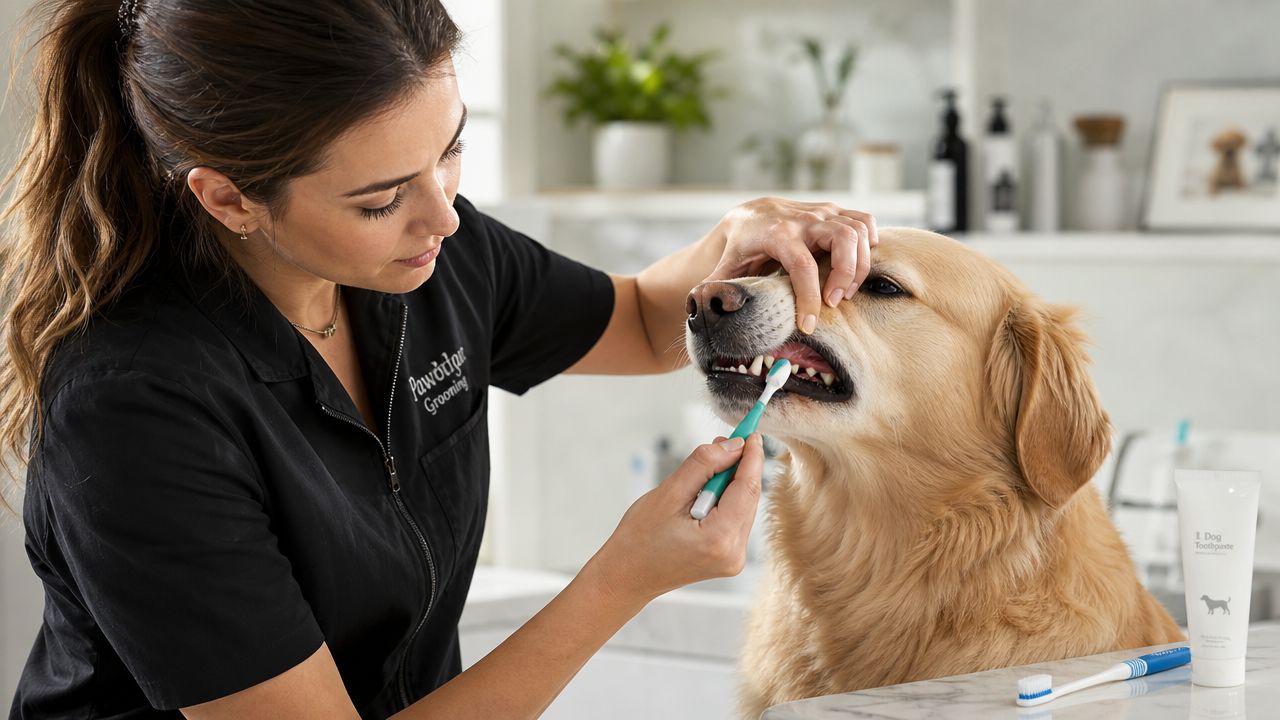
Close handling reveals what owners often miss
A groomer who works with discipline notices patterns. Inflamed gum edges. Heavy tartar odor. Sensitivity when the muzzle is touched. Uneven chewing posture. Facial buildup that suggests the dog isn't cleaning the mouth naturally because something hurts.
That doesn't replace a veterinarian. It does help owners catch issues earlier and stop guessing.
A strong at-home setup also depends on having the right tools ready, from toothbrushes to dog-safe toothpaste and cleaning basics. A practical guide to grooming supplies for dogs can help owners build a setup they will use, preventing supplies from sitting unopened in a drawer.
Science is moving past simple masking
Newer products are starting to target odor at the source instead of just covering it. A 2025 double-blind, randomized clinical trial found that a canine oral postbiotic reduced the compounds responsible for bad breath by 27% compared with placebo within 7 days, and twice as many dogs in the treatment group had perceptibly improved breath by Day 7, according to the published canine oral postbiotic trial.
That's useful for one reason above all. It shows the category is getting more serious about measurable oral outcomes.
Here's a quick look at tooth-brushing technique in action before you build your own home routine.
The chain-store difference is real
Owners in El Paso often ask what separates premium pet grooming from chain appointments at places like PetSmart or Petco. The answer isn't branding. It's workflow.
- Lower volume handling: Fewer dogs on-site means fewer distractions.
- More direct observation: Calm dogs show more of what's really going on.
- Cleaner communication: Owners get clearer feedback about what should be watched.
- Higher accountability: Independent, veteran-owned grooming carries personal ownership that chain systems often can't match.
That's especially important when you're not just chasing a good haircut. You're protecting long-term health.
Building a Resilient At-Home Routine in El Paso
A good routine wins because it's repeatable. Not fancy. Not complicated. Repeatable.
In El Paso, dry air and hot weather can make hydration more important for the whole body, including the mouth. When a dog is a little dry, saliva does less natural rinsing. That makes regular oral care more valuable because you can't rely on chance to keep the mouth cleaner.
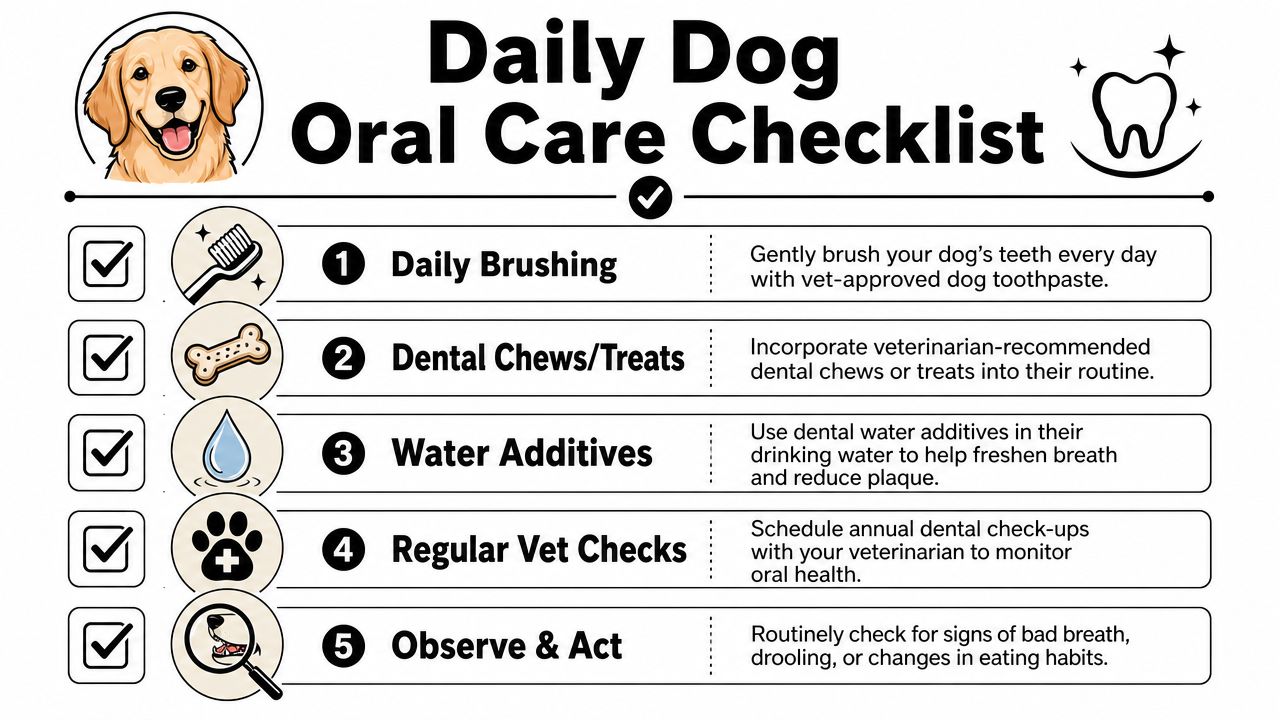
A routine that holds up in real life
Build your plan around the same principle that drives disciplined care in any field. Small actions, done consistently, beat occasional bursts of effort.
Brush when the dog is calm
Pick a quiet time, not the moment your dog is wild with energy. Use dog-safe toothpaste and keep the first sessions short.Add one support product
Use a chew, wipe, spray, or water additive based on what your dog accepts. Don't stack three new products at once.Look at the mouth every week
Lift the lips. Check odor, gum color, and visible buildup. You're looking for change, not perfection.Keep water appealing
Clean bowls often and make sure your dog keeps drinking normally, especially in warm weather.Get help with technique
If brushing feels awkward, this step-by-step guide to brushing dog teeth at home can help owners turn a struggle into a habit.
Where newer sprays may fit
Not every spray is just minty cover-up. A 2026 ACS report described a molasses-derived oral spray that left saliva with smaller amounts of odor-linked compounds and lower proportions of breath-associated bacteria such as Porphyromonas. The researchers described the action as a “molecular sponge” and also compared the longer-term bacterial effect to a gardener reducing odor-causing growth over time, according to the ACS report on a plant-extract dog oral spray.
That doesn't mean every spray on the shelf performs like that. It means the category is starting to split into two camps: products that merely freshen, and products trying to change the oral environment itself.
If your routine keeps failing, simplify it. Brushing plus one well-chosen support product is stronger than a cluttered plan you won't maintain.
Keep the standard steady
A resilient routine doesn't depend on motivation. It depends on structure.
- Use the same time window each day: Dogs settle into patterns fast.
- Reward cooperation: Calm praise or a routine-safe reward helps build tolerance.
- Track setbacks early: If odor returns quickly, reassess instead of buying random add-ons.
That's how owners protect results between grooming visits and veterinary care. Not with gimmicks. With consistency.
Take the First Step to a Healthier Pet Today
Dog owners have more choices than ever, but more choices don't always mean better decisions. A lot of consumer advice still pushes natural add-ins, herbs, and quick-fix breath solutions without clearly separating anecdote from actual clinical support. That's why buyers keep asking whether newer science-backed sprays outperform traditional options, a gap noted in this discussion of dog breath freshener evidence and newer microbiome-targeted formulations.
The practical answer is simple. Start with the basics that hold up. Keep the mouth cleaner. Use safe dog-specific products. Watch for changes. Get professional eyes on your dog regularly. If a product only hides odor and doesn't support oral hygiene, it shouldn't be the center of your plan.
For El Paso families, that kind of steady care fits both health and budget. An affordable grooming promo can help owners stay on schedule instead of postponing maintenance until small issues become larger ones. That's part of the value behind a disciplined local studio model. You get consistency, accountability, and a calmer experience than many chain environments provide.
If you're looking for El Paso dog grooming, premium pet grooming, and the standards that come with veteran-owned grooming, don't settle for rushed care and guesswork. Stay proactive. Keep your dog comfortable. Build a routine that respects your pet's health the same way you respect every other part of responsible ownership.
If you want a cleaner, calmer care routine for your dog, book with Glo More Grooming. El Paso families looking for one-on-one handling, disciplined workflow, and an affordable grooming promo can reserve a spot for Snip & Style Saturday or reach out to discuss a personalized care plan.