

You're probably here because your last cleaning session turned the tank into a snow globe. The waste lifted, the sand lifted with it, the tube clogged, and your bucket started filling with the substrate you paid for. That's the moment it becomes clear sand doesn't behave like gravel, and a gravel-vac habit can make a sand bed look worse instead of better.
A clean sand tank comes down to control, not force. The best results happen when the vacuum barely disturbs the top layer, lifts loose detritus, and leaves the bed itself in place. Once you learn what the suction should feel like and what the sand should look like at the nozzle edge, maintenance gets a lot less frustrating.
Choosing Your Aquarium Sand Vacuum
The first mistake is buying for power alone. With sand, especially finer grades, too much suction is usually the problem. A good aquarium sand vacuum should let you remove debris without dragging half the substrate into the waste bucket.
Manual siphon vs electric vacuum
Manual siphons are still hard to beat for feel. You can angle the tube, slow your passes, and control flow with your hand and hose pressure. That makes them useful when you're learning how your specific sand behaves.
Electric models trade some of that simplicity for convenience. Many are built around continuous sediment pickup and often advertise anti-clog motors and operation at any water level. One reviewed model uses an 18 W motor and mentions a 45° tip as a helpful attachment for keeping intake above the sand surface, which is the exact zone you want to work in for detritus removal without stripping substrate (AQQA electric aquarium vacuum details).
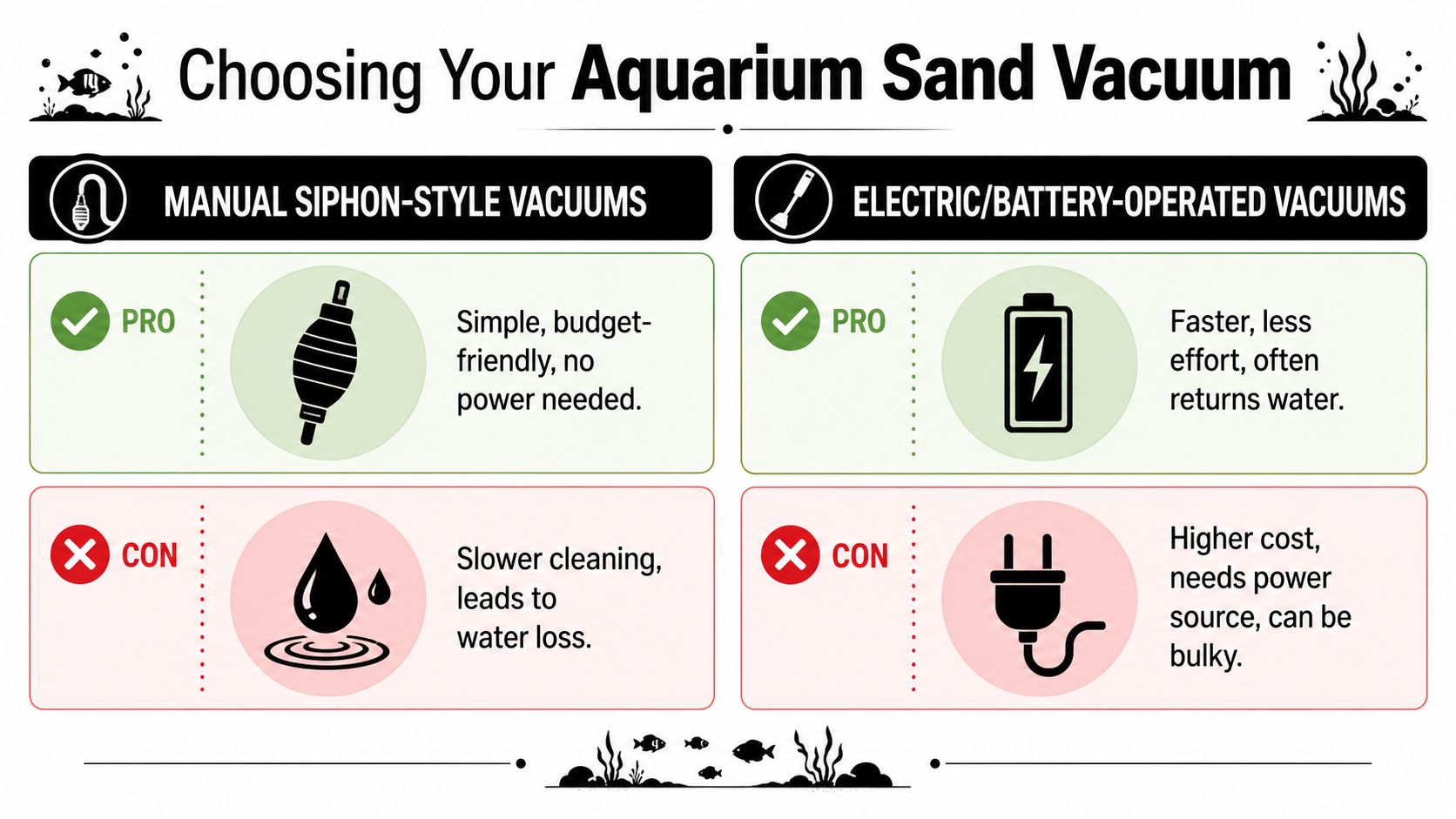
| Type | Best trait | Main drawback | Best fit |
|---|---|---|---|
| Manual siphon | Fine hand control | Slower and removes water as you clean | Small tanks, delicate sand, careful spot cleaning |
| Electric vacuum | Faster debris pickup | Can feel bulky or too strong if poorly matched | Larger tanks, routine sediment removal, users who want less hand-siphoning |
What actually matters on sand
Ignore broad claims and focus on three things:
- Suction control. If you can't tame the pull, you'll fight the tool every session.
- Nozzle shape. An angled intake helps you skim rather than stab.
- Clog behavior. Sand and waste together will expose a bad design fast.
Practical rule: On sand, the best vacuum is usually the one that feels slightly underpowered, not oversized.
If you're setting up or maintaining a smaller system, this guide to a 10 gallon fish tank setup pairs well with choosing a smaller, easier-to-control vacuum.
Which one I'd choose by sand type
For very fine sand, I'd lean manual unless the electric model has effectively soft, adjustable suction. For medium sand, either can work well. For coarser sand, electric units become easier to justify because the substrate is less eager to lift.
The wrong match feels obvious in use. The nozzle grabs and chatters, the sand rises in a hard stream, and you spend more time stopping clogs than cleaning. The right match feels steady. Waste lifts first, the top grains twitch at the edge, and you can move slowly without panic.
The Correct Sand Vacuuming Technique
The core method is simple. Hover and skim. If you plunge the tube into sand like you would with gravel, you'll clog the tube or strip out the bed.
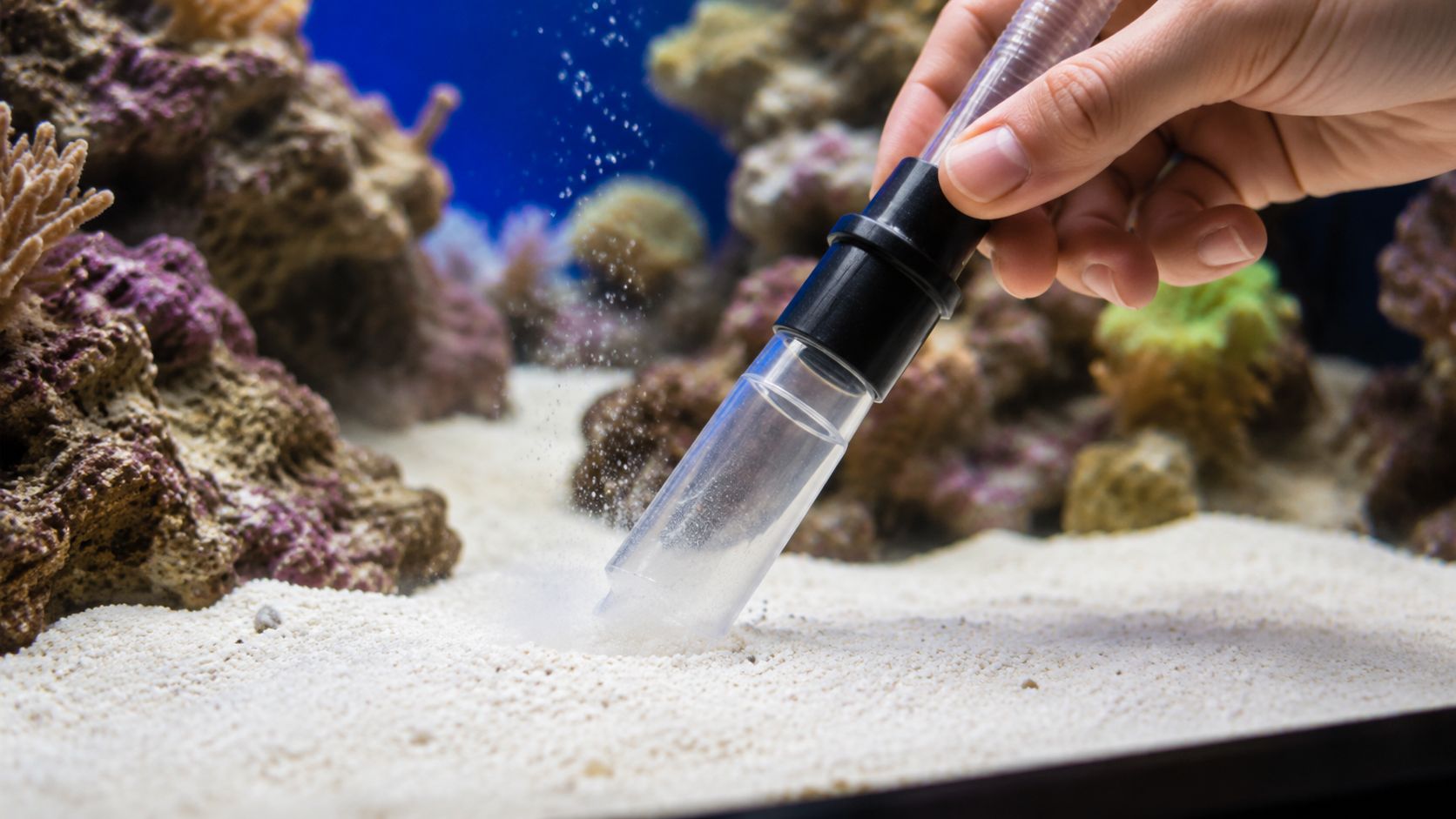
Practical guidance on sand cleaning has become much more specific over time. In a sand-focused instructional video, the presenter says, “Do not put that tube into the sand,” and shows that a light back-and-forth motion is enough to remove waste while avoiding a blocked tube or a bucket full of sand (watch the sand vacuum demonstration).
Start with position, not suction
Before you even move the vacuum, set the tube at a slight angle. Don't hold it straight down. A straight plunge concentrates the pull into one spot and turns the nozzle into a sand drill.
Bring the intake close enough that loose waste starts to rise. You want the debris to lift first and the sand to react second. The visual cue is subtle. The uppermost grains should barely dance at the edge of the flow, not rocket upward in a solid stream.
The motion that works
Use short, slow passes. Picture it as shaving the surface, not excavating it.
- Start the siphon or pump and keep the bucket ready.
- Lower the vacuum to just above the sand.
- Sweep in short back-and-forth movements.
- Pause over dirty patches, but don't dig.
- If the tube starts filling with sand, pinch the hose or stop the flow and reset.
A good feel is essential. When the motion is right, the nozzle seems to “catch” mulm, fish waste, and leftover food while the sand settles back immediately behind it. When the motion is wrong, you'll see a trench form. That trench is your warning sign to lift the head higher.
The best pass leaves the bed looking undisturbed except for cleaner color and fewer dark specks on top.
Adjusting for grain size
Not all sand vacuums behave the same because not all sand behaves the same.
- Very fine sand lifts easily and hangs in the water column longer. Keep the nozzle higher and move faster across the surface.
- Medium sand is the easiest to clean. You can hover lower and let debris rise through the top layer.
- Coarser sand tolerates a slower pass and a slightly closer intake.
If decor has trapped debris, gently disturb that area first and wait a moment for the waste to settle where you can reach it. Don't jab around with the tube. Let gravity help.
A quick visual demo can help lock in the hand motion:
Hose control saves the session
The most useful move isn't fancy. It's pinching the hose the instant the tube loads with sand. That lets you stop the pull before the clog packs tighter. On manual siphons, this is often the difference between a calm maintenance session and repeated restarts.
Another cue to watch is the sound. A smooth siphon has a steady rush. When you hear the pitch change and the intake starts rattling, the vacuum is usually too low or too deep into the surface layer.
Preventing a Cloudy Mess and Sand Loss
Cloudy water usually starts before the vacuum touches the substrate. It comes from rushing, overworking one area, or trying to clean too much in one pass. Sand rewards a disciplined workflow.
Before you start
A few habits make a big difference:
- Turn off strong flow so debris isn't being pushed around while you work.
- Choose sections instead of roaming randomly through the whole tank.
- Keep the hose easy to pinch so you can stop suction instantly.
- Use a bucket position you trust because a slipping hose creates chaos fast.
During the clean
Work in small zones and watch the plume. A light haze that settles quickly is manageable. A thick cloud means you're too low, too aggressive, or stirring more than you're removing.
One instructional source recommends removing only about 10% of tank water per week during routine vacuuming to avoid destabilizing water parameters, and adds that larger or neglected tanks should be cleaned gradually over several days rather than all at once (routine water removal guidance for vacuuming). That advice fits sand especially well because trying to “reset” a dirty sand bed in a single session often creates the worst mess.
After the pass
Let the tank settle before deciding you missed a spot. Sand systems often look worse for a few minutes and better after the fine debris drops out of suspension or gets picked up by filtration.
If you're removing more sand than waste, stop and raise the intake. Technique fixes more problems than stronger equipment.
A clean sand bed doesn't have to look sterile. It should look calm, even, and free of obvious waste buildup. That's the target.
Working Around Fish Plants and Decor
A sand bed is part of the tank's biology, not just its floor. That matters most in planted aquariums, high-flow setups, and tanks where fish regularly move substrate around on their own.
Recent aquarium guidance emphasizes a selective approach in these systems: vacuum loose debris, focus on feeding areas and other hotspots, and avoid deep passes where plant roots or beneficial bacteria are concentrated (selective vacuuming in planted tanks).
Where to clean and where to leave alone
If fish gather in one corner for feeding, that's a high-value cleaning area. If a rooted plant has a stable base and the substrate around it looks healthy, leave it mostly alone.
A practical way to divide the tank is this:
- Hotspots to target. Feeding zones, open bare patches, front glass edges, and areas where current drops debris.
- Areas to approach lightly. Around driftwood, rock bases, and shallow root zones.
- Areas often best left alone. Dense plant clusters and established rooted sections unless visible waste is collecting on top.
Fish stress matters too
Fish read your movements. Fast drops of the tube, abrupt swipes, and repeated hovering over their shelter make cleaning harder for both of you. Slow entries and predictable passes keep them from dashing into the nozzle path.
If you keep a compact aquarium, these 10 gallon aquarium ideas can help you think through layout choices that make maintenance easier, especially around decor and planted corners.
A healthy tank often needs selective cleaning, not universal cleaning.
That tradeoff is easy to miss. Many keepers chase a spotless substrate and end up disturbing rooted areas that were doing more good than harm.
How Often Should You Vacuum Sand
There isn't a universal schedule. That's not a dodge. It's how sand tanks behave.
In hobbyist discussion around substrate care, people reported very different habits. Most never vacuum at all, while others do it weekly, monthly, or only when conditions call for it, which shows how much cleaning frequency depends on stocking level and overall tank goals (community discussion on vacuuming frequency).
Read the tank, not the calendar
Three things tell you more than any fixed routine:
- Visible waste on the surface. If you can see mulm collecting in open areas, the tank is asking for attention.
- Stocking and feeding habits. Heavier feeding and more active fish usually create more surface detritus.
- Flow pattern. Some tanks create obvious dead spots where debris settles repeatedly.
A lightly stocked planted setup may only need occasional touch-ups in exposed zones. A tank with messy eaters may need regular surface skimming in the same few spots.
For larger systems, planning maintenance around scale helps. This look at a 35 gallon tank is useful if you're trying to think through how cleaning rhythm changes as tank footprint grows.
The best schedule is the one your tank can support without making the bed unstable or leaving visible waste to build up.
Troubleshooting Common Vacuuming Problems
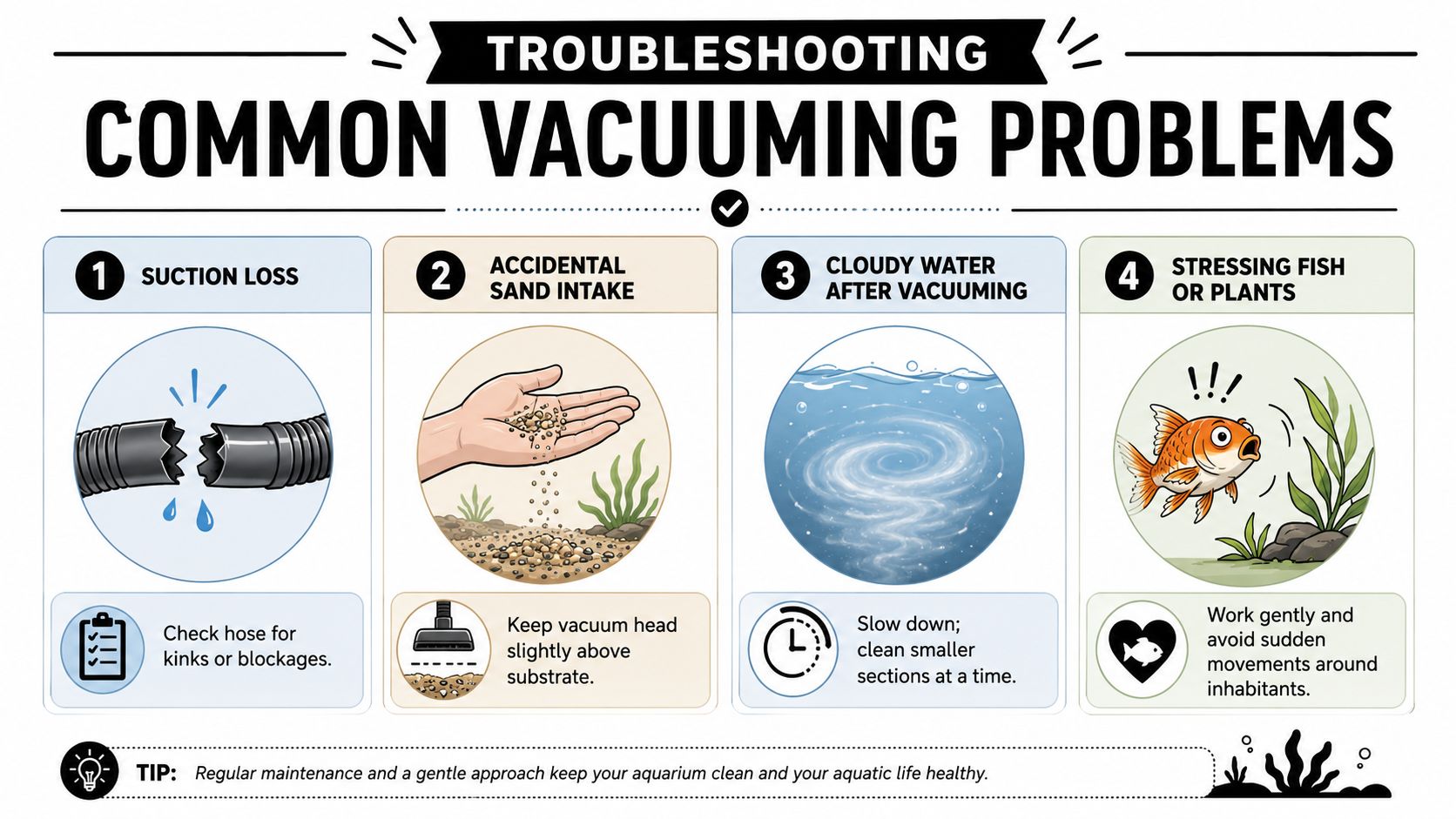
Most sand-cleaning problems come down to nozzle height, suction control, or trying to treat fine sand like gravel.
Quick fixes that work
The tube keeps clogging with sand
Lift the intake higher and shorten your passes. If the tube loads up, stop flow immediately and clear it before packing gets worse.You keep sucking up very fine sand
Very fine sand is difficult to vacuum safely, and guidance on deeper sand beds warns that beds above about 2.5 cm are more prone to compacting and anaerobic zones, so surface cleaning is often the better method instead of deep cleaning (guidance on fine sand and deeper beds).The water turns cloudy every time
Slow down. Clean a smaller section and let the tank settle between areas instead of chasing every speck in one session.Fish or plants seem stressed
Work around them, not through them. Avoid sudden drops of the tube into shelter zones or root-heavy patches.
If your sand seems “impossible” to clean, the answer usually isn't a bigger vacuum. It's a lighter touch, a better angle, and accepting that the surface is what you clean.
If you value the same disciplined workflow in pet care that keeps an aquarium stable, Glo More Grooming brings that mindset to El Paso dog grooming with calm one-on-one handling, premium pet grooming standards, and the pride of a veteran-owned grooming studio. For busy local pet owners who want polished results without chain-store chaos, Glo More Grooming stands apart from PetSmart and Petco through personalized care, clear standards, and long-term commitment to the El Paso community. Watch for affordable grooming promo opportunities like Snip & Style Saturday, then book now, reserve your promo slot, or contact Glo More Grooming today.