

A lot of owners reach the same point with a small dog. The barking starts as something manageable, then it turns into a pattern. The door opens and the dog erupts. A delivery truck passes and the dog sounds the alarm. You answer one work call from home in El Paso and spend half of it apologizing for the noise in the background.
That frustration is real. So is the temptation to buy the first anti bark collar for small dogs you see online and hope the problem disappears by the weekend.
The trouble is that barking isn’t just noise. It’s information. A small dog may be reacting to fear, excitement, habit, barrier frustration, boredom, or discomfort. If you treat every bark like defiance, you pick the wrong tool and often make the dog harder to handle. If you want a calmer dog, start by learning what the dog is saying through posture, tension, tail set, ear position, and facial expression. A good place to begin is this guide on how to read dog body language.
The Challenge of a Small Dog's Big Bark
Small dogs get dismissed too often. People laugh off the barking because the dog is little, then the habit gets stronger. By the time the owner starts searching for solutions, the barking has already become part of the daily routine.
That matters because a small dog’s bark can come from very different causes. One dog alerts at every hallway sound. Another barks when left alone. Another gets overstimulated during grooming, nail trims, visitors, or neighborhood activity. Those are not the same problem, so they shouldn’t get the same response.
Why quick fixes usually disappoint
Owners usually want relief fast. That’s understandable. But a collar only addresses the moment of barking. It doesn’t automatically teach the dog how to settle, how to recover after a trigger, or how to stay composed in a busy home.
Bark control works best when the dog gets clarity, not just correction.
In practice, the strongest results come from pairing any tool with structure. That means consistent routines, clear handling, and follow-through. The disciplined households tend to do better because the dog knows what happens next.
The local reality in El Paso homes
El Paso pet owners deal with the same barking triggers as anywhere else, but local lifestyle plays a role. Apartment living, shared walls, package deliveries, neighborhood foot traffic, and owners balancing long workdays can all keep a small dog on edge. When that dog has pent-up energy and no clear routine, barking becomes self-rehearsing.
A premium care mindset matters here. Not “premium” in the flashy sense. Premium in the sense of careful observation, clean handling, and refusing to guess with a dog’s welfare. That’s the difference between reacting to barking and solving it.
Understanding Anti Bark Collar Technology
An anti bark collar for small dogs is not one device. It’s a category. The main types work differently, and those differences matter because small dogs often react faster and more intensely than larger dogs.
Some modern collars now use adjustable static, vibration, and sound stimuli, and some include bark counters, bark forgiveness, and smart detection that distinguishes true barking from ambient noise, with accuracy reported at over 90% in user trials in the product roundup from WOpet’s bark collar guide. Features like that are useful only if the collar still fits the dog’s temperament and the owner uses it with discipline.
The four main collar types
Here’s the plain-English breakdown.
| Collar Type | Mechanism | Pros | Cons for Small Dogs |
|---|---|---|---|
| Static | Delivers an electronic stimulation when barking is detected | Usually adjustable, widely available, often used for firm interruption | Can be too intense for sensitive or anxious small dogs if used carelessly |
| Vibration | Sends a buzzing sensation, similar to a pager | Non-static option, often a better starting point for mild cases | Some dogs ignore it, others find vibration startling |
| Spray | Releases a burst of citronella or unscented spray near the muzzle | Avoids static stimulation, gives a clear sensory interruption | Refill needs, mess, and inconsistent effectiveness |
| Ultrasonic or sound-based | Emits a high-pitched tone or correction sound when barking occurs | No contact stimulation beyond wearing the collar | Detection and dog response can be inconsistent, especially in noisy settings |
How each one feels to the dog
A vibration collar is like a silent pager on the neck. It doesn’t rely on pain, but it can still be a strong surprise for a timid dog.
A static collar is more direct. Owners often think “small dog means lowest setting and done,” but that’s too simplistic. Sensitivity, bark frequency, the dog’s stress level, and collar fit all affect the experience.
A spray collar works through interruption. The dog barks, the collar releases a burst, and the dog may stop because the sensation and smell break the cycle.
An ultrasonic collar tries to interrupt barking through sound the dog can hear. In theory it’s simple. In practice, it can be less predictable because some dogs habituate and some environments create detection problems.
Why progressive settings matter
The better collars don’t jump straight to the strongest response. They escalate, or they give a warning tone or vibration first. That’s a smarter setup for small dogs because it gives the dog a chance to stop before the collar increases intensity.
Look for function over marketing. Fancy packaging doesn’t mean the device is humane, accurate, or appropriate. In premium pet grooming and behavior support, the standard should always be the same. Know the mechanism, know the dog, then decide.
Safety Fit and Potential Health Risks
The first safety issue isn’t correction level. It’s fit.
A collar that slides around can rub the skin raw. A collar that sits too tight can create pressure, irritation, and stress before the dog even barks. Small dogs have less neck mass, finer skin, and less room for error. That makes sloppy fit unacceptable.
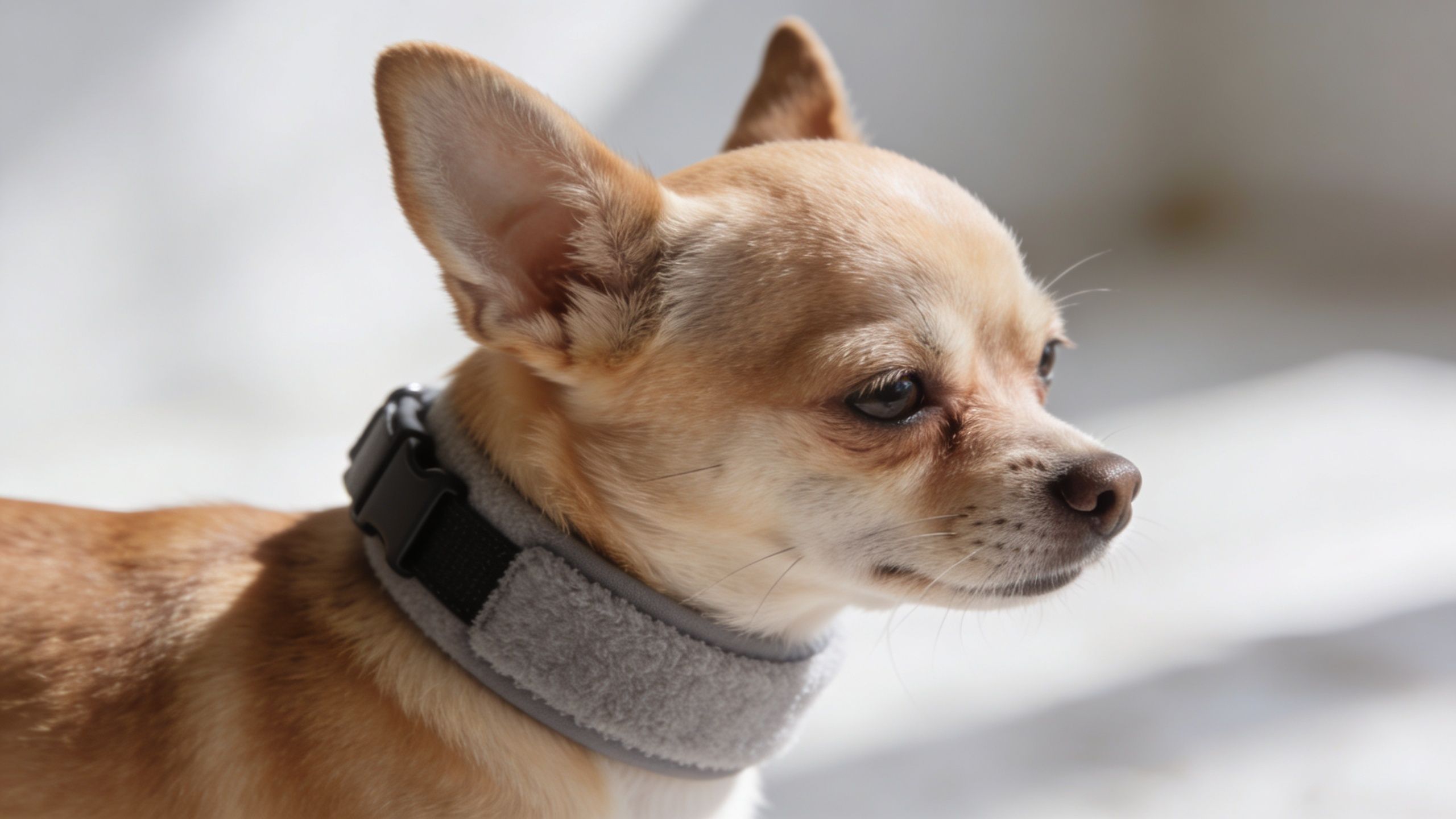
Before anyone puts a training collar on a toy or small breed, they should know how sizing works. This guide to dog collar size is a useful starting point because “small” on packaging is not the same as a safe fit on the dog in front of you.
Physical risks owners overlook
Most mistakes happen because owners focus on stopping barking and ignore wear time, neck checks, and coat condition. On a long-coated small dog, hair can hide friction. On a short-coated dog, irritation shows up faster.
Watch for these problems:
- Skin irritation: Redness, rubbed spots, tenderness, or hair loss around the contact area.
- Moisture buildup: Damp fur under a collar can trap heat and irritate skin.
- Pressure points: A device box that’s too bulky can sit awkwardly on a narrow neck.
- Matting under the strap: Small dogs with finer coats can develop hidden tangles that make the collar more uncomfortable.
Psychological fallout matters too
Physical fit is only half the story. The bigger risk for some small dogs is emotional association. If a dog is already anxious, reactive, or noise-sensitive, a poorly timed correction can make the trigger feel more threatening instead of less.
That’s where detection technology matters. Premium collars now use dual-sensor systems that analyze throat vibration and sound patterns to reduce false activations from environmental noise, as described by Masbrill’s product overview. In a multi-dog setting or a noisy household, that’s a meaningful safety feature because the collar is less likely to fire when another dog barks nearby.
Practical rule: If the collar is correcting the wrong dog, the wrong moment, or the wrong emotional state, it isn’t training. It’s confusion.
When not to use one
Some dogs are poor candidates from the start. That includes dogs with clear anxiety patterns, dogs who vocalize during isolation distress, and dogs who show panic rather than simple excitement. It also includes dogs with skin sensitivity, recent grooming irritation, or any neck-area medical concern.
Owners also need to be honest about their own consistency. If you’re not going to monitor fit, inspect the neck, test the settings, and use the collar as part of a plan, skip the tool.
Humane Alternatives and Professional Training
For most small dogs, the foundation of bark control is not the collar. It’s training, environment, and routine.
That’s not soft advice. It’s the practical route. A collar may interrupt a bark, but the dog still needs to learn how to settle, what to do instead, and how to cope with the trigger without spiraling.
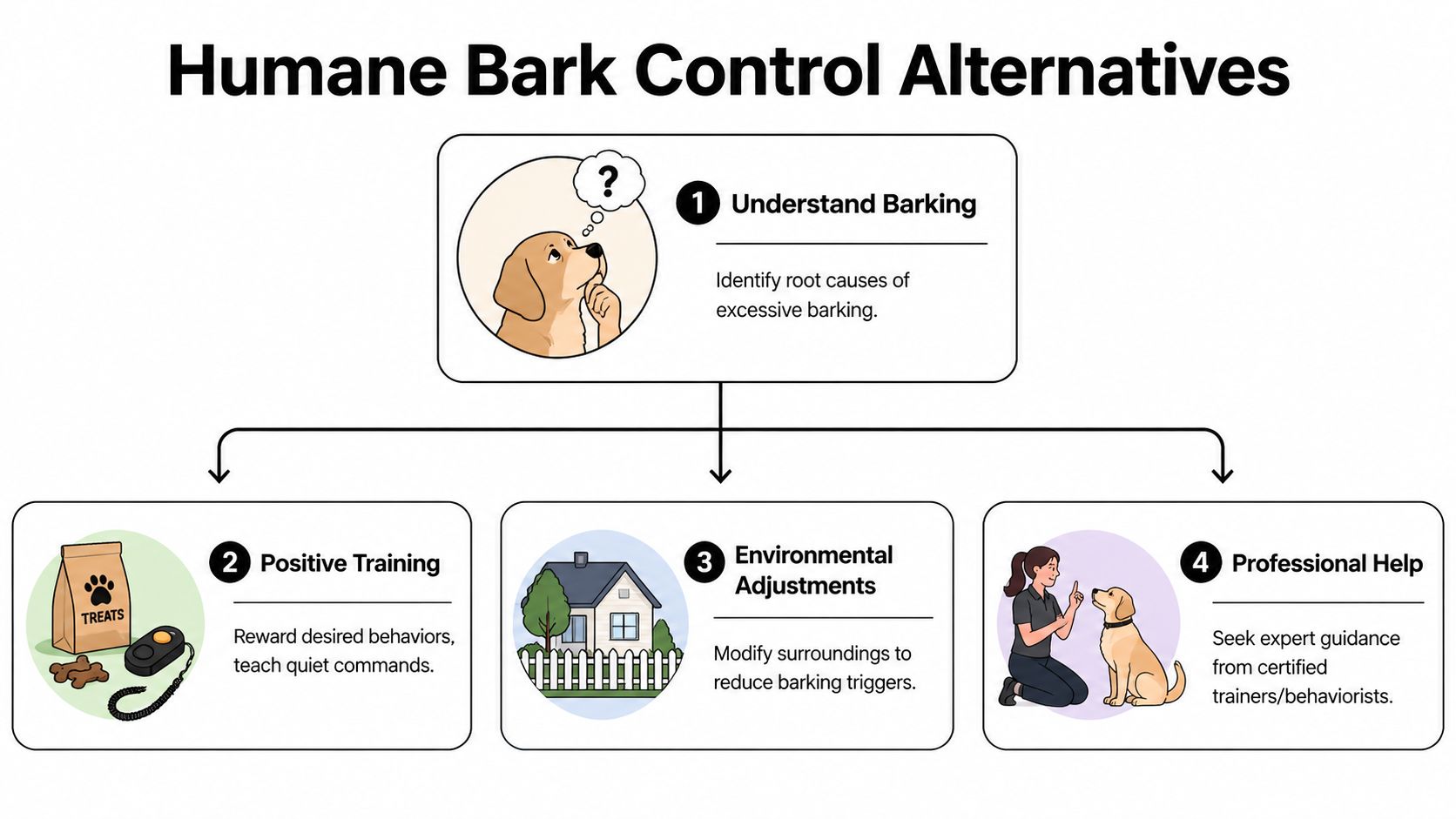
A clinical study on citronella spray collars found they were effective in suppressing barking for only about 43% of dogs, and barking often returned to pretreatment levels within a week of stopping the collar without concurrent training, according to the clinical paper on bark control collars. That’s the key lesson. Suppression alone doesn’t build durable behavior.
What actually helps most dogs
Owners need a system. Not a gadget-first mindset.
- Teach quiet as a trained behavior: Reward the pause, not just the absence of noise. The dog needs to understand what earns reinforcement.
- Reduce trigger rehearsal: If the dog patrols windows and explodes at every passerby, change the setup. Block sightlines, move furniture, or manage access.
- Build decompression into the day: Sniff walks, food puzzles, short training sessions, and predictable downtime lower overall arousal.
- Address physical discomfort: Dogs bark more when they’re uncomfortable. Overgrown nails, matted coat, ear irritation, and general handling stress can all lower a dog’s threshold.
- Practice calm handling: Small dogs often get scooped up, restrained abruptly, or fussed over when they’re already activated. Calm, consistent handling matters.
Grooming can reveal the real issue
A lot of behavior conversations get framed as obedience problems when they’re comfort problems. A dog with tight matting, dirty ears, or painful nails may vocalize more during normal daily handling. Once the dog is physically comfortable, the baseline can improve.
That’s also why chaotic, assembly-line care tends to miss things. High-volume environments often push dogs through fast. A one-on-one setting gives handlers time to notice whether the dog is barking from fear, anticipation, touch sensitivity, or habit.
This video gives a useful visual look at dog training and barking behavior:
When a collar becomes a last-resort tool
There are cases where a carefully selected collar can support a broader plan. Usually that means the owner has already done the work of identifying triggers, improving routines, and teaching replacement behaviors. It also means the dog is not showing signs that correction will worsen fear.
A bark collar should never be the entire plan. At best, it’s one piece of a controlled program.
The strongest long-term results come from dogs who know how to recover. That recovery is trained. It doesn’t come out of the box.
The Glo More Standard for El Paso Pets
Owners in El Paso have choices. They can go with a chain, move through a crowded lobby, and hope the dog gets handled well. Or they can look for a setting that values observation, pace, and accountability.
That distinction matters most with small dogs. A dog who barks through intake, trembles on the table, or stiffens during handling tells you something important. In a rushed environment, that information gets missed. In a disciplined workflow, it becomes part of the care plan.

Why independent care often catches more
Independent studios can control the environment better than large chains. Fewer dogs on site. Less noise. Less cross-stimulation. More time to watch the dog’s actual temperament instead of reacting to a pileup of environmental stress.
That’s one reason many owners looking for El Paso dog grooming and premium pet grooming move away from big-box expectations. They want cleaner handling, calmer scheduling, and someone who notices subtle signs before those signs become bigger problems.
Structure is part of animal welfare
A disciplined process helps dogs settle. They learn that handling will be consistent, transitions will be controlled, and there won’t be unnecessary chaos. That’s not marketing language. It’s operational hygiene.
Examples of that standard include:
- One dog at a time focus: Lower noise and less competition for space.
- Clean booking flow: Better timing reduces stacked appointments and rushed handoffs.
- Careful observation: Behavior changes get noticed earlier.
- Routine maintenance: Regular grooming often supports calmer handling over time.
A local option like Spring Hill dog grooming reflects what many owners now want from pet care in general. Less volume. More precision.
Consistency beats occasional rescue mode
Small dogs benefit from regular maintenance far more than occasional crisis appointments. When grooming happens on a dependable schedule, handling becomes familiar. Nails stay shorter. Coats stay manageable. Dogs arrive with less accumulated stress.
That’s also where practical offers matter. A monthly special such as Snip & Style Saturday can make steady care easier to keep up with. For owners searching for an affordable grooming promo, that kind of consistency is often more valuable than a one-time bargain that doesn’t fit a long-term routine.
Smart Buying Criteria for Responsible Owners
If you still plan to buy an anti bark collar for small dogs, buy like a responsible owner. Don’t buy based on star ratings alone. Don’t buy based on the strongest claim on the box. And don’t assume “small dog approved” means your dog is an appropriate candidate.
The biggest gap in the market is simple. Product pages rarely give useful breed-specific or temperament-specific guidance. As noted in Chewy’s bark collar category context, there’s a real lack of breed-specific efficacy data, and a Chihuahua with anxiety-driven barking may respond very differently than a Toy Poodle with territorial barking.
The checklist that matters
Start with these questions before you purchase anything:
- Is the collar physically appropriate for the dog? Weight, strap width, and receiver size matter on a narrow neck.
- Does it offer adjustable sensitivity? Small dogs don’t all bark the same way, and detection needs to match the individual dog.
- Can it distinguish the dog’s bark from ambient noise? In homes with multiple dogs, this is critical.
- Does it escalate progressively? A warning phase is preferable to a hard correction as the first response.
- What is the stimulation type? Static, vibration, spray, or sound all carry different trade-offs.
- Can you return it if the dog reacts poorly? A responsible trial period matters.
What to observe during the first uses
Once a collar is fitted and tested, the owner’s job becomes observation. Watch the dog, not the advertising.
Signs to evaluate include:
- Does the dog understand the contingency? The dog should appear to connect the bark and the interruption, not look generally alarmed.
- Does stress rise or fall? If the dog becomes more frantic, the collar is not solving the problem.
- Does the barking shift into another problem behavior? Some dogs stop vocalizing and start pacing, trembling, or avoiding normal activity.
- Can the dog still relax? A useful tool should not keep the dog in a constant state of anticipation.
If you can’t tell whether the collar is helping or just suppressing visible symptoms, pause and get qualified guidance.
Buy for the dog in front of you
Owners frequently go wrong. They buy for the problem headline, not the individual animal. “Excessive barking” is too broad to shop from. Buy only after you’ve identified whether the barking is alerting, fear-based, demand-driven, or tied to isolation or discomfort.
That standard is higher than what most product pages ask of you. It should be.
Your Path to a Quieter and Happier Home
A quieter home usually doesn’t start with a stronger correction. It starts with a better read on the dog.
For some small dogs, an anti bark collar for small dogs may have a narrow place in the plan. For many others, the better answer is calmer handling, cleaner routines, improved comfort, and training that gives the dog an alternative to rehearsed barking. That approach asks more from the owner, but it also protects the dog.

The strongest pet care standards come from people who take ownership of the whole picture. Behavior. Grooming. Comfort. Environment. Follow-through. That mindset is a good fit for El Paso families who want peace at home without cutting corners on animal welfare.
Choose the right tool if a tool is needed. But choose a plan first. That’s how you get a dog who isn’t just quieter, but steadier and easier to live with.
If you want thoughtful guidance from a veteran-owned grooming studio that values structure, calm handling, and long-term pet welfare, contact Glo More Grooming. Whether you’re looking for El Paso dog grooming, premium pet grooming, or an affordable grooming promo like Snip & Style Saturday, now’s the time to book, reserve your promo slot, and give your dog the kind of care that supports comfort, behavior, and confidence.