
TL;DR: While almonds aren’t toxic to dogs in the same way chocolate is, they’re still a bad idea. Almonds contain about 49 to 54% fat by weight, can trigger pancreatitis, create a choking or obstruction risk, and bitter almonds can release cyanide. The risk isn’t worth it.
You’re on the couch, you crack open a snack, and your dog locks eyes with you like you owe them a share. Every El Paso dog owner knows that look. It’s hard to say no when your dog is polite, adorable, and convinced your food belongs to them.
Say no anyway.
I’ve spent years around dogs, routines, coats, skin, nails, ears, stress signals, and the small details many owners miss when life gets busy. One thing I’ve learned is simple. The dogs that look best usually live under clear rules. Clean feeding habits, steady routines, consistent care. That’s what keeps pets in strong condition, and that’s why the question of whether almonds are bad for dogs deserves a straight answer.
Your Dog's Health Is Our Mission
A shiny coat doesn’t start with shampoo. It starts with health.
When a dog eats things that don’t belong in their system, the first signs often show up in the ways owners don’t expect. Energy changes. Digestive trouble. A dull coat. Skin that’s irritated for no clear reason. A dog that seems “off” during handling. Good grooming isn’t separate from wellness. It’s tied to it.
High standards start at home
I’m a veteran business owner in El Paso, and I believe pet care should run on discipline, not guesswork. That means you don’t feed random human snacks because the dog begs. You don’t wait for a problem to become an emergency. You set standards, follow them, and protect your dog before trouble starts.
That’s the difference between casual ownership and serious care.
Big chains often move fast because they have to. High-volume environments focus on throughput. Independent, veteran-owned grooming operations with disciplined workflows can pay closer attention to the dog in front of them. That matters. Dogs tell the truth with their body condition, coat quality, behavior, and tolerance for handling.
A polished appearance is the result of good decisions made long before bath day.
Why this matters in El Paso
In El Paso, families treat dogs like family because they are family. Busy schedules, school pickups, work demands, and weekend errands make it easy for snack-sharing habits to slip in. One person drops trail mix. Another thinks a plain almond “can’t be that bad.” That’s how preventable problems start.
If you care about El Paso dog grooming, you should care about what goes into the dog’s body too. Premium pet grooming isn’t only about tidy feet and a fresh face. It’s about maintaining the dog well enough that grooming stays smooth, comfortable, and safe.
Almonds don’t help with any of that. They create risk with no real payoff.
Why Almonds and Dogs Do Not Mix
Here’s the blunt answer. Almonds bad for dogs is the right conclusion.
A plain almond might not create an immediate crisis in every dog, but that doesn’t make it a smart treat. The main problem is fat. According to PetMD’s guidance on whether dogs can eat almonds, almonds pose a significant risk of pancreatitis in dogs because of their high fat content. PetMD also notes that pancreatitis can escalate from mild gastrointestinal upset to a potentially fatal disorder if untreated, with symptoms including vomiting, abdominal pain, and lethargy.
The problem isn't nutrition
Dogs don’t need almonds. There’s no good reason to make them part of a dog’s routine.
Owners sometimes assume that because almonds are a healthy human snack, they must be a healthy dog snack. That logic fails all the time in pet care. Human foods don’t transfer neatly into a canine diet. A dog’s system is not a smaller version of yours. It has its own limits, and fat-rich nuts push in the wrong direction.
Gut stress shows up fast
When dogs eat foods their system doesn’t handle well, digestive trouble often follows. Some dogs vomit. Some get diarrhea. Some act tired, uncomfortable, or lose interest in food. In a grooming setting, dogs dealing with stomach upset or low-grade inflammation often have less patience, more sensitivity during handling, and lower tolerance for stress.
That matters more than people think.
A dog that feels bad won’t stand the same. Won’t cooperate the same. Won’t recover from routine stress the same. Owners who want a smooth premium pet grooming experience should stop treating food decisions like they’re harmless side notes.
Clear recommendation
My recommendation is simple:
- Don’t offer almonds on purpose
- Don’t treat “just one” like a habit
- Don’t assume a large dog gets a free pass
- Don’t let guests feed nuts from snack bowls
There are safer rewards. There are cleaner routines. There are better ways to show love.
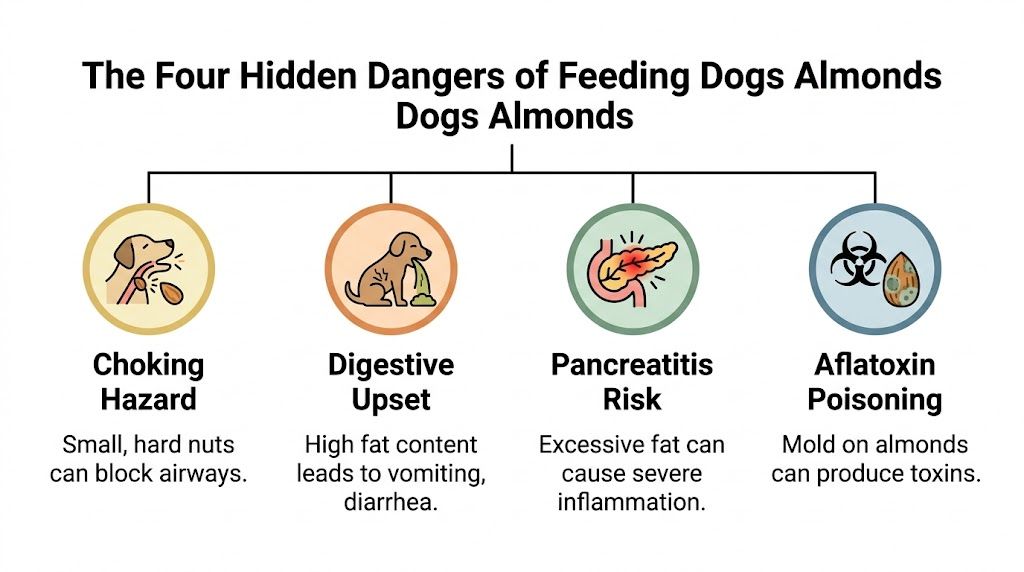
The Four Hidden Dangers of Feeding Dogs Almonds
A dog can look perfectly fine at drop-off, then show us the truth once handling starts. He braces on the table, swallows hard, turns touchy around the belly, and loses patience fast. In my shop in El Paso, I pay attention to that kind of change because food mistakes often show up in grooming before owners connect the dots.
High fat and pancreatic strain
According to Hill’s Pet Nutrition on dogs and almonds, almonds are high in fat. That matters because rich, fatty foods can trigger pancreatitis in some dogs, especially dogs with a history of digestive trouble or poor diet control.
I do not treat that as a small risk. Pancreatitis can turn a careless snack into vomiting, pain, dehydration, and an expensive veterinary visit. Owners who want a dog feeling steady, clean, and comfortable need more discipline than tossing people food from the couch.
Choking and intestinal blockage
Almonds are hard, dense, and easy for a dog to gulp whole. That creates an immediate choking hazard and a second risk farther down the digestive tract if the nut does not pass cleanly.
Toy breeds and small dogs face the highest danger, but I have seen larger dogs inhale treats so fast they create the same problem. If your dog grabs food instead of chewing it, almonds do not belong anywhere near the reward jar. The same common-sense rule applies to other nuts discussed in our guide on whether cashews are safe for dogs.
Seasonings and coatings add another layer of trouble
Store-bought almonds are often salted, smoked, candied, or covered in spice blends and flavor powders. That means the dog is not just eating a nut. The dog is eating a processed snack built for human taste, not canine health.
That distinction matters in real life. A handful from a party bowl, trail mix bag, or center console stash can bring extra salt, garlic, onion seasoning, sweeteners, or oils into the picture. At a one-on-one grooming studio like Glo More Grooming, we build care around the whole dog. Skin, stress tolerance, coat condition, digestion, behavior. Sloppy feeding works against every part of that standard.
Bitter almonds carry a toxin risk
Sweet almonds are the kind sold in most U.S. stores, but bitter almonds are a different matter. The Cleveland Clinic explains that bitter almonds contain compounds that can release cyanide, which makes them dangerous if eaten.
My advice is blunt. If you cannot identify exactly what almond product your dog got into, treat it like a real problem and act fast. Veteran-owned businesses survive by staying disciplined, and pet care should work the same way. Guessing has no place in a serious wellness routine.
Nuanced Risks Almond Types and Breed Vulnerability
Good dog care lives in the details. Blanket advice helps, but precise advice protects.
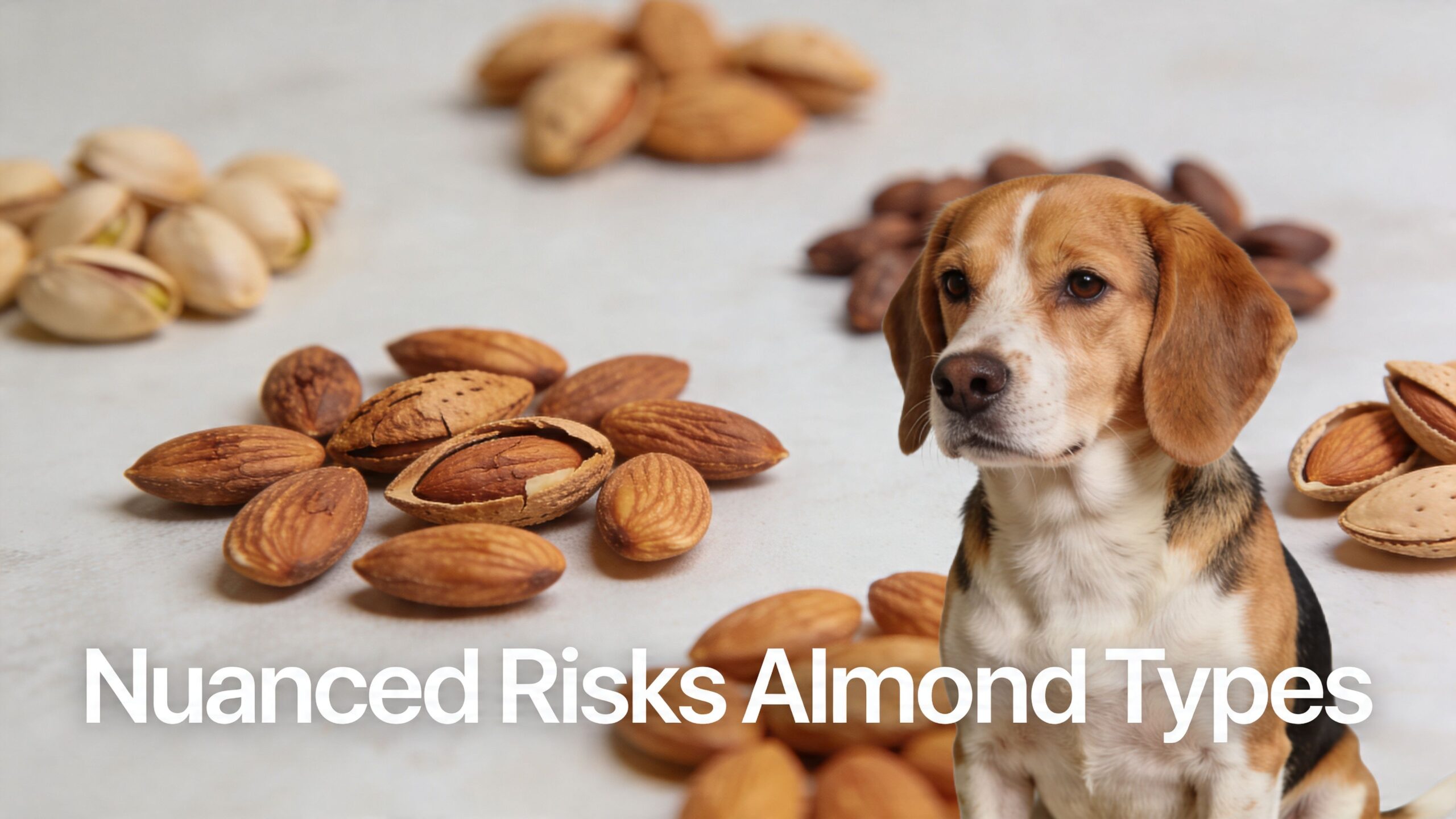
Most grocery-store almonds in the United States are sweet almonds. Those are the ones that usually create digestive upset, fat-related trouble, and physical obstruction risk. Bitter almonds are a different category entirely, and they raise a true toxicity concern. Owners need to know that distinction because online advice often blurs it.
Some breeds carry more risk
Diet doesn’t hit every dog the same way. Breed tendencies matter.
According to Pawlicy Advisor’s discussion of almonds and dogs, almonds contain high levels of phosphorus, which can contribute to the formation of bladder stones, also called urolithiasis. That same guidance highlights that breeds like Dachshunds, Pugs, and Beagles are genetically predisposed to this condition, which makes phosphorus-rich foods a worse idea for them.
A Beagle that raids a snack bag isn’t just “being a dog.” In the wrong body, with the wrong predisposition, the consequences can be more serious.
Owners should stop using one-size-fits-all feeding logic
If your dog is from a breed with known urinary issues, digestive sensitivity, weight struggles, or a history of stomach trouble, your standards should be stricter. Not looser.
Pet care separates into two camps. One camp says, “It was only a little.” The other asks, “Was that food appropriate for this dog?” The second camp prevents more problems.
For owners comparing other nuts, this guide on whether dogs can eat cashews is useful because it shows the same bigger lesson. Dogs don’t need us to experiment with snack foods from the pantry. They need us to filter risk before it reaches the bowl.
The strongest pet routines aren’t flexible about unsafe treats. They’re consistent.
What to Do if Your Dog Eats Almonds
You step away for one minute, come back, and the snack bag is ripped open on the floor. In my shop here in El Paso, I’ve seen the same pattern for years. Owners wait, hope for the best, and lose time they should have used to act. Handle it right away.
Start with the facts. Check how many almonds your dog ate, whether they were plain or seasoned, and whether your dog swallowed them whole. Bitter almonds are a different level of risk because they can release cyanide. If you suspect that type, call a veterinarian or pet poison service immediately.
Start with a simple triage check
Look at your dog first.
Breathing trouble, repeated gagging, frantic pawing at the mouth, or heavy drooling can point to choking or irritation. Vomiting, a swollen or tight belly, obvious pain, diarrhea, or sudden lethargy can signal gastrointestinal trouble. If your dog looks off, treat that as a real problem, not a wait-and-see situation.
Size and history matter here. A small dog can get into trouble faster with whole almonds. A senior dog or a dog with a sensitive stomach has less room for error. At Glo More Grooming, one-on-one care means we pay attention to those individual differences every appointment, because good grooming is tied to good health. You cannot separate the coat, skin, behavior, and gut and still call it premium care.
When to call right away
Call your vet promptly if your dog ate several almonds, swallowed them whole, got into flavored or sugar-free products, or shows any symptom at all. Keep the package in your hand when you call. The ingredient panel matters.
Do not try to make your dog vomit unless a veterinarian tells you to do it. Do not give oil, bread, milk, or internet remedies. Those mistakes waste time and can make the situation worse.
Write down three things before you call: what your dog ate, about when it happened, and what signs you are seeing now. That helps the clinic make a faster call on whether you need monitoring at home or immediate treatment.
Human products cause this same kind of confusion all the time. If you need another example of why dog care demands dog-specific judgment, read our guide on whether Visine is safe for dogs. The rule is simple. Human convenience should never outrank canine safety.
That’s how I run a veteran-owned studio, and that’s how I advise dog owners across El Paso. Stay calm, stay disciplined, and act early.
Safe and Healthy Snack Alternatives for Your Dog
If you want to reward your dog, use foods that respect the dog’s body. That’s the standard.
Whole almonds are a poor choice, and for small dogs the risk is even sharper. According to Chewy’s dog nutrition guidance on almonds, small dog breeds under 20 pounds face a significantly higher risk of gastrointestinal obstruction from whole almonds, and even a single almond can become a choking hazard or cause a blockage requiring emergency surgery.
Better options that actually make sense
You don’t need fancy solutions. You need safe ones.
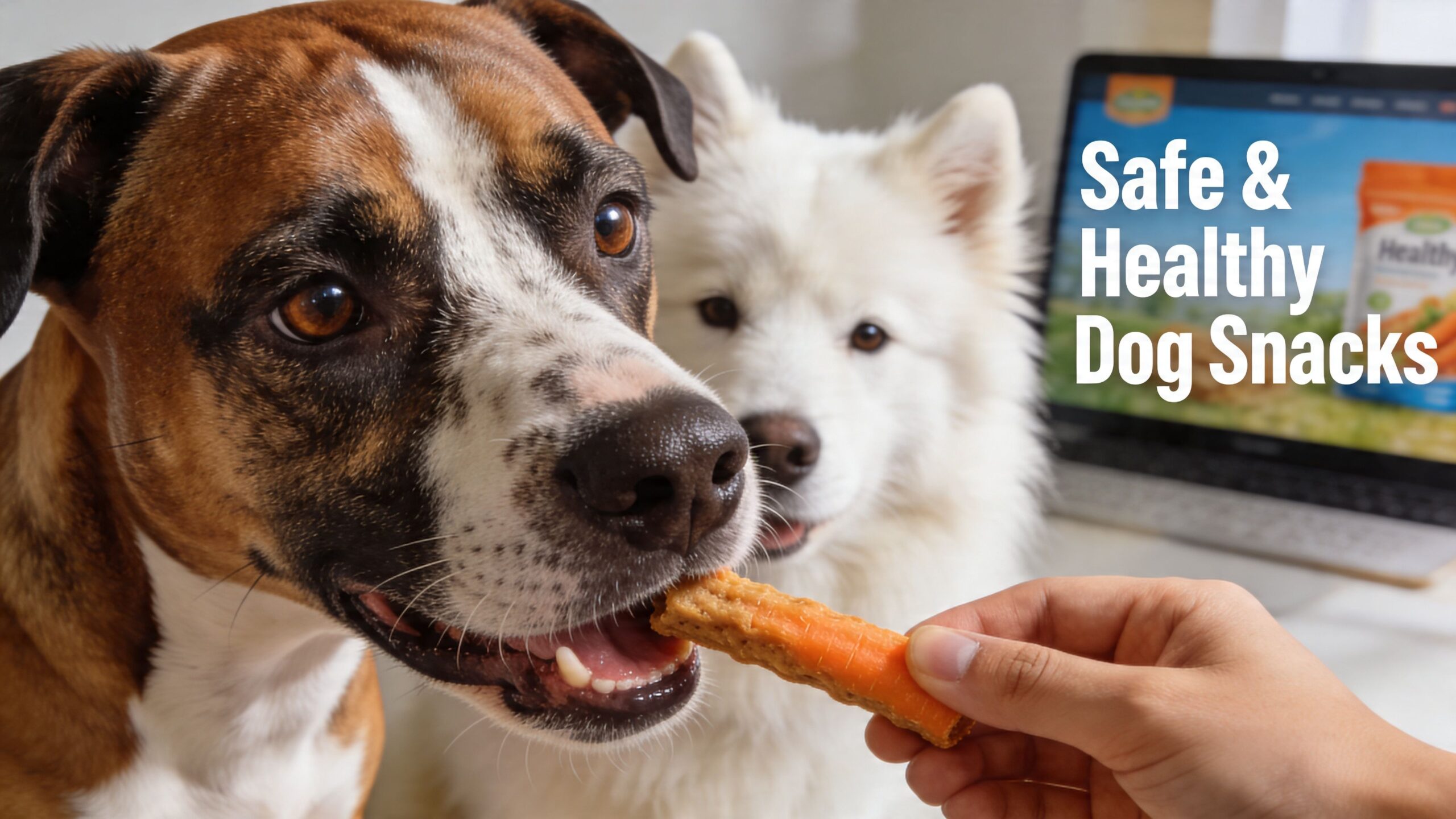
- Baby carrots: Crunchy, simple, and easy to portion.
- Blueberries: Useful as small rewards without turning snack time into a calorie dump.
- Green beans: A solid option for dogs that like a crisp bite.
- Apple pieces: Fine without seeds or core.
- Dog-specific training treats: Better for routine rewards because they’re made for canine digestion.
If you want more snack ideas that fit a cleaner routine, this roundup of healthy puppy treats is a smart place to start.
Dog-safe vs unsafe nuts
| Nut Type | Risk Level | Primary Concerns |
|---|---|---|
| Almonds | Unsafe | High fat, pancreatitis risk, choking, obstruction |
| Bitter almonds | Highly unsafe | Cyanide release toxicity |
| Flavored almonds | Unsafe | Additives, seasonings, unknown ingredients |
| Whole nuts for small dogs | Unsafe | Choking and blockage risk |
What about almond butter and almond milk
These products confuse people because they seem softer and easier to serve. That doesn’t make them smart.
Almond butter can still be too rich for many dogs, and processed products often come with extra ingredients owners overlook. Almond milk isn’t a nutritional win for dogs either. If you’re reaching for a spread to hide medication or fill a lick mat, choose carefully and read every label. A tiny amount of a simpler, dog-appropriate option is usually the cleaner move.
This video gives a useful visual reminder on treat choices and feeding habits.
Feed for the dog in front of you, not for the trend on the package.
Prevention A Core Principle of Premium Pet Care
The best response to almond ingestion is preventing it in the first place.
That’s how disciplined pet care works. You build an environment that reduces mistakes. You don’t rely on luck. You don’t wait until your dog is vomiting at midnight to decide the pantry needed rules.
Build a house with fewer opportunities for bad decisions
Start with the obvious fixes, then make them habits.
- Store nuts high and closed: Pantry shelves, sealed containers, and bags zipped fully shut.
- Control the snack zone: Don’t leave bowls of mixed nuts on coffee tables, side tables, or counters within reach.
- Brief guests quickly: Tell visitors not to feed table scraps or snacks to the dog.
- Watch handbags and backpacks: People carry trail mix more often than they realize.
- Use crates or gates when needed: Especially during parties, holidays, and family gatherings.
These steps are not excessive. They’re responsible.
Train the dog, not just the household
Dogs should know that dropped food isn’t automatically theirs. A solid “leave it” command saves dogs from all kinds of mistakes, not just almonds.
Practice with low-value distractions first. Reward compliance. Build reliability indoors before expecting it in a busy environment with guests, kids, and food around. Obedience is health protection.
Prevention and grooming run on the same standard
Serious owners and serious care providers align on this point: A calm dog doesn’t happen by accident. A safe feeding routine doesn’t happen by accident. A clean, controlled grooming environment doesn’t happen by accident either.
That’s why many El Paso pet owners are moving away from chaotic, high-volume experiences and choosing more focused care. Chains like PetSmart and Petco serve a market. Independent studios with strict workflow standards serve a different one. If you value one-on-one handling, cleaner processes, and dogs that aren’t stacked into a rushed system, the difference is obvious.
For families who want that higher standard without losing sight of value, monthly specials matter too. An affordable grooming promo like Snip & Style Saturday works because it pairs disciplined service with practical access. That’s the right model for a community that cares about both quality and consistency.
The rule to keep
Don’t normalize unsafe snacks.
If a food creates avoidable risk and gives no real benefit, it shouldn’t be in your dog’s routine. That rule is simple enough for kids, guests, and grandparents to follow. Simple rules protect dogs better than complicated exceptions.
Book Your Premium Grooming Experience in El Paso
Your dog deserves more than a quick haircut and a rushed handoff. They deserve care built on standards, patience, cleanliness, and attention to the details that affect comfort and long-term wellness.
That’s what sets El Paso dog grooming apart when it’s done right. A calm setting, one-on-one handling, and disciplined service create a better experience for the dog and more confidence for the owner. If you want premium pet grooming from a veteran-owned grooming studio that values consistency, pride, and community, choose a team that takes every part of pet care seriously. If you’ve been waiting for an affordable grooming promo, keep an eye out for Snip & Style Saturday and reserve early.
Ready for a higher standard of care? Book with Glo More Grooming for a calm, one-on-one grooming experience in El Paso built on discipline, clean craftsmanship, and real pride in every dog served. Contact us today to reserve your spot, ask about current packages, or secure your next Snip & Style Saturday appointment.