
When you live with a dog who is losing their sight, or you’ve brought a blind dog into your family, you quickly learn that it’s a journey of adaptation for both of you. The good news is, the right blind dog accessories aren't just gadgets; they're genuine confidence-builders that help your companion navigate their world safely and joyfully.
Helping Your Dog “See” in a New Way
A dog without sight doesn't stop exploring. Instead, their other senses—smell, hearing, and touch—kick into high gear. They learn to create a detailed mental map of their surroundings using these heightened abilities. Our job is to give them tools that support this new sensory superpower.
This is where modern accessories for blind dogs really shine. They're thoughtfully designed to prevent startling bumps into the coffee table, make playtime an engaging sensory game, and turn a simple walk through the house into a predictable, stress-free stroll.
The Foundation: Safety and Confidence
Ultimately, the goal is to bring back your dog's sense of security. Imagine the difference it makes when they can move around without the constant fear of collision. It’s transformative. You'll see them become more playful, more willing to explore, and a lot more like their old selves. That renewed confidence is everything.
A few key types of accessories help build this foundation:
- Navigational Aids: Think of halos or bumper vests as your dog’s personal early-warning system. They gently alert them to obstacles before they make contact, preventing bumps and building trust in their environment.
- Enrichment Toys: Toys that rely on sound or scent are fantastic for keeping their minds sharp. A puzzle toy with hidden treats or a ball with a bell inside can prevent the boredom and anxiety that sometimes comes with vision loss.
- Home Modifications: You can make a huge difference with simple changes. Textured mats or rugs can become sensory "landmarks" that signal they’re near the water bowl, the back door, or a staircase.
The market for pet accessories has exploded, and while gear for blind dogs is a specific niche, it’s a growing one. With more people welcoming pets into their homes and a large population of senior dogs, the demand for products that enhance safety for visually impaired companions is stronger than ever.
A dog’s world is built on predictability and trust. For a blind dog, accessories provide that predictability, allowing them to navigate their home and your life together with courage and joy.
Don't forget that your dog's overall comfort plays a big role, especially if they're wearing a harness or halo for long periods. Regular grooming is essential to prevent mats and skin irritation from forming under the straps. Understanding the benefits of a deshedding treatment for dogs can keep their coat and skin healthy, making the experience of wearing an accessory a comfortable one. It’s all part of a holistic approach to their well-being.
Choosing the Right Halo or Bumper Vest
So, you've decided a navigational aid is the next step for your dog. That's great! When you start looking, you’ll quickly see two main options pop up: the halo and the bumper vest. Think of them as a personal radar system for your pup. Both are fantastic blind dog accessories designed to prevent bumps and bruises, but they excel in slightly different situations.
A halo is exactly what it sounds like—a lightweight hoop, usually made of a sturdy wire, that attaches to a harness and circles your dog's head. It’s a brilliant solution for navigating the great indoors. When the halo gently taps a wall or a piece of furniture, your dog gets instant feedback to stop or change direction. It’s like a super-sensitive set of whiskers, perfect for mastering the art of avoiding that tricky coffee table leg.
Then you have the bumper vest. This option is more like a padded shield. It's built for dogs with a bit more "oomph" in their step or for those who love their outdoor adventures. The cushioned bumper is designed to absorb more significant impacts, making it the better choice for exploring the backyard or navigating a new walking path where surprise obstacles are part of the fun.
Sizing for a Perfect Fit
Let's be clear: getting the fit right is absolutely critical. A halo or vest that’s too loose will slide around, giving your dog confusing signals and could even become a tripping hazard. On the flip side, one that's too tight will chafe, restrict their movement, and make it tough to do essential dog things like eating, drinking, or curling up for a nap.
Here’s how to nail the measurements:
- Get the Tape Out: Use a soft tailor’s tape to measure your dog's chest girth—that’s the widest part of their rib cage, right behind the front legs. You'll also want to measure their length from the base of their neck to where their tail begins.
- Trust the Chart, Not Your Gut: Every brand has its own sizing. Don't just guess based on your dog's breed or what they weigh. Always compare your measurements directly to the manufacturer's sizing chart.
- Look for Adjustability: The best products have multiple adjustment points. This gives you the flexibility to create a truly custom fit and allows for small changes if your dog gains or loses a little weight.
Material and Durability Considerations
The global pet accessories market has seen incredible growth, which is fantastic news for owners of special needs pets. This boom means there's a higher demand for well-designed products like bumper harnesses that prevent collisions. For owners like us, it's a worthwhile investment in our dog's safety and well-being. You can see just how much the industry is expanding by checking out these insights on the booming pet accessories market on imarcgroup.com.
When you're comparing options, pay close attention to the materials. You want something that's durable but still lightweight and breathable. Easy-to-clean fabrics are a lifesaver, and many are even machine washable. Don't forget to check the hardware—the buckles, clips, and D-rings should be strong, secure, and rust-resistant.
A well-chosen halo or vest does more than just prevent bumps; it rebuilds your dog’s spatial awareness and gives them the freedom to explore with confidence once again.
Ultimately, whether you go with a halo or a bumper vest really depends on your dog’s individual personality and your daily routine. By focusing on getting that perfect fit and choosing quality, durable materials, you're not just buying a piece of equipment. You're giving your best friend a tool that protects them and empowers them to navigate their world with the independence and joy they deserve.
How to Introduce New Gear Without Stress
When you bring home a new halo or vest for your blind dog, your first instinct might be to put it on them right away. But hold on. The secret to success is all about patience and making them want to wear it. Think of it as building a partnership—you’re showing them this new thing is a helper, not a hindrance.
Start slow. Really slow. Just put the new gear on the floor and let your dog discover it on their own time. They'll use their nose, their whiskers, maybe even a paw, to figure out what this strange new object is all about. This is their way of mapping it out, so let them take the lead without any pressure.
Building a Positive Association
Once they’re comfortable being near the accessory, it’s time to build a positive connection. Every time your dog interacts with it—a gentle sniff, a curious nudge—give them a super tasty treat and some happy praise. You're teaching them a simple, powerful lesson: good things happen when this accessory is around.
Keep these initial training sessions short and sweet, just a minute or two. The goal is a positive experience, not an endurance test. If you notice any signs of stress, like their ears pinning back or their tail tucking, it's time to stop. End on a good note with one last treat and try again later.
Getting the right fit from the very beginning makes this whole process much easier. A comfortable halo is one they'll actually want to wear.
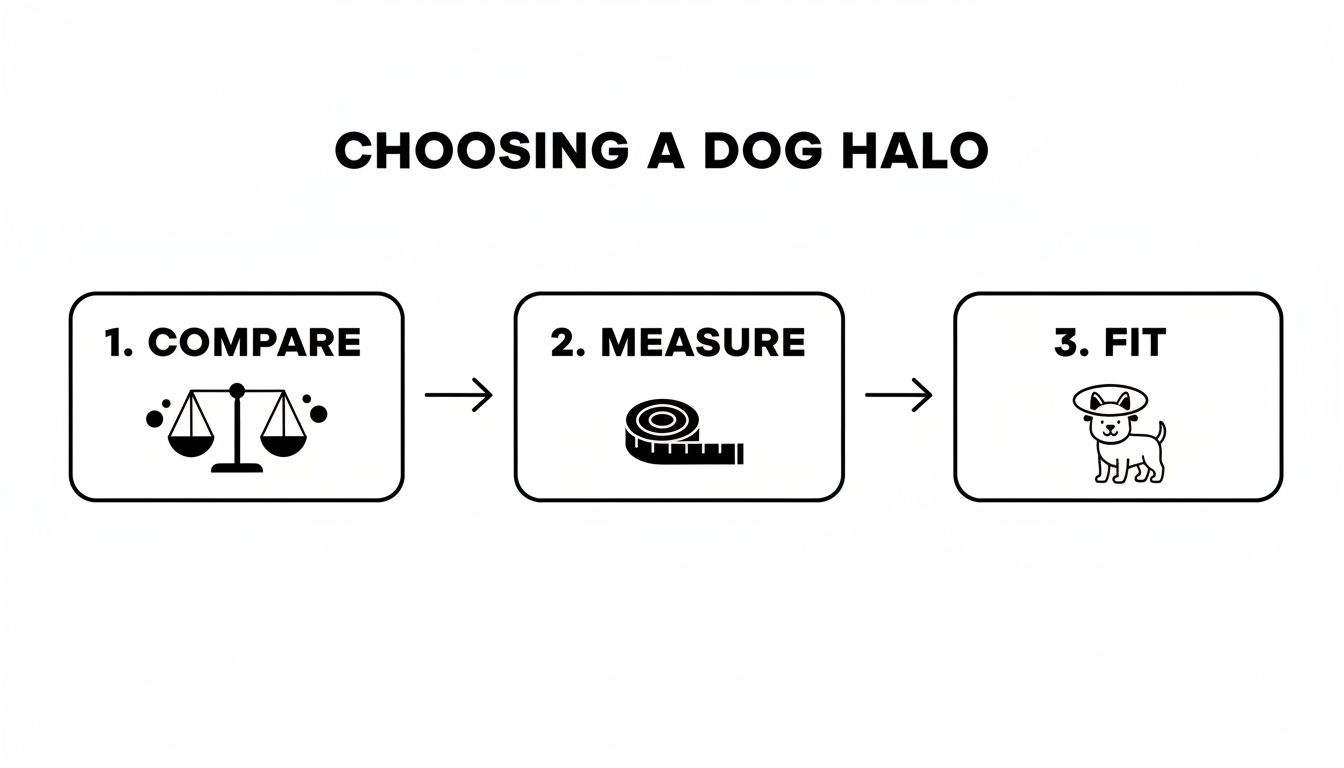
As the diagram shows, a great outcome starts with comparing options, taking careful measurements, and ensuring a snug, comfortable fit.
Reading Your Dog's Body Language
Your dog is constantly communicating with you, and it’s your job to listen. A relaxed body, soft ears, and a gentle tail wag are all signs they’re feeling good. On the flip side, if you see them licking their lips, yawning when they aren't tired, or trying to back away, they're telling you they've had enough. Respecting these signals is how you build unbreakable trust.
Don't forget about their overall comfort, either. A new harness can sometimes rub or chafe, and overgrown nails can easily get snagged on straps. Keeping their paws neat is a small detail that makes a big difference. For detailed instructions, our guide on how to cut overgrown dog nails can help ensure they stay comfortable and safe.
The most important thing to remember is patience. When you associate the new gear with tasty rewards and respect your dog’s comfort, you turn a strange object into a trusted tool that helps them confidently explore their world.
Enrichment Toys for a Happy Blind Dog
When a dog loses its sight, their other senses kick into high gear. Their world becomes a rich tapestry of sounds, smells, and textures. That's why enrichment toys aren't just a fun extra—they're absolutely essential blind dog accessories for keeping your companion mentally sharp, engaged, and truly happy.
Losing vision doesn't mean losing the desire to play or explore. It just means we need to find new ways to satisfy those natural canine instincts. The right toys can prevent boredom, ease anxiety, and build confidence by letting your dog succeed in a world they can't see.
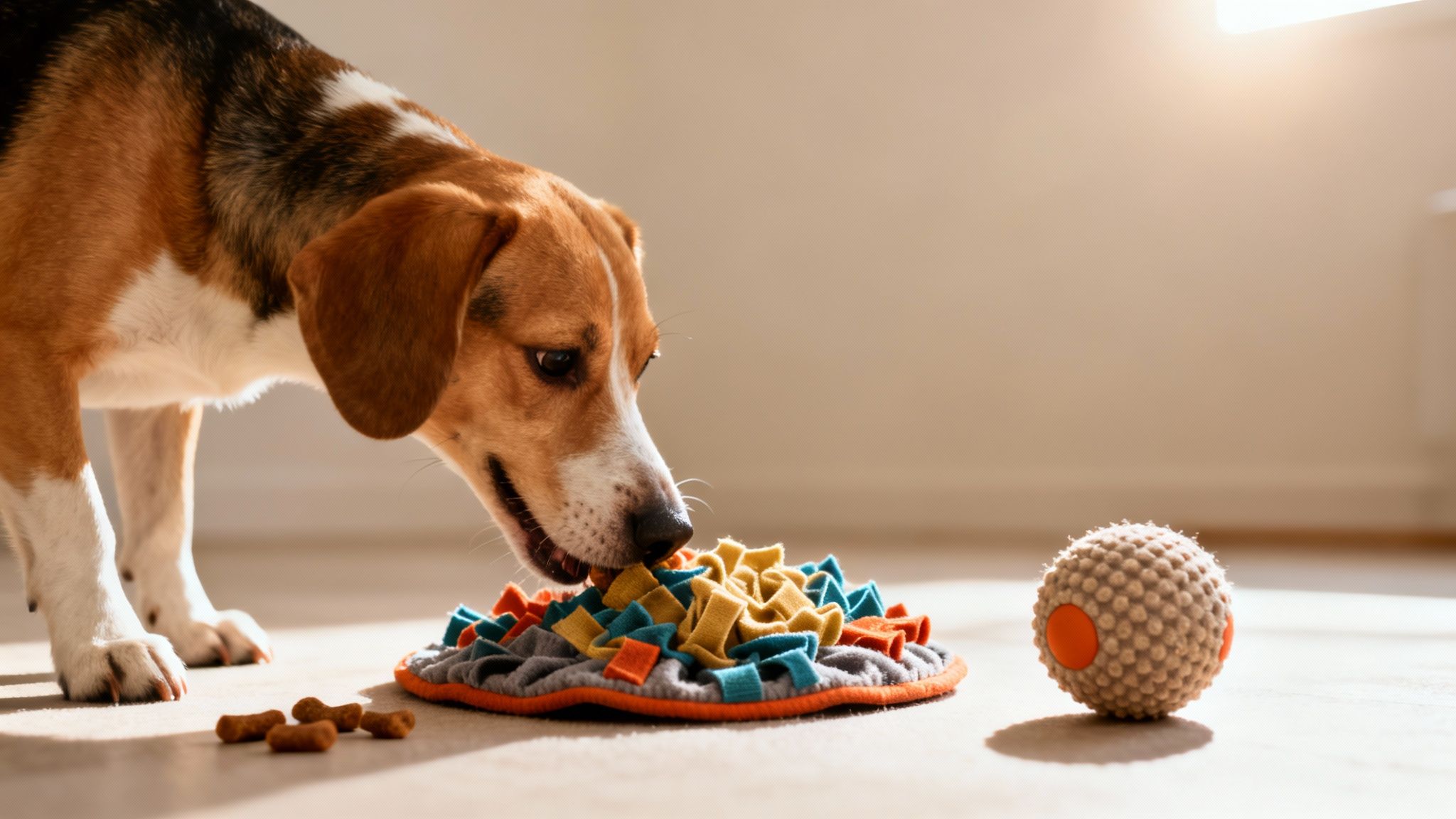
This is where you can really tune into what your dog loves. The idea is to tap into their powerful remaining senses and give them a safe, predictable outlet for their energy and intelligence.
Engaging Through Scent and Sound
A blind dog navigates primarily with their nose, so scent-based games are incredibly rewarding. At the same time, sound gives them the spatial cues they need to track objects and engage with their environment.
Here are a few favorites I’ve seen work wonders:
- Snuffle Mats: These are brilliant. They’re basically shag-rug-like mats with lots of fabric folds where you can hide kibble or treats. It turns mealtime into a rewarding treasure hunt and gives their brain a great workout. It’s also fantastic for slowing down dogs who tend to inhale their food.
- Audible Balls: Think lightweight balls that jingle, squeak, or make a crinkling noise. The sound helps your dog track the ball as it moves, allowing them to enjoy a classic game of fetch or just bat it around on their own.
- Puzzle Toys: Treat-dispensing puzzles are a fantastic way to challenge their problem-solving skills. Look for sturdy designs that your dog can manipulate with their nose or paws to get to the goodies inside. It’s a rewarding mental exercise that keeps them busy.
A stimulated mind is a happy mind. For a blind dog, sensory toys are the bridge to a world of play, exploration, and confidence, proving that their life can be just as rich and joyful.
The pet accessories market in the U.S. is worth billions, which shows just how dedicated we are to our pets' happiness. A significant number of senior dogs face vision loss, creating a real need for specialized products. Thankfully, online shopping has made it easier than ever to find niche items like sensory toys and other blind dog accessories. You can find more details about this growing market at databridgemarketresearch.com.
The Power of Touch and Texture
Never underestimate how important touch is for a blind dog. Exploring different textures with their mouth and paws provides a ton of sensory feedback and can be incredibly satisfying for them.
Try to find toys made from a variety of materials. Mix it up with soft plush, knobby rubber, or sturdy braided rope. This keeps things interesting and gives them different kinds of tactile input to explore.
Caring for a blind dog is about more than just physical safety; it's about enriching their whole world. This holistic approach is at the core of everything we do, whether we're creating a calm grooming space or helping you find the perfect tools to bring your dog joy at home.
Grooming Your Blind Dog with Confidence
Imagine being unable to see, and suddenly you feel a brush on your back or hear the buzz of clippers next to your ear. It would be startling, right? That’s what grooming can feel like for a blind dog, so building a predictable and calm routine is everything. It's all about creating trust through gentle, clear communication.
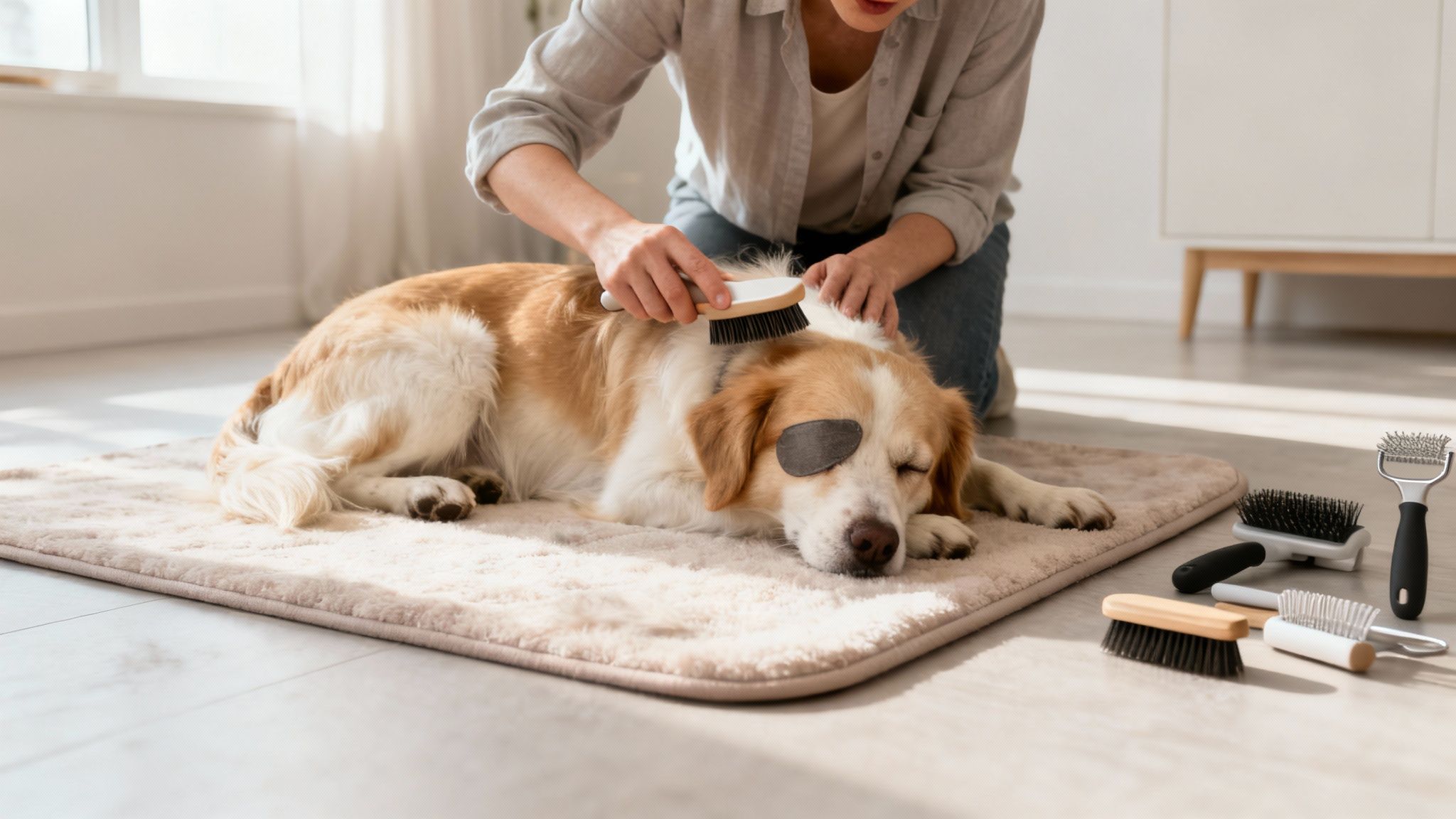
The trick is to narrate everything you do. Before you even touch them, let them know you’re there. Use soft verbal cues for every single action. Say "paw" just before you lift it. Whisper "brush" as you approach their side. This simple act removes the element of surprise and helps your dog feel in control, turning a stressful event into a cooperative bonding moment.
This is especially important if your dog wears blind dog accessories like a halo or a special harness. Straps and contact points can easily trap loose fur, which can quickly turn into painful mats and cause skin irritation. Spending just a few minutes each day brushing these areas will keep their coat healthy and ensure their gear stays comfortable. For a full breakdown of the basics, take a look at our guide on how to groom a dog at home for more tips.
The Professional Difference: Veteran-Owned Precision
While consistent home care is non-negotiable, the expertise of a professional groomer who truly understands special needs can make a world of difference. This is where a premium, independent studio like GloMore Grooming really shines, standing in stark contrast to the often hectic environment of large chain stores like PetSmart or Petco.
As a veteran-owned business right here in El Paso, we bring a unique level of discipline, patience, and pride to our work. Our whole operation is built on resilience and an unwavering commitment to getting it right—not on hitting corporate quotas. We never rush, and we don't overcrowd our space. Instead, we create a calm, one-on-one environment where your dog’s comfort is our only priority. This focused approach is a game-changer for a blind dog, as it eliminates the startling noises and chaotic energy that can cause so much anxiety. Our premium pet grooming standards mean we take all the time needed to build trust, using the same gentle, communicative approach you use at home.
At GloMore Grooming, we believe exceptional care is a standard, not an upgrade. Our disciplined, veteran-led approach ensures every dog, especially those with special needs, receives the patient and meticulous attention they deserve.
Accessible Excellence in El Paso
We are deeply committed to our El Paso community, and that means making top-tier care accessible to everyone. We run an affordable grooming promo with our monthly “Snip & Style Saturday,” giving dogs of all sizes the chance to get a full, professional groom at a special rate. It’s our way of making sure every pet owner can give their dog the high-quality, compassionate care they need.
Choosing a groomer is a huge part of your dog's overall well-being. When you choose a local, veteran-owned grooming studio, you're doing more than just getting your pet a haircut. You're supporting a business built on integrity and a genuine respect for the bond we share with our animals.
Ready to give your dog a grooming experience that's calm, confident, and completely professional? Book your appointment or reserve a slot in our next promo by contacting GloMore Grooming today.
Your Top Questions About Blind Dog Care, Answered
When you share your life with a visually impaired dog, a lot of questions pop up. It's completely normal to wonder how to give them the best, most fulfilling life possible. Getting solid, practical answers is the best way to start building their confidence and making sure they're safe and happy.
Let's dive into some of the most common things owners worry about. We'll offer real-world advice to help you and your best friend navigate this journey together.
How Do I Pick the Right Halo for My Dog?
Finding the perfect halo really comes down to your specific dog—their size, how active they are, and the layout of your home. For a smaller dog or one who spends most of their time indoors, a lightweight and flexible halo is usually the way to go. It gives them the feedback they need without being cumbersome.
On the other hand, if you have a larger, more adventurous dog who loves exploring the yard, a sturdier halo with more padding might be a better fit for that extra protection.
Whatever you choose, make sure you measure your dog carefully based on the manufacturer’s instructions. An adjustable fit is key. You want it to be snug enough to stay in place but not so tight that it interferes with eating, drinking, or just being a dog. The best halo is one they barely notice is there.
Can My Blind Dog Still Have Fun on Walks and During Playtime?
Yes, one hundred percent! Walks are incredibly important for their mental and physical health. Just keep them on a shorter leash to stay close, and use your voice to give them gentle cues about what's ahead ("step up," "easy," "turn left"). When it's time for some off-leash freedom, always stick to a safe, familiar, and completely enclosed space, like your own fenced-in backyard.
Playtime just needs a little creative thinking. Scented toys or ones that make noise (like crinkle toys or balls with bells) are fantastic because your dog can track them using their other amazing senses. It's all about helping them tap into what they can do, which builds incredible confidence and strengthens your bond.
A dog’s blindness doesn't have to dim their spirit. With a few smart tools and a little patience, they can continue to live a vibrant, joyful, and active life. By shifting the focus to their other senses, you unlock a whole new world for them to explore and enjoy.
Will My Dog Get Depressed After Losing Their Sight?
It's true that many dogs go through a tough adjustment period after sight loss, and it can sometimes look like depression or withdrawal. They might seem more hesitant or less interested in things they used to love. This is exactly where blind dog accessories can be a game-changer.
A halo, for instance, can give them back the confidence to move around on their own, which is a massive boost to their independence and overall mood. Enrichment toys that engage their sense of smell and hearing are also vital. These activities keep them from getting bored or anxious, helping them adapt and learn new ways to have fun.
Here at GloMore Grooming, we get it. We know every dog has unique needs, and that’s why our disciplined, one-on-one grooming sessions are perfect for visually impaired pets. A calm, predictable, and gentle environment makes all the difference. We’re committed to making sure premium care is accessible to every dog in our El Paso community.
As a local, veteran-owned business, GloMore Grooming is built on a foundation of dedication and excellence. We invite you to see our premium standards for yourself and understand what sets us apart. Feel free to check out our services or book an appointment today.
Learn more and book your visit at https://glomoregrooming.com.