
At 2 a.m., the house can feel unfamiliar. The water bowl is still in its usual place, the leash hangs by the door, and the silence where tags once jingled seems louder than anything else. If you're facing the death of a dog right now, you may feel numb, disoriented, guilty, or unable to believe what happened. Those reactions are normal.
This is more than a single sad moment. It's a full journey involving immediate care, veterinary decisions, aftercare, grief, memorials, and the practical needs of any surviving pets. The guidance below is designed to help you move through each stage with dignity and clear next steps, whether you're in El Paso or supporting a family from elsewhere.
The First Hours After a Death of Dog
The first hours after a dog dies rarely feel orderly. You may sit on the kitchen floor beside the bed, keep reaching for a familiar routine, or wait for your dog to lift its head. Some owners move quickly into problem-solving. Others can't make a decision at all. Shock, denial, numbness, anger, and intense sadness can all appear in the same hour.
Don't force yourself to understand the loss immediately. Sit beside your dog if that feels right. Speak softly, stroke the coat, or let family members arrive and say goodbye. If children are present, use clear language and avoid saying the dog has “gone to sleep,” which can create confusion and fear around sleep.
Handle the body gently
After death, the body naturally changes. Muscles may relax, and later the body may become stiff through rigor mortis. The eyes may remain partly open, and small releases of urine or stool can occur. These changes are physical, not signs that your dog is suffering.
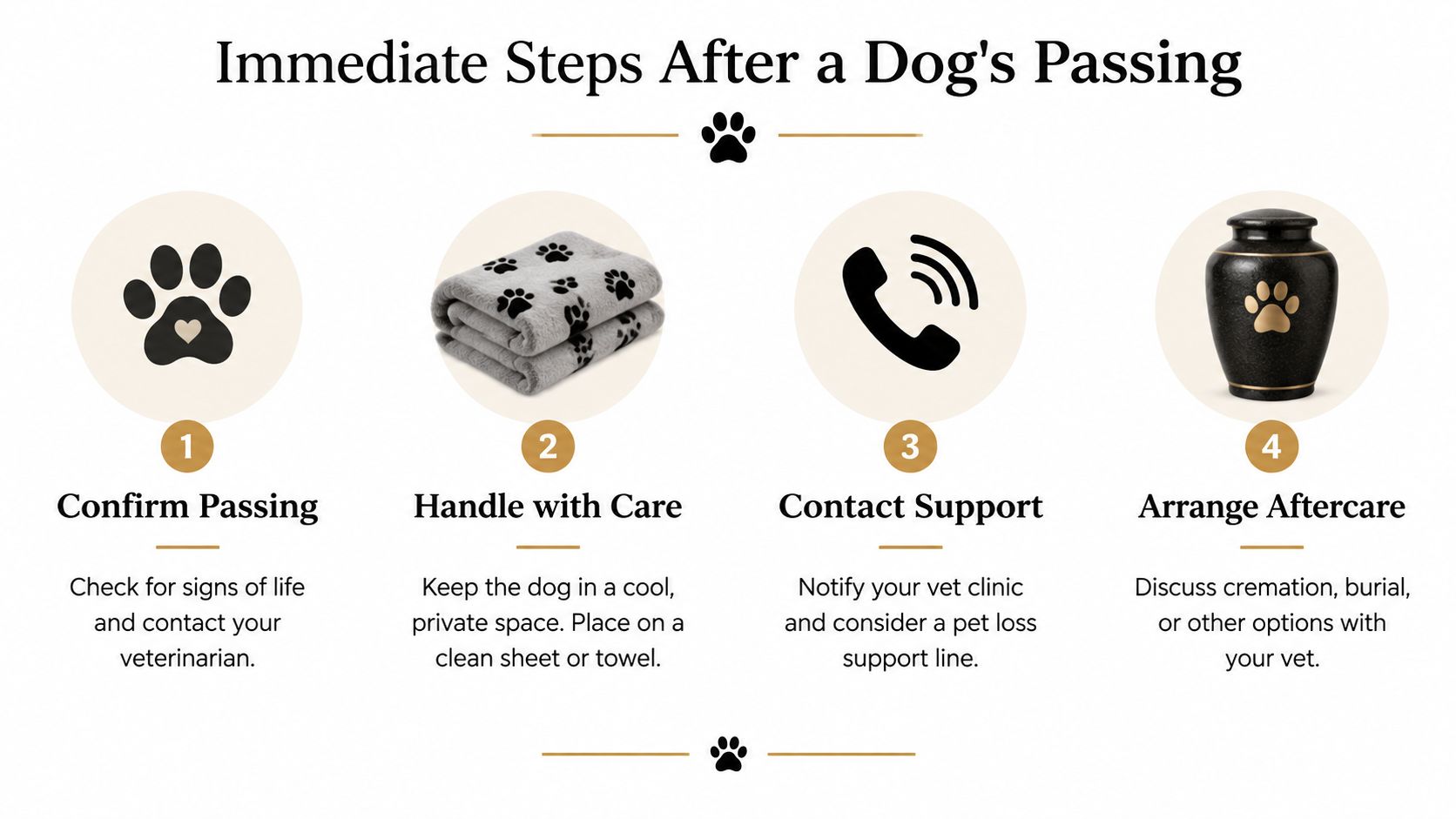
Place your dog on a clean sheet or towel and move slowly. If you plan to arrange transport, keep the body in a cool, private area and avoid unnecessary handling. A familiar blanket can make the space feel more peaceful for everyone.
Practical rule: You don't have to make every decision tonight. You do need to keep your dog's body clean, supported, and cool while you contact the people who can help.
Let the moment be personal
Some families want a final gathering. Others prefer privacy. Neither response is more loving. Remove pressure to perform grief in a particular way, and give each person permission to say goodbye differently.
If the death was sudden, you may replay the last minutes repeatedly. If your dog had been declining, relief may appear beside sorrow. Relief doesn't cancel love. It often means you recognize that suffering or uncertainty has ended.
The next decisions concern confirmation, temporary care, veterinary notification, and aftercare. Take them one at a time. A calm, premium pet-care mindset applies here too, disciplined handling, respect for the animal, and clear communication when emotions are high.
Immediate Steps Every Owner Should Take
When you're overwhelmed, follow an order rather than trying to solve everything at once. Start with confirmation. If your dog has collapsed, isn't breathing normally, or doesn't respond, contact a veterinarian or emergency clinic immediately. Don't assume death after a frightening collapse without professional guidance.
Once a veterinarian has confirmed the passing, move through these steps:
- Create a clean resting space. Place your dog on a sheet, towel, or blanket in a cool, private room. Put an additional towel underneath the hindquarters in case bodily fluids are released.
- Slow physical changes. Turn off nearby fans and keep the room cool, but don't place the body directly against ice or in a position that could cause damage. Handle your dog with the same care you'd use during a professional transport.
- Remove the collar if burial is planned. Save identification tags as a keepsake. If cremation is planned, ask the provider whether the collar can remain with the body.
- Call the veterinary clinic. The clinic can help confirm the death, coordinate transport, explain cremation arrangements, or advise you about a post-mortem examination if the cause is unknown.
- Tell the household. Contact close family members before making irreversible arrangements. Give them the opportunity to visit, especially children who need a straightforward explanation and time to say goodbye.
- Choose overnight care. Your veterinarian, a pet crematory, or a designated aftercare provider may be able to receive your dog. Ask about identification procedures, transportation, cremation type, and return of ashes.
For a fuller checklist, keep this guide to what to do when a pet dies available while you speak with your vet.
If euthanasia didn't occur and the death was unexpected, ask whether an examination could identify poisoning, trauma, infection, internal bleeding, or another preventable hazard. Don't delay if you need answers for the safety of other animals in the home.
Write down the name of every person you speak with and the choices you make. Grief can make ordinary details hard to remember. A written record gives you control when the next decision concerns burial, cremation, or another form of aftercare.
Natural Death and Euthanasia Compared
Natural death and euthanasia can both be surrounded by love, but they unfold differently. Natural death may happen during the night, after a gradual decline, or unexpectedly during an otherwise ordinary day. Euthanasia involves planning with a veterinarian, choosing a setting, and deciding when continued discomfort or loss of function has become unacceptable.
Neither path guarantees emotional peace. Owners may feel guilty for not recognizing a final change, or they may question whether they acted too soon. Those doubts don't prove that the decision was wrong. They show how much responsibility people feel for a companion who depended on them.
| Factor | Natural Death | Euthanasia |
|---|---|---|
| Timing | May be unpredictable and can occur during sleep, illness, or sudden collapse | Planned with a veterinarian after discussing comfort, prognosis, and quality of life |
| Environment | Often takes place at home or wherever the final crisis occurs | Can occur in a clinic or another setting offered by the veterinary team |
| Owner control | Families may have little control over the exact moment | Families can usually plan who will attend and what happens afterward |
| Physical course | The body's final changes may be difficult for owners to witness | The veterinarian guides a controlled medical process intended to prevent suffering |
| Paperwork and aftercare | The cause may be uncertain, so the vet may recommend examination or documentation | The veterinary team can often coordinate records, transport, and aftercare at the appointment |
| Emotional challenge | Suddenness can create shock, unanswered questions, or guilt | The timing can create anticipatory grief and fear of making the wrong choice |
What natural death can mean
A natural passing may feel peaceful when a dog is comfortable and surrounded by familiar people. It can also become medically complicated, especially when breathing, pain, anxiety, or collapse develops quickly. Ask your veterinarian about warning signs and emergency planning before a senior dog reaches crisis.
What euthanasia can mean
Euthanasia gives a family the ability to prepare. You can bring a favorite blanket, invite selected family members, ask about sedation, and decide how you want to spend the final moments. The decision remains painful, but a controlled setting can reduce panic during an already difficult goodbye.
The kindest choice depends on the dog's condition, veterinary advice, and the family's values. Don't judge another owner's path, and don't use someone else's experience as a measure of your own love.
Burial Cremation and Aftercare Choices
After the death, families often have to make a decision before they feel ready. Start with local rules, not internet assumptions. In El Paso and unincorporated areas of El Paso County, backyard burial is generally permitted on private property when the pet is placed below the required depth, kept away from waterways, and covered adequately. City rules can restrict burial on rental or multi-family land, so verify the property's status with the relevant local authority before proceeding.
Home burial may have little or no direct financial cost, but it requires a suitable location, physical work, and confidence that the site won't be disturbed. Consider future construction, irrigation, flooding, access by children, and whether you'll want to move homes later.
Cremation provides a practical alternative. Licensed providers such as Peaceful Paws or Faithful Companion may offer private or communal arrangements, with pricing dependent on the dog's weight, urn selection, and service type. Veterinary euthanasia may include transport and group cremation in one fee, but ask exactly what's included and whether ashes will be returned.
| Option | Typical Cost | Timeline | Best For |
|---|---|---|---|
| Home burial | Essentially no service cost, though tools and site preparation may be needed | Can be arranged promptly after confirming local rules | Families with eligible private property who want a permanent home place |
| Private cremation | $150 to $400, depending on weight and urn selection | Ask the crematory about current scheduling and ash return | Families who want ashes and a personal memorial |
| Communal cremation | Fee varies by provider and arrangement | Often coordinated through a veterinary clinic or crematory | Owners seeking a simpler, lower-cost option without individual ashes |
| Witnessed cremation | Base cremation fee plus an additional charge | Requires advance coordination with the provider | Families who want to be present for the cremation process |
| Aquamation, freeze-drying, or taxidermy | Provider-specific | May require more planning than standard aftercare | Families researching a distinctive physical keepsake |
Religious beliefs, household rules, budget, timing, and the wishes of surviving family members should guide the choice. If children need a place to visit, burial or returned ashes may matter. If travel is likely, a portable urn or memorial object may be more practical.
In El Paso's hot, dry climate, don't leave a body outdoors while researching options. Call the veterinarian or aftercare provider first, then confirm the details in writing.
Understanding Why Dogs Die and When
Mortality data can feel cold when a family is grieving, but it can also answer the question many owners ask themselves: Was this unusual, or did I miss something? A major U.S. veterinary analysis estimated that about 86 million owned pet dogs lived in roughly 45% of U.S. households in 2020, and estimated annual mortality among owned U.S. dogs at 7.3% to 7.9%. Extrapolated nationally, approximately 6.2 to 6.8 million pet dogs died in the United States in a single year. Read the veterinary mortality analysis.
That scale doesn't make an individual loss less personal. It shows that death is a recurring part of the companion-animal lifecycle, even as dogs live longer and receive more advanced care.
Age and breed change the timeline
Research on UK companion dogs that died between 2009 and 2011 found a median age at death of 12.0 years, with breed estimates ranging from 5.5 years for Dogue de Bordeaux to 14.2 years for Miniature Poodle. A separate life-table estimate placed life expectancy at birth at 11.23 years. These findings demonstrate why breed, body size, and genetics matter when families plan senior care. Review the UK companion-dog lifespan research.
A senior dog's decline can still feel sudden, even after months of preparation. Anticipatory grief isn't an overreaction. It's the mind beginning to adapt to the possibility of losing an entrenched member of the household.

Cause-of-death patterns vary by population. In one retrospective pathology study of 1,355 dogs, infectious and parasitic diseases accounted for 25.65%, neoplasms for 22.58%, and degenerative diseases for 10.85%. The report's specific conditions included distemper, chronic kidney disease, trauma from road incidents, pyometra, poisoning, leishmaniasis, leptospirosis, and parvovirosis. Examine the pathology study.
Sudden death deserves separate attention. A veterinary review of unexpected deaths identified heart disease, toxicosis, gastrointestinal disease, trauma, and non-traumatic hemorrhage among the leading causes. Occult neoplasia, particularly hemangiosarcoma, can cause catastrophic internal bleeding, while cardiac disease and airway obstruction can produce rapid collapse. Read the AVMA discussion of sudden pet death.
Grief Coping and When to Seek Support
Pet loss is bereavement, not a lesser version of grief. The RSPCA's 2025 pet grief survey found that 57.8% of respondents felt stigma around pet grief, 57.1% said they hid their grief, and 56.7% said they couldn't find support. Only 6.9% believed society took pet grief seriously enough. Those figures explain why many owners suffer privately while friends, coworkers, or relatives expect them to recover quickly.
Start with permission instead of performance. Cry, tell the story repeatedly, keep a photograph nearby, write a letter, or light a candle on the day your dog died. Maintain food, sleep, medication, and work routines as much as you can, but don't treat ordinary functioning as proof that you should be “over it.”
Use small rituals with real meaning
A ritual gives grief a container. You might place the collar beside a photograph, hold a family remembrance, donate supplies in your dog's name, or return to a favorite walking route. Don't rush to bring home another dog to quiet the empty space. A future adoption should come from readiness, not pressure.
A 2026 summary of UK research reported that 7.5% of people who had lost a pet met criteria for prolonged grief disorder, pet loss represented 8.1% of prolonged grief disorder cases in that sample, and people who lost a pet were 27% more likely to show prolonged grief symptoms. Read the research summary and its discussion of prolonged grief.
Seek professional support if grief keeps intensifying, prevents basic work or caregiving, leads to substance use, or includes thoughts of suicide. A licensed counselor familiar with companion-animal loss can help you separate grief from guilt and build a safe plan. In an immediate crisis, contact emergency services or a crisis hotline rather than staying alone.
For practical coping ideas and pet-loss resources, save this pet-loss grief support guide. Support isn't an admission that you're weak. It's a disciplined way to protect your health while you carry a significant loss.
Memorial Ideas and Floral Tribute Services
A memorial works best when it matches your available energy. During the first week, a simple framed photograph may be enough. Later, you might create a shadow box with the collar, tags, favorite toy, and a written memory. Paw-print kits, collar lockets, commissioned portraits, and planted memorial trees can all turn an invisible bond into something you can revisit.
Ask local artists, florists, veterinary clinics, and pet aftercare providers about availability. Prices vary by materials, size, artist, delivery, and customization, so request a written quote before ordering. If you want something immediately, choose a small ritual now and plan a larger memorial when the first shock has softened.
Petals for Paws in El Paso
Petals for Paws is a tribute program associated with Glo More Grooming that provides custom floral arrangements for families grieving a beloved pet. Families can ask about sympathy arrangements, urn-side sprays, or a bouquet designed around a dog's breed, coloring, personality, or favorite flowers. Confirm the current delivery area across El Paso County, available pricing tiers, ordering instructions, and lead time directly before placing an order.
The program also provides a free ash collection kit and ships nationwide for pet memorial support, according to the publisher's service information. Anniversary and funeral-related orders can fill quickly, so contact the program as soon as you know the date and delivery location.
| Tribute Option | Typical Cost | Lead Time | Best For |
|---|---|---|---|
| DIY memorial | Materials vary by project | Same day to several days | Families who need a personal ritual with flexible spending |
| Traditional sympathy flowers | Florist and arrangement dependent | Ask the florist about current delivery availability | Relatives, friends, or coworkers sending a conventional condolence |
| Petals for Paws | Tier depends on arrangement and customization | Confirm availability, especially around anniversaries | Families wanting a pet-specific floral tribute, including urn-side designs |
Before ordering, decide whether the arrangement is for the home, a service, an urn, or delivery to another family member. Include the dog's name and any meaningful details. A thoughtful description helps the florist create a tribute that feels personal instead of generic.
You can find additional ideas in this guide to memorializing a dog. The right tribute isn't the most elaborate one. It's the one you can receive, keep, and return to without feeling pressured to prove how much you cared.
Honoring the Bond and Moving Forward
Moving forward doesn't mean replacing your dog or closing the relationship. It means carrying the bond in a form that no longer requires your dog to be physically present. A yearly photograph, a favorite walk revisited, a memorial donation, or a family story told at dinner can keep love active without denying the loss.
Healthy integration happens gradually. You may laugh at an old video and cry moments later. That combination isn't disrespectful. It's evidence that the relationship contained joy as well as grief. Rushing closure can create more pressure, while refusing every ordinary routine can leave the household stuck.
Care for the pets who remain
Surviving dogs may search, sleep differently, follow you closely, lose interest in play, or show little visible response. Keep meals, walks, training, grooming, and rest as consistent as possible. Watch for persistent changes in appetite, elimination, energy, or behavior, and contact your veterinarian when something feels medically unusual.
Your own routines matter too. Update microchip and veterinary records, review emergency contacts, and keep preventive care current for the animals still depending on you. In El Paso, regional heat makes hydration, shade, coat maintenance, and safe scheduling especially important. The National Weather Service in El Paso describes the area as having 300 or more days of sunshine and prolonged hot-season conditions, so don't treat summer grooming or outdoor care as an afterthought. Review the National Weather Service's El Paso climate information.
A calm grooming appointment can become a low-pressure touchpoint after a death of dog. A familiar professional can notice coat, skin, nail, ear, hydration, or behavior changes while you re-establish a normal care routine. Glo More Grooming operates as a home-based, veteran-owned grooming studio in El Paso, limiting the number of dogs on site and offering one-on-one grooming, bath and blow-dry services, touch-ups, full grooming packages, and concierge support. Its monthly Snip & Style Saturday promotion is an example of an affordable grooming promo for families balancing grief with ongoing pet-care expenses.
Veteran-owned independence also matters to families who value accountability, discipline, and long-term vision. The Texas Veterans Commission recognizes veteran ownership as a business classification when evaluating entrepreneur resources, giving veteran-owned grooming a clear Texas business context. Review Texas Veterans Commission entrepreneur resources.
Don't wait for grief to disappear before caring for the pets and people still in your home. Keep the bond, protect the routine, and choose support that respects both emotional vulnerability and high grooming standards.
If your surviving dog needs calm, one-on-one care, visit Glo More Grooming for premium pet grooming, seasonal coat maintenance, concierge support, and the monthly Snip & Style Saturday affordable grooming promo. Reserve a grooming appointment or contact the studio to discuss a disciplined care plan for your dog and compassionate memorial support through Petals for Paws.