
You're standing at the grooming counter with a nervous dog pressed against your leg, trying to decide whether the busy salon in front of you is safe. The price looks reasonable, the reviews are positive, and the receptionist says your dog will be ready later. That information isn't enough. How to choose a dog groomer depends on handling, hygiene, communication, and the groomer's ability to protect your dog's health under pressure.
A polished haircut matters, but it's only one part of premium pet grooming. The right professional should recognize early matting, adjust the session to your dog's temperament, explain maintenance clearly, and know when a skin or medical concern belongs with a veterinarian. El Paso owners also need to account for desert dust, dry air, and extreme heat. A groomer who understands local conditions can provide much more useful care than a salon that follows the same routine for every dog.
Why Your Groomer Choice Is a Health Decision
A dog can leave a salon looking polished while still having endured unsafe handling. Groomers work around eyes, ears, skin, nails, and moving bodies, often while managing dryers, clippers, restraints, and other animals. Their decisions can also reveal coat or skin changes before an owner notices them. How to choose a dog groomer therefore requires judging health protection and stress control, not only the finished haircut.
A 2022 peer-reviewed study found that grooming-related concerns appeared in 4% to 6% of veterinary-service appointments across three ASPCA programs. It also reported that 13% of cruelty cases in one partnership involved severe matting or strangulating hair-mat wounds (peer-reviewed veterinary study on grooming-related concerns). These findings make the useful question clear: can this groomer prevent a manageable coat problem from becoming a painful medical issue?
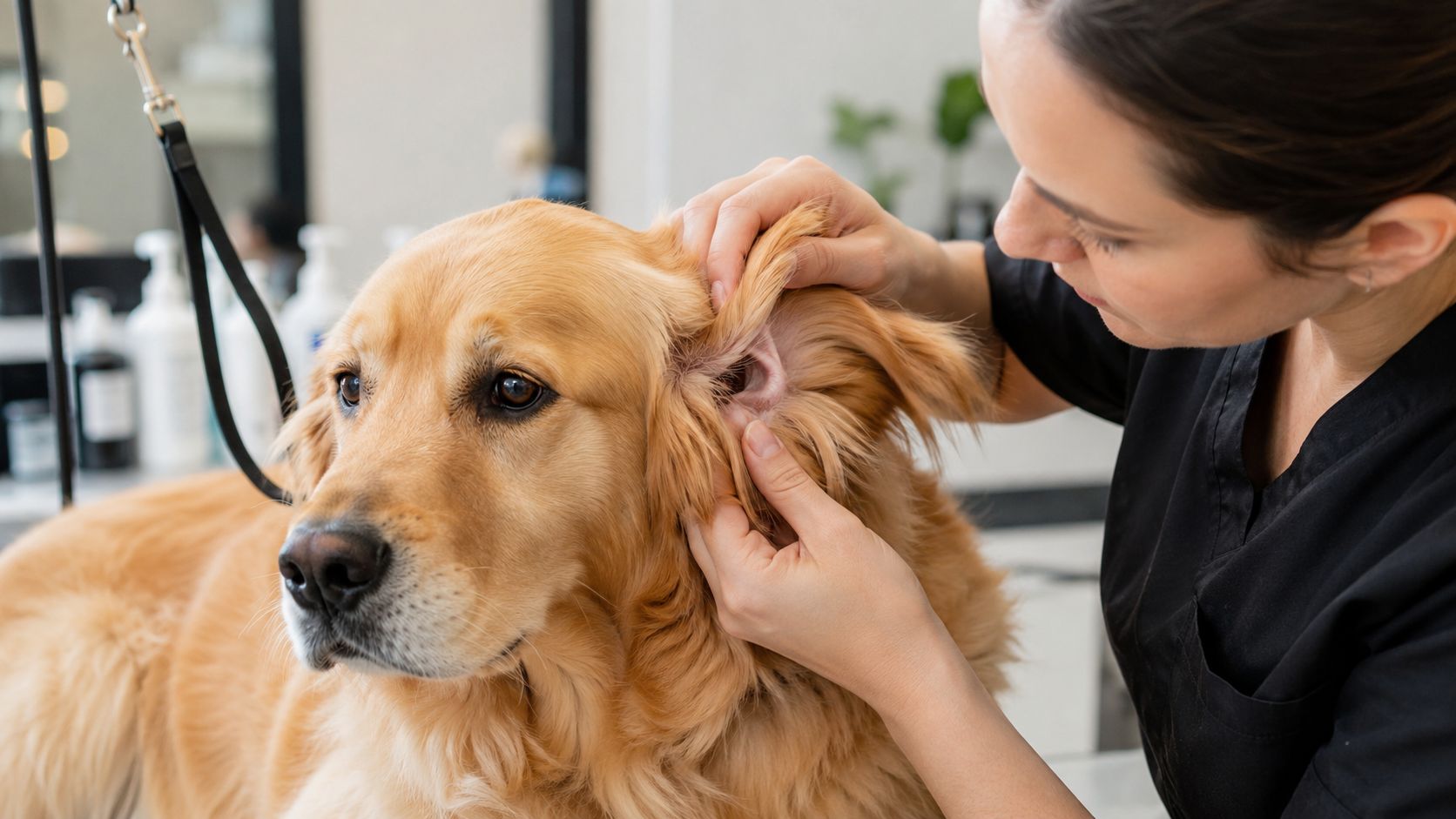
Coat condition reveals professional judgment
Long-haired dogs need especially careful maintenance. The same study reported that 93% of cruelty cases with matting concerns involved long-haired dogs. That figure supports a practical standard: choose a groomer who addresses tangles early, explains coat care, and does not wait for mats to tighten against the skin.
Ask four direct questions:
- Maintenance intervals: How often should your dog return based on coat type, lifestyle, and brushing at home?
- Early matting: What will you do when tangles are present but not dangerously compacted?
- Medical boundaries: When will you stop the service and recommend veterinary attention?
- Owner education: Which brush, comb, or drying method should support the finished coat?
Specific answers show judgment. “We'll see what happens” is not a maintenance plan.
Stress belongs in the health conversation
A crowded salon can overwhelm a fearful dog before clipping starts. Barking, unfamiliar handlers, waiting, kennel time, loud dryers, and rushed transitions may make future appointments harder. A careful groomer limits those pressures with controlled scheduling, calm introductions, appropriate handling, and breaks when the dog's tolerance drops.
What matters instead is whether the groomer can explain their handling standards. Owners can use Glo More Grooming's preventative pet care information to prepare consultation questions. Premium care protects physical condition and emotional tolerance, rather than just completing the haircut.
Credentials and Facility Standards to Verify
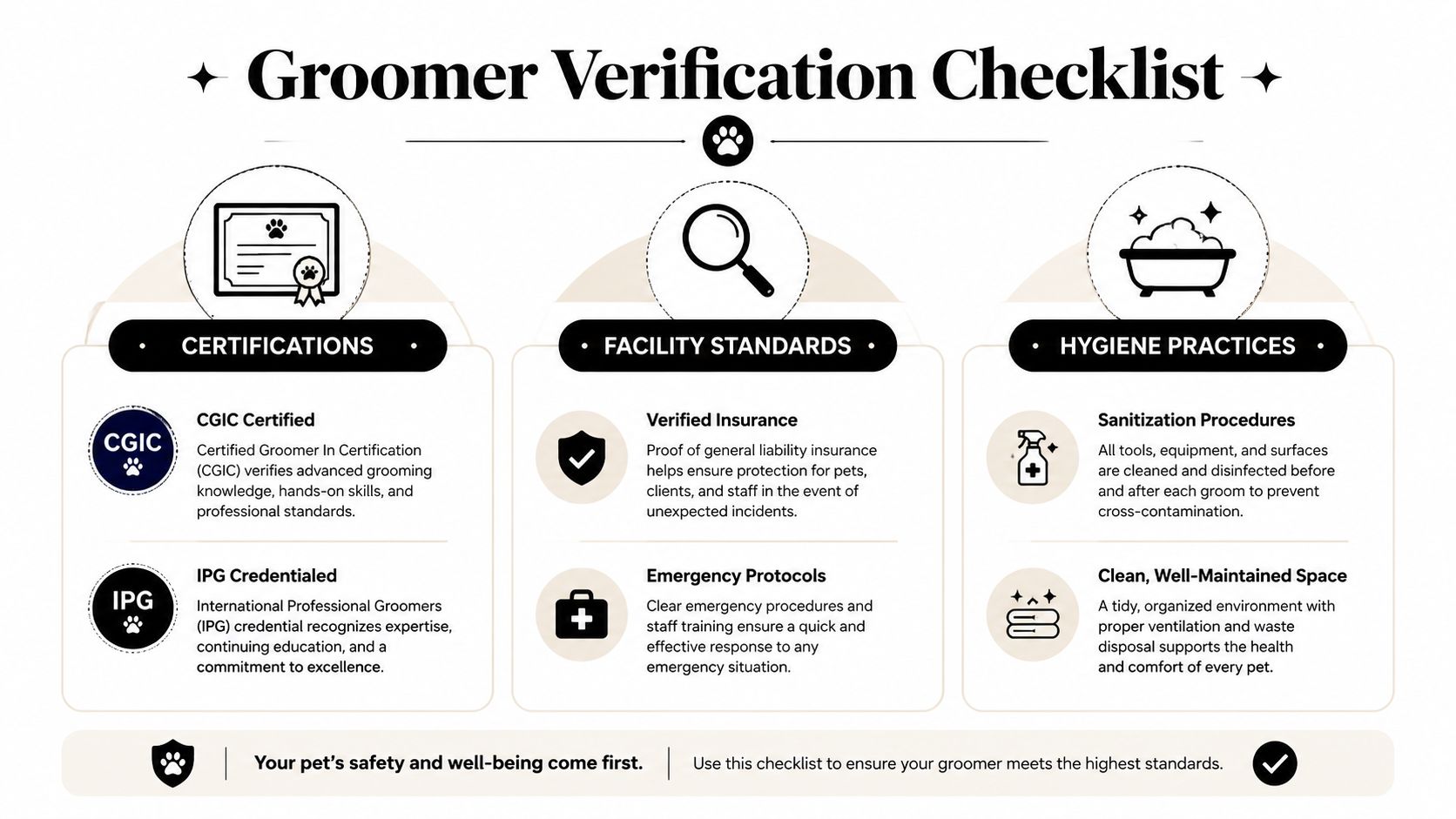
A polished gallery proves a groomer can finish a coat. It does not prove the studio can prevent injuries, control stress, or respond to a medical problem. Visit before booking, or request a detailed pre-booking conversation. Check cleanliness, secure doors, vaccination requirements, staff coverage, insurance, referrals, education, and certification. These are among the selection points summarized in PetMD's dog groomer selection guidance.
Start with training and accountability
Ask who will groom your dog, where that person trained, and which credentials they hold. Certification does not replace sound judgment, but structured education shows the groomer has studied coat care, equipment, hygiene, and handling. Ask whether the business carries insurance covering injury, escape, and property damage.
Require a clear emergency plan. Staff should explain what they do after a cut, breathing concern, heat stress, allergic reaction, or sudden behavioral escalation. They should also state when they will stop the service, contact you, and refer your dog for veterinary care. Vague reassurance is not a safety protocol.
Inspect the workflow, not just the reception area
Use this checklist during your visit:
- Watch the floor. Non-slip surfaces help dogs stay stable while wet, drying, or standing on a grooming table.
- Inspect equipment. Tables, loops, tubs, dryers, clippers, and scissors should be maintained and positioned safely.
- Ask about first aid. Supplies should be available, and staff should know where they are.
- Ask about sanitation. Tools and work areas should be disinfected between dogs, not only at closing.
- Review intake paperwork. Forms should record medical conditions, medications, allergies, bite history, fear responses, and emergency contacts.
- Check animal coverage. Staff need a practical system for supervising dogs during transitions, waiting, drying, and pickup.
A studio's layout also affects stress. Separate waiting and grooming areas, controlled scheduling, and limited kennel time reduce noise and unnecessary exposure to unfamiliar dogs. Ask whether the groomer adjusts session length for age, coat condition, health, and tolerance.
Written policies matter because reviews rarely reveal emergency procedures or daily sanitation. The AKC groomer education and standards guidance addresses policies, insurance, pre-groom health checks, equipment, sanitation, and session-length limits. Those details distinguish disciplined care from an attractive storefront.
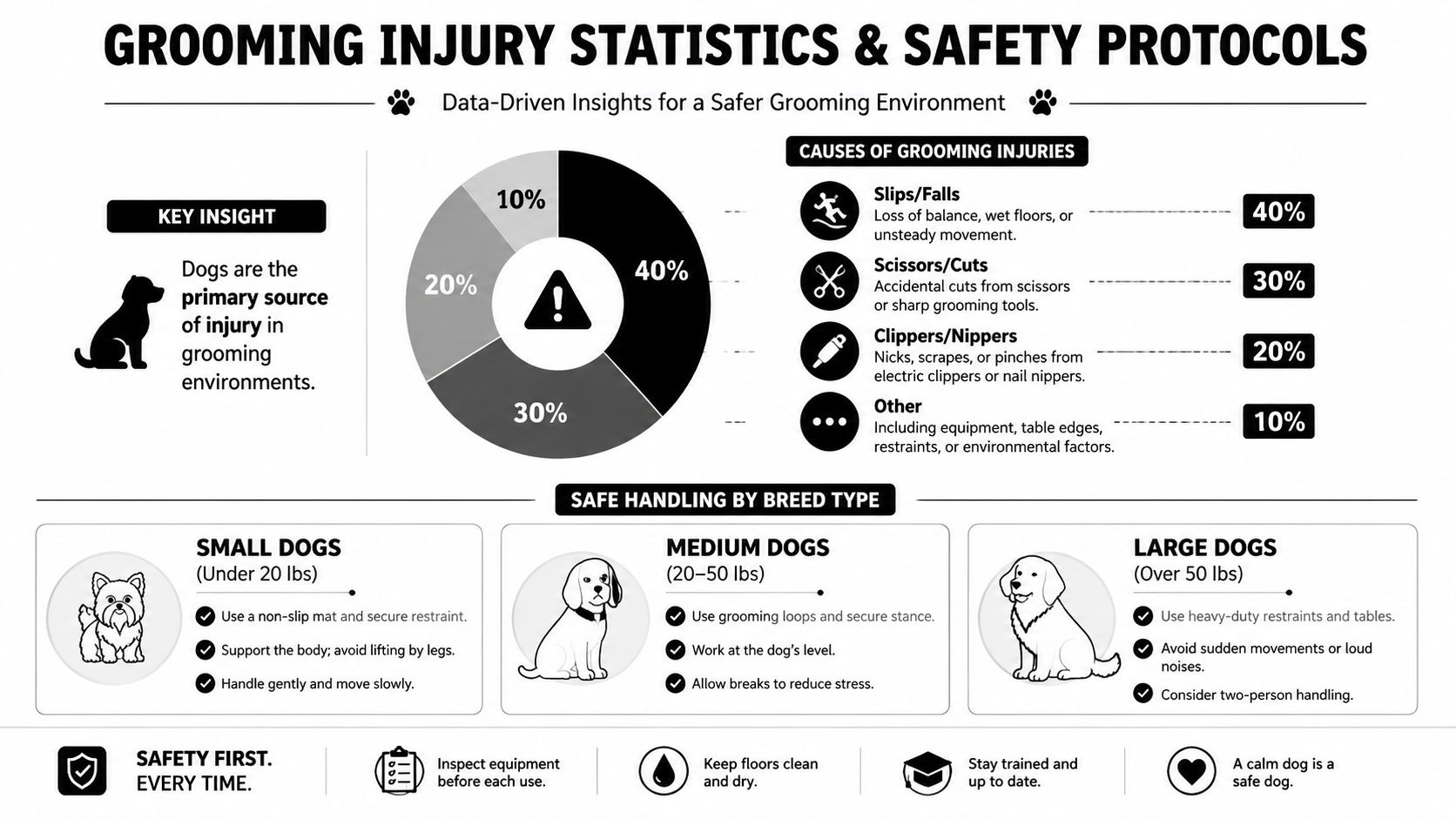
Safety Protocols and Handling for Every Breed
Safety standards become visible when a dog struggles, not when a routine appointment goes smoothly. Washington State workers' compensation data from 2007 to 2011 recorded an accepted claim rate of 2,191 per 10,000 full-time-equivalent workers for grooming and other animal-care services, with compensable claims reaching 317 per 10,000 FTE. Dogs accounted for 57.6% of animal-source claims in that sector (Washington State animal-care injury study).
Owners should look for a repeatable handling system, with clear responses to fear, sudden movement, pain, and escape attempts.
Small dogs need deliberate eye protection
A clinical study of 161 dog grooming-related eye injuries from 2004 to 2020 found that 71% involved small-breed dogs, 34% involved Shih Tzu, and 14% required surgery. Small breeds are not automatically difficult, but their size, facial structure, movement, and proximity to scissors demand precise positioning and calm restraint.
Ask how the groomer protects the eyes during face trimming, stabilizes the head, and responds if the dog jerks or repeatedly turns away. A vague or evasive answer should raise questions about their handling standards.
For home maintenance between appointments, owners can find dog nail clippers with Personalised Mobile. Home trimming should not replace professional care when a dog panics, has dark nails, or may bite.
Look for individualized handling
A calm studio limits unnecessary stimulation. One-on-one appointments, fewer dogs onsite, non-slip footing, careful towel handling, and a defined stopping point all matter. Senior dogs, puppies, reactive dogs, and pets with pain should not be pushed through a fixed assembly-line process.
Ask before booking:
- How do you handle fearful dogs?
- What happens if my dog freezes, snaps, or tries to escape?
- Do you use kennel drying or another drying method?
- How long can a session last before you pause or stop?
- Who supervises my dog during every transition?
A groomer who explains these steps demonstrates stronger preparation than one who relies on “we've handled worse.” Owners preparing questions for a nervous pet can also review this guide to grooming for anxious dogs.
Independent Studios Versus Chain Salons
A chain salon may offer convenient booking and broad availability. An independent studio may offer a narrower, more deliberate workflow. Neither label proves quality. Judge the process behind the logo, especially throughput, communication, handling consistency, and sanitation discipline.
| Criteria | Independent Premium Studio | Chain Salon |
|---|---|---|
| Daily workflow | Often built around controlled appointments and individualized attention | Often designed for a larger scheduled volume |
| Handling | Can adjust pace and surroundings to one dog's temperament | May vary with staffing, shifts, and appointment load |
| Communication | Direct contact with the owner and groomer | May pass through reception or several staff members |
| Sanitation | Depends on the studio, so ask to see the process | Formal systems may exist, but execution still needs checking |
| Pricing | Should explain coat condition, size, add-ons, and complications | May use standard menus with extra charges for condition or behavior |
| Stress reduction | May offer private sessions, mobile service, or limited dog volume | Depends on the salon's layout and operating model |
| Community connection | Often supports local promotions and personalized programs | Usually follows broader corporate promotions |
Price is a screening point, not a decision
The RSPCA warns that very low prices may not reflect quality. Its grooming guidance recommends checking facility safety, hygiene, and insurance instead of choosing by cost alone (RSPCA dog grooming guidance). Vague pricing, uncontrolled dogs, reluctance to explain emergencies, or an unregulated workspace justify leaving.
A responsible groomer explains what the quoted service includes and what could change it. Ask about matted coats, fearful behavior, skin sensitivity, special handling, and extra drying time before booking. These answers reveal whether the salon protects welfare under pressure or moves dogs through a fixed schedule.
Independent businesses can build services around the dog's actual needs. A mobile or home-based model may reduce travel and stimulation. A premium studio may offer skin-friendly products, home-care guidance, concierge support, or coordinated travel. Owners assessing the operational demands of mobile work can read this traveling pet groomer business guide from Passpaw.
For El Paso owners, boutique dog grooming describes the type of controlled, detail-focused service worth examining. Review how the business schedules dogs, explains fees, and documents special requirements. In a hot, dry region, ask whether products and drying routines suit the coat and climate, rather than accepting a generic package.
An independent studio does not automatically outperform a chain. Its advantage is access to the person responsible for the work, making it easier to inspect standards, clarify risks, and build consistent care. A chain can also meet that standard, but owners must verify execution at the local salon instead of relying on corporate branding.
Your Trial Visit Playbook and Red Flags
A polished lobby proves little. During a first visit, watch the staff, the dog flow, and the handoff before you book. Premium care shows up in calm handling, controlled movement, and clear explanations, not just attractive photos or favorable reviews.
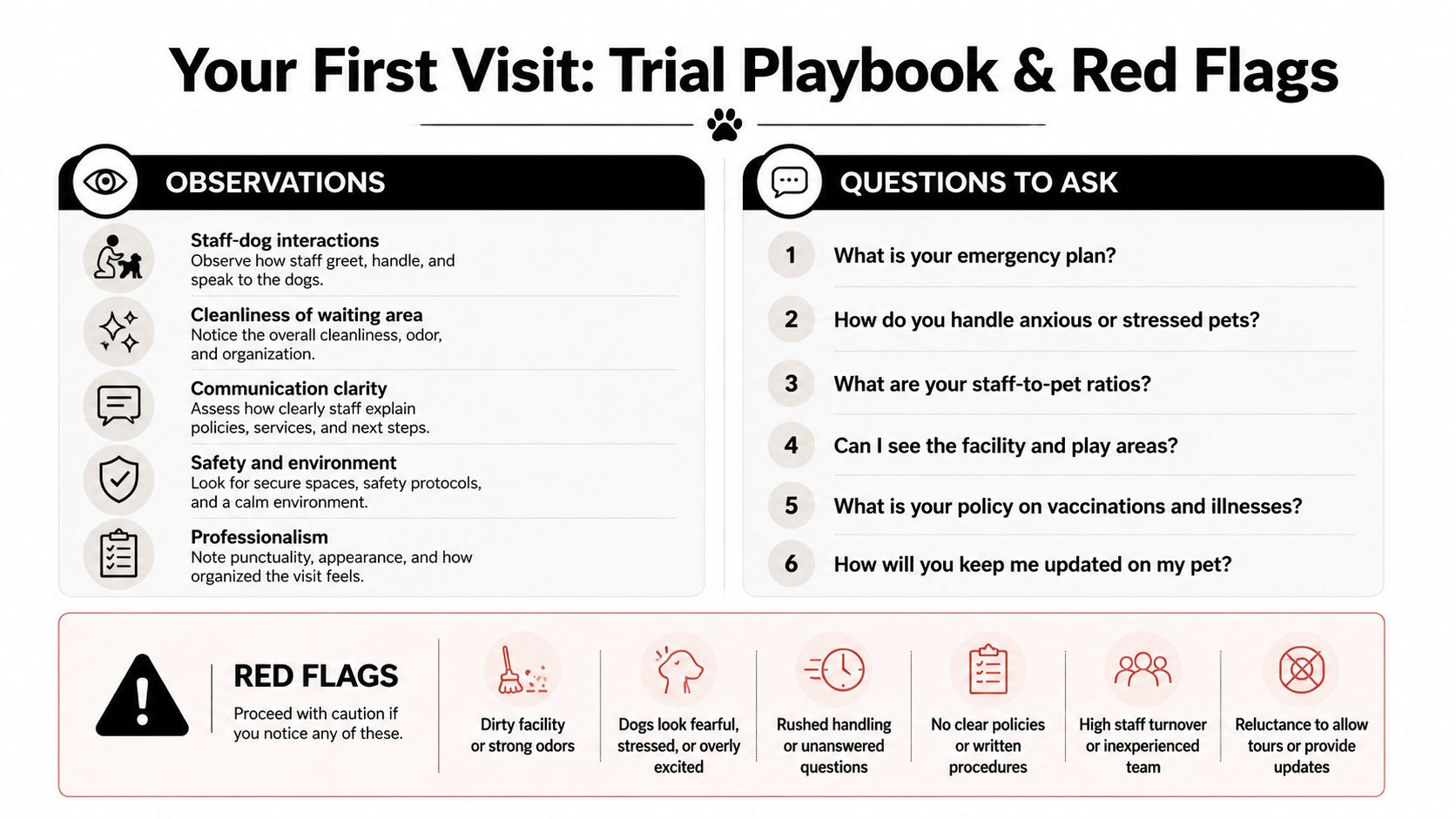
What to observe
Arrive early and inspect the environment before your dog enters the grooming area. Staff should greet dogs calmly, secure them without dragging or grabbing, and recognize signs of rising stress. The waiting space should be clean, quiet, and free from loose or uncontrolled dogs.
Follow each transition. Staff should identify the correct dog and owner, explain where pets wait, and limit unnecessary contact between animals. A rushed handoff can create risk before bathing, drying, or clipping starts.
Ask these questions directly:
- What training and certifications do the groomers have?
- What information do you collect on the intake form?
- How do you handle a fearful or reactive dog?
- What is your emergency plan?
- How are tools, tubs, tables, and work areas disinfected between dogs?
- How do you manage bite risk?
- When do you stop grooming and recommend a veterinarian?
- How will you contact me if the coat condition or behavior changes the service?
Listen for specific procedures, not reassurance. A responsible groomer explains how staff pause, separate, restrain, or modify a session when a dog becomes distressed or unsafe. They also explain what happens during drying, where heat and noise can increase stress.
Walk-away rule: If staff won't explain emergencies, sanitation, or handling before taking your dog, don't hand over your dog.
Leave immediately for a dirty facility, strong lingering odors, broken equipment, uncontrolled dogs, missing intake paperwork, vague pricing, or rushed handling. Leave if staff discourage questions, refuse to show where dogs are handled, or cannot describe drying and pickup procedures.
Ask how the salon records sensitivities, behavior concerns, coat condition, and owner instructions for the next appointment. Consistent records reduce repeated stress and help staff spot changes that warrant veterinary care.
Owners coordinating a move or complex travel schedule can use this pet relocation advice for owners from Ferried when arranging grooming alongside broader pet-care logistics. Book early enough to compare standards instead of accepting the first available salon under time pressure.
Regional Climate Needs and Premium Care Options
El Paso's desert climate makes grooming a health and stress-management decision, not just a cosmetic service. Dust, dry air, dust storms, and extreme heat can burden the coat and skin. Fine particles collect in fur, while low humidity can worsen dryness. A local Texas resource notes that moisturizing shampoos and conditioning treatments may help sensitive dogs (Texas regional entrepreneur and pet-care resource).
Set the schedule around the dog, not a salon's package menu. Coat type, outdoor exposure, skin condition, and season should determine whether the next service needs a bath, conditioning treatment, brush-out, or small trim. A skilled groomer explains that choice and adjusts it when the dog's skin or behavior changes.
Build a sensible home and salon routine
The ASPCA recommends bathing a dog at least once every three months. Dogs that spend substantial time outdoors or have skin problems may need baths more often, according to its dog-care guidance. The ASPCA's nail-trimming guidance says to trim nails when they're just about touching the ground as the dog walks.
Between appointments, brush according to the coat's needs. Check behind the ears and around the legs, wipe away visible dust, and watch for dryness or irritation. Heat alone does not justify shaving a coat. Ask how coat length, shade, airflow, and skin protection should be balanced for your dog.
Premium care may also include services beyond a standard bath and haircut. A concierge option can coordinate personalized support, veterinary advocacy, or travel by car or air. Independent studios may also run community programs, such as Snip & Style Saturday, an affordable promotion offering a $55 full groom for all sizes, or remembrance initiatives such as Petals for Paws for families grieving a pet. These programs show how a small studio can serve its community, but they should not replace clear safety standards and individualized handling.
For a veteran-owned grooming operation, verify ownership instead of accepting military-themed branding. The Texas Comptroller states that a new veteran-owned business must be 100 percent owned by one or more natural persons who are honorably discharged veterans (Texas veteran-owned business ownership requirements). Confirming that structure helps you evaluate the business accurately and understand its connection to the local community.
Glo More Grooming provides home-based, one-on-one grooming, full packages, touch-up sessions, luxury bath and blow-dry options, and concierge support for veterinary advocacy and coordinated travel. Owners can discuss their dog's climate, coat, stress level, and routine directly with the studio, including whether a Snip & Style Saturday appointment fits their needs.