
Your dog was comfortable after the last bath, but today the scratching won't stop. The coat looks clean, yet your pet is licking the paws, rubbing the face, or waking during the night to scratch. If the pattern appears after grooming, the shampoo and the bathing process deserve attention before you change food or assume fleas are responsible.
The best shampoo for sensitive skin isn't defined by a cute label or a strong fragrance. It depends on the dog's skin condition, the formula's surfactants and preservatives, its pH, the water temperature, the rinse, and the drying method. In my work around El Paso, I treat every sensitive-skin bath as a controlled process, not a quick wash.
Why Your Dog Keeps Scratching After Bath Time
A familiar pattern plays out in many homes. A dog seems fine before bath day, tolerates the washing, and then spends the next couple of days scratching, licking its paws, or developing red areas under the collar and around the legs. The owner often blames seasonal allergies or food, but the shampoo may be the overlooked trigger.
Shampoo can remove dirt and excess oil, but a formula can also irritate a compromised skin barrier. Strong cleansing agents, fragrance, dyes, or preservatives may leave the skin feeling tight and inflamed even when the coat appears spotless. A rinse-off product can still cause trouble, particularly when residue remains close to the skin.
Sensitivity is not a niche concern
Sensitive scalp is widespread in human populations, which helps illustrate why mild cleansing formulas have become important in personal care. An epidemiological study published in 2008 found that 44.2% of respondents reported a sensitive scalp, including 47.4% of women and 40.8% of men. A later multicenter study summarized in a 2021 review found that 30% of participants reported sensitive scalp without an underlying skin disease, while 41.3% scored at least 2 on the 3S sensitivity scale. These figures are reported in this review of sensitive scalp research.
Dogs aren't identical to people, but the practical lesson carries over. Skin discomfort can come from the product and process, not only from an underlying allergy. Owners searching for the best shampoo for sensitive skin are often trying to solve a genuine irritation problem, not chasing a cosmetic preference.
The skin barrier needs a disciplined approach
DermNet describes shampoo as mostly water, with detergents and foaming agents making up a smaller portion and fragrance and preservatives representing about 1% of the formula. That small fraction still matters because irritation and allergic responses often involve those functional ingredients. DermNet also notes that sodium lauryl sulphate may be more irritating than sodium laureth sulphate, and that shampoo-related allergic contact dermatitis can occur even though true allergy is uncommon for rinse-off products.
Practical rule: A clean coat isn't proof that the skin is comfortable. Judge the result by the dog's behavior and skin over the following day.
The right response isn't to stop bathing altogether. It's to select a mild, soap-free formula, use lukewarm water, rinse until no product remains, and dry without rubbing or excessive heat. That combination protects long-term skin health far better than repeatedly switching between heavily scented products.
Recognizing the Signs of Canine Skin Sensitivity
Sensitive skin usually announces itself through a pattern rather than one isolated symptom. Look for redness, recurrent itching, flaking, excessive paw licking, hot spots, ear inflammation, or discomfort when you touch areas that were recently washed. A dog that scratches only after a particular product may be reacting to that formula, while a dog that itches continuously may need a broader medical assessment.
El Paso adds a demanding environmental layer. Dry desert air can leave the coat and skin feeling less resilient, while outdoor exposure can bring dust, pollen, and other irritants into the fur. Those factors don't prove a dog has sensitive skin, but they can make an existing problem harder to manage.
Separate a grooming reaction from a deeper problem
Timing provides useful evidence. If itching begins soon after bathing and improves when the product is discontinued, the shampoo, residue, water temperature, or dryer may be involved. If the dog scratches between baths, has persistent ear problems, develops spreading lesions, or repeatedly creates hot spots, don't keep experimenting with retail products as a substitute for veterinary care.
Parasites, food-related reactions, environmental allergies, yeast, and bacterial complications can look similar to simple product irritation. A groomer can identify changes in the coat and skin, but a veterinarian should evaluate persistent inflammation, open wounds, pain, odor, or recurring infections.
Keep a simple observation record
Write down the bath date, product name, water temperature, drying method, and the areas your dog licks or scratches. Note whether the reaction appears after every bath or only during certain outdoor conditions. This record helps you distinguish a repeatable product response from a seasonal pattern.
A careful groomer also checks the skin before applying shampoo. That pre-bath inspection can reveal scabs, parasites, dry scaling, or a hot spot that needs a different plan. Sensitive-skin grooming starts with observation, not with a bottle.
Ingredients to Seek and Avoid in Sensitive Skin Shampoos
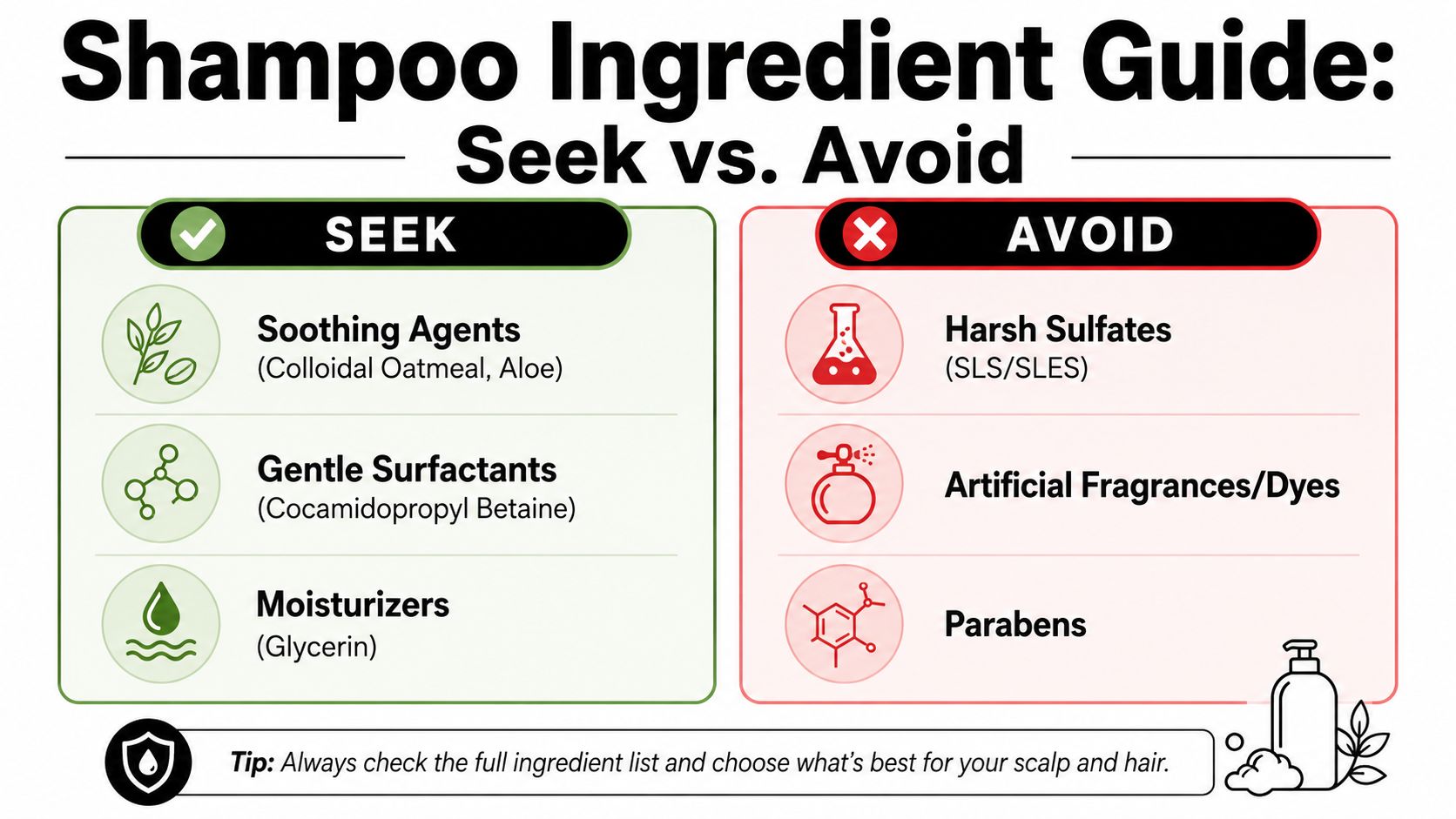
A fragrance-free label is useful, but it isn't a complete screening method. Shampoo formulas contain several ingredient classes, and a dog may respond to a surfactant or preservative even when the bottle contains no added perfume.
DermNet's shampoo composition guidance describes detergents and foaming agents as a meaningful part of the formula, while fragrance and preservatives occupy a smaller but important portion. A 2020 patch-test series found that shampoo caused 3% of all patch-tested cases, and the scalp was affected in 60% of those patients, as summarized in this dermatology reference on shampoo composition and reactions.
Compare the ingredient classes
| Formula feature | What it can do | Practical choice |
|---|---|---|
| Mild surfactants | Clean without the aggressive feel of strongly cleansing detergents | Prefer a soap-free, low-irritant system |
| Fragrance and dyes | Improve scent or appearance, but add unnecessary exposure for irritated skin | Choose unscented and dye-free when possible |
| Preservatives | Keep a water-based product stable and safe to use | Read the complete label instead of relying on “hypoallergenic” |
| Humectants and soothing agents | Help retain water and calm dry-feeling skin | Look for glycerin, colloidal oatmeal, aloe, urea, or phytosphingosine |
A review of shampoo-related allergic contact dermatitis identifies preservatives such as Kathon CG, formaldehyde releasers, and methylisothiazolinone-related compounds among possible allergens. It also identifies surfactants including cocamidopropyl betaine and decyl glucoside as responsible allergens in some reactions. That is why a full ingredient review matters, as explained in this review of allergic contact dermatitis from shampoo components.
What I look for in a gentler formula
Colloidal oatmeal can support a soothing, moisturizing approach. Glycerin helps attract and retain water, while aloe and urea are commonly used for hydration. Veterinary dermatology literature also identifies phytosphingosine as a barrier-support ingredient used in products for pruritic or sensitive skin, including the guidance in this veterinary review of topical care for canine skin.
The best shampoo for sensitive skin should also match the dog's actual condition. A moisturizing formula may suit dry, mildly reactive skin, but an infected or severely inflamed area may require veterinary treatment rather than a soothing bath. For a focused option, review Glo More Grooming's scent-free dog shampoo guidance and still inspect the full label for your individual dog.
Understanding pH and Why Dog Skin Is Not Human Skin
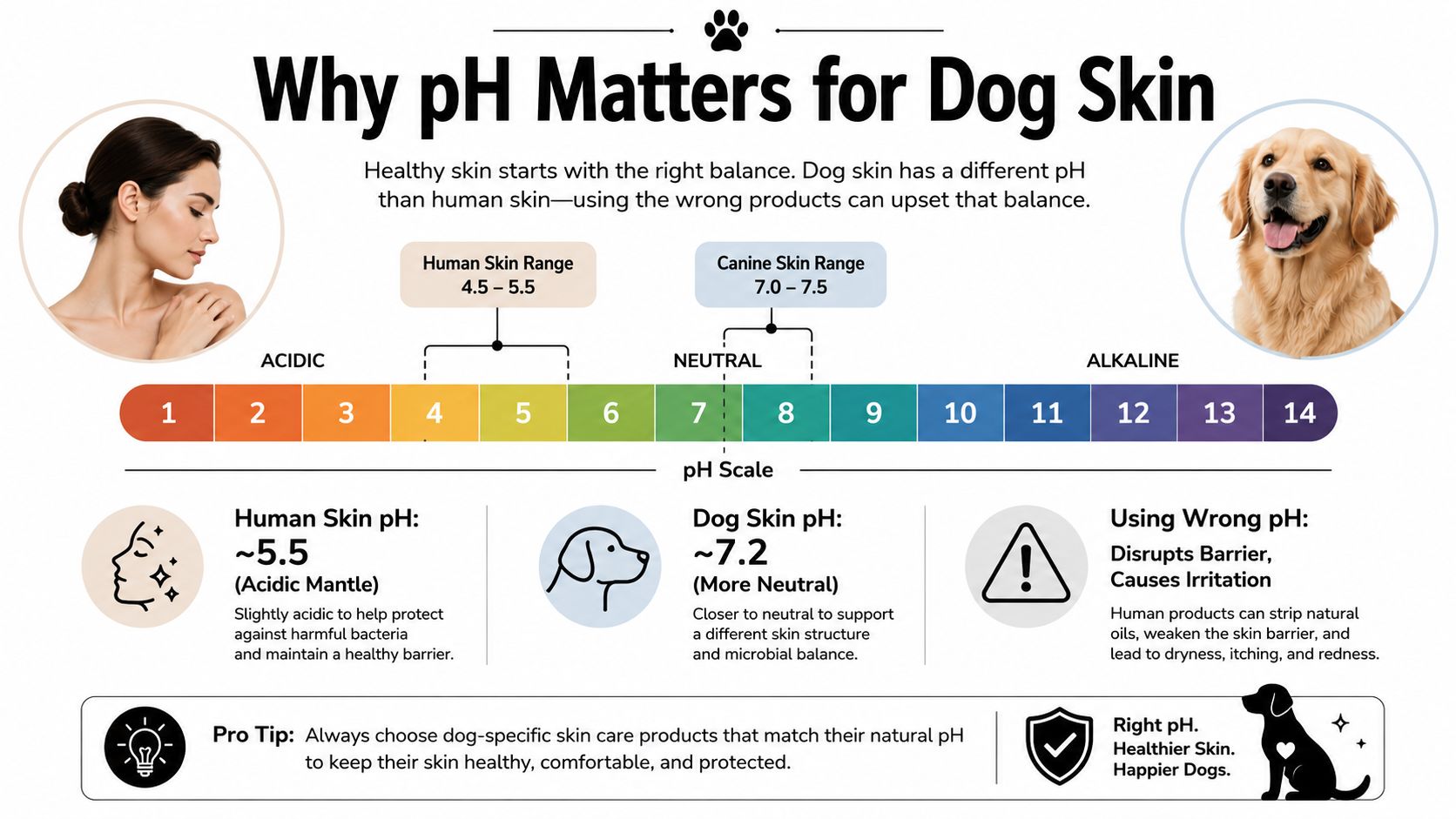
Human shampoo is a poor default for dogs. “Gentle for babies” describes a human product's intended use, not its suitability for canine skin. Dogs have a different skin environment, and changing that environment with an unsuitable formula can increase discomfort.
For dogs, skin is typically reported around pH 6.0 to 6.5, while a quality-evaluation study found commercial dog shampoos ranging from pH 5.6 to 8.4. Products far outside the skin's native range may increase irritation risk and destabilize the barrier, according to the study evaluating pH in commercial dog shampoos.
Use a simple selection and testing protocol
- Choose a canine-specific formula. Look for soap-free, fragrance-free or unscented products with a clear ingredient list.
- Check the pH positioning. A neutral-pH or slightly acidic canine formula is a practical benchmark, particularly for a dog that reacts easily.
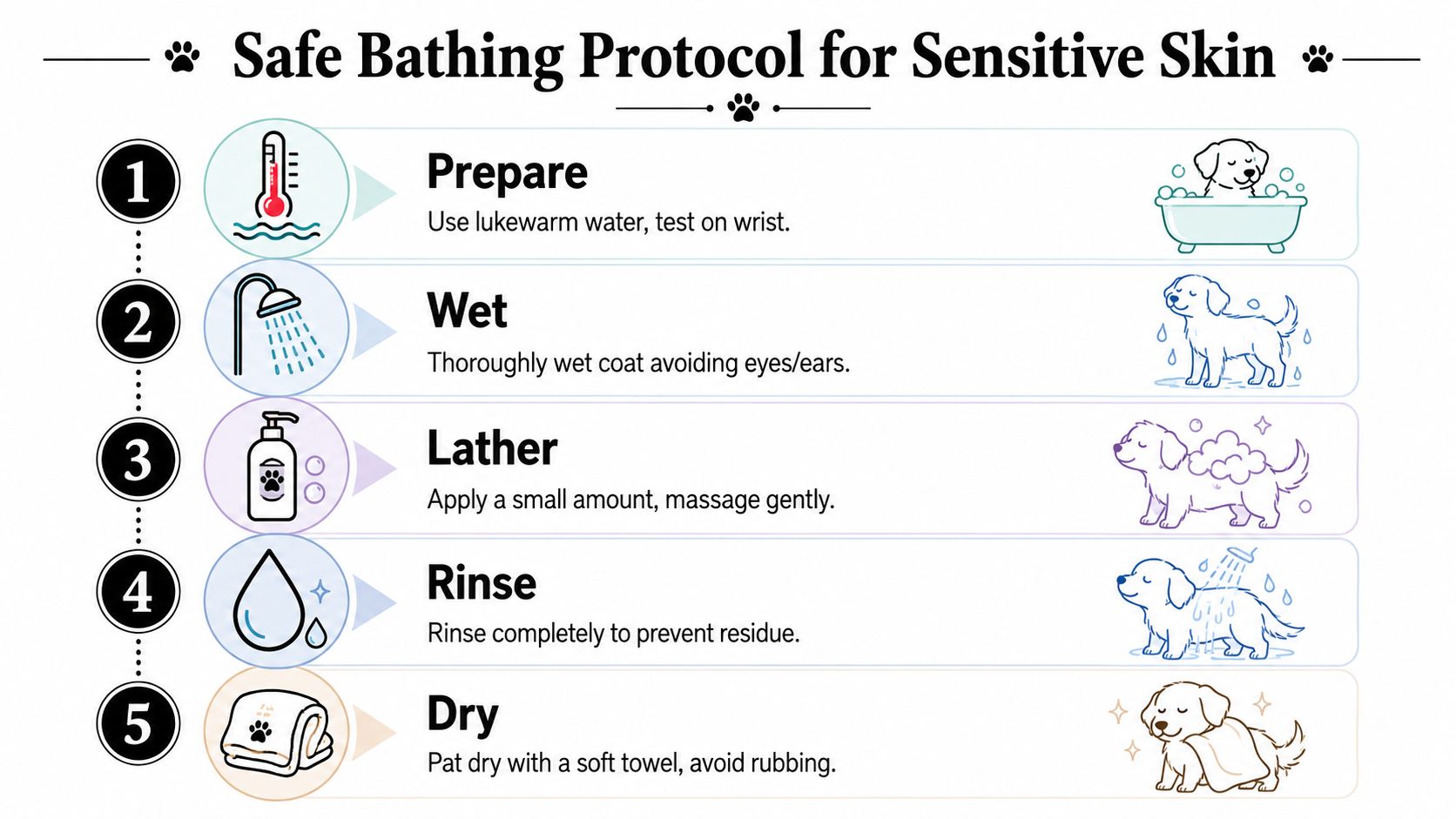
- Patch-test before a full bath. Apply a small amount to a limited area, rinse thoroughly, and observe for a reaction before washing the entire coat. Stop if redness, swelling, or marked discomfort appears.
- Use lukewarm water. Test the water on your wrist. Hot water can worsen irritation.
- Rinse and dry carefully. Residue can irritate, and rubbing or high heat can aggravate compromised skin.
A pH label doesn't make a product automatically safe. It must be considered alongside surfactants, preservatives, fragrance, the dog's current skin condition, and the skill of the person bathing the dog.
For questions about specialty products, including whether a human dandruff formula belongs in your dog's routine, see this guide to dandruff shampoo for dogs.
How to Bathe a Dog with Sensitive Skin Safely
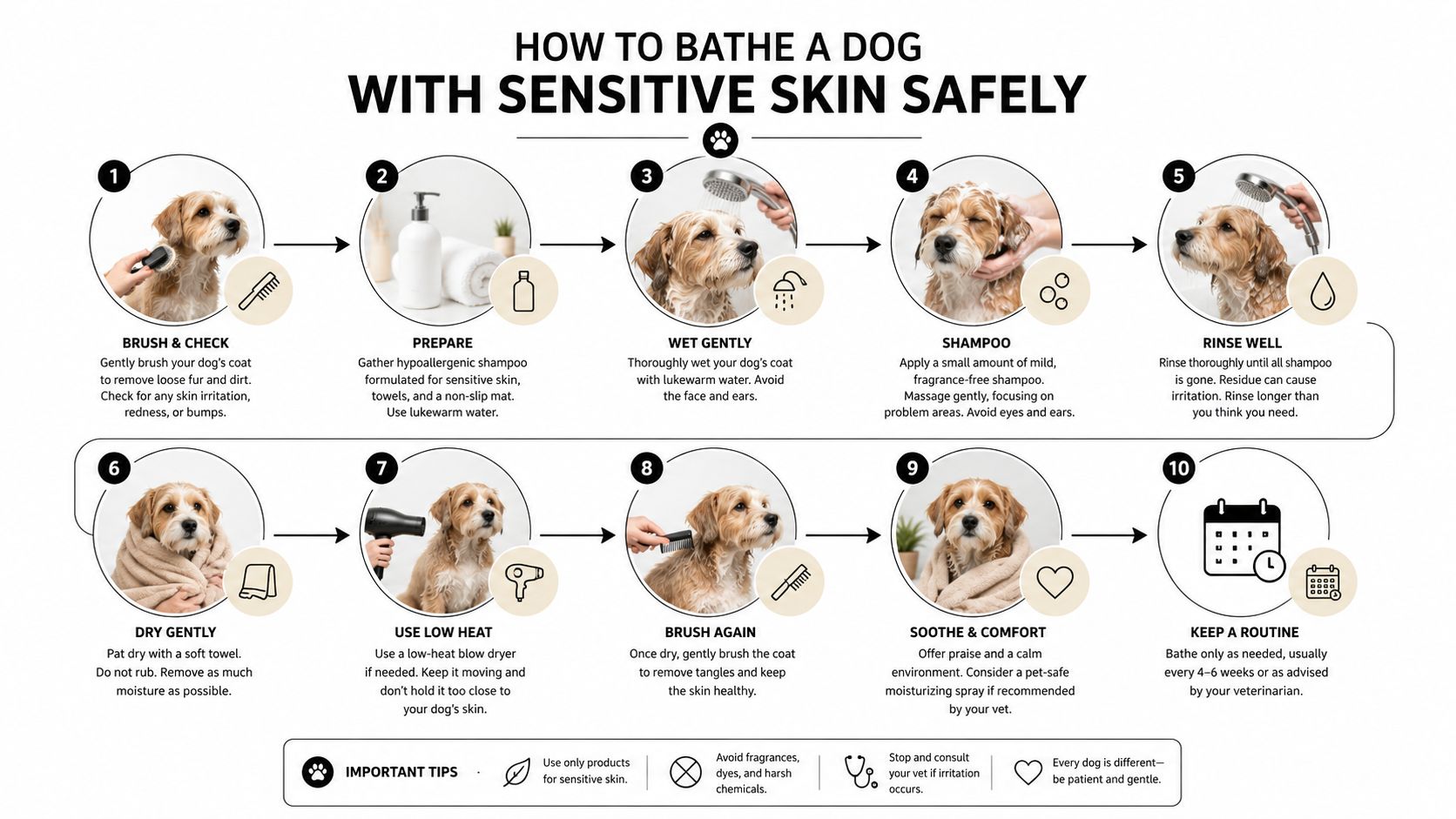
The product is only one part of the result. A mild shampoo can still cause trouble when a dog is washed with hot water, scrubbed aggressively, rinsed too quickly, or dried with excessive heat. Sensitive-skin grooming requires a repeatable workflow that protects the barrier from preparation through post-bath observation.
Follow the bath in order
- Inspect first: Check for hot spots, wounds, scabs, parasites, odor, and painful areas.
- Brush gently: Remove loose coat and mats without scraping irritated skin.
- Prepare the water: Use lukewarm water, never hot.
- Wet the coat fully: Saturate through the coat while avoiding direct water pressure around the eyes and ears.
- Use a small amount: Apply only enough shampoo to clean the coat.
- Massage with control: Work with the direction of the coat and use your fingertips, not your nails.
- Protect inflamed areas: Don't scrub or brush directly over wounds or visibly irritated spots.
- Rinse completely: Continue until the water runs clear and no slippery residue remains.
- Dry with restraint: Pat with a soft towel or use low heat. Avoid rubbing and high heat.
- Observe afterward: Watch for increased scratching, licking, redness, or discomfort.
Veterinary dermatology guidance supports soothing agents such as colloidal oatmeal, glycerin, aloe, urea, and phytosphingosine for pruritic or sensitive skin. The same literature identifies fragrance as a potential concern, so I favor a simple, transparent formula over a product that tries to create a strong scent.
Adjust for hot spots and inflamed skin
A hot spot changes the grooming plan. Keep the area clean and dry, avoid brushing directly across the wound, and don't treat visible inflammation as a routine cosmetic issue. If the area is painful, spreading, oozing, or repeatedly returning, pause experimentation and involve a veterinarian.
At a professional studio, the workflow should also change for a reactive dog. The groomer should record the product used, inspect the skin before and after the bath, control the water temperature, rinse methodically, and choose a drying approach that doesn't inflame the skin. At Glo More Grooming, the process is built around limited bookings and individualized handling rather than rushing every dog through the same sequence.
For drying choices and coat-specific considerations, use this guide to blow-drying a dog after a bath. The safest method depends on the skin, coat density, tolerance, and whether any irritated areas are present.
Building a Grooming Routine That Protects Skin Health
Sensitive skin reflects the whole grooming schedule, not only the shampoo used on bath day. Over-bathing can remove protective oils, while a dirty, matted, or damp dense coat can encourage further discomfort. Set the routine around cleanliness, coat condition, climate, and the dog's medical history.
El Paso's dry conditions make flaking, tight-feeling skin, and post-outdoor changes worth tracking. Allergens can collect in the coat and paws, so a full groom is not always the right response. A gentle touch-up, careful paw cleaning, or a bath and blow-dry appointment may maintain comfort with less handling.
Build the schedule around the dog
- Watch the skin between appointments: Record licking, redness, odor, flakes, and ear changes.
- Brush according to coat type: Choose the correct tool and stop before the skin turns pink or tender.
- Use touch-up sessions when appropriate: A small maintenance visit may suit the dog better than repeatedly resetting the entire coat.
- Change the plan with the season: Reassess outdoor exposure, dryness, and coat debris instead of following a fixed calendar.
- Keep a product record: Introduce one formula change at a time, so a reaction can be traced more accurately.
A predictable schedule is easier to maintain when owners can plan around a monthly offer such as Snip & Style Saturday, a once-monthly $55 full-groom promotion for all sizes, described in Glo More Grooming's service information. Use any promotion as a scheduling aid, not as a reason to bathe or groom more often than the dog's skin and coat require.
Choose precision over volume
A sensitive dog may cope better with a quieter, one-on-one workflow than with a busy chain setting. An independent veteran-owned grooming studio can document preferences, adjust the bath, and explain when the skin differs from the previous visit. That continuity gives owners clearer information for veterinary discussions.
A disciplined routine uses the same product batch, the same water temperature, and the same drying method at every appointment so skin reactions can be tracked accurately. Clean tools, controlled handling, methodical rinsing, and clear product records also reduce variables. If the skin changes, pause the routine, identify what changed, and seek veterinary guidance when the problem persists.
Why Professional Grooming Matters for Sensitive Dogs
The word “hypoallergenic” can make a bottle sound safer than it is. It isn't a guarantee that every dog will tolerate the formula, and it doesn't tell you whether the product contains a surfactant, preservative, botanical, or other ingredient that your dog may react to.
Sensitive skin is associated with scented-product exposure and fragrance allergy, and shampoos and conditioners have been linked to fragrance-allergy risk in research summarized by this review of sensitive skin and fragrance exposure. Regulatory attention is also changing. The EU added 30 mandatory fragrance-labeling substances in 2023, and a 2025 assessment identified five fragrance substances for closer evaluation, while modeled skin-sensitization risk wasn't significant at the 95th percentile. Those findings support a practical position: ingredient transparency and patch-testing habits matter more than a front-label promise.
A professional groomer should challenge assumptions, not reinforce them. At a veteran-owned grooming studio, the team can ask what changed, inspect the skin, adapt the cleanser, control the water and dryer, and tell you when the problem has moved beyond grooming. That level of attention is especially important for dogs with recurrent hot spots, chronic ear inflammation, or a history of reacting to products.
Glomore Grooming operates as a home-based, premium dog grooming studio in El Paso with limited dogs on site, full grooming packages, touch-up sessions, luxury bath and blow-dry options, and a Concierge Service for personalized support, including veterinary advocacy and coordinated travel by car or air. Its veteran-owned independence reflects a long-term vision built on Greatness, Loyalty, and Ownership, not an assembly-line model associated with large chains such as PetSmart or Petco.
For El Paso families, El Paso dog grooming should mean disciplined standards, calm handling, and clear communication. Whether you need routine care or premium Concierge support, the goal remains the same, a comfortable dog and a skin-health plan that holds up between visits.
Book your next sensitive-skin appointment with Glo More Grooming for a controlled bath, careful drying, and grooming matched to your dog's coat and skin. Contact the studio to reserve a Snip & Style Saturday slot, ask about premium pet grooming or Concierge support, and make your next affordable grooming promo part of a consistent care routine.