
Calamine lotion is not safe for dogs because many formulas contain zinc oxide, and if your dog licks it off, that ingredient can become a toxic exposure route. The biggest risks are vomiting, diarrhea, red-blood-cell damage, and anemia.
If your dog is itchy and you've got that pink bottle in the cabinet, stop there. A fast fix can turn into a clinic visit, especially on paws, bellies, and other high-lick areas where dogs don't leave topical products alone. For a cleaner, safer answer, keep reading and treat skin issues with the same discipline you'd want from a premium El Paso dog grooming standard.
That Pink Lotion in Your Cabinet A Risky Quick Fix
A lot of dog owners reach for calamine lotion because it's familiar, cheap, and sitting right there in the medicine cabinet. The problem is simple, can you use calamine lotion on dogs safely? No, you shouldn't.
Calamine products are generally not recommended for dogs because common formulas contain zinc oxide. Veterinary guidance warns that dogs often lick topical products off their skin, and once zinc-containing material is swallowed, the risk shifts from a skin issue to a poison exposure. That's why a product that may seem harmless on human skin can be the wrong move for a dog.
Practical rule: if a product relies on the dog not licking it, it's usually a poor fit for canine skin care.
That's the standard I respect in professional grooming, use products and techniques that fit the animal in front of you, not a human shortcut. A disciplined workflow means looking at the coat, the skin, the licking behavior, and the location of the irritation before choosing a plan. For dog owners who want a safer comparison point, this guide on Vaseline and dogs helps show why human cabinet remedies don't belong in routine pet care.
The right answer isn't panic. It's precision. Dogs deserve care that's built around their habits, and one of those habits is licking whatever they can reach.
The Hidden Dangers of Calamine Lotion for Dogs
Why zinc oxide changes the risk
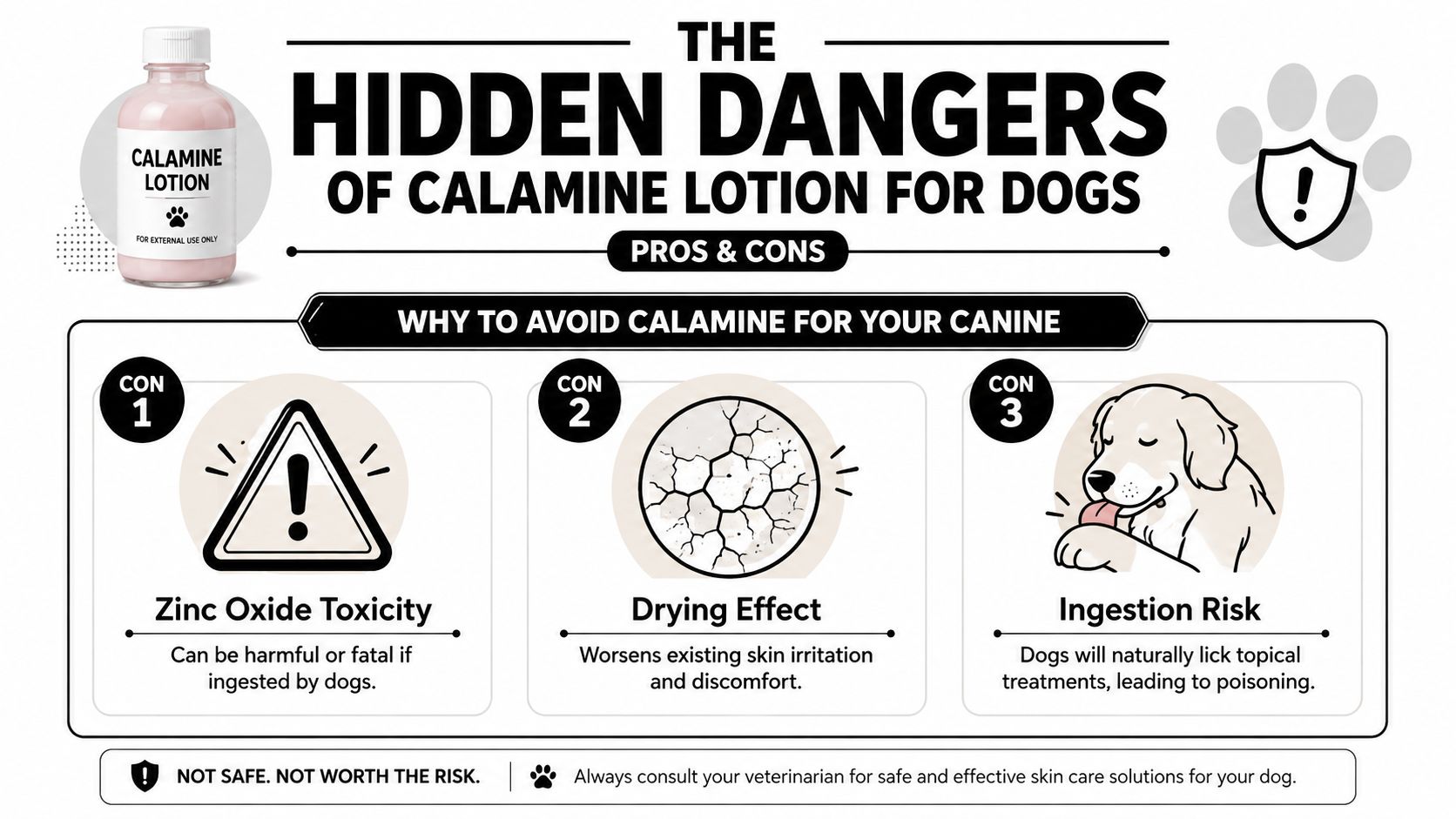
The danger sits inside the bottle, not in the pink color or the soothing feel. Many calamine products contain zinc oxide, and that ingredient is where the trouble starts for dogs. Hemopet warns that calamine lotion is not recommended for dogs because swallowing it can damage red blood cells and lead to anemia, vomiting, and diarrhea. Hemopet's guidance on calamine and dogs makes the risk plain. Dogs lick. That habit turns a skin product into a poisoning risk.
Leaving a zinc-based lotion on a paw and hoping the dog ignores it is poor handling. A dog with itchy skin will usually get to it fast.
VCA gives the same warning from a clinical angle. Its pet care guidance explains that calamine products often contain zinc oxide, and if a dog ingests them, the result can be gastrointestinal upset and red blood cell damage. VCA's personal care products guidance for pets supports a simple rule, human skin products belong out of a dog's mouth. Once zinc toxicosis starts, the problem is no longer a minor irritation.
Why licking makes this worse
Dogs lick itchy skin because they are trying to calm themselves. That instinct raises the risk on paws, bellies, and skin folds, where lotions are easy to reach and hard to keep off the tongue. A product that stays put on human skin does not stay put on a dog for long.
Taconic Veterinary gives the same warning in practical terms. Calamine products can be unsafe if swallowed, and ingestion can bring vomiting, diarrhea, and more serious health problems. Taconic Veterinary's calamine warning for dogs backs the same conclusion, do not assume a human itch remedy is safe just because it is familiar.
Bottom line: if a dog can lick it, the risk shifts from skin irritation to toxicity.
Open wounds, broken skin, and areas near the eyes, ears, and mucous membranes need even more caution. Those spots absorb and react differently, and calamine is a poor choice there. The most responsible response is to stop use at the first sign of redness, swelling, or excessive scratching, then wash the area right away. AnimalWised's caution on calamine use in dogs gives the same clear warning, do not keep applying a product that is making the skin worse.
For owners who want a safer response, this hot spot spray guide is a better place to start than a human cabinet lotion.
Safe Soothing Solutions and Professional Alternatives
What to do instead of calamine
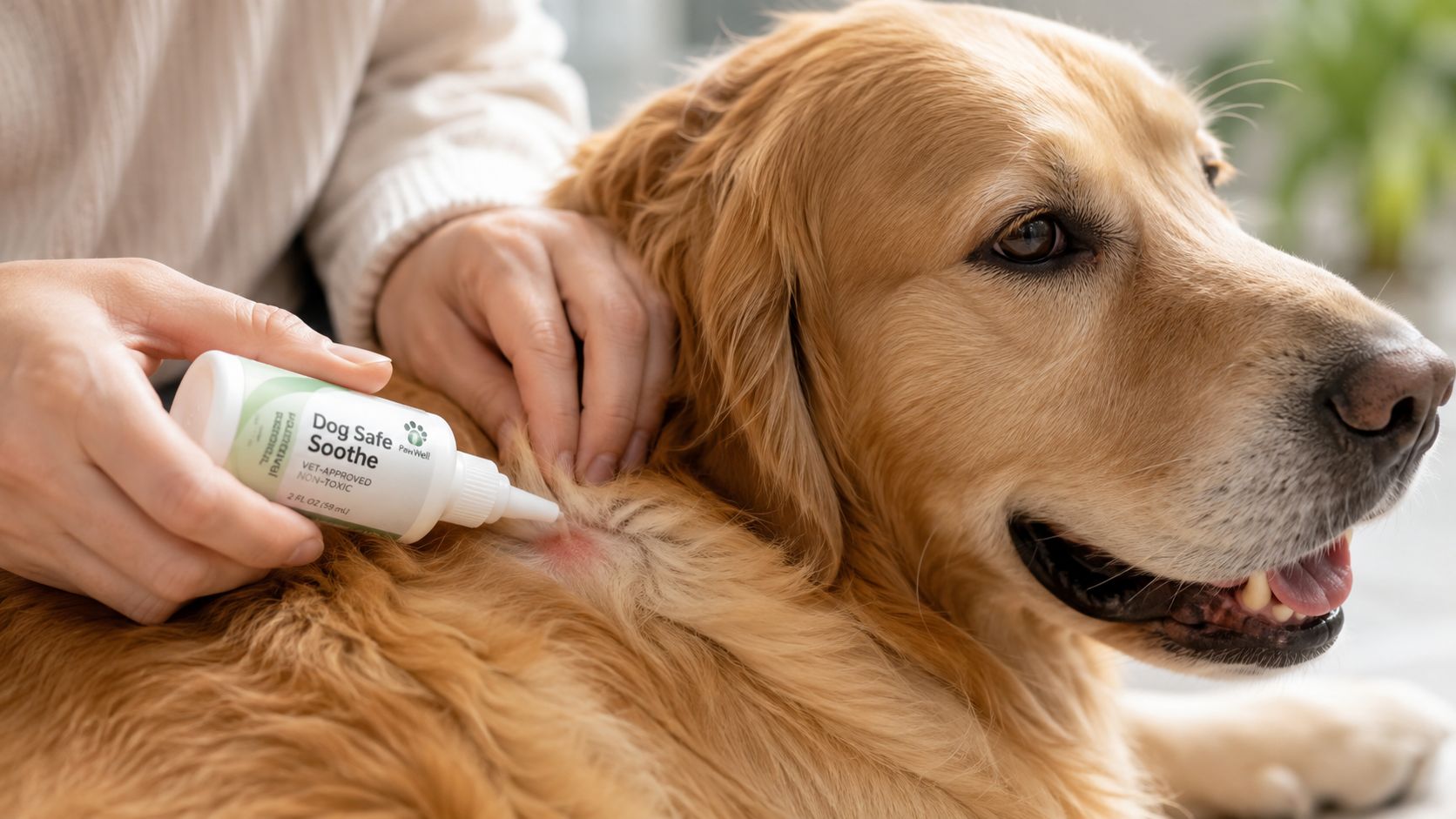
A dog that is scratching, licking, or rubbing nonstop needs a cleaner response than a cabinet lotion. Start by checking the skin carefully, then keep the area dry and protect it from more irritation. The goal is simple, calm the skin without adding a new risk.
A good first pass is straightforward:
- Check the skin closely: look for fleas, a bite, a rash, or a wet, raw spot.
- Stop the licking: use an e-collar or close supervision if your vet has already cleared the area.
- Skip human lotions: especially anything with zinc oxide or unfamiliar active ingredients.
- Watch the pattern: if the itching is getting worse, stop experimenting at home.
If the skin is open, broken, or sitting near the eyes, ears, or mucous membranes, leave calamine out of the picture. A safer choice is to clean the area gently, keep it dry, and use a product meant for canine skin. For owners who want a dog-focused option, this hot spot spray resource gives a far better starting point than a human anti-itch lotion. Hot spots, allergy flareups, and moisture problems need the right tools, not a shortcut from the bathroom shelf.
Why professional grooming helps more than a lotion
A lotion only masks what you can see. Professional grooming examines the coat, the skin, the moisture pattern, and the cleanliness of the area before the problem spreads. That matters because many itch issues come from dirt buildup, trapped moisture, seasonal irritation, or poor coat maintenance.
A disciplined grooming routine keeps the coat clean, dry, and easier to inspect. That is the standard that matters in El Paso, where dust, heat, and outdoor exposure can turn a small irritation into a bigger one fast. A premium grooming provider does not chase quick fixes. It keeps the dog comfortable, watches for trouble early, and treats skin care like part of real health care.
The Glo More Standard Why Professional Care Beats DIY
DIY care feels efficient until it isn't. A bottle from the bathroom shelf may look like a shortcut, but it skips the part that matters most, an actual assessment of the dog's skin and coat. Professional grooming earns its place because it's built on observation, sanitation, and technique, not guesswork.
That's where a one-on-one model stands apart from high-volume chain care. In a busy storefront, dogs can get moved through a process. In a premium setting, the groomer can slow down enough to notice dry patches, irritated folds, matted areas, or signs that a pet needs a different plan. That level of attention is exactly what pet owners want when skin comfort is on the line.
Grooming standards matter because skin issues don't show up in neat categories. A dog can look fine from a distance and still have trouble under the coat, behind the ears, or along the belly. A careful groomer checks those areas with a practiced eye and keeps the workflow tight, clean, and calm.
Veteran-owned businesses often bring a different mindset to service, and that matters here. Discipline, ownership, and a long-term view create consistency. In El Paso, where pet owners want care they can trust again and again, that kind of standard beats a rushed, impersonal experience every time.
Professional care should solve problems, not create new ones.
That's why premium pet care isn't a luxury add-on. It's a health habit. When the goal is comfort, cleanliness, and fewer surprises, the better choice is a groomer who treats every dog like the work has to be done right the first time.
When an Itch Is a Sign to See Your Veterinarian
An itchy dog isn't always an emergency, but some signs mean you need a veterinarian, not another home remedy. If the irritation keeps going, the skin is getting worse, or your dog's behavior changes, stop guessing.
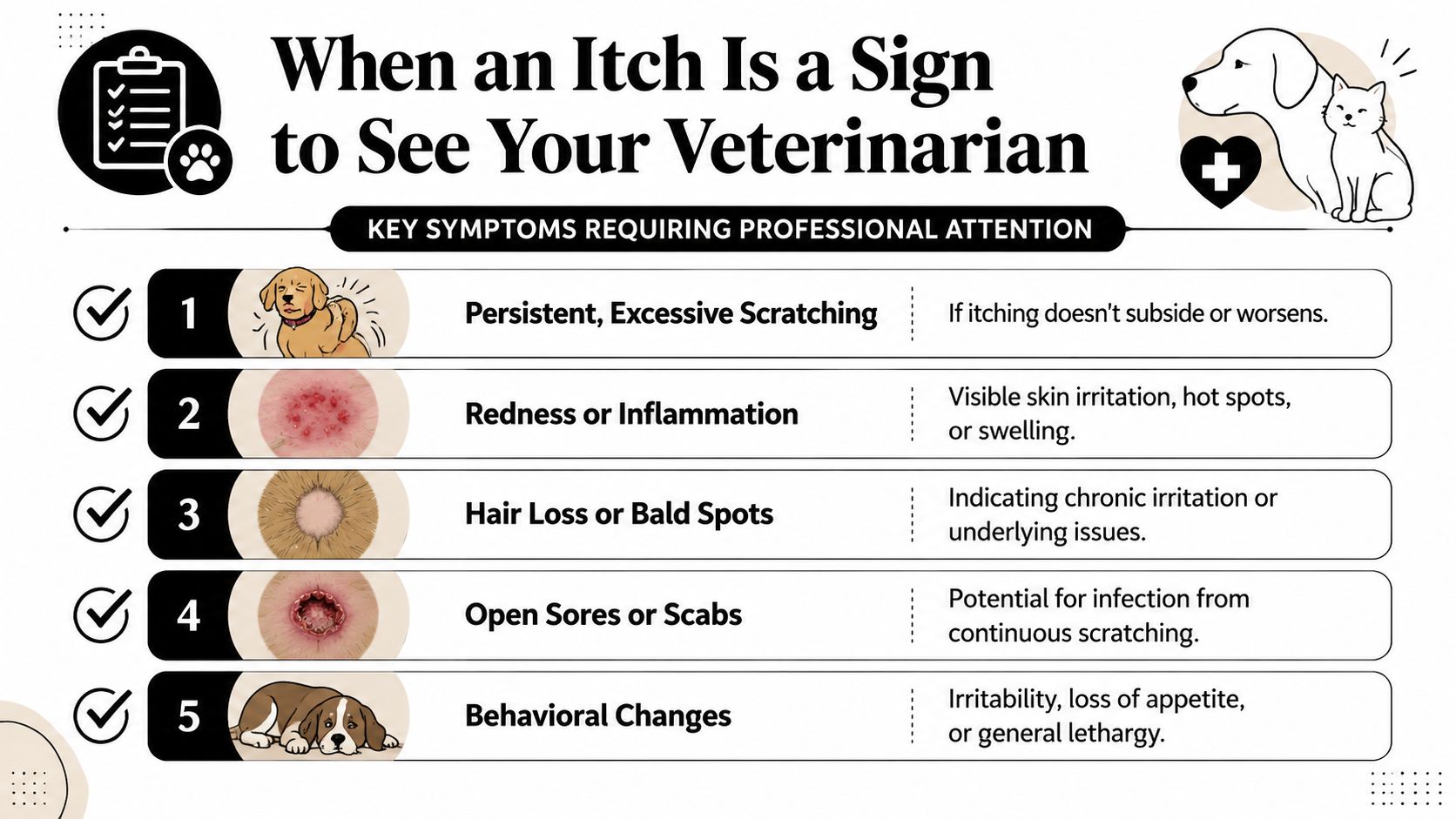
Key symptoms requiring professional attention
- Persistent, excessive scratching: If the itching doesn't subside or keeps escalating, that's a real problem.
- Redness or inflammation: Hot spots, swelling, or obvious irritation need a medical look.
- Hair loss or bald spots: That often points to a chronic issue or ongoing skin damage.
- Open sores or scabs: Continuous scratching can create infection risks fast.
- Behavioral changes: Irritability, loss of appetite, or lethargy means the issue is affecting more than the skin.
If you're seeing more than mild itching, stop treating the situation like a simple nuisance. A dog that's losing fur, chewing the same spot, or acting off needs a proper diagnosis. That's the safest route, and it's the one that protects both the coat and the dog's comfort.
Veterinarians and groomers work best as a team. The vet identifies the medical cause when needed, and the groomer helps keep the coat clean and manageable so the skin doesn't keep getting stressed. That partnership is the standard, not the exception.
Your Partner in Premium Pet Care Book Your El Paso Grooming Session
If your dog is itchy, skip the risky cabinet remedy and choose a cleaner path. Professional grooming gives you a safer baseline, better coat visibility, and a routine that supports your dog's comfort instead of gambling with zinc oxide exposure.

If you want premium pet grooming with a disciplined, one-on-one standard, reserve a spot for Snip & Style Saturday and give your dog the kind of care chains can't match. Use the appointment booking page to claim your place and keep your pet on a safer, cleaner routine.
When you're ready for El Paso dog grooming that puts health, precision, and calm care first, choose veteran-owned grooming with standards you can trust. Visit Glo More Grooming to book now, reserve an affordable grooming promo slot, and give your dog the careful, professional support they deserve.