
You run your hand over your dog's coat and feel it immediately. A clump behind the ear. A tight patch under the collar. Maybe a knot tucked into the back leg where brushing always seems to get skipped when the week gets busy. That moment brings the same question every good owner asks. Can I fix this safely, or am I about to make it worse?
That question matters because mats aren't just ugly. They pull, pinch, trap debris, and can turn a grooming problem into a comfort problem fast. A disciplined approach to detangling dog hair protects the coat, but above all, it protects the dog.
In El Paso, coat care has its own rhythm. Dust, dry air, backyard play, and frequent bathing habits can all change how a coat behaves between appointments. That's why premium pet grooming can't be rushed or handled with a one-size-fits-all routine. It takes standards, patience, and a calm setup. That's also why many local owners start looking beyond chain environments when they want safer, more personal care for their dogs.
Beyond the Tangle A Commitment to Care
Saturday evening in El Paso, a dog jumps onto the couch for attention, and a hand finds a hard patch under the collar instead of a soft coat. Owners mean well in that moment. They grab the nearest brush, add water, or try to work fast before the dog loses patience. That is where small mistakes turn a manageable tangle into a painful grooming job.
At a professional standard, dematting starts with one question. Can this be done without putting the dog through unnecessary pulling, panic, or skin trauma? If the answer is no, the plan changes.
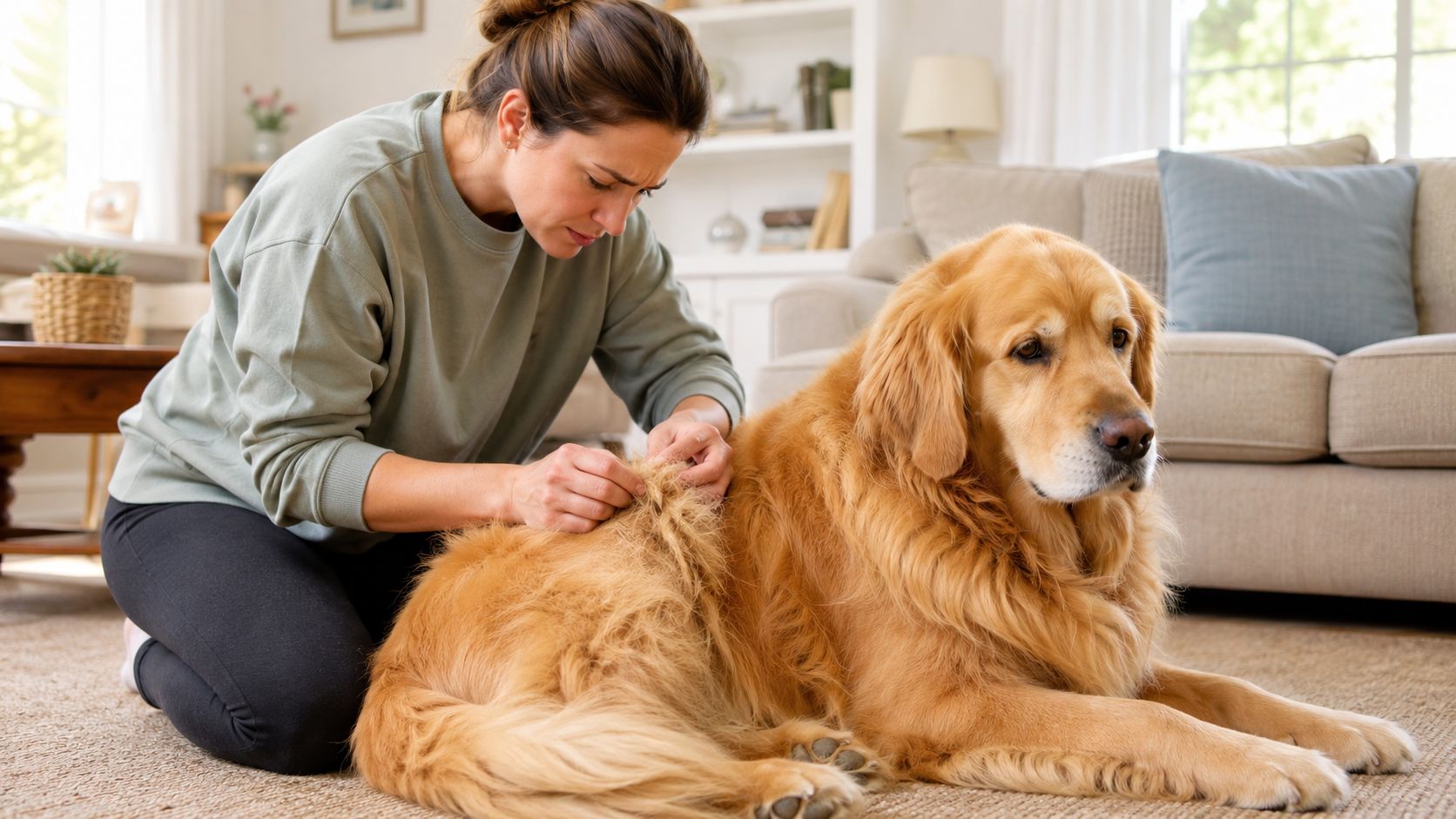
Why a mat deserves respect
A mat is compressed hair under tension. It traps debris, holds moisture close to the skin, and pulls every time the dog turns, scratches, or lies down. Left alone, it gets tighter. Handled carelessly, it can leave a dog sore long after the grooming is done.
That is why prevention matters, and why early coat maintenance always gives better options than delayed rescue work. Owners who want to improve their home setup can start with the right grooming supplies for dogs, but tools only help if the dog is comfortable enough for careful use.
Practical rule: If the skin moves when you tug the mat, slow down. If the dog flinches, stops cooperating, or the mat feels tight to the skin, stop and reassess.
What disciplined care looks like
Veteran-owned care should mean more than a slogan. In practice, it means the work is methodical, calm, and held to a standard every time. The dog gets assessed before the first stroke. Friction points get checked on purpose. Coat sections are cleared in an order that keeps control of the process instead of turning the session into a struggle.
At Glo More Grooming, that one-on-one approach matters because many dogs do worse in noisy, high-volume environments. A crowded chain setup can push a sensitive dog past its limit before the hard part even starts. Quiet handling, clear sequencing, and stopping when a coat is no longer safe to save are not soft choices. They are professional ones.
El Paso dogs bring their own challenges. Dry air, dust, harness wear, and active outdoor routines can tighten a coat faster than owners expect. Good grooming meets that reality with patience, clean technique, and judgment. The goal is never to win a fight with a mat. The goal is to protect the dog while making the smartest call for the coat.
The Groomer's Toolkit For Dematting Duty
Tools don't make a groomer, but the wrong tools can absolutely make a dog miserable. Safe detangling dog hair depends on using the right tool for the right job, on the right part of the coat, with the right pressure.
The core rule is simple. Use tools that separate, loosen, and control. Don't use tools that force.
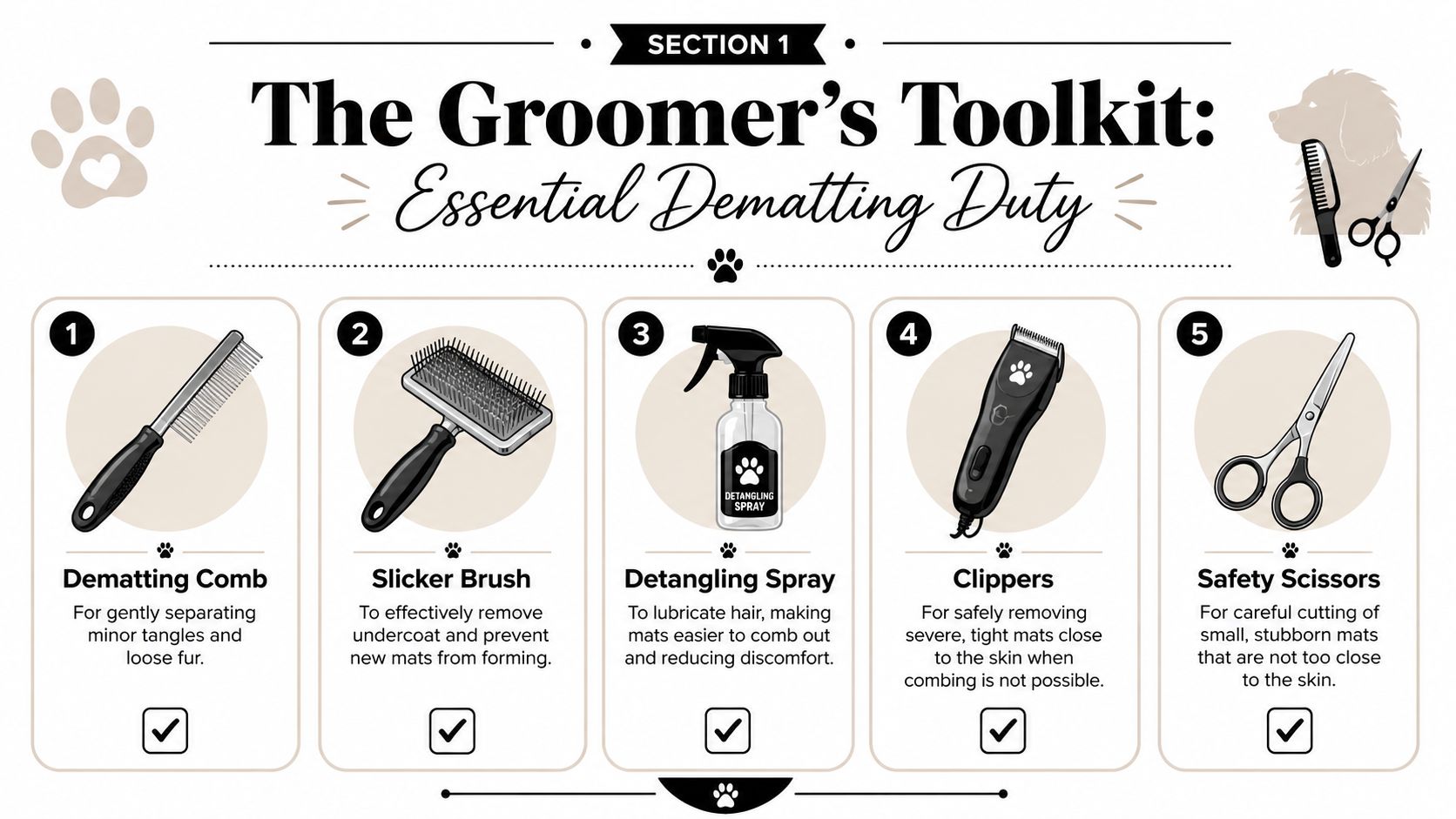
The essential kit
A basic home kit can help with light maintenance. A professional kit goes further because it's built for safety, coat access, and precision.
| Tool | What it does | Where it helps most |
|---|---|---|
| Slicker brush | Lifts loose coat and opens surface tangles | Feathering, legs, chest, friction zones |
| Greyhound-style comb | Checks whether the coat is fully clear to the skin | Finish work after brushing |
| Dematting comb or rake | Separates minor to moderate tangles with control | Localized mats, not broad tearing |
| Dog-safe detangling spray | Adds slip so hair can separate with less drag | Before combing and finger work |
| Clippers | Remove severe mats when brushing would be unsafe | Tight mats close to the skin |
Owners looking to build a better maintenance setup can compare coat-care basics through dog grooming supplies guidance from Glo More Grooming.
What works and what doesn't
Some mistakes show up again and again in home grooming.
- Human brushes with soft pins: These often skim over the coat instead of reaching the tangle.
- Kitchen scissors: They create a serious injury risk, especially when a mat sits flat against the skin.
- Cheap combs with rough seams: Those catch and scrape instead of gliding.
Professional sources also give a firm warning about moisture. Barkbus says to “only work on dry fur” because wet mats tighten and become harder to remove. The same guidance notes that severe mats may need clipping, and Purina advises that when a mat can't be detangled, a professional groomer should shave or cut it out rather than have owners use scissors at home, as summarized in Barkbus guidance on how to demat a dog.
A quick visual helps if you want to see tool handling in motion.
Good tools reduce friction. Good hands reduce fear. You need both.
The premium standard
Premium pet grooming isn't about having more gadgets on the table. It's about using fewer tools with more control. Every brush, comb, and blade should have a reason for being in your hand. If the tool choice is random, the result usually feels random to the dog too.
The Disciplined Workflow for Detangling
When a coat is matted, random brushing wastes time and increases discomfort. A disciplined workflow gives the groomer a repeatable way to protect the skin while making progress. For mild-to-moderate mats, expert guidance recommends identifying friction zones such as behind the ears and under the legs, applying a dog-safe detangler, and then working from the outer edge of each mat inward with short, gentle strokes while holding the coat at the skin to reduce tugging, as outlined in Cowboy Magic's dematting steps.
Start with inspection, not brushing
Before any tool touches the coat, inspect the whole dog. Hands find what eyes miss. Check behind the ears, under the collar, in the armpits, under the tail, and along the rear legs. Those friction zones mat first and tighten fastest.
Then decide what category you're dealing with.
- Loose tangle: Hair is caught but still movable.
- Formed mat: The coat has started locking together in a defined patch.
- Tight mat: The hair is compacted near the skin and should not be forced.
That first judgment call matters more than most owners realize. If you misread a tight mat as a simple knot, you'll use too much force and the dog pays for it.
The working sequence
Use a method, not guesswork.
Isolate the area
Separate the matted section from surrounding hair with your fingers. This keeps you from dragging healthy coat into the knot.Apply slip
Use a dog-safe detangler and let it coat the tangle. You're not soaking the dog. You're reducing drag where the hair is binding.Support the base
Hold the coat close to the skin before you comb. That hand takes the force so the skin doesn't.Work from the outside inward
Start at the edge of the mat, not the center. Small openings on the outside create space for the rest of the tangle to release.Use short, gentle strokes
Don't rake through the whole section. Tiny controlled motions are more effective and much kinder.Reassess often
If the dog starts resisting, if the mat isn't giving, or if the comb can't enter safely, stop and change the plan.
The hand holding the base of the coat is doing as much work as the brush. That's where pain prevention happens.
What a professional stops doing
A disciplined workflow includes knowing when not to continue.
| If this happens | The correct response |
|---|---|
| The skin starts moving with every stroke | Increase support at the base or stop |
| The dog flinches repeatedly | Shorten the session or change to removal instead of brushing |
| The mat feels solid and flat to the skin | Do not dig. Consider clipping |
| Debris or irritation appears under the mat | Slow down and protect the skin first |
Chain-style speed frequently fails dogs. When time pressure drives the session, someone starts trying to “get through it.” That's not grooming. That's forcing the issue. Real veteran-owned grooming standards are built on control, patience, and the discipline to stop before the dog gets hurt.
The comfort standard
Owners often think detangling dog hair is about how much a dog will tolerate. That's the wrong standard. The right standard is how much force a groomer is willing to refuse. A healthy coat can recover from clipping. Damaged trust takes longer.
If you want a cleaner coat without turning the process into a battle, follow the workflow and keep your standards high. Method beats muscle every time.
Customizing the Mission for Different Coat Types
Generic advice falls apart once you move from one coat to another. A poodle mix doesn't tangle like a golden retriever. A shepherd undercoat doesn't pack the same way as a silky drop coat. If you want real progress with detangling dog hair, the routine has to match the coat in front of you.
A practical challenge in grooming is adjusting for coat type and moisture. Existing guidance often stays generic, even though dry mats are usually easier to address than wet ones, and owners don't get much breed- or routine-specific direction for curly, long-haired, or double-coated dogs in climates like El Paso, as discussed in Bubbly Paws' overview of matted dog hair care.
Long and flowing coats
Long coats don't always mat because they're neglected. They mat because they move. Collars rub. Harnesses shift. Rear feathering catches debris. Friction and loose undercoat can create tangles even in homes that brush regularly.
For these dogs, focus on line brushing and follow-up combing. If the comb can't pass through cleanly, the job isn't finished.
A conditioning routine also matters for maintenance between appointments. Owners comparing options for coat support can review dog conditioner guidance to understand what helps add slip without making the coat heavy.
Curly and wool coats
Curly coats hide trouble. The surface may look fine while the base is starting to felt. That's why casual top brushing doesn't work well on doodles, poodles, and similar mixes.
Use these rules:
- Check to the skin: Surface fluff can fool you.
- Separate by hand first: Finger work often reveals where the coat is binding.
- Keep routines steady: Waiting too long between brush-outs usually means more coat loss or a shorter trim later.
Curly coats don't forgive inconsistency. They reward routine.
Double coats and dense undercoat
Double-coated dogs present a different problem. The outer coat may still look presentable while the undercoat compacts underneath. Once that underlayer starts packing, brushing the top does very little.
A short comparison helps:
| Coat type | Main matting issue | Better approach |
|---|---|---|
| Double coat | Packed undercoat under a normal-looking topcoat | Thorough undercoat removal in sections |
| Curly coat | Tight tangles close to the base | Slow separation and frequent maintenance |
| Long straight coat | Friction mats in feathering and joints | Spot checks plus comb-through finishing |
| Short coat | Localized tangles from friction or debris | Quick inspection, targeted cleanup |
El Paso realities
El Paso dogs deal with outdoor dust, dry air, and active routines. Some owners also bathe too often because the dog gets dirty fast. Cleanliness matters, but over-washing can create a coat that tangles in a different way, especially when the drying and brushing routine afterward is rushed.
That's where El Paso dog grooming needs local judgment, not generic internet advice. The coat tells you what it needs. The environment explains why it keeps happening. A groomer who understands both will usually prevent repeat matting more effectively than a one-size-fits-all chain routine.
Prevention The Ultimate Act of Loyalty
Saturday morning in El Paso. The dog comes in from the yard dusty, warm, and happy. By Sunday night, the coat has already started catching behind the ears and under the collar. That is how matting starts here. Not from neglect in the dramatic sense, but from small missed checks that stack up fast in our dry, gritty climate.
Prevention is the standard that protects the dog best. A short brush-out on schedule is easier on the skin, easier on the coat, and far kinder than waiting until tight tangles force a long correction session. In my shop, that is not a cosmetic preference. It is a care standard.
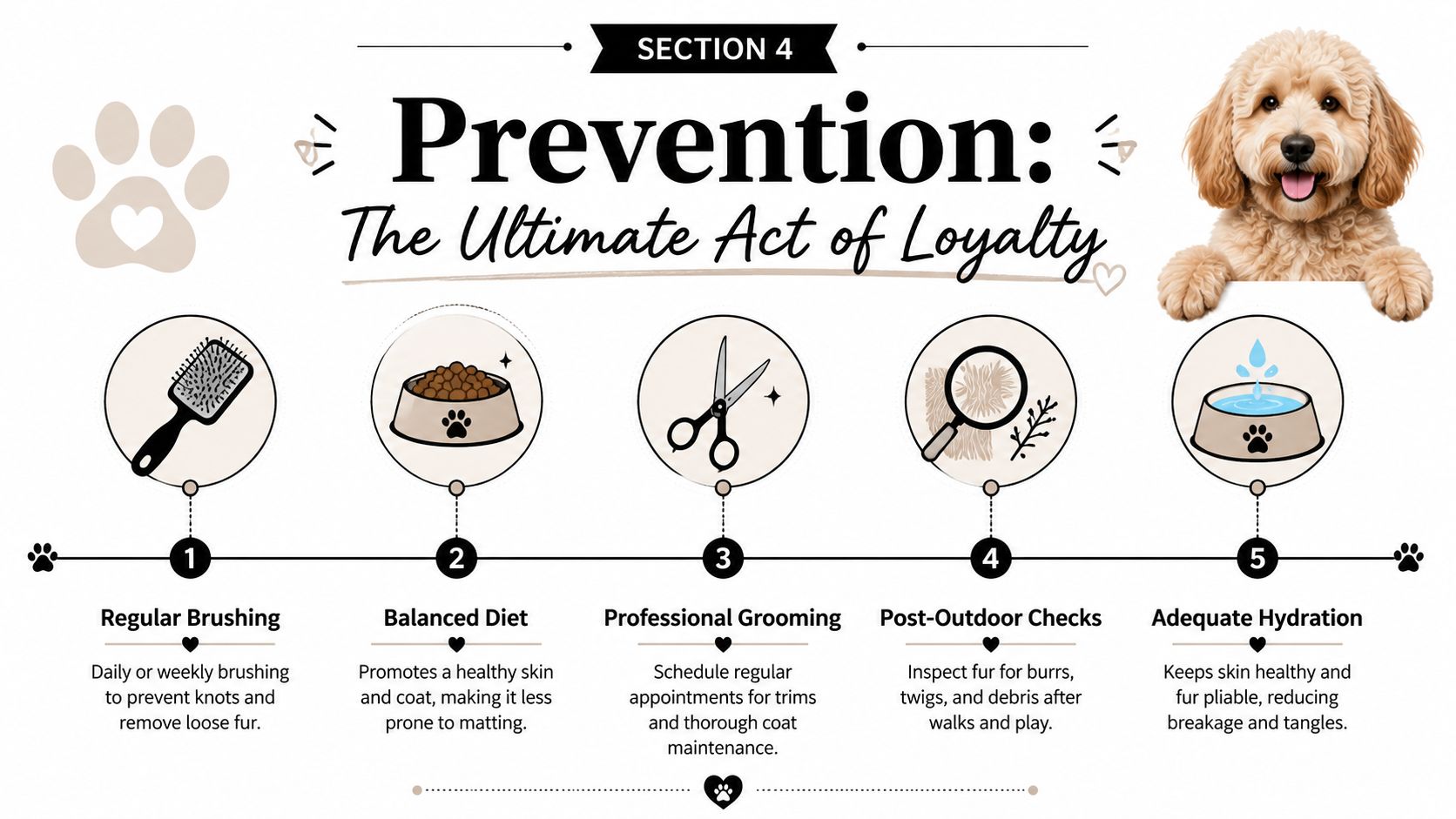
A routine owners can actually keep
Good prevention plans are plain, repeatable, and honest about real life. Families get busy. Dogs roll in dust. Kids forget to mention the dog swam, got sprayed with the hose, or slept in a harness. The answer is a routine simple enough to survive a busy week.
- Set a weekly baseline: Give the whole coat a full brush and comb-through once a week.
- Check the friction points midweek: Behind the ears, under the collar or harness, armpits, feathering, and the base of the tail need fast hands-on checks.
- Clean up after outside time: Pull burrs, stickers, and debris out early, before they tighten into the coat.
- Finish baths correctly: A rushed bath followed by air-drying and no comb-out often creates the next mat.
One disciplined habit matters more than a drawer full of tools. Put grooming on the calendar and treat it like nail trims or vet reminders.
What loyalty looks like in practice
Loyalty shows up in maintenance. It shows up when an owner books before the coat is in trouble, keeps the dog on a schedule, and accepts that some coats need more attention than others.
That trade-off is real. A longer doodle coat or heavy feathering looks beautiful, but beauty carries labor. If the household cannot keep up with brushing, the kind choice may be a shorter trim and a standing appointment. Dogs do better with a plan that gets followed than an ideal coat length no one can maintain.
For many local clients, a steady one-on-one grooming schedule works better than the high-volume chain model. Quiet handling, coat notes, and enough time for careful check-ins help catch trouble early, before a small knot turns into a painful problem.
Preventive brushing is comfort care.
Why routine beats rescue
A dog remembers rough handling and discomfort. Preventive care lowers the odds of both. Short, calm sessions teach the dog that grooming is predictable, and that matters over the course of a lifetime.
El Paso coats need local judgment. Dust, dry air, yard debris, and frequent outdoor activity change how quickly trouble builds. Prevention done well is patient, consistent, and specific to the dog in front of you. That is the standard we hold at Glo More Grooming, veteran-owned, detail-driven, and built around one dog at a time.
When to Call for Professional Reinforcements
Some tangles are home-care work. Some aren't. The hardest part for many owners is admitting when the coat has crossed that line.
Call for professional help when the mat is tight to the skin, when it covers a broad area, or when the dog reacts with pain, panic, or sharp sensitivity. If you can't clearly see where the hair ends and the skin begins, cutting at home isn't a safe gamble. That's where rushed DIY work causes lacerations, brush burn, and a dog that starts fearing every future grooming session.
Clear signs to stop trying at home
Use this as a practical checkpoint.
- The mat feels fused: It's flat, dense, and won't separate with gentle finger work.
- The dog keeps pulling away: Repeated flinching is enough reason to stop.
- You find redness, debris, or hidden skin issues: The coat may be covering more than a tangle.
- Your only plan is scissors: That's a warning sign, not a solution.
Why environment matters
A dog with painful matting doesn't need more chaos. It needs controlled handling, patience, and one-on-one attention. That's why many owners choose a quieter alternative to chain stores when the coat is already compromised. A lower-volume setting gives the groomer more room to make careful decisions and less pressure to push through discomfort.
For owners who want that kind of focused handling, one-on-one dog grooming offers a setup built around the dog rather than the traffic flow of a retail grooming floor.
In El Paso, owners looking for veteran-owned grooming often want exactly that balance. Clear standards, calm execution, and someone who won't cut corners when a dog is vulnerable. If your dog's coat has gone beyond simple brushing, don't wait for the problem to deepen. Get skilled hands on it early, reserve a spot when monthly promotions open, and choose care that treats safety as the first priority.
If your dog has knots, packed coat, or early friction mats, book with Glo More Grooming and get a calm, disciplined approach to El Paso dog grooming. Reserve your appointment, ask about Snip & Style Saturday if you want an affordable grooming promo, and give your dog the kind of premium pet grooming that puts comfort first.