
A lot of El Paso dog owners end up in the same spot. They give their dog a bath, dry the coat, and still notice scratching, a flat-looking finish, or skin that seems more irritated than clean. The dog smells fresh for a day, but the coat doesn't feel right, and the owner starts wondering whether the shampoo is the problem.
That question matters more than it might appear. Shampoo isn't just a scent choice or a shelf decision. It touches the skin barrier, the coat, the rinse water, and the routine you repeat over and over through your dog's life. In a dry, dusty place like El Paso, that routine needs more discipline than guesswork.
Why Your Dog's Shampoo Matters More Than You Think
A bath should leave a dog comfortable. If your dog seems itchy after bathing, if the coat feels dull, or if the skin looks tight and flaky, the product may be working against the result you want.
That's one reason interest in eco friendly dog shampoo has moved well beyond a niche conversation. The broader pet shampoo market was valued at USD 631.8 million in 2024 and is projected to grow at a 5.56% CAGR, with North America holding 39.66% of market share in 2025, according to pet shampoo market statistics from IMARC Group. For owners, that matters because it shows demand is strongest in premium, wellness-focused pet care, not in bargain-bin grooming shortcuts.
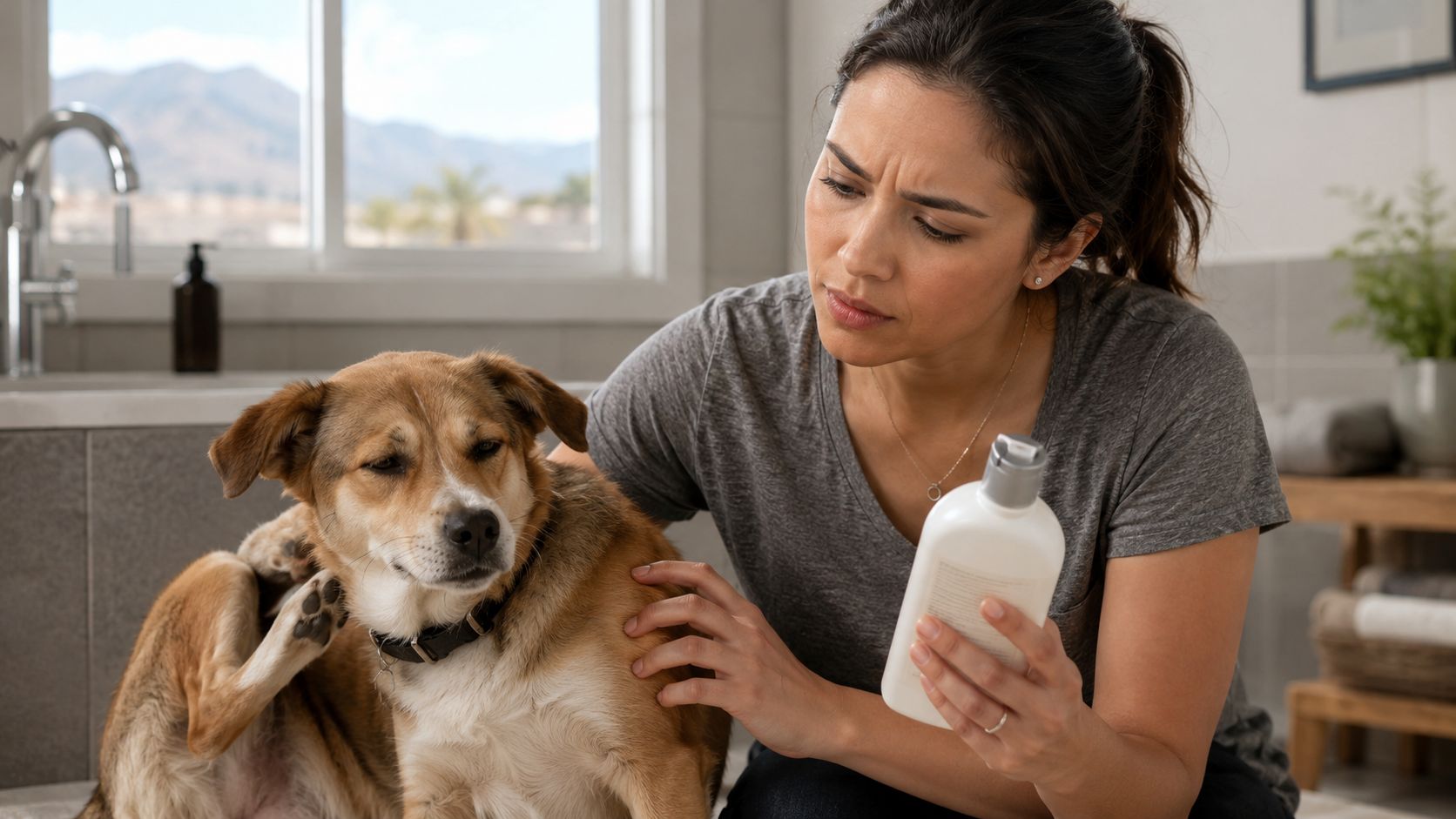
What owners usually notice first
Dog owners don't walk in saying, “I need a more environmentally responsible formula.” They say things like:
- My dog keeps scratching after baths
- The coat looks clean, but feels off
- Strong fragrance seems to linger too long
- Frequent bathing makes the skin seem drier
Those are practical warning signs. They point to residue, poor ingredient selection, or a formula that wasn't chosen with canine skin in mind.
Premium care starts with better standards
A premium grooming standard isn't about using fancy language. It's about choosing products and methods that make sense for the dog in front of you. That includes coat type, skin tolerance, rinse behavior, and how often the dog gets bathed.
A dog can look clean and still be uncomfortable. Good grooming fixes both.
Owners who want a more informed starting point can review dog shampoo and conditioner guidance from Glomore Grooming. The point isn't to chase trends. It's to stop accepting avoidable irritation as normal.
In El Paso, that matters even more. Dry air, dust, and active outdoor routines can expose weak grooming habits fast. When the shampoo is wrong, the coat usually tells you.
What Eco Friendly Dog Shampoo Really Means
A bottle can look responsible and still fall short in the tub. In a professional grooming setting, eco friendly only means something if the shampoo does two jobs well. It needs to respect the dog in front of us and reduce avoidable waste once that lather goes down the drain.
That standard is stricter than marketing.
The clearest way to judge an eco friendly dog shampoo is to look at three parts together. Check how the formula breaks down after use, how clearly the company explains what is inside, and whether the full product design limits unnecessary environmental impact.
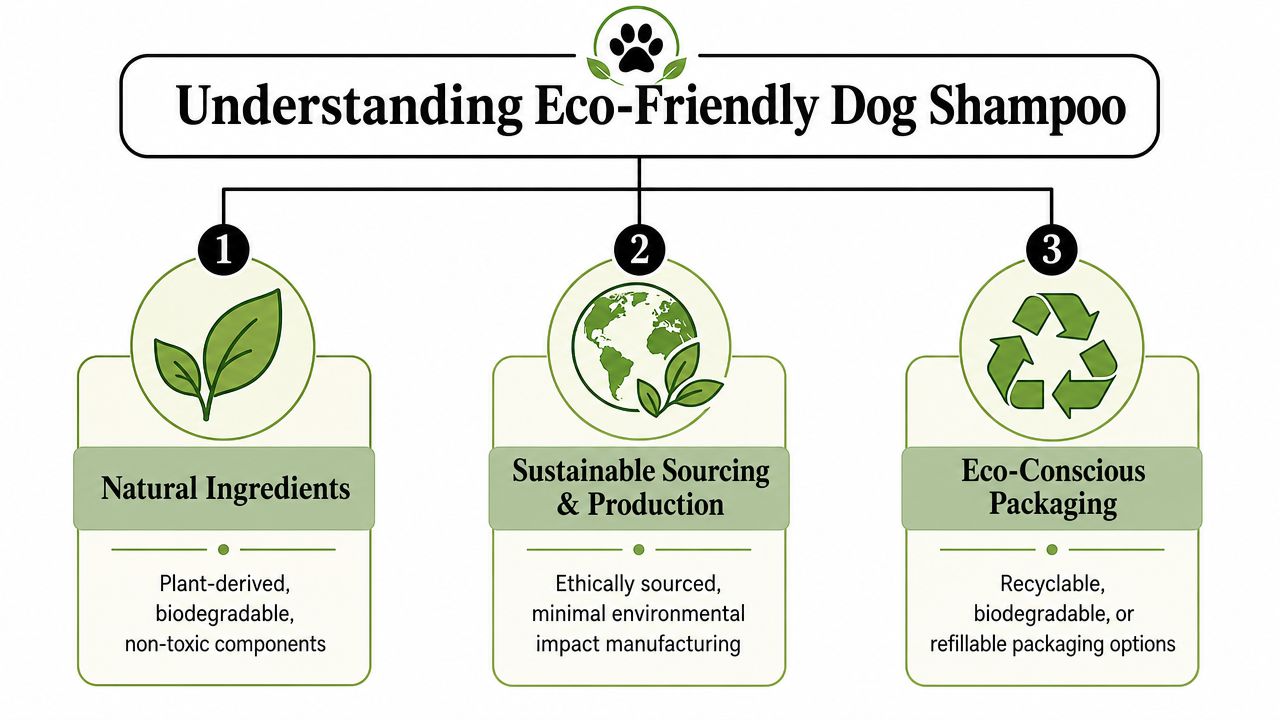
Biodegradability is the first serious filter
In the grooming room, rinse-off products deserve more scrutiny than the label usually gets. One commonly cited benchmark is biodegradability. 4-Legger explains that a shampoo is generally considered biodegradable when at least 90% of it breaks down within six months, and its category review also notes how limited certified organic options still are in this market, which is why careful label reading matters so much (4-Legger's discussion of biodegradable dog shampoo).
That matters in daily practice. Every bath sends product residue somewhere. A formula that breaks down more readily is a better fit for owners who want lower downstream impact without guessing based on color, scent, or packaging language.
Organic claims are narrower than they sound
Owners often group “natural,” “green,” and “organic” into one idea. They are not the same standard. “Organic” points to how ingredients are grown and certified. “Eco friendly” should cover the wider picture, including ingredient sourcing, rinse-off behavior, packaging choices, and whether the product avoids unnecessary fillers or harsh cosmetic extras.
That distinction matters in a premium service. I do not select a shampoo because it sounds wholesome. I select it because it performs cleanly, rinses thoroughly, suits canine skin, and holds up to repeated professional use without creating more problems than it solves.
A practical framework helps:
| Pillar | What to look for | What should raise concern |
|---|---|---|
| Formula | Biodegradable ingredients, lower-residue cleansing | Heavy fragrance, unclear ingredient logic |
| Claims | Specific, verifiable wording | Vague “green” language with no substance |
| Packaging and use | Recyclable or refill-minded choices, less waste | Excess packaging and sloppy overuse |
Here's a quick visual guide worth watching before you buy:
Green labels do not excuse weak formulas
A responsible shampoo still has to clean effectively. If it leaves residue, requires too much product per bath, or hides behind broad claims, it does not meet a professional standard no matter how attractive the branding looks.
In El Paso, that trade-off shows up fast. Dust, dry air, and frequent bathing needs can expose weak formulas within a few appointments. True eco-conscious care is disciplined care. The product, the bathing method, and the amount used all have to work together.
Practical rule: If a label talks more about lifestyle than formulation, keep reading before you buy.
Decoding the Label Ingredients to Avoid and Embrace
The ingredient list tells you far more than the front label. A quality dog shampoo should be made for canine skin, not adapted from human product logic. One industry reference puts appropriate dog-shampoo pH at about 6.5 to 7.5, with formulations as close to pH 7.0 as possible, as explained in Earthbath's guide to quality dog shampoo.
That single detail separates a lot of professional-grade thinking from mass-market noise. Dogs don't need a shampoo that smells expensive. They need one that respects their skin barrier.
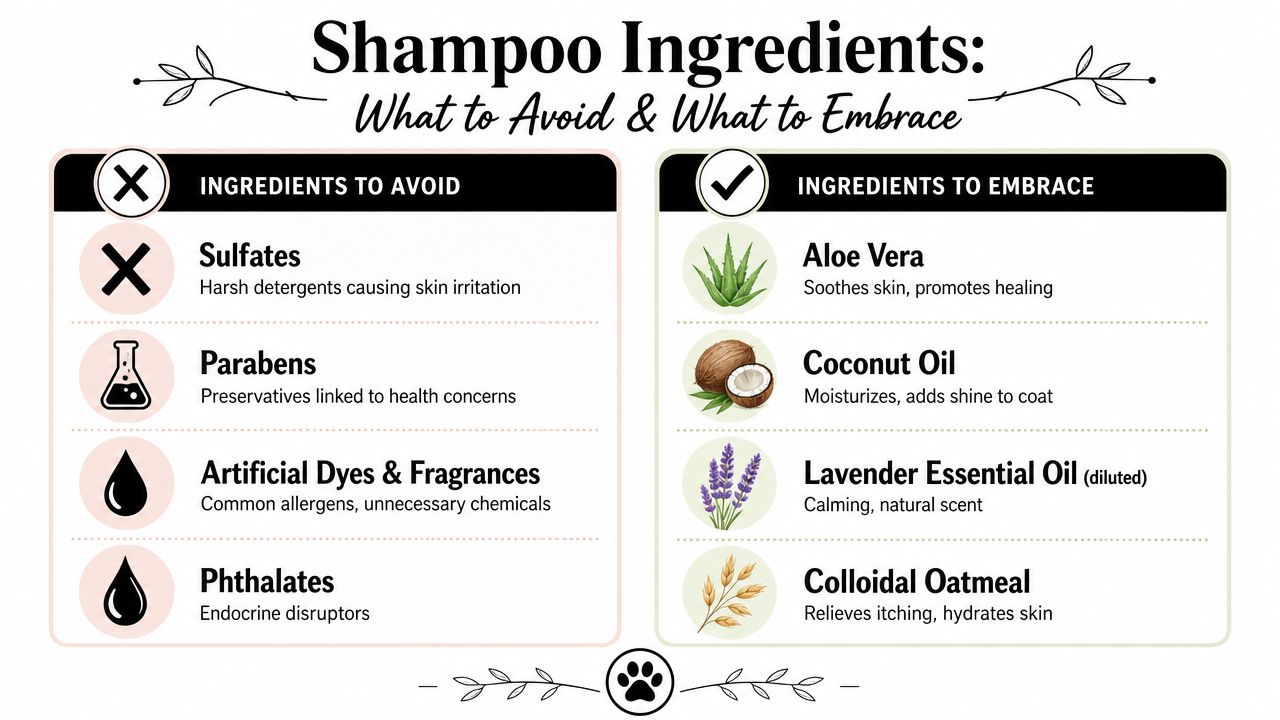
Ingredients that deserve caution
An eco friendly dog shampoo is easiest to defend when it avoids ingredients commonly linked with irritation or unnecessary environmental burden. Based on Eco Fur Ball's discussion of organic dog shampoo safety, formulas should avoid synthetic fragrances, dyes, sulfates, phosphates, and parabens.
Those ingredients can create familiar problems in the grooming room:
- Synthetic fragrance can be unpleasantly strong and may be a poor fit for dogs with touchy skin
- Dyes add appearance, not skin support
- Sulfates can feel too aggressive on dogs that already struggle with dryness
- Parabens are hard to justify when a gentler formulation path exists
- High-residue formulas can leave the coat feeling coated instead of clean
Ingredients worth looking for
Gentler formulas often rely on plant-derived cleansers and soothing support ingredients. Useful examples include:
- Coconut-based surfactants that cleanse with less harshness
- Aloe vera for a soothing, skin-friendly role
- Oatmeal for dogs that need a calmer bathing experience
These ingredients don't guarantee perfection, but they point in the right direction when paired with proper pH balance and solid rinse performance.
What works in practice and what doesn't
A simple comparison helps owners shop smarter:
| Better signs | Weaker signs |
|---|---|
| Canine pH focus | Human-style beauty language |
| Soap-free cleansing | Heavy soap feel or drying finish |
| Low-residue rinse | Coat feels filmy after drying |
| Transparent ingredient list | Front-label marketing with little substance |
When a shampoo rinses poorly, the dog pays twice. Once on the skin, and again the next time dust and debris cling to leftover residue.
A premium pet grooming workflow always starts here. Product choice affects prep time, rinse time, drying quality, coat finish, and comfort after the appointment. Owners who learn to read labels stop buying based on fragrance and start buying based on outcome.
Choosing the Right Formula for Your Dog's Unique Needs
The right shampoo depends on the dog, not the trend. Coat density, age, bathing frequency, and skin sensitivity all matter. In El Paso, climate matters too. Dry air and dust can make a mediocre formula show its flaws fast.
Some dogs need moisture support. Others need a lighter cleanser that won't leave buildup behind. A thick double coat behaves differently from a short, smooth coat, and a puppy shouldn't be treated like an adult dog with heavy outdoor exposure.
Sensitive skin needs a stricter standard
Owners need to exercise caution. A lot of products marketed as gentle still include plant-based ingredients that don't suit every dog. As noted in Pure Earth Pets' guide to environmentally safe dog shampoo, essential oils can still be allergens for some pets, and the priority should be a pH-balanced, unscented, clinically appropriate formula that balances sustainability with performance.
That means “natural” isn't the finish line. If a dog has itchy skin, frequent flare-ups, or reacts after baths, an unscented formula may be the safer call than a more botanical one.
A practical way to match product to dog
Use this decision guide:
For dry or flaky skin
Look for a gentle, low-residue shampoo with supportive ingredients such as aloe vera or oatmeal. Keep fragrance low or absent.For oily coats or active outdoor dogs
Choose a formula that cleans thoroughly but doesn't leave a heavy finish. Strong perfume doesn't equal a cleaner dog.For frequent bath routines
Focus on pH balance and rinse quality. A shampoo used often has to be especially disciplined.For dogs with a history of sensitivity
Start with unscented options and avoid assuming plant ingredients are automatically mild.
A good reference point for owners comparing product styles is this guide on good shampoo for dogs.
El Paso conditions change the conversation
In this region, dogs pick up dust, shed through seasonal swings, and often move between indoor cooling and outdoor heat. That combination can leave skin feeling stressed and coats looking tired if the shampoo is too harsh or too coating.
For local owners, the smart move is consistency. Don't bounce between heavily fragranced products, random home remedies, and bargain shampoos from big-box shelves. Pick a formula that fits your dog's actual needs, then judge it by skin comfort, coat feel, and how cleanly it rinses.
Professional Bathing Techniques and Safe DIY Alternatives
Even a strong shampoo can underperform if the bath itself is sloppy. In premium grooming, the difference often comes down to technique. Product selection matters. Application discipline matters just as much.
A rushed bath usually creates two problems. The coat isn't fully saturated before shampoo goes on, and the rinse isn't complete when the bath ends. That's how residue gets left behind.
How professionals get cleaner results
A cleaner, safer home bath usually follows this order:
Wet the coat completely
Don't skim the top layer. Water has to reach through the coat before shampoo can spread evenly.Use enough product, not excessive product
More shampoo doesn't automatically clean better. It often just takes longer to rinse.Work with the coat, not just over it
Use your hands to move product down to the skin level without rough scrubbing.Rinse longer than you think you need to
Most home baths fail here. The coat should feel clean, not slick with leftover product.Dry thoroughly before judging the result
Many coats feel different when damp than when fully dry and brushed through.
The cleanest bath is usually the one with the best rinse, not the biggest lather.
Owners who want a lower-mess between-grooms option can also look at dry dog bath guidance from Glomore Grooming, especially for maintenance days when a full wet bath isn't practical.
A safe DIY option and what to avoid
If you want a simple at-home add-on, an oatmeal conditioning rinse is the safest direction to think in. Keep it mild, keep it simple, and use it as a supportive step rather than a replacement for a properly formulated dog shampoo.
Avoid experimental homemade shampoos. Kitchen recipes often ignore pH, preservation, eye safety, and residue. They may sound wholesome and still create dryness, irritation, or cleaning problems.
Use DIY care for light support. Use tested dog shampoo for actual cleansing. That's the practical line.
The Glo More Grooming Standard in El Paso
A dog walks into a loud grooming shop already tense from the car ride. Phones ring, dryers run, dogs cross paths, and the bath becomes one more stress point instead of careful skin and coat care. Owners in El Paso see the difference quickly when the setting is calmer and the work is done with discipline.
That standard matters to us. In a veteran-owned grooming studio, the goal is not to push as many dogs through the day as possible. The goal is to handle each dog with control, read the coat accurately, and use products with purpose. Eco-conscious care only means something if the service around it is consistent.
A high-volume chain model can keep dogs moving. Premium grooming asks for something else. It asks for clean scheduling, limited on-site traffic, close observation, and one-on-one handling that gives the groomer time to notice skin changes, coat texture, stress signals, and rinse quality.
What disciplined grooming looks like
In a professional studio, shampoo is part of a system. Product choice connects to pre-bath coat inspection, water temperature, contact time, rinsing standards, drying method, and finishing work. If one part is sloppy, the result suffers, even with a better bottle on the shelf.
Glo More Grooming operates as one local option for El Paso dog grooming with a home-based, one-on-one model and limited dogs on site. The business also notes a quieter, environmentally friendly setup through its green-energy battery salon approach. For owners comparing premium pet grooming with chain experiences at PetSmart or Petco, that difference shows up in the dog's comfort, the groomer's attention, and the consistency of the finished coat.
Why local owners notice the difference
A calmer, more controlled setup supports better grooming in specific ways:
- Coat and skin checks before the bath so product selection is based on what the dog needs
- Steadier handling during bathing for dogs that are noise-sensitive, older, or easily overstimulated
- Cleaner workflow that reduces distraction and keeps the groomer focused on one dog at a time
- More consistent finishing because the pace allows for proper drying, brushing, and detail work
I have seen this firsthand for years. Sensitive dogs rarely need more commotion. They need a groomer who pays attention, sticks to a process, and knows where eco-friendly product choices fit into real coat care instead of using them as a sales line.
Premium care means doing the right steps in the right order, every time.
Premium doesn't have to mean out of reach
El Paso families still have to watch the budget. A monthly affordable grooming promo like Snip & Style Saturday gives owners access to a full groom at a set promotional rate while keeping the service inside a professional, adjusted workflow.
For people looking for veteran-owned grooming in El Paso, that combination has real value. Strong standards. Local accountability. A quieter setting. A grooming process that connects better products with better handling, which is what eco-conscious care should look like in practice.
Commit to a Healthier Pet and a Better Planet
A better shampoo choice starts with a better question. Not “What smells nicest?” Ask, “What supports my dog's skin, rinses clean, and makes sense for the routine I repeat all year?”
That mindset changes everything. You start reading labels more carefully. You stop assuming “natural” means safe for every dog. You pay attention to pH, residue, fragrance, and whether the formula matches your dog's coat and sensitivity level.
The bigger shift is this. Eco conscious grooming isn't only about the bottle. It's about the standard behind the bath. A disciplined service uses the right product, the right handling, the right rinse, and the right follow-through. That's how owners move from guesswork to real care.
If you're in El Paso, this is worth taking seriously. Our climate is hard on coats. Dust, dryness, and frequent cleanup can turn a weak grooming routine into recurring discomfort. A better process protects the dog and reduces wasteful trial and error for the owner.
Choose products with intention. Choose groomers with standards. Stay consistent enough to judge results accurately. That's how you take ownership of your dog's comfort and long-term coat health.
If you want a calmer, more disciplined approach to El Paso dog grooming, book with Glo More Grooming. If you've been looking for premium pet grooming, a trusted veteran-owned grooming studio, or an affordable grooming promo like Snip & Style Saturday, reserve your spot now or reach out for a personalized consultation.