
You run your hand down your dog's side, expecting a soft coat, and your fingers catch on a hard knot buried under the top layer. Then you find another behind the ear. Another under the collar. Now you're wondering whether you can fix it at home, whether a bath will help, and whether brushing it out will hurt.
That's the moment where discipline matters more than force.
Knowing how to demat a dog isn't about grabbing the nearest brush and pulling until the knot gives way. It's about reading the coat, using the right tools, protecting the skin, and knowing when to stop. In a place like El Paso, where dogs pick up dust, friction, and dry debris from everyday life, mats can sneak up fast, especially on longer or curlier coats. Home care helps, but it only works when it's done with control.
The Hidden Dangers of Matted Fur
A small knot can turn into a painful problem fast. One day it is a tangle behind the ear or under the collar. A few days later, it has tightened into a dense patch that shifts every time your dog walks, lies down, or scratches.
In El Paso, coats take extra abuse. Dry air, wind, dust, and fine debris settle into the fur, especially on dogs that wear harnesses, roll in the yard, or spend time outdoors. That grit adds friction. Dry coat texture makes tangles bind down faster, and the skin under the mat is often more prone to irritation.
Bathing a matted dog before you break up the coat is a common mistake. Water can cause the tangle to draw tighter, which makes the coat harder to separate and the process more uncomfortable. A knot that might have come apart with controlled work can turn into a clip-out.
What mats do to a dog
A mat pulls on skin constantly. The dog feels that tension with normal movement, and the discomfort builds in the places owners miss most often, under the harness, in the armpits, behind the ears, around the tail, and along the back legs.
Mats also trap problems under the coat. Dirt, foxtails, moisture, and irritated skin can sit out of view while the top layer looks unchanged.
That is how small coat neglect turns into skin trouble.
Practical rule: If your dog flinches when you touch a knot, treat it as a pain issue first.
Why disciplined grooming matters
Safe dematting starts with control. Controlled handling protects the skin, keeps the dog from associating grooming with pain, and helps you decide whether home care is still appropriate.
That is the standard I hold in the shop, and it is the same standard owners should use at home. Work with patience, good lighting, and clear limits. If the mat is tight, broad, or sitting close to the skin, force has no place in the process. Home care supports professional grooming. It does not replace it, especially when the coat has already crossed into painful matting.
Assess the Damage Before You Begin
Before you touch a brush, inspect the coat like a groomer would. Your first job isn't removal. Your first job is deciding whether the mat is even safe to handle at home.
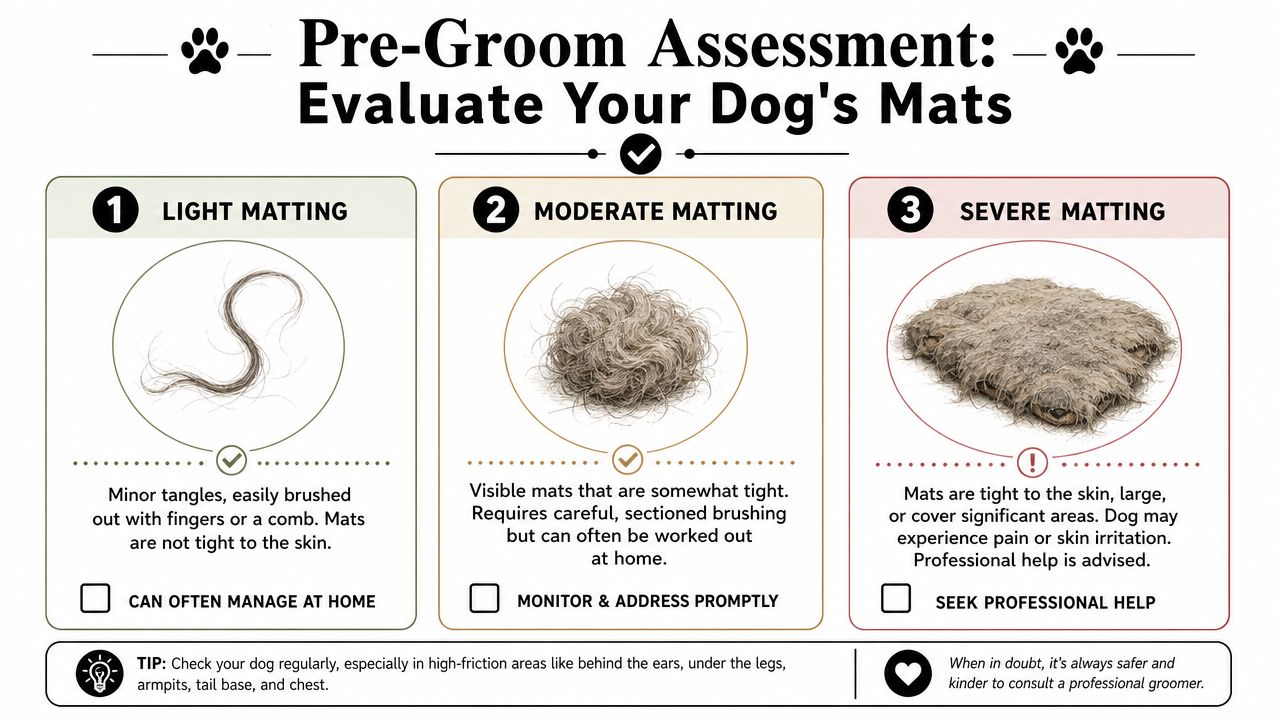
What to check with your hands and eyes
Start with calm contact. Separate the topcoat with your fingers and find the edges of the tangle. You're trying to learn three things:
- How close it sits to the skin. If you can't find space between the mat and the skin, that's a major warning sign.
- How large and dense it feels. A loose knot behaves very differently from a dense clump that feels packed and flat.
- How your dog reacts. Pulling away, turning to look, lip licking, freezing, or resisting touch tells you the area may already be painful.
If the coat feels sheeted together over a wider area, don't keep probing aggressively. That's often where owners create accidental nicks by trying to dig underneath with a comb or scissors.
Light, moderate, or severe
Use this table as your decision point.
| Mat Severity Assessment | Description | Recommended Action |
|---|---|---|
| Light tangles | Minor tangles that separate with fingers or a comb and aren't tight to the skin | Use spray, fingers, slicker brush, and a comb check |
| Moderate matting | Visible mats that feel tighter and need careful sectioned work | Demat slowly at home only if your dog stays comfortable and the mat is not skin-tight |
| Severe matting | Large, dense, flat, or skin-close mats, or broad areas of fused coat | Stop home removal and book a professional grooming appointment |
Red flags that change the plan
Some areas deserve extra caution even when the mat itself seems small.
- Behind the ears gets overlooked fast because the skin is thin.
- Armpits and groin mat from friction and movement.
- Under collars, harnesses, and clothing can hide tight compression mats.
- Sanitary areas can become both uncomfortable and risky to clip at home.
- Any area with redness, odor, or moisture needs a gentler standard and often professional eyes.
If you can't clearly see where the hair ends and the skin begins, don't reach for scissors.
The home or pro decision
A manageable home job looks like this: one or a few isolated mats, visible edges, some movement in the hair, and a dog that tolerates gentle handling.
A professional job looks like this: tight-to-skin mats, widespread matting, sensitive zones, or a dog that's already stressed before you begin. That's where premium pet grooming earns its value. Judgment matters as much as tools.
Your Dematting Toolkit The Right Gear for the Job
A safe dematting session starts long before the first brush stroke. If your tools are flimsy, dull, or the wrong shape for the coat, you'll spend more time struggling and your dog will feel every mistake.
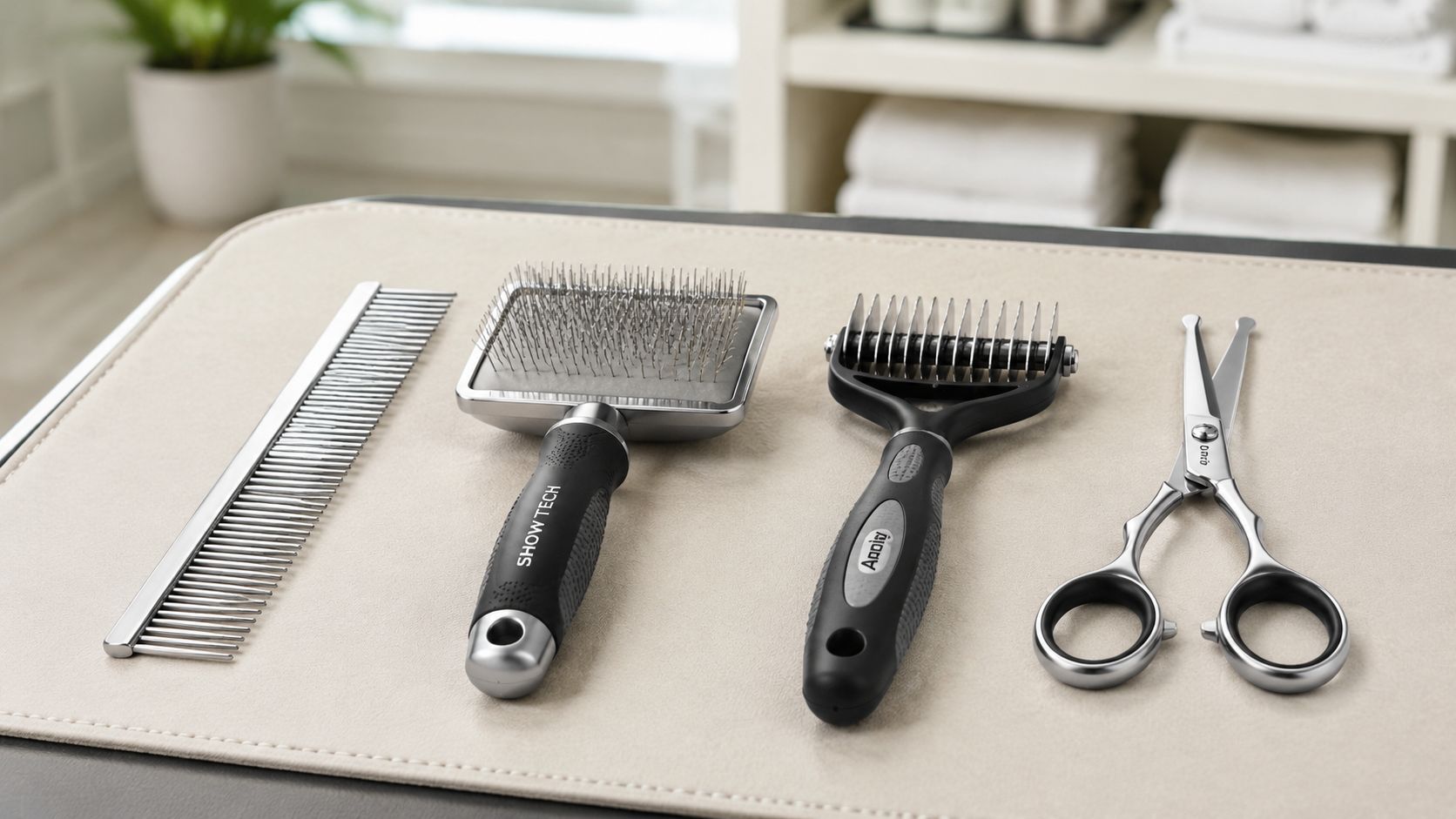
The core tools that actually help
A basic home kit should include these pieces:
- Detangling spray. Use a dog-safe conditioning spray to add slip before you work the mat. Dry friction is rough on coat and skin.
- Slicker brush. This is your working brush for breaking apart outer fibers in a controlled way.
- Steel comb. A greyhound-style metal comb is your inspection tool. It tells you whether the coat is really free of tangles or just looks better on the surface.
- Dematting comb or rake. Useful for some moderate mats, but only with a light hand and proper angle.
- Non-slip surface. A stable setup keeps your dog from shifting while you're working through a difficult spot.
One practical place to compare coat-care options is Glo More Grooming's dog grooming supplies guide, especially if you're building a more intentional home setup instead of buying random tools off a shelf.
What to avoid
Cheap brushes with rough pins, loose heads, or poor cushioning often scratch instead of separate. Household scissors are another bad gamble. So are plastic combs that bend before they can give you real feedback on the coat.
Water also doesn't belong in your toolkit for active mat removal. If you're deciding between misting with water or using a proper detangler, use the detangler.
A steel comb doesn't do the heavy lifting. It checks your work. If the comb sticks, the mat isn't gone yet.
Think like a pro, not a shopper
This isn't about owning a drawer full of gadgets. It's about having a short list of reliable tools you know how to use well. That's the standard behind premium pet grooming. Fewer shortcuts. Better control. Less stress on the dog.
The Glo More Method A Disciplined Approach to Dematting
A dog with one small mat behind the ear can stay comfortable through careful home work. A dog with a tight plate of felted coat on the flank needs a different decision. That distinction is what keeps dematting safe.
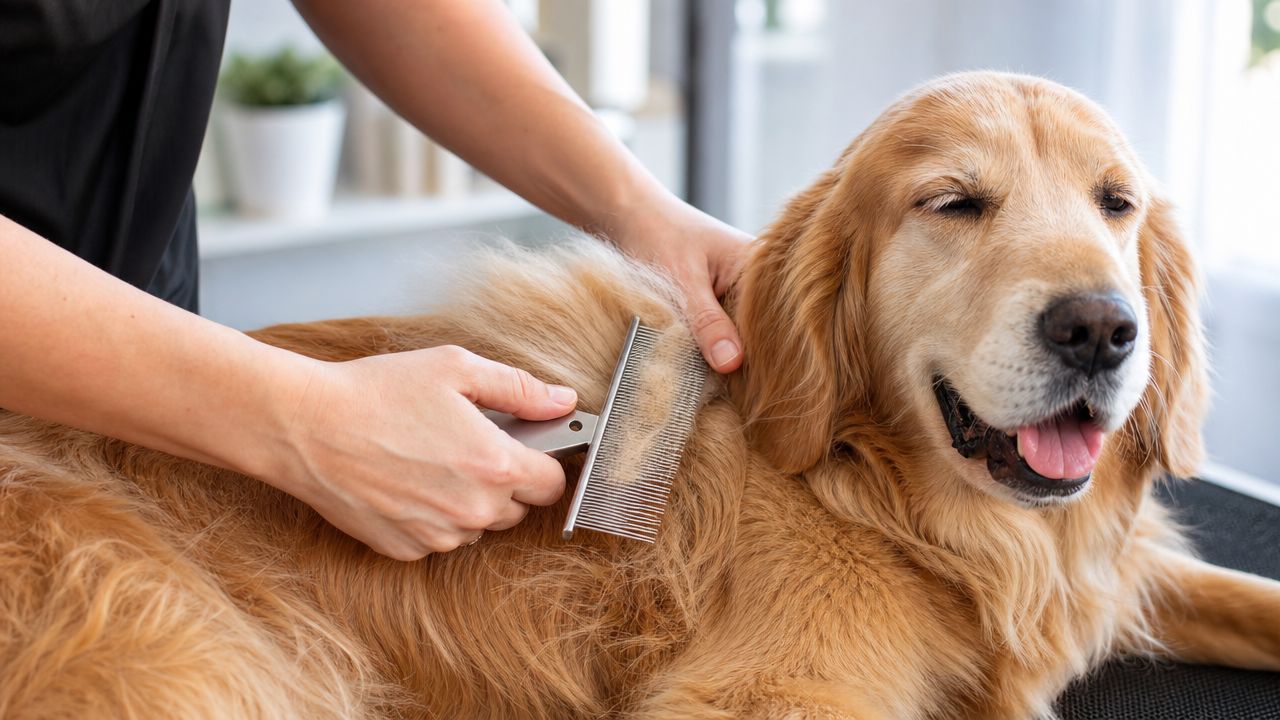
At my table, discipline matters more than force. The goal is not to save every hair. The goal is to remove what can be removed without tearing at skin, exhausting the dog, or turning a manageable tangle into a painful job.
Step one, set the dog up for success
Work on a steady, non-slip surface in good light. Keep the dog positioned so you can see the skin side of the mat, not just the top of the coat. In El Paso, dry air and dust can make coats grab onto themselves fast, so a light coat-safe detangler helps reduce drag before you start.
Use only enough product to give the hair some slip. A soaked mat tightens and becomes harder to read with your fingers.
If your dog is shedding heavily as well as matting, routine coat maintenance with the right dog brush for shedding can reduce the loose undercoat that feeds new knots between full grooming appointments.
Step two, isolate the mat and control the skin
Separate the mat from the surrounding coat with your fingers. Find the edge that still has some movement. That is your entry point.
Then anchor the hair at the base, close to the skin. That hand does half the job. It absorbs the pull so the dog does not take every stroke directly on the skin.
Professional dematting guidance from Petterati's guide to removing mats without hurting your dog reflects the same principle groomers use every day. Start at the outer edge, use short controlled strokes, and protect the base while you work.
Step three, reduce the mat in layers
Brush or pick apart the perimeter first. Open a little space. Tease out a few strands with your fingers. Then repeat.
Do not drive a tool straight through the center and hope it breaks loose. That is how skin gets yanked, dogs start fighting the process, and small mats turn into a trust problem.
A clean working pattern looks like this:
- Hold the base of the hair close to the skin
- Loosen the outer fringe with short, light strokes
- Use your fingers to separate any strands that release
- Shrink the mat a little at a time
- Run the steel comb through the section to confirm it is clear
The comb is your pass or fail test. If it catches, you still have work left.
Step four, read the dog in real time
Watch the body, not just the coat. Lip tension, head turns, pinned ears, skin twitching, weight shifting, and sudden mouthiness all mean the dog is reaching a limit.
Stop early. Reset. Come back later if needed.
I would rather see an owner finish a moderate tangle over two or three calm sessions than force one long session that teaches the dog to fear grooming. Home care supports the grooming schedule. It does not replace professional judgment when the coat is getting too tight to handle humanely.
Here's a visual walk-through of controlled coat handling and comb work:
Step five, know when to escalate
Some mats should not be brushed out at home. If the mat is tight to the skin, wider than your fingers can safely isolate, packed with debris, or sitting in a high-friction area like the armpit, groin, ear base, or under the collar line, clipping is often the kinder option.
That choice protects the dog. It also protects the skin from razor nicks, brush burn, and the hidden cuts that happen when someone slides scissors under a mat they cannot fully see.
What works and what fails
A few standards I expect owners to follow:
- What works: light detangler, finger separation, base support, short passes, comb checks, short sessions
- What fails: attacking the middle of the knot, soaking the coat, forcing progress on a stressed dog, cutting blindly under a mat
- What gets underestimated: friction spots around gear, especially on active dogs and longer coats
- What a pro respects: the point where preserving coat is no longer worth the discomfort
That is the Glo More method. Stay precise. Protect the skin first. If the job stops being gentle, stop doing it at home.
Preventing Future Mats The Best Strategy of All
A dog comes in from a windy El Paso afternoon, rolls once on the rug, and by the next morning the coat behind the ears and under the harness has started to bind. That is how mats usually begin. Not with one dramatic mistake, but with a few missed checks in the spots that take the most friction.
Prevention saves coat, time, and patience. More important, it keeps brushing from turning into a painful job. Home care works best as steady maintenance between professional appointments, especially for dogs with longer trims, curly coats, dense undercoat, or daily gear.
Build a routine your household can keep
The right schedule depends on the dog in front of you. Coat type matters. Activity matters. Your brushing skill matters too. A doodle that hikes, wears a harness, and sleeps on fabric furniture needs more coat checks than a short-coated dog that takes neighborhood walks and air-dries clean.
Keep the routine simple enough that you will do it. For many longer-coated dogs, that means brief check-ins through the week instead of one long session after the coat has already started to tighten. I tell owners to inspect first, then brush what needs brushing. That approach catches small tangles before they pack down.
Friction points cause most of the trouble
Owners often miss the same trouble zones because the topcoat can still look fine:
- Under collars and harness straps, where repeated rubbing packs coat together
- Behind the ears, where fine hair twists fast
- Armpits, chest, and leg feathering, where movement creates constant friction
- Belly lines and sanitary areas, especially after outdoor time
- Any area covered by shirts, recovery suits, or sweaters, which can press coat flat and hide tangles
Lifestyle plays a direct role here. Petsmart's guidance on grooming matted dog hair points to coat type, gear, clothing, swimming, and aftercare as common reasons mats form. That lines up with what I see on the table.
El Paso conditions change the maintenance plan
Dry air, dust, goatheads, and trail debris rough up coats faster than many owners expect. Dogs that spend time in the Franklin Mountains or even a dirt backyard can collect fine grit that sits low in the coat and helps tangles lock together. A two-minute hand check after walks goes a long way. Run your fingers through the chest, belly, leg fringe, tail base, and behind the ears while the debris is still loose.
For heavy shedders and double-coated dogs, loose undercoat is part of the problem. It sheds, catches, and compacts. Using the right dog brush for shedding helps remove that dead coat before it turns into dense knots in high-friction areas.
Prevention is a habit, not a rescue job.
That standard matters. Good home brushing supports the coat and keeps your dog comfortable. Professional maintenance at Glo More Grooming resets the coat, checks the areas owners miss, and keeps small problems from turning into skin-level matting.
Know When to Call a Professional Groomer
Your dog shifts away when you touch the mat under the leg. The coat feels fused instead of tangled, and you cannot find a safe gap between hair and skin. That is the point to stop.
Home dematting has limits. A careful owner respects those limits, because the goal is not to save a grooming appointment. The goal is to keep the dog comfortable and avoid cuts, brush burn, and panic. If the coat is packed tight, spread across a large patch, or sitting in a high-risk area, professional handling is the safer call.
Situations That Require a Professional
Book help if you see any of the following:
- Skin-tight mats where the coat cannot be lifted away from the skin
- Pelted areas that feel like a single sheet instead of separate hair
- Mats in sensitive places such as the ears, armpits, groin, tail base, feet, or sanitary area
- Pain or stress reactions like flinching, crying, snapping, or refusing handling
- Signs of skin trouble including redness, moisture, odor, sores, or anything hidden under the mat
Those are working limits in my book. Once a dog is painful or the skin is hard to read, guessing has no place in the job.
Why the setting matters
Matted dogs usually do better in a calm, controlled appointment than in a busy grooming flow. Less noise helps. Fewer handoffs help. Slow, deliberate coat assessment helps most of all.
For owners weighing convenience against stress, mobile dog groomers in El Paso are worth considering, especially for dogs that get anxious in the car or unravel in unfamiliar spaces.
What that means in El Paso
El Paso coats can get rough fast. Dust, dry air, trail debris, and stickers turn small tangles into compact mats quicker than many owners expect. By the time a dog reaches the table, the primary concern is not whether the mat can come out. It is whether removal can be done without causing unnecessary pain.
That is where professional judgment matters. Sometimes a short, humane shave is kinder than prolonged dematting. Sometimes the dog needs a reset, a skin check, and a stricter maintenance plan at home between appointments.
Glo More Grooming handles that decision the way it should be handled. Calmly, responsibly, and with the dog's welfare first. If your dog's coat has crossed the line from manageable to risky, book professional help before the matting gets tighter and the options get harder.