
Your dog still greets you at the door. He still follows you into the kitchen. He still wants to be near his people. But lately you may have noticed the quieter changes. He gets up a little slower. He leaves a few kibbles behind. His coat feels different. He seems comfortable one day and stiff the next.
That stage can stir up a mix of emotions. Pride, because your dog has been with you through years of family routines and life changes. Concern, because now every choice feels like it matters more, especially what goes in the bowl.
For many El Paso families, that question begins: Should I buy senior food now? The honest answer is that dog food for seniors can help, but only when it matches the dog in front of you. A label alone doesn't tell the whole story. Your older dog may need more support for muscle, easier digestion, gentler texture, or tighter calorie control. Another senior may still be active and do well on a different plan.
Food is the foundation, but it isn't the whole structure. Senior comfort also depends on hydration, mobility, skin health, paw care, coat care, and a low-stress routine. In El Paso, our dry air, heat, dust, and bright sun can make those details even more important. An aging dog who eats well but struggles with matted coat, irritated skin, or overgrown nails still won't feel his best.
This guide is built for real owners making real decisions. If you're standing in the pet food aisle comparing bags, trying to make sense of ingredients, or wondering how nutrition connects with full-body wellness, you're in the right place.
The Golden Years Nourishing Your Senior Dog
You set down dinner, and your old friend walks over with the same loyal eyes he has always had. But now he pauses before eating. He may chew more slowly, leave a few pieces behind, or settle back onto his bed sooner than he used to. Moments like that are often the first sign that feeding an older dog calls for more care and closer attention.
Senior years change the goal of feeding. In young adulthood, many dogs do well as long as they get enough calories and a balanced diet. In later years, the bowl has a bigger job. Food now supports muscle, digestion, skin comfort, hydration, and a healthy body weight, all while fitting the dog in front of you.
That is why senior nutrition should be looked at as part of whole-body care, not as a single purchase. A dog can eat a decent food and still feel uncomfortable if dry skin, a rough coat, sore paws, or overgrown nails are adding stress. Here in El Paso, our heat, dust, and low humidity can make those everyday comfort issues more noticeable in older pets.
Age alone does not hand you a perfect feeding plan.
Some senior dogs stay active and hold weight well. Others need meals that are easier to chew, gentler on the stomach, or lower in calories. Dogs with sensitive digestion may also do better with formulas chosen for digestibility and ingredient tolerance, much like the options discussed in this guide to dog food for dogs with sensitive stomachs.
Aging also shows up in small signals that owners sometimes miss at first. The coat may feel thinner or drier. Recovery after a walk may take longer. Stools may change. Appetite may become less predictable. Those clues work like dashboard lights in a truck. One light may not tell the whole story, but together they tell you it is time to pay attention and adjust care with purpose.
That fuller view matters for El Paso families. Nutrition is the center of this guide, but good senior care also includes regular grooming, skin and coat checks, comfortable routines, and an environment that helps an older dog move through the day with less strain. That practical, whole-dog approach is what many local owners value when they want steady, experienced help for a pet who has earned extra patience.
Understanding Your Senior Dog's Changing Nutritional Needs
A senior dog's body still needs nourishment, but it doesn't use food the same way it did in younger years. That's where many owners get confused. They assume older dogs just need less food. Sometimes they need fewer calories, yes. But they may also need better protein, easier digestion, and more careful attention to body condition.
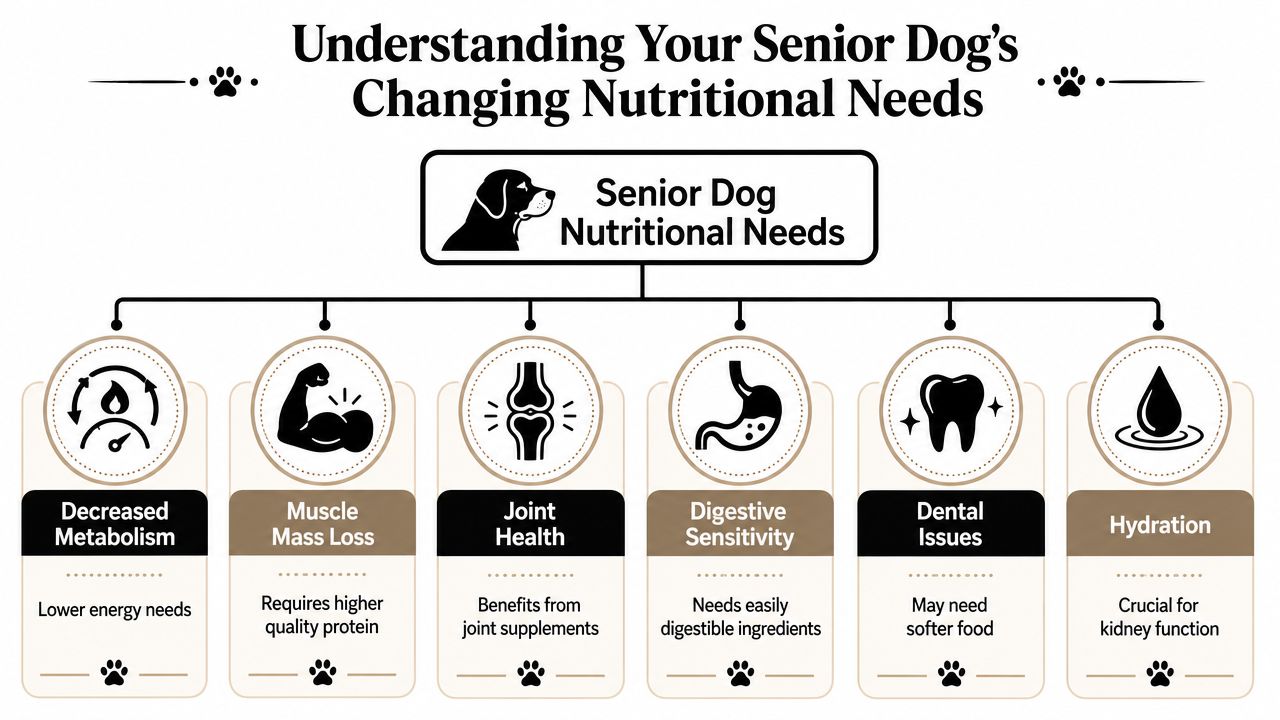
Metabolism slows while needs become more specific
Think of your dog's metabolism like an engine that now runs at a calmer pace. If meals stay rich but activity drops, weight can climb. Extra weight doesn't just change appearance. It can make stiffness, arthritis discomfort, and day-to-day movement harder.
At the same time, "senior food" isn't one fixed medical category. Purina Institute notes that senior diets with increased high-quality protein and reduced fat or calories can help maintain ideal body condition and lean mass, while also emphasizing that needs must be customized to the dog's health status.
That combination surprises people. Lower calories doesn't mean lower nutritional value. The goal is often denser nutrition with tighter energy control.
Muscle matters more than many owners realize
Older dogs can lose lean muscle even when they still look sturdy under the coat. That's one reason protein quality matters so much. A food that supports muscle maintenance may help a senior stay steadier, stronger, and more active in daily life.
A simple way to think about it is this. Calories are fuel. Protein is repair material. Senior dogs often can't afford a diet that skimps on repair material while delivering excess fuel.
If your dog has a sensitive stomach on top of age-related changes, texture and digestibility become part of the conversation too. Owners comparing formulas often benefit from looking at foods designed for gentler digestion, such as this guide to dog food for dogs with sensitive stomachs.
Joints digestion teeth and hydration all affect the bowl
Nutrition isn't only about protein and calories. Senior dogs may eat differently because of sore teeth, slower digestion, or reduced thirst drive. That can change what food format works best.
Watch for these everyday clues:
- Finishing meals slowly: Your dog may still be hungry but uncomfortable chewing.
- Leaving hard kibble behind: Texture may be the issue, not appetite.
- Drinking less than you'd expect: Moisture in meals may become more helpful.
- More gas or inconsistent stools: Ingredient choice and digestibility matter.
A healthy senior feeding plan usually supports muscle without overfeeding energy, and it adjusts to the dog's actual comfort, not just age on paper.
That practical mindset helps you choose food based on function. Not hype.
How to Read a Senior Dog Food Label
The front of the bag is marketing. The side and back panels are where the full story is. That's especially important with dog food for seniors, because there isn't one shared formula that every brand follows.
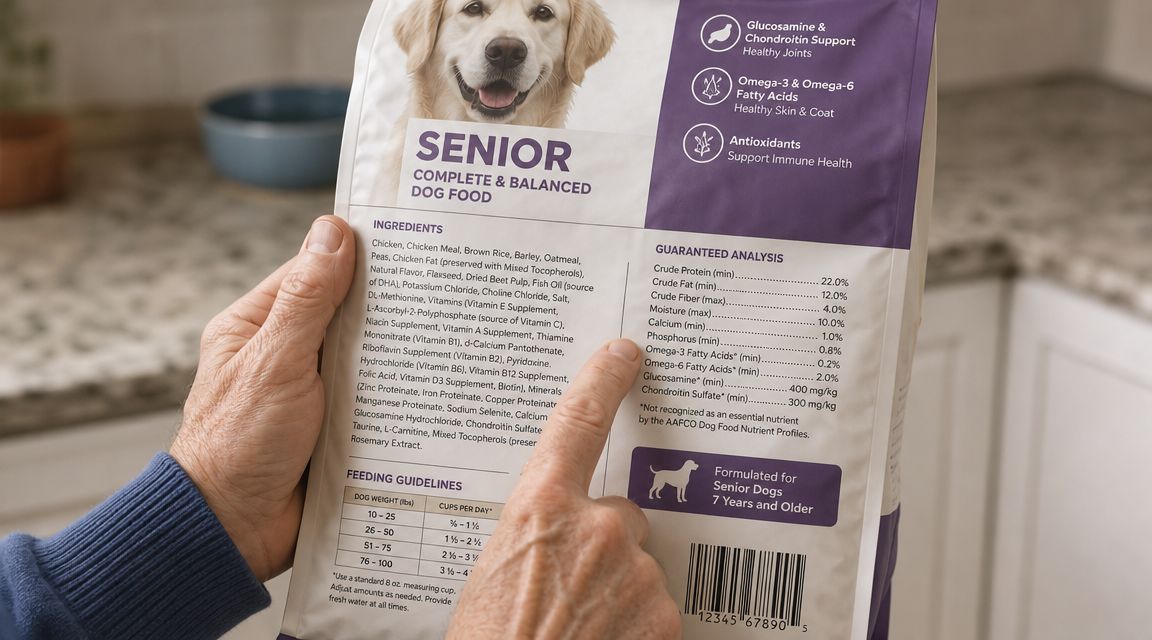
That wide range is the key lesson. Two bags can both say "senior" and still be very different foods.
Start with the ingredient list
The first few ingredients deserve your closest attention. In plain terms, you want a clearly named protein source near the top of the list, such as chicken, beef, salmon, lamb, or turkey. Named ingredients are easier to evaluate than vague terms.
Look closely for:
- Named animal proteins: These are easier to identify and compare.
- Digestible supporting ingredients: Foods that are gentle on the stomach may work better for some seniors.
- Added functional ingredients: Some formulas include omega fatty acids or joint-support ingredients.
Be cautious when a label leans heavily on branding language but gives you little clarity about the core ingredients. Marketing phrases can sound impressive while telling you almost nothing about quality or fit.
Check the guaranteed analysis with context
Guaranteed analysis is useful, but only if you read it with your dog's needs in mind. Higher protein may be helpful for a healthy senior trying to preserve muscle. Lower fat and more controlled calories may help a dog who gains weight easily. Fiber can also affect fullness and stool quality.
A quick label review can look like this:
| Label area | What to ask |
|---|---|
| Protein | Is this enough to support an older dog's muscle maintenance? |
| Fat | Is this appropriate for a dog with lower activity or weight concerns? |
| Calories | Does this match your dog's daily movement and body condition? |
| Texture notes | Will your dog comfortably chew and finish the meal? |
One food isn't "good" in the abstract. It's good only if it fits your dog's current condition.
Here's a short visual walkthrough if you'd like a simpler way to practice label reading before your next store trip.
Don't let the word senior do all the thinking
Many owners assume the "senior" label means the hard work is done for them. It isn't. Read past the age claim and ask whether the formula supports your dog's actual life.
Practical rule: Buy for your dog's body condition, appetite, chewing comfort, and veterinary guidance. Don't buy on age label alone.
That mindset protects you from one of the biggest aisle mistakes. Treating all senior foods like they were nutritionally equivalent.
Comparing Food Types for Your Senior Companion
The right format can matter as much as the right formula. Some senior dogs do well on kibble their whole lives. Others become easier to feed when the food is softer, more aromatic, or easier to portion around a health issue.
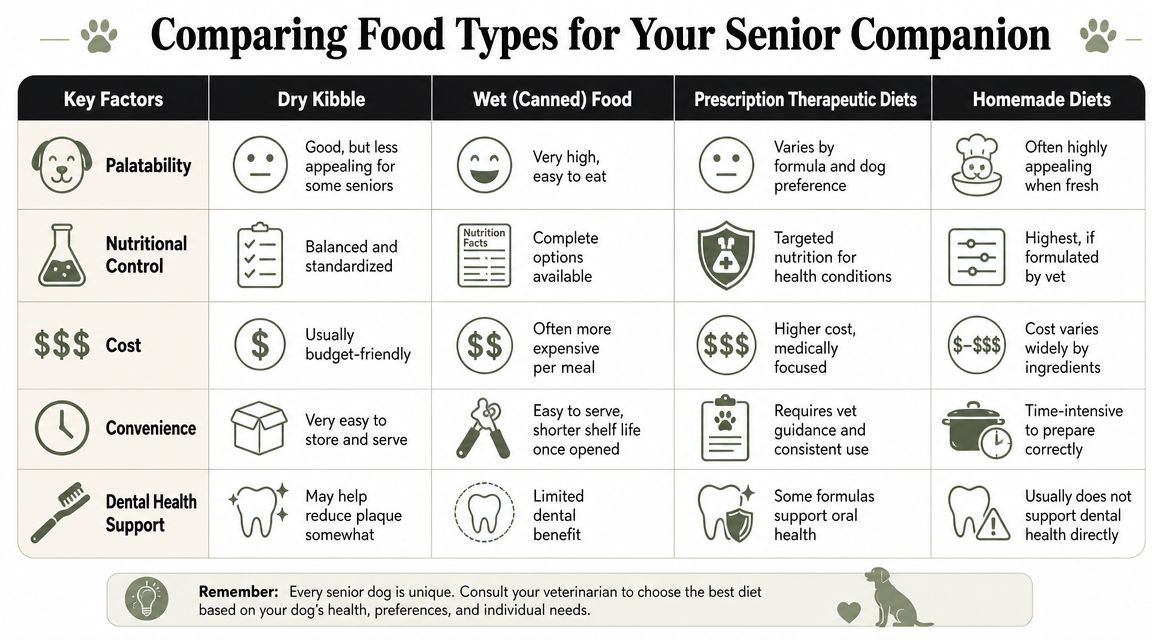
If you're weighing fresh options against traditional ones, this overview of fresh food for dogs can help you think through ingredients, storage, and daily routine.
Dry kibble
Dry food is convenient, easy to measure, and simple to store. For many households, that's a real advantage. It also works well for seniors who still chew comfortably and do best on a consistent routine.
Kibble may be less appealing to dogs with dental pain, lower smell sensitivity, or reduced appetite. Some owners soften it with warm water to improve comfort and aroma.
Wet food
Wet food can help seniors who need more moisture in meals or who struggle with hard texture. It often has a stronger smell, which can encourage a dog who has become picky with age.
That said, wet food is usually messier to portion, less convenient to store after opening, and can cost more over time. For some homes, a mixed feeding approach works well. Dry for structure, wet for moisture and appeal.
Prescription therapeutic diets
When a dog has a diagnosed condition, a therapeutic diet can become part of treatment rather than just feeding. Those diets are chosen for a specific health purpose and should be discussed with your veterinarian.
This isn't the place for guesswork. If your dog has kidney concerns, weight challenges, digestive disease, or another medical issue, the best diet may not be the one with the nicest marketing. It may be the one built for that exact problem.
Some older dogs need a wellness food. Others need a medical nutrition plan. Those aren't the same thing.
Homemade diets
Homemade feeding appeals to owners who want full ingredient control. That can be useful, especially for dogs with special preferences or complicated histories.
The challenge is balance. Homemade feeding can go wrong when owners build meals that look wholesome but don't meet long-term nutritional needs. If you go this route, work with your veterinarian or a qualified veterinary nutrition professional.
A side by side view
| Food type | Often helpful for | Potential drawback |
|---|---|---|
| Dry kibble | Dogs who chew well and benefit from easy portioning | Can be less appealing or harder to chew |
| Wet food | Dogs needing moisture, softer texture, stronger aroma | Less convenient after opening |
| Prescription diet | Dogs with diagnosed health needs | Requires veterinary direction |
| Homemade diet | Owners wanting ingredient control | Hard to balance without expert guidance |
The smartest choice is the one your dog can eat comfortably, digest well, and stay healthy on over time. That's the standard worth using.
Serving Sizes Transitions and Signs to Watch For
Once you've picked a food, daily management matters just as much as the formula. Senior dogs often do best when owners stay observant and adjust early instead of waiting for a small issue to become a bigger one.
Portion with your eyes and hands, not just the scoop
Feeding guidelines on the bag are starting points. They don't know whether your dog spends most of the day indoors, takes short neighborhood walks, or has recently lost muscle.
Use a simple routine:
- Measure consistently. Use the same cup or scale each time.
- Check body condition weekly. Feel for waist and rib coverage through the coat.
- Adjust slowly. If your dog is gaining or losing in an unwanted way, change portions gradually.
- Track treats. Senior dogs can gain weight from extras faster than owners expect.
If budget is part of the decision, comparing price per feeding style can help you stay consistent without overspending. This breakdown of dog food cost is useful when you're balancing quality, portion size, and long-term routine.
Switch food gradually
A sudden switch can upset even a sturdy stomach. Older dogs are often less forgiving when the bowl changes overnight.
A calm transition usually looks like this:
- Days early in the change: Mix a smaller amount of the new food into the old.
- Middle of the transition: Increase the new food if stools remain normal.
- Final stage: Move fully to the new food once appetite and digestion stay steady.
If your dog has a history of stomach upset, go slower. There's no prize for switching fast.
Read the dog in front of you
Food is working when your dog shows you that it's working. Sometimes the signs are subtle.
Good signs include:
- Steady appetite
- Comfortable stools
- Stable body condition
- Better enthusiasm at mealtime
- Coat that feels healthier to the touch
Concerning signs include reduced interest in food, repeated stomach upset, unusual lethargy, itchiness, or a sudden change in drinking or urination. Those signs deserve veterinary input, especially in an older dog.
A food isn't successful because the bag says it is. It's successful when your dog eats it well, carries weight appropriately, and looks comfortable living on it.
Holistic Senior Dog Wellness in El Paso
You switch your older dog to a food that fits his age, and the bowl starts going better. Then he still hesitates on the patio, licks at dry paws, or seems stiff when he stands. That can confuse owners. Food matters, but comfort in a senior dog also depends on skin, coat, nails, footing, weather, and the way daily care is handled.
In El Paso, those outside conditions are hard to ignore. Dry air, dust, strong sun, heat, and rough ground can wear on an older dog's skin and paws. A dog may be eating well and still feel uncomfortable if the coat is matted, the skin is irritated, or the nails are long enough to change how he stands.
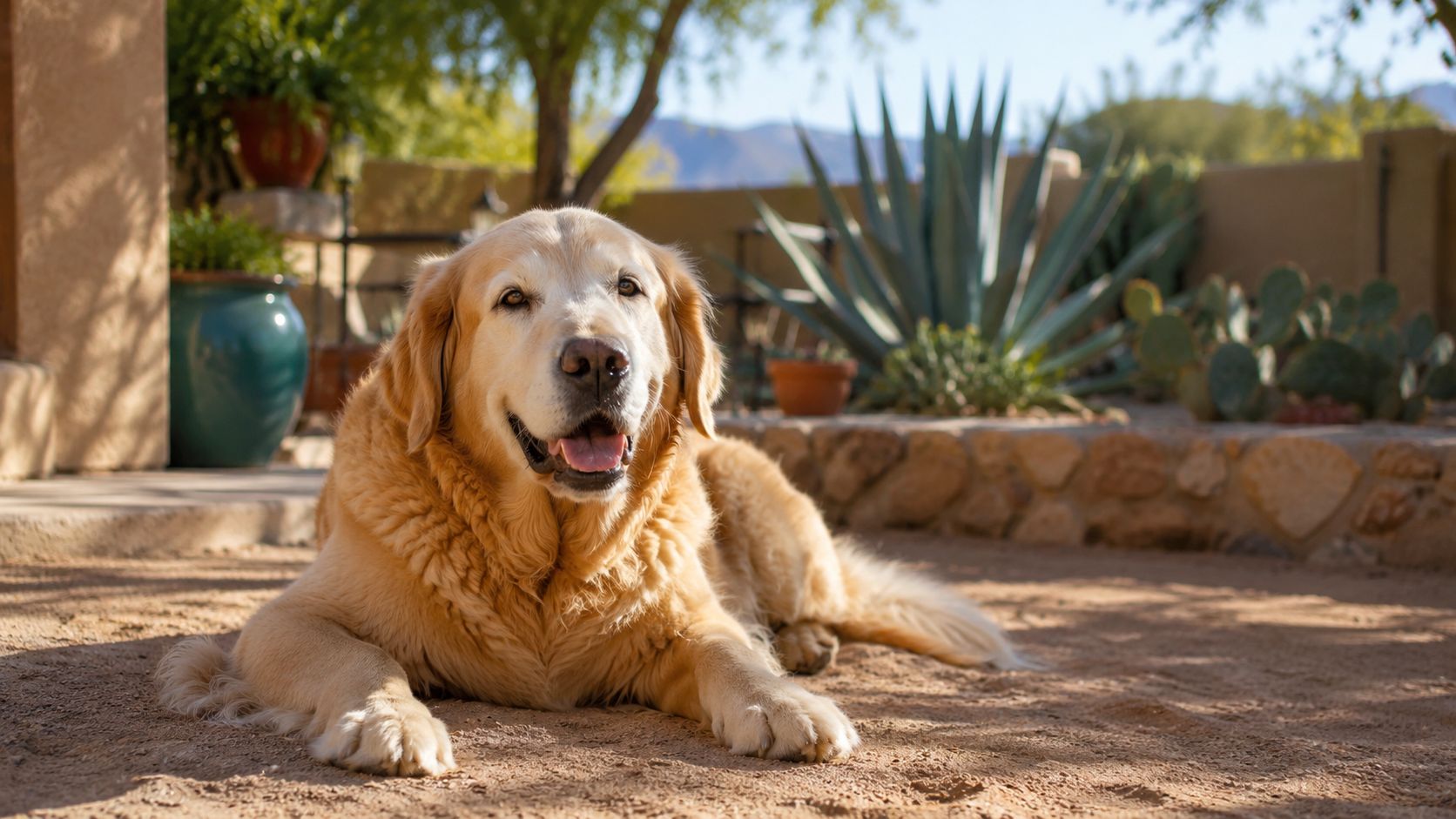
Senior care works like a full support system. Nutrition is one part. Grooming, home setup, and close observation are the other parts that help an older dog stay clean, comfortable, and steady on his feet.
Why grooming needs often change with age
As dogs get older, the body usually gives you less margin for neglect. Skin may become thinner or drier. Coats may tangle faster because the dog is not twisting, stretching, and self-grooming the way he used to. Nails often become a mobility issue before owners realize it, because even mild overgrowth can shift weight backward and make standing less natural.
That is why grooming for a senior dog should be approached as comfort care, not just appearance care.
In El Paso, I encourage owners to keep an eye on a few areas:
- Paw pads: Dry ground and heat can leave them rough, cracked, or sensitive.
- Hidden matting: Older dogs that rest more can develop tangles under the collar, behind the ears, in the armpits, and around the hindquarters.
- Nail length: Long nails can change posture and add strain to aging joints.
- Bath products: Mild products are often better tolerated by older skin.
- Sanitary upkeep: Clean trimming around the rear and belly can help dogs who are less steady or less flexible.
A lower-stress grooming setup can make a real difference
Many senior dogs do better in a quiet, orderly environment with fewer surprises. That is not about pampering. It is about reducing physical and mental strain. An older dog with arthritis, hearing loss, vision changes, or lower stamina may handle grooming better when the appointment is calm and the pace is controlled.
A one-on-one approach also gives the groomer more chances to notice small changes. During hands-on care, owners and professionals may catch a new lump, tenderness in a leg, skin dryness, ear debris, or a change in coat texture that deserves a closer look. Those details are easy to miss during a rushed routine at home.
For El Paso families comparing care options, a veteran-owned grooming studio often appeals for practical reasons. Clear handling standards, consistent scheduling, and a disciplined workflow can help senior dogs feel more secure. Some owners also appreciate set promotions such as Snip & Style Saturday because regular upkeep is easier to maintain when the routine fits the household budget.
Glo More Grooming is a home-based grooming studio in El Paso that offers one-on-one appointments, senior-friendly handling, and a structured workflow designed to reduce on-site congestion.
Good grooming for a senior dog supports comfort, cleanliness, mobility, and early observation.
Home care matters too. Soft bedding, shaded outdoor time, clean water, paw checks after walks, and traction on slick floors all support what the food bowl is trying to do. For many older dogs, the goal is not a dramatic transformation. It is a steady week with less irritation, better footing, and fewer small discomforts that add up over time.
A Lifetime of Loyalty Committing to Your Senior Dog's Well-Being
Your senior dog doesn't need perfection. He needs thoughtful care, steady routines, and an owner who pays attention. The right dog food for seniors can support body condition, muscle, comfort, and digestion, but the label alone isn't enough. The best choice comes from matching the food to the dog.
That's the bigger lesson of senior care. Wellness is never just one thing. It's the bowl, the body, the coat, the paws, the teeth, the daily movement, and the environment your dog lives in. In El Paso, where climate can add stress to skin and paws, that whole-dog view matters even more.
For many of us, caring for an old dog feels personal because it is. These are the years when loyalty comes full circle. Your dog has spent a lifetime showing up for your family. Now it's your turn to show up with patience, discipline, and a plan that protects comfort and dignity.
If your older dog needs gentler care, cleaner maintenance, or a calmer routine, don't wait until discomfort becomes obvious.
Your senior dog has earned thoughtful, hands-on care. If you're looking for Glo More Grooming, book a calm one-on-one appointment, ask about Snip & Style Saturday, or reach out today to reserve a spot for your dog's next premium grooming visit in El Paso.