
A lot of owners notice the same sequence. Their cat starts shaking its head more than usual, scratching one ear hard, then pulling back when anyone tries to look inside. By that point, people usually want the fastest fix possible.
That instinct makes sense, but calm observation works better than guesswork. Ear problems in cats reward the same discipline that defines high-standard pet care overall. Notice the small changes early, avoid random home remedies, and handle the problem in the right order. That approach protects the cat's comfort and prevents a simple irritation from turning into a household-wide reinfestation issue.
An Owner's First Clue to Ear Mites
The first clue is often behavioral, not dramatic. A cat that was settled yesterday suddenly scratches at the ears several times in a row, flicks its head, or seems irritated when you touch the side of the face. Some cats also become less tolerant of normal handling during brushing or coat care.

That's when owners need a method, not panic. Check both ears in good light. Watch how often the scratching happens. Notice whether the cat resists ear handling more than usual. Small details matter. The same kind of close attention helps with coat issues too, especially when hidden discomfort gets buried under tangles or dense fur. Severe coat neglect can mask skin and ear problems, which is one reason owners dealing with grooming-related buildup often benefit from reviewing professional guidance on matted cat hair removal.
What owners usually notice first
Some signs show up before you ever see discharge inside the ear:
- Head shaking: Not an occasional shake after a nap, but repeated shaking through the day.
- Focused scratching: The cat keeps returning to the same ear.
- Handling sensitivity: Your cat backs away, flattens the ears, or seems annoyed when you touch near the ear base.
- Restlessness: Sleep gets interrupted because the irritation keeps returning.
Practical rule: When a cat repeats the same ear-focused behavior, treat it like useful information. Don't dismiss it as random grooming.
A premium standard of care starts with this kind of observation. The owner is the first line of defense. The veterinarian confirms the diagnosis, but the earliest warning usually comes from the person who knows the cat's normal habits best.
Confirming the Diagnosis What to Look For
Ear mites can produce a recognizable pattern, but appearance alone still isn't enough to make the call. Owners should know what to watch for, then hand the final diagnosis to a veterinarian.
The visible signs that raise suspicion
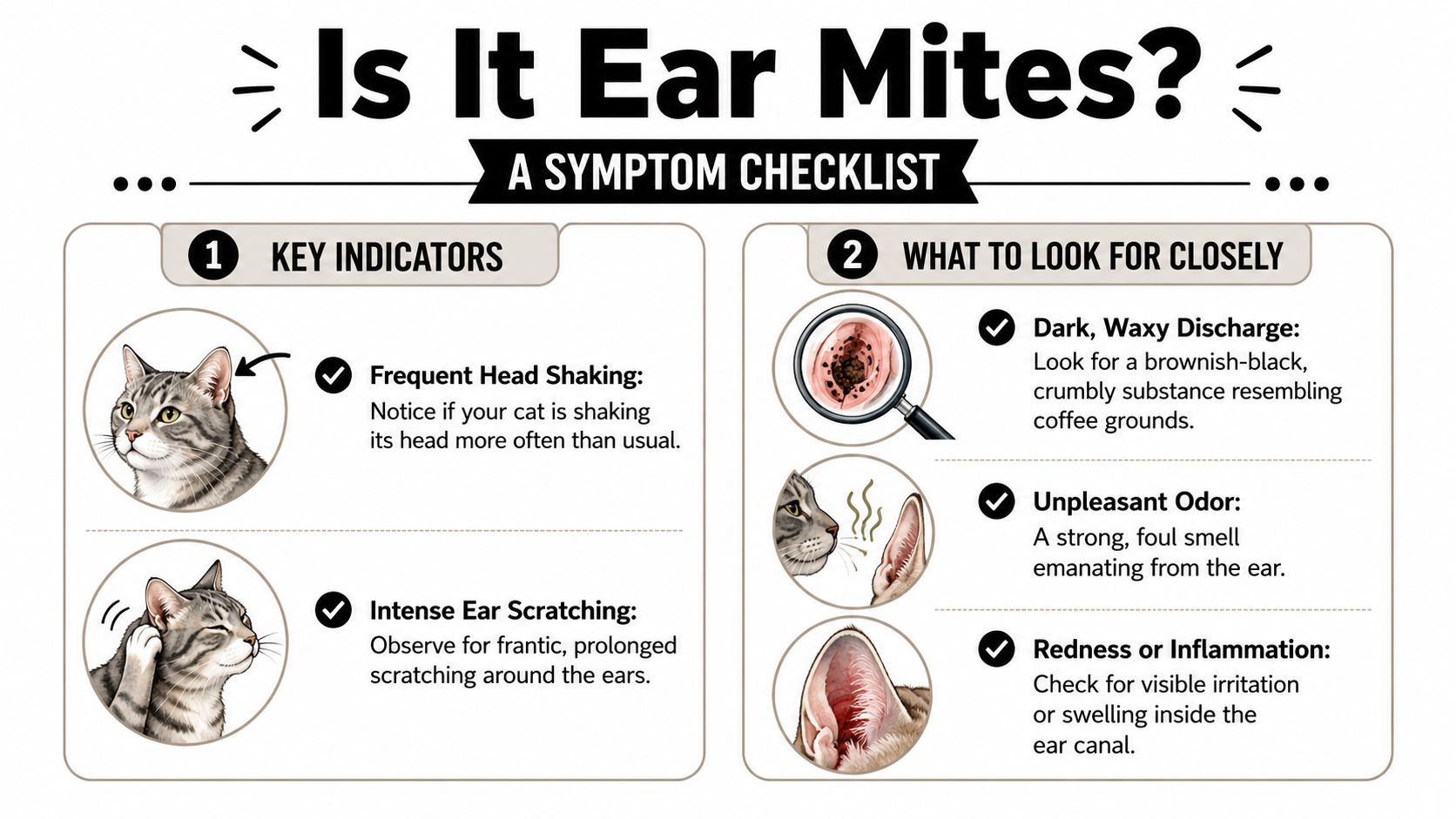
The classic sign is dark, crumbly debris in the ear canal that many owners describe as looking like coffee grounds. You may also see redness, irritation, and a waxy buildup. Some cats develop a noticeable odor from the ear, especially when inflammation is present.
Behavior fills in the rest of the picture:
- Frequent head shaking
- Intense ear scratching
- Visible irritation inside the ear
- Discharge that looks dark, dry, or gritty
- Strong odor from the ear
Why self-diagnosis goes wrong
Standards matter. Ear mites can overlap with other ear disease. According to Cornell's feline health guidance, a vet visit is critical because treating for mites when the actual problem is a bacterial infection or a foreign body can worsen the condition, and proper diagnosis helps the veterinarian choose the right treatment from the start in Cornell's review of feline ear mite risks and diagnosis.
That's the trade-off owners need to understand. A product that sounds harmless can still delay the correct care. If the cat has yeast, bacterial otitis, trauma, or something lodged in the ear canal, treating blindly wastes time and may increase irritation.
What to do before the appointment
Use a simple decision checklist:
| What you notice | What it means |
|---|---|
| Repeated scratching and head shaking | Ear irritation needs evaluation |
| Dark debris in the ear | Ear mites are possible, not confirmed |
| Foul odor or marked redness | Secondary infection may also be present |
| Pain when the ear is touched | Prompt veterinary assessment matters |
Don't try to win by guessing. In ear care, precision beats speed.
That principle sits at the center of good animal care, whether you're managing a medical issue or maintaining a pet on a disciplined grooming schedule.
Your Step-by-Step Treatment Protocol
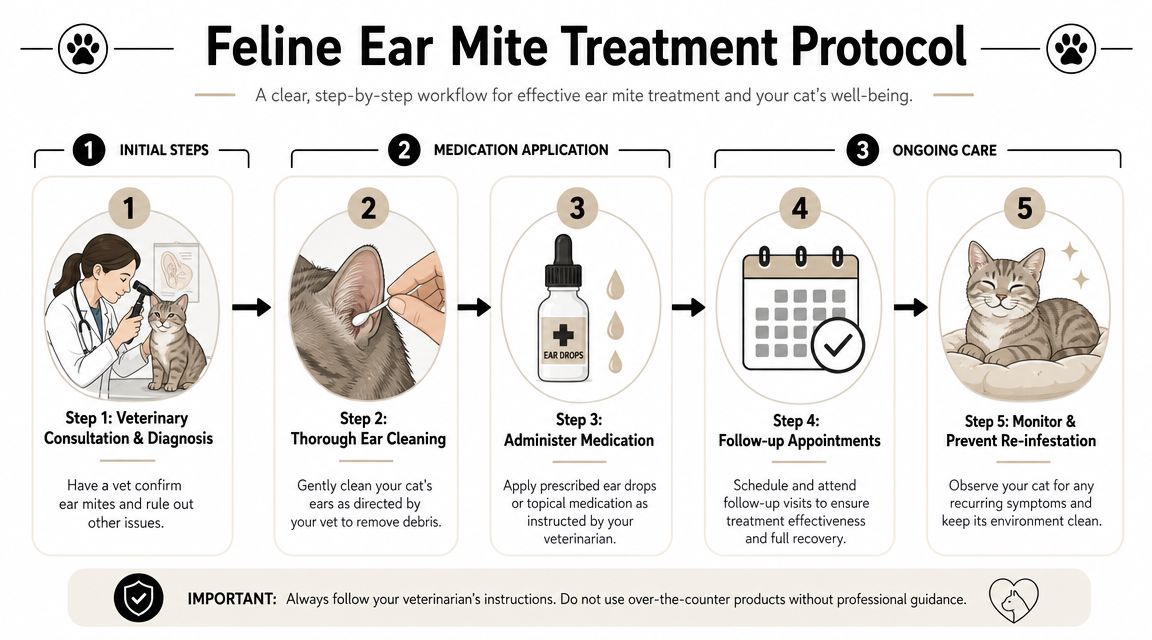
Once a veterinarian confirms the cause, ear mites in cats treatment should follow a full protocol. Partial treatment is where many owners lose ground. The cat may seem better, but the household problem isn't finished.
Step one starts with cleaning and medication
A practical veterinary workflow begins with a thorough ear clean to remove cerumen and debris that can block medication contact, followed by a prescribed topical, oral, or systemic miticidal medication. If the ears are significantly inflamed, anti-pruritic or anti-inflammatory support may also be added, as outlined in Hill's Pet guidance on clinical ear mite care.
Medication struggles to work effectively through a packed layer of debris. Owners often want to skip straight to the drug. That shortcut reduces effectiveness.
Modern options work differently than older repeated-dose routines
The strongest shift in treatment has been toward modern systemic parasiticides. A 2025 systematic review concluded that a single dose of topical fluralaner, esafoxolaner, or sarolaner, alone or combined with moxidectin or selamectin, was the most effective and safest systemic treatment, with most cats free of ear mites within 2 to 7 days after treatment in the reviewed studies, as reported in the 2025 systematic review on feline otodectic mange treatments.
That doesn't mean every cat gets the same product. It means the field has moved toward faster, more reliable single-dose systemic regimens when the veterinarian decides they fit the case.
Household control is part of treatment
At this point, owners either finish the job or accidentally restart it.
- Treat in-contact pets: In homes with multiple pets, all cats and dogs that can carry the infestation may need treatment.
- Clean shared items: Bedding, toys, carriers, and grooming surfaces need attention.
- Follow the veterinarian's schedule: Improvement in scratching doesn't mean the protocol is complete.
Today's Veterinary Practice notes that macrocyclic lactones and certain isoxazolines are among the key pharmacologic options, including selamectin, moxidectin, ivermectin, milbemycin oxime, afoxolaner, fluralaner, lotilaner, and sarolaner. The same review emphasizes that untreated subclinical infestations are a primary cause of reinfestation and that repeated monthly treatment with persistent acaricides is ideal in those situations, with some severe or multi-cat cases needing repeat dosing at 2-week intervals for 3–4 treatments, as described in Today's Veterinary Practice on uncovering, treating, and preventing ear mite infestations.
What doesn't work well
Owners get into trouble when they:
- Stop because the cat looks better
- Treat one pet and ignore the others
- Skip ear cleaning
- Rely on casual home remedies
- Forget the environment
Successful treatment isn't just killing mites in one ear. It's breaking the cycle in the cat, the home, and the rest of the pet group.
Mastering the Art of Feline Ear Cleaning
Ear cleaning sounds simple until you try it on a cat that's uncomfortable. Technique matters. The goal is to clear debris without making the ear more inflamed or turning the session into a wrestling match.
The right setup
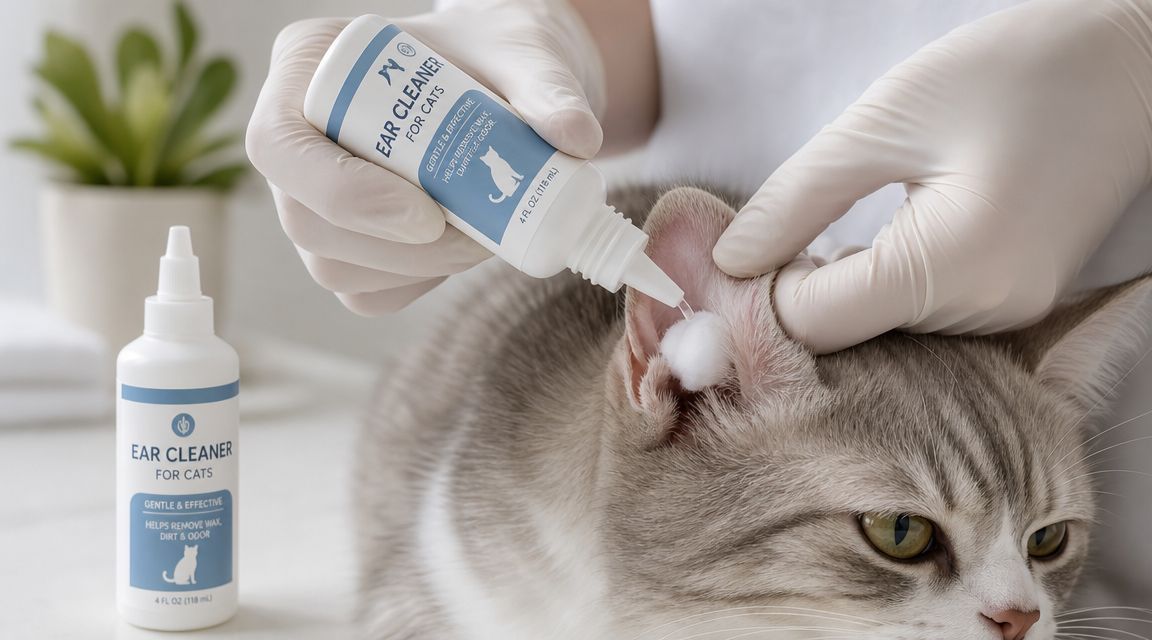
Use only what your veterinarian recommends. In most homes, that means a vet-approved ear-cleaning solution and soft cotton balls or gauze. Avoid improvised chemicals. Avoid cotton swabs deep in the ear canal.
Good handling matters just as much as good tools. Work in a quiet room. Keep the cat wrapped or supported if needed. Go slowly, but stay decisive.
A clean, disciplined ear-care routine has a lot in common with professional maintenance standards in grooming. Consistency prevents rough handling and rushed mistakes. Owners who want a strong baseline for routine canine ear hygiene can also review professional dog ear cleaning guidance to understand how careful technique and sanitation fit into broader pet wellness habits.
A safe cleaning sequence
- Position the cat securely: Don't pin the cat aggressively. Support the body and keep the head stable.
- Apply cleaner as directed: Use the prescribed amount. Don't flood the ear with random product.
- Massage the ear base gently: This helps loosen debris inside the canal.
- Let the cat shake if needed: That motion helps move loosened material outward.
- Wipe the visible area: Use cotton or gauze to remove what comes out. Stay in the area you can see.
- Stop if the cat seems painful: Struggling from annoyance is one thing. Sharp pain is another.
Here's a visual walkthrough that helps many owners understand the handling rhythm before they try it at home.
The timing matters as much as the technique
The parasite's life cycle is 21 days, and mites can survive off the host for up to 12 days, which is why treatment follow-up and environmental cleaning have to continue for at least that long, according to EveryCat's review of ear mite treatment comparisons and life-cycle guidance.
That's why one good cleaning session isn't the whole job. Bedding, cages, grooming tools, and shared resting spots all matter. If they're ignored, the environment keeps pressuring the cat after treatment has started.
From Treatment to Total Pet Wellness
A cat with ear mites doesn't just need a product. The household needs a prevention mindset. That's the difference between temporary relief and lasting control.
Why recurrence happens
A common owner complaint is simple. One pet got treated, symptoms faded, then the problem seemed to return. In multi-pet homes, that often points to silent carriers. Veterinary literature notes that untreated subclinical infestations are a primary cause of reinfestation, and repeated monthly treatment with persistent acaricides is considered ideal for managing those hidden cases, as explained by Riverside Veterinary's summary of reinfestation risks in household ear mite control.
Discipline triumphs over convenience. If one pet improves and the others are ignored, the household stays vulnerable.
A better long-term routine
Prevention looks less dramatic than treatment, but it's what keeps homes stable:
- Check ears regularly: Watch for scratching, debris, odor, or sensitivity during normal handling.
- Keep shared gear clean: Wash bedding and sanitize items pets share.
- Ask your veterinarian about parasite prevention: Ongoing preventives may support a broader control strategy.
- Pay attention to every pet in the home: Not just the one showing obvious discomfort.
Good pet care is often quiet. It shows up in routines that prevent problems before they become messy.
That philosophy applies well beyond feline ear care. The owners who do best over the long haul usually treat grooming, skin care, ear checks, parasite control, and seasonal maintenance as one connected wellness system. That's especially relevant in El Paso, where active households, shared pet spaces, and year-round pet handling make consistency more valuable than quick fixes.
For families balancing budgets with high standards, routines matter even more. A smart care calendar can include veterinary visits, home sanitation, coat maintenance, and practical scheduling around local services and an affordable grooming promo such as a monthly Snip & Style Saturday. Prevention works best when owners build it into real life rather than waiting for the next flare-up.
The Glo More Standard for Your El Paso Pet
The same discipline that solves ear mites properly also defines better grooming. Care improves when the workflow is calm, the standards are clear, and pets aren't pushed through like inventory. That's why many owners eventually decide they're done with the chain-store experience and want a more personal, accountable standard for ongoing care.
In El Paso, that difference matters. A veteran-owned grooming business tends to show its values in the details. Cleaner process. Better handling. Fewer shortcuts. More ownership over the result. For pet owners comparing local options with large retail operations like PetSmart or Petco, that one-on-one model can feel very different from high-volume traffic and rushed turnover.
For cats, specialized support may also matter when coat condition, stress, or handling tolerance complicate routine care. Owners exploring higher-touch support can review mobile cat grooming options as part of a broader wellness plan.
Customers seeking El Paso dog grooming or premium pet grooming are often looking for more than a haircut. They want judgment, steadiness, and a place that treats pet care like a craft. That standard doesn't happen by accident. It comes from pride, resilience, and the decision to do the work carefully every time.
If you want that level of care for your dog, book with Glo More Grooming. As a local, independent, veteran-owned studio in El Paso, Glo More Grooming delivers premium pet grooming with a disciplined, one-on-one approach that stands apart from high-volume chains. Reserve your appointment, ask about the affordable grooming promo, and claim your spot before the next Snip & Style Saturday fills.