
You're probably here because snakes seem appealing for the same reasons that draw in a lot of first-time keepers. They're quiet. They don't need walks. Their care looks clean and contained compared with many furry pets. That part is true.
What isn't true is the idea that snakes are “set it and forget it” animals.
A well-kept snake depends on disciplined habitat control, steady routines, close observation, and a keeper who pays attention to small changes before they become large problems. If you want to learn how to take care of snakes properly, start with that mindset. A snake isn't low-effort. It's self-contained, which is different.
Good snake keeping is rewarding because it asks you to be precise. Temperature matters. Security matters. Hygiene matters. Feeding and handling need structure. Ethical sourcing matters too. For a serious beginner, that's good news, because most mistakes are preventable if you prepare before the snake comes home.
If you're still deciding whether a reptile fits your life, this guide to pets for beginners can help you compare the responsibility level more realistically.
Embracing the Responsibility of Snake Ownership
People often buy their first snake for the wrong reason. They want a pet that seems easier than a dog or cat, and they assume reptiles need less daily attention. In practice, snakes punish shortcuts faster than many mammals do, because husbandry errors show up in appetite, shedding, stress, sanitation, and escape behavior.
A responsible owner treats care like a workflow, not a mood. The enclosure has to be built correctly before the animal arrives. The feeding routine needs to be predictable. Cleaning can't be random. You also need a plan for vet care and a plan for an escape, because secure housing is never something to “figure out later.”
Practical rule: If you haven't set up the habitat, verified the temperatures, and identified an exotics vet, you're not ready to bring the snake home.
That sounds strict, but it protects both the animal and the owner. New keepers usually do best when they approach the hobby with humility. Don't chase rarity, size, or appearance first. Chase stability.
Three traits matter most in a good beginner keeper:
- Patience: Let the snake acclimate instead of forcing interaction.
- Consistency: Feed, clean, and monitor on a repeatable schedule.
- Observation: Notice changes in posture, appetite, shedding, urates, and activity.
Snake keeping becomes much simpler once you stop thinking in terms of “easy pet” and start thinking in terms of controlled environment. Build the system well, and the animal has a real chance to thrive.
Choosing Your First Pet Snake
Your first snake should match your skill level, available space, and tolerance for species-specific quirks. That means you should care less about striking colors and more about adult size, enclosure demands, and how reliably the species feeds and settles into captive life.
For most beginners, three groups come up repeatedly for good reason: corn snakes, ball pythons, and kingsnakes. They're widely kept, generally manageable, and familiar enough that care supplies and husbandry advice are easier to find. They are not identical, though, and the differences matter.
Pick for temperament and adult reality
A baby snake is not the animal you'll be housing long term. Think about the adult, not the hatchling.
Corn snakes are often a strong first choice for people who want an active snake with a usually steady feeding response. They tend to use the enclosure more visibly, which many beginners enjoy. Their body size is manageable for most homes, but they are athletic and will test weak doors, screen tops, and cable gaps.
Ball pythons attract many new keepers because they usually have a calm reputation and a sturdy build that feels less delicate in the hands. The trade-off is that they can be more particular about feeding and humidity. If your husbandry is sloppy, a ball python often tells you by refusing meals.
Kingsnakes are hardy and engaging, but they can be enthusiastic feeders. For some beginners that's a benefit. For others, it means they need cleaner routine separation between feeding and handling from day one.
Beginner Snake Species Comparison
| Species | Adult Size | Lifespan | Temperament | Temp Gradient (°F) | Humidity |
|---|---|---|---|---|---|
| Corn Snake | Moderate | Long-lived in captivity | Usually active and manageable | Species-specific, maintain a warm side and cool side | Moderate |
| Ball Python | Moderate to heavier-bodied | Long-lived in captivity | Usually calm, often tolerant of handling | Species-specific, maintain a warm side and cool side | Higher than many colubrids |
| Kingsnake | Moderate | Long-lived in captivity | Alert, food-motivated, manageable with routine | Species-specific, maintain a warm side and cool side | Moderate |
The table is intentionally broad because exact targets vary by lineage, enclosure type, room conditions, and keeper setup. For a first snake, broad husbandry stability matters more than chasing tiny adjustments.
Captive-bred is the right start
If you remember one sourcing rule, make it this one. Choose captive-bred over wild-caught.
Wild-caught snakes often arrive with heavier stress loads, parasite risks, acclimation issues, and feeding challenges. A well-established captive-bred animal is usually better adapted to enclosure life and easier for a beginner to read. That doesn't guarantee perfection, but it shifts the odds in the right direction.
When you talk to a breeder or seller, look for direct, practical answers. Ask what the snake is currently eating, how consistently it has fed, what substrate it has been kept on, and whether it has had complete sheds. A reputable breeder won't act annoyed by those questions.
Buy from the person who can describe the animal's routine clearly, not the person who markets the animal most aggressively.
Red flags to walk away from
A new keeper should pass on a snake if the seller can't answer basic husbandry questions or if the animal shows obvious poor condition.
Watch for these warning signs:
- Vague feeding history: “It eats fine” is not a useful answer.
- Dirty housing: Fouled tubs, stale water, and stuck shed suggest weak standards.
- Defensive sales tactics: Pressure to buy quickly usually means the seller doesn't want scrutiny.
- Unclear origin: If the source sounds murky, move on.
A calm, healthy, captive-bred snake from a disciplined breeder makes the rest of the learning curve far easier.
Building the Perfect Enclosure
A new owner brings home a healthy young snake, sets up a nice-looking tank, and still runs into trouble within weeks. The enclosure is usually the reason. Good snake housing is less about decoration and more about control. Space, security, temperature, humidity, sanitation, and privacy all have to work together every day.
Enclosure size deserves more attention than it gets. A July 2022 study summarized by Phys.org found that 54.7% of pet snakes were in enclosures too small for them to fully stretch out, and snakes in those smaller enclosures showed significantly more clinical signs of stress and illness, making enclosure size a welfare issue, not just a style choice, as reported in this snake welfare summary by Phys.org.
That should shape the buying decision from the start. Set up for the snake's adult size, or at least buy with a realistic upgrade plan. Temporary undersizing has a way of becoming permanent.
Start with structure, not accessories
The enclosure itself should be escape-proof, simple to service, and appropriate for the species' adult length, body type, and activity level. Front-opening enclosures make routine cleaning and controlled interaction easier for many keepers. Well-secured tubs can also work, especially for species that do better with more cover, but only if ventilation, locking, and heat control are done properly.
Every enclosure should have:
- A secure lid or locking doors: Snakes find weak points fast, especially around screen tops, sliding panels, and cable openings.
- Two snug hides: One on the warm side and one on the cool side, so the snake does not have to choose between feeling secure and thermoregulating.
- A water bowl sized for the animal: Some species soak readily, and a bowl that is too small limits that option.
- Furnishings you can inspect and clean easily: Branches, cover, and climbing structure are useful, but not if they make waste, mites, or shed problems hard to spot.
For another reptile enclosure planning example, this guide to a bearded dragon cage setup is useful for comparing equipment choices and maintenance habits, even though snake requirements differ.
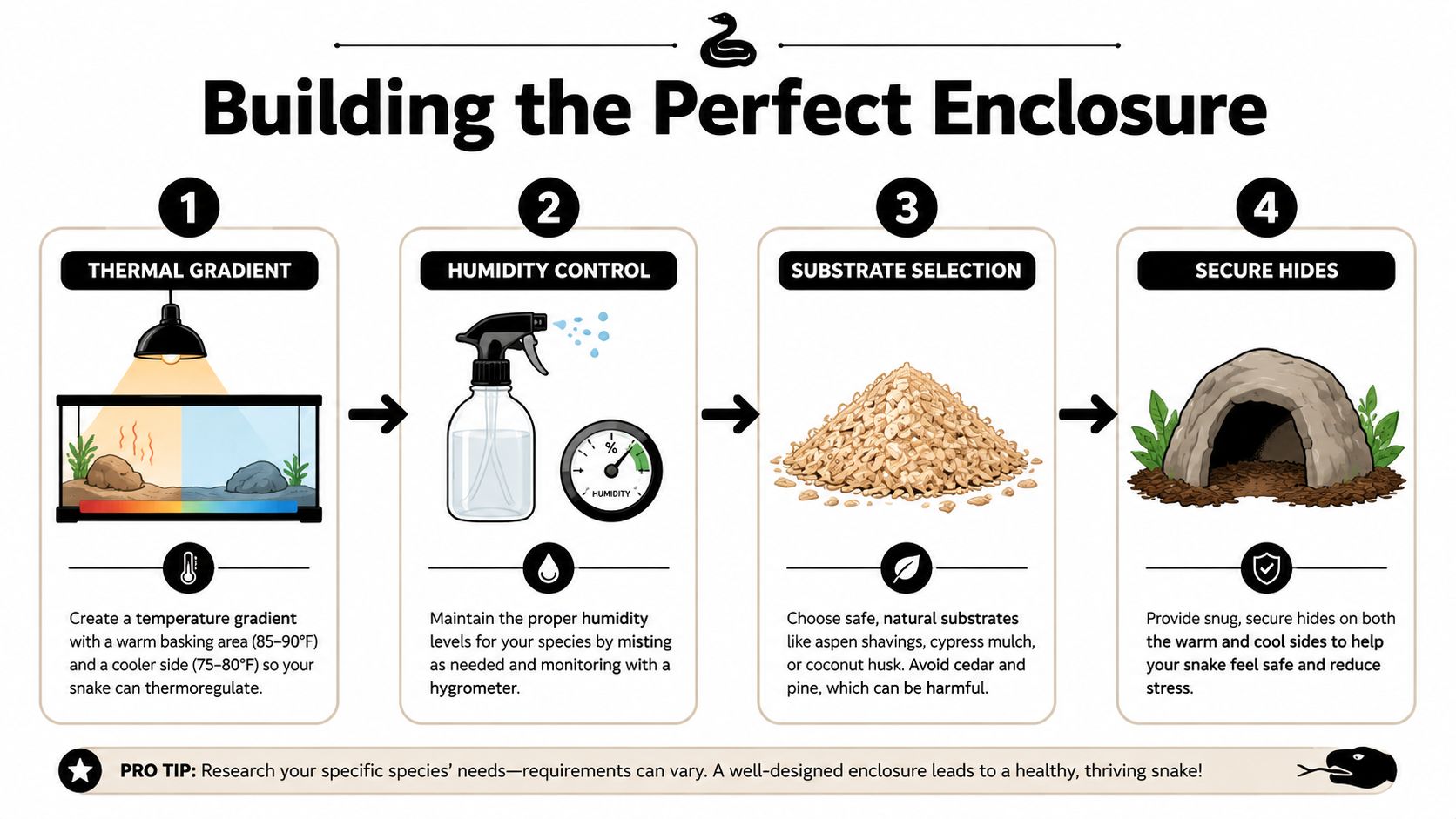
Build a true thermal gradient
The technical core of snake care is temperature control. The goal is not to make the whole enclosure warm. The goal is to give the snake a usable range of temperatures so it can self-regulate.
In practice, that means heating one side and leaving the other side cooler, with hides available in both zones. Many keepers heat roughly one-third of the enclosure, but the target temperatures depend on the species. A ball python, a corn snake, and a king snake should not all be set up by guesswork or by copying one generic number from a care sheet.
A practical setup process looks like this:
Choose the room carefully
Keep the enclosure away from direct sun, drafty windows, air-conditioning vents, and constant foot traffic.Use a thermostat with the heat source
Heat mats, radiant heat panels, and ceramic emitters all have their place. Any of them can overheat an enclosure if they are run without control.Measure temperatures at snake level
Use reliable probes or thermometers on both the warm and cool ends. Built-in stick-on dials are often too inaccurate to trust.Check the hides, not just the open floor
A warm hide that is too hot or a cool hide that is too exposed defeats the whole setup.
A stable gradient does more than improve comfort. It supports digestion, activity, immune function, and normal behavior. If the enclosure is uniformly warm, the snake loses the ability to choose.
Choose substrate for safety and monitoring
Substrate choice is where a lot of beginners spend money before they have enough experience to judge what works. Start with the species, the humidity target, and how easily you can monitor waste and sheds.
Loose substrates can work well in the right setup, but they come with trade-offs. Some hold moisture unevenly. Some make spot-cleaning harder. Some obscure droppings or urates long enough that minor husbandry problems get missed. For quarantine, medical observation, new acquisitions, or any snake with questionable health, simpler options are usually better.
Veterinary guidance cited in the care materials recommends non-loose options such as reptile carpet, paper towels, or stick-on vinyl for higher-risk setups or when close monitoring is needed. Paper towels are ugly and extremely useful. I use them without hesitation for quarantine and for any animal that needs observation. Vinyl is easy to sanitize. Reptile carpet is serviceable, but only if it is cleaned thoroughly and replaced once it starts to fray or hold odor.
Humidity and hygiene decide whether the setup stays healthy
Humidity problems are often husbandry problems in disguise. A snake with repeated bad sheds may need more than a quick misting. A damp, dirty enclosure may hold humidity well and still be unsafe.
The right humidity level depends on the species and the room, so measure it instead of guessing. Then adjust with methods that fit the enclosure:
- A humidity box with damp moss: Useful during sheds and for species that benefit from a humid retreat.
- A larger water bowl or better bowl placement: Sometimes enough to raise ambient humidity modestly.
- Substrate and ventilation changes: These affect humidity more consistently than occasional misting.
Cleaning needs the same discipline. Spot-clean as soon as waste appears. Replace substrate on schedule. Scrub and disinfect water bowls, hides, and enclosure surfaces before they look filthy. PetSmart's husbandry guidance in the verified data also emphasizes weekly stir-cleaning of substrate and full replacement at least monthly to reduce bacterial load and make hygiene easier to assess.
The best enclosure is not the flashiest one. It is the one that stays secure, measurable, clean, and appropriate for the animal year after year. That is part of responsible snake ownership. The enclosure is not just a display. It is the snake's entire living environment, and it deserves to be built that way.
Mastering Feeding and Handling Routines
Feeding and handling are where beginners create avoidable stress. The fix is simple. Keep both routines predictable, separate them clearly, and don't improvise.
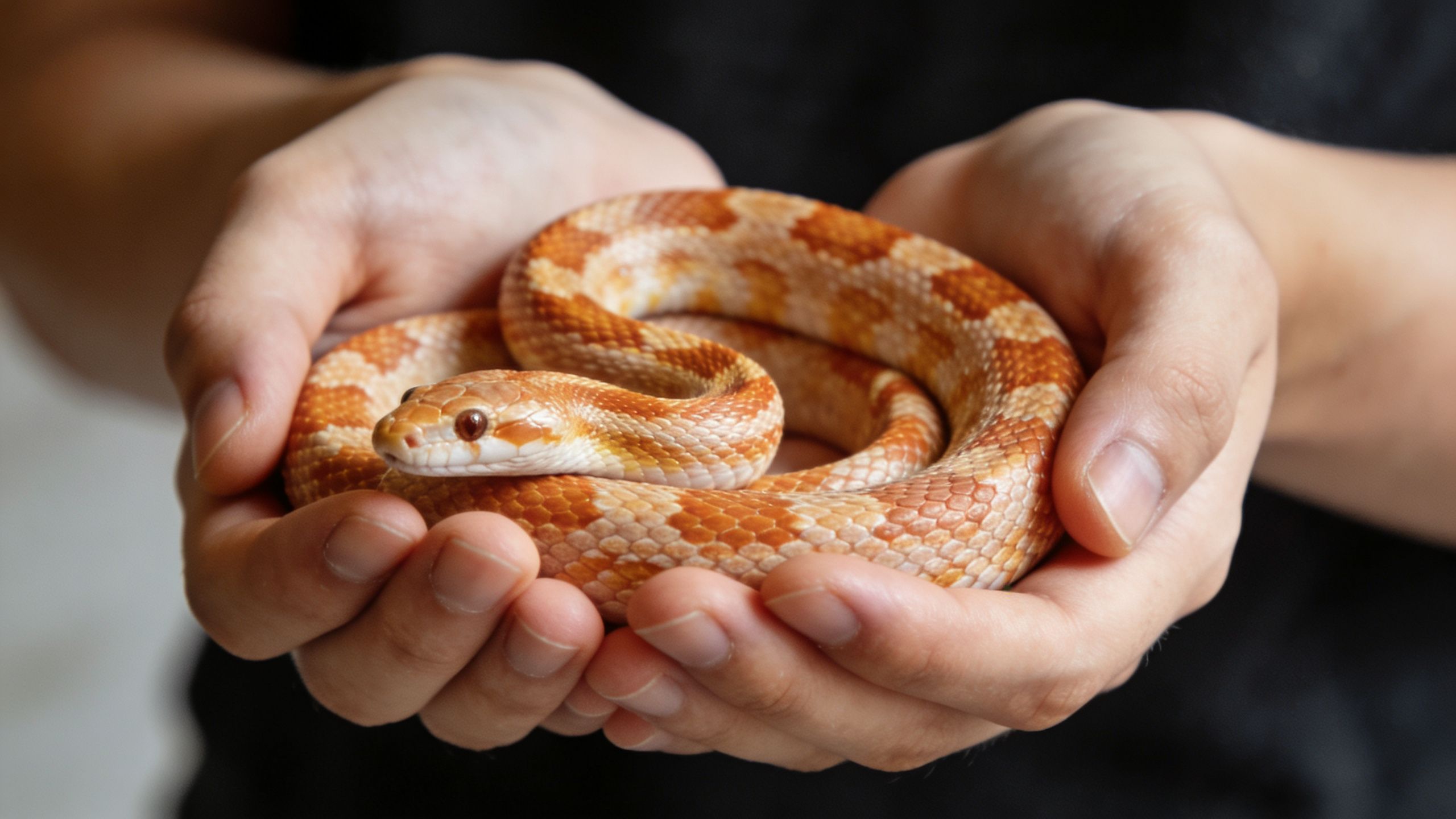
A new snake should be left alone long enough to settle. Veterinary guidance recommends leaving a newly acquired snake undisturbed for 1–2 weeks to acclimate, then handling gently with full body support and no sudden movements. The same guidance advises avoiding handling for several days after feeding to reduce regurgitation risk, as explained in this veterinary snake care guide.
Feeding should be boring
That's a compliment. A good feeding routine is uneventful.
Use prey that matches the species and individual snake's established routine. Many keepers prefer frozen-thawed prey because it creates a more controlled feeding process and avoids the risks that can come with live prey. Whatever you use, consistency matters more than novelty.
A practical feeding workflow looks like this:
- Prepare first: Have tongs, prey, and a quiet environment ready before opening the enclosure.
- Feed deliberately: Don't wave prey around excessively or turn the moment into a stress event.
- Leave the snake alone afterward: Give it privacy and time to settle.
- Log the meal: Record date, response, and any odd behavior.
A snake that skips a meal isn't always in crisis. A snake that skips meals while also showing other husbandry or health flags deserves closer attention.
Handling needs a cue
Handling should never feel like surprise feeding.
The Bio Dude handling cue included in the verified guidance is useful because it adds a clear distinction between routine interaction and food response. Wash your hands first, then gently tap the snake with an inanimate object such as a paper towel roll before lifting. That cue helps reduce confusion and can lower the chance of a feeding response. Also, never lift a snake by the tail.
Here's a better handling pattern:
- Open the enclosure calmly.
- Touch with the cue object first.
- Lift from underneath with full body support.
- Keep movements slow and confident.
- End the session before the snake becomes overstimulated.
This is a good point to watch a visual example of calm, controlled handling:
Clean routines protect the animal
Biosecurity is part of handling, not an optional extra. Wash your hands before and after contact. Clean tools. Don't move between animals casually if you keep multiple pets.
Petbarn recommends weekly disinfection of the terrarium using bleach diluted 1:10 with water, followed by thorough rinsing, while also spot-cleaning throughout the week. That kind of disciplined sanitation matters because skipped cleaning and sloppy hand hygiene increase pathogen transfer risk.
A snake that feels secure in a stable routine is easier to feed, easier to handle, and easier to monitor.
Beginners often ask how often they should handle. The better question is whether the snake is tolerating handling well. A steady, calm animal in a clean routine tells you far more than a rigid calendar ever will.
Proactive Health Care and Emergency Planning
Most beginner guides spend plenty of time on tanks and feeding, then leave owners unprepared for the moments that cause real panic. A missing snake. A sudden refusal to eat. Respiratory signs. A bad shed. A keeper who doesn't know whether to monitor, adjust husbandry, or call a vet.
That gap matters because emergency readiness is part of responsible ownership, not an advanced topic. The verified guidance notes that snakes are skilled escape artists, yet few beginner resources provide a clear protocol for what to do when one goes missing or requires urgent vet care, which is why contingency planning belongs in basic care, as discussed in this beginner snake care article from Paws and Claws.
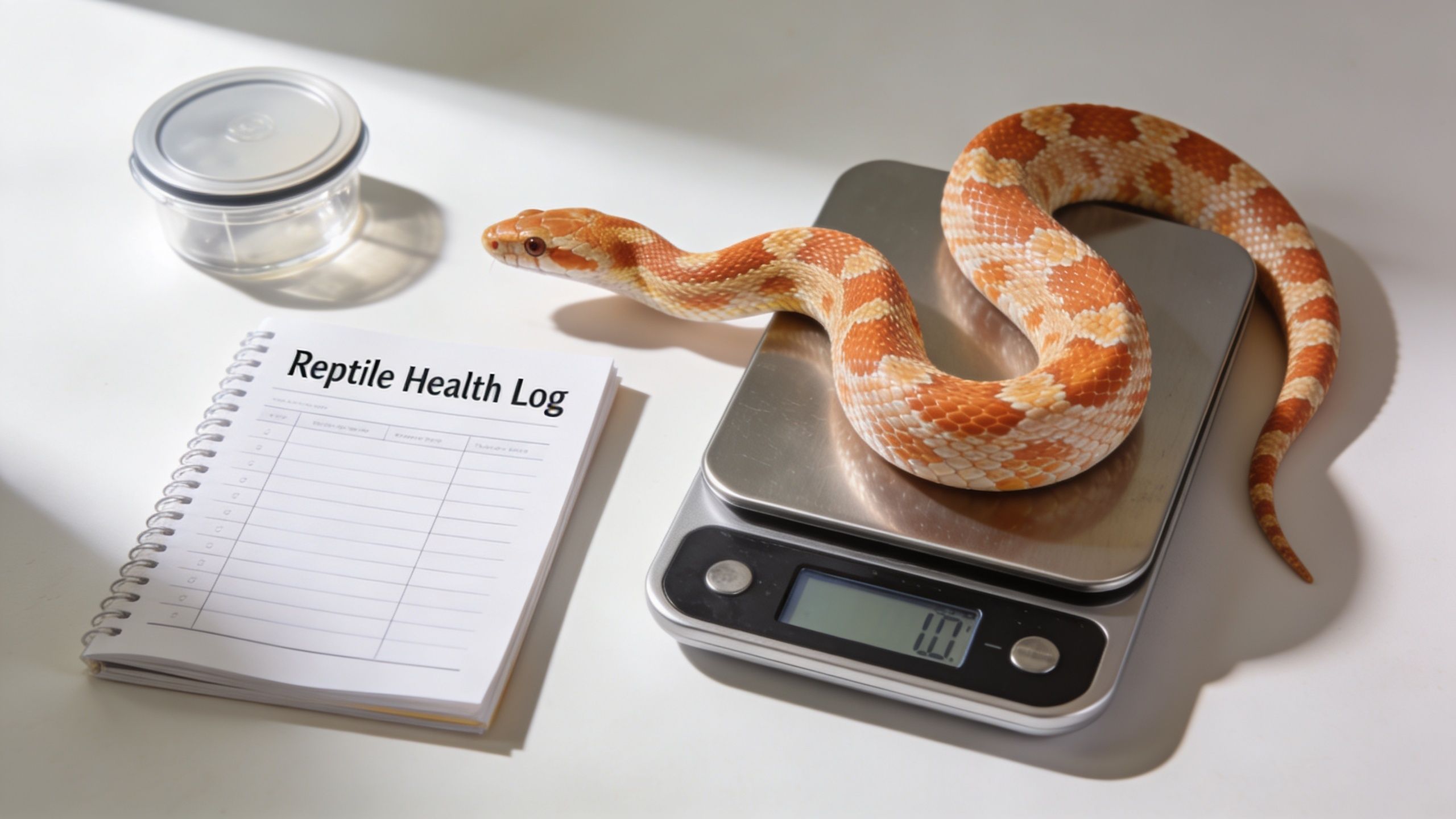
Know what healthy usually looks like
A healthy snake often appears uneventful. It rests normally, uses its enclosure predictably, sheds in a way that matches its condition and humidity support, and doesn't show obvious respiratory noise or physical decline.
Routine health checks should focus on trends, not isolated moments.
Use a simple checklist:
- Body condition: Does the snake look steady in weight and muscle tone?
- Skin and scales: Any retained shed, irritation, mites, or abrasions?
- Eyes and nose: Any discharge, bubbling, or stuck eye caps?
- Breathing: Any wheezing, clicking, or open-mouth breathing?
- Waste output: Are feces and urates appearing normally for the animal's feeding pattern?
- Behavior: Is it suddenly far more defensive, lethargic, or restless?
If you want a general example of why unusual symptoms should never be brushed off in pets, this article on cat foaming at the mouth is a useful reminder that fast observation and timely veterinary judgment matter across species.
Keep records like a serious keeper
Memory is unreliable. Logs are better.
Track feedings, sheds, cleaning dates, weight checks, unusual behavior, and any husbandry changes. If the snake starts refusing food or acting differently, your notes will tell you whether the issue started after a substrate change, a temperature shift, a move, or a recent handling pattern.
A basic reptile log should include:
| What to record | Why it matters |
|---|---|
| Feeding date and response | Helps identify appetite trends |
| Shed date and quality | Flags humidity or health issues |
| Waste observations | Supports sanitation and health monitoring |
| Weight trend | Helps catch decline early |
| Enclosure changes | Connects husbandry shifts to behavior |
The first 24 hours after an escape
When a snake escapes, people usually waste time searching emotionally instead of methodically. Stay calm and work the room.
Start with immediate containment:
- Secure other pets and people
Reduce noise, movement, and accidental harm. - Close interior doors
Limit the search area before the snake travels farther. - Check heat sources and tight spaces
Snakes seek security, edges, darkness, and warmth. - Inspect the enclosure first
Find the escape route so it doesn't happen again. - Search low and along walls
Look behind appliances, under furniture, in closets, and near clutter.
Then improve the environment in your favor. Reduce clutter. Check near water access. Inspect cracks, vents, and gaps. In the broader cohabitation guidance summarized in the verified data, practical prevention focuses on sealing cracks, reducing clutter, and controlling attractants. Those same ideas help during a search.
Search where the snake can feel hidden, not where you wish it had gone.
If the snake isn't found quickly, keep checking quiet areas at calm times of day and night. Many escaped snakes turn up near edges, behind stored items, or close to subtle warmth.
When to call the exotics vet
Every owner should identify an exotics veterinarian before trouble starts. Waiting until the animal is in distress is how people lose time.
Seek veterinary help promptly if you notice:
- Labored breathing or respiratory noise
- Mouth or nose discharge
- Repeated regurgitation
- Sudden neurological signs or severe weakness
- Visible injury, burns, or prolapse
- Persistent failure to thrive despite husbandry correction
A prepared keeper has transport supplies ready, the clinic number saved, and recent husbandry notes available. That level of readiness isn't excessive. It's standard.
The Long-Term Commitment of Snake Ownership
Ten years from now, the novelty is gone. The snake still needs correct heat, clean water, secure housing, feeder costs in the budget, and a keeper who notices small changes before they become serious problems. That is the actual commitment.
A snake fits well in a quiet home because it does not demand constant interaction. It still depends on steady husbandry for a long time, and in some species, a very long time. Before bringing one home, treat the decision like taking on a durable obligation, not a trial run. Housing changes, moves, new jobs, power outages, vacations, and vet bills all affect reptile care.
Good keepers plan for that reality early. They choose a species conservatively, buy from a reputable source, finish the enclosure before the animal arrives, keep written records, and set aside money for equipment failure and medical care. They also make practical arrangements for who can care for the snake if they are sick, traveling, or forced to relocate.
The long view matters more than enthusiasm.
Long-term success usually comes down to ordinary habits done well, week after week. Maintain the temperature range your species needs, replace worn equipment before it fails, quarantine any new reptile, and keep handling consistent and low stress. Snakes do best in stable conditions. Small lapses, especially with heat, security, and feeding records, are what cause many preventable setbacks.
There is also an ethical side to commitment. Responsible ownership includes saying no to impulse buys, oversized species, and animals with unclear origin or poor body condition. It includes having a plan if your interest changes years from now. Rehoming may become necessary in some situations, but it should be handled carefully, with full husbandry records and honest disclosure, not as a quick attempt to clear space.
Snake keeping is rewarding for people who value precision, patience, and responsibility. The job is simple to describe and serious in practice. Provide the right environment, observe the animal closely, prepare for problems before they start, and keep doing it for the life of the snake.