
You're probably staring at an empty glass box, a shopping cart full of aquarium gear, and a dozen tabs all telling you different things. One guide says a 10 gallon tank is perfect for beginners. Another says small tanks are harder. Both are right.
A 10 gallon fish tank setup can be a great first aquarium because it's manageable, affordable, and small enough to fit in most homes. It can also go wrong fast if you treat it like a decorative bowl instead of a living system. The small water volume gives you less room for mistakes, which is why beginners often get into trouble with overstocking, rushed setups, and skipped testing.
The good news is that success isn't complicated. It's about doing the boring parts in the right order, then keeping a disciplined routine. If you can resist the urge to add fish too early, you'll avoid most of the heartbreak that pushes people out of the hobby.
Assembling Your Essential Aquarium Equipment
The foundation matters more than the fish. If your equipment is mismatched, weak, or rushed into place, everything gets harder later.
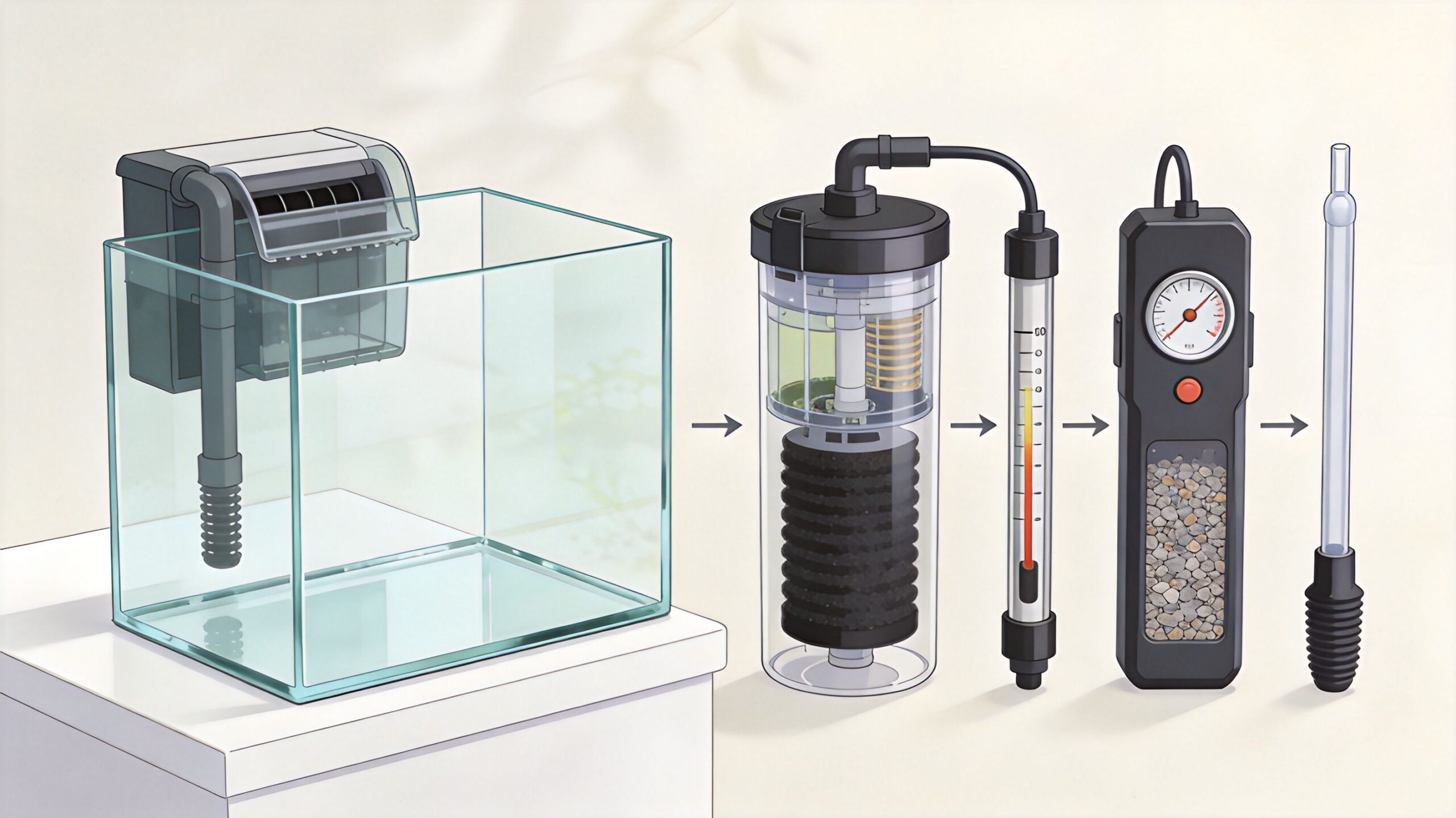
A standard 10 gallon aquarium typically measures 20 inches long, 10 inches wide, and 12 to 13 inches high, and when it's filled with water and gravel it weighs around 111 pounds, which is why Aquarium Care Basics notes that a purpose-built aquarium stand is the safe choice. The same source says improper support is a factor in over 30% of novice tank failures within the first year, so this isn't a detail to shrug off.
Start with the hardware that keeps fish alive
For a first tank, keep your shopping list simple and functional.
- Tank and stand: Buy the tank first, then match it with a stand rated for aquarium use. A side table might look solid, but aquariums need even support across the base.
- Filter: A hang-on-back filter is the standard beginner choice. It gives you mechanical filtration and water movement without much fuss.
- Heater: For tropical fish, a 50-watt heater is a common fit for this tank size, and many starter kits use that range to maintain 76 to 78°F.
- Thermometer: Don't trust the heater dial alone. A simple thermometer tells you what the water is doing.
- Water conditioner: Tap water needs dechlorinator before it's safe for fish or beneficial bacteria.
- Substrate: Gravel is easy to clean and beginner-friendly. Rinse it before it goes into the tank.
- Net, bucket, and gravel vacuum: These make routine care far easier and cleaner.
Choose gear that matches a small tank
A 10 gallon aquarium doesn't forgive oversized ambitions. You don't need specialty equipment. You need equipment that fits the bioload and the space.
If you're buying a kit, look for one that includes the basics rather than flashy extras. Earlier beginner kits became popular because they bundled the practical essentials people needed, such as a heater, filter, hood light, thermometer, dechlorinator, gravel, and net. That kind of bundle still makes sense because it reduces guesswork.
Practical rule: Buy for stability, not for style. In a small tank, the “nice-to-have” gear matters less than a reliable heater, a properly sized filter, and a stand that won't flex.
One more point confuses beginners all the time. A 10 gallon tank doesn't really act like a full 10 gallons once you add substrate, décor, and hardscape. The usable water volume drops, which means waste builds up faster and water quality shifts faster too. That's why disciplined setup matters so much in a small aquarium.
A clean setup order saves headaches
Before you fill anything, set the tank on its stand and make sure it sits level. Then rinse the substrate, place it in the tank, add hardscape, install the filter and heater, and fill the aquarium slowly with conditioned water.
A dinner plate or plastic bag placed on the substrate while you pour helps keep the gravel from blasting all over the tank. It's a small trick, but it makes the whole setup look cleaner from the start.
If you're tempted to plug everything in and run to the fish store the same day, stop there. The tank may look finished, but biologically it isn't ready yet.
The Unskippable Step The Nitrogen Cycle
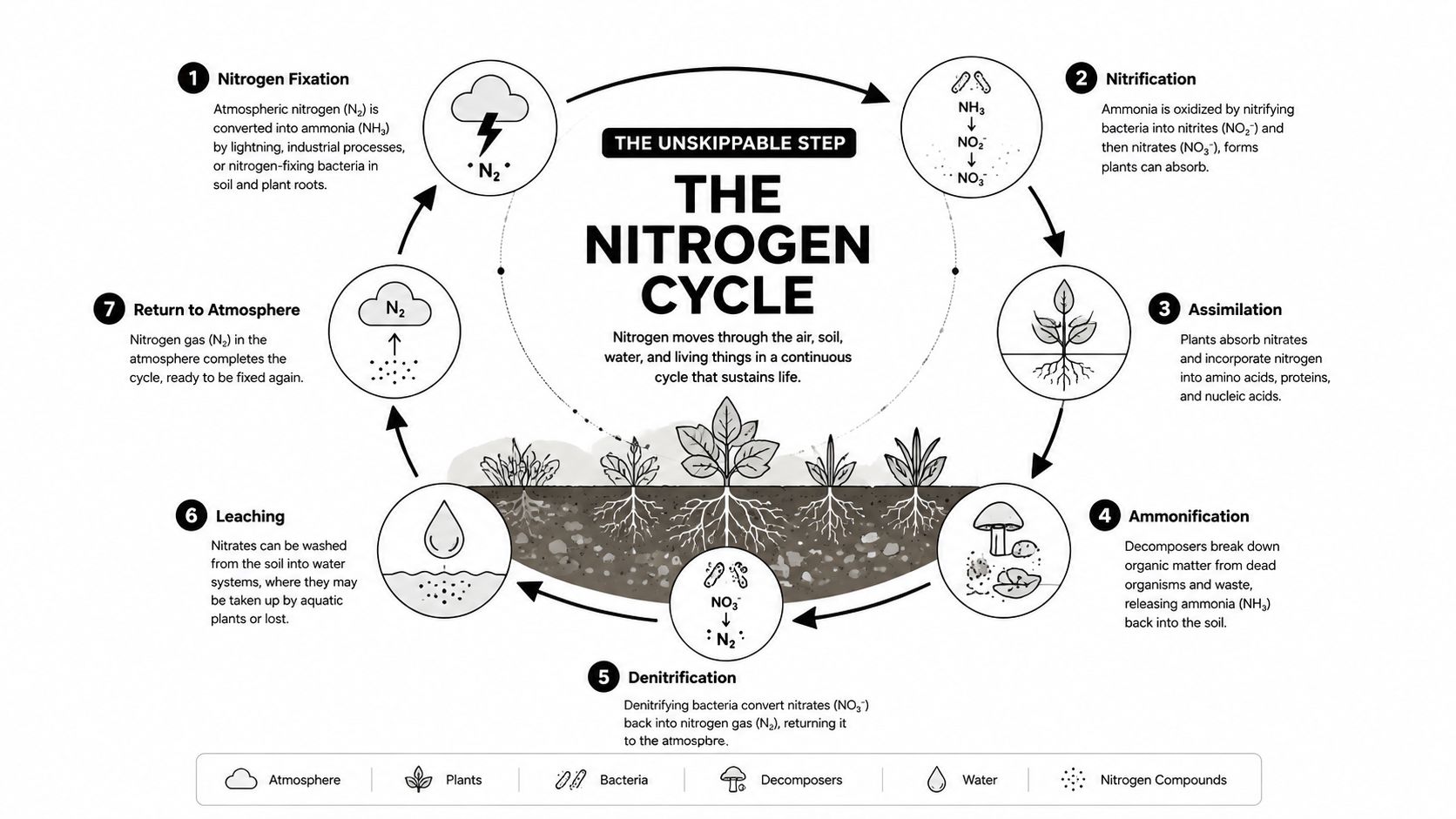
This is the step that separates a healthy aquarium from a stressful one. Fish produce waste. Uneaten food breaks down. Plant debris rots. In water, all of that turns into compounds your fish can't safely live with unless beneficial bacteria are present to process them.
Think of the nitrogen cycle as your tank's sanitation crew. Without it, waste piles up in a closed glass box. With it, the tank can process what the animals produce.
What the cycle actually does
In plain language, the cycle goes like this:
- Ammonia appears: Waste and decaying material create ammonia.
- Bacteria convert ammonia to nitrite: That's progress, but nitrite is still dangerous.
- More bacteria convert nitrite to nitrate: Nitrate is the end product you manage with water changes and plants.
A new tank doesn't have enough of those bacteria at first. That's why adding fish right away is risky. Aquarium Co-Op explains that establishing the nitrogen cycle takes about 4 to 6 weeks, and skipping it is linked to “new tank syndrome,” which accounts for 70 to 80% of beginner fish mortality.
A properly cycled tank shows 0 ppm ammonia, 0 ppm nitrite, and some nitrate. Those are the signs that the tank can process waste instead of trapping fish in it.
Waiting feels slow. Losing fish because the tank wasn't ready feels much worse.
How to do a fishless cycle
A fishless cycle means you build the bacterial colony before any fish go in. It's kinder, steadier, and much easier to control.
Use this workflow:
- Set up the full tank first: Install the heater, filter, and substrate. Run the tank with conditioned water.
- Keep the heater on: Beneficial bacteria establish better in stable, warm water.
- Add an ammonia source: Some hobbyists use fish food, others use a pure ammonia source. The point is to feed the future bacteria.
- Test the water regularly: You're watching for ammonia to rise, then nitrite, then nitrate.
- Stay patient: Don't restart the process because the numbers look odd in the middle. That's normal.
Common mistakes that derail the process
Most cycling problems come from impatience or from cleaning too aggressively.
Here are the usual traps:
- Adding fish because the water looks clear: Clear water doesn't mean safe water.
- Turning equipment off for long stretches: Your filter and heater need to run consistently during setup.
- Washing filter media with untreated tap water: Chlorine can damage the bacteria you're trying to grow.
- Dumping in too much food: Rotting food can foul the tank faster than it helps.
A seeded sponge, cycled filter media, or even a small amount of mature gravel from an established healthy tank can help jump-start the process. Still, test results matter more than optimism. The tank is ready when it behaves like a cycled tank, not when it looks finished.
What “ready for fish” really means
Beginners often ask one question: “How do I know for sure?” The answer is in the water tests.
You're looking for a tank that can process waste without showing measurable ammonia or nitrite afterward. That's the practical goal. Once you see 0 ppm ammonia, 0 ppm nitrite, and some nitrate, you're no longer guessing. You've built the invisible system that keeps fish alive.
That patience is the most important skill in fishkeeping. Fancy aquascaping can come later. Good bacteria come first.
Choosing Your Fish Plants and Hardscape
Many first tanks go sideways. People fall in love with the look of a fish at the store, bring home too many, and only later learn that a 10 gallon tank has strict limits.
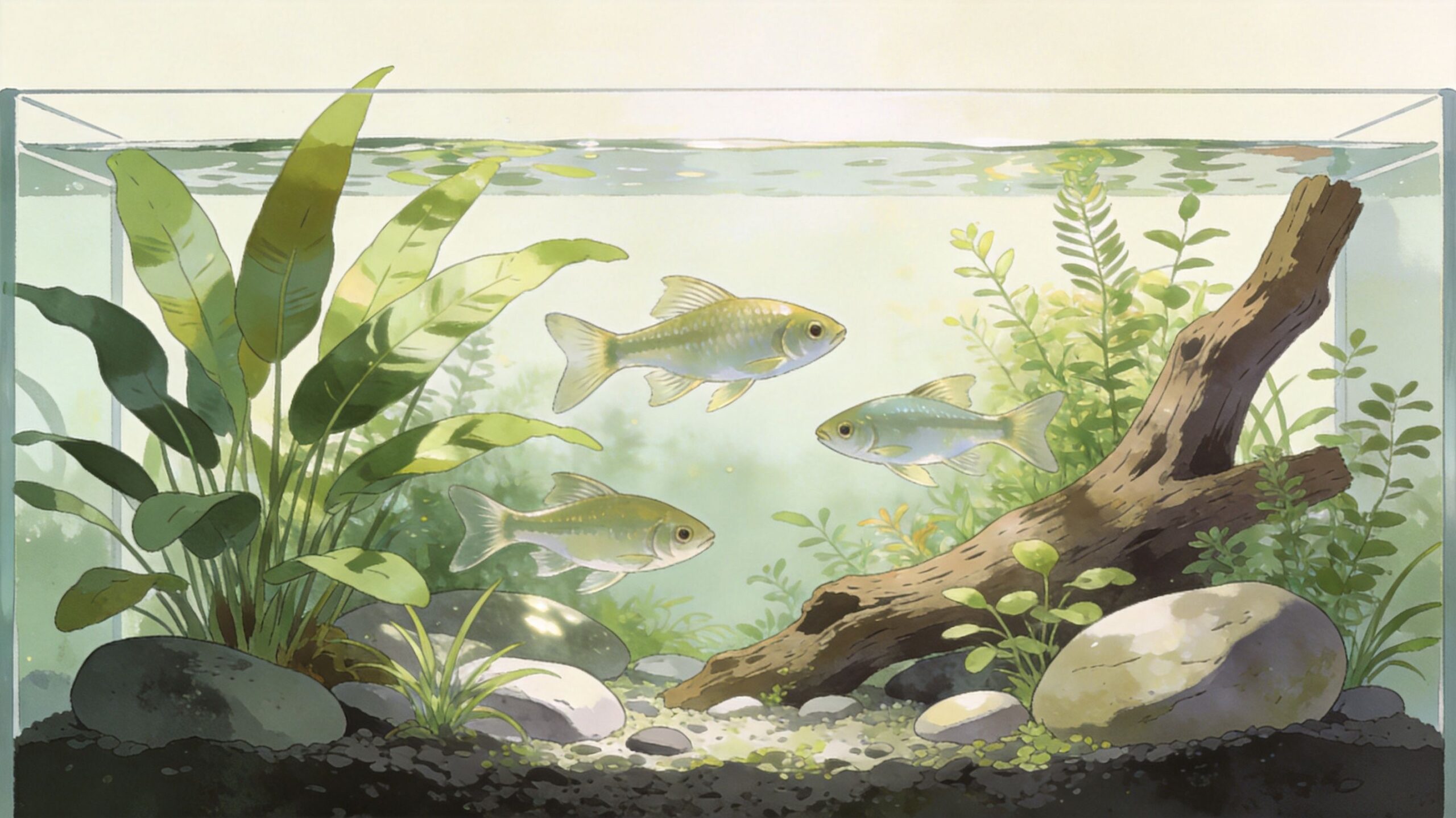
Small tanks aren't empty canvases. They're compact ecosystems. Every fish adds waste, every feeding adds load, and every decoration changes usable swimming space.
Stock for adult size, not store size
The old “one inch of fish per gallon” rule isn't useless, but it needs a stricter reading in a 10 gallon setup. Aqueon advises adapting that rule to no more than 1 to 2 inches of total adult fish length per gallon in a 10 gallon tank to avoid dangerous ammonia spikes.
That means two things:
- Count the fish at their adult size, not the size you buy them.
- Treat the lower end of that range as the safer path for beginners.
If you choose guppies or other livebearers, sex ratio matters too. The same Aqueon guidance notes that keeping 1 male to 2+ females can reduce stress and aggression by over 60%.
The best-looking 10 gallon tanks usually aren't the fullest. They're the most balanced.
Three beginner-friendly directions
You don't need a giant stocking chart. You need a coherent plan.
Option one is a small livebearer group. Guppies and Endler-type setups attract beginners because they're colorful and active. If you go this route, be realistic about breeding and keep the sex ratio in mind. Too many males often means nonstop chasing.
Option two is a simple schooling setup. Small fish like neon tetras appeal to people who want movement and group behavior. In a 10 gallon tank, restraint matters. A modest school with clean filtration and open swimming room works better than trying to recreate a larger community tank.
Option three is an invertebrate-focused setup. Shrimp and snails can be fascinating in a small aquarium, especially if you enjoy planted layouts and close-up observation more than fast fish activity.
If you enjoy other small pet habitats too, this guide to a hermit crab cage setup for beginners shows a similar principle: the enclosure works best when you design around the animal's real needs instead of squeezing in what looks fun at the store.
Plants do more than decorate
Live plants make a beginner tank feel calmer and more forgiving. They break up sight lines, soften the hardscape, and help use waste in the water.
Good beginner choices include:
- Anubias: Tough, slow-growing, and easy to attach to wood or rock.
- Java fern: Another forgiving plant that doesn't need to be buried in substrate.
- Vallisneria: Useful for background cover and a more natural look.
You don't need a dense jungle. Even a few healthy plants can make the aquarium feel more stable and more natural.
Hardscape should serve the fish
Rocks and driftwood shouldn't just fill space. They should shape the tank in a way that helps the animals use it.
A strong beginner layout often includes:
- Open front area: Gives fish room to swim and makes feeding easier.
- Shelter zones: Driftwood, caves, or planted corners create resting places.
- Visual depth: Taller elements toward the back help the tank look larger.
If you're unsure, think in layers. Keep the foreground open, place mid-height plants around wood or stone, and let taller plants frame the back. That approach looks natural and leaves room for maintenance.
Creating Your Weekly Maintenance Routine
A healthy tank doesn't come from constant tinkering. It comes from repeatable habits. Once your 10 gallon fish tank setup is established, your job is to keep conditions steady.
Most beginners either do too little or far too much. They ignore the tank for days, then panic-clean everything at once. That roller coaster creates stress for fish and damages the stability you worked to build.
Your simple weekly rhythm
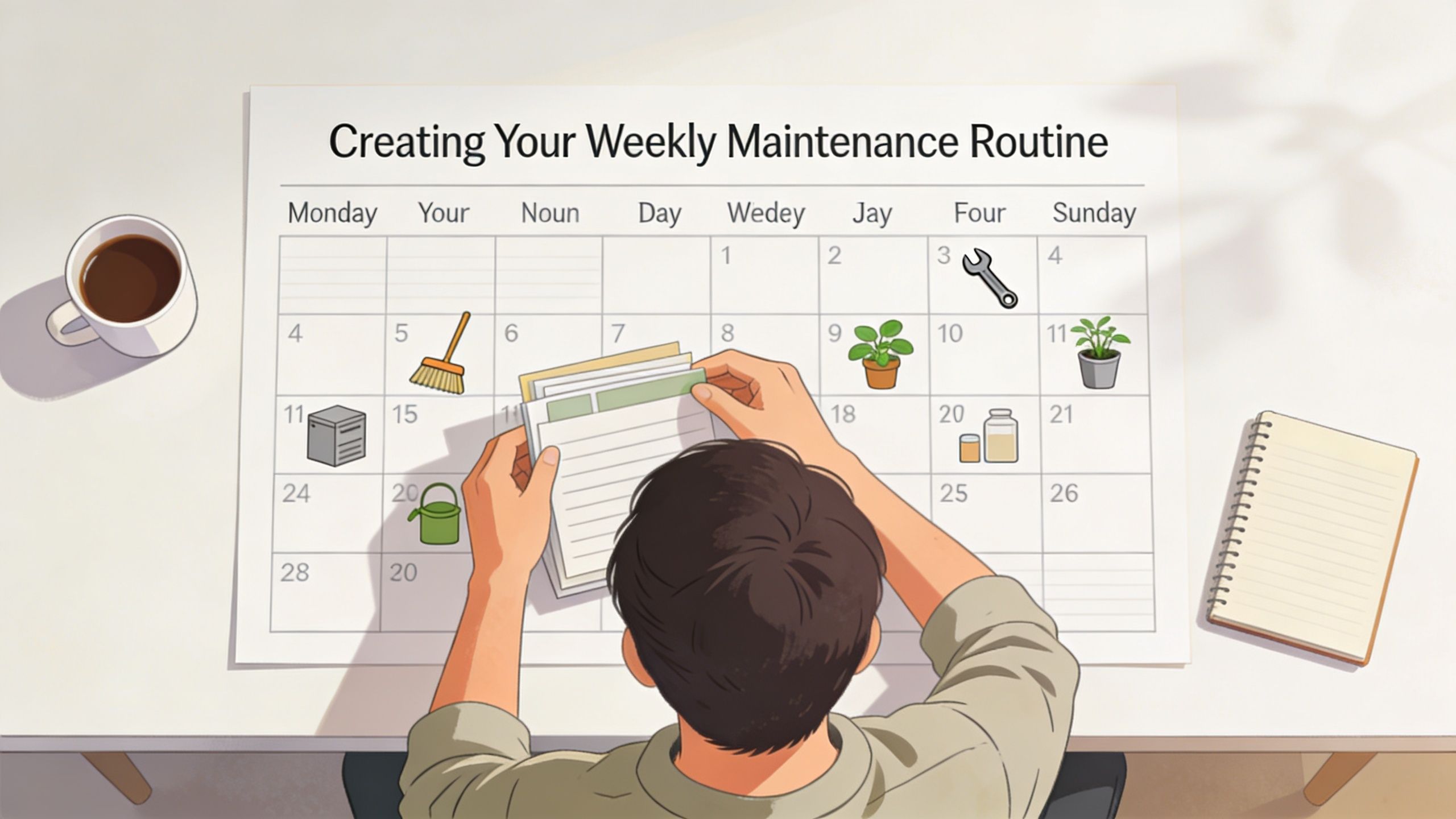
A manageable routine usually includes the same few tasks each week.
- Observe the tank: Look at fish behavior, water clarity, temperature, and filter flow before you touch anything.
- Do a partial water change: Remove old water and replace it with temperature-matched, conditioned water.
- Vacuum the substrate lightly: Pull out trapped waste without stripping the whole bottom clean.
- Wipe the glass if needed: A soft aquarium-safe pad handles light film before it becomes stubborn buildup.
- Check equipment: Make sure the heater is holding temperature and the filter is running normally.
This doesn't need to become a half-day project. Once you've done it a few times, it becomes part of your week.
Clean the filter without ruining the cycle
This point confuses almost everyone at first. Filters need cleaning, but they don't need sterilizing.
The goal is to remove sludge while preserving beneficial bacteria. The easiest method is to rinse filter media gently in a bucket of old tank water during a water change. That lifts out debris without exposing the media to untreated tap water.
Maintenance mindset: Clean for function, not for perfection. A spotless tank can actually be less stable if you scrub away the biology that keeps it running.
Don't replace all filter media at once unless it's falling apart. If your filter has multiple components, stagger any replacements so the tank keeps enough bacterial support.
Monthly checks that prevent surprises
Some tasks don't need to happen weekly, but they should still happen consistently.
A monthly pass can include:
- Trim dead or overgrown plant leaves
- Inspect cords, plugs, and equipment positioning
- Review stocking and feeding habits
- Adjust décor if dead spots collect debris
If your routine feels overwhelming, simplify rather than quit. A stable, lightly stocked tank with a modest routine beats an ambitious setup that you can't keep up with. For more broad beginner-friendly animal care routines, the articles in pet care basics follow the same principle of calm, disciplined upkeep.
Solving Common Beginner Aquarium Problems
Most aquarium problems look dramatic before they're dangerous. The key is to respond calmly and look for the cause.
Cloudy water often shows up in new tanks. If the tank is still settling in, don't empty it and start over. Check whether you overfed, disturbed the substrate, or cleaned too aggressively. Keep the filter running and stay consistent.
Algae on the glass or décor usually points to excess light, excess nutrients, or both. Shorten the lighting period, remove what you can by hand, and be honest about feeding. Fish need less food than beginners think.
Fish acting stressed can mean many things. Watch for clamped fins, hiding, gasping, or sudden inactivity. Before buying treatments, check the basics: temperature, whether the tank was fully cycled, and whether you added too many fish too fast.
A few warning signs deserve immediate attention:
- Rapid breathing at the surface
- A heater that isn't holding steady
- Filter flow that has dropped sharply
- A recent jump in stocking or feeding
When in doubt, do less, not more. Sudden chemical fixes, full teardowns, and frantic overcleaning often make a beginner problem worse. Slow, steady corrections are usually the safer move.
Quick-Start Summary Checklist
If you want the whole process in one place, use this as your working checklist. It keeps the sequence straight, which matters more than any individual product choice.
10-Gallon Setup Timeline
| Phase | Key Actions | Estimated Time |
|---|---|---|
| Equipment setup | Place tank on aquarium stand, add rinsed substrate, install filter and heater, fill with conditioned water | Under 1 hour |
| Cycling period | Run filter and heater, add ammonia source, test regularly, wait for ammonia and nitrite to reach 0 with nitrate present | 4 to 6 weeks |
| Stocking plan | Choose fish based on adult size and light bioload, add hardscape and beginner plants | Varies |
| Fish introduction | Acclimate carefully, add livestock gradually instead of all at once | Slow and steady |
| Ongoing care | Maintain a weekly water change and observation routine | Weekly |
The short version that keeps you out of trouble
- Pick the location first: The stand must support the full weight safely and evenly.
- Assemble the tank completely: Don't plan to “finish it later” after fish are already home.
- Cycle before stocking: This is the patience test that prevents most beginner losses.
- Choose fewer fish than you think the tank can hold: Restraint creates stability.
- Use plants and hardscape with purpose: Leave open space, create shelter, and avoid clutter.
- Stick to a weekly routine: Consistency beats heroic cleanup sessions.
If you're still deciding whether an aquarium is the right kind of starter pet project for your household, this guide to pets for beginners can help you think through the day-to-day commitment.
A 10 gallon fish tank setup doesn't need advanced skills. It needs patience, observation, and a disciplined workflow. If you respect the biology, keep the equipment simple, and avoid the urge to rush, your first tank can be calm, healthy, and rewarding.
If you're the kind of pet owner who values disciplined care, premium standards, and consistent routines, Glo More Grooming brings that same mindset to El Paso dog grooming. As a veteran-owned grooming studio, Glo More focuses on one-on-one care, clean craftsmanship, and a calmer experience than big chains like PetSmart or Petco often provide. For busy local pet families looking for premium pet grooming with real attention to detail, plus community-friendly offers like affordable grooming promo options including Snip & Style Saturday, it's a strong fit. If your pet deserves polished care with pride and professionalism, book now, reserve your promo slot, or contact Glo More Grooming today.